




Monday, February 23, 2026

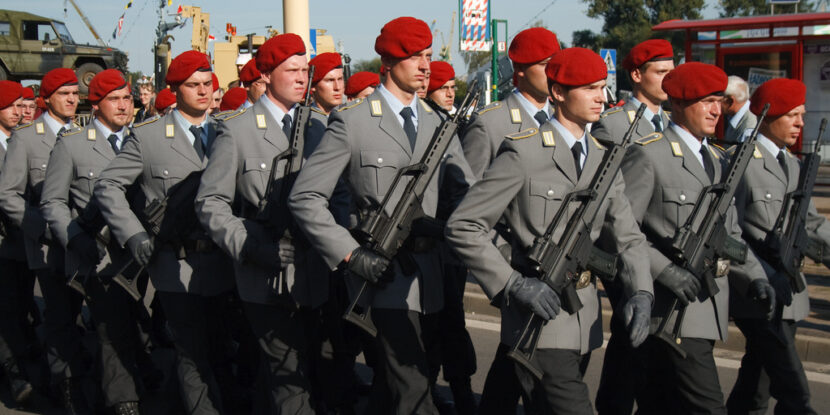
Germany Stations Troops Near Russian Border in Historic Military Move.

PULSE POINTS:

What Happened: German troops will be stationed permanently along NATO’s eastern flank in Lithuania.

👥 Who’s Involved: Germany’s Bundeswehr, Brigadier General Christoph Huber, NATO.

📍 Where & When: Lithuania, along NATO’s eastern flank; fully operational by 2027.

💬 Key Quote: “We have to ensure the protection, freedom, and security of our Lithuanian allies here on NATO’s eastern flank,” said Brigadier General Christoph Huber.

⚠️ Impact: This marks the first permanent foreign deployment of German soldiers since World War II, strengthening NATO’s presence in Eastern Europe.

IN FULL:

The Bundeswehr has announced that German military personnel will soon be stationed in Lithuania to bolster NATO’s eastern defenses, marking a significant shift in Germany’s post-World War II military deployment strategy. The unit, slated to be fully operational by 2027, represents Germany’s first permanent foreign troop deployment since the war, when Lithuania was part of the Soviet Union.

Brigadier General Christoph Huber, who commands the German brigade in Lithuania, emphasized the mission’s critical objectives. “We have to ensure the protection, freedom, and security of our Lithuanian allies here on NATO’s eastern flank,” said Huber.

The deployment is part of a broader NATO strategy to ensure a robust military presence in Eastern Europe. It aims to deter potential threats by demonstrating the alliance’s commitment to the security of its member states near Russia.

Modern Germany has engaged in some foreign military missions, including their involvement in Afghanistan, but these operations have not been permanent deployments. Stationing troops permanently in Lithuania reflects an evolving security landscape and an increased emphasis on fortifying NATO positions along its eastern borders.

It is also a diplomatic victory for President Donald J. Trump, who has long pushed Germany, as Europe’s economic powerhouse, to pull its weight in defense matters, having hitherto failed to meet its NATO spending targets while enriching Russia through a series of energy deals.

However, the deployment will likely be seen as provocative by Russia, which views its invasion by Germany during the Second World War—or Great Patriotic War—as a defining event. The Kremlin will almost certainly cite the return of German soldiers to Russia’s borders as proof that its hostile posture towards NATO and its entanglement with Ukraine are justified. 

Image by w?odi.

show less

PULSE POINTS:

show more
China Spying

Chinese Ship Suspected of Severing Undersea Cables.

A Chinese commercial bulk carrier is suspected of having deliberately cut two Baltic Sea data cables critical to regional communications and security last week. The Yi Peng 3 allegedly dragged its anchor for over 100 miles along the seabed, aiming to damage or cut the cables that connect Finland and Germany, and Sweden, and Lithuania. The Chinese ship was transporting Russian fertilizer at the time.

Currently, the Yi Peng 3 is surrounded by European warships in international waters. Investigators are believed to have boarded the vessel to review the cause of the severing. The incident could escalate tensions between Europe and the United States on one side and Russia and China on the other.

The European investigators are seeking to determine whether the Yi Peng 3’s captain was induced or colluded with Russian intelligence. According to its logs, the commercial bulk carrier left the Russian Baltic port of Ust-Luga on November 15. If a Russian intelligence connection is established, it will mark the latest in a series of sabotage efforts against Western powers.

“It’s extremely unlikely that the captain would not have noticed that his ship dropped and dragged its anchor, losing speed for hours and cutting cables on the way,” a European investigator involved in the case told The Wall Street Journal.

Ningbo Yipeng Shipping—which owns the Yi Peng 3—says it is cooperating with the investigation.

show less
A Chinese commercial bulk carrier is suspected of having deliberately cut two Baltic Sea data cables critical to regional communications and security last week. The Yi Peng 3 allegedly dragged its anchor for over 100 miles along the seabed, aiming to damage or cut the cables that connect Finland and Germany, and Sweden, and Lithuania. The Chinese ship was transporting Russian fertilizer at the time. show more
nato tactics

Frontline NATO Members Look to Trump as President-in-Waiting.

On the first day of the NATO Summit in Washington, D.C., defense ministers from Estonia, Latvia, and Lithuania signaled their preparedness to engage with former President Donald J. Trump—likely anticipating his return to the White House after November’s presidential election. Advocating strongly for NATO during a panel hosted by POLITICO and Die Welt, the Baltic defense officials deployed rhetoric resonating with the America First leader’s previous critiques of defense spending within the alliance.

“NATO is a club. When you have club rules, then you respect the rules and you expect that everyone will also respect the rules,” said Estonian Defense Minister Hanno Pevkur, with POLITICO noting the remarks were “clearly aimed at the golf-loving former president.”

“When you pay your fee in the golf club, you can play. It doesn’t matter how big is your wallet,” Pevkur added.

The ministers also highlighted increased American engagement with NATO during Trump’s first term and said they are not afraid of his reelection.

The National Pulse reported in June that a record number of alliance members are now meeting their commitments. In office, Trump put significant pressure on NATO members to increase their defense spending.

Earlier this year, Trump told Brexit leader Nigel Farage that he would be there for NATO members if they “play fair.”

He has also revealed how he motivated “delinquent” governments in NATO to meet their defense targets by warning he would not rush to protect alliance members “taking advantage” of America by relying on American military protection while neglecting their own spending obligations.

The Baltic ministers’ statements come as voters, U.S. lawmakers, and foreign diplomats are raising concerns regarding 81-year-old Joe Biden‘s cognitive decline and inability to fulfill the duties of office.

show less
On the first day of the NATO Summit in Washington, D.C., defense ministers from Estonia, Latvia, and Lithuania signaled their preparedness to engage with former President Donald J. Trump—likely anticipating his return to the White House after November's presidential election. Advocating strongly for NATO during a panel hosted by POLITICO and Die Welt, the Baltic defense officials deployed rhetoric resonating with the America First leader's previous critiques of defense spending within the alliance. show more

German Govt Plans Predict 2025 War with Russia.

Germany is readying itself for a potential attack on NATO by Russian forces in 2025, according to leaked plans published by German newspaper Bild.

The secret documents from the German Ministry of Defense detail a step-by-step projection that sees Russia escalating the Ukraine conflict into an all-out European war over the next year and a half. The documents predict that Russia will take Ukraine and then launch cyber attacks and foment violence in Estonia, Latvia, and Lithuania.

This violence, the documents claim, would then be used by Putin as a pretense to amass troops in Belarus and Western Russia, before moving more troops and missiles to Kaliningrad, a Russian enclave that lies between Poland and Lithuania. Russian military buildup in the region would then force NATO to engage in a similar troop buildup, which would be portrayed in Russia as proof of an impending attack and used by Putin as casus belli.

“[C]onsidering different scenarios, even if they are extremely unlikely, is part of everyday military business, especially in training,” a German defense official, who refused to comment on the specific doomsday scenario, told Bild.

The secret plans were leaked just days after British PM Rishi Sunak announced a new security agreement with Ukraine and pledged more than $3 billion in additional aid to the country, and also follow a warning by the Swedish civil defense minister that his country could soon find itself in a war.

show less
Germany is readying itself for a potential attack on NATO by Russian forces in 2025, according to leaked plans published by German newspaper Bild. show more