




Monday, February 23, 2026

Trump Treasury Unleashes Financial Crimes Division on Minnesota.

PULSE POINTS

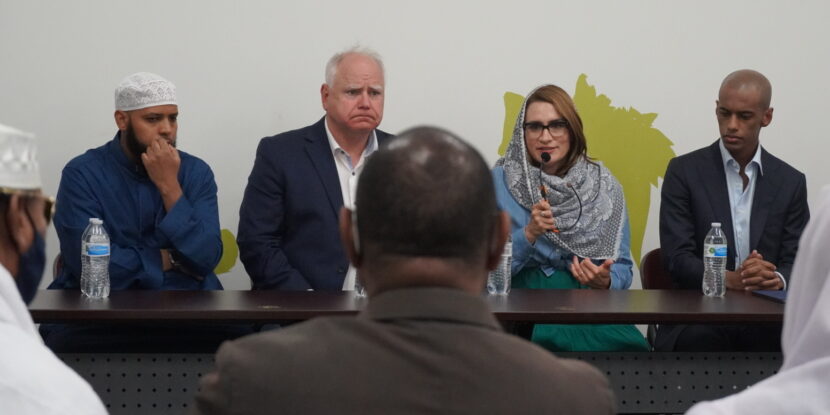
WHAT HAPPENED: U.S. Treasury Secretary Scott Bessent announced on Friday that he has ordered the department’s Financial Crimes Enforcement Network (FinCEN) to begin a geographic targeting operation for the Minneapolis-St. Paul area, applying extra scrutiny to all businesses engaging in overseas money transfers.

👤WHO WAS INVOLVED: Treasury Secretary Scott Bessent, FinCEN officials, the Internal Revenue Service (IRS), Minnesota’s Somali immigrant community, and Governor Tim Walz (D).

📍WHEN & WHERE: The announcement was made on Friday, January 9, 2026.

💬KEY QUOTE: “This will put a microscope on these businesses, advance prosecutions, and assist in the recovery of funds laundered internationally.” — Scott Bessent

🎯IMPACT: The Treasury Department order will require wire transfer businesses and banks to submit additional information to FinCEN on money transfers before the transactions will be allowed to process.

IN FULL

U.S. Treasury Secretary Scott Bessent announced on Friday that he has ordered the department’s Financial Crimes Enforcement Network (FinCEN) to begin a geographic targeting operation for the Minneapolis-St. Paul area, applying extra scrutiny to all businesses engaging in overseas money transfers. The order will require wire transfer businesses and banks to submit additional information to FinCEN on money transfers before the transactions will be allowed to process.

“This will put a microscope on these businesses, advance prosecutions and assist in the recovery of funds laundered internationally,” Sec. Bessent said at a press conference announcing the new financial monitoring measures on Friday. He added, “Under Democratic Governor Tim Walz, welfare fraud has spiraled out of control. Billions of dollars intended for feeding hungry children, housing disabled seniors, and providing services for children in need were diverted to benefit Somali fraud rings.”


According to the Treasury Department, the geographic targeting order will “require banks and money transmitters located in Hennepin and Ramsey Counties, which include Minneapolis and St. Paul, to report additional information about funds transferred outside of the United States. These businesses will be required to file reports with FinCEN above certain transactions of $3,000 or more where the beneficiary is located outside of the United States.”

The Treasury Department contends the order will provide federal law enforcement with greater insight into the individuals overseas receiving money transfers, and help “advance prosecutions and assist in the recovery of funds laundered internationally.” As part of the operation, the department has notified four money transfer businesses that they are under investigation for suspicious financial activity.

In addition to the FinCEN geographic targeting order, Sec. Bessent announced that the Internal Revenue Service (IRS) will soon launch a task force charged with investigating instances of COVID-19 pandemic relief fraud and violations of 501(c)(3) tax-exempt status by nonprofits tied to the numerous Somali community-linked social services fraud schemes.

Bessent added that FinCEN is already on the ground in Minnesota and will also provide training to federal, state, and local law enforcement on how to utilize Treasury Department tools, such as Suspicious Activity Reports, to combat fraud. “We will not let the incompetence and recalcitrance of Governor Walz stop law enforcement from holding these perpetrators accountable,” Bessent said.

Join Pulse+ to comment below, and receive exclusive e-mail analyses.
show less
show more

Bank Execs Reveal Pressure to ‘Debank’ Customers Under Biden, Obama Regimes.

PULSE POINTS

WHAT HAPPENED: President Donald J. Trump signed an executive order outlawing debanking practices. Senior banking executives have since revealed that the Biden and Obama governments pressured them to debank customers.

👤WHO WAS INVOLVED: Banking executives, President Donald J. Trump, and former Presidents Obama and Biden.

📍WHEN & WHERE: From the Obama administration to the present day, in the United States.

💬KEY QUOTE: “Those pressures were very, very real. When your regulator gives you a suggestion, it’s not a suggestion, it’s an order.” – Senior Banking Executive

🎯IMPACT: President Trump’s order aims to prevent banks from denying services based on political views, addressing concerns of political discrimination.

IN FULL

In the wake of President Donald J. Trump’s executive order banning “debanking,” top banking executives have alleged that both the Barack Obama and Joe Biden regimes pressured financial institutions to cut off services to individuals and industries based on political or ideological views.

“Debanking,” the practice of closing bank accounts or denying services, often without explanation, has drawn growing criticism from conservatives and religious groups in recent years. Although linked initially to anti–money laundering regulations, it is now being weaponized for political discrimination.

Two anonymous executives from major U.S. banks said regulators exploited vague federal laws to push banks to deny services. They pointed to programs like “Operation Choke Point,” launched under the Obama regime to target fraud-prone industries, as laying the groundwork. That pressure, they said, continued under Biden.

“Those pressures were very, very real. When your regulator gives you a suggestion, it’s not a suggestion, it’s an order. The political stuff is very real, those pressures are real,” one of the senior executives said.

President Trump has issued an executive order prohibiting banks from denying services based on political beliefs. The order directs federal agencies to investigate claims of politically motivated debanking.

JPMorgan Chase and other major financial institutions have updated internal policies, stating they do not close accounts based on political affiliation. Still, bank executives said that regulators continue pressuring them to flag “suspicious activities,” potentially resulting in indirect debanking.

Trump’s own businesses became the subject of a high-profile debanking case. In March 2025, the Trump Organization sued Capital One, alleging that over 300 business accounts were closed in 2021 due to “unsubstantiated, ‘woke’ beliefs.” The lawsuit alleged the bank believed “the political tide at the moment favored doing so.” Trump’s team said the closures caused “considerable financial harm.”

Debanking has also been used against populists internationally. In the United Kingdom, Reform Party leader Nigel Farage was debanked by Coutts, which claimed his views were “not compatible” with the bank’s values. After public backlash and an attempt to deceive the press about the reasons for the account closure, the bank apologized and paid Farage a settlement.

Join Pulse+ to comment below, and receive exclusive e-mail analyses.
show less
show more

Mexico Is Defending Cartel-Linked Banks Against U.S. Sanctions.

PULSE POINTS

WHAT HAPPENED: Mexico’s government is defending three financial institutions accused by the U.S. Treasury Department of laundering cartel money and facilitating payments for fentanyl precursors to China.

👤WHO WAS INVOLVED: Mexico’s Secretariat of Treasury and Public Credit (SHCP), the U.S. Department of the Treasury, CIBanco SA, Intercam SA, and Vector Casa De Bolsa.

📍WHEN & WHERE: Mexico’s SHCP issued a statement this week.

💬KEY QUOTE: “Financial facilitators like CIBanco, Intercam, and Vector are enabling the poisoning of countless Americans by moving money on behalf of cartels, making them vital cogs in the fentanyl supply chain.” — Secretary of the Treasury Scott Bessent

🎯IMPACT: Tensions between U.S. and Mexican authorities over drug cartel-related corruption and financial crimes are increasing.

IN FULL

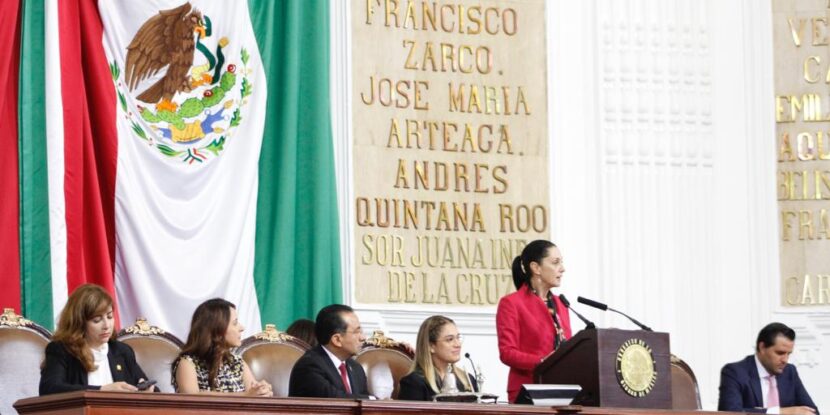
Mexico’s leftist government is rushing to defend two banks and a brokerage firm accused by the U.S. Department of the Treasury of laundering cartel funds and aiding in payments to China for fentanyl precursors.

“Financial facilitators like CIBanco, Intercam, and Vector are enabling the poisoning of countless Americans by moving money on behalf of cartels, making them vital cogs in the fentanyl supply chain,” Secretary of the Treasury Scott Bessent said in a statement released June 25.

Mexico’s Secretariat of Treasury and Public Credit (SHCP) said they requested proof from the U.S. Treasury upon being notified of the actions against the cartel-linked institutions. According to the SHCP, their internal review found no evidence of criminal wrongdoing.

The SHCP claimed that the U.S. Treasury’s information pertained to a small number of transactions with “legally constituted Chinese companies,” which they argued were routine and consistent with legitimate commerce. A review by Mexico’s National Banking and Securities Commission (CNBV) reportedly found only administrative faults, not criminal activity.

The allegations against the institutions—CIBanco SA, Intercam SA, and Vector Casa De Bolsa—were part of a broader accusation that they had worked with drug cartels to launder millions in drug proceeds and facilitate payments for fentanyl precursors.

President Donald J. Trump vowed to crack down on fentanyl trafficking and combat the cartels, which he has designated as foreign terrorist entities. Currently operating in all 50 states, the cartels have attacked Border Patrol officials and even used drones as part of an effort to attack those defending the southern border.

Image via Mexico City Government.

Join Pulse+ to comment below, and receive exclusive e-mail analyses.
show less
show more

Major US Banks Exit ‘Net Zero’ Alliance Ahead of Trump Inauguration.

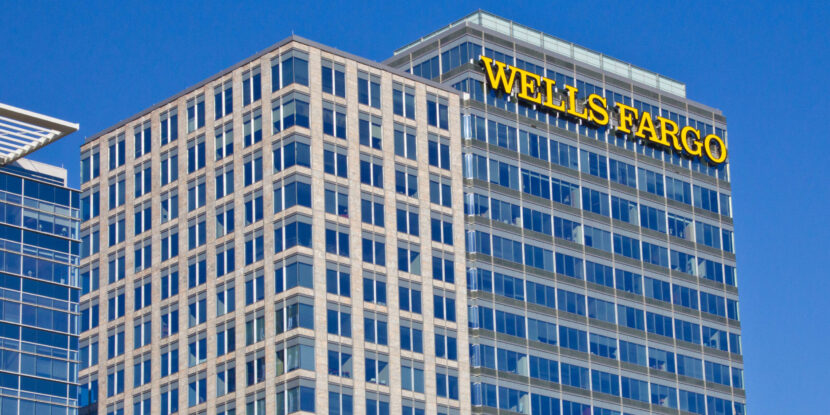
The six largest banks in the United States have abandoned a climate change “alliance” just ahead of the inauguration of President-elect Donald J. Trump. In early December, JP Morgan joined Citigroup, Bank of America, Morgan Stanley, Wells Fargo, and Goldman Sachs in distancing themselves from the United Nations-supported Net Zero Banking Alliance (NZBA).

Paddy McCully from Reclaim Finance described the banks’ withdrawal as a calculated move to sidestep challenges from Trump. McCully noted that while climate commitments were previously emphasized, with changing political winds, such priorities seem less central.

The NZBA aims to align financial practices with a goal of net zero greenhouse gas emissions by mid-century. Citigroup, a founding member, and JP Morgan both claim they will continue independently pursuing low-carbon technologies, but from outside the organization. The NZBA’s membership count still stands at 141 banks after the departures, with significant participation from European banks.

The American banks are just the latest companies to abandon leftist policies after President-elect Trump’s victory last November. Over the last year, several other major companies have abandoned woke policies related to diversity, equity, and inclusion (DEI) and climate change.

In October, Democrats attempted to preserve DEI initiatives, telling corporations not to abandon them despite public and shareholder backlash.

Image by SeniorLiving.Org.

show less
The six largest banks in the United States have abandoned a climate change "alliance" just ahead of the inauguration of President-elect Donald J. Trump. In early December, JP Morgan joined Citigroup, Bank of America, Morgan Stanley, Wells Fargo, and Goldman Sachs in distancing themselves from the United Nations-supported Net Zero Banking Alliance (NZBA). show more

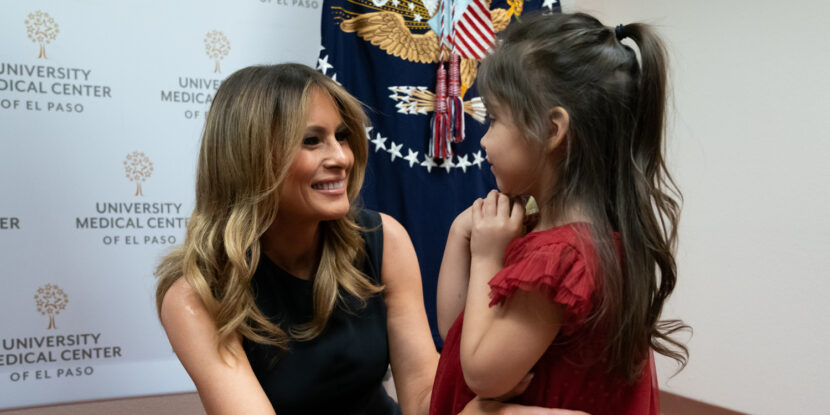
Melania Says She Was Debanked AND Banned From Her Email Provider.

Former First Lady Melania Trump was cut off by a bank and an email service provider upon leaving the White House. Mrs. Trump believes these actions were politically motivated, providing an example of the rising trend of “debanking”, where individuals and organizations are denied essential services due to their political affiliations or opinions.

“The bank suddenly informed me they will not be able to do business with me anymore,” and a “very prominent email distribution service provider just rapidly terminated my agreement,” the former First Lady confirmed during an interview.

Mrs. Trump described how these actions not only affected her personally but also had far-reaching consequences on her charitable work. Political bias has also had a more general impact on her capacity to do good works—for instance, a university initially accepted her donations to support scholarships for foster children but later refused them after realizing she was the funding source. “They didn’t want to do business with me because of my political affiliation,” she said.

Debanking has been used to disrupt many conservatives’ activism and personal lives. For instance, Brexit leader Nigel Farage was debanked by Coutts, a subsidiary of NatWest. The chief executive had to resign after leaking to the BBC that Farage’s account was closed due to insufficient funds.

In addition to being a breach of privacy, this explanation was contradicted by the discovery of a “Stasi-style surveillance report” on Farage by the bank’s so-called “reputation risk committee,” detailing his ties to Donald Trump and vaccine skeptic tennis star Novak Djokovic and his interviews with Alex Jones, among other supposed transgressions.

show less
Former First Lady Melania Trump was cut off by a bank and an email service provider upon leaving the White House. Mrs. Trump believes these actions were politically motivated, providing an example of the rising trend of "debanking", where individuals and organizations are denied essential services due to their political affiliations or opinions. show more

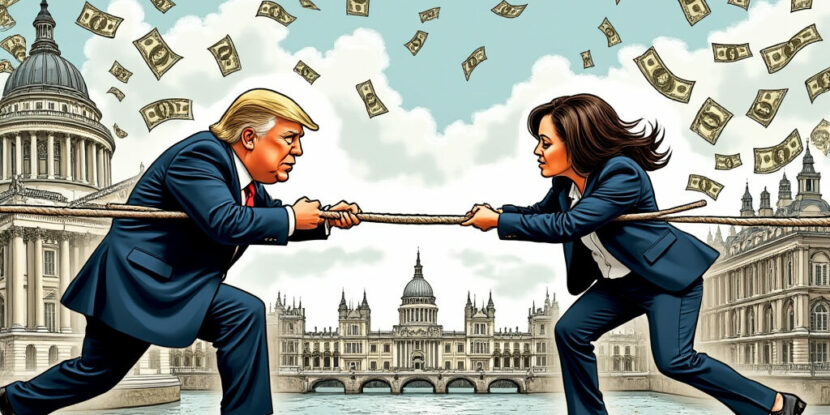
City of London Balks at Kamala Presidency, With Many Preferring Trump.

Top bankers in Britain’s City of London are quietly hopeful that former president Donald J. Trump will be re-elected in November. They believe his economic policies will be far more beneficial to capital markets than a Kamala Harris presidency.

Despite some concerns over Trump’s protectionist stance on some industries and views on the Ukraine war, some in the City see advantages in his laissez-faire finance approach.

Speaking anonymously, a senior U.K. financial lobbyist noted that a Trump presidency might lead to a less restrictive regulatory environment, potentially boosting financial flows across the Atlantic.

The genuine concern in the City is a potential Kamala Harris presidency. Her economic plan includes targeting big businesses, which could be less favorable for the financial sector than Trump’s pro-business stance.

Under Trump, the City also benefited from appointments of industry veterans to key regulatory positions, like Steven Mnuchin at the Treasury and Christopher Giancarlo at the CFTC. This trend could continue, benefiting the financial sector.

A key opportunity for the City would be the inclusion of financial services in a U.S.-U.K. free-trade agreement, a possibility under Trump but unlikely under President Joe Biden or a Harris administration.

Chancellor Rachel Reeves has already signaled a willingness to strengthen U.K.-U.S. financial ties, regardless of who leads the U.S. And with Trump’s recent support for cryptocurrencies, the crypto industry in London sees potential benefits, despite his previous skepticism.

Trump has promised to create a strategic Bitcoin reserve and has earned millions of dollars of cryptocurrency donations throughout the 2024 presidential campaign.

show less
Top bankers in Britain's City of London are quietly hopeful that former president Donald J. Trump will be re-elected in November. They believe his economic policies will be far more beneficial to capital markets than a Kamala Harris presidency. show more
FBI FinCEN MAGA

Feds Pulled Bank Info on Americans Who Bought Bibles or Had ‘Trump’ in Search History.

The House Judiciary Committee and House Select Subcommittee on the Weaponization of the Federal Government have uncovered evidence the federal government pressured at least 13 banks into handing over American conservatives’ information without a warrant. The U.S. Treasury’s Financial Crimes Enforcement Network (FinCEN) and the Federal Bureau of Investigation (FBI) told financial institutions, including Bank of America, Chase, Citi Bank, and Wells Fargo, to sift customers’ transactions for so-called “extremism” indicators, such as searches including the term “Trump.”

Searches including the term “MAGA” were also included as an “extremism” indicator, along with purchases of the Bible. Following January 6, FinCEN suggested banks sift through transactions at hunting, fishing, and camping stores like Bass Pro Shops and Dick’s Sporting Goods.

At least 211 Americans had their personal information transferred to FinCEN and the FBI by Bank of America on January 17, 2021. The bank was asked for more details on “weapons-related transactions” among the group, leading to “criminal background queries” into four bank customers. Federal agents established multiple leads on additional persons after this, but they had to be pulled because there were no “allegations of federal criminal conduct.”

WARRANTLESS SURVEILLANCE. 

“This kind of warrantless financial surveillance raises serious concerns about the federal government’s respect for Americans’ privacy and fundamental civil liberties,” Jordan wrote Janet Yellen, Joe Biden’s Treasury Secretary.

“Given this coordination, the Committee and Select Subcommittee are concerned that the federal government, through the FBI and FinCEN, sent similar or identical [requests] to other financial institutions… to elicit the information and transaction history of individuals without any allegation of federal criminal conduct,” he said.

The authorities have stepped up their persecution of January 6 defendants ahead of the presidential elections in November, with up to 445 new cases coming before the courts — more than the total for 2022 and 2023.

Earlier this month, Rebecca Lavrenz, a 71-year-old great-grandmother who briefly prayed inside the U.S. Capitol on January 6, was convicted. National Pulse editor-in-chief Raheem Kassam called the casedisgusting.”

show less
The House Judiciary Committee and House Select Subcommittee on the Weaponization of the Federal Government have uncovered evidence the federal government pressured at least 13 banks into handing over American conservatives' information without a warrant. The U.S. Treasury's Financial Crimes Enforcement Network (FinCEN) and the Federal Bureau of Investigation (FBI) told financial institutions, including Bank of America, Chase, Citi Bank, and Wells Fargo, to sift customers' transactions for so-called "extremism" indicators, such as searches including the term "Trump." show more

Commercial Real Estate Shows Signs of Collapse.

The United States economy may be seeing the start of a collapse in the commercial real estate sector — raising concerns about the potential impact on banks and city budgets. Elevated interest rates, slow corporate growth, and post-pandemic ‘work-from-home’ trends have drastically reduced the office and retail space market.

In San Francisco, a 20-story office tower that was purchased for $146 million ten years ago was recently on the market for merely $80 million, almost a 45 percent reduction in value. Similarly, in Chicago, a 200,000-square-foot-office building sold for close to $90 million in 2004, was bought last month for just $20 million, a staggering 78 percent drop in cost. In Washington, D.C., a 12-story retail and office building just blocks from the White House sold for $36 million, a significant decline in value since its $100 million sale in 2018.

Hammering City Budgets.

This depreciation in commercial property values is severely affecting municipal budgets that rely heavily on the taxes attached to these commercial real estate properties. Financial shortfalls are becoming a reality for many cities as lower assessments of property values shrink tax income. Aaron Peskin, president of the San Francisco Board of Supervisors, notes a potential $1 billion shortfall in San Francisco’s $14 billion budget over the next few years, mainly due to decreased commercial real estate tax revenue.

Renewed Banking Crisis Risk.

Additionally, there are mounting concerns that a crisis in commercial real estate could cause cross-contamination in the U.S. banking sector — especially among small and regional banks. Since the middle of last year, small and mid-sized regionals have increased holdings in commercial real estate despite the market cooling. If holdings in commercial real estate increasingly become toxic assets, U.S. regulators could face a renewed banking crisis similar to the one experienced last year when several regional banks — including Silicon Valley Bank — experienced banking runs before ultimately being seized by the Biden government as they collapsed.

show less
The United States economy may be seeing the start of a collapse in the commercial real estate sector — raising concerns about the potential impact on banks and city budgets. Elevated interest rates, slow corporate growth, and post-pandemic ‘work-from-home’ trends have drastically reduced the office and retail space market. show more

Here’s The ONE Decent Idea the Biden White House is Working On.

President Joe Biden’s Consumer Financial Protection Bureau (CFPB) unveiled a new proposed rule that could limit bank overdraft fees to as little as $3. The proposed rule applies only to banks and credit unions with over $10 billion in assets — limiting the fee caps to roughly 175 of the largest banking institutions in the U.S. According to the CFPB, banks currently take in around $9 billion annually in overdraft fees.

The proposed rule would limit banks to charging either the coverage cost for an overdrawn account or a capped fee determined by the CFPB. This, in practice, should drastically lower the typical overdraft fee from the $35 most consumers are currently charged.

“When companies sneak hidden junk fees into families’ bills, it can take hundreds of dollars a month out of their pockets and make it harder to make ends meet,” President Biden said yesterday in a statement released by the White House. “For too long, some banks have charged exorbitant overdraft fees—sometimes $30 or more.”

He added: “Banks call it a service—I call it exploitation.”

The American Bankers Association (ABA) blasted the proposed rule change. “Today’s proposal from the CFPB marks the bureau’s latest attempt to demonize and mischaracterize highly regulated and clearly disclosed bank fees for a service that surveys consistently show Americans value and appreciate,” the ABA said in a statement.

The ABA claims the rule change would discourage banks from offering consumers overdraft protection, “including those who have few, if any, other means to access needed liquidity.” Critics of the current rules governing overdraft fees argue that banks too often view overdrafts as a quasi-lending instrument, with overdraft fees treated as a form of interest that exceeds federal regulations.

show less
President Joe Biden’s Consumer Financial Protection Bureau (CFPB) unveiled a new proposed rule that could limit bank overdraft fees to as little as $3. The proposed rule applies only to banks and credit unions with over $10 billion in assets — limiting the fee caps to roughly 175 of the largest banking institutions in the U.S. According to the CFPB, banks currently take in around $9 billion annually in overdraft fees. show more

Editor’s Notes

Behind-the-scenes political intrigue exclusively for Pulse+ subscribers.

RAHEEM J. KASSAM Editor-in-Chief
This move – as well as my headline about it – is likely to enrage the “muh free market” puritans regarding matters of banking and private finance
This move – as well as my headline about it – is likely to enrage the “muh free market” puritans regarding matters of banking and private finance show more
for exclusive members-only insights
banks

UK Banks Close 1,000+ Accounts Per Day.

Banks in the United Kingdom are closing more than one thousand private and business accounts every day, according to data obtained by a freedom of information request, which revealed the increasing regularity of the measure against both politically exposed persons (PEPs) and ordinary members of the public.

The total number of account closures exceeded 343,000 in 2022 alone, representing an enormous increase in the use of the measure compared to 2016-17, during which around 45,000 accounts were shuttered. Worse yet, banks often fail to explain why they are closing an account. Instead, they merely inform customers that the account has either closed or will close in the coming months.

Brexit leader turned TV presenter Nigel Farage – whose bank account with Coutts was recently closed due to his political opinions not “aligning” with the bank’s – is now leading a campaign against “debanking” in the UK. Since launching his campaign website, Farage explains:

“I’ve just been inundated by small businesses, by folk all round the country. People in absolute fear, terror, lives being ruined, thousands of businesses being closed. These are people who have done nothing wrong whatsoever.”

– Nigel Farage, 2023.

“I want this to be a turning point in this whole appalling behavior from banks. Whether it’s high-profile figures or people running a fish stall, what has happened within this industry is wrong,” Farage adds.

The British government has condemned banks for closing accounts and is proposing new legislation that would revoke banking licenses from the organizations that close the private accounts of public figures.

show less
Banks in the United Kingdom are closing more than one thousand private and business accounts every day, according to data obtained by a freedom of information request, which revealed the increasing regularity of the measure against both politically exposed persons (PEPs) and ordinary members of the public. show more