



Monday, February 23, 2026

Trump Acquires Major Lithium Mine Stake for U.S. Government.

PULSE POINTS

WHAT HAPPENED: The U.S. government has taken a minority stake in Lithium Americas to support the development of one of the world’s largest lithium mines in northern Nevada.

👤WHO WAS INVOLVED: The U.S. Department of Energy, Lithium Americas, General Motors, and U.S. Energy Secretary Chris Wright.

📍WHEN & WHERE: The agreement was announced on October 1, focusing on the Thacker Pass project in northern Nevada.

💬KEY QUOTE: “This deal helps reduce our dependence on foreign adversaries for critical minerals by strengthening domestic supply chains and ensures better stewardship of American taxpayer dollars.” – Chris Wright

🎯IMPACT: The project aims to reduce U.S. reliance on China for lithium, with production set to grow exponentially, potentially powering 800,000 electric vehicles (EVs) annually in its first phase.

IN FULL

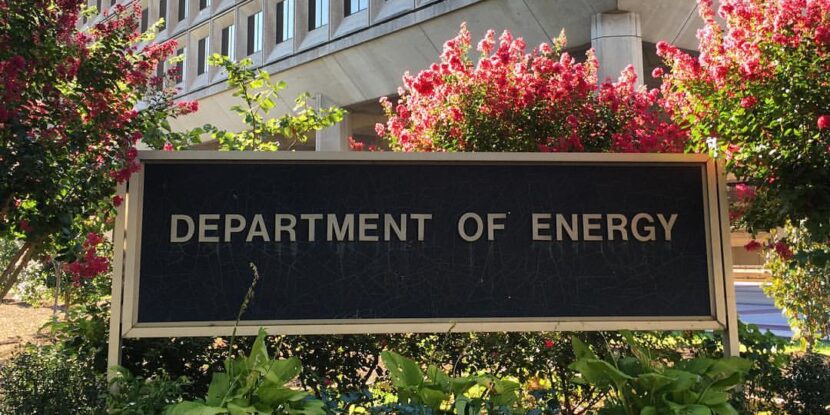
The U.S. Department of Energy has taken a five percent equity stake in Lithium Americas, a Vancouver-based company developing the Thacker Pass lithium project in northern Nevada. The site, considered one of the largest known lithium reserves in the United States, is central to efforts to reduce America’s reliance on China for critical minerals essential to electric vehicles, smartphones, and renewable energy technologies.

Developed as a joint venture with General Motors, the Thacker Pass project is expected to produce 40,000 metric tons of battery-grade lithium carbonate annually in its initial phase. That output would be enough to power approximately 800,000 electric vehicles per year. GM has committed over $900 million to the project, which is estimated to hold enough lithium to support batteries for one million electric vehicles (EVs) annually.

The Department of Energy also agreed to defer $182 million in debt service for the first five years of a $435 million federal loan issued to Lithium Americas. Additionally, recent amendments to a $2.3 billion loan agreement with the company have cleared the way for construction and production to move forward.

“This deal helps reduce our dependence on foreign adversaries for critical minerals by strengthening domestic supply chains and ensures better stewardship of American taxpayer dollars,” said U.S. Energy Secretary Chris Wright.

The announcement sent Lithium Americas’ stock soaring more than 33 percent, signaling strong investor confidence. Dan Ives, an analyst with Wedbush Securities, described the project as a “massive opportunity” for the U.S. to reduce China’s near-total dominance of the global lithium processing market.

The federal government’s backing of Thacker Pass comes amid a broader push to secure domestic sources of critical minerals. That push has accelerated under the Trump administration, which has reversed several Biden-era climate policies while focusing on energy independence and resource development.

In recent months, the Trump administration has committed to expand domestic mining, processing, and battery production capacity, including support for companies like MP Materials. It has also imposed steep tariffs on key battery components from China, including a 160 percent combined duty on graphite anode materials.

Meanwhile, a minerals deal with Ukraine finalized earlier this year grants the U.S. preferential access to new mining licenses, with revenues shared through a joint reconstruction fund.

Image by chicabrandita.

Join Pulse+ to comment below, and receive exclusive e-mail analyses.
show less
show more

Trump Tells Foreign Firms to Employ and Upskill Americans After Hyundai Raid.

PULSE POINTS

WHAT HAPPENED: President Donald J. Trump told companies operating in the U.S. to only use foreign labor to train American workers following the largest single-site immigration enforcement operation in Homeland Security history, which saw hundreds of South Korean illegal workers arrested at a Hyundai plant in Georgia.

👤WHO WAS INVOLVED: U.S. Immigration and Customs Enforcement (ICE), Hyundai, South Korean nationals, and President Trump.

📍WHEN & WHERE: The operation took place last Thursday at a Hyundai battery plant under construction near Savannah, Georgia. President Trump’s comments came late Sunday in a post on Truth Social.

💬KEY QUOTE: “What we ask in return is that you hire and train American Workers.” – Donald Trump

🎯IMPACT: President Trump floated a possible policy change where some high-skilled foreign labor would only be authorized in order to train American workers in the battery and computer manufacturing sectors.

IN FULL

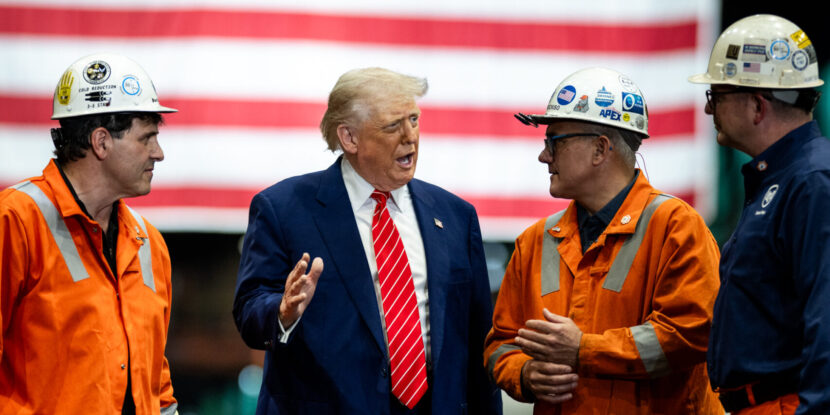
President Donald J. Trump says foreign companies operating in the United States should only use foreign workers to train their American employees. The comments were made in a late Sunday night post on Truth Social, following last Thursday’s largest single-site enforcement operation in Department of Homeland Security (DHS) history, which detained hundreds of South Korean illegal immigrant workers at a Hyundai battery plant under construction near Savannah, Georgia.

“Following the Immigration Enforcement Operation on the Hyundai Battery Plant in Georgia, I am hereby calling on all Foreign Companies investing in the United States to please respect our Nation’s Immigration Laws,” Trump wrote, continuing: “Your Investments are welcome, and we encourage you to LEGALLY bring your very smart people, with great technical talent, to build World Class products, and we will make it quickly and legally possible for you to do so. What we ask in return is that you hire and train American Workers.”

“Together, we will all work hard to make our Nation not only productive, but closer in unity than ever before,” the America First leader added.

The operation resulted in the detention of 475 workers, most of whom were South Korean nationals. U.S. Immigration and Customs Enforcement (ICE) officials stated that some had entered the country illegally, while others had overstayed visas or violated visa waiver conditions that prohibited employment. None of the detained workers were charged with crimes, according to Steven Schrank, the lead Homeland Security Investigations (HSI) agent in Georgia.

South Korea’s government expressed concern over the detentions, with Foreign Minister Cho Hyun planning to travel to the U.S. to discuss the matter. On Sunday, South Korea announced that more than 300 detained workers would be released and repatriated via charter plane. Kang Hoon-sik, chief of staff for President Lee Jae Myung, confirmed that negotiations with U.S. officials had been finalized.

The incident has raised tensions between Washington and Seoul, coming just months after South Korea committed $350 billion in U.S. investments as part of a broader economic agreement. Trump, speaking to reporters at Joint Base Andrews on Sunday, suggested that the U.S. and South Korea could collaborate to allow their nationals to train American workers for roles in battery and computer manufacturing.

Join Pulse+ to comment below, and receive exclusive e-mail analyses.w

show less
show more

Elon Musk Is Building a Massive Battery Plant for Communist China.

PULSE POINTS

WHAT HAPPENED: Tesla has signed a deal to construct its first grid-scale battery power plant in China, resurfacing concerns regarding Tesla CEO Elon Musk’s ties to the Chinese Communist Party (CCP).

👤WHO WAS INVOLVED: Tesla, the Chinese Communist Party (CCP), and China Kangfu International Leasing.

📍WHEN & WHERE: Project announced recently; it will be based in Shanghai, China.

💬KEY QUOTE: “After completion, this project is expected to become the largest grid-side energy storage project in China,” Tesla stated on the Chinese-controlled social media platform Weibo.

🎯IMPACT: The project highlights Tesla’s expansion into China’s energy storage market amid increasing geopolitical tensions between the United States and the CCP.

IN FULL

Elon Musk’s Tesla firm has secured its first deal to construct a grid-scale battery power plant in the People’s Republic of China, which will, upon completion, become the largest of its kind in the country. The company made the announcement on the Chinese Communist Party (CCP)-controlled social media platform Weibo, where Tesla highlighted the project’s potential impact on urban power supply.

The agreement, valued at four billion yuan ($556 million), was signed by Tesla, the local government of Shanghai, and China Kangfu International Leasing, according to Chinese media outlet Yicai. Tesla’s Shanghai factory has already produced over 100 Megapacks in the first quarter of this year, with each Megapack capable of delivering up to one megawatt of power for four hours.

In a statement on Weibo, Tesla described the grid-side energy storage power station as a “smart regulator” for urban electricity, capable of flexibly adjusting grid resources. “After completion, this project is expected to become the largest grid-side energy storage project in China,” Tesla stated, adding that the project would “effectively solve the pressure of urban power supply and ensure the safe, stable, and efficient electricity demand of the city.”

China’s CATL and carmaker BYD, both competitors in the battery market, have made substantial progress in battery development and manufacturing, with CATL holding approximately 40 percent of the global market share. Notably, CATL is also expected to supply battery cells and packs for Tesla’s Megapacks.

The deal comes amid strained trade relations between Beijing and Washington. The agreement also brings additional scrutiny on Elon Musk, who has long been criticized for his business ties to the CCP. Shortly after Musk was tapped as a special government employee to help advise the U.S. Department of Government Efficiency (DOGE), his companies saw a flood of Chinese investors, raising concerns about the possibility of foreign influence over the technology billionaire.

Join Pulse+ to comment below, and receive exclusive e-mail analyses.

show less
show more