




Monday, February 23, 2026

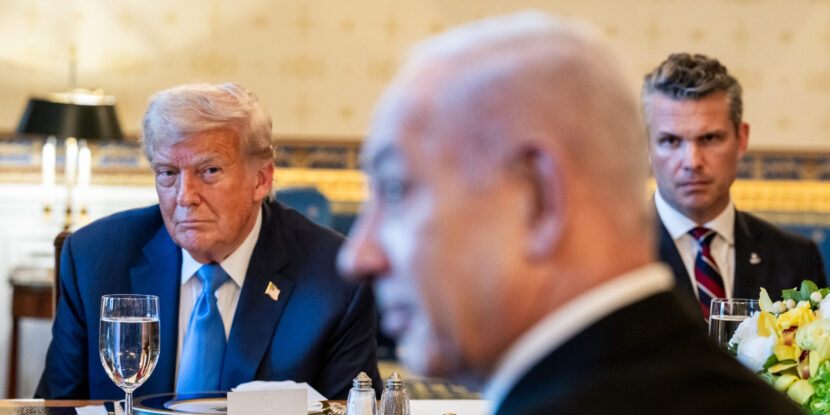
‘You Can’t Fake That’ — Trump Disagrees With Netanyahu on Gaza Starvation.

PULSE POINTS

WHAT HAPPENED: President Donald J. Trump expressed disagreement with Israeli Prime Minister Benjamin Netanyahu’s claim that there is no starvation in Gaza.

👤WHO WAS INVOLVED: President Trump, Benjamin Netanyahu, Hamas, and the Israel Defense Forces (IDF).

📍WHEN & WHERE: The comments were made on Monday during Trump’s meeting with British Prime Minister Sir Keir Starmer in Scotland.

💬KEY QUOTE: “There is real starvation in Gaza—you can’t fake that.” — President Trump

🎯IMPACT: International pressure to bring the Gaza conflict to a close amid a growing humanitarian crisis is growing.

IN FULL

President Donald J. Trump publicly disagreed with Israeli Prime Minister Benjamin Netanyahu‘s assertion that there is no starvation in Gaza, citing televised images of hungry children as evidence. Trump’s remarks came during a press event at his Turnberry, Scotland, resort with British Prime Minister Sir Keir Starmer.

“Based on television, I would say not particularly because those children look very hungry,” Trump stated when asked if he agreed with Netanyahu that there is no starvation. “There is real starvation in Gaza—you can’t fake that.”

Trump added: “Hamas doesn’t want to give the hostages. I told Bibi that he will have to now maybe do it in a different way.” The U.S. President emphasized that he believes a ceasefire “is possible” and that the conflict in Gaza must end. He also said the U.S. would be providing food aid.

The humanitarian situation in Gaza is deteriorating, with recent ceasefire talks collapsing. Israel has begun implementing daily humanitarian pauses in military operations in several areas of Gaza and conducted air drops of food, a move mirrored by the United Arab Emirates (UAE) and Jordan. Despite these efforts, Netanyahu maintains his stance that there is no starvation in the region.

In recent weeks, the Trump White House has signalled a degree of frustration with Netanyahu. Following recent Israeli bombing strikes against Syria, anonymous White House officials told Axios, “Bibi acted like a madman. He bombs everything all the time,” and “Netanyahu is sometimes like a child who just won’t behave.”

Join Pulse+ to comment below, and receive exclusive e-mail analyses.
show less
show more

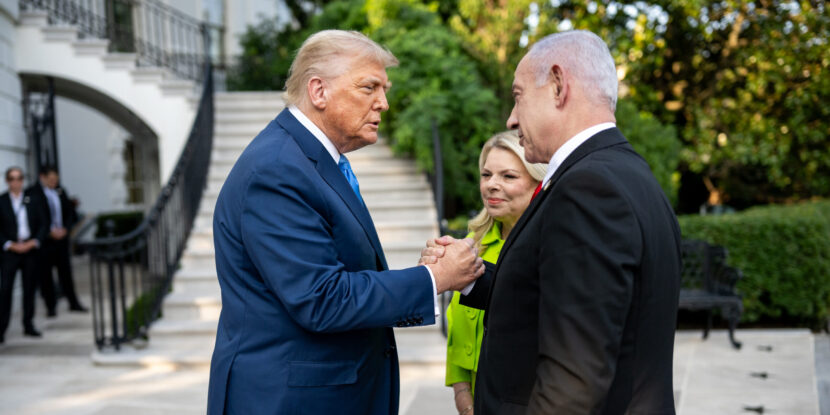
U.S. and Israel Leave Gaza Ceasefire Talks, Blame Hamas.

PULSE POINTS

WHAT HAPPENED: The United States and Israel withdrew their negotiators from Gaza ceasefire talks, blaming Hamas for the failure to reach an agreement.

👤WHO WAS INVOLVED: U.S. special envoy Steve Witkoff, Israeli Prime Minister Benjamin Netanyahu, and Hamas representatives.

📍WHEN & WHERE: July 24, 2025, in Doha, Qatar.

💬KEY QUOTE: “If Hamas interprets our willingness to reach a deal as a weakness… it is gravely mistaken.” – Benjamin Netanyahu

🎯IMPACT: The breakdown of talks leaves no end in sight to the humanitarian crisis in Gaza.

IN FULL

The United States and Israel have withdrawn their negotiators from Gaza ceasefire talks, with U.S. special envoy Steve Witkoff accusing Hamas of failing to act in good faith. The talks, held in Doha, Qatar, aimed at ending nearly two years of fighting, have not reached a breakthrough.

Israeli Prime Minister Benjamin Netanyahu reaffirmed his government’s commitment to seeking a ceasefire but criticized Hamas for blocking efforts to end the conflict. He stated, “If Hamas interprets our willingness to reach a deal as a weakness… it is gravely mistaken.”

Mediators have been working for over two weeks to facilitate discussions between the Israeli and Hamas delegations, but the talks have not yielded results. The humanitarian situation in Gaza remains dire, with warnings of “mass starvation” spreading among the population.

Hamas’s response to the latest ceasefire proposal included amendments concerning aid entry, withdrawal maps, and guarantees for a permanent end to hostilities. Witkoff indicated that the U.S. would consider alternative options to stabilize the region and secure the release of hostages.

International attention is focused on the humanitarian crisis in Gaza. Israel maintains that it is not responsible for the crisis, attributing the situation to Hamas’s actions in attacking Israel on October 7, 2023.

Join Pulse+ to comment below, and receive exclusive e-mail analyses.
show less
show more

Trump White House Thinks ‘Madman’ Netanyahu Is Out of Control: Report.

PULSE POINTS

WHAT HAPPENED: Reports suggest the Trump White House is frustrated with Israeli Prime Minister Benjamin Netanyahu following recent Israeli attacks on Syria and Gaza’s only Catholic church.

👤WHO WAS INVOLVED: President Donald J. Trump, Israeli Prime Minister Benjamin Netanyahu, and White House officials.

📍WHEN & WHERE: Following recent Israeli airstrikes, including the bombing of a Catholic church in Gaza on Thursday.

💬KEY QUOTE: “Bibi acted like a madman. He bombs everything all the time,” a White House official told Axios.

🎯IMPACT: The incidents have reportedly caused tensions between the Trump administration and the Israeli government.

IN FULL

President Donald J. Trump’s administration is concerned that Israeli Prime Minister Benjamin Netanyahu’s recent strikes on Syrian government targets and Gaza’s only Catholic church are reckless, with some officials describing him as acting “like a madman.”

White House sources reportedly told Axios that Netanyahu’s actions are hindering Trump’s attempts to foster peace in the region. “Bibi acted like a madman. He bombs everything all the time,” an unnamed White House official remarked. Another official added, “Netanyahu is sometimes like a child who just won’t behave.”

The situation intensified following Israel’s bombing of the sole Catholic Church in Gaza on Thursday. In response, Trump reportedly held a heated phone call to Netanyahu, insisting on a public acknowledgment that the attack was an error, which Israel subsequently provided.

Despite the growing frustration among White House staff, Trump has in recent months openly supported Netanyahu, and criticized the corruption prosecution he faces in the Israeli courts. On June 25, Trump said he was “shocked to hear that the State of Israel, which has just had one of its Greatest Moments in History, and is strongly led by Bibi Netanyahu, is continuing its ridiculous Witch Hunt against their Great War Time Prime Minister!”

Nevertheless, some U.S. officials find the situation increasingly unsustainable. One official told Axios, “The feeling is that every day there is something new. What the f***?”

Trump publicly expressed frustration with the Israeli government towards the end of its 12-day war with Iran, despite having sent American forces to assist Israeli strikes against Iranian nuclear facilities. “I’m not happy with Israel. You know, when I say, OK, now you have 12 hours, you don’t go out in the first hour and just drop everything you have on them,” he said, after the Israelis launched massive strikes on Iran after a ceasefire had been agreed but before it came into effect.

The America First leader later demanded the cancellation of post-ceasefire Israeli strikes on Iran in response to an alleged violation by Iran, writing on his Truth Social platform, “ISRAEL. DO NOT DROP THOSE BOMBS. IF YOU DO IT IS A MAJOR VIOLATION. BRING YOUR PILOTS HOME, NOW!”

Join Pulse+ to comment below, and receive exclusive e-mail analyses.
show less
show more

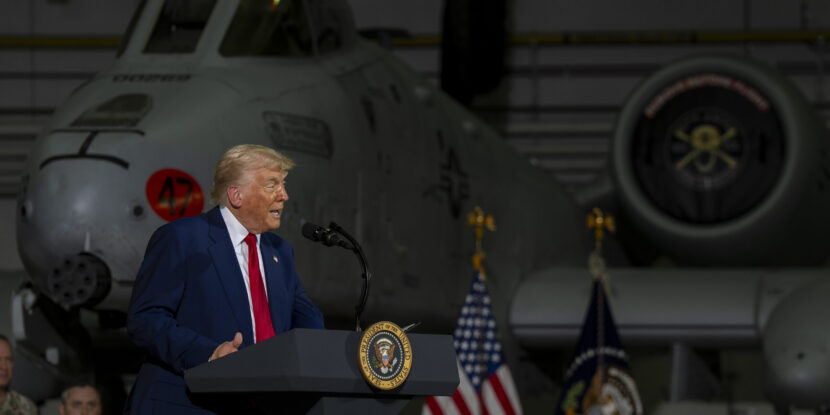
Israel Just Started ANOTHER War.

PULSE POINTS

WHAT HAPPENED: Israeli aircraft launched airstrikes on key military targets of the new Syrian regime after attacks on the Druze minority.

👤WHO WAS INVOLVED: Israel, Prime Minister Benjamin Netanyahu, Syrian President Ahmed al-Sharaa, Syrian military, Druze minority.

📍WHEN & WHERE: The strikes took place on Wednesday, July 16.

💬KEY QUOTE: “Do not cross the border. You are risking your lives; you could be murdered, you could be taken hostage, and you are impeding the efforts of the IDF.” — Benjamin Netanyahu.

🎯IMPACT: The attacks could resume the hostility between the two nations that subsided somewhat following the ouster of former President Bashar al-Assad. Notably, Netanyahu’s corruption trial has been adjourned due to the strikes.

IN FULL

Israel has a series of major military strikes against the Syrian capital of Damascus and against a tank unit that was approaching Syria’s southern city of Suweida. The city is predominantly Druze—a religious minority group that the Israelis say they intend to protect. The strikes in Damascus targeted and destroyed the Ministry of Defense and the General Staff Headquarters of the Syrian military.

Notably, Israeli Prime Minister Benjamin Netanyahu’s long-running corruption trial has been adjourned as a result of the strikes.

The renewed conflict, which could reignite hostilities across the region, stems from what began as a Sunni Bedouin attack on the Druze population of Suweida. This escalated as Syrian government forces appeared poised to join the Bedouin tribal fighters against the Druze, who are alleged to remain loyal to the ousted Assad regime.

The Israeli military confirmed the operation, stating it was a “message to [Syrian President Ahmed] al-Sharaa regarding the events in Suweida.” Israel has also targeted Syrian tanks and conducted drone strikes over the past three days, killing regime soldiers.

Israel has drawn a red line in southern Syria, vowing to protect the Druze minority from what it sees as renewed oppression by the Syrian regime. However, Netanyahu has warned Druze from the Israeli-controlled Golan Heights, attempting to cross into Syria, “Do not cross the border. You are risking your lives; you could be murdered, you could be taken hostage, and you are impeding the efforts of the IDF.”

Many in the Druze community remain wary of appearing aligned with Israel. Nevertheless, the ongoing violence, sparked by a robbery involving Bedouin tribesmen and escalating into sectarian warfare, has forced many to seek outside help. Sheikh Hikmat al-Hijri, a leading Druze spiritual figure, has publicly appealed for international intervention.

The Assad regime’s fall left a power vacuum in southern Syria. Damascus has struggled to reassert control, and its attempt to reenter Suweida over the weekend was met with fierce resistance from local militias. A ceasefire announced Tuesday collapsed within hours.

The Syrian interior ministry insists the only solution is the reintegration of Suweida into the central state. But ongoing attacks on Druze fighters and civilians have fueled resentment. Civilians trapped in Suweida report being cut off from power and supplies, with snipers making the streets deadly.

President al-Sharaa, previously known by his nom de guerre Abu Mohammad al-Julani, is a Sunni jihadist previously wanted by the U.S., whose Hay’at Tahrir al-Sham (HTS) is an offshoot of al-Qaeda previously aligned with the Islamic State. In addition to persecuting Druze, al-Sharaa’s regime has also overseen massacres of Syria’s Christians, who were largely protected by Assad.

Join Pulse+ to comment below, and receive exclusive e-mail analyses.
show less
show more

Trump Is Exerting ‘Heavy’ Pressure on Netanyahu to End Gaza War.

PULSE POINTS

WHAT HAPPENED: President Donald J. Trump is applying significant pressure on Israeli Prime Minister Benjamin Netanyahu to bring an end to the ongoing war in Gaza, according to sources close to the ceasefire negotiations.

👤WHO WAS INVOLVED: Donald Trump, Benjamin Netanyahu, Steve Witkoff, Marco Rubio, and Hamas leaders.

📍WHEN & WHERE: Meetings in Washington, D.C., including a White House dinner on Monday night, during Netanyahu’s visit from Monday to Thursday.

💬KEY QUOTE: “The U.S. pressure on Israel has begun, and tonight it will be heavy,” an unnamed source told Sky News.

🎯IMPACT: The pressure from the U.S. could influence Netanyahu’s decisions regarding the Gaza conflict and potentially reshape the region’s future diplomatic landscape.

IN FULL

President Donald J. Trump is reportedly exerting strong pressure on Israeli Prime Minister Benjamin Netanyahu to halt Israel’s military actions in Gaza. This comes from two sources close to the ceasefire negotiations, with one U.S. source stating on Tuesday, “The U.S. pressure on Israel has begun, and tonight it will be heavy.”

Netanyahu, who arrived in Washington, D.C., early Monday morning, has held meetings with Steve Witkoff, Trump’s Middle East envoy, and Marco Rubio, the Secretary of State and National Security Adviser. Additional meetings are taking place on Tuesday, with the Israeli leader is scheduled to remain in Washington until July 10.

The Monday night dinner between Trump and Netanyahu reportedly focused on the Gaza ceasefire deal and the broader implications for the region. While Trump seeks to solidify his legacy as a peacemaker, Netanyahu’s strategic objectives, including the elimination of Hamas, remain a key factor in the negotiations.

Join Pulse+ to comment below, and receive exclusive e-mail analyses.
show less
show more

This Is Trump’s Plan to End the War in Gaza and Bring Peace to the Middle East:

PULSE POINTS

WHAT HAPPENED: U.S. President Donald J. Trump is working on a comprehensive Middle East peace plan, with an immediate focus on ending Israel’s war in Gaza within two weeks.

👤WHO WAS INVOLVED: President Trump, Israeli Prime Minister Benjamin Netanyahu, and leaders from Egypt, the United Arab Emirates (UAE), Saudi Arabia, Syria, and other Arab nations.

📍WHEN & WHERE: The plan is being developed following the recent 12-Day War between Israel and Iran, with discussions ongoing in the United States and Israel.

🎯IMPACT: The plan aims to end Gaza hostilities, exile Hamas leadership, expand the Abraham Accords, and lay the groundwork for broader Middle East peace.

IN FULL

U.S. President Donald J. Trump is spearheading a peace initiative in the Middle East with the support of Israeli Prime Minister Benjamin Netanyahu, beginning with an end to Israel’s war in Gaza within two weeks. The plan reportedly includes multiple components aimed at stabilizing the region and fostering diplomatic relations between the Arab states and the Jewish state of Israel.

According to the Israeli newspaper, Israel Hayom, the proposal involves four Arab nations, including Egypt and the United Arab Emirates (UAE), stepping in to administer the Gaza Strip in place of Hamas. The remaining Hamas leadership would face exile, and Israeli hostages currently held would be freed. Additionally, efforts would be made to facilitate emigration for Gaza residents seeking to leave the region.

The peace plan also includes expanding the Abraham Accords to bring countries such as Syria and Saudi Arabia into formal relations with Israel. Israel would express openness to resolving Palestinian issues under a “two states” framework, contingent upon reforms by the Palestinian Authority. The United States, in turn, would recognize limited Israeli sovereignty in Judea and Samaria, in the West Bank.

This initiative follows the 12-Day War between Israel and Iran, during which U.S. forces targeted Iranian nuclear weapons sites. With Iran’s threat diminished, Israel and Arab states now appear more willing to make concessions for peace and normalize relations.

Join Pulse+ to comment below, and receive exclusive e-mail analyses.
show less
show more

WATCH – Trump Comes Out Against ‘Chaos’ of Regime Change.

PULSE POINTS

WHAT HAPPENED: President Donald J. Trump said he does not want “regime change” in Iran, after facilitating a ceasefire between the Islamic Republic and the State of Israel.

👤WHO WAS INVOLVED: President Trump, Israeli Prime Minister Benjamin Netanyahu, Iranian leaders.

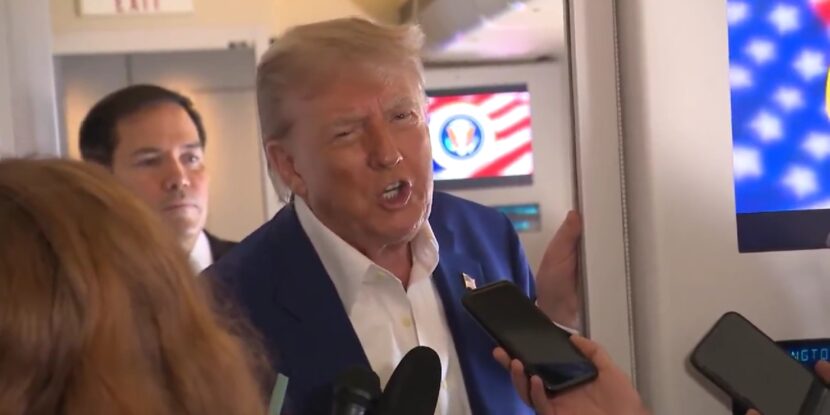
📍WHEN & WHERE: Trump made the comments on Tuesday aboard Air Force One.

💬KEY QUOTE: “Regime change takes chaos—and ideally, we don’t want to see so much chaos.” – Donald Trump.

🎯IMPACT: The ceasefire has temporarily halted hostilities, with Trump coming out strongly against early violations and retaliatory actions by both sides.

IN FULL

President Donald J. Trump stated on Tuesday that he does not want “regime change” in Iran, following a weekend of military actions targeting Iranian nuclear facilities and subsequent ceasefire negotiations. When asked aboard Air Force One if regime change in Iran was a goal, Trump said, “No. If there was, there was. But no, I don’t want it.”

The President highlighted the potential for Iran to rebuild, saying, “Regime change takes chaos, and ideally, we don’t want to see so much chaos… The Iranians are very good traders, very good business people, and they’ve got a lot of oil. They should be fine. They should be able to rebuild and do a good job,” he said, cautioning, “They’re never going to have nuclear, but other than that, they should do a great job.”

Trump’s remarks followed a ceasefire agreement between Israel and Iran. Shortly before this went into effect, Israel launched heavy strikes on the Iranian capital of Tehran, with Iran retaliating with a missile strike that killed four civilians in Israel’s Beersheba. Both parties conducted some follow-up strikes after the ceasefire officially took effect at 7:00 AM.

President Trump was angered by these actions, with most of his ire directed at Israel. He argued that Israeli Prime Minister Benjamin Netanyahu did not act in “good faith” by launching a massive attack on Iran just hours before the ceasefire was due to take effect. In a phone call to Israeli Prime Minister Benjamin Netanyahu, Trump delivered a “firm and clear” message urging restraint.

Trump’s public comments against regime change will reassure anti-war members of the America First coalition, concerned by a Truth Social post from the President suggesting he was open to it following the U.S. strikes on Iran’s nuclear facilities. “It’s not politically correct to use the term, ‘regime change,’ but if the current Iranian regime is unable to MAKE IRAN GREAT AGAIN, why wouldn’t there be a regime change?” he wrote.

Having now brokered a ceasefire and denounced regime change, it now seems likely this message was mainly intended to pressure Iran into coming to the negotiating table.

Join Pulse+ to comment below, and receive exclusive e-mail analyses.
show less
show more

Netanyahu Hits Back at Trump, But Agrees to Stop Strikes.

PULSE POINTS

WHAT HAPPENED: Israel has defended striking Iranian targets in Tehran hours before a ceasefire went into effect, resulting in Iranian strikes and Israeli counter-strikes after the ceasefire and angering President Donald J. Trump.

👤WHO WAS INVOLVED: Israeli Prime Minister Benjamin Netanyahu, Iran, and President Trump.

📍WHEN & WHERE: June 24, 2025, Israel and Iran.

💬KEY QUOTE: “Pursuant to the conversation between President Trump and Prime Minister Netanyahu, Israel has refrained from additional attacks.” – Office of the Israeli Prime Minister.

🎯IMPACT: President Trump, who intervened in the Israel-Iran war to deliver a decisive blow to Iran’s nuclear facilities, is now adopting a more aggressive diplomatic posture to bring the conflict to a close.

IN FULL

Israeli Prime Minister Benjamin Netanyahu has responded to President Donald J. Trump’s criticism of Israeli forces launching a massive attack on Iran shortly before a ceasefire was due to take effect, resulting in subsequent violations by both parties.

According to a statement from Netanyahu’s office, the Israeli Air Force “forcefully attacked in the heart of Tehran, struck regime targets and eliminated hundreds of Basij and Iranian security forces personnel” at 03:00 AM, just hours before a scheduled ceasefire was to begin at 07:00 AM.

“Shortly before the ceasefire was due to take effect, Iran launched a barrage of missiles, one of which took the lives of four of our citizens in Be’er Sheva,” the statement continues, asserting that six minutes after the ceasefire took effect at 07:00 AM, “Iran launched one missile at Israeli territory, and two additional missiles at 10:25.”

Despite acknowledging that the missiles “were either intercepted or fell in open areas, and caused neither casualties nor damage,” the Israeli statement defends subsequent strikes on Iran as a response to the Islamic Republic’s “violations.”

President Trump was highly critical of Israel’s actions on Tuesday morning, saying, “Israel, as soon as we made the deal, they came out and they dropped a load of bombs the likes of which I’ve never seen before. The biggest load that we’ve seen.”

“I’m not happy with Israel. You know, when I say, ‘OK, now you have 12 hours,’ you don’t go out in the first hour and just drop everything you have on them,” he continued, adding that Israel and Iran “don’t know what the f**k they’re doing.”

Despite defending its strikes before the ceasefire officially went into effect, Netanyahu’s office acknowledged that, “Pursuant to the conversation between President Trump and Prime Minister Netanyahu, Israel has refrained from additional attacks.”

The Israeli statement added that, “In the conversation, President Trump expressed his great appreciation for Israel, which achieved all of its objectives for the war, as well as his confidence in the stability of the ceasefire.”

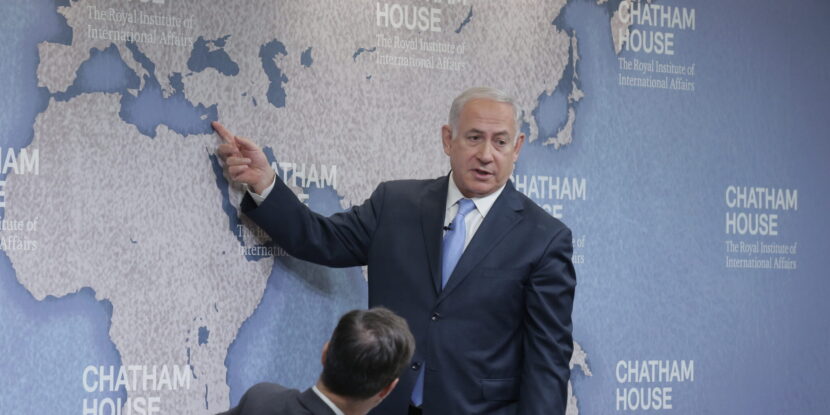
Image by Chatham House.

Join Pulse+ to comment below, and receive exclusive e-mail analyses.

show less
show more

Here’s What America is Sending to the Middle East Now.

PULSE POINTS

WHAT HAPPENED: A U.S. aircraft carrier strike group is heading to the Middle East amid escalating tensions involving Iran and Israel.

👤WHO WAS INVOLVED: The USS Nimitz strike group, Israeli Prime Minister Benjamin Netanyahu, President Donald Trump, and Iran’s leadership.

📍WHEN & WHERE: The USS Nimitz is en route from the South China Sea to the Middle East, with a canceled stop in Vietnam, as of Sunday.

💬KEY QUOTE:  “We will have a second Holocaust—a nuclear Holocaust,” Israeli Prime Minister Benjamin Netanyahu said on Sunday, justifying his country’s attacks on Iran. He added: “The Jewish state is not going to have the Holocaust on the Jewish people. Never again is now, and we have to act now.”

🎯IMPACT: The repositioning of U.S. military assets highlights ongoing regional tensions and the potential for further escalation.

IN FULL

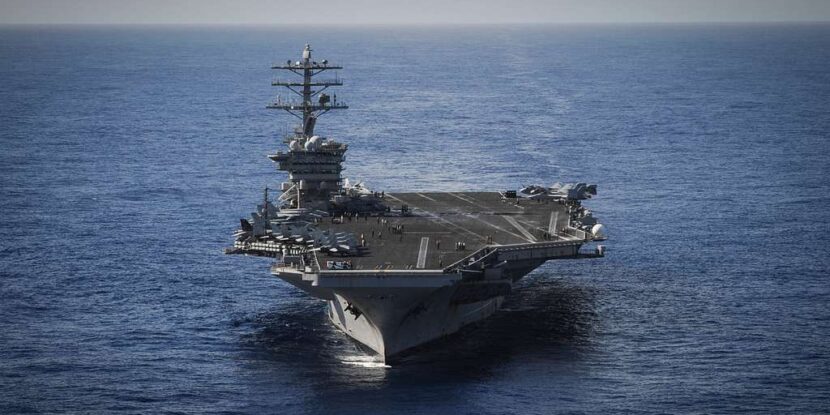
The United States is diverting a large number of military assets to positions in Europe and the Middle East as the conflict between Israel and Iran continues. The USS Nimitz aircraft carrier strike group is heading to the Middle East from the South China Sea. The strike group includes nine squadrons flying F/A-18E/F Super Hornets, EA-18G Growlers, E-2D Hawkeyes, C-2A Greyhounds, and MH-60R/S Sea Hawks.

Additionally, on Sunday, social media accounts tracked the flight paths of multiple KC-135 and KC-46 refueling aircraft heading to Europe. While the refueling tankers traveled with their flight transponders on, it is possible they towed other aircraft as part of the airlift, which did not have activated transponders. These could include B-2 bombers, capable of delivering the GBU-57A/B MOP (Massive Ordnance Penetrator)—a 30,000lb bunker buster bomb capable of destroying Iran’s Fordow Fuel Enrichment Plant (FFEP), which is located an estimated half-mile inside a mountain just outside the city of Qom.

Two anonymous American officials have stated that the aircraft were being repositioned to provide President Donald J. Trump with additional options. The Nimitz, set to be decommissioned next year, was initially scheduled to replace the USS Carl Vinson in the Arabian Sea but is now arriving ahead of schedule.

The deployment coincides with Israel’s ongoing offensive against Iran, aimed at destroying the Islamic Republic’s nuclear program. “Once they go that route, it’s too late. We will have a second Holocaust—a nuclear Holocaust,” Israeli Prime Minister Benjamin Netanyahu said on Sunday, justifying his country’s attacks on Iran. He added: “The Jewish state is not going to have the Holocaust on the Jewish people. Never again is now, and we have to act now.”

Netanyahu said Iran had been given an opportunity to reach a nuclear deal with President Trump, but it became evident that Iran was not serious. “They basically strung everyone along and it was clear to us that the talks were going nowhere,” he added. The Israeli Defense Forces announced that one-third of Iranian missile launchers have been destroyed, with Netanyahu confirming that the Israeli Air Force “controls the skies over Tehran.”

The National Pulse reported on Monday that Iran has signaled to neighboring Arab governments that it is willing to return to negotiations, on the condition that the United States remain on the sidelines and not directly involve itself with Israel’s air campaign. “The Iranians know the U.S. is supporting Israel in its defense, and they are sure the U.S. is supporting Israel logistically,” anonymous Arab officials stated. “But they want guarantees the U.S. won’t join the attacks.”

Join Pulse+ to comment below, and receive exclusive e-mail analyses.

show less
show more

Muslim Prosecutor Faces Repeat Sexual Assault Allegations, Used Palestine to Silence Victim.

PULSE POINTS:

What Happened: The chief prosecutor in the International Criminal Court (ICC) war crimes case against Israeli Prime Minister Benjamin Netanyahu allegedly used the situation in Gaza to try to silence a woman accusing him of sexual assault.

👥 Who’s Involved: British-Pakistani Karim Khan KC, an unnamed Malaysian woman, the ICC, the United Nations (UN).

📍 Where & When: The accusations date back to 2023, but recordings of Khan were released on May 11.

💬 Key Quote: “It’s the feeling of being trapped.” — Unnamed Malaysian victim.

⚠️ Impact: The accusations call Khan’s credibility into question, with some claiming he launched the prosecution of Netanyahu after learning of the accusations against him.

IN FULL:

A British-Pakistani prosecutor at the International Criminal Court (ICC) has been accused of using Gaza to silence a woman who accused him of sexually assaulting her. Karim Khan KC heads the war crimes case against Israel at the ICC in the Hague and is alleged to have told the woman accusing him that her accusations could harm the Palestinian cause.

Khan’s statements were allegedly recorded during a phone conversation. He stated, “The casualties [of the victim’s allegations] will unfortunately be three: You and your family, me and my family, and the justice of [Israel’s] victims.” Khan is currently under investigation by the United Nations, which heard the recording as testimony.

Khan launched the arrest warrant for Prime Minister Benjamin Netanyahu last Tuesday, two weeks after he had learned of the sex allegations.

According to reports, the alleged victim is a Malaysian woman in her thirties, said to have been pressured into non-consensual sexual intercourse several times by Khan. “He always holds on to me and leads me to the bed,” the alleged victim said in her testimony, adding, “It’s the feeling of being trapped.” The various assaults allegedly took place in the Hague as well as on trips to Paris and countries in Africa.

Khan rejects the allegations and claims that not only are they not true, but he had informed the United States he would be seeking to arrest Netanyahu before learning about the allegations against him.

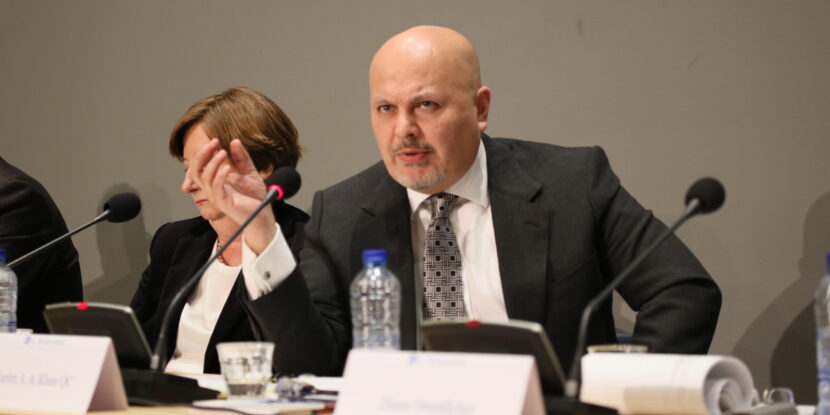
Image by the UN International Criminal Tribunal for the former Yugoslavia.

show less

PULSE POINTS:

show more