




Monday, February 23, 2026

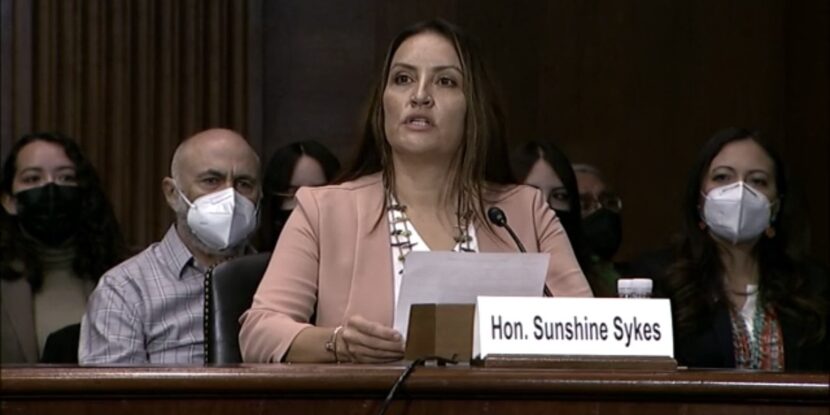
Biden Judge BLOCKS Mass Deportation Powers.

PULSE POINTS

WHAT HAPPENED: A federal judge in California overturned an immigration court ruling that supported the Trump administration’s broad detention powers over illegal immigrants.

👤WHO WAS INVOLVED: U.S. District Court Judge Sunshine Sykes, the Department of Homeland Security (DHS), and U.S. Immigration and Customs Enforcement (ICE).

📍WHEN & WHERE: The ruling was issued on Wednesday, February 18, 2026, in California.

💬KEY QUOTE: “‘Worst of the worst’ is an inaccurate description of most of those affected by DHS and ICE’s operations.” — Judge Sykes

🎯IMPACT: The ruling could block mass deportations and guarantee bond hearings for many non-criminal illegal immigrant detainees, though the Department of Justice (DOJ) is likely to appeal.

IN FULL

On Thursday, a federal judge in California overturned a previous immigration court ruling that supported the Trump administration’s illegal immigrant detention policies. U.S. District Court Judge Sunshine Sykes, a Joe Biden appointee, criticized the Department of Homeland Security (DHS) and U.S. Immigration and Customs Enforcement (ICE) for their characterization of detainees as the “worst of the worst.”

“‘Worst of the worst’ is an inaccurate description of most of those affected by DHS and ICE’s operations,” Judge Sykes ruled. She argued that the administration’s language was designed to justify the scale of its actions against illegal immigrants.

“Even though these press releases might contain an inkling of truth, they ignore a greater, more dire reality,” she claimed, adding: “Beyond its terror against noncitizens, the executive branch has extended its violence on its own citizens, killing two American citizens—Renée Good and Alex Pretti—in Minnesota,” Sykes wrote in her decision, adding, “The threats posed by the executive branch cannot be viewed in isolation.”

The ruling, if upheld, could block mass deportations and ensure bond hearings for many non-convicted illegal immigrant detainees. Previously, DHS had denied bond hearings to migrants arrested by federal immigration authorities, even if they had been in the United States for years. Those who recently illegally crossed the border were also not guaranteed immediate bond hearings under the policy.

While the New Orleans-based federal appeals court recently upheld the administration’s detention and bond policy in its jurisdiction, the Department of Justice (DOJ) is expected to appeal Sykes’s ruling and request that it be stayed during ongoing litigation.

Join Pulse+ to comment below, and receive exclusive e-mail analyses.
show less
show more

How District Court Judges Are Defying Pro-Trump Immigration Rulings, Explained:

PULSE POINTS

WHAT HAPPENED: U.S. District Court judges are seeking ways to counter a Fifth Circuit Court of Appeals ruling that has cleared the way for the Trump administration to continue detaining illegal immigrants without issuing bond.

👤WHO WAS INVOLVED: Judges from the Fifth Circuit Court of Appeals and federal district judges in Texas.

📍WHEN & WHERE: Rulings made throughout February 2026.

💬KEY QUOTE: The Fifth Circuit ruling “has no bearing on this Court’s determination of whether [the petitioner] is being detained in violation of his constitutional right to procedural due process.” — District Court Judge Kathleen Cardone

🎯IMPACT: The lower court actions appear to be a flagrant attempt to undermine the higher court precedent in the service of advancing a political agenda favorable to illegal immigrants.

IN FULL

A group of U.S. District Court judges are utilizing several workarounds to avoid conflicting with a Fifth Circuit Court of Appeals ruling from Friday that cleared the way for the Trump administration to continue detaining illegal immigrants without issuing bond. The Fifth Circuit’s ruling found that “unadmitted aliens apprehended anywhere in the United States are ineligible for release on bond, regardless of how long they have resided inside the United States.”

However, two federal district court judges in Texas—so far—believe they have identified a loophole in the appellate court ruling that allows lower courts to continue issuing bond releases for illegal immigrants based on constitutional grounds. District Court Judges Kathleen Cardone—a Bush appointee—and David Briones—a Clinton appointee—both contend in rulings made earlier this week that the Fifth Circuit ruling “has no bearing on this Court’s determination of whether [the petitioner] is being detained in violation of his constitutional right to procedural due process.”

Both judges insist a “liberty interest” must be considered in relation to immigration bond requests. Judge Briones wrote in his ruling on Monday, “The Court reiterates its original holding that noncitizens who have ‘established connections’ in the United States by virtue of living in the country for a substantial period acquire a liberty interest in being free from government detention without due process of law.”

The rulings by both judges appear to be a blatant attempt to circumvent the Fifth Circuit ruling, which had shot down claims that because the former Biden government used executive discretion to grant some bond requests—mostly involving illegal immigrants with so-called “established connections” to the United States—the policy was binding on the Trump White House. “That prior Administrations decided to use less than their full enforcement authority under [the law] does not mean they lacked the authority to do more,” Circuit Judge Edith H. Jones wrote for the two-to-one Fifth Circuit majority.

Notably, illegal immigrants have filed an unprecedented number of “habeas” petitions across Louisiana and Texas, where the Fifth Circuit has jurisdiction. Meanwhile, several other district court judges outside the Fifth Circuit’s jurisdiction—and almost exclusively Biden appointees—slammed the Friday ruling. New Jersey District Court Judge Evelyn Padin—a Biden appointee—said she was “unpersuaded” by the ruling, while Colorado District Court Judge Charlotte Sweeney—also appointed by Biden—accused the circuit court of paying merely  “lip service” to the law.

The National Pulse reported in March of last year that, in his first two months in office, President Donald J. Trump faced over 100 legal challenges to his administration’s policies, more than double the number faced by any other president at the same point in their term.

Image by Katrin Bolovtsova.

Join Pulse+ to comment below, and receive exclusive e-mail analyses.
show less
show more

Trump Is Praising a Biden Judge’s ICE Ruling, Here’s Why…

PULSE POINTS

WHAT HAPPENED: A federal judge declined to issue a temporary restraining order (TRO) against U.S. Immigration and Customs Enforcement (ICE) operations in Minnesota.

👤WHO WAS INVOLVED: President Donald J. Trump, U.S. District Court Judge Katherine Menendez, and Minnesota Governor Tim Walz (D).

📍WHEN & WHERE: The ruling was issued late Wednesday, with President Trump praising the decision early Thursday morning.

💬KEY QUOTE: “A highly respected judge declined to block I.C.E. operations in the very politically corrupt State of Minnesota. I.C.E. will therefore be allowed to continue its highly successful operation of removing some of the most violent and vicious criminals anywhere in the World, many of them murderers, from the State.” – Donald Trump.

🎯IMPACT: ICE operations in Minnesota will continue, with Trump praising law enforcement efforts to ensure public safety.

IN FULL

President Donald J. Trump on Thursday praised U.S. District Court Judge Katherine Menendez’s decision not to issue an immediate temporary restraining order (TRO) against U.S. Immigration and Customs Enforcement (ICE) operations in Minnesota. On Monday, Democrat Governor Tim Walz’s administration filed a lawsuit against President Trump’s Department of Homeland Security (DHS) seeking to halt its immigration enforcement actions in the state and requesting an emergency TRO as litigation proceeds.

“A highly respected judge declined to block I.C.E. operations in the very politically corrupt State of Minnesota. I.C.E. will therefore be allowed to continue its highly successful operation of removing some of the most violent and vicious criminals anywhere in the World, many of them murderers, from the State,” Trump posted on Truth Social, adding: “The great patriots of Law Enforcement will continue to make our Country safe. RECORD LOW CRIME NUMBERS!!!”

Judge Menendez—a Joe Biden appointee—stated that she was disinclined to issue the TRO before first hearing the Trump administration’s response to the lawsuit. However, she stressed her decision to decline the request “should not be taken as a prejudgment of the merits of either the plaintiff’s case or the anticipated defense that may be raised by the United States.”

“It is simply observing that these are grave and important matters and that they are somewhat frontier issues in constitutional law,” the judge added. Menendez requested that the Trump administration respond to Minnesota’s lawsuit by January 19 and that Gov. Walz file a reply by January 22.

Join Pulse+ to comment below, and receive exclusive e-mail analyses.

show less
show more

Biden Judge Blocks Trump’s Order Barring Late Mail-In Ballots.

PULSE POINTS

WHAT HAPPENED: A federal judge blocked parts of President Donald J. Trump’s election reform executive order, including a provision setting Election Day as the deadline for mail-in votes.

👤WHO WAS INVOLVED: President Donald Trump, U.S. District Court Judge John H. Chun, Washington and Oregon state officials, and White House Deputy Press Secretary Abigail Jackson.

📍WHEN & WHERE: The ruling was issued on Friday in Washington State by Judge Chun, a Biden appointee.

💬KEY QUOTE: “The Constitution assigns the states all authority to regulate the time, place, and manner of elections,” wrote Judge Chun in his ruling.

🎯IMPACT: The ruling limits the President’s power to impose changes on state election processes and is expected to be appealed by the Trump administration.

IN FULL

A federal judge in Washington State has issued an order blocking, in part, President Donald J. Trump‘s Executive Order enacting election integrity reforms. Late Friday, U.S. District Court Judge John H. Chun—a Joe Biden appointee—ruled that President Trump could not mandate Election Day as the deadline for receiving mail-in ballots, a key provision of the executive order issued in March.

The ruling comes after Washington and Oregon filed a lawsuit in April, arguing that the executive order violated the U.S. Constitution. Judge Chun stated in his 75-page decision that President Trump lacks the constitutional authority to impose such changes on state election processes. “The Constitution assigns the states all authority to regulate the time, place, and manner of elections,” Chun wrote, adding that the President’s authority to establish a national ballot-receipt deadline does not exist under the Constitution.

Trump’s March Executive Order also sought to withhold funding from states that do not require documentary proof of U.S. citizenship when registering to vote. This provision was similarly blocked by the court. Washington Attorney General Nick Brown (D) called the ruling “a huge victory for voters in Washington and Oregon, and for the rule of law.”

President Trump has consistently criticized mail-in ballots as vulnerable to fraud. On Truth Social, Trump previously announced plans to end the use of mail-in ballots and voting machines, stating, “I am going to lead a movement to get rid of MAIL-IN BALLOTS, and also, while we’re at it, Highly ‘Inaccurate,’ Very Expensive, and Seriously Controversial VOTING MACHINES.”

The White House has indicated that it will challenge the ruling, with Deputy Press Secretary Abigail Jackson stating, “President Trump cares deeply about the integrity of our elections and his executive order takes lawful actions to ensure election security. This is not the final say on the matter, and the administration expects ultimate victory on the issue.” In November, the U.S. Supreme Court took up a separate case on the legality of accepting mail-in ballots that arrive after Election Day, with oral arguments and a ruling expected sometime this year.

Image via League of Women Voters of California.

Join Pulse+ to comment below, and receive exclusive e-mail analyses.
show less
show more

Biden Judge Delays Trump Admin Effort to Restrict SNAP Benefits for Migrants.

PULSE POINTS

WHAT HAPPENED: A federal judge extended the grace period for states to comply with Supplemental Nutrition Assistance Program (SNAP) eligibility rules after a legal challenge by 20 states.

👤WHO WAS INVOLVED: The Trump administration, 20 state attorneys general, U.S. District Court Judge Michael Simon Kasubhai, and the U.S. Department of Agriculture (USDA).

📍WHEN & WHERE: The lawsuit was filed on November 26, and the ruling was issued on December 15. The issue involves SNAP programs across the U.S.

💬KEY QUOTE: “The inability to provide compliance in the time period in which they were forced to by virtue of the guidance contributed to an erosion of trust.” – Judge Michael Simon Kasubhai.

🎯IMPACT: The ruling mandates that the Trump administration extend the grace period for states to comply with changes to SNAP eligibility.

IN FULL

A federal judge ruled on Monday that the U.S. Department of Agriculture (USDA) must allow states additional time to bring themselves into compliance with new guidance regarding Supplemental Nutrition Assistance Program (SNAP) eligibility. The order follows a coalition of 20 state attorneys general filing suit on November 26, arguing that the administration failed to provide a legally required 120-day compliance period.

The issue centers on guidance issued by the USDA on October 31, 2025, which would bar SNAP benefit eligibility for certain lawful permanent residents—including refugees and asylum seekers. Notably, the USDA guidance stems from changes to SNAP, also known as food stamps, made under the One Big Beautiful Bill Act, signed into law by President Donald J. Trump on July 4. Provisions in the law significantly reduced the number of immigrants who can qualify for the supplemental food assistance.

States were initially told to comply immediately with the new SNAP eligibility rules or face significant fines. However, after an initial legal challenge, the Trump administration reversed course on December 10 and reinstated eligibility for all lawful permanent residents. Other SNAP restrictions under the One Big Beautiful Bill Act remain in place, and the USDA continues to contend that the compliance grace period ended on November 1.

In his ruling, U.S. District Court Judge Michael Simon Kasubhai—a Biden appointee—agreed with the 20 state attorneys general, ruling that the USDA’s position was unlawful and inconsistent with past practices. “The inability to provide compliance in the time period in which they were forced to by virtue of the guidance contributed to an erosion of trust,” Judge Kasubhai wrote, extending the grace period to April 9, 2026.

Join Pulse+ to comment below, and receive exclusive e-mail analyses.
show less
show more

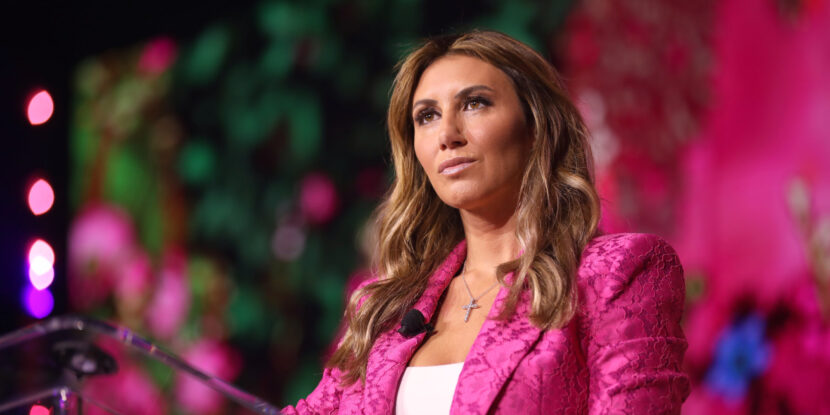
Appeals Court Upholds Alina Habba’s Removal as U.S. Attorney for New Jersey.

PULSE POINTS

WHAT HAPPENED: A federal appeals court upheld a decision barring Alina Habba from serving as New Jersey’s top federal prosecutor.

👤WHO WAS INVOLVED: Alina Habba, Attorney General Pam Bondi, Third Circuit Court of Appeals judges, and New Jersey district judges.

📍WHEN & WHERE: Monday, December 1, at the Third Circuit Court of Appeals in New Jersey.

💬KEY QUOTE: “The delegation of all the powers of a U.S. Attorney to Habba was expressly prohibited.” – Third Circuit Court ruling.

🎯IMPACT: The ruling reinforces the Federal Vacancies Reform Act and limits the Attorney General’s ability to bypass it.

IN FULL

Acting United States Attorney for the District of New Jersey Alina Habba has been disqualified from continuing in the position after a federal appeals court upheld a lower court decision on Monday. A three-judge panel for the Third Circuit Court of Appeals, comprised of two Bush appointees and one Biden appointee, agreed with the plaintiffs and with New Jersey’s federal district court that Attorney General Pam Bondi had unlawfully attempted to circumvent the Federal Vacancies Reform Act when she extended Habba’s appointment as a U.S. Attorney.

The plaintiffs argued that Bondi‘s appointment of Habba as Acting U.S. Attorney, after her term as interim U.S. Attorney ended, violated their “constitutional right to be prosecuted only by a duly authorized United States Attorney” and that “the illegitimacy of Ms. Habba’s appointment undermines… fundamental due process rights.”

Habba, who had been named by President Donald J. Trump as the interim U.S. Attorney for New Jersey in March, was briefly forced out of the role in late July after federal district court judges in the state voted not to extend her term. At the time, then-First Assistant U.S. Attorney Desiree Grace took over as New Jersey’s top federal prosecutor.

Subsequently, Attorney General Bondi fired Grace just two days later and named Habba as her replacement as Acting U.S. Attorney for New Jersey. This move, according to the appeals court panel, violated procedures set out in the Federal Vacancies Reform Act, with the judges writing that “only the first assistant in place at the time the vacancy arises automatically assumes the functions and duties of the office.” The judges agreed with the lower court’s findings that federal law barred Bondi’s “delegation of all the powers of a U.S. Attorney to Habba.”

Image by Gage Skidmore.

Join Pulse+ to comment below, and receive exclusive e-mail analyses.

show less
show more

Biden Judge Orders End to Trump’s National Guard Deployment in D.C.

PULSE POINTS

WHAT HAPPENED: U.S. District Court Judge Jia Cobb, appointed by former President Joe Biden, ruled on Thursday that President Donald J. Trump “exceeded the bounds of [his] authority” in ordering the deployment of National Guard troops in Washington, D.C.

👤WHO WAS INVOLVED: Judge Jia Cobb, President Trump, and National Guard troops deployed in Washington, D.C.

📍WHEN & WHERE: The ruling was handed down late in the day on Thursday, November 20, 2025.

💬KEY QUOTE: “The Court finds that the District’s exercise of sovereign powers within its jurisdiction is irreparably harmed by Defendants’ actions in deploying the Guards.” — Judge Cobb

🎯IMPACT: Judge Cobb voluntarily stayed her ruling for 21 days to allow the Trump administration time to file an appeal.

IN FULL

U.S. District Court Judge Jia Cobb, appointed by former President Joe Biden, ruled on Thursday that President Donald J. Trump “exceeded the bounds of [his] authority” in ordering the deployment of National Guard troops in Washington, D.C. In her ruling, Judge Cobb contends that Trump acted “contrary to law” when he deployed the National Guard “for non-military, crime-deterrence missions in the absence of a request from the city’s civil authorities.”

The National Pulse reported in late October that the Trump administration, using statutory authorities, had extended the National Guard deployment in the nation’s capital until February 2026. Notably, Judge Cobb voluntarily stayed her ruling for 21 days in order to allow the Trump administration time to file an appeal.

“The Court finds that the District’s exercise of sovereign powers within its jurisdiction is irreparably harmed by Defendants’ actions in deploying the Guards,” Judge Cobb wrote, also finding that Trump administration officials “lack statutory authority” to deploy Guard units from outside the District of Columbia.

In September, the District of Columbia’s attorney general filed a lawsuit challenging Trump’s National Guard deployment in the city, resulting in Cobb’s ruling.

“President Trump is well within his lawful authority to deploy the National Guard in Washington, DC, to protect federal assets and assist law enforcement with specific tasks,” White House deputy press secretary Abigail Jackson said in response to the court’s decision. “This lawsuit is nothing more than another attempt—at the detriment of D.C. residents—to undermine the President’s highly successful operations to stop violent crime in D.C.”

Join Pulse+ to comment below, and receive exclusive e-mail analyses.

show less
show more

Biden Judge Orders Release of 615 Migrants Caught in Chicago’s ‘Midway Blitz.’

PULSE POINTS

WHAT HAPPENED: A federal judge ordered the release of hundreds of illegal immigrants detained in the Chicago area, citing alleged violations of a 2022 settlement agreement restricting warrantless arrests.

👤WHO WAS INVOLVED: U.S. District Court Judge Jeffrey Cummings, U.S. Immigration and Customs Enforcement (ICE), the National Immigrant Justice Center (NIJC), and detainees.

📍WHEN & WHERE: Illinois, with the ruling issued on Wednesday. Detentions occurred during Operation Midway Blitz between June and October.

💬KEY QUOTE: “All of this, all of the tactics of [senior Border Patrol official Gregory Bovino], all of the tactics of ICE have been unlawful in the vast, vast majority of arrests,” said NIJC attorney Mark Fleming.

🎯IMPACT: ICE must grant bond to those still detained by November 21.

IN FULL

U.S. District Court Judge Jeffrey Cummings, appointed by former President Joe Biden, is ordering the release of 615 illegal immigrants detained in the Chicago area as part of the Trump administration’s “Midway Blitz” enforcement action. In the order, Judge Cummings claims the detentions by U.S. Immigration and Customs Enforcement (ICE) violate a 2022 settlement agreement that restricts warrantless arrests in Chicago.

Court filings reveal that between June and October, the ICE-led operation resulted in the arrests of over 3,000 migrants, with 615 still in federal custody—the other detainees having already been deported or agreed to leave the country of their own accord. Judge Cummings’s ruling requires those still detained to be granted bond by November 21.

Mark Fleming, an attorney with the National Immigrant Justice Center (NIJC), stated, “All of this, all of the tactics of [senior Border Patrol official Gregory Bovino], all of the tactics of ICE have been unlawful in the vast, vast majority of arrests.” Fleming estimates that approximately 1,100 detainees have already departed voluntarily.

Far-left civil rights nonprofits claim ICE tactics are akin to racial profiling and have accused the agency of making unlawful arrests. One of the primary issues has been the practice of ICE arresting illegal immigrants at or near courthouses while on site to take other individuals into custody.

The Department of Homeland Security (DHS) has until next week to comply with the court order and determine which detainees qualify for immediate release.

Join Pulse+ to comment below, and receive exclusive e-mail analyses.
show less
show more

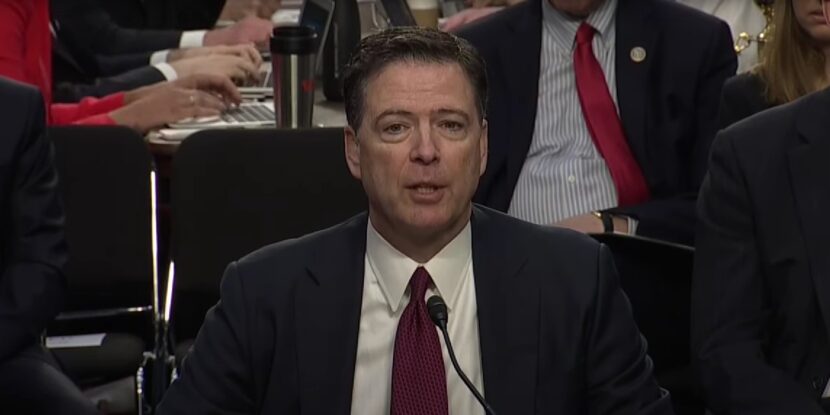
Biden-Appointed Judge to Oversee Comey Perjury Case.

PULSE POINTS

WHAT HAPPENED: Former Federal Bureau of Investigation (FBI) Director James Comey has been charged with lying to Congress and obstructing justice, with his case assigned to a Joe Biden-appointed federal judge.

👤WHO WAS INVOLVED: James Comey, Judge Michael Nachmanoff, President Donald J. Trump, attorney Patrick Fitzgerald, and lawyer William Shipley.

📍WHEN & WHERE: The arraignment is scheduled for October 9 in the U.S. District Court for the Eastern District of Virginia.

💬KEY QUOTE: “He does not have a background that suggests ‘progressive’ activism as is true of many Biden appointed district judges, particularly those in the last 2 years of his Admin.” – William Shipley

🎯IMPACT: The case assignment raises questions about judicial impartiality.

IN FULL

Judge Michael Nachmanoff, a Joe Biden appointee who took the bench in 2021, has been assigned to oversee the Department of Justice’s (DOJ) prosecution of former Federal Bureau of Investigation (FBI) Director James Comey. Nachmanoff, who serves on the U.S. District Court for the Eastern District of Virginia, has set Comey’s arraignment for October 9, with the former FBI director facing charges of lying to Congress and obstructing justice.

The Biden-appointed judge is a former public defender who was confirmed by the U.S. Senate in 2021, receiving unanimous support from Democrats and three Republicans: Sens. Susan Collins (R-ME), Lindsey Graham (R-SC), and Lisa Murkowski (R-AK). While Nachmanoff’s partisan association with the former Biden government has raised concerns regarding his ability to be impartial in the case, some clues in his background offer support to the notion that, among the possible judges in the Eastern District of Virginia—almost all Democrat appointees—he is the most Trump-friendly draw.

Despite false social media claims that Nachmanoff was hired at the DOJ by Comey—in reality, the judge was clerking for U.S. District Court Judge Leonie Brinkema at the alleged time of his DOJ employment—former federal prosecutor William Shipley has suggested the judge could be reasonably open to the prosecution’s arguments. Shipley, on social media, pointed to Nachmanoff’s 2021 appointment and past as a public defender, rather than a career government official or academic, as evidence he may not be an “activist progressive judge.”

“He does not have a background that suggests ‘progressive’ activism as is true of many Biden appointed district judges, particularly those in the last 2 years of his Admin,” Shipley wrote. Judge Nachmanoff’s record includes a recent case where he sided with the Trump administration in allowing the Central Intelligence Agency (CIA) to terminate Dr. Terry Adirim, who had implemented vaccine mandates under the Biden government.

However, President Donald J. Trump criticized the assignment of a Biden-appointed judge, calling Nachmanoff “crooked” on Truth Social. “He [Comey] was just assigned a Crooked Joe Biden appointed Judge, so he’s off to a very good start,” Trump wrote.

Comey has denied the allegations through his attorney, Patrick Fitzgerald. “Jim Comey denies the charges filed today in their entirety. We look forward to vindicating him in the courtroom,” Fitzgerald said in a statement.

Join Pulse+ to comment below, and receive exclusive e-mail analyses.

show less
show more

Supreme Court Authorizes Expanded ICE Raids.

PULSE POINTS

WHAT HAPPENED: The Supreme Court ruled on Monday to allow the Trump administration to continue immigration raids in Los Angeles, California.

👤WHO WAS INVOLVED: The Trump administration, U.S. Immigration and Customs Enforcement (ICE), Justice Brett Kavanaugh, and the Supreme Court.

📍WHEN & WHERE: September 8, 2025, in Washington, D.C., relevant to the Los Angeles area.

💬KEY QUOTE: “Immigration stops based on reasonable suspicion of illegal presence have been an important component of U.S. immigration enforcement for decades, across several presidential administrations.” – Justice Brett Kavanaugh

🎯IMPACT: The decision allows ICE to continue its operations while an appeals court reviews the case.

IN FULL

The United States Supreme Court cleared the way on Monday for U.S. Immigration and Customs Enforcement (ICE) to resume large-scale immigration enforcement operations in Los Angeles, California. In July, U.S. District Court Judge Maame Ewusi-Mensah Frimpong—appointed to the bench by former President Joe Biden—issued an order preventing ICE from conducting raids at L.A.-area Home Depots, car washes, warehouses, and other commercial facilities without demonstrating probable cause to do so.

Monday’s ruling stays the District Court order, which had been previously upheld by a federal appellate court, effectively allowing ICE to resume raids based on broad demographic criteria such as the prevalence of Spanish-speaking workers.

“Immigration stops based on reasonable suspicion of illegal presence have been an important component of U.S. immigration enforcement for decades, across several presidential administrations,” Justice Brett Kavanaugh wrote in his concurring opinion to the six-to-three court majority. “The interests of individuals who are illegally in the country in avoiding being stopped by law enforcement for questioning is ultimately an interest in evading the law. That is not an especially weighty legal interest.”

The majority opinion stressed that the Immigration and Nationality Act specifically allows U.S. immigration officials broad authority to determine whether a foreign national is legally allowed in the country. This broad authority, according to the high court, includes the use of factors such as race, ethnicity, specific locations like bus stops, the type of work performed, and speaking Spanish.

Join Pulse+ to comment below, and receive exclusive e-mail analyses.

show less
show more