




Monday, February 23, 2026

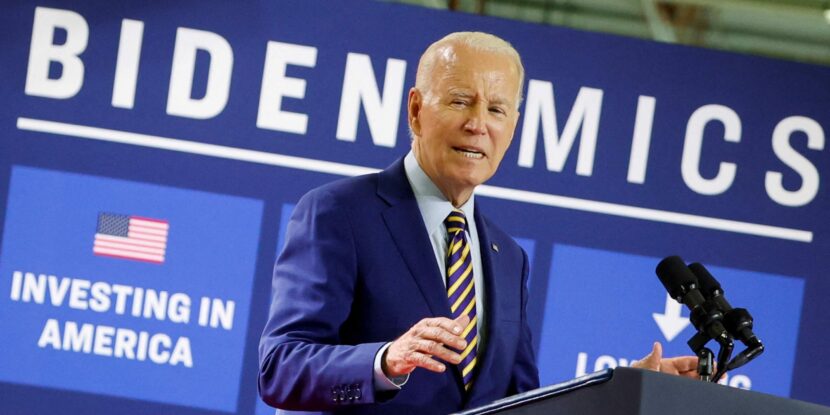
Manufacturing, Mining, Energy Extraction Shrink Under Biden-Harris Govt.

U.S. manufacturing took a significant hit in September, shrinking by 0.4 percent, far worse than the expected 0.1 percent decline, pushing manufacturing output down 0.5 percent year-over-year. Under the Biden-Harris government, this trend dragged overall U.S. industrial production down by 0.3 percent month-over-month and 0.6 percent year-over-year, the weakest since April. This economic stumble follows a downward revision of August’s figures.

Union workers have been restive under the Biden-Harris government, and a strike by aircraft machinists contributed to a 0.3 percent reduction in industrial production, according to the Federal Reserve. Aerospace equipment production plunged by a staggering 8.3 percent, illustrating the vulnerabilities in critical industries under the current leadership.

Harris has weak support among union workers, and unions such as the Teamsters are breaking precedents by declining to endorse a candidate this year in deference to internal polling showing overwhelming support for Donald Trump.

Capacity utilization dropped to 77.5 percent, highlighting inefficiencies and underperformance in the nation’s industrial sector. The energy sector was not spared either, with mining and energy extraction sliding 0.6 percent. Only utilities saw a slight uptick—after three months of declines.

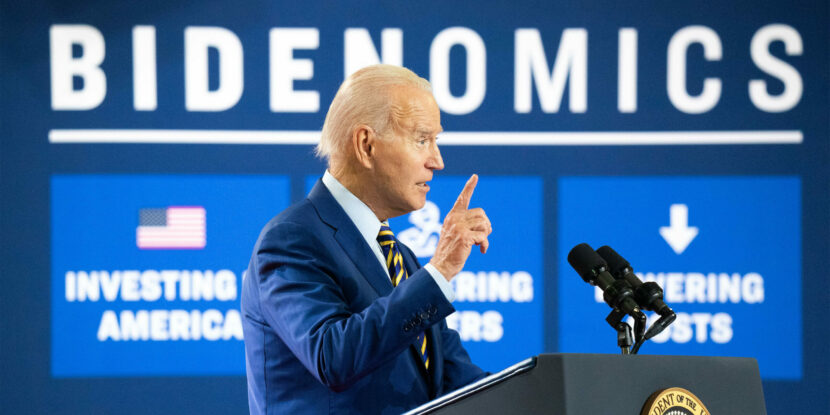
Critics argue that the Biden-Harris government’s policies have exacerbated economic instability, with the country’s sluggish economic performance being a direct consequence of “Bidenomics”—which the 81-year-old president has tied to his vice president, Democratic nominee Kamala Harris—rather than simply “transitory.”

Polls have consistently shown voters have more faith in Trump than Biden or Harris in terms of managing the economy and controlling inflation.

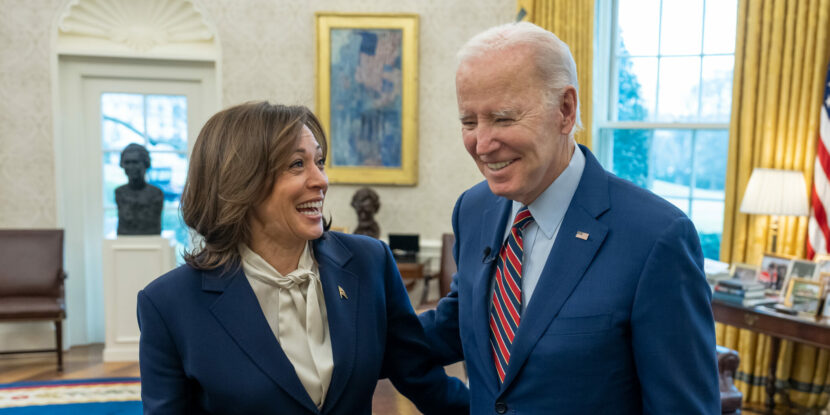
Image by Adam Schultz.

show less
U.S. manufacturing took a significant hit in September, shrinking by 0.4 percent, far worse than the expected 0.1 percent decline, pushing manufacturing output down 0.5 percent year-over-year. Under the Biden-Harris government, this trend dragged overall U.S. industrial production down by 0.3 percent month-over-month and 0.6 percent year-over-year, the weakest since April. This economic stumble follows a downward revision of August’s figures. show more

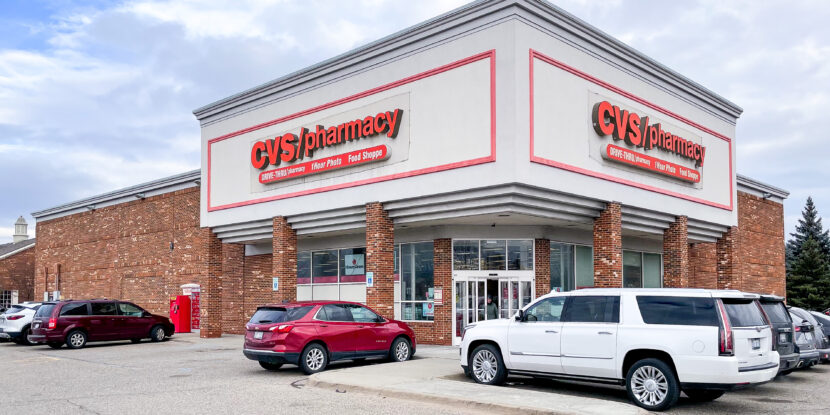
CVS Lays Off 2,900 Amidst Biden-Harris Inflation, Crime.

Drugstore giant CVS has announced it will lay off 2,900 workers as part of a new measure to cut costs. The company has struggled to sell non-prescription goods due to inflation and rampant retail theft. According to a CVS spokesman, these reductions represent about one percent of the company’s workforce and save around $2 billion.

Inflationary pressures have led consumers to reduce spending on non-prescription items, hurting the financial performance of companies like CVS and Walgreens. Walgreens is considering closing up to a quarter of its 8,600 retail locations.

In a statement, CVS attributed the layoffs to “continued disruption, regulatory pressures, and evolving consumer needs and expectations.” Its most recent quarterly report noted a four percent decline in same-store sales for non-prescription products.

Inflation under the Biden-Harris regime has led to surging prices for families. A study published earlier this year found a family of four would need a household income of $177,798 to maintain a satisfactory quality of life.

Rising crime and theft have also forced many retailers to change their business practices. In Washington, D.C., stores last year posted framed images of products on shelves rather than the products themselves to prevent thefts. Stores like Whole Foods and Walmart were also driven out of Chicago due to rampant criminality, leading to proposals for government-owned grocery stores to replace them.

show less
Drugstore giant CVS has announced it will lay off 2,900 workers as part of a new measure to cut costs. The company has struggled to sell non-prescription goods due to inflation and rampant retail theft. According to a CVS spokesman, these reductions represent about one percent of the company's workforce and save around $2 billion. show more

Massive Japanese Market Crash as Failing Biden-Harris Economy Spreads ‘Contagion’ Worldwide.

Japanese stocks recorded their most enormous daily loss in history on Monday, driven by fears of a U.S. economic slowdown under the Joe Biden-Kamala Harris government. The Nikkei 225 index plummeted by an unprecedented 4,451 points, closing over 12 percent down. This drop pushed the index into bear market territory with a 25 percent decline since early July. Analysts are likening the crash to the infamous “Black Monday” of October 1987, when the Nikkei fell by 3,836 points and global markets tumbled.

Concerns over a sharp slowdown in the U.S. economy have fueled expectations that the Federal Reserve will cut interest rates. The latest U.S. jobs report showed job creation significantly below expectations, and unemployment significantly above expectations. Moreover, the jobs data suggests foreign workers are replacing American workers.

“The aggressive bear onslaught and fears of a hard landing in the U.S. are creating a contagion effect, leading to a severe meltdown in Tokyo’s markets,” warns Stephen Innes, managing partner at SPI Asset Management.

Trading in Japan and South Korea was intermittently halted as circuit breakers were triggered to prevent panic selling. This market volatility extended to other regions, including the U.S. where stock futures dipped sharply. Nasdaq futures dropped by 4 percent, while Dow and S&P 500 futures dropped by 1.5 percent and 2.3 percent.

The Stoxx Europe 600 index fell by 2.5 percent in morning trade in Europe, reaching lows not seen since February. Taiwan‘s Taiex, South Korea’s Kospi, Australia’s S&P/ASX 200, Hong Kong’s Hang Seng Index, and China’s Shanghai Composite also recorded big losses.

Oil prices also hit their lowest levels since January, and cryptocurrencies like Bitcoin fell by over 12 percent. Poor U.S. tech earnings—and China’s weak manufacturing data—are exacerbating the wider situation.

Investors are on edge, with many bracing for continued market instability in the days ahead.

show less
Japanese stocks recorded their most enormous daily loss in history on Monday, driven by fears of a U.S. economic slowdown under the Joe Biden-Kamala Harris government. The Nikkei 225 index plummeted by an unprecedented 4,451 points, closing over 12 percent down. This drop pushed the index into bear market territory with a 25 percent decline since early July. Analysts are likening the crash to the infamous "Black Monday" of October 1987, when the Nikkei fell by 3,836 points and global markets tumbled. show more

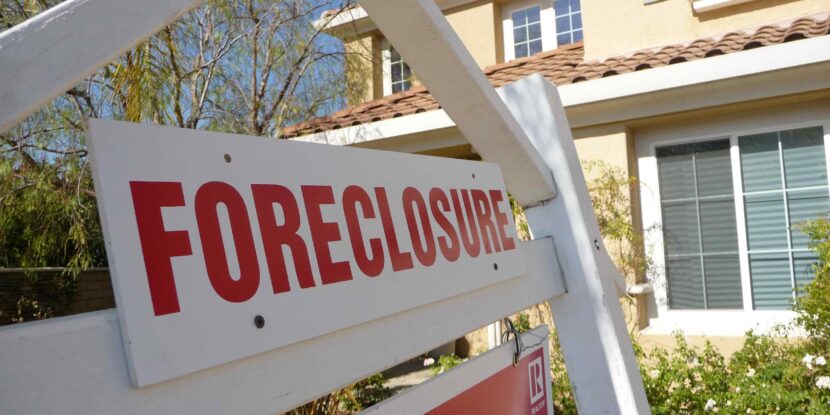
Home Foreclosures Are on the Rise.

Home foreclosures were on the rise across the United States in May as Americans struggled with higher living costs.

The details: According to a report from real estate data researcher ATTOM, 32,621 properties had foreclosure filings in May, a three percent jump from the prior month.

  • Rob Barber, CEO at ATTOM, said the data “highlights nuanced shifts in the housing market.”

What’s driving the rise? When you buy a home, you lock in a fixed monthly mortgage [in most cases]. But expenses like property taxes, home insurance, energy, and internet service are not fixed – and they’re all rising – putting the squeeze on homeowners.

  • Property taxes now cost Americans an average of $18,118 annually, up 26 percent from four years ago.
  • Home insurance premiums jumped 11.3 percent from last year alone.
  • Electricity prices have risen more than 25 percent since Biden took office
  • Internet service has jumped more than 11 percent since Biden took office.

Zoom in: Nationally, 1 in every 4,320 housing units began foreclosures last month. The states with the highest foreclosure rates were:

  • New Jersey: 1 in 1,939
  • Illinois: 1 in every 2,362
  • Deleware: 1 in every 2,595
  • Connecticut: 1 in every 2,600
  • Florida: 1 in every 2,638

Zoom out: Home affordability is at its worst level in decades, according to Zillow. In 2020, the national average salary required to buy a home was $59,000. Today, it’s $106,500 – a 61 percent increase.

Big picture: As we draw closer to the 2024 election, voters continue to tell pollsters that inflation and the economy are their top concerns—and on both issues, they prefer Trump over Biden by 14 percent.

This story is brought to you with permission from our friends at the WakeUpRight newsletter, a free, 5-minute morning read for people who want the real news, not the perspective of the D.C. establishment. Sign up here.

show less
Home foreclosures were on the rise across the United States in May as Americans struggled with higher living costs. show more

WATCH: Most ‘Biden Jobs’ Are Being Taken by Illegals as Regime Rewards ‘Illegality and Criminality.’

Most of the jobs created under Joe Biden “are not jobs for American workers,” according to Raheem Kassam, Editor-in-Chief of The National Pulse. “These are not jobs for either the native nor the legal migrant,” he told Turning Points USA founder Charlie Kirk.

Kassam says the public “rightly are sick of” of this “rewarding of illegality, rewarding of criminality” by the Biden regime, which may explain why the incumbent rates so poorly on the economy in polls, despite the corporate media insisting it is growing well.

The National Pulse has previously reported research by Steve Englander, head of macro at Standard Chartered, estimating that “undocumented [sic] immigrants account for half of job growth in FY24 so far.”

Even this may have been an underestimate, however, with research by the Center for Immigration Studies (CIS), covered by The National Pulse in February, finding Biden‘s vaunted “jobs recovery” is driven almost entirely by illegal immigrants.

Kassam has explained how this is possible before, noting that illegal immigrants are still able to take jobs if they are issued so-called employment authorization documents by the Biden regime. These enable them to work while they await their day in immigration court.

This is often set for years from the date they first encounter U.S. border officials, and hundreds of thousands have been granted a stealth amnesty as a result of the federal government terminating their asylum cases without any decision on their right to asylum being taken.

show less
Most of the jobs created under Joe Biden "are not jobs for American workers," according to Raheem Kassam, Editor-in-Chief of The National Pulse. "These are not jobs for either the native nor the legal migrant," he told Turning Points USA founder Charlie Kirk. show more
bidenomics

Bidenomics: Inflation Rises AGAIN in April.

Inflation continues to re-accelerate, rising again in April according to personal consumption expenditures (PCE) price index data released by the Biden government on Friday. The PCE index, an important measure of inflation for the Federal Reserve, rose by 0.3 percent last month, meaning inflation remains stubbornly around three percent — still above the central bank’s two percent target.

“The longer you get the market inflation lingering close to 3 percent, the harder it is for the Fed to make a case for cutting rates. Certainly, there’s nothing in these numbers that advances the Fed’s rate-cutting idea,” Joseph Trevisani, a trader with FXStreet, told Reuters regarding the April PCE numbers. Annualized, the PCE has risen 2.7 percent since April of last year. Meanwhile, core inflation has increased by 2.8 percent, annualized.

Beginning in March 2022, the Federal Reserve engaged in an aggressive series of interest rate increases as inflation drastically spiked under Joe Biden. By July 2023, the central bank had raised interest rates by 525 basis points. However, the continued persistence of elevated inflation has prevented the Federal Reserve from lowering rates in recent months. An expected March rate cut was pushed back to June, and late last month, Fed chairman Jerome Powell signaled that the June cut would now not likely occur until September at the earliest.

Voter anger over high prices — driven by inflation — has dogged Joe Biden‘s re-election efforts. The 81-year-old Democrat incumbent has seen his approval ratings crater and falling support among critical Democratic minority and young voter demographics as voters continue to sour on his handling of the economy.

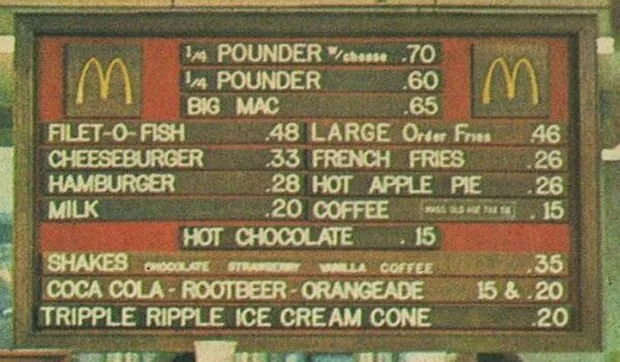
National Pulse previously reported that fast-food McDonald’s has acknowledged that its menu prices have risen upwards of 40 percent since 2019. Meanwhile, the cost of essential items and utilities has become prohibitive for many American consumers.

show less
Inflation continues to re-accelerate, rising again in April according to personal consumption expenditures (PCE) price index data released by the Biden government on Friday. The PCE index, an important measure of inflation for the Federal Reserve, rose by 0.3 percent last month, meaning inflation remains stubbornly around three percent — still above the central bank's two percent target. show more

BIDENFLATION: McDonald’s Menu Prices Up 40% Since 2019.

Joe Erlinger, president of McDonald’s USA, addressed recent claims concerning increased menu prices through an open letter on Wednesday. The fast food executive acknowledged that McDonald’s menu items have seen an average price rise of about 40 percent since 2019. While Erlinger sought to refute claims by House Republicans — among others — that menu price hikes exceeded 100 percent, he did confirm that inflation has forced a drastic rise in food costs.

“Americans across the country are making tough calls about where to spend their hard-earned money,” Erlinger said. “And while we’ve been working hard to make sure our fans have great reasons to visit us, it’s clear that we — together with our franchisees — must remain laser-focused on value and affordability.”

Erlinger reported that the cost of a Big Mac meal has risen to $9.29, a 27 percent increase from $7.29 in 2019. Similarly, a 10-piece McNuggets meal has seen a 28 percent price increase, while medium french fries’ prices have surged by 44 percent. He attributed these rises to increased costs in salaries and source products.

“For a brand that proudly serves nearly 90 percent of the U.S. population every year, we feel a responsibility to make sure the real facts are available,” Erlinger stated.

According to the Bureau of Labor Statistics, consumer prices have risen 3.4 percent over the past year. The upward cost trend has led to some consumers cutting back on restaurant visits, impacting the fast-food industry, including McDonald’s. In its first-quarter earnings report, the company reported that same-store sales fell below expectations.

Meanwhile, the National Owners Association, an independent group of McDonald’s franchisees, is advocating that any potential discounted offerings be sustainable for operators. “There simply is not enough profit to discount 30 percent for this model to be sustainable,” the board stated in a letter to its members. “It necessitates a financial contribution by McDonald’s.”

BIDEN IN DENIAL. 

The prospect of a re-acceleration of inflation has left the Biden government and presidential campaign in denial. Three straight months of increasing inflation have forced the 81-year-old Democrat to avoid discussing the U.S. economy on the 2024 campaign trail. Instead, Biden and his surrogates have opted to either deny that inflation is a problem or, most recently, falsely insist that inflation has actually decreased since he took office.

show less
Joe Erlinger, president of McDonald's USA, addressed recent claims concerning increased menu prices through an open letter on Wednesday. The fast food executive acknowledged that McDonald's menu items have seen an average price rise of about 40 percent since 2019. While Erlinger sought to refute claims by House Republicans — among others — that menu price hikes exceeded 100 percent, he did confirm that inflation has forced a drastic rise in food costs. show more
bidenomics

Inflation Is Up Again, For The Third Straight Month.

A critical measure of inflation in the United States rose for a third straight month, leaving many market analysts doubtful that the Federal Reserve will move to reduce interest rates before the November election. The April Producer Price Index (PPI) was up a shocking 0.5 percent month over month. This exceeded the expected 0.3 percent increase.

The new PPI data add to growing evidence that inflation has become either sticky, just above the Federal Reserve’s 2 percent target, or has even re-accelerated. Market futures slid slightly on the news of the hot PPI data.

A re-acceleration in inflation follows the Bureau of Labor Statistics employment numbers earlier this month, which suggested that the unusually resilient job market might finally be weakening. The uptick in unemployment had left some hopeful that the Federal Reserve could soon begin cutting interest rates. The new PPI data, however, suggests the central bank will likely keep rates at their current level for the time being.

The National Pulse reported earlier on Tuesday that a study by the Federal Reserve details how price increases were driven predominantly by inflation and not corporate greed. “Data for the current recovery show that the increase in corporate profits is not particularly pronounced compared with previous recoveries,” the Federal Reserve researchers wrote. They added: “Markups also have not played much of a role in the slowing of inflation since the summer of 2022.”

Joe Biden recently insisted during an interview with CNN that inflation was at 9 percent when he came into office. In reality, inflation was at a low of 1.4 percent when the 81-year-old Democrat was inaugurated. However, it quickly rose to more than 9 percent just over a year into his term.

show less
A critical measure of inflation in the United States rose for a third straight month, leaving many market analysts doubtful that the Federal Reserve will move to reduce interest rates before the November election. The April Producer Price Index (PPI) was up a shocking 0.5 percent month over month. This exceeded the expected 0.3 percent increase. show more
Bidenomics

FED REPORT: Corporate Greed *ISN’T* Fuelling Inflation, as Biden Claims.

Despite the Biden government’s claims to the contrary, corporate price-gouging has not been driving rises in U.S. inflation, according to research published by the Federal Reserve Bank of San Francisco on Monday. The Biden regime has attempted to blame inflation on corporate America by deploying terms like ‘greedflation’ and ‘shrinkflation.’

Although markups were observed in 2021-2022 for vehicles and petroleum products, markups across all U.S. goods and services have been relatively flat post-pandemic. “As such, rising markups have not been a main driver of the recent surge and subsequent decline in inflation during the current recovery,” wrote bank researchers.

“Data for the current recovery show that the increase in corporate profits is not particularly pronounced compared with previous recoveries,” they wrote. “Markups also have not played much of a role in the slowing of inflation since the summer of 2022.”

The research is a direct rebuttal to the Biden regime’s efforts to blame corporate America for inflation. In a video released around the Super Bowl, Biden slammed snack manufacturers for selling smaller bags of food for the same price. In his most recent State of the Union address, Biden leveled similar accusations against large corporations, accusing Snickers by name of engaging in “shrinkflation” practices.

Inflation continues to be an issue for the incumbent Democrat, and more Americans have faith in former President Donald Trump’s ability to bring it under control versus Biden’s.

show less
Despite the Biden government's claims to the contrary, corporate price-gouging has not been driving rises in U.S. inflation, according to research published by the Federal Reserve Bank of San Francisco on Monday. The Biden regime has attempted to blame inflation on corporate America by deploying terms like 'greedflation' and 'shrinkflation.' show more
Biden Border

What’s Keeping Inflation & Interest Rates So High? Biden’s Great Replacement Policies.

Joe Biden’s high-volume immigration policy is driving the rising housing inflation linked to surges in interest and mortgage rates, concedes the Wall Street Journal. Chief economics correspondent Nick Timiraos says one “key reason market rents have moderated is that the industry is adding a record amount of new apartment supply.” However, industry executives advise that “supply is being quickly absorbed because of increased immigration,” among other factors.

The Federal Reserve has been trying to get inflation down to two percent, but an expected slowdown in the cost of housing has not materialized.

“Fed officials, Wall Street investors, and private-sector economists have expected housing inflation to slow since late 2022,” the WSJ reports, adding, “Housing inflation has indeed slowed from a peak of 8.2 percent one year ago – but only to 5.6 percent in March.”

Jay Parsons, Texas-based apartment owner Madera Residential’s head of residential strategy, says this is “a much slower pace than pretty much anybody anticipated.”

The Biden regime had planned on being able to count on a general improvement in the inflation situation and the economy generally heading into the November elections. However, the situation is poorer than expected, with inflation figures worse than projected and job growth shaky. Research suggests the “American Dream” has become unaffordable to anyone earning less than $100,000 nationwide and, in many states, less than $150,000.

Illegal immigration, in particular, has been extremely high under Biden, with a majority of voters suspecting the Democrat incumbent is allowing it for partisan advantage.

News that immigration is helping keep housing costs, interest rates, and mortgage rates high in the U.S. comes as a report in the United Kingdom confirms record-breaking mass migration has exacerbated housing shortages and is driving rents and house prices upwards.

show less
Joe Biden's high-volume immigration policy is driving the rising housing inflation linked to surges in interest and mortgage rates, concedes the Wall Street Journal. Chief economics correspondent Nick Timiraos says one "key reason market rents have moderated is that the industry is adding a record amount of new apartment supply." However, industry executives advise that "supply is being quickly absorbed because of increased immigration," among other factors. show more