Monday, February 23, 2026

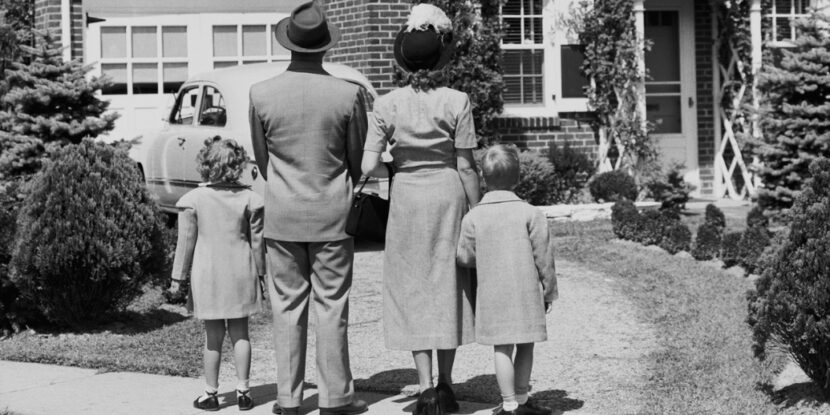
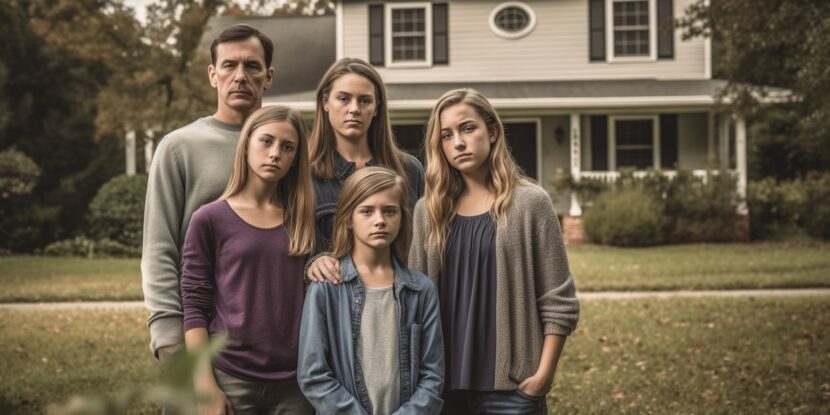
The American Dream is Now ‘Unaffordable.’

The affordability of the “American Dream” is slipping further away for many U.S. citizens, with escalating costs outpacing income gains for most households. A new report indicates that those seeking the “American Dream” must now exceed $100,000 in annual earnings in all 50 states. A staggering 29 of these states require more than $150,000 a year.

Examples of these states include Ohio, where the ideal lifestyle costs $137,842 a year, Texas at $147,535, and Florida at $159,932. The rates climb even higher in states like New York, at $194,067, and California, at a whopping $245,723.

Alarming figures like this put into perspective the financial difficulties under the Biden economy that are suffocating average U.S. households. For example, in Illinois, which ranks 26 on the list, the median home price is $255,278, with total annual costs reaching $78,369. The total cost of the American Dream in Illinois is around $156,739. The cost of living could continue to worsen as the Biden government struggles to bring down inflation.

Across the board, spikes in essential commodity prices and the sharp rise in housing costs have fueled increasing disillusionment among voters. The 81-year-old incumbent, Joe Biden, has struggled to regain his footing in opinion polls with core Democratic demographics, including young voters, Hispanics, and Black voters.

The National Pulse previously reported that concerns about jobs, the economy, and immigration top most presidential opinion polls heading into this November’s election. Voters routinely believe former President Donald Trump is better suited to address these concerns.

show less
The affordability of the "American Dream" is slipping further away for many U.S. citizens, with escalating costs outpacing income gains for most households. A new report indicates that those seeking the “American Dream” must now exceed $100,000 in annual earnings in all 50 states. A staggering 29 of these states require more than $150,000 a year. show more

Americans Are More Pessimistic About Home Ownership Than Ever Before.

New data from the Federal Reserve Bank of New York suggests American renters are becoming increasingly pessimistic about their chances of eventually becoming homeowners. According to the Survey of Consumer Expectations, anticipation of homeownership is now at an all-time low of 40.1 percent, significantly down from 44.4 percent a year ago. The percentage of renters expecting to one day be homeowners has plummeted by over 10 points since Joe Biden took office.

When Biden first entered the White House, the average belief in future homeownership was 51.6 percent. The drop has been even larger amongst renters aged 50 and under, with 48.7 percent today believing in future home ownership, down from 67.2 percent when Biden took office — a nearly 20-point drop.

Contrary to Biden’s assurance that his policies would spur economic growth from the grassroots level upwards, Americans in the lower income bracket also express deeper pessimism regarding their likelihood of homeownership. Those earning less than $60,000 annually assessed their average chance of buying a home at 31.3 percent this year, down from 41.3 percent in February 2021.

Renters earning above $60K also manifested a declining homeownership expectation, decreasing to 61.5 percent from 69.8 percent when President Biden took office.

The decline in homeownership anticipation has been prominently significant in the Northeast and Midwest regions. In the Northeast, the rate dropped to 25.8 percent this year from 43.4 percent in 2021, while expectations in the Midwest fell from 61 percent to 36.7 percent.

Worries over the economy and inflation consistently rank among voters’ top three concerns. Biden’s time in the White House has been marked by a steep economic decline in the U.S., and over half of Americans view the economy under Biden as “poor.”

show less
New data from the Federal Reserve Bank of New York suggests American renters are becoming increasingly pessimistic about their chances of eventually becoming homeowners. According to the Survey of Consumer Expectations, anticipation of homeownership is now at an all-time low of 40.1 percent, significantly down from 44.4 percent a year ago. The percentage of renters expecting to one day be homeowners has plummeted by over 10 points since Joe Biden took office. show more
bidenomics

Bidenomics: Unemployment Increased In April With Workers Still Sitting On The Sidelines.

The U.S. unemployment rate rose to 3.9 percent in April, with the economy only adding 175,000 jobs — missing market expectations by over 60,000. According to the Dow Jones consensus estimate, an additional 240,000 new workers were predicted to enter the labor market last month.

April’s job numbers could signal a slowdown in the U.S. economy, raising hopes the Federal Reserve could look to begin reducing interest rates in the coming months. However, earlier this week, Fed chairman Jerome Powell signaled that a rate cut remains unlikely before the November presidential election as the U.S. central bank remains concerned about accelerating inflation.

While full-time employment rose last month, an equivalent decline in part-time employment canceled out those gains. Even with the full-time employment gains, the Biden economy has still lost full-time jobs on net over the last year. Additionally, labor force participation continues to remain below pre-pandemic levels.

Unlike the March jobs report, April saw significant private-sector gains, with the healthcare industry leading the way with 56,000 jobs added. The transportation and warehousing sector added 22,000 jobs. Meanwhile, the retail sector saw 20,000 jobs added. Construction continues to lag, seeing an increase of only 9,000 jobs.

Another concerning trend in the jobs report is the continued gap between the employment numbers of foreign and native-born workers. Over the last year, employment for native-born workers has remained flat, with job gains driven by immigrant labor. The National Pulse reported in February that immigrant labor has almost entirely driven the so-called Biden job recovery.

show less
The U.S. unemployment rate rose to 3.9 percent in April, with the economy only adding 175,000 jobs — missing market expectations by over 60,000. According to the Dow Jones consensus estimate, an additional 240,000 new workers were predicted to enter the labor market last month. show more
bidenomics

1 in 4 Worry They’ll Lose Their Job In the Next Year.

One in four employed Americans say they fear losing their jobs within the next year according to a new survey. The data, collected by OnePoll on behalf of CSU Global, suggests that a significant percentage of American workers see their job security as unstable.

According to the survey, 32 percent of American workers say they are concerned they lack the necessary skills and training to be successful in their careers. The rising anxiety about current and future employment prospects among Americans appears to be playing a significant role in the 2024 election. Respondents in national polling have routinely listed jobs and the economy as two of their top issues when deciding which presidential candidate they will support.

Despite the Biden government persistently touting a strong U.S. jobs market, The National Pulse has extensively shed light on the dubious nature of their claims. The March jobs report from the Bureau of Labor Statistics, cited by Joe Biden and numerous Democrat officials, actually revealed full-time jobs declined by 1.3 million while the labor market added 1.09 million part-time positions.

A February 2024 report by the Center for Immigration Studies shows the so-called Biden job recovery was almost entirely driven by illegal and legal immigrant labor. As of its publication, the study also revealed that native-born labor force participation had not yet recovered to pre-COVID-19 pandemic levels.

The anxiety among American workers appears justified. Biden and his Democrat allies at the state and local level have made immigrant employment a top policy priority — a move that has suppressed the wages of American workers — in the name of combating inflation. With the Federal Reserve also signaling that interest rates will likely remain elevated for the foreseeable future, there appears to be little relief in sight for American workers under the Biden government.

show less
One in four employed Americans say they fear losing their jobs within the next year according to a new survey. The data, collected by OnePoll on behalf of CSU Global, suggests that a significant percentage of American workers see their job security as unstable. show more
Bidenomics

Bidenomics: Home Sales See Biggest Dip in a Year, Mortgages Soar.

Home sales saw their biggest month-on-month decline since November 2022 in March, dropping by 4.3 percent compared to February. Meanwhile, the average 30-year fixed mortgage surged to 7.1 percent — its highest since the end of last year.

Average monthly new mortgage payments are 38 percent higher than average apartment rent, with this double-digit disparity persisting for a two-year period. This is discouraging Americans from buying their own homes, with sales down 3.7 percent year-on-year.

“It’s never been this high for this long,” commented the Head of Multifamily Research at the CBRE Group, who produced the disparity figures, Matt Vance. “It doesn’t seem likely that it will come down any significant amount in the next several years,” he warned.

Consumers are also suffering from higher-than-expected inflation. Energy price rises have been especially punishing, increasing by 29.4 percent since Joe Biden assumed office in 2021. The price of gasoline has risen by over 52.1 percent over the same period and was even higher in 2022.

Donald Trump has made Biden’s faltering economy one of his key pitches to voters ahead of the presidential election in November, regularly asking, “Are you better off than you were four years ago?”

Voters largely believe they are not, with 75 percent saying the cost of living is increasing in a recent poll. Of voters who think the cost of living is rising, 56 percent support Trump, while only 32 percent support Biden.

Trump also enjoys strong support among those working hardest through the challenging economy, with 80 percent of voters working over 60 hours and 59 percent working 50-59 hours backing the former president.

Biden only enjoys majority support among voters working 20-29 hours or less.

show less
Home sales saw their biggest month-on-month decline since November 2022 in March, dropping by 4.3 percent compared to February. Meanwhile, the average 30-year fixed mortgage surged to 7.1 percent — its highest since the end of last year. show more
Bidenomics

Over 50% Say Biden’s Economy is ‘Poor.’

More than half of Americans believe that Joe Biden’s economy is “poor” and less than a quarter believe it is good, according to a new poll from The New York Times/Siena.

The poll, conducted from April 7 to 11, found that 52 percent of Americans describe the current state of the nation’s economy as “poor.” Less than a quarter gave a positive description of the economy, with 17 percent describing it as “good” and just 4 percent describing it as “excellent.” Just over a quarter of respondents — 27 percent – described the economy as “fair.”

Additionally, the poll revealed that a substantial number of Americans are not happy with the direction the country is heading under Biden’s stewardship. Some 64 percent of respondents believe the nation is on the wrong track under President Biden’s leadership. Just 25 percent said the country is on the right track.

Biden’s handling of the economy has been a persistent weakness throughout his presidency. Serious levels of inflation persist as Americans struggle with rising living costs, and nearly all of the ‘new‘ jobs added to the economy under Biden’s watch are the result of individuals taking part-time work.

show less
More than half of Americans believe that Joe Biden's economy is "poor" and less than a quarter believe it is good, according to a new poll from The New York Times/Siena. show more

The Return of Bidenflation: Price Rose More than Expected in March.

Consumer Price Index (CPI) inflation was worse than expected in March, according to new figures. Economists had expected price rises to be up by 0.3 percent, but they were actually up by 0.4 percent. Inflation has been worse than forecast for several months in a row now.

Compared to the same time last year, inflation is up 3.5 percent. Last month, the year-on-year rise was 3.2 percent.

Surging energy and shelter costs are responsible for half the inflation increase, but measuring only “core inflation” — which excludes food and energy — still gives a rise of 0.4 percent.

The renewed acceleration of inflation makes it increasingly unlikely the Federal Reserve will cut interest rates before the end of the year. Previously, the U.S. central bank had signaled it was considering at least one rate cut prior to 2025.

News of the worse-than-expected inflation numbers was followed swiftly by a fall in U.S. stock-index futures. S&P 500 futures fell by 71 points, Nasdaq 100 futures by 275 points, and Dow Jones Industrial Average futures by 463 points.

Ron Klain, former Chief of Staff to President Joe Biden, recently warned the 81-year-old Democrat was not making enough progress on bringing down prices.

“Prices are still high, the price of gasoline is still high, other prices are still high, and people feel that pinch,” he said.

show less
Consumer Price Index (CPI) inflation was worse than expected in March, according to new figures. Economists had expected price rises to be up by 0.3 percent, but they were actually up by 0.4 percent. Inflation has been worse than forecast for several months in a row now. show more
Bidenomics

REVEALED: The *REAL* Inflation Numbers, Which Biden Doesn’t Want You to See, Nor Share.

Leading economic and price indices have indicated a re-acceleration of inflation over the past several months. The return of inflation was further confirmed early on Wednesday, with the Consumer Price Index (CPI) coming in hotter than expectations. According to the data, inflation is up 3.5 percent over the same time last year — well above the Federal Reserve’s 2 percent target.

The previous two months saw jumps in the Producer Price Index (PPI) and the Personal Consumption Expenditures Price Index (PCE), further fueling fears regarding inflation’s return.

While the complex government price data is a major factor in the Federal Reserve’s determination of whether to cut or increase interest rates, it does little to shed light on inflation’s impact on the average American family. However, examining annualized increases in the price of goods provides a fairly grounded view of how inflation hurts Americans.

Below is a list of goods impacted by price inflation driven by President Joe Biden‘s reckless fiscal policy. The numbers reflect the annualized increase in cost as a percentage compared to 2021.

BIDEN’S INFLATION CRISIS IN NUMBERS.

Food at elementary and secondary schools65.0%
Fuel oil59.4%
Other motor fuels54.1%
Margarine52.5%
Motor vehicle insurance50.1%
Other lodging away from home, including hotels and motels49.4%
Eggs49.3%
Gasoline, unleaded regular48.2%
Frozen noncarbonated juices and drinks47.8%
Gasoline (all types)47.8%
Motor fuel47.7%
Energy commodities47.6%
Gasoline, unleaded midgrade46.8%
Gasoline, unleaded premium46.0%
Leased cars and trucks45.0%
Fuel oil and other fuels44.3%
Lodging away from home42.6%
Repair of household items40.9%
Motor vehicle repair40.5%
Other fats and oils, including peanut butter40.1%
Energy38.8%
Crackers, bread, and cracker products38.2%
Transportation services38.0%
Fats and oils35.3%
Video discs and other media35.1%
Flour and prepared flour mixes33.5%
Airline fares32.7%
Butter and margarine32.0%
Other bakery products30.7%
Salad dressing30.6%
Admission to sporting events30.6%
Frozen and refrigerated bakery products, pies, tarts, turnovers30.5%
Baby food30.5%
Delivery services30.4%
Food from vending machines and mobile vendors30.3%
Motor vehicle maintenance and repair30.2%
Uncooked beef roasts29.8%
Tax return preparation and other accounting fees29.7%
Electricity29.3%
Sugar and sugar substitutes29.1%
Veterinarian services29.0%
Energy services28.9%
Apparel services other than laundry and dry cleaning28.8%
Olives, pickles, relishes28.6%
Other condiments28.5%
Frozen vegetables28.2%
Care of invalids and elderly at home27.8%
Canned vegetables27.3%
Window coverings27.2%
Motor oil, coolant, and fluids27.2%
Sauces and gravies26.9%
Utility (piped) gas service26.9%
Food at employee sites and schools26.8%
Canned fruits and vegetables26.8%
Stationery, stationery supplies, gift wrap26.7%
Pet services, including veterinary26.7%
Cookies26.7%
Bakery products26.7%
Soups26.4%
Fresh biscuits, rolls, muffins26.2%
Fresh whole chicken26.0%
Other uncooked poultry, including turkey26.0%
Cakes, cupcakes, and cookies25.5%
Cereals and bakery products25.4%
Carbonated drinks25.1%
Other food at home25.0%
Cigarettes25.0%
Financial services25.0%
Juices and nonalcoholic drinks24.8%
Admissions24.8%
Uncooked beef steaks24.8%
White bread24.7%
Frozen and freeze-dried prepared foods24.6%
Canned fruits24.5%
Other sweets24.5%
Checking account and other bank services24.5%
Processed fruits and vegetables24.4%
Poultry24.4%
Beef and veal24.3%
Nonfrozen, noncarbonated juices and drinks24.1%
Chicken23.9%
Spices, seasonings, condiments, sauces23.8%
Other foods23.8%
Fresh cakes and cupcakes23.8%
Sugar and sweets23.8%
Pet food23.7%
Bread23.7%
Car and truck rental23.7%
Tobacco and smoking products23.6%
Fresh and frozen chicken parts23.6%
Other dairy and related products23.6%
Butter23.5%
Frozen fruits and vegetables23.4%
Lunchmeats23.4%
Motor vehicle maintenance and servicing23.4%
Women’s dresses23.3%
Domestic services23.3%
Nonalcoholic beverages and beverage materials23.2%
Other miscellaneous foods23.1%
Snacks22.7%
Propane, kerosene, and firewood22.7%
Bread other than white22.6%
Candy and chewing gum22.6%
Uncooked other beef and veal22.6%
Cereals and cereal products22.5%
Limited service meals and snacks22.5%
Laundry and dry cleaning services22.3%
Public transportation22.2%
Household operations21.9%
Vehicle accessories other than tires21.9%
Other meats21.8%
Uncooked ground beef21.6%
Miscellaneous personal services21.4%
Frankfurters21.4%
Food away from home21.4%
Meats, poultry, fish, and eggs21.3%
Roasted coffee21.3%
Floor coverings21.2%
Tools, hardware, and supplies21.2%
Food at home21.1%
Food21.1%
Full-service meals and snacks21.0%
Rent of shelter20.9%
Used cars and trucks20.9%
Legal services20.8%
Meats20.8%
Shelter20.7%
Photographic equipment and supplies20.5%
Breakfast cereal20.5%
Motor vehicle parts and equipment20.5%
Men’s shirts and sweaters20.4%
Rent of primary residence20.4%
Household paper products20.4%
Outdoor equipment and supplies20.4%
Tools, hardware, outdoor equipment, and supplies20.3%
Owners’ equivalent rent of primary residence20.1%
Owners’ equivalent rent of residences20.1%
Rice, pasta, cornmeal20.1%
Other processed fruits and vegetables, including dried20.0%
Transportation commodities less motor fuel19.9%
Tires19.7%
Meats, poultry, and fish19.7%
Pets and pet products19.6%
Coffee19.6%
New trucks19.5%
Other food away from home19.4%
Dried beans, peas, and lentils19.4%
All items19.4

Thank you for reading.

show less
Leading economic and price indices have indicated a re-acceleration of inflation over the past several months. The return of inflation was further confirmed early on Wednesday, with the Consumer Price Index (CPI) coming in hotter than expectations. According to the data, inflation is up 3.5 percent over the same time last year — well above the Federal Reserve's 2 percent target. show more
Bidenomics

Biden’s Ex-Chief of Staff Makes Stunning Inflation Admission.

Ron Klain, former Chief of Staff to President Joe Biden, acknowledged on Wednesday that the Biden government’s efforts to bring down prices for American consumers have not been successful. “Prices are still high, the price of gasoline is still high, other prices are still high, and people feel that pinch,” admitted Klain during an appearance on MSNBC’s “All In With Chris Hayes.” He added, “I think the President needs to make more progress on that.”

The remarks from the former White House Chief of Staff run contrary to claims made by the Biden government that inflation and prices are falling. President Biden has repeatedly asserted that his policies have reduced unemployment, cut consumer costs, and boosted the U.S. economy. According to polling data, however, American voters aren’t buying the President’s claims — which Klain acknowledged is a problem for Biden.

“I understand that people say, hey, I’m glad you have all these good things going on in the economy, I’m glad that there are jobs,” he told Hayes before adding: “But people want to see that their own personal pocketbook is better off.”

“People need more money in their pockets,” Klain concluded.

President Biden’s 2024 re-election campaign also appears to have already tacitly acknowledged the economic reality for many Americans isn’t as rosy as the White House insists. The campaign appears to have abandoned the term “Bidenomics” after featuring it on the campaign trail late last year.

Klain isn’t the only former or current Biden official to acknowledge that grocery, gasoline, and housing prices remain restrictively high for many Americans. In February, Biden’s own Treasury Secretary, Janet Yellen, told lawmakers on Capitol Hill that high prices are likely here to stay — while insisting it wasn’t the fault of “Bidenomics.”

show less
Ron Klain, former Chief of Staff to President Joe Biden, acknowledged on Wednesday that the Biden government's efforts to bring down prices for American consumers have not been successful. "Prices are still high, the price of gasoline is still high, other prices are still high, and people feel that pinch," admitted Klain during an appearance on MSNBC's "All In With Chris Hayes." He added, "I think the President needs to make more progress on that." show more

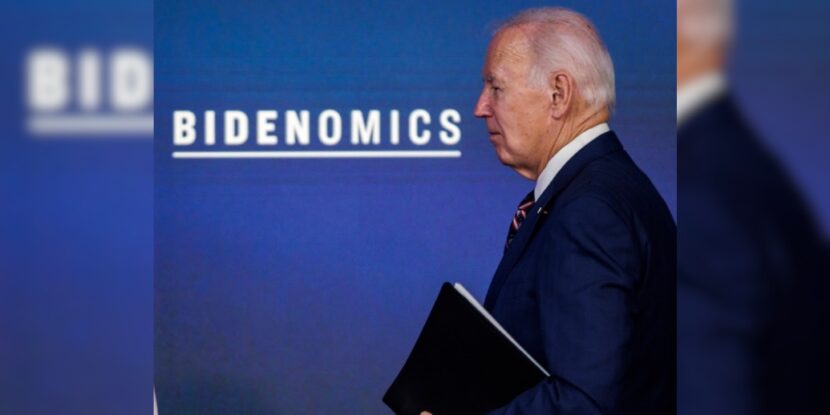
‘Bidenomics’ is Dead.

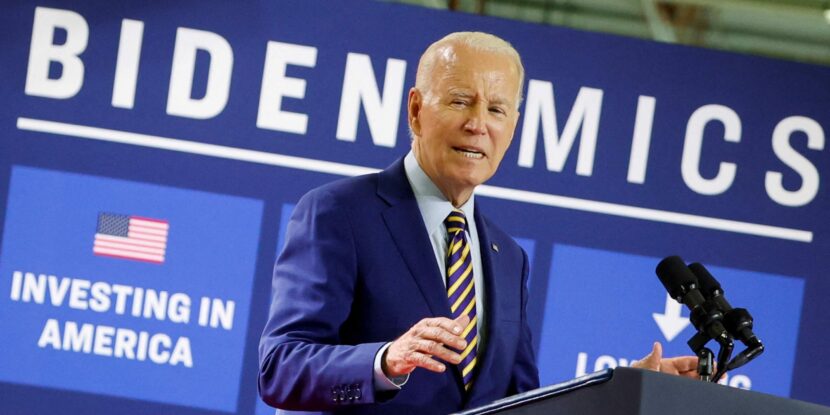
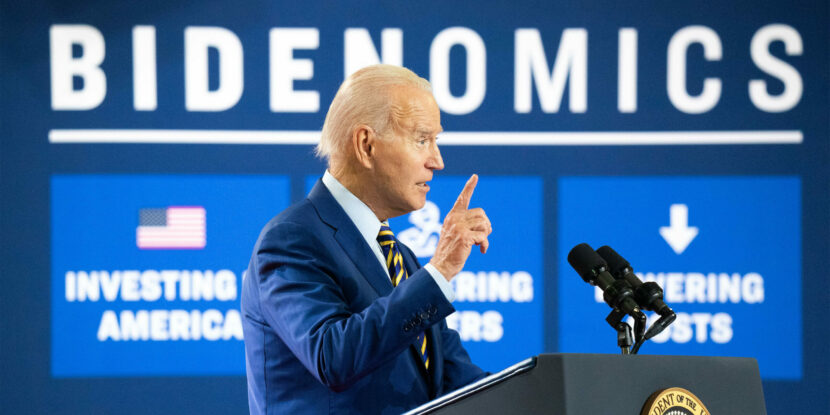
Joe Biden and his fellow Democrats have abandoned the term “Bidenomics” as Americans reject their economic message, and Republicans have turned the term into a pejorative.

The numbers: According to an analysis by Axios, here’s how often Biden mentioned the term “Bidenomics” during public appearances:

  • 100 times between June and Dec 2023;
  • 3 times in 2024.

Most notably, Biden didn’t mention the term once during his State of the Union this month.

Trickle-down Bidenomics: Joe’s fellow Democrats have also abandoned the term. For instance, in July 2023, Congressional Democrats used the term 483 times in addresses and on social media. In March? Ten times.

Weaponizing Bidenomics: Axios points out that “Republicans are now using the term — mockingly — far more than Democrats.” For an example, look no further than the ‘First Word’ in yesterday’s newsletter.

Big picture: The real reason Democrats abandoned the term is they couldn’t sell it to the American people who are suffering from the effects of Bidenflation, which is up roughly 20 percent since Joe took office.

  • A recent Fox News poll found that 61 percent of Americans disapprove of Biden’s handling of the economy, vs 38 percent who approve.

This article is adapted from the free ‘Wake Up Right’ newsletter, which you can subscribe to here.

show less
Joe Biden and his fellow Democrats have abandoned the term “Bidenomics” as Americans reject their economic message, and Republicans have turned the term into a pejorative. show more

Editor’s Notes

Behind-the-scenes political intrigue exclusively for Pulse+ subscribers.

RAHEEM J. KASSAM Editor-in-Chief
It’s fascinating to watch them give up on this theme, especially given the major assistance the Biden campaign is getting from the corporate media on “hOw WeLL tHe eCoNoMy iS dOinG
It’s fascinating to watch them give up on this theme, especially given the major assistance the Biden campaign is getting from the corporate media on “hOw WeLL tHe eCoNoMy iS dOinG show more
for exclusive members-only insights