




Wednesday, August 12, 2026

TikTok Is Still a CCP-Owned National Security Risk, For Now.

TikTok and its Chinese Communist Party (CCP)-owned parent company, ByteDance, remains a serious national security threat despite a renewed push to force the social media video app’s divestment from the United States’s foreign adversary. President Donald J. Trump has signaled he is willing to give TikTok and ByteDance 90 more days to negotiate a possible sale to an American company—though it isn’t clear if the CCP and their proxies at ByteDance have warmed to the idea of parting with the app and its valuable content algorithm.

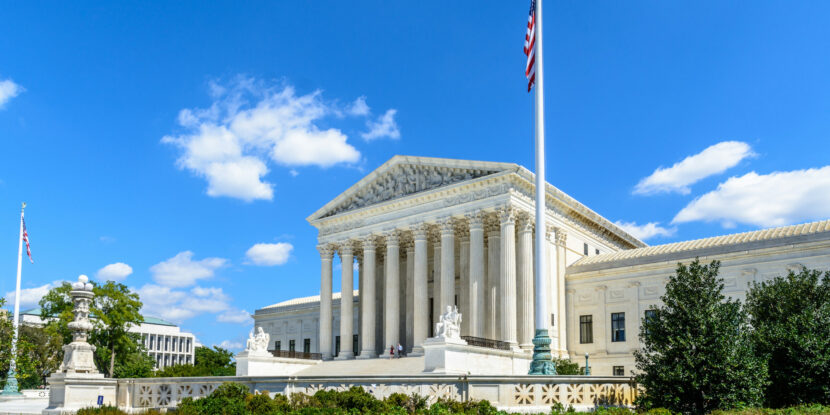
The National Pulse has extensively covered TikTok’s threat to the United States, including the CCP’s ongoing access to American user data. When a law forcing ByteDance to divest or face a ban in the U.S. was challenged before the Supreme Court earlier this month, the justices were quick to note that ByteDance’s refusal to sell the app despite the likely lucrative windfall was more than unusual and appeared to signal app was more valuable to China than just as a business venture. Ultimately, the high court ruled late last week to uphold the Congressional action forcing the app’s sale or ban in the U.S.

ESPIONAGE & PROPAGANDA.

In early January 2025, Rutgers University’s Network Contagion Research Institute (NCRI) released a new study indicating that the Chinese-owned video app is used to promote pro-CCP propaganda among American youth. The study, an update to a preliminary report published by NCRI last August, reveals a bevy of evidence that TikTok routinely downplays negative content regarding the Chinese state, Communist Party, and their history of repression when searched even by U.S. audiences.

Data security concerns aside, the CCP’s use of TikTok as a propaganda platform crosses into the realm of U.S. national security, justifying the app’s ban. The researchers argue that TikTok is a prime example of the CCP’s use of “persuasive technologies” as part of a broader propaganda campaign to influence public perception of the communist country in the Western world.

Meanwhile, the CCP and its proxies appear to have stepped up their foreign intelligence actions against Western nations—especially the United States under former Joe Biden. Although the espionage plots and TikTok may not be not directly connected, they reveal an aggressive Chinese agenda to spy on and attempt to influence nations they view as opposed to Beijing’s interests.

DATA SECURITY FARCE. 

The National Pulse reported in February 2024 that TikTok built a $1.5 billion data center in Texas to form a “firewall” between its U.S. operations and its Chinese counterparts. However, a bevy of audio records of meetings of company executives, whistleblowers, and leaked documents have revealed the so-called “Project Texas” data security plan was little more than a farce. Chinese employees of ByteDance continue to be able to routinely access American user data despite the alleged firewall.

Additionally of concern is that TikTok may be pulling more data from users’ mobile phones than is publicly disclosed. This could add a new layer to national security concerns as a phone with TikTok installed could also be used as an active espionage tool without the user’s knowledge.

Despite opposition to the ban of TikTok among its most dedicated user base, the action is actually relatively popular among the broader American public. Survey data has consistently shown over 50 percent of Americans believe TikTok is a critical influence tool used by the CPP. Polling by Reuters last spring suggests almost 60 percent of Americans are wary of TikTok’s use as a conduit for pro-Chinese communist propaganda.

DIRECT TIES TO THE CCP. 

While data security, espionage, and propaganda concerns underpin most of the arguments for TikTok’s divestment or ban, the app and its parent company ByteDance’s unusual relationship with the CCP is arguably a justification on its own. Chinese technology companies—like ByteDance—are required under a CCP-enacted national security law to cooperate with and enact the agenda of Chinese intelligence services.

Despite claims that TikTok and ByteDance aren’t entirely Chinese-controlled, these are misleading assertations at best. ByteDance was founded by Chinese nationals Zhang Yiming and Liang Rubo. Zhang still serves as the company’s chairman, and Liang as its CEO.

Even more disturbing is that—like most China-based corporations—ByteDance has its own internal Chinese Communist Party committee. This body represents the interests of the Chinese state within the company and is the true center of ByteDance’s corporate governance.

Chinese regulatory law has been used to obfuscate the extent to which the CCP directly controls ByteDance—as is the case with many Chinese-based companies deemed critical to CCP interests. One of the CCP-appointed board members is Wu Shugang, a party official with an extensive background in state propaganda.

During the frantic fight launched by ByteDance against Congressional action to enforce a divestment or ban of the app, the Chinese embassy in the U.S. took the unusual step of directly lobbying on behalf of TikTok and its parent company. The CCP lobbying effort was only headed off by a dedicated group of American lawmakers and former Trump White Hosue staff who launched what they dubbed “The Thunder Run” to catch the Chinese company by surprise and secure support before they could rally their users as weapons against the legislation.

show less
TikTok and its Chinese Communist Party (CCP)-owned parent company, ByteDance, remains a serious national security threat despite a renewed push to force the social media video app's divestment from the United States's foreign adversary. President Donald J. Trump has signaled he is willing to give TikTok and ByteDance 90 more days to negotiate a possible sale to an American company—though it isn't clear if the CCP and their proxies at ByteDance have warmed to the idea of parting with the app and its valuable content algorithm. show more

TikTok Struggles to Make Its Case Against Anti-CCP Law at SCOTUS.

TikTok, the video social media platform owned by Chinese-controlled ByteDance, argued against its impending ban in the United States before the Supreme Court on Friday. However, the social media company appears to have found little enthusiasm in their defense among the high court’s justices.

The oral arguments—stemming from an emergency appeal of a law requiring the Chinese-owned ByteDance to divest from TikTok or face a ban of the platform in the U.S.—mostly circled around the constitutional question of viewpoint and content restrictions enacted by Congress. Despite TikTok insisting the case was a simple matter of First Amendment speech rights, the justices pushed the case into the realm of the constitutional question of association—specifically with the Chinese Communist Party (CCP)-controlled ByteDance—as well.

TikTok’s counsel Noel Francisco insisted that the video social media platform is not ‘ultimately’ controlled by ByteDance and that Congress’s divestiture law clearly violates the company’s—and its users’— free speech rights. Currently, TikTok’s Chinese parent company, ByteDance, must divest from the company by January 19. If this divestiture does not occur, the social media platform will be barred from being downloaded to U.S. social media app stores. Thus far, ByteDance has insisted it will not divest from its American social media company.

ASSOCIATION NOT CONTENT.

The U.S. government, defending the law, emphasized it does not discriminate against specific content or viewpoints but merely seeks to cut the CCP and ByteDance out of being able to influence the TikTok platform. Solicitor General Elizabeth Prelogar noted to the justices that the ban—which serves as the crux of TikTok’s argument against the law—is a secondary effect and that the content shown on TikTok would not need to change if the platform was divested from ByteDance. The latter is key to the government’s defense of the law as it illustrates the law does not seek to regulate speech but rather association.

Ultimately, the justices appear wary of preventing Congress from asserting its ability to regulate the foreign ownership of American companies. Justice Ketanji Brown Jackson went so far as to question whether TikTok was essentially arguing that Congress could not prevent companies from associating with terrorist organizations.

Importantly, the government repeatedly stressed that the law is meant to not just address U.S. data security interests but also the country’s national security interests.

With arguments concluded, the Supreme Court could decide the fate of TikTok in a matter of days by issuing a preliminary or administrative injunction which would delay the divestment law from taking effect.

Image by Domenico Convertini.

show less
TikTok, the video social media platform owned by Chinese-controlled ByteDance, argued against its impending ban in the United States before the Supreme Court on Friday. However, the social media company appears to have found little enthusiasm in their defense among the high court's justices. show more

The Future of TikTok in the U.S. Now Rests With the Supreme Court.

The United States Supreme Court announced on Wednesday that it will hear TikTok‘s challenge to a law effectively banning its distribution to Americans unless the social media app’s Chinese-owned parent company, ByteDance, divests from the platform. Additionally, the high court has agreed to expedite the case with oral arguments slated for January 10, 2025.

Since the divestment requirement and potential ban were enacted by Congress in March, TikTok has fought them through litigation, arguing that the law violates the First Amendment. However, earlier this month, a U.S. federal appeals court held that the narrow language of the statute—specifically applying to companies controlled by hostile foreign governments—does not infringe on the Chinese-controlled company’s constitutional rights.

“The First Amendment exists to protect free speech in the United States,” the appeals court panel held in its ruling, arguing: “Here, the Government acted solely to protect that freedom from a foreign adversary nation and to limit that adversary’s ability to gather data on people in the United States.”

The appeals court noted that the legal burden of the ban rests with ByteDance, which is tightly intertwined with the Chinese Communist Party (CPP) and its foreign intelligence and military networks. While TikTok has claimed it built a sufficient firewall to prevent ByteDance employees and Chinese government operatives from accessing U.S. user data, numerous whistleblowers have come forward with evidence this is not the case. These revelations underpin Congress’s legal claim to national security authority as justification for the law.

Despite the law’s narrow language and national security implications, TikTok’s constitutional challenge could result in the Supreme Court establishing a broader precedent on the limits of corporate speech and the government’s national security authority.

show less
The United States Supreme Court announced on Wednesday that it will hear TikTok's challenge to a law effectively banning its distribution to Americans unless the social media app's Chinese-owned parent company, ByteDance, divests from the platform. Additionally, the high court has agreed to expedite the case with oral arguments slated for January 10, 2025. show more

U.S. Appeals Court Says TikTok Must Divest From China or Face Ban.

The U.S. Court of Appeals for the D.C. Circuit ruled to uphold the Protecting Americans from Foreign Adversary Applications Act, which requires the social media video app TikTok to divest from Chinese ownership. According to the bill signed into law by President Joe Biden earlier this year, TikTok must be free of Chinese control by January 19, 2025; otherwise, it faces a ban in the United States.

Following the divestment legislation’s enactment, TikTok sued the Biden-Harris government, arguing the statute infringed on the company’s constitutional rights, including the First Amendment’s guarantee of free speech. However, the federal appellate court found that the federal government’s national security prerogative takes precedence in its ruling.

“We recognize that this decision has significant implications for TikTok and its users. Unless TikTok executes a qualified divestiture by January 19, 2025—or the President grants a 90-day extension based upon progress towards a qualified divestiture, §2(a)(3)—its platform will effectively be unavailable in the United States, at least for a time. Consequently, TikTok’s millions of users will need to find alternative media of communication,” the court writes in its opinion.

“That burden is attributable to the PRC’s hybrid commercial threat to U.S. national security, not to the U.S. government, which engaged with TikTok through a multi-year process in an effort to find an alternative solution,” it continues.

“The First Amendment exists to protect free speech in the United States. Here, the Government acted solely to protect that freedom from a foreign adversary nation and to limit that adversary’s ability to gather data on people in the United States,” the appeals court concludes, denying TikTok’s request for relief from the law.

Both the first Trump White House and the Biden government have sought to force TikTok’s divestiture from China, citing the social app’s threat to national security due to numerous instances of its data being shared with the Chinese Communist Party (CCP). India, another nation that views China as a regional adversary and threat, has already banned the app, with domestic alternatives seeing exponential growth in popularity.

show less
The U.S. Court of Appeals for the D.C. Circuit ruled to uphold the Protecting Americans from Foreign Adversary Applications Act, which requires the social media video app TikTok to divest from Chinese ownership. According to the bill signed into law by President Joe Biden earlier this year, TikTok must be free of Chinese control by January 19, 2025; otherwise, it faces a ban in the United States. show more

TikTok Parent Firm Says It Prefers Ban to Sale, Protects China’s Algorithm.

TikTok’s Chinese-owned parent company, ByteDance, would prefer the United States government ban the social media app rather than sell it to a non-Chinese buyer. According to Reuters, citing four anonymous sources, ByteDance does not wish to part with control over the app’s algorithm, which it views as critical to the success of its network of technology ventures.

ByteDance has signaled it intends to pursue legal action against the Biden government to halt the newly signed law, forcing it to divest from TikTok or face the app’s ban. While TikTok only accounts for a relatively small share of ByteDance’s overall revenue, its algorithm, which determines what content is promoted to users and encourages continued engagement on the app, is far more valuable. As Americans only account for a small portion of the app’s overall user base, ByteDance prefers shuttering its U.S. presence instead of losing control of TikTok’s algorithm.

The Chinese company denied earlier reports on Thursday it was exploring avenues to sell the TikTok social media app. On Wednesday, TikTok’s CEO Shou Zi Chew said he expects the company to win its legal challenge against the divestment law. However, the National Pulse previously reported that House Republicans worked with officials at the Department of Justice to ensure the language of the law would make it difficult to overturn in court.

As it stands, ByteDance has until January 19, 2025, to find a buyer for the TikTok app. The U.S. government, however, could extend the deadline an additional three months if it believes ByteDance is close to making a sale. If ByteDance chooses not to sell or cannot reach an agreement with a purchaser, the U.S. ban on TikTok will take effect.

show less
TikTok's Chinese-owned parent company, ByteDance, would prefer the United States government ban the social media app rather than sell it to a non-Chinese buyer. According to Reuters, citing four anonymous sources, ByteDance does not wish to part with control over the app's algorithm, which it views as critical to the success of its network of technology ventures. show more