





Wednesday, April 1, 2026
ballot

PA Dem Admits No Way to ‘Restore Trust’ With Voting Machines.

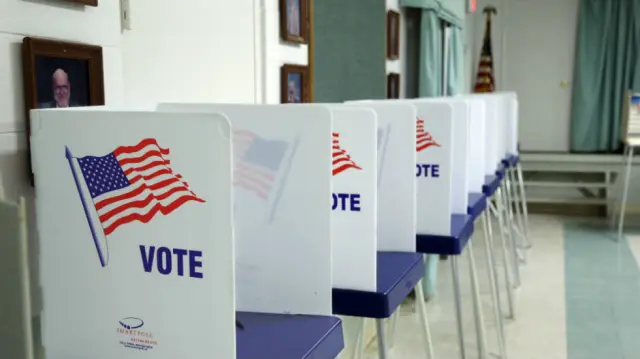
Pennsylvanian officials are fuming about voter confidence in the electoral process being undermined after touchscreen voting machines used in the state’s local elections suffered a serious glitch earlier this month. The error caused “significant confusion” among election safety workers and members of both parties, with Northampton residents who voted in person on November 7th learning their printouts from Election Systems and Software (ES&S) voting machines did not match the votes they had digitally submitted. Instead, the machines swapped voters’ choices in the written section of the ballot.

This was not the first instance of the same machines suffering glitches. In 2019, they significantly undercounted the number of votes for the Democratic candidate in the judges’ race.

ES&S and Northampton say the errors were spotted and did not impact any results. A growing number, however, have begun questioning whether it is too risky to use the machines in the 2024 presidential election. Especially since Northampton is a contested county in the key state of Pennsylvania.

No Trust.

“Since 2019, the theory has been well, that was a big mistake, but we caught it and we’ve implemented new processes to make sure nothing like that would ever happen again,” said the chair of the Northampton County Democratic Party, Matthew Munsey. But after the latest glitch, “I don’t know how we can restore trust with these machines.”

Republican Committee Chair Glenn Geissinger argued: “In 2019, when the issues came up with the touchscreens, we were told, ‘Don’t worry about it. The cards are recording the votes… OK, you’re telling me now, in 2023, ‘Don’t worry about what’s printed on the card?”

Multiple voting rights groups have since called for a full investigation into the incident. Phillip Hensley-Robin, the executive director of one of the groups, said in a statement, “We must reassure voters that steps are being taken to prevent this kind of mistake in the future.”

show less

Pennsylvanian officials are fuming about voter confidence in the electoral process being undermined after touchscreen voting machines used in the state's local elections suffered a serious glitch earlier this month. The error caused "significant confusion" among election safety workers and members of both parties, with Northampton residents who voted in person on November 7th learning their printouts from Election Systems and Software (ES&S) voting machines did not match the votes they had digitally submitted. Instead, the machines swapped voters' choices in the written section of the ballot. show more

Democrat Co-Authored ‘Demonic’ Books, Supported Satanic ‘After-School Club’.

Jeremy D. Rodden, a Democratic candidate running to become a member of the Virginia House of Delegates, has published or contributed to “demonic” books and supported sending his children to an after-school Satan Club.

Rodden, whose election bid is supported by the Democratic Party, Virginia’s Planned Parenthood, and former Barack Obama administration attorney Eric Holder, has contributed to disturbing books such as “Demonic Carnival: First Ticket’s Free,” “Demonic Household,” “UnCommon Evil: A collection of Nightmares, Demonic Creatures, and UnImaginable Horrors,” and “Demonic Wildlife.”

The self-described “stay-at-home dad of three” attained notoriety in his area in February last year after he called an after school club organized by the Satanic Temple “good news.”

He posted on Facebook in subsequently deleted posts, “I can’t wait to sign up my second grader for this after-school club… Note for those who don’t know: this club does not practice any religious indoctrination whatsoever, unlike some of the other clubs offered at this school…”

Predictably, responses from other parents were not as welcoming, including one who said he was “appalled” and would not “tolerate” the club. “I will not be scared to stand up for the safety of our future generations and I will not be quiet because it may ‘offend’ people,” he said.

Rodden is standing as a candidate in District 90 in the Old Dominium, with voting to commence on November 7.

show less
Jeremy D. Rodden, a Democratic candidate running to become a member of the Virginia House of Delegates, has published or contributed to "demonic" books and supported sending his children to an after-school Satan Club. show more

🚨 Mail-In Voting is Up By Nearly 20% in Ohio.

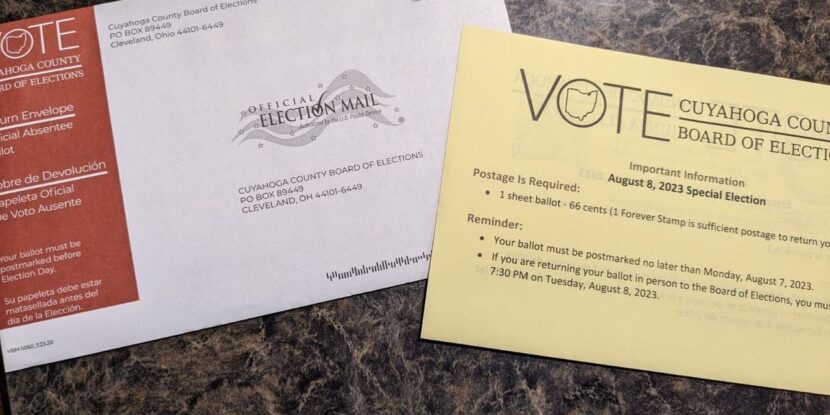
Officials reported a significant uptick in turnout for early voting with less than a week remaining in Ohio’s state-wide elections.

They anticipate both the number of in-person votes and mail-in ballot submissions to experience large increases, with Melanie Amato, the Secretary of State’s office director of communications, disclosing that more than 200,000 people have already voted in person, and approximately 110,000 mail-in ballots have been tallied.

Compared to previous data, these figures demonstrate a noteworthy surge. The stats surpass the August pre-election numbers of 192,000 in-person voters and 93,000 mail-in ballots.

Polling stations will welcome Ohioans on November 7th, where locals will also be casting votes on two critical statewide issues: access to abortion in the state, and legalizing possession of marijuana.

show less
Officials reported a significant uptick in turnout for early voting with less than a week remaining in Ohio's state-wide elections. show more
soros ukraine

Soros Groups Demand NO ELECTIONS Be Held in Ukraine… to Preserve Democracy?

Over 100 Ukrainian NGOs – including those financed by George Soros’s Open Society Foundations – have signed a public appeal to demand there be no national elections in the country next year, suggesting that holding a democratic election in which Zelensky‘s position as President would be in doubt could cause a “loss of legitimacy” in the electoral process.

The NGOs made the bizarre claim that “elections alone do not constitute democracy” and that voting is not necessarily the only means of showing a country is “truly democratic.”

They also gave a number of other reasons to postpone a general election until after the war in Ukraine is over, including the inability to ensure that all voters can participate, undermining national unity, the fact that a potential Russian missile strike could make voting impossible on election day, and that it would cost too much.

Ukraine is due to hold national elections in March next year, yet remains under martial law following President Zelensky’s swift decision to introduce it hours after Russia invaded on February 24, 2022. The Ukrainian government also banned the country’s second-largest party, “For Life,” in June last year, as well as 11 others it claimed were linked to Russia.

However, there have been growing calls among Ukrainian allies to ensure the elections go ahead next year, with figures such as U.S. Congressman Lindsey Graham arguing, “I want free and fair elections to occur in this country, even under attack… I believe it’s time for Ukraine to take the next step in its democratic development.”

show less
Over 100 Ukrainian NGOs – including those financed by George Soros's Open Society Foundations – have signed a public appeal to demand there be no national elections in the country next year, suggesting that holding a democratic election in which Zelensky's position as President would be in doubt could cause a "loss of legitimacy" in the electoral process. show more
illegal migrant voting

Voters Say Migrants Voting Illegally Will Affect 2024 Election Outcome.

A majority of Americans – 51 percent – believe that illegal migrants may cast ballots in the 2024 presidential election and influence the outcome, according to a recent survey conducted by Rasmussen Reports. The study also found that almost one in four Democrats (23 percent) said illegal migrants should be allowed to vote.

Of the 51 percent who fear the situation, 28 percent believe it is “very likely” and another 23 percent “somewhat likely.” Republicans are overwhelmingly in agreement at 72 percent, with 43 percent answering “very likely” and another 29 percent answering “somewhat likely.”

A total of 44 percent say it is unlikely, with 22 percent telling pollsters it was “not at all likely” and 20 percent answering “not very likely.” Eight percent were undecided.

Rasmussen also asked the 1,035 likely U.S. voters: “How important is it to prevent illegal immigrants from voting in U.S. elections?” To which the vast majority of respondents – 77 percent – answered either “very important” or “somewhat important.”

Majorities of both Democrat and Republican voters agreed it was important, with only 33 percent of Democrats and 15 percent of GOP voters answering either “not very important” or “not at all important.”

This sentiment was further reflected after Rasmussen asked whether “illegal immigrants be allowed to vote in U.S. elections?” A whopping 80 percent answered “no.” A mere 13 percent answered “yes.”

show less
A majority of Americans – 51 percent – believe that illegal migrants may cast ballots in the 2024 presidential election and influence the outcome, according to a recent survey conducted by Rasmussen Reports. The study also found that almost one in four Democrats (23 percent) said illegal migrants should be allowed to vote. show more
zelensky

Ukraine’s First Lady Unsure If Husband Zelensky Will Run For Re-Election.

Olena Zelenska, the wife of Ukrainian President Volodymyr Zelensky, appeared unsure during an interview if her husband would run for re-election in 2024 as the country continues to fight a war with Russia. Zelenska also indicated that she hasn’t always been as supportive of her husbands political aspirations.

“Even when he ran for the first time, I didn’t fully endorse it,” Ukraine’s First Lady told Margaret Brennan on CBS’s ‘Face the Nation’. “But if he runs again, if he runs for the second time, if he decided it is necessary — well, we have some experience, we’ve been there.” Zelenska’s emphasis on ‘if’ seemed to suggest that her husband was still weighing weather to seek re-election as leader of the war-torn country. She added that if Ukrainians “…no longer wish him to be the president, he will probably not run.”

The First Lady of Ukraine also seemed to suggest the 2024 elections in the country might not occur at all.

Western leaders like Dutch head of the Council of Europe’s Parliamentary Assembly, Tiny Knox, have encouraged Ukraine to move forward with their 2024 elections despite the country being under martial law. U.S. lawmakers like Sens. Lindsey Graham (R-SC), Richard Blumenthal (D-CT), and Elizabeth Warren (D-MA) have also pushed for Ukrainian elections next year.

Ukrainian officials have said they believe holding open elections in the midst of the ongoing war may be impossible. At least one security official said in an interview that they believed the push for elections by Western leaders was a Russian conspiracy, adding, “There is no situation in which it is possible to have a democratic election during the war.”

show less
Olena Zelenska, the wife of Ukrainian President Volodymyr Zelensky, appeared unsure during an interview if her husband would run for re-election in 2024 as the country continues to fight a war with Russia. Zelenska also indicated that she hasn't always been as supportive of her husbands political aspirations. show more

1 in 3 Europeans Are Now Voting for Populist Parties.

Just under one-third of Europeans – 32 percent – have started voting for both left-wing and right-wing populist political parties over the past several years as trust in establishment parties has plummeted, according to a recent analysis conducted across 31 countries.

Right-wing populist parties in particular “have really broadened their voter base and are forging coalitions of voters with very different concerns,” argues Daphne Halikiopoulou, comparative political scientist at the University of York and a PopuList co-author.

Europe has witnessed electoral success for populists in countries across the continent, including Sweden, the Netherlands, France, Austria, Germany, Italy, Poland, Hungary, and Spain, with a number of those going to the national polls within the next 12 months.

The share of the vote for populist parties has skyrocketed in recent years, as only 20 percent of Europeans voted for anti-establishment parties in the early 2000s, with even fewer in the 1990s, at just 12 percent. The researchers highlight a number of current political trends as the contributing factors, such as mass uncontrolled immigration from the third world, climate change – all but accepted as sacrosanct by the political mainstream – and other “culture war” issues.

Despite some fluctuation in the vote share, “the underlying trend is the numbers keep rising,” argues Matthijs Rooduijn, a political scientist at the University of Amsterdam, who led the research.

“Mainstream parties are losing votes; anti-establishment parties are gaining,” Rooduijn added.

Recent polling similarly found that right-wing populist parties are also expected to make major gains in next year’s European elections.

show less
Just under one-third of Europeans – 32 percent – have started voting for both left-wing and right-wing populist political parties over the past several years as trust in establishment parties has plummeted, according to a recent analysis conducted across 31 countries. show more
right wing parties

Right-Wing Parties Expected To SURGE In Europe.

Right-wing populist parties are expected to make large gains in the 2024 European elections, reflecting a continent-wide trend in national politics that is seeing voters flock to increasingly conservative parties.

The European Conservatives and Reformists (ECR), advocating for greater member state sovereignty and stricter immigration control, among other things, is set to become the joint third-biggest party in the European Parliament with 89 seats – a “massive” 23-seat gain since 2019 – according to POLITICO’s in-house polling.

The populist Identity and Democracy Party, demanding increased security for native Europeans and tackling illegal immigration, is expected to win 77 seats, representing a 15-seat rise and driven by the recent success of Germany‘s Alternative for Germany (AfD) party, which recently achieved its first “landmark victory” and is polling second across the country with 21 percent of the popular vote.

The right’s gains would come at the cost of the centrist and left-wing parties. The European People’s Party (EPP) – currently the largest group in the European Parliament – is expected to lose 12 seats, bringing the total number to 165, with the far-left Greens predicted to lose a whopping 24 seats, maintaining only 48.

The elections are due to be held between June 6-9 next year, with the number of European Parliament Members expected to grow from 705 to 720.

show less
Right-wing populist parties are expected to make large gains in the 2024 European elections, reflecting a continent-wide trend in national politics that is seeing voters flock to increasingly conservative parties. show more

Editor’s Notes

Behind-the-scenes political intrigue exclusively for Pulse+ subscribers.

RAHEEM J. KASSAM Editor-in-Chief
REMINDER: 2024 will likely be the first year we see a UK general election, US general election, and European parliamentary elections all in the same year
REMINDER: 2024 will likely be the first year we see a UK general election, US general election, and European parliamentary elections all in the same year show more
for exclusive members-only insights
spain

Spain’s Complex Elections: Neo-Cons Largest Party But Far-Left Claims Win.

There has been no clear winner in the Spanish general election, with the neo-conservative People’s Party (PP) and the Spanish Socialist Workers Party (PSOE) – currently in office – both failing to achieve an outright majority.

The PP won 136 seats, 14 more than the PSOE, which won 122, but a party or coalition must attain a majority of 176 in the 350-seat Spanish parliament in order to govern. If a coalition cannot be formed, the previous government can actually continue for the next four years, even without a mandate. The parties will now endure months of negotiations with smaller partners.

The right-wing populist VOX Party obtained just 33 seats, which still makes it the third-largest party in the country. A coalition between PP and VOX would fail to obtain an outright majority, despite initially being considered likely. Leader of Vox, Santiago Abascsal, argued after the results were announced:

“I’d like to point out something that’s bad news for many Spaniards: despite losing the election, Pedro Sánchez [leader of PSOE and the current Prime Minister of Spain] can block the formation of a new government. Worse still, Pedro Sánchez could even be invested as prime minister with the help of communists, [Catalan] independence supporters and terrorists.”

The extreme left-wing party Sumar – led by the lifelong communist Yolanda Diaz – came fourth with 31 seats but, once again, would be unable to offer PSOE a majority in the parliament. Two regional Catalan and Basque separatist parties collected 13 seats between them and have already supported the current government, giving rise to a potential alliance.

Communist Diaz suggested the left won after the results were publicized on Sunday night: “We’ve won. Today we have a better country. From tomorrow, we have to keep winning rights and we are committed to doing that – more rights for women, for LGBTI people and for workers.”

show less
There has been no clear winner in the Spanish general election, with the neo-conservative People's Party (PP) and the Spanish Socialist Workers Party (PSOE) – currently in office – both failing to achieve an outright majority. show more
dominion

Stunning ‘Halderman Report’ Reveals ‘Critical Vulnerabilities’ in Dominion Machines.

The 2021 Halderman Report, released this past week, lays bare a litany of “critical vulnerabilities” in Dominion Voting Systems’ machines, currently being used in a number of states, and in all voting locations in the U.S. state of Georgia.

Compiled by Prof. Alex Halderman and Prof. Drew Springall as part of the lawsuit Curling v. Raffensperger, the newly released though still partly redacted report explains how ballot scanners ad ballot marking devices (ICX), “can be exploited to subvert all of its security mechanisms” and that “ICX could be used to change the votes of individual Georgia voters.”

The seven principles findings establish that “attackers can alter the QR codes on printed ballots,” and that attackers “can install malware with only brief physical access to the machines.”

“An attacker with brief access to a single ICX or a single Poll Worker Card and PIN can obtain the county-wide [cryptographic] keys,” writes Halderman, warning that “[a] dishonest election worker… with just brief access to the scanner’s memory card could violate ballot secrecy and determine how individual voters voted.”

The security issues are so bad, the report says, that “merely patching these specific problems is unlikely to make the ICX substantially more secure… It is very likely that there are other, equally critical flaws… yet to be discovered.”

The 96-page report is extremely technically detailed, with Halderman showing how “ICX malware can still change individual votes and most election outcomes without detection.” Even the “auditability of the ballots” can be compromised, and “such cheating could not be detected by [a risk limiting audit] or a hand count.”

“My technical findings leave Georgia voters with greatly diminished grounds to be confident that the votes they cast on the ICX BMD are secured,” Halderman concludes.

By November 2020, 24 states used one or more components of the Dominion Democracy Suite voting system, and the ICX mentioned used in 16 states, with Georgia mandating the system as the primary method of voting.

show less
The 2021 Halderman Report, released this past week, lays bare a litany of "critical vulnerabilities" in Dominion Voting Systems' machines, currently being used in a number of states, and in all voting locations in the U.S. state of Georgia. show more

Editor’s Notes

Behind-the-scenes political intrigue exclusively for Pulse+ subscribers.

RAHEEM J. KASSAM Editor-in-Chief
I suppose we’re all “machine guys” now
I suppose we’re all “machine guys” now show more
for exclusive members-only insights