



Thursday, May 7, 2026

Trump Slaps New Tariffs on European Union.

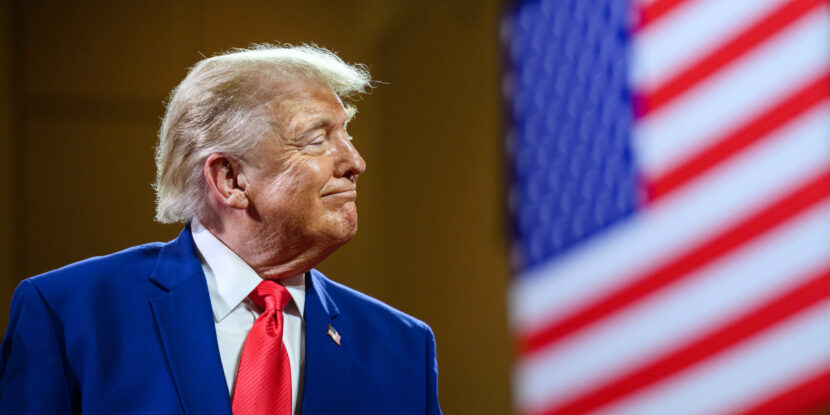
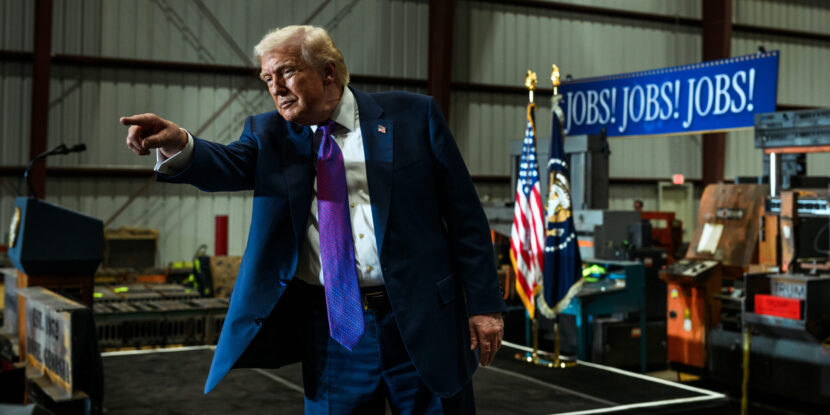
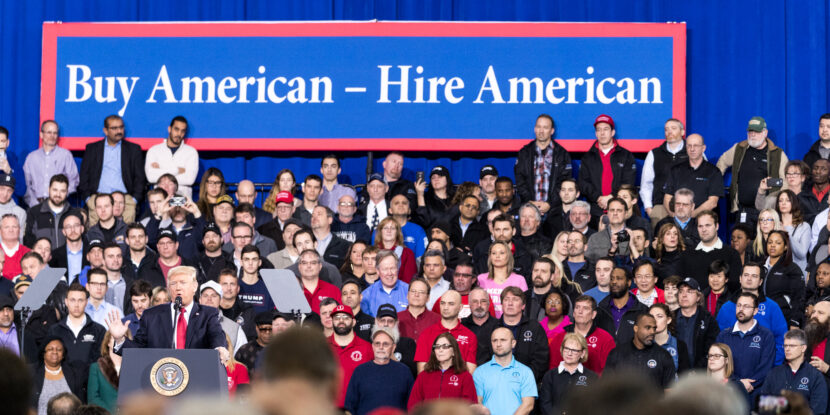
President Donald J. Trump has raised tariffs on vehicles made in the European Union (EU), saying the bloc has failed to comply with the terms of its trade agreement with the U.S.

PULSE POINTS
❓ WHAT HAPPENED: President Donald J. Trump has announced a 25 percent tariff on cars and trucks manufactured in the European Union (EU). The tariffs are set to take effect next week.
📺 DETAIL: On Friday, President Donald J. Trump announced that cars and trucks made in the EU would be hit with a 25 percent tariff starting next week. The President said the tariff was a response to the EU’s failure to comply with the terms of its trade deal with the U.S. Trump emphasized that vehicles made in U.S.-based facilities would not be subject to the new tariffs. The move is part of a broader economic strategy to encourage car manufacturers to relocate to the U.S. and boost the country’s domestic market.
💬 KEY QUOTE: “I am pleased to announce that, based on the fact the European Union is not complying with our fully agreed to Trade Deal, next week I will be increasing Tariffs charged to the European Union for Cars and Trucks coming into the United States. The Tariff will be increased to 25%. It is fully understood and agreed that, if they produce Cars and Trucks in U.S.A. Plants, there will be NO TARIFF… There has never been anything like what is happening in America today!” – President Donald J. Trump on Truth Social.
🎯 IMPACT: The tariff comes as relations between the U.S. and the EU are heavily strained. Trade, along with defense spending and Iran, is among several points of contention between the United States and the EU. The tariff on EU-made vehicles comes a day after the President announced the suspension of all tariffs and restrictions on Scotch imports from Britain, a decision characterized by President Trump as a gesture of goodwill towards King Charles III and Queen Camilla, both of whom visited the United States for a four-day state visit this week.

Join Pulse+ to comment below, and receive exclusive e-mail analyses.

show less
President Donald J. Trump has raised tariffs on vehicles made in the European Union (EU), saying the bloc has failed to comply with the terms of its trade agreement with the U.S.

show more

FTC Launches ‘Made in USA’ Enforcement to Shield Consumers, Support Domestic Businesses.

The Federal Trade Commission has taken enforcement action against three companies for falsely advertising their products as “Made in the USA.”

PULSE POINTS
❓ WHAT HAPPENED: The Federal Trade Commission (FTC) announced enforcement actions against three companies—TouchTunes Music Company, Americana Liberty LLC, and Oak Street Manufacturing Company—for falsely advertising their products as “Made in the USA,” alleging that some products were merely assembled in the United States using imported components.
📺 DETAIL: Each company was found to have violated FTC rules by advertising products as “Made in the USA” despite using significant foreign components or manufacturing processes. For example, TouchTunes falsely claimed its electronic dartboards were U.S.-made, even though key parts essential to the product’s function were imported from overseas. Americana Liberty falsely labeled flags and related products as American-made, while Oak Street misrepresented its footwear as entirely U.S.-crafted, even though components and assembly were outsourced to foreign factories. Such schemes have been observed elsewhere, with some Italian luxury brands caught importing goods and simply attaching a single component, such as a bag handle, to claim they are “Made in Italy.”
🎯 IMPACT: These enforcement actions include financial penalties—$625,000 for TouchTunes, $167,743 for Americana Liberty, and $75,000 for Oak Street—and require the companies to cease their misleading advertising practices. The FTC emphasized its commitment to protecting consumers and ensuring fair competition for businesses that genuinely invest in American manufacturing.
💬 KEY QUOTE: “The FTC is committed to ensuring that ‘Made in the USA’ claims are truthful and trustworthy.” – Christopher Mufarrige, Director of the FTC’s Bureau of Consumer Protection.
📺 FLASHBACK: These actions follow a March Executive Order by President Donald J.Trump aimed at ensuring truthful advertising of “Made in the USA” claims, as well as prior FTC warnings to the companies involved.

Join Pulse+ to comment below, and receive exclusive e-mail analyses.

show less
The Federal Trade Commission has taken enforcement action against three companies for falsely advertising their products as "Made in the USA."

show more

Trump Economy: U.S. Industrial Output Soars in January.

PULSE POINTS

WHAT HAPPENED: Industrial Production in the U.S. surged 0.7 percent in January, exceeding expectations and marking the third consecutive monthly increase.

👤WHO WAS INVOLVED: U.S. manufacturers and industrial sectors, along with President Donald J. Trump and American consumers.

📍WHEN & WHERE: January 2026, across the United States.

🎯IMPACT: Positive trends in industrial production and manufacturing output reflect continued economic resilience.

IN FULL

Industrial Production surged 0.7 percent in January, surpassing the expected 0.4 percent and improving significantly from December’s revised 0.2 percent growth. The production data indicates that the U.S. economy continues to maintain a position of strength despite establishment economists’ claims that a slowdown is imminent.

Notably, this marks the third consecutive month of growth in Industrial Production, bringing annual growth to 2.3 percent, the strongest since September 2022. Manufacturing output also rose 0.6 percent in January, exceeding expectations and representing the best monthly gain since February 2025.

Meanwhile, capacity utilization increased to 76.2 percent, continuing a positive trend that began near the start of President Donald J. Trump‘s second term—though it fell slightly below projections. Additionally, the Institute for Supply Management (ISM) Manufacturing Index saw a sharp rise in January, diverging from the ‘soft’ data trends observed throughout the year.

When combined with pricing and other economic data, the trends suggest the U.S. economy continues to stabilize and strengthen heading into the 2026 midterm elections, despite counterclaims by some economists who have continually argued the administration’s tariff policies will trigger a downturn.

The National Pulse reported earlier on Wednesday that the Trump White House’s Director of the National Economic Council, Kevin Hassett, took aim at a research paper published by the New York Federal Reserve Bank that claims tariff costs are predominantly being passed on to American consumers. “The paper is an embarrassment,” Hassett said, adding, “It’s, I think, the worst paper I’ve ever seen in the history of the Federal Reserve System.”

Join Pulse+ to comment below, and receive exclusive e-mail analyses.

show less
show more

Eli Lilly Invests $3.5 Billion in America for Advanced Obesity Drugs Plant.

PULSE POINTS

WHAT HAPPENED: Eli Lilly announced plans to invest over $3.5 billion to build a manufacturing plant in Pennsylvania’s Lehigh Valley to produce next-generation obesity drugs.

👤WHO WAS INVOLVED: Eli Lilly, CEO Dave Ricks, President Donald J. Trump, and rival pharmaceutical company Novo Nordisk.

📍WHEN & WHERE: The announcement was made on Friday, with construction expected to begin this year in Pennsylvania. The site is projected to be operational by 2031.

💬KEY QUOTE: “Lilly CEO Dave Ricks has told me the drugmaker aims to build six plants in the U.S.” – President Donald Trump

🎯IMPACT: The plant will create 850 permanent jobs and 2,000 construction jobs, while advancing production capacity for obesity treatments.

IN FULL

Pharma giant Eli Lilly said it will invest $3.5 billion to build a new manufacturing facility in Pennsylvania’s Lehigh Valley, expanding its U.S. production footprint as demand for obesity and diabetes drugs continues to surge. The plant will focus on making next-generation obesity treatments, including retatrutide, an experimental drug that has delivered strong weight-loss results in late-stage clinical trials. Construction is expected to begin this year, with the facility scheduled to start operations in 2031. Once fully operational, the site is expected to employ about 850 full-time workers, including engineers, scientists, and technicians, and support roughly 2,000 construction jobs during the building phase.

The Pennsylvania project marks the fourth major U.S. manufacturing facility announced by the pharmaceutical giant in recent years. Lilly has pledged at least $27 billion toward new domestic manufacturing investments, in addition to roughly $23 billion it has spent in the United States since 2020. CEO Dave Ricks has reportedly told President Donald J. Trump that the company plans to build six U.S. plants, although Lilly has not formally confirmed that number.

The investment comes as drugmakers race to expand manufacturing capacity for GLP-1-based therapies, which have reshaped the treatment of obesity and type 2 diabetes. Obesity rates continue to climb worldwide, with projections showing that more than half of adults could be overweight or obese by mid-century, contributing to a sharp rise in diabetes and related chronic diseases.

Beyond healthcare, the widespread use of effective weight-loss drugs has drawn attention for its broader economic impact. Analysts have suggested that large-scale weight reduction could lower costs in industries such as aviation by reducing fuel consumption, while governments have focused on improving access to the medications to curb long-term healthcare spending.

Lilly recently overtook Novo Nordisk in the GLP-1 market, though Novo is seeking to regain ground with plans to launch the first GLP-1 pill for obesity. Both companies have increased U.S. investments following earlier tariff threats from President Trump, which have since eased after voluntary drug pricing agreements aimed at lowering costs for patients.

Image by Towfiqu barbhuiya.

Join Pulse+ to comment below, and receive exclusive e-mail analyses.

show less
show more

Trump Cuts Biden-Era ‘Green Tape’ to Boost U.S. Coke and Steel Industries.

PULSE POINTS

WHAT HAPPENED: President Donald J. Trump signed a Proclamation granting two years of regulatory relief from a stringent Biden-era regulation on coke oven facilities.

👤WHO WAS INVOLVED: President Donald J. Trump and the Environmental Protection Agency (EPA).

📍WHEN & WHERE: Announced on November 21 in the United States.

💬KEY QUOTE: “This exemption ensures that critical coke production assets can continue to operate uninterrupted to support national security without incurring substantial costs to comply with unattainable compliance requirements.” – The White House.

🎯IMPACT: Protects America’s steelmaking capacity, reduces reliance on foreign metals, and supports national security and industrial strength.

IN FULL

President Donald J. Trump on Friday issued a Proclamation granting a two-year suspension of Biden-era Environmental Protection Agency (EPA) rules for select coke-oven facilities, allowing them to operate under earlier, less restrictive standards. The administration says the move is necessary to protect plants that play a central role in domestic steel production and, by extension, national security.

Metallurgical coke is used in roughly 70 percent of all U.S. steelmaking, and industry officials had warned that stricter emissions limits imposed under the previous administration would force costly upgrades using technologies they say are not yet commercially viable. The White House described the Biden-era rules as “costly and unattainable compliance requirements… the necessary technologies do not yet exist in commercially viable or cost-effective forms.” Trump officials argue that without temporary relief, facilities risk shutdowns, job losses, and disruptions to the steel supply chain.

“This exemption ensures that critical coke production assets can continue to operate uninterrupted to support national security without incurring substantial costs to comply with unattainable compliance requirements,” the White House stated.

The Proclamation is intended to prevent long-term weakening of the nation’s steel capacity and to avoid increasing dependence on foreign suppliers. The decision fits into Trump’s larger effort to reverse environmental policies he says burden U.S. industry.

Earlier this year, he signed executive orders aimed at reviving the coal sector by streamlining permitting, lifting restrictions on federal coal leasing, and designating coal as a critical mineral. Trump has framed these moves as essential to restoring American energy independence and meeting rising electricity demand driven by data centers and advanced manufacturing. He has said he wants to “bring back an industry that was abandoned,” arguing that coal remains vital to a reliable energy grid.

Energy Secretary Chris Wright has emphasized that the administration’s “energy dominance” strategy seeks not only to expand domestic production but also to strengthen U.S. geopolitical leverage. During recent meetings with European officials, Wright said the United States has the resources to be a “key energy supplier to our allies around the world,” pointing to expanding U.S. energy exports and long-term purchasing agreements with European partners. He argues that the strategy reduces Europe’s reliance on adversarial suppliers and reinforces transatlantic energy security.

Join Pulse+ to comment below, and receive exclusive e-mail analyses.

show less
show more

Trump Tariffs Push GE Appliances to Shift Production from China to Kentucky.

PULSE POINTS

WHAT HAPPENED: GE Appliances announced over $150 million in new U.S.-based supplier contracts as part of its plan to shift production from China to Kentucky.

👤WHO WAS INVOLVED: GE Appliances, U.S.-based suppliers, GE Appliances Vice President Lee Lagomarcino, and U.S. President Donald J. Trump.

📍WHEN & WHERE: Announced Thursday, production to begin in early 2027 at Appliance Park in Louisville, Kentucky.

💬KEY QUOTE: “When we invest in U.S. manufacturing and our people, it drives growth far beyond our own walls,” said Lee Lagomarcino, a GE Appliances vice president.

🎯IMPACT: The contracts will increase GE Appliances’ domestic supplier spending by 3.3 percent, create 800 jobs, and expand the company’s U.S. manufacturing footprint.

IN FULL

GE Appliances has announced over $150 million in new contracts with U.S.-based suppliers as part of its effort to shift production from China to its Louisville, Kentucky facility. The contracts, which range in value from $330,000 to $41 million, cover key supply chain segments such as plastics, steel, aluminum, and castings. The suppliers include companies of various sizes, from U.S. Steel to smaller, family-owned businesses.

The new contracts will support the production home appliances including a combo washer/dryer and a lineup of front-load washers, which GE Appliances plans to manufacture domestically by 2027. The company is investing $490 million to retool its Louisville plant, a move expected to create 800 new jobs. The expansion will increase the facility’s total production footprint to the equivalent of 33 football fields.

“When we invest in U.S. manufacturing and our people, it drives growth far beyond our own walls,” said Lee Lagomarcino, a GE Appliances vice president. He added: “These new supplier contracts represent what ‘Built for America’ is all about—investing in U.S. manufacturing, creating more American jobs and building opportunity that multiplies.”

The contracts are part of GE Appliances’ broader $3 billion commitment over five years to bolster U.S. manufacturing, reshore production, and create over 1,000 jobs. The company has already increased its domestic supplier spending by 69 percent since 2019 and now works with more than 6,500 U.S. suppliers. The new contracts will increase its domestic spending by an additional 3.3 percent.

President Donald J. Trump’s tariff policies have played significant roles in recent decisions by major corporations to reshore and relocate key production to the United States. Still, Lagomarcino contends there are advantages beyond the tariff savings, such as shorter lead times, reduced transportation costs, and improved collaboration with suppliers.

GE Appliances also has plans to shift production of refrigerators, gas ranges, and water heaters from China and Mexico to its U.S. facilities.

Join Pulse+ to comment below, and receive exclusive e-mail analyses.

show less
show more

Manufacturing Investment Is Surging Under Trump.

PULSE POINTS

WHAT HAPPENED: Major corporations have announced billions in new investments to onshore production and create thousands of American jobs under President Donald J. Trump’s tariff and regulatory policies.

👤WHO WAS INVOLVED: Companies like Stellantis, Whirlpool, and GE Aerospace, among others, alongside the Trump Administration.

📍WHEN & WHERE: Announcements were made over the past week, with investments targeting facilities across Illinois, Ohio, Michigan, and Indiana.

🎯IMPACT: Thousands of jobs created, advanced workforce training programs initiated, and a strengthened U.S. manufacturing sector.

IN FULL

The American manufacturing sector continues to see a surge in investment under President Donald J. Trump’s tariff and deregulation policies. According to the White House, over the past week, a new round of major corporations has pledged significant investments aimed at onshoring their production, resulting in new jobs for American workers.

Stellantis, the parent company of U.S. automotive brands Chrysler and Jeep, announced it will invest $13 billion in domestic American production, the single most significant investment in its history. The company says it is seeking to increase U.S.-based production by 50 percent by 2030. Additionally, Stellantis announced it will re-open its Belvidere, Illinois, plant and add production at its Toledo, Ohio; Warren, Michigan; Detroit, Michigan; and Kokomo, Michigan plants. According to the company, the production increases will bring 5,000 new jobs and the production of five new vehicles to the U.S.

Meanwhile, Whirlpool Corporation says it plans a $300 million investment in its U.S. laundry manufacturing facilities in Ohio as part of an effort to “grow its American manufacturing footprint.” The company says this expansion will create upwards of 600 new jobs.

Additionally, the GE Aerospace Foundation—funded by General Electric (GE) Aerospace—is rolling out a $30 million workforce skills training program that will help prepare a new generation of high-skilled American workers. This program aims to ensure the country’s workforce has the skills necessary for advanced manufacturing within the aerospace industry.

Other major U.S. expansions include companies like Pfizer, GSK, Eli Lilly, AstraZeneca, Amgen, Hitachi, and ABB.

Join Pulse+ to comment below, and receive exclusive e-mail analyses.

show less

show more

Trump Economy Surges as Consumer Spending Rises, Trade Deficit Shrinks.

PULSE POINTS

WHAT HAPPENED: America’s economic resurgence under President Trump continues as Q2 2025 GDP growth is revised up to 3.8 percent, reflecting strong consumer spending, rising incomes, and a narrowing trade gap.

👤WHO WAS INVOLVED: President Donald J. Trump, White House Deputy Press Secretary Kush Desai, and economic analysts.

📍WHEN & WHERE: Q2 2025, United States.

💬KEY QUOTE: “America’s economic resurgence under President Trump continues: revised data show even stronger real GDP growth of 3.8 percent in Q2 2025 thanks to the Trump agenda of tax cuts, deregulation, tariffs, and energy abundance. And this is just the beginning.” – Kush Desai

🎯IMPACT: The fastest economic growth in nearly two years, increased small business confidence, and a surge in durable goods demand signal a robust U.S. economy powered by private sector growth.

IN FULL

Second-quarter GDP has been revised up to 3.8 percent, after the initial print in July showed GDP at 3.0 percent. Notably, the revised number now puts second-quarter growth significantly higher than the forecasted 2.4 percent by economists surveyed by Bloomberg. The White House, hailing the news, credits the surge in economic development to President Donald J. Trump’s tariff policies, as well as the One Big Beautiful Bill Act’s tax cuts, deregulation, and energy abundance.

“America’s economic resurgence under President Trump continues: revised data show even stronger real GDP growth of 3.8 percent in Q2 2025 thanks to the Trump agenda of tax cuts, deregulation, tariffs, and energy abundance. And this is just the beginning: new data from today also shows core capital goods orders beat expectations, paving the way for robust investment growth in Q3,” White House Deputy Press Secretary Kush Desai said in a statement, adding: “President Trump pledged to Make America Wealthy Again, and with Joe Biden’s inflation crisis tamed, we are now laying the groundwork for a long-term restoration of American Greatness.”

In addition to the GPD revision, real disposable income growth was also revised up to 3.1 percent, showing significant gains in wages and income. This marks the fastest pace of economic growth in nearly two years.

Meanwhile, manufacturers’ demand for durable goods surged in August, exceeding expectations and signaling confidence in future investments. Factory production increased for goods and services, while government output decreased, highlighting private sector-driven growth.

According to the U.S. Chamber of Commerce, small business confidence has reached its highest level in nearly a decade. New home sales also soared in August, marking a three-year high and the strongest market for homebuyers in over a decade.

Join Pulse+ to comment below, and receive exclusive e-mail analyses.

show less
show more

Trump Moves to Restrict Chinese Access to Key American Technology.

PULSE POINTS

WHAT HAPPENED: The Trump administration has revoked special authorizations for foreign chipmakers in China, requiring licenses for access to American semiconductor manufacturing equipment.

👤WHO WAS INVOLVED: South Korea’s Samsung and SK Hynix, Intel, and U.S. equipment suppliers like KLA Corp., Lam Research, and Applied Materials.

📍WHEN & WHERE: The new restrictions were announced recently and will take effect in 120 days, applying to operations in China.

🎯IMPACT: The decision could benefit U.S. semiconductor firms like Micron and Intel.

IN FULL

The Trump White House has tightened export restrictions on foreign chipmakers operating in China, revoking special authorizations that previously allowed South Korea’s Samsung and SK Hynix to access American semiconductor manufacturing equipment without individual licenses. The move was announced in a Federal Register notice and ends exemptions granted in 2022 when sweeping limits on U.S. technology sales to China were first imposed.

Under the new rules, companies will now need licenses to obtain U.S. equipment for their Chinese facilities. Intel also appeared on the list of firms losing authorization, though it sold its Dalian facility in China earlier this year. The Commerce Department stated that licenses would be approved to maintain existing operations, but would not cover expansions or technology upgrades.

U.S. equipment suppliers like KLA Corp., Lam Research, and Applied Materials are the most likely domestic companies to be impacted by the new export restrictions, which could limit their sales to China. Shares of Lam Research fell by four percent, Applied Materials dropped 2.8 percent, and KLA slipped 2.4 percent on the news.

The restrictions come amid ongoing trade tensions between the U.S. and China, with both nations still operating under a tariff truce set to last until November. Notably, South Korea’s Samsung and SK Hynix—both reliant on Chinese semiconductor facilities—had previously benefited from a Validated End User status, which streamlined equipment shipments from U.S. suppliers. With the designation now revoked, the companies must operate under the same licensing rules as other foreign firms.

The revocations will not take effect for 120 days, giving businesses time to adjust.

Join Pulse+ to comment below, and receive exclusive e-mail analyses.

show less
show more

Here’s How Trump’s America First Economy Is Boosting Wages for the Average Worker:

PULSE POINTS

WHAT HAPPENED: President Donald J. Trump highlighted that his America First economic policies have resulted in a $500 wage increase for the average American worker this year, and the fastest blue-collar wage growth in 60 years.

👤WHO WAS INVOLVED: President Trump, Interior Secretary Doug Burgum, Energy Secretary Chris Wright, Agriculture Secretary Brooke Rollins, and Treasury officials.

📍WHEN & WHERE: Across the United States since Trump’s inauguration in January.

💬KEY QUOTE: “The wages for blue-collar workers are now rising at the fastest rate in 60 years, which is so important to all of us around this table. The average American worker has already seen a $500 wage increase this year.” — President Trump

🎯IMPACT: Workers’ incomes are outpacing inflation, increasing purchasing power and signaling continued economic growth.

IN FULL

President Donald J. Trump has announced to the Cabinet that blue-collar wages are rising at the fastest rate in six decades, with the average American worker seeing a $500 wage increase this year. Trump emphasized the importance of this growth, noting its positive impact on American families and the broader economy.

“The wages for blue-collar workers are now rising at the fastest rate in 60 years, which is so important to all of us around this table. The average American worker has already seen a $500 wage increase this year,” Trump stated. He also highlighted that wages are outpacing inflation, providing workers with increased purchasing power.

Trump credited the stabilization of inflation to American energy production, thanking Interior Secretary Doug Burgum and Energy Secretary Chris Wright for their efforts. “There’s no inflation because there’s been decreases, tremendous decreases, thanks to Doug and Chris, some of the people, the great job they’ve done with energy. Thank you very much,” Trump said. He also pointed to declining grocery prices, praising Agriculture Secretary Brooke Rollins for her contributions.

Joe Lavorgna, senior adviser to Treasury Secretary Scott Bessent, echoed Trump’s optimism. He noted that the current 1.4 percent annualized wage growth for blue-collar workers is the second-fastest start for any administration in six decades, surpassed only by Trump’s first term. Lavorgna added that the recently passed One Big Beautiful Bill, which includes incentives for factory and plant construction, will further boost blue-collar wages and job opportunities.

“Those are carpenters, electricians, plumbers, laborers,” Lavorgna explained, adding: “It also includes things like nursing assistants, people that work in retail and wholesale trade, basically the backbone of the economy. Those workers are going to benefit from the increased capital that companies are incentivized now to make those commitments, in addition to the building of factories.”

Join Pulse+ to comment below, and receive exclusive e-mail analyses.

show less
show more