



Thursday, October 22, 2026

Texas Supreme Court Gives Dems Until Friday to Respond to Abbott’s Removal Order.

PULSE POINTS

❓WHAT HAPPENED: Texas Gov. Greg Abbott filed an emergency petition to the state Supreme Court to remove state Rep. Gene Wu from office after Wu fled with other Democrats to block a redistricting bill. The Texas Supreme Court took up the petition late Tuesday, giving Wu until Friday to respond.

👤WHO WAS INVOLVED: Gov. Greg Abbott (R-TX), state Rep. Gene Wu (D), Texas House Democrats, and Attorney General Ken Paxton (R-TX).

📍WHEN & WHERE: The petition was filed on Tuesday evening in Texas following the Democrats’ departure over the weekend.

đź’¬KEY QUOTE: “Absconding from the State during a constitutionally mandated session… constitutes a flagrant violation of Wu’s oath and is an intentional abandonment of his constitutional duty,” the lawsuit states.

🎯IMPACT: The Texas House Republicans plan to attempt reaching a quorum again on Friday, after failing earlier this week.

IN FULL

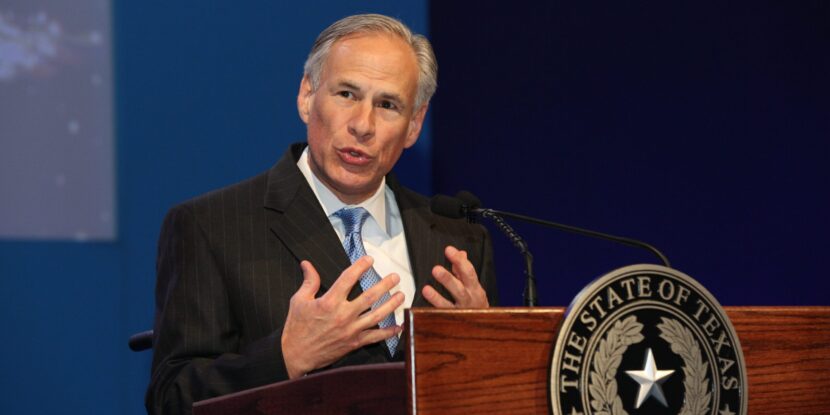
Governor Greg Abbott (R-TX) filed an emergency petition with the state Supreme Court on Tuesday to initiate removal proceedings against state Representative Gene Wu (D) and Texas House Democrats. Texas’s high court took up the petition late Tuesday evening, giving Wu until Friday to respond.

Wu, who serves as the Texas House Democratic Caucus chair, was among several Democratic lawmakers who left Texas to deny Republicans the quorum needed to pass a congressional map that could provide them with five additional pickup opportunities in the 2026 midterms.

According to Abbott’s filing, Wu violated the state Constitution by failing to return for the vote, claiming that his actions amounted to abandoning his office. The petition argued that maintaining quorum is “an affirmative constitutional obligation” and accused Wu of “openly renouncing these constitutional mandates by fleeing the State of Texas to break quorum.”

Responding to the accusations in a statement, Wu said: “Let me be unequivocal about my actions and my duty. When a governor conspires with a disgraced president to ram through a racist gerrymandered map, my constitutional duty is to not be a willing participant.” He added, “Denying the governor a quorum was not an abandonment of my office; it was a fulfillment of my oath.”

The Texas Supreme Court quickly took up Gov. Abbott’s petition, giving Wu until 5:00 PM on Friday to respond.

The emergency petition follows remarks from Texas Attorney General Ken Paxton (R), who hinted at potential legal action over the situation. Texas House Republicans are expected to attempt to reach a quorum again on Friday, after failing on Monday and Tuesday.

Image by World Travel & Tourism Council.

Join Pulse+ to comment below, and receive exclusive e-mail analyses.

show less
show more

California Plans to Cut 5 GOP House Seats Through Gerrymandering.

PULSE POINTS

❓WHAT HAPPENED: California Democrats are proposing new political maps that could reduce five Republican-held House seats while strengthening Democratic margins in battleground districts.

👤WHO WAS INVOLVED: Governor Gavin Newsom (D-CA), California’s Democratic congressional delegation, and Republican Representatives Ken Calvert, Darrell Issa, Kevin Kiley, David Valadao, and Doug LaMalfa.

📍WHEN & WHERE: The proposal was discussed on Monday in California, with a potential special election planned for the first week of November.

💬KEY QUOTE: “California will not sit by idly and watch this democracy waste away,” said Governor Gavin Newsom.

🎯IMPACT: If approved, the new maps could increase Democratic seats in California from 43 to 48, further tipping the balance of the U.S. House in their favor.

IN FULL

California Democrats are advancing a draft proposal to redraw the state’s congressional district lines in a way that could significantly weaken Republican representation, while shoring up Democratic advantages in competitive regions. If enacted, the changes could increase the number of Democratic-held seats in California’s 52-member U.S. House delegation from 43 to 48.

Though the plan hasn’t been formally unveiled, it’s expected to target several Republican-controlled districts by reducing the number of conservative voters and boosting liberal turnout in those areas. Districts currently held by GOP Representatives Ken Calvert, Darrell Issa, Kevin Kiley, David Valadao, and Doug LaMalfa would be among those affected. On the other hand, seats held by Democrats Dave Min, Mike Levin, and Derek Tran would likely become more secure under the proposed boundaries.

Governor Gavin Newsom (D-CA) has indicated he’s prepared to move forward with the partisan redistricting effort, including calling a statewide vote on the matter. “California will not sit by idly and watch this democracy waste away,” Newsom said on August 4, underscoring his frustration with redistricting moves in other states, particularly Texas. He added that a special election could be scheduled for early November to allow voters to weigh in. Still, he emphasized he would reconsider if Texas Republicans paused their redistricting campaign.

This effort comes as a direct response to Texas Republicans’ push to reshape their state’s congressional map, which some claim is being done in favor of the GOP ahead of the 2026 elections. Democrat lawmakers tried to disrupt the process by fleeing the state to avoid voting on the redistricting plans. In response, Texas Governor Greg Abbott ordered the arrest and return of any member caught abandoning their duties.

California’s proposal aims to counterbalance those moves by strengthening Democratic margins in politically mixed regions such as Orange County, San Diego County, and parts of the Central Valley.

Still, the redistricting push faces hurdles. State lawmakers must approve the plan, and voters, who previously opted to hand over redistricting responsibilities to an independent commission, may be wary of what they perceive as a return to partisan gerrymandering.

Image by Gage Skidmore. 

Join Pulse+ to comment below, and receive exclusive e-mail analyses.

show less
show more