
Friday, January 23, 2026

‘GEORGE IS GETTING UPSET!’ – Seinfeld Actor Rage Quits X.

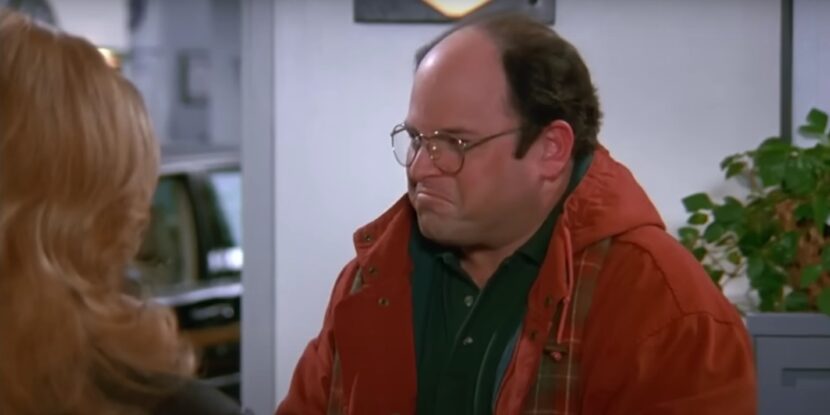
Jason Alexander, the 65-year-old actor best known for portraying the hapless George Costanza in Seinfeld, has rage quit X, formerly Twitter, following President-elect Donald J. Trump’s victory over Vice President Kamala Harris on November 5. Alexander joins several left-liberal public figures and organizations to have exited the platform, whose owner, Elon Musk, campaigned for Trump, in a fit of pique following the election.

“Well, everyone that cares… I am leaving this platform permanently. I will post this and then delete my account. For those who enjoy me, Im on Insta, Threads, and BlueSky [sic],” he wrote, referring to the X alternative set up by Jack Dorsey.

“I wish you all well. Take care and be good to each other. Best wishes always,” he added.

While some exiles from X have left their accounts dormant, leaving the option of returning open, Alexander deleted his entirely shortly after announcing his departure—perhaps irked by the flood of George Costanza memes and messages thanking him for “self-deporting” that the announcement prompted.

He had been heavily invested in the Democratic election campaign, fundraising for the party through the ActBlue platform, only to see it lose the White House, House of Representatives, and Senate to Trump.

show less
Jason Alexander, the 65-year-old actor best known for portraying the hapless George Costanza in Seinfeld, has rage quit X, formerly Twitter, following President-elect Donald J. Trump's victory over Vice President Kamala Harris on November 5. Alexander joins several left-liberal public figures and organizations to have exited the platform, whose owner, Elon Musk, campaigned for Trump, in a fit of pique following the election. show more

The Guardian Rage Quits ‘Toxic’ X After Trump’s Election Win.

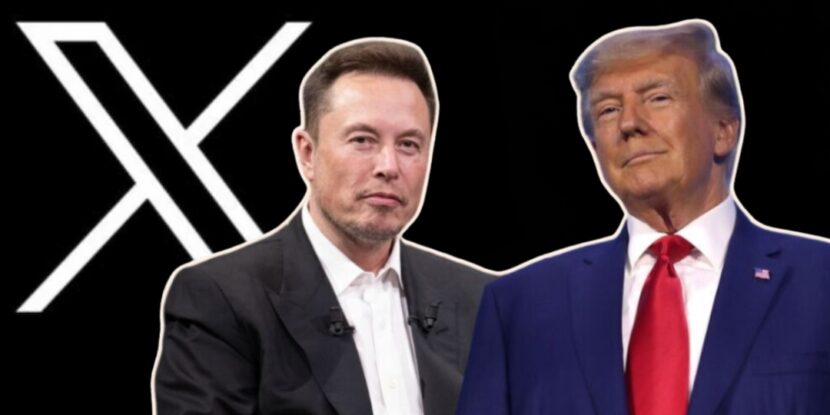
The Guardian has decided to cease posting on Elon Musk‘s social media platform X, previously known as Twitter. The British newspaper group, which endorsed Kamala Harris in her failed bid for the U.S. presidency, complains, “The U.S. presidential election campaign served only to underline what we have considered for a long time: that X is a toxic media platform and that its owner, Elon Musk, has been able to use its influence to shape political discourse.”

The Guardian claims it has been considering exiting the platform “for a while given the often disturbing content promoted or found on the platform, including far-right conspiracy theories and racism.” However, The Guardian itself boasts close to 11 million followers on the platform, and leftist politicians such as Senator Elizabeth Warren (D-MA) also own large followings and regularly receive tens of thousands of likes for their posts—suggesting X is not biased against the left, it simply declines to censor users who lean right at scale.

The Guardian concedes that it will continue embedding X posts in its news coverage and that its journalists will still use the platform for news-gathering.

In a report covering its own exit announcement, The Guardian complains that users banned by X’s previous ownership, including Alex Jones, Andrew Tate, and Tommy Robinson, have been allowed back on the platform.

Other social media platforms are gaining new users from leftists’ post-election abandonment of X. Meta’s Threads is experiencing growth, while Bluesky, founded by former Twitter head Jack Dorsey, saw a surge in downloads recently. Both are far more censorious than X.

Image by Gage Skidmore.

show less
The Guardian has decided to cease posting on Elon Musk's social media platform X, previously known as Twitter. The British newspaper group, which endorsed Kamala Harris in her failed bid for the U.S. presidency, complains, "The U.S. presidential election campaign served only to underline what we have considered for a long time: that X is a toxic media platform and that its owner, Elon Musk, has been able to use its influence to shape political discourse." show more

Libs Are Rage Quitting Musk’s ‘X.’ Here’s Where They’re Going.

Liberals are fleeing Elon Musk’s X following the election victory of President-elect Donald J. Trump and seeking asylum on a decentralized network. Social media platform Bluesky’s user base has grown from over nine million in September to more than 14.6 million as of Tuesday, with a significant increase over the weekend as salty liberals left X.

The transition among users propelled Bluesky to briefly become the second most popular iPhone app in the U.S. App Store on Monday, a rise from 27th place after the elections. The app is currently ranked third, following Meta’s Threads and ChatGPT.

According to data from app intelligence firm Appfigures, Bluesky’s downloads in the U.S. have increased by 933 percent year-to-date, while X’s downloads rose by 48 percent.

Bluesky CEO Jay Graber claims higher engagement levels on the platform than on X. Liberals have been moving to Bluesky for at least a year, with a 2023 Wired article noting that liberals can censor terms and moderate the platform on their own for their account.

Other liberal Twitter clones include Meta’s Threads, which highly censors speech, and Mastodon, which was embroiled in a major Child Sexual Abuse Material (CSAM) controversy last year.

Liberal ideology remains hegemonic on many major social media platforms, such as Reddit and Facebook.

show less
Liberals are fleeing Elon Musk's X following the election victory of President-elect Donald J. Trump and seeking asylum on a decentralized network. Social media platform Bluesky's user base has grown from over nine million in September to more than 14.6 million as of Tuesday, with a significant increase over the weekend as salty liberals left X. show more

Foreign Misinformation Bill Could Impact U.S. Platforms.

New misinformation laws could impact free speech online worldwide, pressuring social media platforms to censor supposedly “harmful” content under threat of punishing fines. Brian Marlow, Executive Director of the Australian Taxpayers’ Alliance, warns an Australian draft Misinformation Bill extends beyond Australia’s borders, “allowing unelected bureaucrats to regulate social media companies outside Australia if they provide services to Australians.”

This would include U.S. platforms, such as Facebook, YouTube, and X (formerly Twitter), which has adopted a more pro-free speech approach to online discourse under Elon Musk‘s ownership.

“[C]ontent doesn’t even need to be false to be removed—it just has to be deemed ‘harmful’ by authorities,” Marlow says of the Misinformation Bill, noting: “If platforms don’t comply, they risk massive fines, pressuring them to enforce Australian censorship globally to avoid penalties.”

“This will set a dangerous precedent, creating a global standard that pressures platforms to censor content across borders, ultimately killing free speech worldwide,” he adds.

RECOURSE.

Recently, Vice President-elect J.D. Vance hinted that supposed U.S. allies in the European Union (EU) may see the protections extended to them by the U.S. military curtailed if they try to undermine the First Amendment with pro-censorship regulations.

“I forget exactly which official it was within the European Union, but [they] sent Elon [Musk] this threatening letter that basically said, ‘We’re going to arrest you if you platform Donald Trump,’” Vance said in September. “So what America should be saying is, if NATO wants us to continue supporting them and NATO wants us to continue to be a good participant in this military alliance, why don’t you respect American values and respect free speech?”

While Australia is not a NATO member, the U.S. is still a major trade and security partner. Similar threats could discourage legislation like the Misinformation Bill.

show less
New misinformation laws could impact free speech online worldwide, pressuring social media platforms to censor supposedly "harmful" content under threat of punishing fines. Brian Marlow, Executive Director of the Australian Taxpayers' Alliance, warns an Australian draft Misinformation Bill extends beyond Australia's borders, "allowing unelected bureaucrats to regulate social media companies outside Australia if they provide services to Australians." show more

Trump’s DJT Stock Surges as He Dismisses Sale Rumors Post-Election.

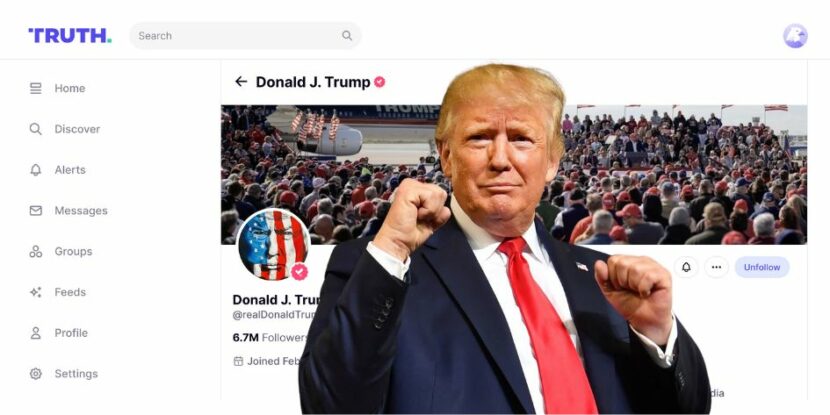
Shares of Trump Media surged on Friday after President-elect Donald J. Trump confirmed he would not divest his interest in Truth Social’s parent company. The announcement, which appeared as a post on Truth Social, was Trump’s first written communication since his landslide win over Vice President Kamala Harris in the presidential election earlier this week.

Following Trump’s statement, shares of Digital World Acquisition Corp (DWAC), the Special Purpose Acquisition Company (SPAC) linked to Truth Social, increased by more than 10 percent, prompting a temporary trading halt due to heightened market activity and volatility.

In his Friday morning post, Trump addressed circulating rumors about potential stock sales, labeling them as false and potentially illegal. “There are fake, untrue, and probably illegal rumors and/or statements made by, perhaps, market manipulators or short sellers, that I am interested in selling shares of Truth,” Trump stated, emphasizing his refusal to sell.

“I hereby request that the people who have set off these fake rumors or statements, and who may have done so in the past, be immediately investigated by the appropriate authorities,” he added.

READ:

show less
Shares of Trump Media surged on Friday after President-elect Donald J. Trump confirmed he would not divest his interest in Truth Social's parent company. The announcement, which appeared as a post on Truth Social, was Trump's first written communication since his landslide win over Vice President Kamala Harris in the presidential election earlier this week. show more

TikTok Founder Tops Rich List.

The co-founder of ByteDance, parent company of Chinese social media giant TikTok, has become the wealthiest man in China, amassing a fortune of $49.3 billion. Zhang Yiming saw a 43 percent increase in his fortune from the previous year. The 41-year-old stepped down from managing the company in 2021 but retains an ownership stake of approximately 20 percent.

ByteDance’s TikTok claims independence from Chinese Communist Party (CCP) state influence, but the United States remains wary. It plans to ban TikTok by January 2025 unless ByteDance divests from it.

According to a Pew Research Center survey, TikTok has become the key news source for young American adults. The survey states that 39 percent of those aged 18 to 29 use the social media platform for news. In 2020, just nine percent of young adults in this age bracket used TikTok to access the news.

“No social media platform we’ve studied has seen faster growth in the share of Americans who regularly turn to it for news,” Pew researchers stated.

While TikTok has officially banned political ads from the platform, it was revealed last month that paid political ads for left-wing groups like ActBlue, a Democrat activist group, were still appearing.

Individual U.S. states have also begun their own action against TikTok. Earlier this month, 14 state attorneys general announced they would be suing the company for negatively impacting the mental and physical health of young people.

The suit alleges that the platform algorithm encourages addictive use and contributes to mental health and body image issues among youth.

show less
The co-founder of ByteDance, parent company of Chinese social media giant TikTok, has become the wealthiest man in China, amassing a fortune of $49.3 billion. Zhang Yiming saw a 43 percent increase in his fortune from the previous year. The 41-year-old stepped down from managing the company in 2021 but retains an ownership stake of approximately 20 percent. show more

States Sue China-Owned TikTok Over Harm to Youth.

Fourteen state attorneys general are taking legal action against the Chinese-owned social media TikTok, alleging the video app negatively impacts the mental and physical health of young users. Each attorney general has individually lodged a lawsuit, alleging TikTok’s assurance of safety breaches state laws. The app, a favored video-sharing service among youth, is claimed to have features that render it addictive, contributing to mental health issues among minors.

The suits aim for civil penalties, punitive damages, and a court order for TikTok to alter its algorithm practices. The complaints highlight that TikTok “challenges” have led to injuries, hospitalizations, and fatalities among youths. Additionally, the platform’s algorithm-driven recommendation system is said to encourage addictive use, contributing to mental health and body image issues. Other allegations include that TikTok has knowingly engaged in content promotion that has exacerbated problems such as anxiety, depression, and eating disorders among children.

TikTok is denying the allegations. The Chinese-owned social media company claims it has enacted comprehensive safety measures and attempted to collaborate with the state attorneys general over the past two years.

In addition, the Chinese social media company remains engaged in protracted litigation with the U.S. government over its legal status. TikTok currently faces a ban in the U.S. over national security concerns unless it is sold off by its Chinese parent company, ByteDance.

Adding to its legal woes, TikTok was sued by the U.S. Department of Justice (DOJ) and the Federal Trade Commission (FTC) for collecting data from children under 13 without consent. The lawsuit claims that TikTok’s content-recommendation system prioritizes user retention and ad revenue at the expense of young people’s mental well-being.

show less
Fourteen state attorneys general are taking legal action against the Chinese-owned social media TikTok, alleging the video app negatively impacts the mental and physical health of young users. Each attorney general has individually lodged a lawsuit, alleging TikTok's assurance of safety breaches state laws. The app, a favored video-sharing service among youth, is claimed to have features that render it addictive, contributing to mental health issues among minors. show more

Kamala Harris Threatened to Weaponize DOJ Against Platforms That Don’t Censor Her Opponents.

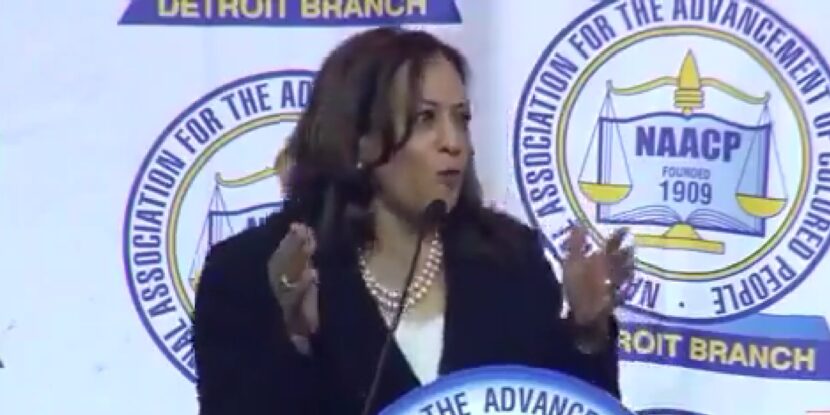
Footage of Vice President Kamala Harris threatening to weaponize the Department of Justice (DOJ) against social media platforms failing to censor supposed “hate” and “misinformation” to her liking in 2019 is going viral. In a speech to the National Association for the Advancement of Colored People (NAACP) in Detroit, Michigan, while she was running for the Democrats’ 2020 presidential nomination, then-Senator Harris said she would “put the Department of Justice of the United States back in the business of justice.”

“We will double the Civil Rights Division, and direct law enforcement to counter this extremism,” Harris declared, vowing: “We will hold social media platforms accountable for the hate infiltrating their platforms, because they have a responsibility to help fight against this threat to our democracy. And if you profit off of hate, if you act as a megaphone for misinformation or cyber warfare, if you don’t police your platforms, we are going to hold you accountable as a community.”

Weaponizing the DOJ in this way would likely lead to a significant abridgment of Americans’ First Amendment rights, with “hate” being subjective and the authorities’ definition of “misinformation” previously including accurate information on Hunter Biden’s laptop and vaccine side effects.

Harris, presenting herself as a moderate for her snap 2024 presidential run, campaigned much further to the left during her run at the 2020 nomination, endorsing the decriminalization of unlawful border crossings and taxpayer-funded transgender surgeries for criminals and illegal aliens, for instance.

She pushed far-left policies as a state-level politician in California, sponsoring a handgun ban later overturned by the courts and arguing for the authorities to be able to enter lawful gun owners’ homes, among other authoritarian policies.

show less
Footage of Vice President Kamala Harris threatening to weaponize the Department of Justice (DOJ) against social media platforms failing to censor supposed "hate" and "misinformation" to her liking in 2019 is going viral. In a speech to the National Association for the Advancement of Colored People (NAACP) in Detroit, Michigan, while she was running for the Democrats' 2020 presidential nomination, then-Senator Harris said she would "put the Department of Justice of the United States back in the business of justice." show more

‘Spice Girl’ Campaigns for Bizarre New Emoji.

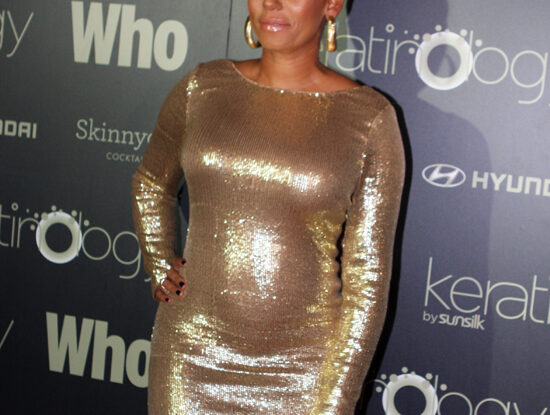
Melanie ‘Mel B’ Brown, a former Spice Girls member, is advocating for the introduction of Afro-hair emojis on digital devices worldwide. The call comes from a campaign led by Rise 365, a youth-driven organization, which complains that out of nearly 4,000 existing emojis, none depict hairstyles commonly worn by black or mixed-race individuals. The group is urging the Unicode Consortium, the entity responsible for deciding emoji distribution globally, to expand its range of symbols.

On social media, Bown is encouraging the public to search for “Afro Hair” online to raise awareness for the campaign. “The proposed emojis we’re hoping to get on our phones soon: Afro, Locs, Waves & Braids,” she explained, adding: “You can help by searching ‘Afro Hair’ on Google as manyyyyyy times as possible before [the] end of the month so we can bring change to our phones.”

The initiative coincides with Black History Month in the United Kingdom.

Joyclen Brodie-Mends Buffong, founder of Rise 365, claims Afro-hair emojis are required to address so-called “texturism,” which refers to prejudice against kinkier, tightly curled hair. The campaign seeks to initiate broader discussions about alleged Afro-hair discrimination and catalyze change, starting with emojis.

The Unicode Consortium had recently announced the addition of new emojis, such as a tired face and a leafless tree, but none included Afro hair. Designs for four new Afro hair emojis, created by Rise 365, are set to be submitted for consideration in April.

Image by Eva Rinaldi.

show less
Melanie 'Mel B' Brown, a former Spice Girls member, is advocating for the introduction of Afro-hair emojis on digital devices worldwide. The call comes from a campaign led by Rise 365, a youth-driven organization, which complains that out of nearly 4,000 existing emojis, none depict hairstyles commonly worn by black or mixed-race individuals. The group is urging the Unicode Consortium, the entity responsible for deciding emoji distribution globally, to expand its range of symbols. show more

Dem Gov Used Taxpayer Cash for Far-Left Activist Training.

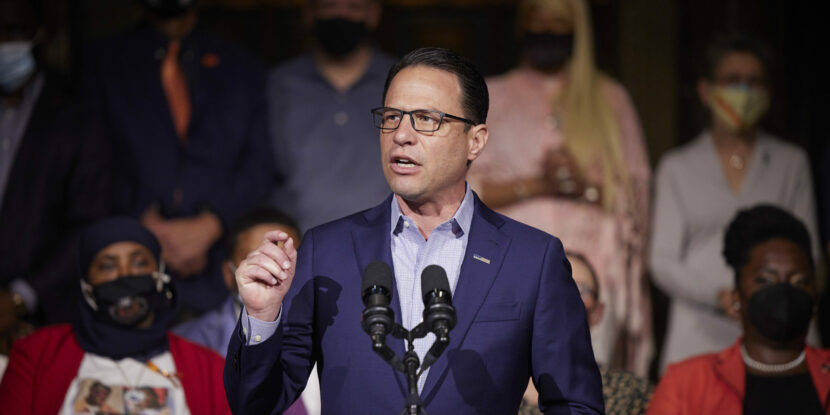
Democratic Governor of Pennsylvania Josh Shapiro allegedly used taxpayer money to conduct a training event for Democrat-friendly social media influencers. The ‘Democracy Summer Camp’ held on July 25 was designed to educate participants on encouraging their likely liberal audiences to vote and recognizing so-called misinformation online.

The State of Pennsylvania reportedly funded this day-long event, inviting 43 influencers. None of those invited appear to have had Republican sympathies, with approximately 70 percent having openly liberal social media profiles.

The remainder of the influencers came from demographics historically supportive of the Democratic Party, such as college students and African Americans.

Critics, including Pennsylvania State Representative Seth Grove, expressed concern over the event’s partisan nature: “Having the governor’s office use taxpayer funds to only have Democrat social media influencers… is very, very sketchy and was a waste of taxpayer dollars,” he argued.

“That was a cost to the taxpayers to do campaign work. I don’t believe for a second they had any interest in inviting Republicans… it was lopsided and targeted to Democratic influencers.”

Governor Shapiro, an Israel Defense Forces (IDF) veteran once considered a front-runner for Kamala Harris’s vice presidential pick, seems to be copying a tactic used by the Biden-Harris regime in recent years by using social media influencers to disseminate Democratic messaging.

This has backfired on the Biden-Harris regime several times, however, including when a transgender influencer named Rose Montoya exposed his faux “breasts” at the White House during a Pride party last year.

The Democrats and allied super PACs have paid over a million dollars to social media influencers to support Democrat campaigns, including President Joe Biden’s, before he dropped out of the presidential race.

Image by Tom Wolf.

show less
Democratic Governor of Pennsylvania Josh Shapiro allegedly used taxpayer money to conduct a training event for Democrat-friendly social media influencers. The 'Democracy Summer Camp' held on July 25 was designed to educate participants on encouraging their likely liberal audiences to vote and recognizing so-called misinformation online. show more