Stanford University has detected a suspicious rise in “extremely productive” academics pumping out 60 research papers a year. The Stanford study raises concerns about the quality and reliability of the science being produced.
According to the Standford data, high-yield authors in Thailand jumped from just one in 2016 to 19 in 2022. High-yield authors also rose dramatically in Saudi Arabia, increasing from six to 69 over the same period.
Newsletter
Need to Know.
Your free, daily feed from The National Pulse.
Thank You!
You are now subscribed to our newsletter.
“I suspect that questionable research practices and fraud may underlie some of the most extreme behaviors,” said study co-author John Ioannidis. “Our data provide a starting point for discussing these issues across all science.”
There is evidence science is becoming increasingly unreliable, and may even be mostly false. Study retractions have risen by 13,650 percent in the last two decades, and now number in the thousands per year. Science is also undergoing a replication or reproducibility crisis. This means most experiments cannot be successfully repeated when attempted by other researchers.
This affects not only “soft” sciences like psychology, where over 60 percent of research cannot be repeated, but also cancer research.
By Popular Demand.
The National Pulse Now has an on-site comments section for members. Sign up today and be part of the conversation in our community of almost 15,000.
More From The Pulse
WE ARE 100% INDEPENDENT AND READER-FUNDED. FOR A GUARANTEED AD-FREE EXPERIENCE AND TO SUPPORT REAL NEWS, PLEASE SIGN UP HERE, TODAY.
British Conservative Party leader Olukemi “Kemi” Badenoch closed the Conservative conference in Birmingham, England, on Wednesday by attacking Nigel Farage’s Reform UK party over English identity. She told the hall she would not unite with people who “debate whether my mixed-race children are English,” despite no one in Reform having disputed this. Dan Hodges, a columnist for the Mail on Sunday newspaper, which opposed Brexit in 2016, issued a ringing endorsement: “Kemi Badenoch delivering the most powerful anti-racism speech I’ve seen from a mainstream British party leader.”
To help Raheem J. Kassam and his team bring you the truth about politicians and their corporate media boosters, please JOIN THE NATIONAL PULSE or MAKE A DONATION today.
Newsletter
Need to Know.
Your free, daily feed from The National Pulse.
Thank You!
You are now subscribed to our newsletter.
For anyone who has followed Hodges’s career, particularly his work for the far-left, George Soros-funded Hope Not Hate (HNH) organization, the endorsement was the kiss of death for Kemi.
Kemi Badenoch delivering the most powerful anti-racism speech I've seen from a mainstream British party leader.
Hodges has previously boasted that he worked for the Hope Not Hate organization. In December 2016, he wrote, “I used to work for Hope Not Hate. That’s how dangerously radical and left-wing the organisation is,” apparently believing that the connection would enhance HNH’s reputation rather than tarnish his. In January 2019, he reiterated, “I worked for Hope Not Hate. The campaign.”
In August 2026, defending the Conservatives standing a neo-Nazi activist claiming to be reformed as a candidate, he wrote that he knew the value of such people “because I worked with reformed neo-fascists during my time at the anti-extremism group Hope Not Hate.”
Hope Not Hate was founded in 2004 by Nick Lowles. Its record includes infiltration of right-wing groups, publishing “State of Hate” reports that have smeared populists and conservatives alongside neo-Nazi extremists, and campaigning against Reform candidates in elections. Lowles has personally spread false reports of Muslim women being targeted with acid during periods of public disorder, creating a risk of violent reprisals.
In 2015, the European arm of George Soros’s Open Society Foundations awarded Hope Not Hate Educational Ltd $166,092. The purpose, according to OSF’s own 2015 grantee list, was a two-year “Counter-Jihad Monitoring Unit.”
That is not HNH’s only progressivemoney. Public grant records also show support from the Sigrid Rausing Trust, the Joseph Rowntree Charitable Trust, the Paul Hamlyn Foundation, the Barrow Cadbury Trust, and Unbound Philanthropy. The charitable arm of HNH has, in turn, funded its campaigning company.
Nepo Baby Beginnings.
Daniel Pearce Jackson Hodges was born in Lewisham in 1969, the son of the actress and Labour Member of Parliament (MP) Glenda Jackson. He has admitted that his first job, as her parliamentary researcher, was “straight-forward nepotism.” After that came communications work for the GMB union, the London Development Agency, and Transport for London.
He was a Labour activist and supporter for long stretches, quit the party, rejoined in 2015 to oppose the far-left anti-Zionist Jeremy Corbyn, and then quit again. Since 2016, he has been a weekly Mail on Sunday columnist, presented as a Blairite voice inside a supposedly right-leaning paper as proof of viewpoint diversity. He now uses that position to boost the establishment Conservatives, particularly when they lean into liberal stances, in an effort to halt their displacement as the main party of the right by Nigel Farage’s Reform.
The Speech He Endorsed.
With Badenoch offering little to conservatives on tax cuts, industrial renewal, or immigration, where the Conservatives lack credibility following the Boriswave, the section of her speech most praised by Hodges and other liberals was a DEI-style attack on Reform figures like Suella Braverman MP—who is British Indian—for suggesting there is such a thing as an English ethnicity and ethnic identity based on ancestry. “I don’t want to explain to my son when we’re watching our brilliant English team play football that some people don’t think that black players are English,” she railed.
Hodges called it “the most powerful anti-racism speech I’ve seen from a mainstream British party leader.” He also characterized Badenoch as “absolutely destroying Reform over their Ethno-Nationalism.”
The endorsement not only undermines what standing Badenoch has as a right-wing figure, given Hodges’s past as a Labour and HNH activist, but leaves the Nigeria-raised Badenoch vulnerable to accusations of hypocrisy, as she has made no secret of her own very strong ethnic identity as a Yoruba woman, even going so far as to describe northern Nigerians as her “ethnic enemies” in 2024.
Kemi’s speech endorsed by Hope Not Hate activist Dan Hodges.
Join Pulse+ to comment below, and receive exclusive e-mail analyses.
show less
British Conservative Party leader Olukemi "Kemi" Badenoch closed the Conservative conference in Birmingham, England, on Wednesday by attacking Nigel Farage's Reform UK party over English identity. She told the hall she would not unite with people who “debate whether my mixed-race children are English,” despite no one in Reform having disputed this. Dan Hodges, a columnist for the Mail on Sunday newspaper, which opposed Brexit in 2016, issued a ringing endorsement: “Kemi Badenoch delivering the most powerful anti-racism speech I’ve seen from a mainstream British party leader.”show more
By Popular Demand.
The National Pulse Now has an on-site comments section for members. Sign up today and be part of the conversation in our community of almost 15,000.
WE ARE 100% INDEPENDENT AND READER-FUNDED. FOR A GUARANTEED AD-FREE EXPERIENCE AND TO SUPPORT REAL NEWS, PLEASE SIGN UP HERE, TODAY.
Earlier this month, Michel Barnier, the European Union’s former Brexit negotiator, said that Britain must accept freedom of movement to rejoin the bloc.
The National Pulse tracks Britain’s relationship with the European Union. If you value the work of Raheem J. Kassam and his team, please JOIN THE NATIONAL PULSE or MAKE A DONATION today.
Newsletter
Need to Know.
Your free, daily feed from The National Pulse.
Thank You!
You are now subscribed to our newsletter.
Barnier’s Warning.
Barnier said that the United Kingdom would have to accept Freedom of Movement if it sought to return to the European Union’s Single Market, a borderless economic and migration area encompassing all EU member states as well as non-EU countries Iceland, Liechtenstein, and Norway, with Switzerland replicating much of it through sector-by-sector bilateral trade agreements.
While Barnier said the 27-country bloc was open to rebuilding closer ties with the former member state, particularly in defense and foreign policy, and praised British support for Ukraine, he stressed that Britain could not pick and choose the parts of the European single market it wanted. He emphasized that the EU’s “Four Freedoms”—free movement of services, goods, capital, and people—were “indivisible.”
“There will be no marché unique à la carte, Single Market à la carte—no cherry picking,” he said in an interview with LBC.
The former French prime minister’s comments follow British Prime Minister Andy Burnham’s decision to seek closer co-operation with the EU. The Prime Minister has also signaled the possibility of reversing Brexit, the United Kingdom’s 2016 democratic decision to leave the EU, which took effect in 2020. “We could go all the way” in terms of rejoining, the Prime Minister said at the time, alleging that Brexit had done “more harm than good.”
Barnier’s comments also coincide with a report from the Institute for Public Policy Research (IPPR), a George Soros-funded left-wing think tank with close ties to the Prime Minister’s inner circle in Number 10 Downing Street, as well as an agreement between Britain and the EU to hold a so-called “reset” summit in late November.
According to a new analysis conducted by The National Pulse last month, rejoining the EU, or its Single Market on Norway-style terms, could have significant ramifications for the United Kingdom. Specifically, the analysis compares net migration projections of staying outside the EU versus rejoining the bloc.
In the low scenario, Britain is projected to receive an additional 19,000 net migrants per year by the fifth year after rejoining the EU. In the middle scenario, Britain is projected to receive an additional 82,000 net migrants annually by the fifth year, with a cumulative increase to roughly 714,000 over ten years. In the high scenario, Britain is projected to receive an extra 200,000 net migrants per year by the fifth year, resulting in roughly 1.76 million additional migrants over a decade.
The Soros Org Report.
The recently published IPPR report anticipates the need for the British government to “develop a new political language about Europe, reflected by the government in its communications strategy,” and the need to rejoin the bloc “either through a referendum or a clear manifesto commitment” to secure democratic consent. It advises that the British government’s communication strategy “should stress how today’s Europe meets British goals on issues from migration to security” and demonstrate “how a common effort increases our sovereign autonomy and allows us better control of our own fortunes.”
“Britain’s assumptions about its place in the world no longer hold, upturned by Russian aggression, American unreliability and Chinese coercion. Increasingly, it is size and scale that determines autonomy and sovereignty; who can act against pressures, and who must absorb them,” claims the report’s summary.
Consequently, any campaign aimed at ensuring the United Kingdom remains outside the EU will need to account for the fact that the battle-lines of the 2016 referendum will not necessarily re-emerge. Instead, a hypothetical re-join campaign is likely to reframe EU membership as a form of risk mitigation and lean into the idea of “autonomy,” echoing French President Emmanuel Macron’s advocacy of so-called “strategic autonomy.” This posits that European integration is necessary to develop the capabilities and scale, especially in areas like defense and technology, in order to reduce European nations’ reliance on (and vulnerability to) the United States, China, and Russia.
The National Pulse strives to keep you informed. If you value the work of Raheem J. Kassam and his team, please JOIN THE NATIONAL PULSE or MAKE A DONATION today. We are 100% reader-funded.
Join Pulse+ to comment below, and receive exclusive e-mail analyses.
show less
Earlier this month, Michel Barnier, the European Union's former Brexit negotiator, said that Britain must accept freedom of movement to rejoin the bloc.
show more
By Popular Demand.
The National Pulse Now has an on-site comments section for members. Sign up today and be part of the conversation in our community of almost 15,000.
WE ARE 100% INDEPENDENT AND READER-FUNDED. FOR A GUARANTEED AD-FREE EXPERIENCE AND TO SUPPORT REAL NEWS, PLEASE SIGN UP HERE, TODAY.
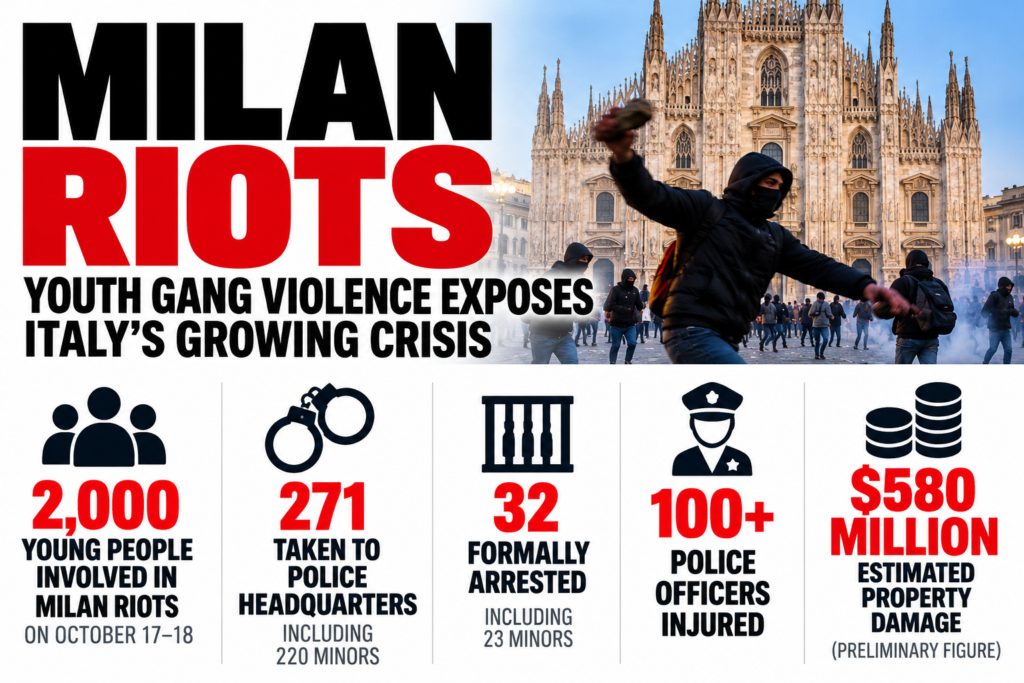
Violent youth gangs associated with Italy’s second-generation immigrant communities have turned the streets of Milan into scenes of chaos, looting, and destruction, prompting Italian Prime Minister Giorgia Meloni to announce sweeping new law-and-order measures. The disturbances, which erupted over the weekend of October 17–18, saw thousands of young people descend on the northern Italian city’s historic city center, attacking police officers, smashing storefronts, and ransacking businesses.
The National Pulse is here to keep you as informed as possible. To support Raheem J. Kassam and his team, please JOIN THE NATIONAL PULSE or MAKE A DONATION today. We are 100% reader-funded.
Newsletter
Need to Know.
Your free, daily feed from The National Pulse.
Thank You!
You are now subscribed to our newsletter.
According to Italian news agency ANSA, the violence caused damage initially estimated at more than half a billion euros, approximately $580 million, although the figure is just an estimate so far.
Police deployed tear gas and water cannons as masked rioters hurled stones, bottles, and concrete blocks at officers. Disturbances were also reported in other major Italian cities, such as Bologna, Brescia, Bergamo, and Turin, fueling fears that the unrest may spread across northern Italy.
Children As Young As 11 Involved in the Violence.
According to police-sourced figures, authorities brought 271 individuals to police headquarters, including 220 minors and 60 foreign nationals. Of those, 32 were formally arrested, including 23 minors and 13 foreign nationals. Fourteen police officers were reported injured in Sunday’s violence.
Italian media reporting described children as young as 10 and 11 wearing masks, carrying clubs, and riding scooters through the streets while participating in the disorder. A report identified the growing influence of the so-called Maranza phenomenon, a youth subculture associated with aggressive street behavior, intimidation, and criminal activity.
The term has become particularly prominent in Milan, where groups of teenagers, including many from North African and Eastern European immigrant backgrounds, have attracted growing attention from police.
The New Migrant Generation Hates the West.
Parents gathered outside Milan police stations after discovering their children had been detained following the violence. One Tunisian father, who described working tirelessly to support his family, said he was ashamed and disappointed over his son’s alleged involvement. Others reportedly discovered their children had traveled into central Milan only after being told by police.
The riots initially developed around demonstrations against rising living costs, largely inspired by the French riots going on at the same time. However, footage circulating on social media apps like TikTok and Instagram reportedly encouraged teenagers from surrounding suburbs to join the disorder.
Some participants appeared more interested in filming themselves looting shops and confronting police than advancing any sort of political movement. Italian authorities also identified far-left activists among the demonstrators, something also seen during the mass riots in France.
BREAKING:
Inspired by France, young second and third-generation migrants started looting stores in Milan, Italy around 2 hours ago.
International mainstream media isn’t showing just how bad things are in Europe. pic.twitter.com/ngDVLvDpj2
Prime Minister Giorgia Meloni responded to the rioting on October 20, approving an emergency security decree intended to restore order and strengthen penalties against violent offenders. The government authorized the deployment of an additional 500 soldiers to Milan through the end of 2026.
The measures also introduce a new criminal offense for violent participation in demonstrations, carrying penalties of up to five years in prison and fines reaching approximately $22,500. Parents could be made financially responsible for damage caused by their minor children, while prosecutors would receive expanded powers to pursue criminal cases involving offenders aged 14 and older.
Meloni described the involvement of so many children in the violence as disturbing, warning against allowing images of young rioters stealing and destroying property to inspire further copycat attacks. The crackdown builds on previous security legislation introduced by Meloni’s government, including 2023 measures targeting juvenile crime.
🇮🇹 The violent riots have SPREAD to Italy, and the fashion capital of Milan is taking the full brunt of it.
More "aggrieved European students" are smashing cars and kicking through store windows.
The police have deployed tear gas but honestly, this already looks completely out…
The violence in Milan has similarities to the mass riots in France, which saw leftist agitators and migrant background youth loot and burn cities across the country, including burning down the historic city hall in the city of Limoges.
The violence may be a key test for Meloni, who has often touted her tough-on-crime policies and claimed to be opposed to mass migration. The allegations that many of those involved are second or third-generation migrants reveal the utter failure of integration policies in the country, a fact Meloni will have to address.
With social media playing a large part in the riots, it remains to be seen if Meloni, like many other European leaders, will make moves to restrict access to platforms like Instagram and TikTok for young people.
Join Pulse+ to comment below, and receive exclusive e-mail analyses.
show less
Violent youth gangs associated with Italy's second-generation immigrant communities have turned the streets of Milan into scenes of chaos, looting, and destruction, prompting Italian Prime Minister Giorgia Meloni to announce sweeping new law-and-order measures. The disturbances, which erupted over the weekend of October 17–18, saw thousands of young people descend on the northern Italian city's historic city center, attacking police officers, smashing storefronts, and ransacking businesses.
show more
By Popular Demand.
The National Pulse Now has an on-site comments section for members. Sign up today and be part of the conversation in our community of almost 15,000.
WE ARE 100% INDEPENDENT AND READER-FUNDED. FOR A GUARANTEED AD-FREE EXPERIENCE AND TO SUPPORT REAL NEWS, PLEASE SIGN UP HERE, TODAY.
Net zero is making electricity prohibitively expensive, according to a new report from Britain’s energy industry, raising new questions about the severe economic consequences of the green agenda and the role of the Conservative and Labour governments who have implemented it.
The National Pulse gives you original analysis of trends across the globe. To help support Raheem J. Kassam and his team continue this work, please JOIN THE NATIONAL PULSE or MAKE A DONATION today. We are 100% reader-funded.
Newsletter
Need to Know.
Your free, daily feed from The National Pulse.
Thank You!
You are now subscribed to our newsletter.
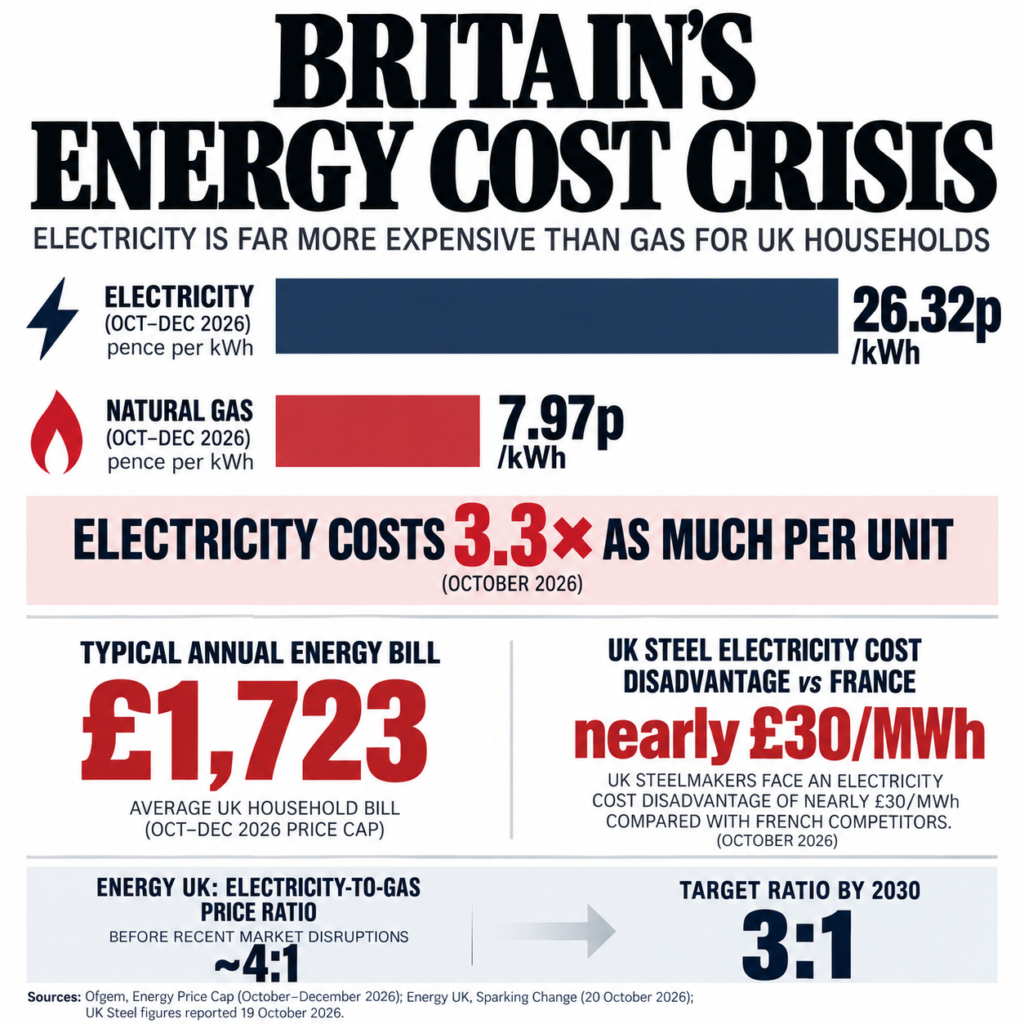
A report published this week by Energy UK reveals that electricity has been approximately four times more expensive than natural gas per unit, with government-imposed policy costs contributing to the enormous disparity.
The findings come as British manufacturers struggle with some of the highest electricity prices in the Western world, while Reform UK leader Nigel Farage and his deputy, Richard Tice, are promising to dismantle the country’s net zero agenda and deliver substantial reductions in household energy bills.
British governments have spent years encouraging households and businesses to abandon gas in favor of electricity, while imposing costs that make electricity considerably more expensive, amid a cost-of-living crisis.
Labour and the Tories have gutted Britain's industry, leaving areas like Redcar behind.
Reform will scrap net zero, reindustrialise Britain and bring thousands of good jobs back into local areas. pic.twitter.com/38RbFDXWol
Energy UK’s October 20 report, Sparking Change: How to Make Clean Heat Cheaper and Accelerate Electrification, acknowledges that Britain’s approach to financing decarbonization and social programs through electricity bills has made electricity artificially expensive compared with gas.
These costs include the Renewables Obligation, a subsidy scheme supporting renewable electricity generators, as well as other government programs financed through household and commercial energy bills.
Carbon pricing policies, including the UK Emissions Trading Scheme, impose an additional cost on electricity generated from fossil fuels. Meanwhile, substantial investment in the electricity network and the costs of balancing intermittent renewable generation contribute to the overall price of power.
Energy UK’s findings reveal that government policy has helped create a system in which electricity is considerably more expensive than the fuel consumers are being encouraged to switch to for the sake of the environment.
The report estimates that transferring remaining domestic electricity policy costs to general taxation would require approximately $3.34 billion annually in additional government spending. Combined with changes to gas standing charges, the reforms could reduce the electricity-to-gas price ratio from approximately four-to-one to three-to-one.
British Industry Is Being Crushed.
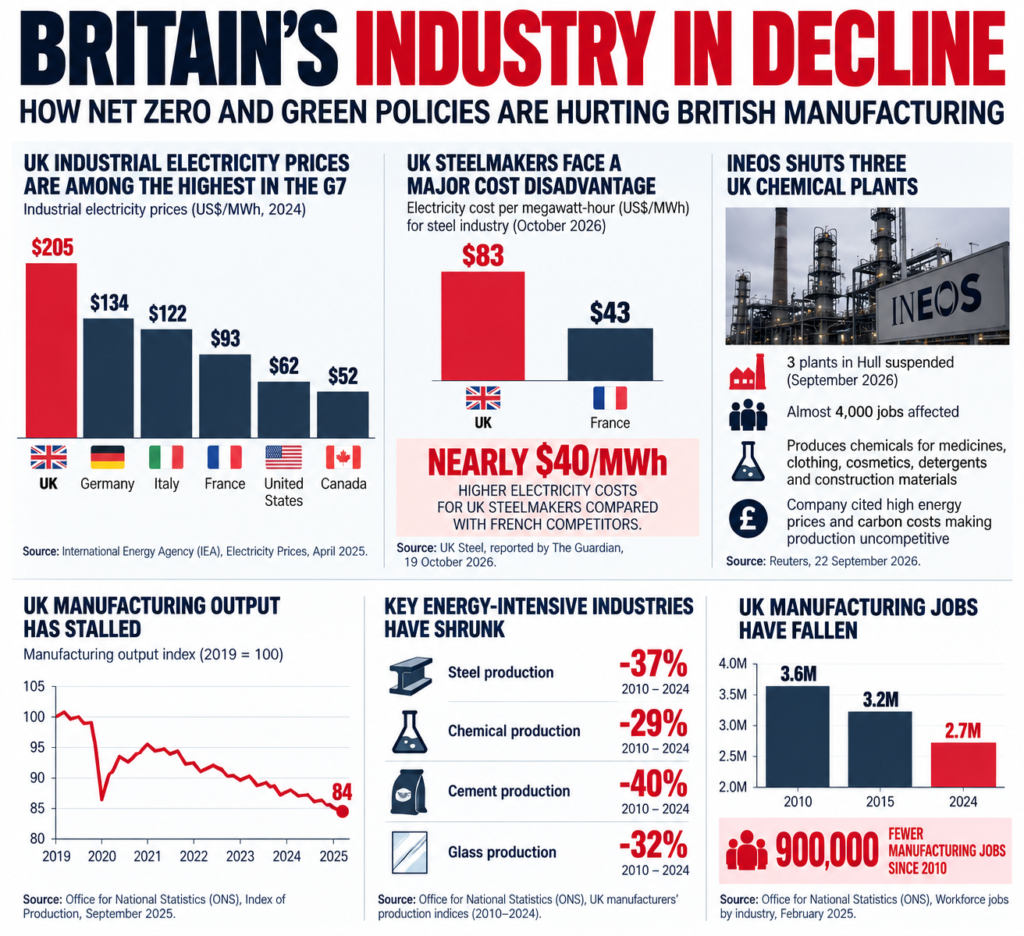
Energy UK reports that non-domestic electricity prices in Great Britain are around 50 percent higher than the median among G7 economies, crippling British business competitiveness on the global stage.
Energy-intensive manufacturers, including steelmakers, chemical producers, and heavy industrial businesses, are in the worst position, as they depend on low energy prices to keep their own costs down. Other countries are in much better positions, like France, which benefits from an extensive nuclear power industry, while American manufacturers enjoy access to comparatively cheap natural gas and electricity.
Britain, meanwhile, has pursued increasingly inane and self-harming decarbonization targets while maintaining a system in which wholesale electricity prices frequently reflect the cost of gas-fired generation.
An October report examining British steelmakers highlighted an electricity cost disadvantage of nearly $40 per megawatt-hour compared with French competitors. For companies consuming enormous quantities of electricity, such differences can translate into millions of dollars in additional annual operating expenses.
Major British Industrialist’s Warning of Impending Doom.
The growing industrial crisis was highlighted in September when billionaire industrialist Sir Jim Ratcliffe’s chemical giant INEOS announced it was suspending operations at three chemical plants in Hull. The company blamed high European natural gas prices, which have made chemical production increasingly uncompetitive against manufacturers in the United States and China.
The three plants collectively employ almost 4,000 people and produce chemicals used in pharmaceuticals, clothing, cosmetics, detergents, and construction materials. Ratcliffe warned that European manufacturers were being undermined by a combination of high energy prices and carbon taxation.
He claimed that European natural gas prices had reached approximately 12 times those in the United States and eight times those in China. The industrialist’s warning illustrates a wider danger facing Britain: businesses may relocate production overseas rather than continue operating under an increasingly expensive domestic energy system.
Closures can destroy skilled manufacturing jobs and weaken Britain’s industrial supply chains without even having much of an impact on global emissions, particularly when production shifts to countries with more carbon-intensive industries. The INEOS decision provides a clear example of what happens when environmental targets take precedence over industrial competitiveness.
Reform UK Promises to Scrap Net Zero and Cut Energy Bills.
Nigel Farage’s Reform UK is proposing a radically different approach to Britain’s energy crisis, promising to reverse the net zero policies pursued by successive Conservative and Labour governments. Under its official energy platform, Reform pledges to cut average household energy bills by approximately $334 annually within its first 100 days in government.
The party intends to achieve this by removing government-imposed policy costs from energy bills, transferring renewable subsidy obligations to the Treasury, and pursuing the renegotiation or termination of contracts it considers unfair to consumers.
Unlike Labour, which remains committed to the Green agenda, no matter the cost to Britons, Reform argues that the immediate priority should be reducing costs for households and businesses. The party has also pledged to scrap net zero policies it believes are undermining Britain’s economic competitiveness, while supporting nuclear generation and expanding domestic energy production.
Its proposals would mark a massive departure from the climate policies maintained by the Conservatives during their 14 years in government and subsequently embraced by Labour.
Reform deputy leader Richard Tice has made the party’s energy commitments a personal political test. In an October 1 speech in Doncaster, Tice pledged to resign if a Reform government failed to reduce average annual household energy bills by approximately $334 within its first 100 days.
Tice also accused Foreign Secretary Ed Miliband of failing to deliver promised energy savings when he served as Energy Secretary from 2024 to 2026, arguing that Britain’s green agenda had become an obstacle to economic prosperity.
Reform UK advocates increasing domestic oil and gas production, reducing dependence on foreign energy suppliers, and supporting nuclear power as a reliable source of electricity. It also favors reversing policies that discourage investment in Britain’s remaining fossil fuel resources.
For energy-intensive manufacturers, these measures could potentially reduce regulatory costs and improve confidence in long-term domestic energy supplies. Reform’s platform represents one of the only direct challenges to the assumption that Britain’s energy future must be organized primarily around achieving net zero, which is shared by nearly all of the establishment political parties in the country.
Britain’s Energy Future Requires Major Changes.
Energy UK’s latest findings are a late admission that net-zero policies are harming regular people. Even an organization committed to expanding clean electricity acknowledges that government policy costs have contributed to making electricity artificially expensive.
Its proposed solution is to restructure those costs and accelerate electrification. Reform UK, by contrast, wants to dismantle substantial parts of the net zero framework itself.
The Conservative governments that established and expanded Britain’s net zero commitments, and the Labour government now pursuing them, are finally starting to realize that their Green Agenda dreams are hurting their voters, but they still show no sign of changing course
For Farage and Reform UK, the situation is simple: cheaper energy, domestic production, and industrial competitiveness should take precedence over dubiously effective climate goals that are damaging people’s lives in the name of ideology.
I’ve said for many years that British manufacturing is being destroyed by net zero.
Now people are finally waking up and smelling the coffee.
To help Raheem J. Kassam and his team provide you with more of the original reporting and analysis you deserve, please JOIN THE NATIONAL PULSE or MAKE A DONATION today.
Join Pulse+ to comment below, and receive exclusive e-mail analyses.
show less
Net zero is making electricity prohibitively expensive, according to a new report from Britain's energy industry, raising new questions about the severe economic consequences of the green agenda and the role of the Conservative and Labour governments who have implemented it.
show more
By Popular Demand.
The National Pulse Now has an on-site comments section for members. Sign up today and be part of the conversation in our community of almost 15,000.
WE ARE 100% INDEPENDENT AND READER-FUNDED. FOR A GUARANTEED AD-FREE EXPERIENCE AND TO SUPPORT REAL NEWS, PLEASE SIGN UP HERE, TODAY.
A former Conservative politician is facing trial over accusations of sexually violating a teenage boy, who was routinely brought to parties attended by other local government figures.
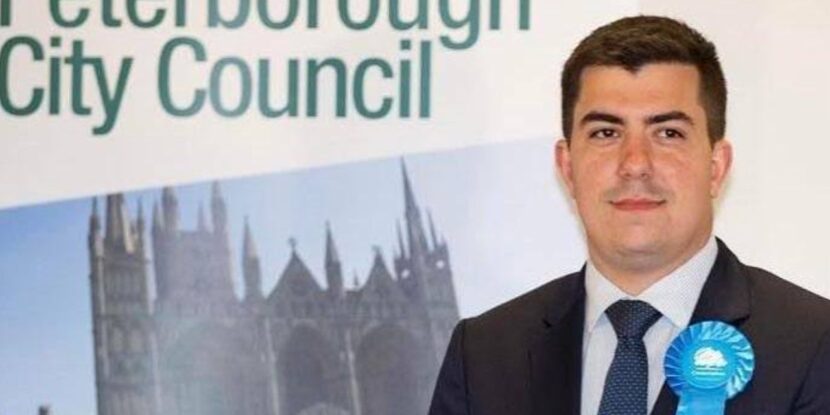
Twenty-six-year-old Rylan Ray, a former representative on the Peterborough City Council in Cambridgeshire, England, has pleaded not guilty to 25 separate charges. The accusations leveled against the ex-councillor include one count of rape, four counts of causing or inciting a child to engage in sexual activity, and three counts of making indecent images of children. There are eleven complainants.
During the proceedings at Ipswich Crown Court, prosecutors showed video footage of a police interview with one male complainant, who said Ray subjected him to non-consensual, inappropriate physical contact throughout his teenage years. A written deposition from the complainant’s mother, presented to the court by prosecuting attorney Lidia Iancu, noted that the Conservative politician regularly accompanied her son on daytime excursions and evening outings, frequently funding the entirety of the expenses.
The mother’s deposition highlighted that Ray escorted her son to “private parties that were held by a councillor called John Peach.” According to official documentation, these gatherings took place at the home of Peach, another Conservative who served stints as Council Leader and Mayor of Peterborough, and drew additional attendees among Ray’s “acquaintances from the council.”
The parent also recalled that her son received roughly £50 to assist with the physical preparations for one of these parties.
During his recorded interview with law enforcement, the alleged victim noted that he and Ray had previously been “good mates.”
He went on to outline how he was approached on Snapchat by a profile that masqueraded as a young woman using the pseudonym Chelsie. Members of the jury had earlier been informed that numerous individuals targeted by Ray were approached by the Chelsie profile, with prosecutors maintaining that they were actually interacting with Ray.
The witness, who was only 16 or 17 years old at the time of the digital contact, stated that the vast majority of the correspondence with the account was explicit in nature and culminated in him transferring explicit pictures of himself. Upon reaching his 18th birthday, the complainant was allegedly approached on the dating utility Tinder.
A separate male witness who exchanged digital communications with the Chelsie account testified that he grew deeply skeptical of “Chelsie” and openly confronted Ray. According to his testimony, “Chelsie” had provided a telephone number, prompting him to place a direct voice call to the line, which he said was answered by Ray.
Prosecutors allege the behavior occurred across a span of six years, with a significant portion of the 11 complainants being Army Cadets. Ray previously volunteered with the Cadets in Cambridgeshire, holding the rank of detachment commander.
Ray was elected to Peterborough City Council in 2022, occupying his seat until this past May.
Join Pulse+ to comment below, and receive exclusive e-mail analyses.
show less
A former Conservative politician is facing trial over accusations of sexually violating a teenage boy, who was routinely brought to parties attended by other local government figures.
show more
By Popular Demand.
The National Pulse Now has an on-site comments section for members. Sign up today and be part of the conversation in our community of almost 15,000.
WE ARE 100% INDEPENDENT AND READER-FUNDED. FOR A GUARANTEED AD-FREE EXPERIENCE AND TO SUPPORT REAL NEWS, PLEASE SIGN UP HERE, TODAY.
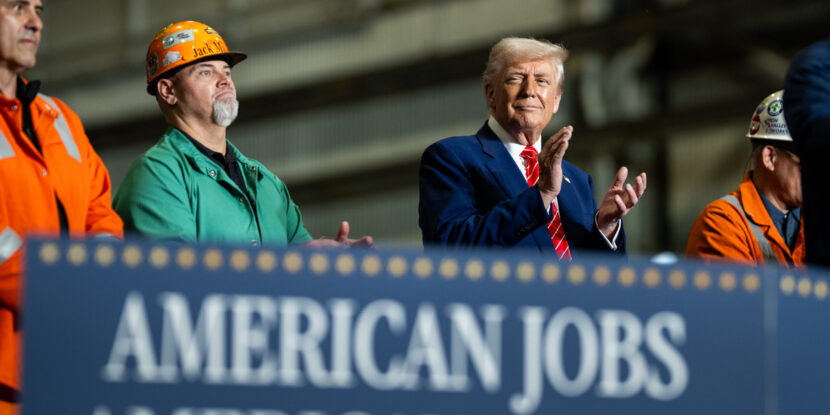
In the run-up to the November midterm elections, which are projected to be tight, the Trump administration has announced several economic nationalist measures, suggesting that the White House believes a renewed focus on “America First” economic policy can improve the GOP’s fortunes.
The National Pulse keeps track of the latest decisions from the White House. If you value the work of Raheem J. Kassam and his team, please JOIN THE NATIONAL PULSE or MAKE A DONATION today.
Newsletter
Need to Know.
Your free, daily feed from The National Pulse.
Thank You!
You are now subscribed to our newsletter.
Harvest Fuel Relief.
On October 20, President Donald J. Trump announced an $8 billion Harvest Fuel Relief Program to help farmers cope with high diesel prices during this harvest. The Department of Agriculture will implement the program through the Farm Service Agency, with farmers receiving one-time payments calculated by a uniform formula. “When Republicans win, we will pass even more funding for our Great Farmers, and Fuel prices will come tumbling down as soon as the Iran War is over, which will happen very quickly!” the President posted on Truth Social on Tuesday.
The move shows that the Trump administration believes it must cushion the costs passed onto American producers by the ongoing Iran war. By implementing measures to lower costs, American farmers can pass savings on to American consumers while simultaneously protecting their own livelihoods.
Russian Diesel Deal.
On October 9, President Trump announced that Russia would immediately supply more than 300,000 metric tons of diesel to U.S. and global energy markets. This follows direct talks between President Trump and Russian President Vladimir Putin, and the Trump administration’s decision last month to temporarily lift sanctions on Russian fuel.
“Russia will immediately supply over 300,000 Tons of Diesel Fuel to the American and Global Marketplace, another 500,000 Tons during the month of November, and 1,000,000 Tons immediately thereafter,” announced the President on Truth Social earlier this month.
The decision demonstrates the Trump administration’s willingness to prioritize Americans’ living costs over foreign policy optics related to the Ukraine war. This is especially important as affordability ranks as one of the most important issues with independent, moderate, and swing voters ahead of the midterm elections.
Iowa Steel Complex.
On September 28, President Trump announced a $15 billion planned steel complex in Iowa by Mesabi Metallics. The project would become the largest steel plant ever built in U.S. “Today, we’re thrilled to announce that Mesabi Metallics will be building the largest steel plant in American history in the great state of Iowa,” the President announced at the White House in September. The complex is projected to create 1,750 permanent jobs and support up to 6,000 construction jobs in the state. The first phase is expected to produce 7.5 million tons of steel annually, rising to about ten million tons.
The announcement fits into a broader economic nationalist agenda of reshoring industry to rebuild the United States’ productive base and create job opportunities for American workers. Mesabi Metallics already operates an iron ore mine and pellet plant in Minnesota.
Mined, melted, and made right here in the U.S.A. 🇺🇸
President Trump announces Mesabi Metallics' new mega steel plant in Iowa, generating thousands of jobs, billions of dollars, and plenty of the highest quality, most affordable steel anywhere in the world. pic.twitter.com/r15Wrl0AgW
The National Pulse does not take government or corporate cash, so we need your support. Please JOIN THE NATIONAL PULSE or MAKE A DONATION today. We are 100% reader-funded.
Bombardier Threat.
On September 8, President Trump announced that he could block Bombardier, a prominent Canadian aerospace company, from selling aircraft in the U.S. unless it starts manufacturing in the country. “NO MORE SELLING BOMBARDIER IN THE UNITED STATES! If they want our Market, they must build here, and stop treating America like a ‘piggybank,'” the President posted on Truth Social last month. The President’s threat comes amid a broader trade dispute with Canada and coincides with approximately $20 billion in tariffs on U.S.-made goods.
This shows that the Trump administration is increasingly using access to the American market as leverage to encourage companies to move production to U.S. soil. Bombardier operates a U.S. headquarters in Wichita, Kansas.
The State of American Manufacturing.
On October 10, the White House’s Council of Economic Advisers (CEA) published The State of American Manufacturing report. According to the report, manufacturing jobs increased by 72,000 in 2026, with durable-goods manufacturing increasing by 101,000. The CEA report also states that manufacturing job openings are up 25 percent, while layoffs have fallen 25 percent and overtime has increased about 5.3 percent. The S&P Global Manufacturing PMI reached 55.9 in September, its highest level since President Trump took office, and real earnings for non-managerial manufacturing and construction roles have risen. The CEA also reports over $11 trillion in investment and a record $220 billion in goods exports, among other successes.
The release of the report demonstrates that the Trump administration is keen to put its economic nationalist agenda front and center and to underscore its successes ahead of the midterms. This is further substantiated by the comprehensive nature of the report, with data spanning jobs, wages, investment, exports, and more.
National Manufacturing Day.
On October 2, President Trump issued a proclamation for National Manufacturing Day. “My highest priority has been putting America First by restoring our Nation’s manufacturing and bringing back good-paying American jobs,” wrote the President in the proclamation. He highlighted his administration’s use of tariffs, factory investment, tax policy, and other measures to bring production back to the United States. “After years of failed policies that hollowed out our industrial base and left American workers behind, manufacturing is once again powering America’s economic resurgence,” the proclamation continued.
This emphasis on restoring the United States’ industrial capacity shows a deliberate economic nationalist message ahead of the midterms. Rather than framing growth purely in numerical terms, the White House is evidently keen for such stats to be seen as a reflection of America’s restored industrial power.
For 250 years, American workers have been the driving force behind our Nation’s strength & industrial might.
On National Manufacturing Day, we honor the men & women who make, build, & create in America — & we celebrate the extraordinary COMEBACK of American manufacturing. 🇺🇸 pic.twitter.com/kkFrjeKqi8
The National Pulse helps you understand the latest economic news. If you value the work of Raheem J. Kassam and his team, please JOIN THE NATIONAL PULSE or MAKE A DONATION today.
Join Pulse+ to comment below, and receive exclusive e-mail analyses.
show less
In the run-up to the November midterm elections, which are projected to be tight, the Trump administration has announced several economic nationalist measures, suggesting that the White House believes a renewed focus on "America First" economic policy can improve the GOP's fortunes.
show more
By Popular Demand.
The National Pulse Now has an on-site comments section for members. Sign up today and be part of the conversation in our community of almost 15,000.
WE ARE 100% INDEPENDENT AND READER-FUNDED. FOR A GUARANTEED AD-FREE EXPERIENCE AND TO SUPPORT REAL NEWS, PLEASE SIGN UP HERE, TODAY.
Polling data shows that Marine Le Pen has consolidated her lead in the crowded race for France’s presidential elections next year, amid increasingly violent and widespread riots in the country.
The National Pulse provides you with the data that matters. If you value the work of Raheem J. Kassam and his team, please JOIN THE NATIONAL PULSE or MAKE A DONATION today.
Newsletter
Need to Know.
Your free, daily feed from The National Pulse.
Thank You!
You are now subscribed to our newsletter.
Le Pen Leading.
According to Elabe, a French polling firm, Marine Le Pen, leader of the National Rally (RN) party, leads the field for the 2027 French presidential election, with 32 percent support. Jean-Luc Mélenchon, leader of the far-left France Unbowed party, is on 15.5 percent. Former French Prime Minister Édouard Philippe, leader of Horizons, an establishment-aligned centrist party, also secured 15.5 percent. Raphaël Glucksmann, leader of the center-left eurofederalist Public Square party, secured comparable support, with 15 percent. This follows Glucksmann’s successful bid to obtain the endorsement of the Socialist Party after running in the party’s primary.
In the same poll, Bruno Retailleau, leader of the establishment-right Republicans, received 6.5 percent support. David Lisnard, Mayor of Cannes, a city on the south-east coast of France, and leader of New Energy, polled at 5.5 percent. Éric Zemmour, whose Reconquest party challenges Le Pen from the right, secured three percent, as did Nicolas Dupont-Aignan, leader of the eurosceptic France Arise party, Marine Tondelier of the eco-socialist Green Party, François Ruffin of the left-wing Stand Up! party, and former French Prime Minister Dominique de Villepin of the centrist Humanist France party. Fabien Roussel, leader of the French Communist Party, received 1.5 percent support, while Nathalie Arthaud of the far-left Workers’ Struggle party received one percent.
The poll was conducted between October 14 and October 16 amid ongoing riots in France, but before the significant escalation in violence over recent days, including the burning of Limoges City Hall over the weekend.
The French presidential system uses a two-round system. In the first round, all candidates from all parties are allowed to run. If no candidate secures more than 50 percent of the vote in the first round, the two most popular candidates are advanced to the second round in a head-to-head.
According to multiple polls throughout the year, Le Pen is projected to win the first round, but not secure over 50 percent of the vote outright. However, she is also projected to win the second round, regardless of who she is up against. As such, there is a lively race for second place in the first round. Mélenchon is considered the most likely candidate to advance to the second round, even though data suggest he would be rejected in a landslide. If the National Rally leader faces off against Philippe, data indicates that her margin of victory would be narrower but still decisive. Glucksmann’s nomination by former President François Hollande’s party has given him the boost needed to become a contender for second place, although it is not clear that he would fare much better against Le Pen, who has currently managed to extend a 16-point lead over her closest rivals.
However, while fragmentation between the center, center-left, and far-left helps Le Pen’s odds of securing the presidency, it is reasonable to assume that the ongoing riots in France will boost support for the National Rally, with many French voters likely seeking a candidate who will restore law and order. This is especially true since the venerated 143-year-old Limoges City Hall in central France was set ablaze by protestors.
The National Pulse keeps you updated on the latest news from Europe. If you value the work of Raheem J. Kassam and his team, please JOIN THE NATIONAL PULSE or MAKE A DONATION today. We are 100% reader-funded.
Plusieurs véhicules de nouveau incendiés près de la Place de la République à Paris.
Join Pulse+ to comment below, and receive exclusive e-mail analyses.
show less
Polling data shows that Marine Le Pen has consolidated her lead in the crowded race for France's presidential elections next year, amid increasingly violent and widespread riots in the country.
show more
By Popular Demand.
The National Pulse Now has an on-site comments section for members. Sign up today and be part of the conversation in our community of almost 15,000.
WE ARE 100% INDEPENDENT AND READER-FUNDED. FOR A GUARANTEED AD-FREE EXPERIENCE AND TO SUPPORT REAL NEWS, PLEASE SIGN UP HERE, TODAY.
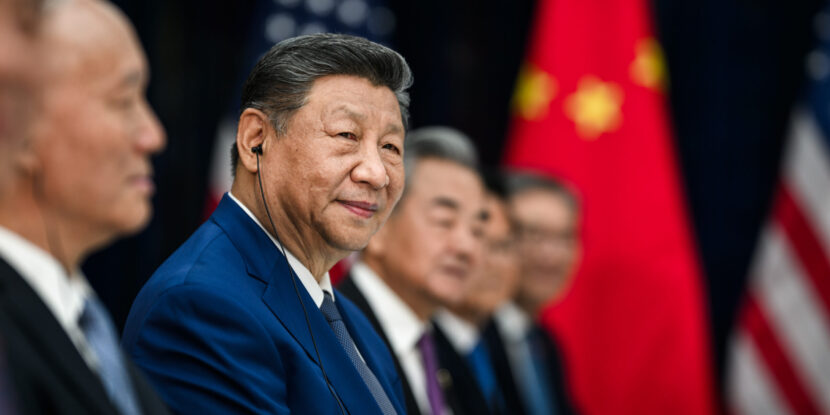
Department of Homeland Security (DHS) Secretary Markwayne Mullin has formally warned that the electronic voting systems that dominate U.S. elections rely on components manufactured in China, creating supply chain vulnerabilities that foreign adversaries could exploit.
The National Pulse does not take government or corporate cash, but it needs your support to remain RADICALLY INDEPENDENT. Please JOIN THE NATIONAL PULSE or MAKE A DONATION today. We are 100% reader-funded.
Newsletter
Need to Know.
Your free, daily feed from The National Pulse.
Thank You!
You are now subscribed to our newsletter.
The August 24, 2026 letter to the White House Transparency Task Force underscores a long-recognized hardware problem now tied directly to midterm election security under the Trump administration.
Mullin wrote that “voting machines with components manufactured by foreign adversaries introduce significant security risks.” He explained that “malicious actors could potentially compromise election infrastructure at any stage of the supply chain, even before the machines are assembled or deployed. If a component is tampered with during manufacturing, it could serve as a point-of-entry for hackers, allowing for the possibility of synchronized attacks across multiple machines and jurisdictions.”
Three vendors—ES&S, Hart InterCivic, and Dominion—control more than 80 percent of the U.S. market, Mullin noted. Representatives from each have acknowledged Chinese-made parts. In congressional testimony, Dominion’s then-President and CEO previously stated that “voting systems manufacturers would be challenged to source certain product hardware components from outside of China,” claiming: “In some cases, there are simply no alternative suppliers.”
ES&S representatives similarly said that “in some instances, there is no ability to procure from alternative component suppliers. Some components are sole-sourced, protected by a patent and/or intricate to the design of the circuit or sub-assembly.”
These admissions align with earlier public testimony. In 2020 House Administration Committee hearings, Dominion’s CEO described reliance on Chinese components ranging from LCD screens to chip-level parts, noting that no domestic manufacturing alternatives existed for certain items.
Proponents of pen or pencil and paper, hand-counted ballots have said this only underscores the need to return to the traditional, inherently high-security method of casting and counting votes.
The DHS letter places the hardware issue in the broader intelligence picture. Recently declassified records, including the 2024 ODNI Annual Threat Assessment, concluded that “China remains the most active and persistent cyber threat to U.S. Government, private-sector, and critical infrastructure networks.”
A National Intelligence Council Memorandum from October 2024 assessed that some U.S. adversaries—at a minimum China, Iran, and Russia—“have the technical capability to access some U.S. election-related networks and systems.”
Heroic! @SecMullinDHS letter – he finds that China parts are in election machines. Can’t be used if so compromised. Mullin also has $1b for states to use safe machines. READ IT! pic.twitter.com/Wy7c7JnADk
The Chinese-component issue compounds documented software and operational vulnerabilities already identified in widely used systems. A 2021 report by University of Michigan professor Alex Halderman and colleague Drew Springall detailed critical flaws in Dominion’s ImageCast X ballot-marking devices and scanners used in Georgia and other states. Attackers with brief physical access could install malware, alter QR codes on printed ballots to change votes, obtain county-wide cryptographic keys, and compromise ballot secrecy or outcomes in ways that risk-limiting audits or hand counts might not detect. Halderman concluded that Georgia voters had “greatly diminished grounds to be confident” that votes cast on the ICX were secured.
Georgia officials largely dismissed the findings. A spokesman for Secretary of State Brad Raffensperger’s office told concerned scientists that if they objected to being grouped with so-called election deniers, “tough noogies.” Computer scientist David Jefferson of Lawrence Livermore National Laboratory and other experts called the response irresponsible, noting that the vulnerabilities were real and required remediation.
Those software flaws exist independently of the manufacturing origin of any particular chip or screen. Supply-chain exposure adds a separate vector: a compromised component introduced before assembly could affect machines across multiple jurisdictions without requiring later physical access.
Verification Requirements and Midterm Stakes.
Mullin stated that “election security is national security” and that, under President Trump, he has directed DHS to prioritize it. Electronic voting systems “have one job—to accurately count the votes on ballots.” To receive full Homeland Security Grant Program awards, states must demonstrate they have conducted random post-election manual counts of paper ballots “to ensure that any errors or manipulation is detected.” This “trust but verify” condition supplements other DHS actions on election infrastructure.
The DHS letter frames the problem of Chinese and other foreign components in American voting machines as structural rather than theoretical. Vendors have long said certain parts cannot be sourced domestically. Intelligence assessments identify China as the leading cyber threat. Prior independent examinations of Dominion equipment identified pathways for vote alteration and secrecy breaches. Together, these facts support the case for mandatory random hand counts of paper ballots as a condition of federal election-security funding ahead of the midterms.
The National Pulse produces in-depth analysis that takes time and research to produce. To support our work, please JOIN THE NATIONAL PULSE or MAKE A DONATION today.
Join Pulse+ to comment below, and receive exclusive e-mail analyses.
show less
Department of Homeland Security (DHS) Secretary Markwayne Mullin has formally warned that the electronic voting systems that dominate U.S. elections rely on components manufactured in China, creating supply chain vulnerabilities that foreign adversaries could exploit.
show more
By Popular Demand.
The National Pulse Now has an on-site comments section for members. Sign up today and be part of the conversation in our community of almost 15,000.
WE ARE 100% INDEPENDENT AND READER-FUNDED. FOR A GUARANTEED AD-FREE EXPERIENCE AND TO SUPPORT REAL NEWS, PLEASE SIGN UP HERE, TODAY.
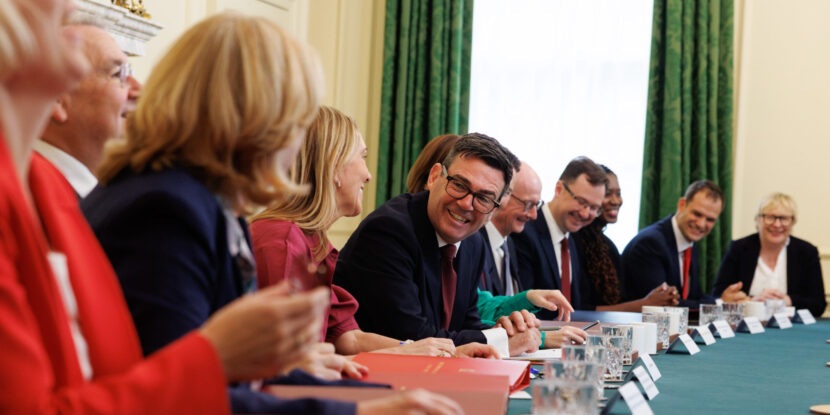
On Monday, the Institute for Public Policy Research (IPPR), a British left-wing think tank, released a report calling for the government to reverse Brexit, the country’s democratic decision to leave the European Union (EU). Significantly, multiple members of Prime Minister Andy Burnham’s top team are products of the IPPR.
The National Pulse maps the networks of the establishment left in Britain. If you value the work of Raheem J. Kassam and his team, please JOIN THE NATIONAL PULSE or MAKE A DONATION today.
Newsletter
Need to Know.
Your free, daily feed from The National Pulse.
Thank You!
You are now subscribed to our newsletter.
What Is The IPPR?
The Institute for Public Policy Research (IPPR) was founded in 1988 by businessman Clive Hollick and economist John Eatwell, both of whom represent the Labour Party in the House of Lords, the upper chamber of the United Kingdom’s bicameral legislature. The IPPR was established to develop progressive policy ideas and challenge free-market economics, which gained traction during the premiership of former Conservative Prime Minister Margaret Thatcher throughout the 1980s.
While the think tank describes itself as independent and non-partisan, it is deeply entwined with the governing Labour Party.
Who Funds The IPPR?
According to the IPPR’s 2025 financial disclosure, it received between £725,001 and £750,000 from left-wing billionaire George Soros’ Open Society Foundations (OSF).
The think tank also received between £325,001 and £350,000 from the European Climate Foundation, a Netherlands-based non-profit seeking to achieve Net Zero across Europe by 2050, and between £275,001 and £300,000 from the ClimateWorks Foundation. The latter has received donations from various non-profit organizations, including Amazon founder Jeff Bezos’ Earth Fund, and billionaire Michael Bloomberg’s Bloomberg Philanthropies, among others.
The IPPR has also taken between £150,001 and £175,000 from the Gates Foundation, established by Microsoft founder Bill Gates and his then-wife, Melinda French Gates.
Other foreign donations include between £275,001 and £300,000 from the Laudes Foundation and between £200,001 and £225,000 from the Fondation Pluralisme, two Switzerland-based non-profits broadly focused on climate change and human rights, respectively.
The organization’s most recent financial disclosure also lists between £175,001 and £200,000 from the Joseph Rowntree Foundation and between £100,001 and £125,000 from Justice Together, two UK-based ‘social justice’ charities, with the latter specifically seeking to oppose restrictive immigration and asylum policies.
According to the Charity Commission, Britain’s official independent charity regulator, the IPPR raised £4,682,349 in funding for the financial year ending December 31, 2024.
The National Pulse does not take government or corporate cash, so we need your support. Please JOIN THE NATIONAL PULSE or MAKE A DONATION today. We are 100% reader-funded.
The IPPR-Burnham Network.
There exists significant overlap between former IPPR personnel and the inner circle of Prime Minister Andy Burnham. James Purnell, Prime Minister Burnham’s Chief of Staff, served as Chair of the IPPR from July 2010 to March 2013. Purnell served as a Cabinet minister under former Labour Prime Minister Gordon Brown.
Graeme Cooke, Prime Minister Burnham’s Director of Policy, served as Director of Research at the IPPR from October 2012 to November 2014. He also worked as the organization’s Associate Director for Work and Families from October 2011 to October 2012. Cooke and Purnell co-edited We Mean Power: Ideas for the Future of the Left, a book published in 2010 by the Open Left project, an initiative by Demos, another British political think tank associated with the so-called “Soft Left” of Labour. Cooke and Purnell were head and director of the Open Left Project, respectively.
The book proposes reframing the immigration debate “from numbers to rules” and “re-presenting the open society” after attempts to incorporate “indigenous Englishness within a wider multicultural setting” proved “largely ineffective” at addressing the growing discontent of the “white working-class.”
Matthew McGregor, Prime Minister Burnham’s Director of Political Strategy, served as a Trustee for the IPPR from February 2024 to July 2026. McGregor previously served as CEO of 38Degrees, a progressive activist group that sought to prevent President Donald J. Trump’s state visit to the United Kingdom. McGregor also described the President as a “maniac with fascist tendencies” and Reform UK leader Nigel Farage “a racist piece of shit” on his now-deleted X (formerly Twitter) page. He also worked as Director of Communications for Hope Not Hate, a far-left activist group, from 2018 to 2021. In 2021, McGregor co-authored a report downplaying Britain’s grooming gang scandal with Liron Velleman, a former Labour councillor and the group’s former Political Organizer. In early January 2026, Velleman pleaded guilty to attempting to engage in sexual communication with a child.
Emma Norris, Special Adviser to Prime Minister Burnham, served as the IPPR’s Deputy Director from August 2025 to September 2026.
Miatta Fahnbulleh, the current Secretary of State for Energy Security and Net Zero, served as the IPPR’s Director of Policy and Research from December 2016 to December 2017. Her family was involved in multiple attempts to overthrow the Liberian government in the 1980s. “Much like Rep. Ilhan Omar in America, Miatta’s family actually worked for the government they later fled… Her grandfather was even charged with treason for cavorting with Chinese communists in the late 1960s. Miatta is just another in a long line of anti-Western, far leftists,” said Raheem Kassam, Editor-in-Chief of The National Pulse, back in July.
The IPPR’s Report.
According to the report, titled New World, New Relationship: Our Future with Europe,the IPPR argues that Britain “must again become a member of the European Union” and should make European Union membership its “medium-term goal.” The report claims that geopolitical uncertainty created by China, Russia, and the United States necessitates rejoining the EU and further claims that closer trade deals with the bloc will be insufficient. The IPPR calls on the British government to establish “closer ties between progressive parties across Europe,” “develop a new political language about Europe, reflected by the government in its communications strategy,” and rejoin “either through a referendum or a clear manifesto commitment.”
This follows research by The National Pulse modeling the severe impact of immigration on the United Kingdom if the country were to join the EU, responding t0 comments about rejoining made by the Prime Minister. “We could go all the way,” said Burnham at the time.
The National Pulse follows the money so you don’t have to. If you value the work of Raheem J. Kassam and his team, please JOIN THE NATIONAL PULSE or MAKE A DONATION today.
Join Pulse+ to comment below, and receive exclusive e-mail analyses.
show less
On Monday, the Institute for Public Policy Research (IPPR), a British left-wing think tank, released a report calling for the government to reverse Brexit, the country's democratic decision to leave the European Union (EU). Significantly, multiple members of Prime Minister Andy Burnham's top team are products of the IPPR.
show more
By Popular Demand.
The National Pulse Now has an on-site comments section for members. Sign up today and be part of the conversation in our community of almost 15,000.
WE ARE 100% INDEPENDENT AND READER-FUNDED. FOR A GUARANTEED AD-FREE EXPERIENCE AND TO SUPPORT REAL NEWS, PLEASE SIGN UP HERE, TODAY.
A historic French city hall that survived two world wars has been destroyed by youth rioters, as part of a wave of unrest, much of it involving young people from migration backgrounds, sweeping across President Emmanuel Macron’s France. The destruction comes amid nationwide violence that has left thousands of businesses damaged, thousands of rioters arrested, and many police officers injured.
The National Pulse brings you the latest research on current events. To support Raheem J. Kassam and his team, please JOIN THE NATIONAL PULSE or MAKE A DONATION today. We are 100% reader-funded.
Newsletter
Need to Know.
Your free, daily feed from The National Pulse.
Thank You!
You are now subscribed to our newsletter.
The 143-year-old city hall in Limoges, central France, was set ablaze by a masked mob on Saturday, October 17, during demonstrations over rising living costs and deteriorating public services. Rioters smashed windows and forced their way into the historic building before setting it on fire. Flames consumed much of the roof, while the building’s iconic 141-foot clock tower collapsed.
Residents compared the destruction to the devastating 2019 fire at Notre-Dame Cathedral in Paris, which shocked the entire world. Local officials described the destruction as a heritage catastrophe, while Limoges Mayor Guillaume Guérin criticized the lack of police protection, claiming officers had been diverted to deal with demonstrations elsewhere in the city.
France: The bell tower of Limoges City Hall has collapsed after a massive fire engulfed the historic building during protests.
The landmark, inaugurated in 1883, was more than 140 years old. https://t.co/7F4OO6tIiD
Limoges City Hall was inaugurated on July 14, 1883, deliberately coinciding with Bastille Day, the French national holiday commemorating the French Revolution. Designed by architect Charles-Alfred Leclerc, the neo-Renaissance building was inspired by Paris’s Hôtel de Ville and was an example of the architecture of France’s Third Republic.
Its elaborate stone facade, huge staircase, decorative interiors, and towering central belfry made it one of the city’s most recognizable landmarks. The building received historic monument protection in 1975 and served generations of residents as the city’s center of government.
Remarkably, the building survived both world wars due to its location in France’s midwest, far from the battlefields of Flanders of 1916 and the Nazi blitzkrieg in 1940. However, mass migration and far-left violence proved to be phenomena that it could not survive.
Thousands Arrested as France Descends Into Rioting.
The destruction in Limoges was part of a much wider outbreak of violence that engulfed major French cities, including Paris, Marseille, Lyon, and Bordeaux. Around 2,400 people were arrested during the weekend’s unrest, while thousands of businesses suffered damage or looting. More than 3,000 shops were damaged nationwide.
French newspaper Le Mondereported that Prime Minister Sébastien Lecornu had confirmed 150 injured police officers, but that was an early estimate, and the true number is likely higher. Rioters themselves also suffered serious injuries, including injuries from French police riot-control weapons.
In Marseille, rioters briefly breached the city hall, while the residence of the prefect in Bordeaux was damaged. Groups of rioters also approached within approximately 300 meters of the Élysée Palace, the French president’s official residence.
France’s Long History of Riot-Related Destruction.
The burning of Limoges City Hall is not the first occasion on which rioting has threatened France’s historic buildings and public institutions. During the 2018 Yellow Vest protests, far-left agitators vandalized the Arc de Triomphe in Paris, one of France’s most recognizable national monuments.
The 2023 riots following the police shooting of migrant-background teenager Nahel Merzouk were even more destructive. According to an official French Senate investigation, those disturbances resulted in 2,508 buildings being burned or damaged, including 105 town halls, 243 educational establishments, and 273 police or gendarmerie (paramilitary police) buildings. Rioters also burned 12,031 vehicles and vandalized or looted more than 1,000 businesses. The Senate estimated the total property damage at nearly €1 billion ($1.12 billion), with insurers recording €793 million ($889 million) in claims.
Among the cultural losses was the Jean-Macé Library in Metz, which was burned to the ground during the violence, destroying a significant collection of books and other materials.
Macron’s Repeated Failure Is Destroying France.
While President Macron has condemned the latest violence, blaming radical far-left groups and opportunistic criminals for exploiting demonstrations originally organized around education and living standards, he has done little to contain it. Some analysts have questioned whether organized extremists alone can explain the scale of the disorder, with some noting the broad leftist networks involved, many of which go well beyond France itself.
The French government has responded with additional policing and localized restrictions, including overnight curfews in parts of Paris. For Limoges, however, the consequences of the violence are already irreversible. A landmark that stood through two world wars is largely destroyed, with taxpayers expected to foot the bill for an expensive reconstruction or demolition.
Join Pulse+ to comment below, and receive exclusive e-mail analyses.
show less
A historic French city hall that survived two world wars has been destroyed by youth rioters, as part of a wave of unrest, much of it involving young people from migration backgrounds, sweeping across President Emmanuel Macron's France. The destruction comes amid nationwide violence that has left thousands of businesses damaged, thousands of rioters arrested, and many police officers injured.
show more
By Popular Demand.
The National Pulse Now has an on-site comments section for members. Sign up today and be part of the conversation in our community of almost 15,000.
WE ARE 100% INDEPENDENT AND READER-FUNDED. FOR A GUARANTEED AD-FREE EXPERIENCE AND TO SUPPORT REAL NEWS, PLEASE SIGN UP HERE, TODAY.
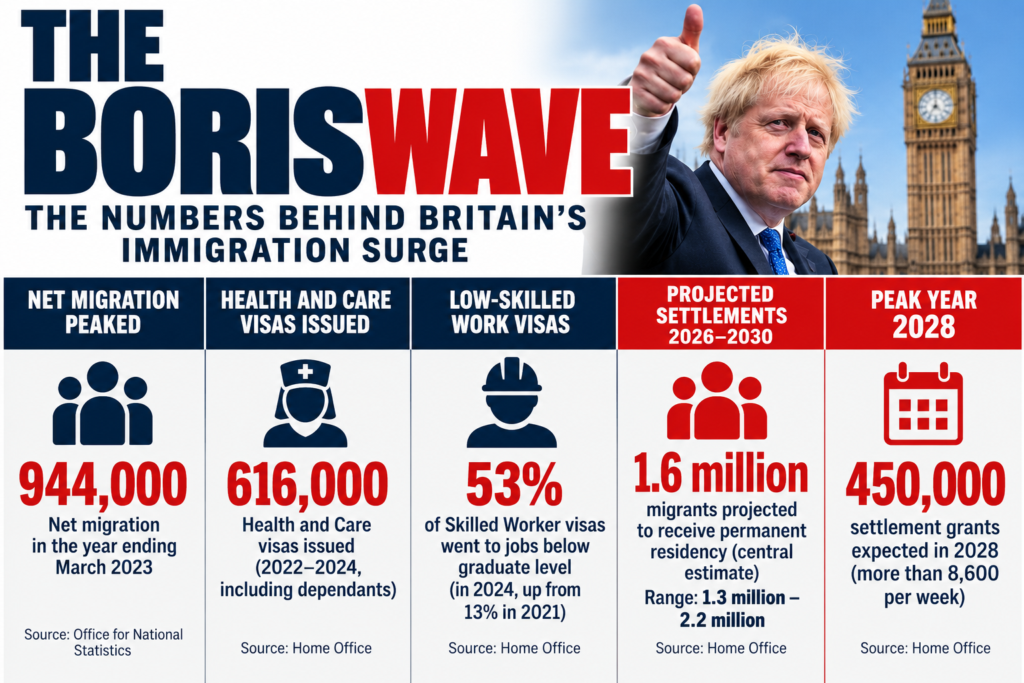
Britain’s Labour government is allowing thousands of migrants to secure de facto permanent residency every week by delaying promised immigration restrictions. Many are entered Britain as part of the Boriswave, a mass influx engineered by the former Conservative government following the COVID-19 pandemic.
The National Pulse researches the stories that matter to you. To support Raheem J. Kassam and his team, please JOIN THE NATIONAL PULSE or MAKE A DONATION today. We are 100% reader-funded.
Newsletter
Need to Know.
Your free, daily feed from The National Pulse.
Thank You!
You are now subscribed to our newsletter.
More than 200,000 legal migrants have reportedly received indefinite leave to remain (ILR) despite tougher settlement requirements being promised last year. Around 5,000 migrants are reportedly securing permanent settlement every week under existing arrangements, even as government ministers debate extending the standard qualifying period from five to ten years.
The Conservatives created the conditions for the surge in settlement by dramatically relaxing controls on legal immigration, disregarding their repeated pledges to substantially reduce it. Labour, despite promising to tighten the rules, has failed to implement reforms that could prevent hundreds of thousands of Boriswave arrivals from becoming de facto permanent residents.
The Tories Own the Boriswave.
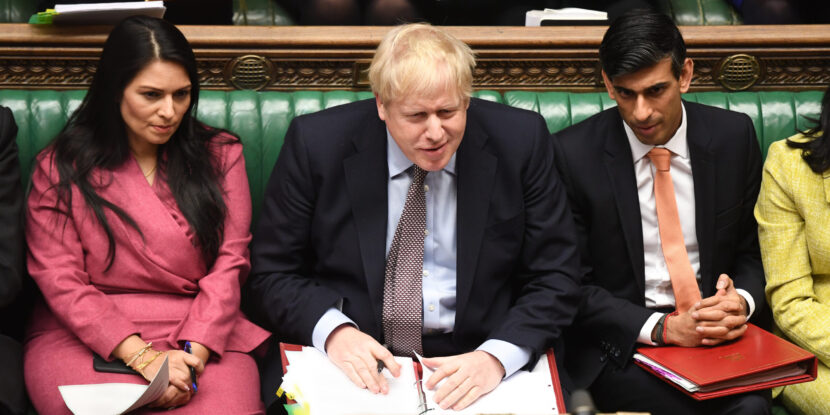
Boris Johnson’s government introduced a new points-based immigration system in December 2020, supposedly to restore British control over immigration following Brexit. Instead, the Conservatives greatly expanded eligibility for foreign workers outside of the EU, lowered skills requirements for sponsored employment, uncapped student and work visas, and opened additional routes for lower-paid care workers and their dependants.
According to the Home Office’s own assessment of the settlement system, approximately 616,000 people entered Britain through the Health and Care visa route alone between 2022 and 2024, most of them dependants rather than the workers the scheme was supposedly designed to attract.
The Conservatives also expanded the “skilled” worker routes to occupations below graduate level. By the year ending June 2024, 53 percent of Skilled Worker visas issued to main applicants were for jobs below graduate-level skill requirements.
Brexit had been sold to voters as an opportunity to restore national control over Britain’s borders, including by Johnson himself. Instead, while Conservative ministers ended European “free movement” immigration, they introduced an uncapped points system that facilitated record levels of arrivals from outside the European Union, far larger than the decrease in EU immigration.
The Office for National Statistics (ONS) subsequently revised its estimates of net migration, placing the peak at approximately 944,000 in the year ending March 2023.
Up to 2.2 Million Migrants Could Settle by 2030.
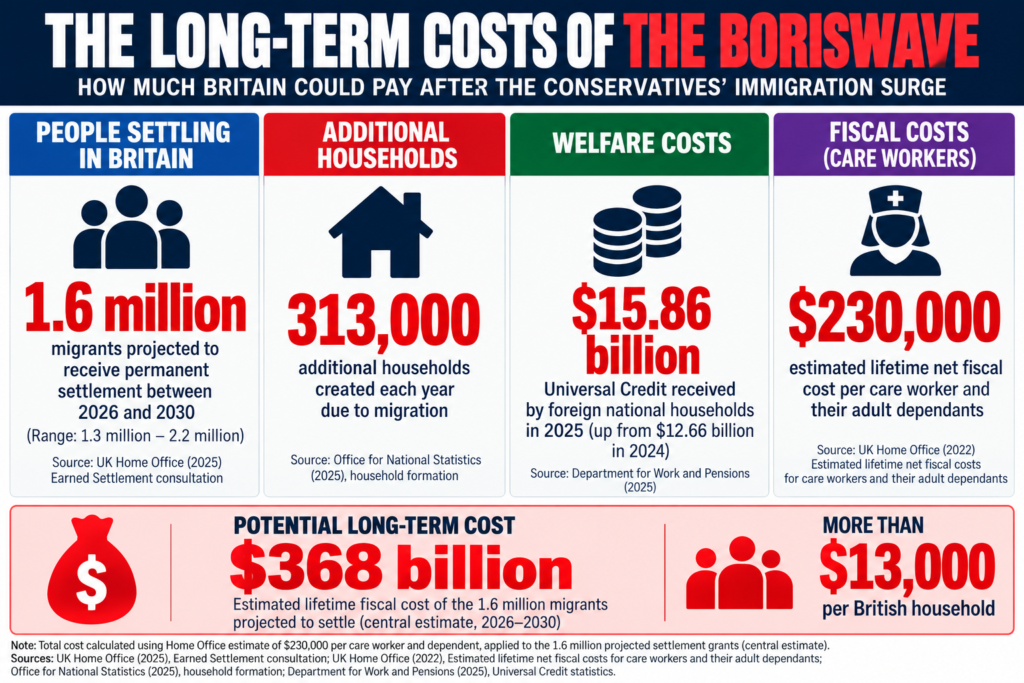
The Home Office’s official settlement forecasts estimate that between 1.3 million and 2.2 million migrants could obtain Indefinite Leave to Remain between 2026 and 2030 under projected settlement patterns. The department expects settlement grants to peak in 2028, when approximately 450,000 people could receive ILR. That would represent an average of more than 8,600 grants per week, nearly doubling the approximately 5,000 being reported now.
Much of the increase can be traced directly to decisions taken by Conservative ministers. The Home Office forecasts that approximately 462,000 people who originally entered through the Health and Care visa route could obtain ILR between 2026 and 2030. Another 306,000 are projected to settle after arriving through other Skilled Worker routes.
In 2028 alone, the department expects approximately 210,000 settlement grants to people who originally entered through the Health and Care route. The forecasts also include “family reunion” chaim migration, Hong Kong British National (Overseas) visa holders, and others.
Labour’s Promised Crackdown Appears to Be a Mirage.
Labour initially proposed doubling the standard qualifying period for indefinite leave to remain from five to ten years as part of its immigration reforms. Home Secretary Shabana Mahmood outlined a more extensive system of earned settlement, under which applicants would have to demonstrate economic contribution, integration, and compliance with immigration requirements.
The government’s November 2025 consultation also proposed a 15-year qualifying period for certain lower-skilled workers, alongside longer periods for applicants whose circumstances trigger additional requirements. Mahmood has also proposed applying the changes to migrants already living in Britain who had not yet obtained ILR.
However, the proposal provoked opposition within Labour, with many Members of Parliament (MPs) lobbying against retrospectively changing the conditions for millions of foreign workers who are already in Britain. Open borders proponents and others say that migrants who arrived legally under the Conservative government’s rules should not have their settlement expectations overturned after years of residence.
The consultation closed in February 2026, but the central reforms remained unresolved as of October 19. Meanwhile, the settlement pipeline established by Johnson and his Conservative successors continues to operate.
The Long-Term Cost of the Conservative Immigration Experiment.
Permanent settlement does not automatically grant every recipient welfare payments, but it generally removes the immigration restrictions that prevent many temporary visa holders from accessing many public funds. ILR holders can become eligible for Universal Credit, social housing, and other benefits. They can also generally apply for British citizenship after meeting additional residence and eligibility requirements.
This raises questions about the long-term fiscal consequences of the Conservatives’ decision to expand immigration through low-paid employment routes. A Home Office fiscal assessment of care workers and their adult dependants examines how earnings, tax contributions, public services, and welfare expenditure affect the lifetime fiscal impact of this category of migration.
Meanwhile, government figures reported in September showed that households containing at least one foreign national received approximately £11.9 billion ($15.86 billion) in Universal Credit during 2025, up from £9.5 billion ($12.66 billion) in 2024.
Labour’s proposed restrictions would delay settlement for many applicants, potentially postponing their access to certain benefits. However, the final fiscal impact will depend on which migrants are covered, what transitional arrangements are introduced, and how settlement affects their employment and tax contributions.
Britain’s Immigration Crisis Is a Failure of the Entire Establishment.
Labour’s hesitation over settlement reform presents an opportunity for Nigel Farage and his Reform UK party, but the Boriswave is fundamentally a legacy of the Conservative government. Their post-Brexit immigration system admitted unprecedented numbers of foreign nationals, many on pathways that could eventually lead to indefinite leave to remain.
Labour inherited that system and has now spent months debating how to change it, while thousands continue securing settlement under the existing rules.
Join Pulse+ to comment below, and receive exclusive e-mail analyses.
show less
Britain's Labour government is allowing thousands of migrants to secure de facto permanent residency every week by delaying promised immigration restrictions. Many are entered Britain as part of the Boriswave, a mass influx engineered by the former Conservative government following the COVID-19 pandemic.
show more
By Popular Demand.
The National Pulse Now has an on-site comments section for members. Sign up today and be part of the conversation in our community of almost 15,000.
Share Story
FacebookTwitterWhatsappTruthTelegramGettrCopy Link
Real News Fan? Show It!
Many people are shocked to learn that because of active censorship, we currently have to spend more time making sure you can even see The National Pulse, than on producing the news itself. Which sucks. Because we do this for the truth, and for you.
But the regime doesn’t want you being informed. That’s why they want us to go away. And that will happen if more people don’t sign up to support our work. It’s basic supply and demand. So demand you get to read The National Pulse, unrestricted. Sign up, today.
We don’t sell ads, and refuse corporate or political cash. It all comes down to you, the reader. I hope you can help.
























.jpg)


.jpg)


_04.jpg)
