Monday, December 8, 2025

WE ARE 100% INDEPENDENT AND READER-FUNDED. FOR A GUARANTEED AD-FREE EXPERIENCE AND TO SUPPORT REAL NEWS, PLEASE SIGN UP HERE, TODAY.

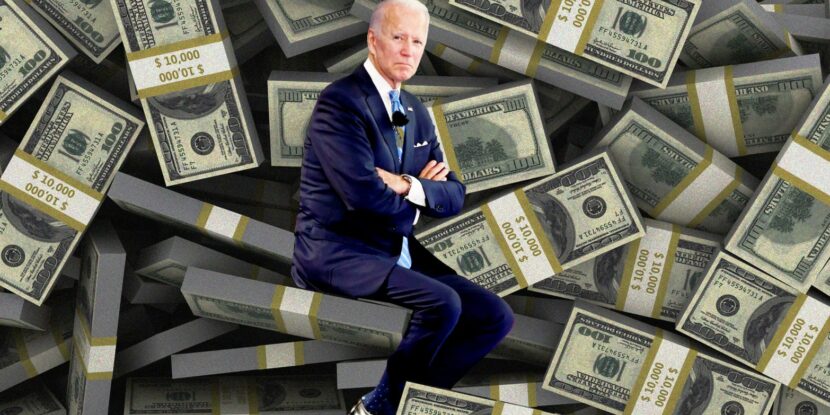
No Refunds? Biden Donors Are Asking About Getting Their Money Back.

Major Democrat donors are beginning to turn on Joe Biden‘s 2024 re-election campaign after the 81-year-old incumbent appeared cognitively impaired during last Thursday’s presidential debate with former President Donald J. Trump. Concerned that Biden will be unable to hold on to the White House, some donors are asking the campaign to refund their contributions so they can redirect the money to down-ballot races.

Julie Chavez Rodriguez, Biden’s campaign manager, attempted to reassure donors in a private call over the weekend, claiming that the campaign had raised over $33 million since the debate. However, the call revealed a sense of unease among donors. One participant shared that many attendees expressed fear and frustration, noting that some had inquired about the possibility of refunds. Rodriguez emphasized that should Biden withdraw, only Vice President Kamala Harris could access the campaign’s funds, complicating any potential shift in the Democratic ticket.

The octogenarian Democrat struggled to coherently respond to moderator questions during the 90-minute debate held at CNN‘s studios in Atlanta, Georgia last week. On multiple occasions, Biden lost his train of thought and contradicted statements he made just moments before. The Democrat nominee’s impaired state sparked panic among supporters and prompted calls for him to reconsider his candidacy.

Former Biden government officials were also deeply critical of President Biden’s disastrous performance, with one Democratic campaign veteran calling it “Catastrophe … unimaginably bad … Waterloo.” California Governor Gavin Newsom, a possible favorite to replace Biden in the presidential race, admitted there was “panic” among the Democrats following the debate.

By Popular Demand.
The National Pulse Now has an on-site comments section for members. Sign up today and be part of the conversation in our community of almost 15,000.
More From The Pulse

WE ARE 100% INDEPENDENT AND READER-FUNDED. FOR A GUARANTEED AD-FREE EXPERIENCE AND TO SUPPORT REAL NEWS, PLEASE SIGN UP HERE, TODAY.

Jasmine Crockett Joins Texas Senate Contest.

PULSE POINTS

WHAT HAPPENED: Rep. Jasmine Crockett (D-TX) officially filed paperwork to enter the Democrat primary for the U.S. Senate in Texas.

👤WHO WAS INVOLVED: Rep. Jasmine Crockett and other Texas politicians.

📍WHEN & WHERE: Crockett filed her paperwork on Monday in Texas.

💬KEY QUOTE: “In the past few days, I’ve come to believe that a bruising Senate Democratic primary and runoff would prevent the Democratic Party from going into this critical election unified against the danger posed to our communities and our Constitution by Donald Trump and one of his Republican bootlickers [Ken] Paxton, [John] Cornyn, or Hunt.” – Colin Allred

🎯IMPACT: The Texas Senate race is expected to be one of the most expensive and competitive of the midterms.

IN FULL

Representative Jasmine Crockett (D-TX) formally joined the Democratic U.S. Senate primary in Texas on Monday by submitting her paperwork, stepping in just hours after Rep. Colin Allred ended his Senate bid. Allred announced earlier the same day that he would instead run for the House in the newly created 33rd congressional district.

In the Democratic primary, Crockett will now face state Rep. James Talarico of Austin. On the Republican side, the Republican field includes Republican-in-name-only three-term incumbent Senator John Cornyn, America First state Attorney General Ken Paxton, and Rep. Wesley Hunt. The contest is expected to be one of the most expensive and closely followed Senate races of the 2026 midterms.

Allred explained his withdrawal by saying, “In the past few days, I’ve come to believe that a bruising Senate Democratic primary and runoff would prevent the Democratic Party from going into this critical election unified against the danger posed to our communities and our Constitution by Donald Trump and one of his Republican bootlickers [Ken] Paxton, [John] Cornyn, or [Wesley] Hunt.” He continued, “That’s why I’ve made the difficult decision to end my campaign for the U.S. Senate. But I’m nowhere near done serving my community and our state.”

Crockett, a prominent progressive voice and strident critic of President Donald J. Trump known for her outlandish statements and allegations, had previously said she would only enter the Senate race if polls showed a realistic path to victory in November. Recent surveys reportedly place her ahead in the Democratic primary field.

Join Pulse+ to comment below, and receive exclusive e-mail analyses.

show less
show more
By Popular Demand.
The National Pulse Now has an on-site comments section for members. Sign up today and be part of the conversation in our community of almost 15,000.

WE ARE 100% INDEPENDENT AND READER-FUNDED. FOR A GUARANTEED AD-FREE EXPERIENCE AND TO SUPPORT REAL NEWS, PLEASE SIGN UP HERE, TODAY.

Trump Prosecutors Take Aim as Scandal Engulfs Dem-Appointed Officials in Somali Fraud Case.

PULSE POINTS

WHAT HAPPENED: Feeding Our Future, a nonprofit intended to feed low-income children in Minnesota, is accused of illegally diverting over $250 million in taxpayer funds for personal luxury purchases, according to federal prosecutors.

👤WHO WAS INVOLVED: The Minnesota Department of Education (MDE), former MDE leaders Brenda Cassellius and Mary Cathryn Ricker, fraudsters tied to Feeding Our Future, and Minnesota Governor Tim Walz (D).

📍WHEN & WHERE: The alleged fraud occurred between 2018 and 2021 in Minnesota, with key developments during the tenures of Cassellius and Ricker at MDE.

💬KEY QUOTE: “Many of MDE’s complaint investigation procedures and practices were inappropriate or of limited usefulness, particularly in the context of the alleged fraud. While MDE had written complaint investigation procedures, their limited scope and failure to address important issues undermined their ability to promote good investigative practices.” – Minnesota Legislative Auditor’s report.

🎯IMPACT: The alleged fraud highlights systemic failures in oversight, with MDE reportedly increasing payments to Feeding Our Future by 2,800 percent between 2020 and 2021.

IN FULL

Former heads of the Minnesota Department of Education (MDE) are under scrutiny as new findings deepen the investigation into the alleged fraud surrounding Feeding Our Future (FOF), a Somali-run nonprofit that was ostensibly providing meals to low-income children. Prosecutors say FOF diverted more than $250 million in taxpayer funds to shell companies and individuals, many of whom used the money for real estate, luxury cars, and other lavish purchases, rather than meals for children.

A 20-page audit from Judy Randall and Katherine Theisen faulted MDE for failing to act on repeated warning signs before and after the pandemic. The report said MDE “did not effectively exercise its authority to hold Feeding Our Future accountable to program requirements,” and was “ill-prepared to respond to the issues it encountered.”

“Many of MDE’s complaint investigation procedures and practices were inappropriate or of limited usefulness, particularly in the context of the alleged fraud. While MDE had written complaint investigation procedures, their limited scope and failure to address important issues undermined their ability to promote good investigative practices,” the report said.

Under former Commissioner Brenda Cassellius, FOF received its initial approval and survived an administrative review in 2018. Her successor, Mary Cathryn Ricker, oversaw the department during the nonprofit’s explosive expansion; in 2020, MDE approved FOF’s summer-food-service application without re-verifying that FOF retained its nonprofit status, even though it had been revoked earlier that year by the Internal Revenue Service (IRS).

Despite receiving at least 30 complaints about FOF’s operations, MDE rarely intervened. In one instance, the department asked FOF to investigate complaints against itself. Meanwhile, FOF’s payments surged, increasing by 2,800 percent between fiscal year 2020 and 2021. The audit also detailed a case in which the nonprofit allegedly demanded a kickback from a vendor; when the vendor declined, their contract was cancelled.

FOF’s outreach and network were deeply rooted in Minnesota’s Somali-American community, which was allegedly shielded from investigation by Minnesota Governor and failed Democratic vice presidential candidate Tim Walz.

Prosecutors have said that many of the companies receiving funds were owned or operated by Somalis. For instance, evidence presented in federal court shows that the nonprofit Somali Community Resettlement Services sponsored several meal-distribution sites in cities like Minneapolis and Faribault, which claimed to serve thousands of meals daily but, prosecutors say, were part of the fraud.

In one case, a site backed by Somali Community Resettlement Services claimed to serve 3,000 meals a day, and another claimed 2,000. That nonprofit was reimbursed about $2.9 million via a sponsoring intermediary, and paid the purported meal-serving entities roughly $1.83 million, keeping nearly $1.1 million itself.

Federal prosecutors—including Joseph Thompson—warn that the problem goes beyond FOF. They say similar fraud has already hit other state-backed programs, such as housing stabilization and autism services. “To be clear, this is not an isolated scheme,” Thompson said.

Image by Gage Skidmore.

Join Pulse+ to comment below, and receive exclusive e-mail analyses.

show less
show more
By Popular Demand.
The National Pulse Now has an on-site comments section for members. Sign up today and be part of the conversation in our community of almost 15,000.

WE ARE 100% INDEPENDENT AND READER-FUNDED. FOR A GUARANTEED AD-FREE EXPERIENCE AND TO SUPPORT REAL NEWS, PLEASE SIGN UP HERE, TODAY.

ICEBlock App Files Lawsuit Against Trump Admin for ‘Censorship.’

PULSE POINTS

WHAT HAPPENED: The developer of ICEBlock, an app that tracks U.S. Immigration and Customs Enforcement (ICE) agents, has sued the Trump administration for supposed free speech violations after Apple removed the app from its store under government pressure.

👤WHO WAS INVOLVED: ICEBlock developer Joshua Aaron, Attorney General Pam Bondi, Apple, and the Trump administration.

📍WHEN & WHERE: The lawsuit was filed on Monday in Washington, D.C., following Apple’s removal of the app in October.

💬KEY QUOTE: “We view that as an admission that she engaged in coercion in her official role as a government official to get Apple to remove this app,” said lawyer Noam Biale.

🎯IMPACT: If successful, the lawsuit could see ICEBlock, used to evade and potentially ambush ICE agents, returned to Apple’s app store.

IN FULL

The creator of ICEBlock—an iPhone app that lets users anonymously report and receive alerts about nearby Immigration and Customs Enforcement (ICE) activity—has sued the Trump administration, claiming it violated the First Amendment. The legal action comes after Apple pulled the app from its App Store in October, which the developer says happened only after direct pressure from the White House.

Attorney General Pam Bondi openly acknowledged the administration’s involvement, saying, “We reached out to Apple today demanding they remove the ICEBlock app from their App Store—and Apple did so.” ICEBlock represents a safety threat to ICE agents, not only helping illegal immigrants evade law enforcement but also potentially providing intelligence for ambush attacks.

The developer’s attorney, Noam Biale, said of Bondi’s comments, “We view that as an admission that she engaged in coercion in her official role as a government official to get Apple to remove this app.”

Developer Joshua Aaron denies the app endangers agents, insisting the tool is peaceful and meant only to share information. “It was just the best idea I had to do everything I could to fight back against what was going on,” Aaron said, calling the administration’s commitment to deporting illegal immigrants, including pedophiles and other dangerous criminals, “abhorrent.”

ICEBlock can no longer be downloaded from Apple’s store, though people who already installed it can still use it. Aaron says the lawsuit aims to get the app reinstated and to deter similar takedowns in the future. “We will take it as far as it needs to go to ensure this never happens again,” Aaron said.

Join Pulse+ to comment below, and receive exclusive e-mail analyses.

show less
show more
By Popular Demand.
The National Pulse Now has an on-site comments section for members. Sign up today and be part of the conversation in our community of almost 15,000.

WE ARE 100% INDEPENDENT AND READER-FUNDED. FOR A GUARANTEED AD-FREE EXPERIENCE AND TO SUPPORT REAL NEWS, PLEASE SIGN UP HERE, TODAY.

IAEA: Chernobyl Shield Loses Ability to Contain Radiation After Drone Strike.

PULSE POINTS

WHAT HAPPENED: The protective shield at the Chernobyl nuclear power plant has been damaged by a drone strike, compromising its ability to contain radioactive material, according to the International Atomic Energy Agency (IAEA).

👤WHO WAS INVOLVED: Ukraine has accused Russia of conducting the February drone strike, though the Kremlin denies responsibility. The IAEA conducted the inspection and provided updates.

📍WHEN & WHERE: The drone strike occurred earlier this year at the Chernobyl nuclear power plant, located in the Kiev region of Ukraine.

💬KEY QUOTE: The structure has “lost its primary safety functions, including the confinement capability.” – Rafael Grossi, Director of the IAEA.

🎯IMPACT: While radiation levels have not increased, the site requires comprehensive restoration to ensure long-term nuclear safety, the IAEA stated.

IN FULL

The International Atomic Energy Agency (IAEA) says the protective arch over Chernobyl’s destroyed reactor has been weakened after a drone strike earlier this year, raising new concerns about nuclear safety in a war zone. The February attack, which Ukraine attributes to Russian forces but the Kremlin denies, tore a hole in the outer shell of the steel structure erected in 2016 to contain radioactive material from the 1986 disaster. A brief fire broke out near the reactor, but the inner containment barrier held, and radiation levels did not increase.

IAEA Director Rafael Grossi reported that emergency repairs were completed but warned that the enclosure has “lost its primary safety functions, including the confinement capability.” He urged a full restoration to prevent further deterioration and to maintain long-term safeguards at the site.

Chernobyl remains one of the most sensitive nuclear locations in the region. Russian forces seized the area during the early weeks of the 2022 invasion but withdrew after a month.

Nuclear facilities across Ukraine continue to face risks as the conflict enters its fourth year. Europe’s largest nuclear power plant complex, the Russian-occupied Zaporizhzhia plant, has endured repeated shelling, fires, and power disruptions. In August 2024, explosions ignited a fire at a cooling tower, with both sides blaming each other. Inspectors later confirmed that radiation levels were unaffected, but the incident reinforced international warnings that continued military activity around the site could trigger a major nuclear emergency. The plant requires stable external power to keep its cooling systems operating, and any prolonged outage could create dangerous conditions.

Amid these escalating concerns, former U.S. National Security Adviser and President Donald J. Trump’s Ukraine envoy, Keith Kellogg, recently emphasized that resolving nuclear safety issues, including stabilizing operations at Zaporizhzhia, is essential to achieving a broader settlement to the conflict. The topic gained further attention after a proposal surfaced in March 2025 in which Donald Trump suggested that the United States assume control of Ukraine’s nuclear-power facilities to secure them from wartime threats. Ukrainian officials rejected the idea as incompatible with national sovereignty, though they acknowledged the need for stronger international involvement in nuclear oversight.

The conflict has also been marked by allegations of sabotage attempts. Russian authorities have claimed that British-trained operatives sought to damage Russian-held nuclear facilities, while Kiev has accused Moscow of staging provocations to justify further military escalation. Both sides deny the accusations leveled against them.

Join Pulse+ to comment below, and receive exclusive e-mail analyses.

show less
show more
By Popular Demand.
The National Pulse Now has an on-site comments section for members. Sign up today and be part of the conversation in our community of almost 15,000.

WE ARE 100% INDEPENDENT AND READER-FUNDED. FOR A GUARANTEED AD-FREE EXPERIENCE AND TO SUPPORT REAL NEWS, PLEASE SIGN UP HERE, TODAY.

Trump Increases Deportations of Iranians.

PULSE POINTS

WHAT HAPPENED: The Trump administration has deported another 55 Iranians, according to reports from Iranian and U.S. sources.

👤WHO WAS INVOLVED: The U.S. government, Iranian nationals, the Iranian Foreign Ministry, and the U.S. Department of Homeland Security (DHS).

📍WHEN & WHERE: The deportation flight reportedly departed on Sunday, with Iranians eventually arriving in Tehran via Kuwait.

💬KEY QUOTE: “These individuals announced their willingness for return following continuation of anti-immigration and discriminative policy against foreign nationals particularly Iranians by the United States,” said Iranian Foreign Ministry official Mojtaba Shasti Karimi.

🎯IMPACT: The deportation highlights the Trump administration’s ongoing crackdown on illegal immigration.

IN FULL

Another 55 Iranians have been put on a deportation flight by the Trump administration. The Mizan news agency, affiliated with Iran’s judiciary, quoted Iranian Foreign Ministry official Mojtaba Shasti Karimi, who claimed that “These individuals announced their willingness for return following continuation of anti-immigration and discriminative policy against foreign nationals particularly Iranians by the United States.”

Iranian Foreign Ministry spokesman Esmaeil Baghaei confirmed, “In the coming days, about 55 nationals will return to Iran… This is the second group being returned to Iran in the latest months.”

Reports indicate that the deportation flight departed on Sunday and included migrants from other nations. Upon landing in Cairo, Egypt, Arab and Russian nationals disembarked, while Iranian nationals continued to Kuwait before transferring to a chartered Kuwait Airways aircraft bound for Tehran.

The deportations align with the Trump administration’s intensified focus on enforcing immigration laws and reversing illegal immigration. They come despite heightened tensions between the U.S. and Iran, with President Donald J. Trump having ordered strikes against Iranian nuclear facilities in June.

The Trump administration is on course to set a modern record for deportations by the end of the year, with a further 1.6 million illegal aliens estimated to have self-deported to avoid forcible removal.

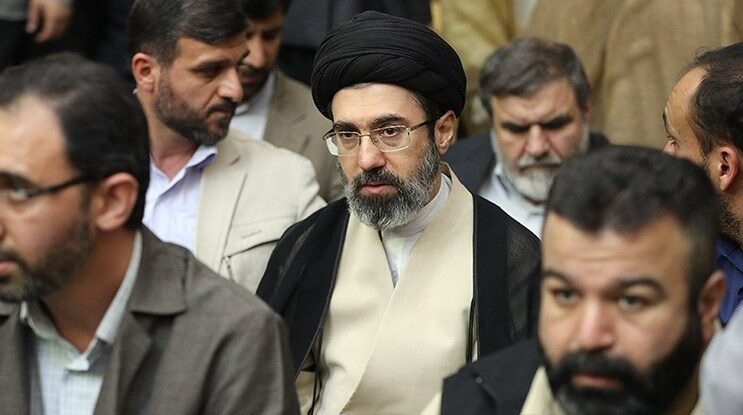
Image by Mohammad Ali Marizad.

Join Pulse+ to comment below, and receive exclusive e-mail analyses.

show less
show more
By Popular Demand.
The National Pulse Now has an on-site comments section for members. Sign up today and be part of the conversation in our community of almost 15,000.

WE ARE 100% INDEPENDENT AND READER-FUNDED. FOR A GUARANTEED AD-FREE EXPERIENCE AND TO SUPPORT REAL NEWS, PLEASE SIGN UP HERE, TODAY.

Chinese Navy Ship Docks Near U.S., Raising Strategic Concerns.

PULSE POINTS

WHAT HAPPENED: A Chinese naval hospital ship, the CNS Silk Road Ark, arrived in the Caribbean as part of Mission Harmony 2025, ostensibly a global medical mission.

👤WHO WAS INVOLVED: The Chinese People’s Liberation Army Navy, the Jamaican government, and the U.S. military.

📍WHEN & WHERE: The ship arrived in Montego Bay, Jamaica, on December 4, following stops in Nicaragua and the South Pacific.

💬KEY QUOTE: “This is… the first time that a Chinese naval hospital ship has docked at multiple ports within the same country to provide medical services since the launch of the Chinese [People’s Liberation Army] Navy’s ‘Harmony Mission’ series of tasks.” – Chinese Defense Ministry

🎯IMPACT: The mission highlights China’s growing influence in the Caribbean as the U.S. also strengthens its military posture in the region.

IN FULL

The Chinese naval hospital ship CNS Silk Road Ark arrived this week in Montego Bay, Jamaica, as part of its 220-day global medical outreach, “Mission Harmony 2025.” The 12-day stop follows damage sustained by the island from Hurricane Melissa in late October. “This is… the first time that a Chinese naval hospital ship has docked at multiple ports within the same country to provide medical services since the launch of the Chinese [People’s Liberation Army] Navy’s ‘Harmony Mission’ series of tasks, and also represents the longest duration of medical services delivered within a single nation,” the Chinese Defense Ministry said.

The Silk Road Ark is on a broader mission, ostensibly delivering humanitarian medical services across Latin America, the Caribbean and the South Pacific, with planned stops including Mexico, Barbados, Brazil, Peru, Chile, and Papua New Guinea—with extending Chinese influence in the region likely its primary goal, rather than humanitarianism.

Beijing’s expanding naval activity lends geopolitical weight to this mission. Recent reporting indicates that the country has deployed more than 100 naval and coast guard vessels across East Asian waters, the largest such mobilization on record, spanning from the Yellow Sea through the East China Sea into the contested South China Sea and the western Pacific. Analysts describe this surge as part of a broader push by the People’s Liberation Army Navy (PLAN) to enhance its global reach.

In parallel, China’s shipbuilding capacity has surged dramatically. A recent study by the Office of Naval Intelligence found that Chinese shipyards could produce over 23 million tons of military vessels, more than 200 times the capacity of U.S. yards. This industrial base underpins the PLAN’s rapid expansion and enables Beijing to simultaneously engage in humanitarian “soft power” missions and hard power deployments.

Join Pulse+ to comment below, and receive exclusive e-mail analyses.

show less
show more
By Popular Demand.
The National Pulse Now has an on-site comments section for members. Sign up today and be part of the conversation in our community of almost 15,000.

WE ARE 100% INDEPENDENT AND READER-FUNDED. FOR A GUARANTEED AD-FREE EXPERIENCE AND TO SUPPORT REAL NEWS, PLEASE SIGN UP HERE, TODAY.

Powerful 7.6 Earthquake Strikes Off Japan, Tsunami Warning Issued.

PULSE POINTS

WHAT HAPPENED: A major 7.6-magnitude earthquake struck in the North Pacific Ocean near Japan.

👤WHO WAS INVOLVED: United States Geological Survey (U.S.G.S.), Japan Meteorological Agency.

📍WHEN & WHERE: Monday at 11:15 PM. Japan time, approximately 45 miles northeast of Misawa, Japan.

🎯IMPACT: Tsunami warnings issued for parts of Japan’s northeastern coast; potential aftershocks could follow.

IN FULL

A powerful earthquake with a magnitude of 7.6 struck the North Pacific Ocean near Japan on Monday, according to the United States Geological Survey (U.S.G.S.). The quake occurred at 11:15 PM local time, with its epicenter located about 45 miles northeast of Misawa, Japan.

Following the tremor, the Japan Meteorological Agency issued tsunami alerts for sections of the country’s northeastern shoreline. Experts are continuing to analyze seismic readings, and the initial magnitude may be updated as more data becomes available.

U.S.G.S. maps indicate that the region experienced shaking at an intensity level of three or higher, categorized as “weak.” It is possible that the earthquake was felt beyond the mapped zones, and additional seismic activity is anticipated.

Aftershocks, smaller quakes that follow a major seismic event, may occur over the span of days, weeks, or even years. These subsequent tremors reflect ongoing adjustments along the fault responsible for the initial slip.

As of Monday, December 8, at 11:33 PM Japan time, updated shaking information was still being compiled, and more details about future aftershocks, including their strength and locations, are expected to be released.

Image by z tanuki.

Join Pulse+ to comment below, and receive exclusive e-mail analyses.
show less
show more
By Popular Demand.
The National Pulse Now has an on-site comments section for members. Sign up today and be part of the conversation in our community of almost 15,000.

WE ARE 100% INDEPENDENT AND READER-FUNDED. FOR A GUARANTEED AD-FREE EXPERIENCE AND TO SUPPORT REAL NEWS, PLEASE SIGN UP HERE, TODAY.

U.S. to Ease AI Chip Export Restrictions to China in New Compromise Plan.

PULSE POINTS

WHAT HAPPENED: The U.S. Department of Commerce plans to allow the export of Nvidia GPUs that are 18 months behind the most advanced versions to China.

👤WHO WAS INVOLVED: The U.S. Department of Commerce, Nvidia, and the Chinese Communist Party (CCP) regime.

📍WHEN & WHERE: December 8, 2025, in the United States.

💬KEY QUOTE: “China has many advantages in the AI race and the disparity in computing resources stands out as almost certainly the largest single advantage that the United States enjoys over China. Two senior executives in key Chinese AI firms have explicitly stated that lack of access to advanced AI chips is the most significant challenge that they face.” – Greg Allen, Center for Strategic and International Studies

🎯IMPACT: The decision could open up a significant market for Nvidia, but potentially undermines U.S. leadership in the tech sector over the longer term.

IN FULL

The U.S. Department of Commerce plans to permit exports of Nvidia’s H200 GPUs to China soon. These processors lag about 18 months behind the company’s cutting-edge models, in a move intended to strike a balance between parties that want to ban all sales of high-end artifical intelligence (AI) chips to the communist state and those concerned that overly stringent controls would merely cede the market to domestic Chinese rivals.

Commerce Secretary Howard Lutnick supports hopes the deal will substantially increase Nvidia’s earnings by tapping into China’s massive customer base. The goal is to keep American technology as the worldwide benchmark while easing Beijing’s objections to being stuck with too-weak alternative chips, such as Nvidia’s H20.

Previously, the U.S. implemented tough export controls to hinder China’s AI development. Yet certain White House officials argue that the measures have fallen short, given ongoing advances by firms like DeepSeek and Alibaba.

In testimony to the Senate Foreign Relations Subcommittee, Greg Allen of the Center for Strategic and International Studies stressed the vital role of export controls in preserving U.S. superiority in AI. He warned that without them, China could potentially build the first million-chip AI cluster. “China has many advantages in the AI race and the disparity in computing resources stands out as almost certainly the largest single advantage that the United States enjoys over China. Two senior executives in key Chinese AI firms have explicitly stated that lack of access to advanced AI chips is the most significant challenge that they face,” he stressed.

Join Pulse+ to comment below, and receive exclusive e-mail analyses.

show less
show more
By Popular Demand.
The National Pulse Now has an on-site comments section for members. Sign up today and be part of the conversation in our community of almost 15,000.

WE ARE 100% INDEPENDENT AND READER-FUNDED. FOR A GUARANTEED AD-FREE EXPERIENCE AND TO SUPPORT REAL NEWS, PLEASE SIGN UP HERE, TODAY.

Trump Disappointed That Zelensky ‘Hasn’t Yet Read’ Peace Proposal.

PULSE POINTS

WHAT HAPPENED: President Donald J. Trump criticized Ukrainian President Volodymyr Zelensky for not acting on a proposed peace deal to end the Ukraine-Russia war.

👤WHO WAS INVOLVED: Donald Trump, Volodymyr Zelensky, Russian President Vladimir Putin, and Trump envoys including Steve Witkoff and Jared Kushner.

📍WHEN & WHERE: Statements made Sunday evening at the Kennedy Center and during ongoing negotiations in Miami, Florida, and Moscow, Russia.

💬KEY QUOTE: “I have to say that I’m a little bit disappointed that President Zelensky hasn’t yet read the proposal. That was as of a few hours ago.” – President Donald J. Trump

🎯IMPACT: Peace negotiations remain stalled as territorial disputes and nuclear plant issues hinder progress.

IN FULL

President Donald J. Trump criticized Ukrainian President Volodymyr Zelensky on Sunday, saying he was surprised and “a little bit disappointed” that Zelensky had not yet reviewed the Trump administration’s proposal to end the war with Russia. Speaking to reporters at the Kennedy Center, Trump said Russia appeared “fine with” the plan, while questioning why Kiev had not responded.

“I have to say that I’m a little bit disappointed that President Zelensky hasn’t yet read the proposal. That was as of a few hours ago,” President Trump said.

Zelensky, addressing reporters after meeting Trump’s special envoy Steve Witkoff and adviser and son-in-law Jared Kushner, described the talks as “not easy” and said that Ukraine continued to seek “a dignified peace.” He insisted that any settlement ultimately depended on Russia and on the “collective pressure” applied by the United States, Europe, and other partners. Zelensky is traveling this week to London, Brussels, and Rome for meetings with European leaders as Western governments debate how aggressively to pursue a U.S.-led peace initiative.

Moscow, meanwhile, signaled that it expects substantial adjustments to Washington’s plan. Kremlin adviser Yuri Ushakov said Russia believes “radical changes” are necessary and pointed to unresolved “territorial problems,” though he did not specify what revisions the Kremlin wanted.

Two issues remain central obstacles: the status of the Donbas region and control of the Zaporizhzhia nuclear power plant—the largest such plant in all of Europe. Keith Kellogg, Trump’s special envoy for Ukraine, suggested negotiators were closing in on a framework. “If we get those two issues settled, I think the rest of the things will work out fairly well. We’re almost there,” he said. The Trump administration has circulated a 28-point peace outline, and U.S. and Ukrainian officials recently held three days of talks in Miami, Florida, though no breakthrough was announced.

As peace discussions continue, Ukraine is grappling with internal turmoil. A sweeping criminal investigation into alleged corruption inside the nuclear energy sector has triggered what local media have described as a $100-million scandal. Prosecutors say contractors working with the state-run Energoatom were pressured to pay kickbacks to secure agreements. One businessman linked in local reporting to Zelensky, Timur Mindich, reportedly fled Ukraine for Israel shortly before police raids on his properties.

Meanwhile, tensions have emerged among Western allies. According to recent reporting, the Pentagon has paused routine communication with Germany’s Defense Ministry amid disagreements over Washington’s diplomatic push for peace, even as European leaders engage Zelensky in parallel consultations on Ukraine’s negotiating position.

Join Pulse+ to comment below, and receive exclusive e-mail analyses.

show less
show more
By Popular Demand.
The National Pulse Now has an on-site comments section for members. Sign up today and be part of the conversation in our community of almost 15,000.

WE ARE 100% INDEPENDENT AND READER-FUNDED. FOR A GUARANTEED AD-FREE EXPERIENCE AND TO SUPPORT REAL NEWS, PLEASE SIGN UP HERE, TODAY.

Trump Unveils $12 Billion Aid Package for Farmers.

PULSE POINTS

WHAT HAPPENED: President Donald J. Trump is announcing a $12 billion aid package for American farmers.

👤WHO WAS INVOLVED: President Trump, Treasury Secretary Scott Bessent, Agriculture Secretary Brooke Rollins, and American farmers.

📍WHEN & WHERE: The announcement takes place on Monday during a roundtable event at the White House.

💬KEY QUOTE: “China is on track to keep every part of the deal.” – Scott Bessent

🎯IMPACT: The aid package aims to provide relief to American farmers amid trade tensions with China.

IN FULL

President Donald J. Trump is set to unveil a $12 billion aid package for U.S. farmers on Monday. The announcement takes place during a White House roundtable attended by the President, Treasury Secretary Scott Bessent, Agriculture Secretary Brooke Rollins, and a group of farmers.

The package consists of up to $11 billion in direct one-time payments through a new program run by the Department of Agriculture. The initiative comes as U.S.-China trade ties show signs of recovery. China placed its biggest order for American soybeans in two years in November. Although Beijing has not yet reached its pledged purchase of 12 million tons, Treasury Secretary Bessent remained positive, saying, “China is on track to keep every part of the deal,” in remarks last week.

China’s stepped-up buying of U.S. farm products follows a stretch in which it relied more heavily on Argentina for soybeans. In October, the U.S. Treasury Department unveiled a $20 billion currency swap deal with Argentina, whose president, Javier Milei, is an ally of Trump. However, some U.S. farmers criticized the arrangement, viewing it as support for a competitor while their own promised assistance from Washington remained delayed.

Reports suggest that the Treasury ultimately made a profit on the currency swaps.

Join Pulse+ to comment below, and receive exclusive e-mail analyses.

show less
show more
By Popular Demand.
The National Pulse Now has an on-site comments section for members. Sign up today and be part of the conversation in our community of almost 15,000.