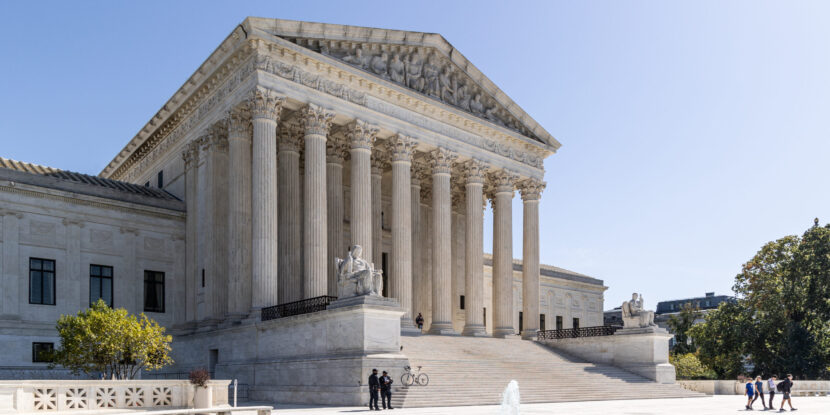
❓WHAT HAPPENED: The U.S. Supreme Court will decide on President Donald J. Trump’s plan to end automatic birthright citizenship.
Newsletter
Need to Know.
Your free, daily feed from The National Pulse.
Thank You!
You are now subscribed to our newsletter.
👤WHO WAS INVOLVED: President Trump, Solicitor General D. John Sauer, and the Supreme Court justices.
📍WHEN & WHERE: The announcement was made on Friday, with arguments likely to take place in April and a decision expected by the end of June.
💬KEY QUOTE: “The Citizenship Clause of the Fourteenth Amendment was adopted to grant citizenship to freed slaves and their children, not to the children of illegal aliens, birth tourists, and temporary visitors.” – D. John Sauer
🎯IMPACT: The decision could redefine birthright citizenship and affect immigration policy in the U.S.
IN FULL
The Supreme Court is set to rule on President Donald J. Trump’s initiative to end automatic birthright citizenship for children born on U.S. soil, a move that has sparked significant debate and legal challenges. The justices announced their decision to take up the case, with arguments anticipated in April and a ruling expected by the end of June.
“The Citizenship Clause of the Fourteenth Amendment was adopted to grant citizenship to freed slaves and their children, not to the children of illegal aliens, birth tourists, and temporary visitors,” Solicitor General D. John Sauer wrote in a court filing on behalf of the Trump administration. He added: “Yet, long after the Clause’s adoption, the mistaken view that birth on U.S. territory confers citizenship on anyone subject to the regulatory reach of U.S. law became pervasive, with destructive consequences.”
President Trump, shortly after his inauguration, signed an Executive Order aimed at denying U.S. citizenship to children of illegal immigrants and foreigners on temporary visas. The administration argued that the order was necessary to deter illegal immigration and “birth tourism.”
However, the policy was immediately met with legal challenges. In July, the 9th U.S. Circuit Court of Appeals upheld a lower court ruling that found the birthright citizenship order unconstitutional, citing an 1898 Supreme Court decision that has long been interpreted as ensuring citizenship to nearly everyone born in the U.S. Subsequently, the Department of Justice filed an appeal with the Supreme Court.
❓WHAT HAPPENED: The BBC’s Persian service mistranslated remarks by U.S. Secretary of War Pete Hegseth, making it look as though he said U.S. forces were targeting the Iranian “people” rather than the Iranian “regime.”
👤WHO WAS INVOLVED: Pete Hegseth, BBC Persian, and President Donald J. Trump.
Newsletter
Need to Know.
Your free, daily feed from The National Pulse.
Thank You!
You are now subscribed to our newsletter.
📍WHEN & WHERE: The mistranslation occurred during a live broadcast on Monday, with subsequent fallout online and in international media.
💬KEY QUOTE: “This mistranslated word was a mistake, as a result of human error, during the live simultaneous translation of a speech.” – BBC spokesman
🎯IMPACT: The mistranslation has raised questions about the BBC’s impartiality and reignited criticism from Donald Trump, who has a history of disputes with the broadcaster.
IN FULL
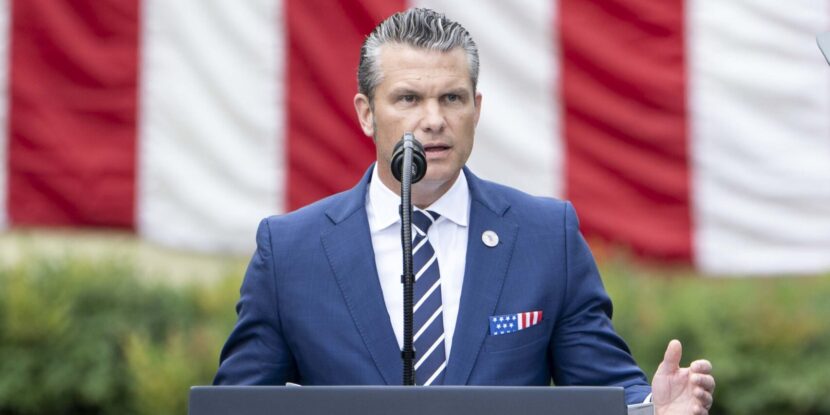
The BBC is facing backlash after BBC Persian mistranslated comments made by U.S. Secretary of War Pete Hegseth during a broadcast. In the original speech, Hegseth made clear that U.S. military operations in Iran are aimed at Iran’s regime rather than its citizens, stating, “It turns out the regime that chanted ‘Death to America and death to Israel’ was gifted death from America and death from Israel. This is not a so-called regime change war, but the regime sure did change, and the world is better off for it.” However, BBC Persian translated this as: “It turns out the people that chanted ‘Death to America and death to Israel’ was gifted death from America and death from Israel,” making it look as though the Iranian people as a whole, rather than the Islamic Republic’s ruling mullahs, are being targeted.
The mistranslation drew swift backlash, and BBC Persian subsequently acknowledged the issue and issued a correction, claiming it was an unintentional mistake made by the interpreter during real-time simultaneous translation.
The incident follows a major scandal involving the BBC doctoring a speech by President Donald J. Trump on January 6, 2021, for a programme aired shortly before the U.S. elections in 2024. BBC Panorama showed a clip of Trump saying, “We’re gonna walk down to the Capitol, and I’ll be with you, and we fight. We fight like hell, and if you don’t fight like hell, you’re not gonna have a country anymore,” making it appear as though he directly incited disorder.
In reality, Trump said, “We’re going to walk down to the Capitol, and we’re going to cheer on our brave senators and congressmen and women”—the BBC had created its clip by splicing together two sections of Trump’s speech close to an hour apart.
The broadcaster’s Director General and Head of News both abruptly resigned following the scandal, but it has not officially admitted any malicious wrongdoing and is fighting a multi-billion-dollar lawsuit from Trump.
Join Pulse+ to comment below, and receive exclusive e-mail analyses.
show less
show more
By Popular Demand.
The National Pulse Now has an on-site comments section for members. Sign up today and be part of the conversation in our community of almost 15,000.
WE ARE 100% INDEPENDENT AND READER-FUNDED. FOR A GUARANTEED AD-FREE EXPERIENCE AND TO SUPPORT REAL NEWS, PLEASE SIGN UP HERE, TODAY.
❓WHAT HAPPENED: Parents spotted Islamic Ramadan decorations on Go Texan Day, in an elementary school that supposedly enforces a ban on religious displays.
Newsletter
Need to Know.
Your free, daily feed from The National Pulse.
Thank You!
You are now subscribed to our newsletter.
👤WHO WAS INVOLVED: Moms for Liberty, Spring Branch ISD, and Bunker Hill Elementary School.
📍WHEN & WHERE: March 2026, at Bunker Hill Elementary School in Houston.
💬KEY QUOTE: “This is in a school district that does NOT allow (per board policy) religious symbols to be displayed, yet somehow these decorations were approved,” – Moms for Liberty.
🎯IMPACT: The display has been removed following online backlash.
IN FULL
Parents spotted an Islamic Ramadan display at Bunker Hill Elementary School in Houston, Texas, on Go Texan Day, despite the district’s policy on political and religious neutrality. The display included signage reading “Ramadan Mubarak” and Islamic symbols such as crescent moons and stars.
“‘Ramadan’ decor was set up in the lobby of an elementary school in Houston TX by a PTA ‘Cultural Committee.’ This is in a school district that does NOT allow (per board policy) religious symbols to be displayed, yet somehow these decorations were approved,” the Moms for Liberty, Harris County, Texas, chapter wrote in a post on X (formerly Twitter). “On Friday in Houston, it was ‘Go Texan Day’…a day where kids across the city celebrate their TX Pride to kick off rodeo season. Parents are often invited to come to the school to watch their kids participate in square dancing and line dancing. Imagine walking into the school for ‘Go Texan Day,’ and this is the decor that greets you,” the group added.
“Ramadan” decor was set up in the lobby of an elementary school in Houston TX by a PTA “Cultural Committee”. This is in a school district that does NOT allow (per board policy) religious symbols to be displayed, yet somehow these decorations were approved.
— Moms for Liberty-Harris County Texas (@M4LHarris) February 28, 2026
The display was removed on Monday “because the display was religious in nature,” according to a spokesman for the school district.
The growth of Islam and attempts to enforce Sharia law in Texas have sparked significant discussion in recent years. The state’s growing Muslim population has attempted to assert itself both politically and culturally, with projects like EPIC City, a proposed residential development near Dallas, designed exclusively for adherents of Islam. Earlier this month, the Trump administration launched an investigation into the EPIC City project, joining a state probe led by Attorney General Ken Paxton, seeking to determine whether the Islamic group’s land development project has violated federal and state laws, including the Fair Housing Act.
The National Pulse reported last March that the Tablighi Jamaat—a global Islamic missionary network that intelligence agencies contend acts as a potential entry point for jihadis—had established its new headquarters in Garland, Texas. The network, also known as the ‘Army of Darkness,’ has set up operations inside the Masjid Yaseen mosque, which now serves as its American nerve center, following its relocation from Louisiana.
❓WHAT HAPPENED: The CEO of artificial intelligence (AI) firm Anthropic revealed that researchers are uncertain if their AI bot, Claude, is conscious, sparking public debate.
Newsletter
Need to Know.
Your free, daily feed from The National Pulse.
Thank You!
You are now subscribed to our newsletter.
👤WHO WAS INVOLVED: Dario Amodei, CEO of Anthropic, and the AI bot Claude.
📍WHEN & WHERE: The revelation was shared in a recent interview with The New York Times.
💬KEY QUOTE: “We don’t know if the models are conscious. We’re not even sure what it would mean for a model to be conscious, or whether a model can be. But we’re open to the idea that it could be.” – Dario Amodei
🎯IMPACT: The disclosure has led to public concern and debate over the ethical implications of AI potentially gaining consciousness.
IN FULL
Dario Amodei, CEO of the artificial intelligence (AI) firm Anthropic, has admitted that his team does not know whether AI systems could be conscious. In an interview, he said, “We don’t know if the models are conscious. We’re not even sure what it would mean for a model to be conscious, or whether a model can be. But we’re open to the idea that it could be.”
The comments sparked discussion online about the nature of artificial intelligence. Anthropic’s Claude chatbot, like other advanced AI systems, is built using large language models (LLMs), neural networks trained to generate human‑like text and perform complex tasks. While they can appear autonomous, most researchers view them as statistical systems predicting patterns rather than thinking entities.
Amodei said Anthropic is taking a “precautionary approach” to ensure that, if AI systems ever develop self‑awareness, they would have a “good experience.” Earlier this year, Anthropic’s AI safety chief, Mrinank Sharma, resigned, warning that “the world is in peril” and highlighting difficulties in aligning AI development with human values.
The company has also been caught in political disputes. In February 2026, the Trump administration ordered federal agencies to stop using Anthropic’s AI tools and designated the company a “supply chain risk,” effectively barring its involvement in defense projects.
❓WHAT HAPPENED: The U.S. Attorney’s office in South Florida initiated an investigation into Cuba’s leaders for various crimes, aiming for quick indictments.
👤WHO WAS INVOLVED: U.S. Attorney Jason A. Reding Quiñones, President Donald J. Trump, and various U.S. federal agencies; along with Cuban leader Miguel Díaz-Canel Bermúdez.
Newsletter
Need to Know.
Your free, daily feed from The National Pulse.
Thank You!
You are now subscribed to our newsletter.
📍WHEN & WHERE: South Florida, with the investigation beginning in early March 2026.
🎯IMPACT: The investigation could serve as a legal and political pretext for action against Cuba, similar to the case with Venezuela’s Maduro.
IN FULL
Federal prosecutors in South Florida are preparing a comprehensive investigation into numerous government officials who oversee the communist regime that controls Cuba. The United States Attorney for the District of Southern Florida is spearheading the inquiry, which is focused on uncovering evidence tying Cuban Communist Party officials to allegations of drug, immigration, economic, and violent crimes, with the aim of allowing the U.S. Department of Justice (DOJ) to bring swift indictments should the regime fall.
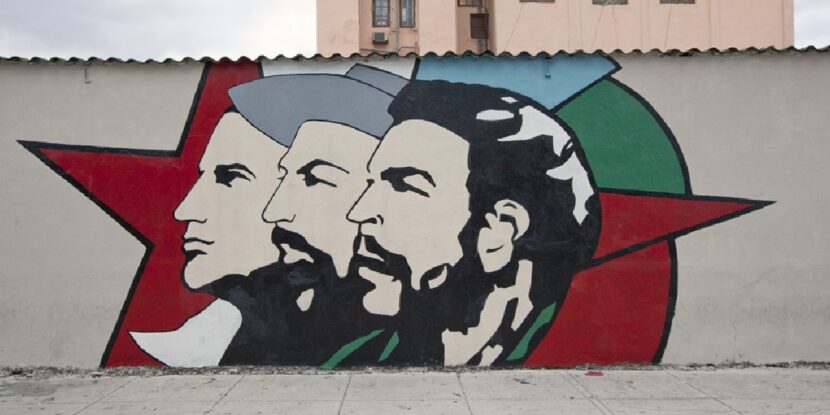
Notably, the investigatory actions in the office of the U.S. Attorney for the District of Southern Florida come as President Donald J. Trump ramps up pressure on the Cuban government to abdicate its rule and transition away from the communist ideology imposed by the island’s late dictator, Fidel Castro, and subsequently enforced by his brother Raúl Castro. Since the removal of Venezuelan narco-dictator Nicolás Maduro from power earlier this year, Trump has contemplated action against Cuba, which maintained close ties to the Marxist regime in Venezuela. The U.S. President has even floated the possibility of military action against the communist island once current hostilities with the Islamic Republic of Iran conclude.
The case being built by U.S. Attorney Jason A. Reding Quiñones in South Florida could provide pivotal legal and political justification for potential Trump administration actions against Cuba. As part of the effort, Quiñones has formed a working group that includes prosecutors from his office, agents from the Federal Bureau of Investigation (FBI), as well as the Treasury Department, the State Department, the Department of Health and Human Services (HHS), the Drug Enforcement Administration (DEA), and the Bureau of Alcohol, Tobacco, Firearms, and Explosives (ATF).
Quiñones’s inquiry mirrors similar actions previously taken by the DOJ when it built a narco-terrorism case against Maduro in Venezuela, with existing indictments used to justify his extraction from the South American country. Whether President Trump will use the military’s special forces units to conduct a similar raid that captured Maduro on Cuban figures, like Miguel Díaz-Canel Bermúdez—the First Secretary of the Communist Party of Cuba and de facto leader of the country—remains unclear.
Join Pulse+ to comment below, and receive exclusive e-mail analyses.
show less
show more
By Popular Demand.
The National Pulse Now has an on-site comments section for members. Sign up today and be part of the conversation in our community of almost 15,000.
WE ARE 100% INDEPENDENT AND READER-FUNDED. FOR A GUARANTEED AD-FREE EXPERIENCE AND TO SUPPORT REAL NEWS, PLEASE SIGN UP HERE, TODAY.
❓WHAT HAPPENED: An illegal immigrant from Mauritania was charged with fraudulent voting after allegedly casting ballots in five presidential elections in Pennsylvania.
👤WHO WAS INVOLVED: Mahady Sacko, a 50-year-old illegal immigrant, and the U.S. Attorney’s Office for the Eastern District of Pennsylvania.
Newsletter
Need to Know.
Your free, daily feed from The National Pulse.
Thank You!
You are now subscribed to our newsletter.
📍WHEN & WHERE: Sacko allegedly voted in elections from 2008 to 2024 in Pennsylvania, despite a deportation order issued in 2000.
🎯IMPACT: If convicted, Sacko faces a maximum sentence of five years in prison.
IN FULL
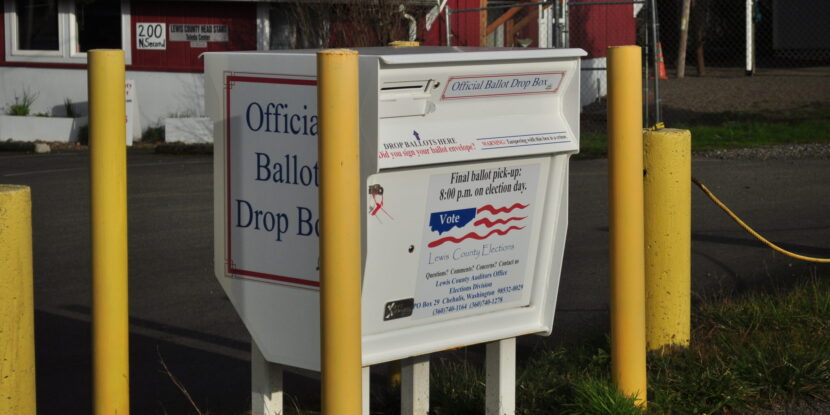
Mahady Sacko, an illegal immigrant from Mauritania living in Philadelphia, has been charged with fraudulent voting after allegedly participating in five presidential elections in Pennsylvania despite being under a deportation order since 2000. The U.S. Attorney’s Office for the Eastern District of Pennsylvania announced the charges, which include falsely representing U.S. citizenship to vote and register to vote.
According to the Federal Bureau of Investigation (FBI), Pennsylvania state voting records show Sacko voted in multiple federal elections, including the 2008, 2012, 2016, 2020, and 2024 general elections, as well as the 2016 and 2020 primary elections. The complaint stated that Sacko voted in person for most of these elections, except for the 2020 primary, which he voted by mail. On each occasion, he allegedly misrepresented his citizenship status.
The complaint also detailed Sacko’s immigration history. He entered the U.S. in 1998 and was ordered deported by an immigration judge in 2000. Sacko appealed the decision, but the Board of Immigration Appeals dismissed his appeal in 2002. Despite this, Sacko remained in the U.S., and U.S. Immigration and Customs Enforcement (ICE) was unable to enforce the deportation order due to a lack of a valid Mauritanian passport.
Sacko was arrested in 2007, but was placed under ICE supervision due to the inability to secure travel documents. While under supervision, he reportedly registered to vote multiple times, starting in January 2005. The Philadelphia Inquirer reported that voting records show Sacko registered as a Democrat.
If convicted, Sacko could face up to five years in prison.
Join Pulse+ to comment below, and receive exclusive e-mail analyses.
show less
show more
By Popular Demand.
The National Pulse Now has an on-site comments section for members. Sign up today and be part of the conversation in our community of almost 15,000.
WE ARE 100% INDEPENDENT AND READER-FUNDED. FOR A GUARANTEED AD-FREE EXPERIENCE AND TO SUPPORT REAL NEWS, PLEASE SIGN UP HERE, TODAY.
❓WHAT HAPPENED: Gas prices have surged to $3.32 per gallon, the highest since President Donald J. Trump’s return to office, following U.S.-led strikes on Iran.
Newsletter
Need to Know.
Your free, daily feed from The National Pulse.
Thank You!
You are now subscribed to our newsletter.
👤WHO WAS INVOLVED: President Trump, Treasury Secretary Scott Bessent, Interior Secretary Doug Burgum, and analysts like Torbjorn Soltvedt and Matt Wright.
📍WHEN & WHERE: Strikes began Saturday in Iran, with immediate impacts on global oil markets and U.S. gas stations.
💬KEY QUOTE: “I don’t have any concern about it. They’ll drop very rapidly when this is over, and if they rise, they rise, but this is far more important than having gasoline prices go up a little bit.” – President Trump
🎯IMPACT: Rising gas prices strain household budgets and businesses, while the global oil market faces further uncertainty amid Middle East tensions.
IN FULL
Gasoline prices have risen to $3.32 per gallon, their highest level since September 2024, as the Iran war disrupts global energy markets. The increase follows a U.S.-led military operation in Iran that has killed the Islamic Republic’s Supreme Leader, Grand Ayatollah Ali Khamenei, and several senior Iranian officials. The strikes, along with Iran’s retaliatory attacks on Israel and U.S.-aligned Middle Eastern countries, have disrupted oil and natural gas flows and heightened concerns about supply shortages.
The recent spike marks a sharp reversal from just a few months ago, when fuel prices were significantly lower. By late December 2025, the national average for gasoline had fallen to about $2.75 per gallon, the lowest level since 2021, according to GasBuddy. Some stations in certain states were even selling fuel for under $2 per gallon, reflecting strong U.S. oil production, stable global markets, and robust refinery output. That trend has quickly changed now that war has broken out.
In addition to launching strikes on Israeli and Gulf targets, Iranian attacks have also hit regional energy infrastructure. For instance, Saudi authorities were forced to shut down operations at the massive Ras Tanura oil refinery after drone attacks sparked fires, raising fears of broader disruptions to global oil supply. Brent crude prices have already surged toward $100 per barrel as traders factor in the risk of further disruptions.
The Trump administration says it is taking steps to address rising energy costs and stabilize supply.
President Donald J. Trump announced that the U.S. Development Finance Corporation will provide risk insurance and guarantees to protect maritime trade in the Gulf, especially energy shipments. Treasury Secretary Scott Bessent said the administration is considering additional measures to stabilize supply flows, while Interior Secretary Doug Burgum stated that “everything is being considered,” including tapping U.S. crude reserves and adjusting fuel-blending requirements.
The U.S. Navy is also prepared to escort tankers through the Strait of Hormuz if necessary. Some analysts are skeptical. Energy analyst Matt Wright has questioned whether escorting vessels is practical given the large number of ships passing through the strait each day.
Trump downplayed concerns about the impact of higher gas prices, saying, “I don’t have any concern about it. They’ll drop very rapidly when this is over, and if they rise, they rise, but this is far more important than having gasoline prices go up a little bit.”
Join Pulse+ to comment below, and receive exclusive e-mail analyses.
show less
show more
By Popular Demand.
The National Pulse Now has an on-site comments section for members. Sign up today and be part of the conversation in our community of almost 15,000.
WE ARE 100% INDEPENDENT AND READER-FUNDED. FOR A GUARANTEED AD-FREE EXPERIENCE AND TO SUPPORT REAL NEWS, PLEASE SIGN UP HERE, TODAY.
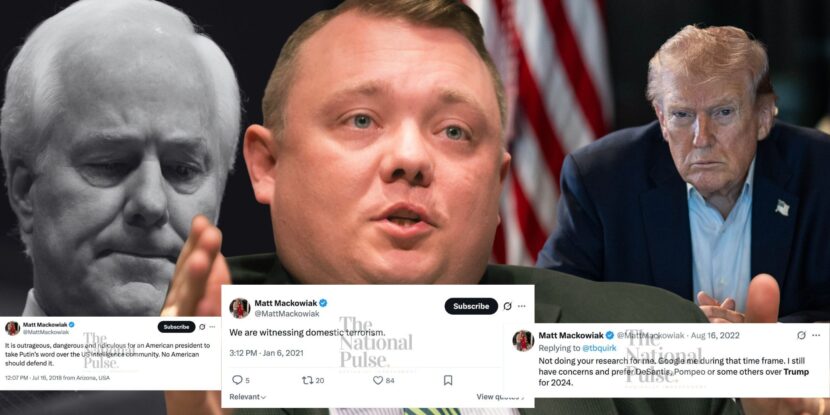
Senator John Cornyn’s campaign communications director, Matt Mackowiak, has a history of vicious, anti-Trump tweets and media quotes, The National Pulse can exclusively reveal.
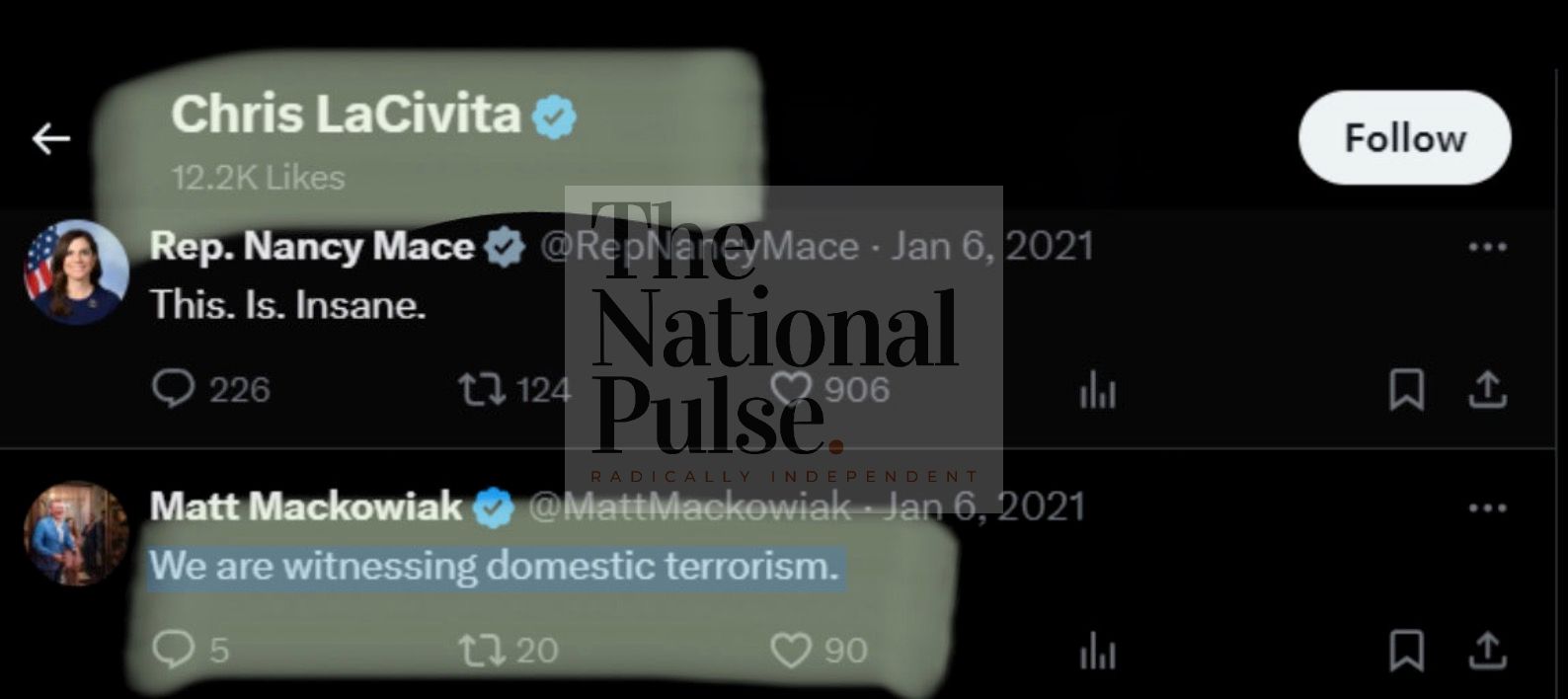
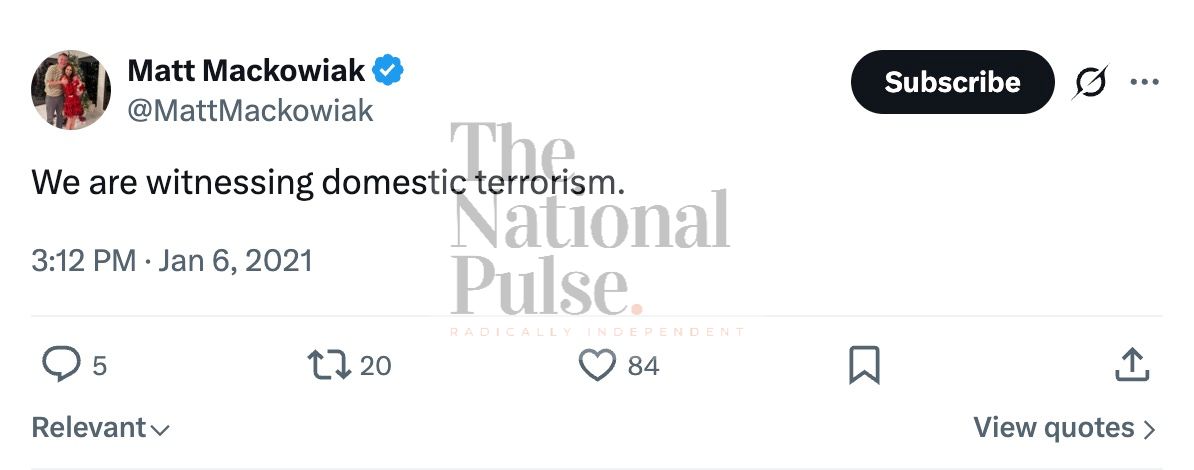
Mackowiak, an establishment GOP consultant who once worked in the Bush administration, is leading the charge against Attorney General Ken Paxton in the Texas Senate run-off. He called January 6, 2021, “domestic terrorism” in tweets first unearthed by The National Pulse and shared on social media.
Newsletter
Need to Know.
Your free, daily feed from The National Pulse.
Thank You!
You are now subscribed to our newsletter.
Furthermore, Cornyn’s campaign advisor Chris LaCivita, who once even worked for President Trump’s 2024 campaign, “liked” Mackowiak’s tweet.
Mackowiak deleted the tweet on Friday morning, after he became aware of this story. The National Pulse, however, archived the original, as well as dozens of other tweets, podcasts, interviews, and quotes from Mackowiak attacking the U.S. President and his team.
The National Pulse has scoured over a decade’s worth of Mackowiak’s political activity, which included pitching rejected op-eds to The National Pulse, which we will reveal more about in the coming days. Click here to support our important work.
‘GO F**K YOURSELF.’
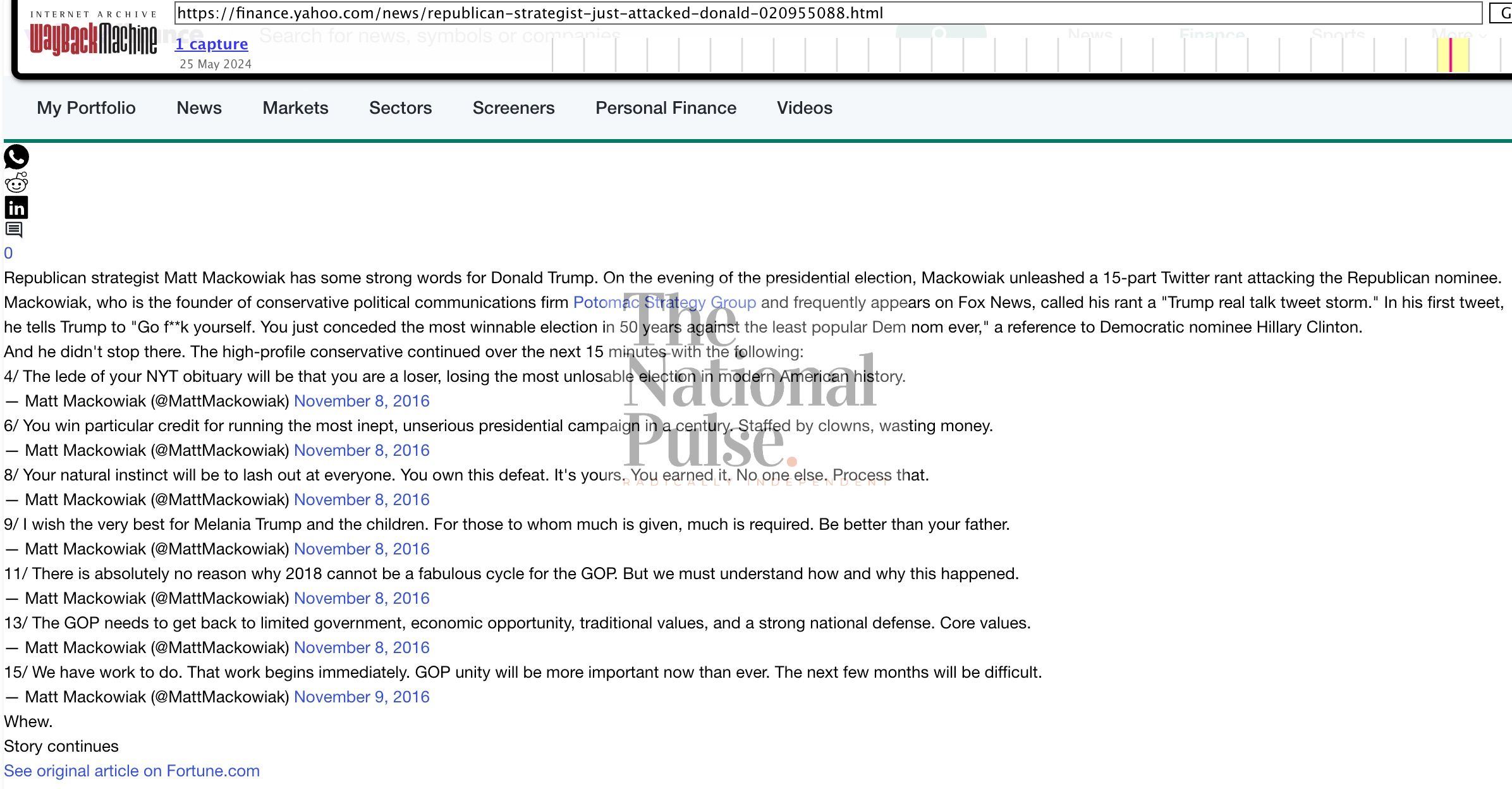
In archived tweets from election day 2016, Mackowiak unleashed a tirade at Trump and his team.
“Go f**k yourself. You just conceded the most winnable election in 50 years against the least popular Dem nom ever,” Mackowiak incorrectly forecast.
“The lede of your NYT obituary will be that you are a loser, losing the most unlosable election in modern American history,” he added at the time.
“You win particular credit for running the most inept, unserious presidential campaign in a century. Staffed by clowns, wasting money,” Mackowiak continued.
“Your natural instinct will be to lash out at everyone. You own this defeat. It’s yours. You earned it. No one else. Process that.”
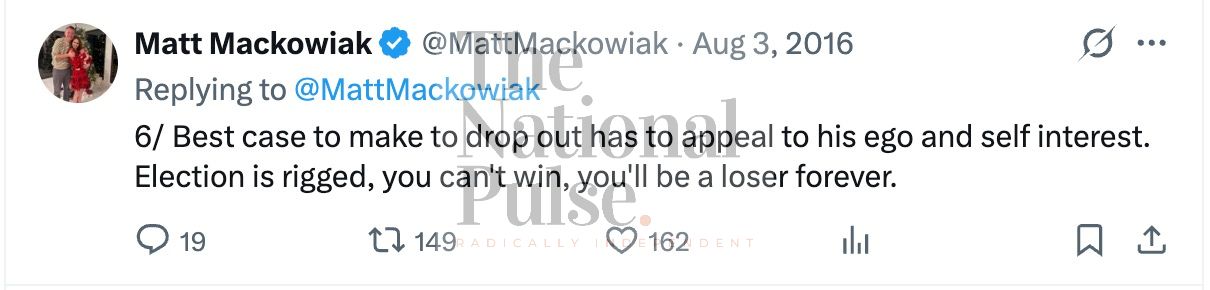
“Best case to make to drop out has to appeal to his ego and self interest,” he wrote.
Mackowiak also drew Trump’s family into his tirade, adding, “I wish the very best for Melania Trump and the children. For those to whom much is given, much is required. Be better than your father.”
RUSSIA HOAX.
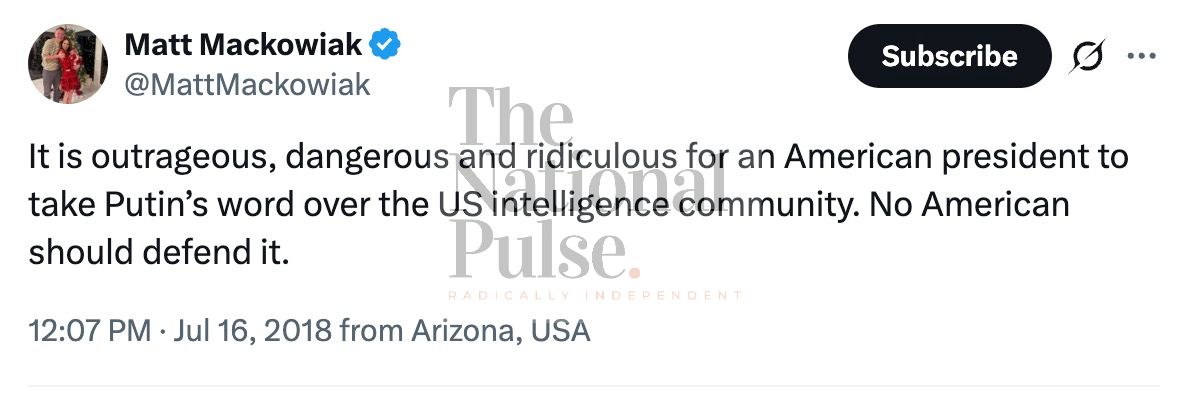
Mackowiak’s Trump Derangement Syndrome (TDS) even extend to the Russia hoax and diplomacy, with the “Potomac Strategy Group” chief tweeting in 2018: “It is outrageous, dangerous and ridiculous for an American president to take Putin’s word over the US intelligence community. No American should defend it.”
The tweet was in reference to Trump’s claim that Putin did not interfere in the 2016 election – a long-established hoax peddled by the intelligence community in cahoots with the corporate media and establishment Democrats.
His ire extended through 2019, when he claimed: “Every single person who approve [sic] Doral for G7 should be fired.”
The matter was used by Democrats, led by Jerry Nadler, to launch another investigation into Trump that went nowhere.
‘DRUNK DRIVER’
“I think we’ve reached the crisis point in the campaign. He’s hemorrhaging support,” Mackowiak told CBS News in August 2016.
“The GOP has a drunk driver at the wheel, chugging vodka, and he’s got other people’s children in the car. He must be stopped,” Mackowiak said, adding, “I think it’s time for our leaders to make the case to him that he needs to withdraw. He’s going to lose this election on the current trajectory. He would be better off withdrawing. He can say the election is rigged. He wasn’t given a fair shot. He can go back to his business.”
‘A PURGE’
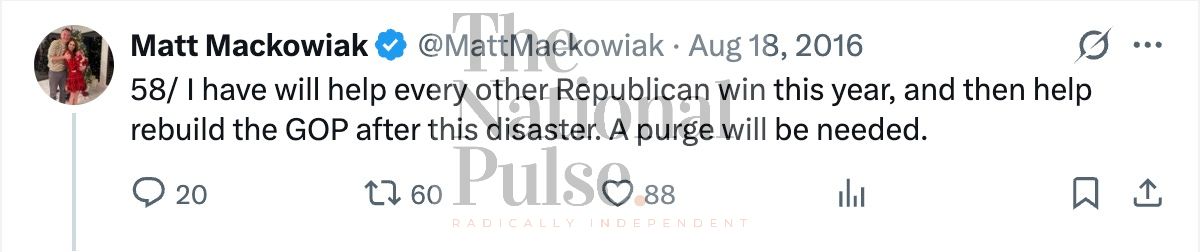
Mackowiak insisted through 2016 that Trump would lose, claiming: “I have will help [sic] every other Republican win this year, and then help rebuild the GOP after this disaster. A purge will be needed.”
Trump famously thumped Hillary Clinton in the 2016 election, and Mackowiak launched a podcast shortly after, featuring guests such as NeverTrumper Bill Kristol, MSNBC host Chris Matthews, and ardent anti-Trump voice and Bulwark contributor Mona Charen.
Now, he works as the campaign communications director for John Cornyn, working under LaCivita’s tutelage.
‘EXTINCTION-LEVEL EVENT’
The Hill newspaper also covered him, stating, “Trump is threatening the entire GOP, and it could take a decade to erase the damage. We are looking at an extinction-level event.”
Mackowiak’s anti-Trump screeds were not limited to 2016 or even 2020. He continued his anti-Trump and anti-MAGA tirades the next year, also stating: “Roughly half of ‘very conservative’ voters in Georgia said they would not vote in (Georgia Senate) runoffs because of Voter Fraud. Republicans conceded these races and President Trump is the cause.”
‘HANG HIMSELF.’
Opinion in a still publicly available podcast from 2016, Mackowiak predicted, of the now infamous televised debates: “We’ll see how he does in the first debate. I think that they’re likely to give him enough rope to hang himself.”
He added: “Donald Trump is not a base conservative… his commitment to the Republican party is zero. His commitment is to himself and so I think he’s a real danger to the process because he’s taking up oxygen from all the other serious candidates.”
At the time, Mackowiak found himself embroiled in a clash with a local Texas libertarian, who told KUT Austin: “I don’t even think Mackowiak is going to support the Republican nominee, who is probably going to be Trump… What kind of traitor to the party is Matt Mackowiak? The incredible amount of damage someone like him does to the party — and he’s a douchebag.”
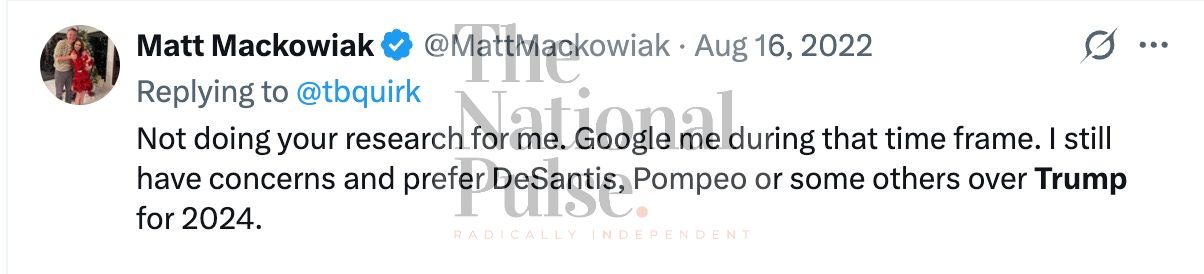
The National Pulse has archived dozens of Mackowiak’s comments over the years, in which he attacks President Trump, backs Mike Pence’s actions on January 6th, blasts election integrity efforts, and states that he prefers “DeSantis, Pompeo, or some others over Trump for 2024.”
Late Friday afternoon, the independent “AMuse” account on X published a number of The National Pulse’s findings on Mackowiak, with more set to be published this weekend.
TEXAS SENATE RACE: I wanted to belatedly thank @RaheemKassam for digging up the anti-Trump tweets from John Cornyn's campaign manager. They were slid into my texts without attribution – just found out we have him to thank. Give him a follow if you don't already! pic.twitter.com/kZN0JX7Dzz
Senator John Cornyn's campaign communications director, Matt Mackowiak, has a history of vicious, anti-Trump tweets and media quotes, The National Pulse can exclusively reveal.
show more
Editor’s Notes
Behind-the-scenes political intrigue exclusively for Pulse+ subscribers.
❓WHAT HAPPENED: Dr. Robert W. Malone says he has uncovered new evidence that suggests Lyme disease was—at least in part—the result of U.S. government and military attempts at developing a biological weapon in the mid-1960s.
Newsletter
Need to Know.
Your free, daily feed from The National Pulse.
Thank You!
You are now subscribed to our newsletter.
👤WHO WAS INVOLVED: Robert Malone, Kris Newby, the U.S. military, the Central Intelligence Agency (CIA), and Cuba.
📍WHEN & WHERE: Malone published his evidence on March 4, 2026, with the alleged biological weapons experiments occurring in the 1960s.
💬KEY QUOTE: “Between 1966 and 1969, the U.S. military released 282,800 lone star ticks made radioactive with Carbon-14 across Virginia sites along bird migration routes. The radioactive marking allowed researchers to track the ticks’ spread using Geiger counters over several years.” — Dr. Robert Malone
🎯IMPACT: The physician and biochemist, who was a pioneer of mRNA technology, cites a new report that appears to indicate the U.S. Central Intelligence Agency (CIA) attempted to use disease-infected ticks against Cuba in 1962.
IN FULL
Dr. Robert W. Malone says he has uncovered new evidence that suggests Lyme disease was—at least in part—the result of U.S. government and military attempts at developing a biological weapon in the mid-1960s. The physician and biochemist, who was a pioneer of mRNA technology, cites a new report that appears to indicate the U.S. Central Intelligence Agency (CIA) attempted to use disease-infected ticks against Cuba in 1962.
According to author and Lyme disease researcher Kris Newby, a former CIA operative—said to now be in his seventies—came forward and spoke with her about a secret mission in which the “strangest thing he ever did was drop infected ticks on Cuban sugarcane workers,” stating that his C-123 aircraft was “almost skimming the surface of the Caribbean to avoid Cuban radar.” Following the mission and his return to the United States, the operative told Newby that his young son became ill and developed a severe fever that required emergency surgery. The operative further tells Newby that his commander at the CIA subsequently ordered him to “burn all the clothes you took to Cuba. Burn everything.”
The testimony is notable as it builds on long-standing allegations that the U.S. military engaged in dangerous and unethical biological weapons research during the Cold War for use against the Soviet Union and Cuba. Importantly, there is documentation that the military did engage in experimental biological weapons testing, including an Operation Mongoose memo from March 13, 1962, sent to Brigadier General Edward Geary Lansdale directly mentioning a study about an operation aimed at incapacitating Cuban sugarcane workers.
“Task 33b – Plan for Incapacitation of Sugar Workers – completed 2 February. Task as assigned was to develop a plan for incapacitating large sections of the sugar workers by the covert use of BW or CW agents. Study revealed the idea was infeasible and it was cancelled,” the memo states.
Malone further claims that, “Between 1966 and 1969, the U.S. military released 282,800 lone star ticks made radioactive with Carbon-14 across Virginia sites along bird migration routes. The radioactive marking allowed researchers to track the ticks’ spread using Geiger counters over several years.” He added that prior to the release, “lone star ticks were not found above the Mason-Dixon Line. Within years of the Virginia releases, they had established populations on Long Island for the first time.”
While radioactive tick release does appear to have happened, a Journal of Medical Entomology article authored by Dr. Daniel E. Sonenshine from June 1968 states that the release occurred in the summer of 1966 and only involved the 42,400 radioisotope-tagged D. variabilis larvae. Notably, the D. variabilis tick species is commonly known as the American dog tick, not the lone star tick, which belongs to the species A. americanum.
Though the revelations regarding an alleged mission to incapacitate Cuban sugarcane workers do lend some credibility to the claim that Lyme disease was the result of biological weapons testing, it is also important to stress that the bacteria in ticks that are responsible for the condition, Borrelia burgdorferi, weren’t discovered until 1982.
❓WHAT HAPPENED: Statistics reveal that Britain is currently prosecuting more people for speech crimes than the former Soviet Union did.
👤WHO WAS INVOLVED: Commentator Peter Nimitz, analyst Alex Kokcharov, and the British government.
Newsletter
Need to Know.
Your free, daily feed from The National Pulse.
Thank You!
You are now subscribed to our newsletter.
📍WHEN & WHERE: The statistics were posted on X (formerly Twitter) on March 4.
💬KEY QUOTE: “USSR had centralized repression apparati (party officials & secret police) while UK utilizes a combination of secret police, decentralized apparati aligned by judiciary (HR departments), & ethnic auxiliaries in certain territorial police forces,” Peter Nimitz wrote.
🎯IMPACT: The statistics reveal the massive scale of speech suppression in Britain.
IN FULL
Statistics circulated online suggest that Britain prosecutes far more speech-related cases each year than the former Soviet Union (USSR) did during one of its most repressive periods. According to figures shared by commentator Peter Nimitz, Soviet authorities arrested 3,234 people between 1962 and 1985 under Articles 70 and 190-1 of the criminal code, which targeted “anti-Soviet agitation” and “disinformation.” Meanwhile, Britain recorded 2,341 prosecutions for online speech offenses in 2022 alone, resulting in 1,816 convictions, under legislation such as the Communications Act 2003 and the Malicious Communications Act 1988.
“USSR had centralized repression apparati (party officials & secret police) while UK utilizes a combination of secret police, decentralized apparati aligned by judiciary (HR departments), & ethnic auxiliaries in certain territorial police forces (infamously Leicestershire),” Nimitz said.
The comparison was prompted by a viral video shared by British counter-terror police as part of its sinister “WHAT YOU SHARE LEAVES A TRACE” campaign, showing a white teenager fearing for his future after sharing a link because he “thought it was funny,” only for the authorities to decide it was “terrorist content” and seize his devices.
The comparison between Britain and the USSR has been seized upon by critics who argue that Britain’s expanding policing of online speech has erased the country’s traditional civil liberties. High-profile recent cases include a mother who was jailed over an anti-immigrationsocial media post shortly after a mass stabbing targeting young girls, perpetrated by the son of two African asylum seekers.
In another case, a British man received a prison sentence after chanting “Who the f*** is Allah?” during unrest over the stabbings, with the judge citing hostility toward Islam as a factor in sentencing. A former professional soccer player was also convicted over abusive messages directed at BBC presenters on social media, with the judge rebuking him in court for wearing a scarf displaying the British flag.
Some argue the comparison of Britain to the USSR is unfair, as the USSR had no social media to police, and the penalties for speech crimes were often harsher than in Britain, including years in labor camps or internal exile. However, Britain’s modern censorship has drawn much international criticism, with the Trump administration in the U.S. concerned that it is impacting American citizens and companies.
Last year, the U.S. State Department released a human rights report critical of British policies, highlighting the censorious Online Safety Act in particular.
❓WHAT HAPPENED: The Islamic Republic of Iran appears to be attempting to goad U.S. President Donald J. Trump into launching a politically unpopular and deadly ground invasion, claiming its military is prepared to repel a ground invasion by American troops.
👤WHO WAS INVOLVED: Iranian Foreign Minister Abbas Araghchi, President Donald J. Trump, the U.S. military, and Ali Larijani.
Newsletter
Need to Know.
Your free, daily feed from The National Pulse.
Thank You!
You are now subscribed to our newsletter.
📍WHEN & WHERE: Araghchi’s comments were made on Thursday, March 5, 2026.
💬KEY QUOTE: “We are waiting for them. Because we are confident that we can confront them, and that would be a big disaster for them.” — Abbas Araghchi
🎯IMPACT: Earlier this week, President Trump stopped short of ruling out the deployment of American boots on the ground as joint U.S.-Israeli strikes continue to increase against Iranian military and political targets.
IN FULL
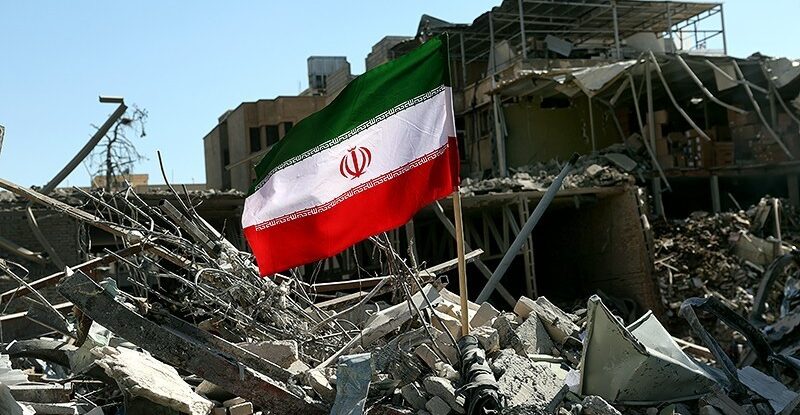
The Islamic Republic of Iran appears to be attempting to goad U.S. President Donald J. Trump into launching a politically unpopular and deadly ground invasion, claiming its military is prepared to repel a ground invasion by American troops. Iran’s Foreign Minister Abbas Araghchi said on Thursday, “We are waiting for them. Because we are confident that we can confront them, and that would be a big disaster for them.”
Earlier this week, President Trump refused to rule out American “boots on the ground” as joint U.S.-Israeli strikes continue to increase against Iranian military and political targets. The U.S. military action, dubbed Operation Epic Fury and launched on February 28, 2026, has already resulted in the deaths of dozens of top Iranian political and military officials, including Supreme Leader Ali Khamenei.
Araghchi contradicted claims made by Trump that Iran had sought a ceasefire and negotiations to end hostilities, stating, “We didn’t ask for a ceasefire even last time.” This assertion was echoed by Iran’s top national security official, Ali Larijani, who wrote in a post on X (formerly Twitter), “We will not negotiate with the United States.”
“The fact is that we don’t have any positive experience of negotiating with the United States. You know, especially with this administration. We negotiated twice last year and this year, and then in the middle of negotiations, they attacked us,” Araghchi said. “So we see no reason why we should engage once again with those who have, who are not honest in negotiation, and they don’t and do not enter into negotiation in good faith.”
However, on Friday, President Trump announced that the United States will only accept “unconditional surrender” from the Islamic Republic of Iran, stating that there will be “no deal” to end the conflict with the Islamist regime on any other grounds.
On Thursday, Secretary of War Pete Hegseth told The National Pulse that concerns that the war against Iran is expanding across the Middle East are unfounded. “What Iran is doing by attacking allied countries that would otherwise want to stay out of this” is pulling them “into the American orbit,” Hegseth said.
“So, now you’ve got UAE and Qatar and Bahrain and Saudi Arabia and Kuwait and others saying, ‘Hey, we’re with you, we’ll shoot with you, we’ll fly with you, we’ll defend you,” he explained, saying Iran’s actions were “actually firming up the unity of the resistance” to its regime.
“So this idea that [the war is] expanding, no, it’s actually simplifying in a number of ways, exactly what we need to achieve,” the War Secretary added.
Join Pulse+ to comment below, and receive exclusive e-mail analyses.
show less
show more
By Popular Demand.
The National Pulse Now has an on-site comments section for members. Sign up today and be part of the conversation in our community of almost 15,000.
Share Story
FacebookTwitterWhatsappTruthTelegramGettrCopy Link
Real News Fan? Show It!
Many people are shocked to learn that because of active censorship, we currently have to spend more time making sure you can even see The National Pulse, than on producing the news itself. Which sucks. Because we do this for the truth, and for you.
But the regime doesn’t want you being informed. That’s why they want us to go away. And that will happen if more people don’t sign up to support our work. It’s basic supply and demand. So demand you get to read The National Pulse, unrestricted. Sign up, today.
We don’t sell ads, and refuse corporate or political cash. It all comes down to you, the reader. I hope you can help.





















.jpg)

