





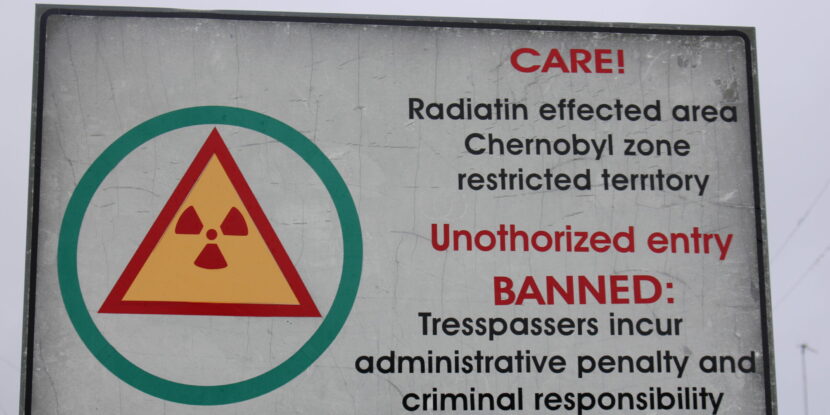
❓WHAT HAPPENED: The protective shield at the Chernobyl nuclear power plant has been damaged by a drone strike, compromising its ability to contain radioactive material, according to the International Atomic Energy Agency (IAEA).
👤WHO WAS INVOLVED: Ukraine has accused Russia of conducting the February drone strike, though the Kremlin denies responsibility. The IAEA conducted the inspection and provided updates.
📍WHEN & WHERE: The drone strike occurred earlier this year at the Chernobyl nuclear power plant, located in the Kiev region of Ukraine.
💬KEY QUOTE: The structure has “lost its primary safety functions, including the confinement capability.” – Rafael Grossi, Director of the IAEA.
🎯IMPACT: While radiation levels have not increased, the site requires comprehensive restoration to ensure long-term nuclear safety, the IAEA stated.
The International Atomic Energy Agency (IAEA) says the protective arch over Chernobyl’s destroyed reactor has been weakened after a drone strike earlier this year, raising new concerns about nuclear safety in a war zone. The February attack, which Ukraine attributes to Russian forces but the Kremlin denies, tore a hole in the outer shell of the steel structure erected in 2016 to contain radioactive material from the 1986 disaster. A brief fire broke out near the reactor, but the inner containment barrier held, and radiation levels did not increase.
IAEA Director Rafael Grossi reported that emergency repairs were completed but warned that the enclosure has “lost its primary safety functions, including the confinement capability.” He urged a full restoration to prevent further deterioration and to maintain long-term safeguards at the site.
Chernobyl remains one of the most sensitive nuclear locations in the region. Russian forces seized the area during the early weeks of the 2022 invasion but withdrew after a month.
Nuclear facilities across Ukraine continue to face risks as the conflict enters its fourth year. Europe’s largest nuclear power plant complex, the Russian-occupied Zaporizhzhia plant, has endured repeated shelling, fires, and power disruptions. In August 2024, explosions ignited a fire at a cooling tower, with both sides blaming each other. Inspectors later confirmed that radiation levels were unaffected, but the incident reinforced international warnings that continued military activity around the site could trigger a major nuclear emergency. The plant requires stable external power to keep its cooling systems operating, and any prolonged outage could create dangerous conditions.
Amid these escalating concerns, former U.S. National Security Adviser and President Donald J. Trump’s Ukraine envoy, Keith Kellogg, recently emphasized that resolving nuclear safety issues, including stabilizing operations at Zaporizhzhia, is essential to achieving a broader settlement to the conflict. The topic gained further attention after a proposal surfaced in March 2025 in which Donald Trump suggested that the United States assume control of Ukraine’s nuclear-power facilities to secure them from wartime threats. Ukrainian officials rejected the idea as incompatible with national sovereignty, though they acknowledged the need for stronger international involvement in nuclear oversight.
The conflict has also been marked by allegations of sabotage attempts. Russian authorities have claimed that British-trained operatives sought to damage Russian-held nuclear facilities, while Kiev has accused Moscow of staging provocations to justify further military escalation. Both sides deny the accusations leveled against them.
Join Pulse+ to comment below, and receive exclusive e-mail analyses.















.jpg)


.jpg)


.jpg)
