




Friday, April 3, 2026

WE ARE 100% INDEPENDENT AND READER-FUNDED. FOR A GUARANTEED AD-FREE EXPERIENCE AND TO SUPPORT REAL NEWS, PLEASE SIGN UP HERE, TODAY.

U.S. Faces Worst Flu Season in Decades as Virus Resists Vaccines.

PULSE POINTS

WHAT HAPPENED: Flu cases in the U.S. have surged to their highest level in 25 years, with new symptoms being reported.

👤WHO WAS INVOLVED: Public health experts and Americans across the country.

📍WHEN & WHERE: Nationwide in the U.S., during the ongoing 2026 flu season.

💬KEY QUOTE: “This is definitely a banner year. It’s the worst we’ve had in at least 20 years.” – Dr. Caitlin Rivers

🎯IMPACT: At least 11 million illnesses, 120,000 hospitalizations, and 5,000 deaths have been reported, with concerns over vaccine effectiveness and rising pediatric deaths.

IN FULL

The United States is currently experiencing its highest level of flu cases in 25 years, with new symptoms and severe impacts being observed across the nation. Experts have highlighted differences in this year’s strain, including prolonged fevers lasting up to seven days and increased gastrointestinal symptoms in adults, such as vomiting and diarrhea.

Dr. Mark Loafman of Cook County Health noted in a recent media interview that there is “More fever with the flu this year than people are accustomed to. And the fever can last up to seven days, so five to seven days. And that’s worrisome.”

Dr. Juanita Mora from the American Lung Association has also noted that some cases are not responding to common medications, such as Tylenol or Motrin.

The U.S. Centers for Disease Control and Prevention (CDC) has reported that 30 states are currently in the worst flu activity tier, with at least 11 million illnesses, 120,000 hospitalizations, and 5,000 deaths recorded so far. Pediatric deaths are also on the rise, with nine child flu deaths reported nationwide, and recent additional cases may not yet be included in the CDC‘s tally.

Dr. Caitlin Rivers, an epidemiologist with the Johns Hopkins Center for Health Security, described the situation as unprecedented: “This is definitely a banner year. It’s the worst we’ve had in at least 20 years. We’re seeing a majority of the country is experiencing very high levels of activity, and we’re still in the thick of it.” She added that the nation is at its highest level of respiratory illness since the 1997-1998 flu season.

Despite concerns that current flu vaccines may not fully inoculate against the new variant, health officials continue to urge Americans to get vaccinated, saying it remains the best way to prevent severe illness.

Image by Nicola Sap De Mitri.

Join Pulse+ to comment below, and receive exclusive e-mail analyses.

By Popular Demand.
The National Pulse Now has an on-site comments section for members. Sign up today and be part of the conversation in our community of almost 15,000.
More From The Pulse

WE ARE 100% INDEPENDENT AND READER-FUNDED. FOR A GUARANTEED AD-FREE EXPERIENCE AND TO SUPPORT REAL NEWS, PLEASE SIGN UP HERE, TODAY.

ICE Detains Islamic Society President Over Alleged Terror Links.

PULSE POINTS

WHAT HAPPENED: U.S. federal immigration agents arrested Salah Sarsour, a Palestinian immigrant suspected of funding terror groups.

👤WHO WAS INVOLVED: Salah Sarsour, U.S. Immigration and Customs Enforcement (ICE), and Sarsour’s attorneys.

📍WHEN & WHERE: April 2026, Milwaukee, Wisconsin.

💬KEY QUOTE: The Department of Homeland Security (DHS) says Sarsour was previously “convicted for throwing Molotov cocktails at the homes of Israeli armed forces.”

🎯IMPACT: Sarsour’s arrest has sparked allegations that the U.S. is “doing the bidding” of Israel by silencing pro-Palestinian voices, but U.S. officials say he lied on his immigration forms and has links to fundraising for terror groups.

IN FULL

Salah Sarsour, president of the Islamic Society of Milwaukee and Wisconsin’s largest mosque, has been detained by U.S. Immigration and Customs Enforcement (ICE). U.S. officials say he is suspected of funding terrorist organizations.

Sarsour has lived in the United States as a legal permanent resident for more than 30 years. His supporters are demanding his release, arguing that he has been singled out because of his criticism of Israel. One of his attorneys, Munjed Ahmad, said, “Our government should not be doing the bidding of a foreign government,” adding that the arrest is intended to suppress pro-Palestinian voices.

The Department of Homeland Security (DHS) says Sarsour was previously “convicted for throwing Molotov cocktails at the homes of Israeli armed forces,” although his attorneys claim a conviction related to this incident was known to U.S. authorities when he arrived in 1993.

DHS insists that Sarsour “lied on his immigration application,” adding: “This terrorist will remain in ICE custody pending removal proceedings.”

Join Pulse+ to comment below, and receive exclusive e-mail analyses.

show less
show more
By Popular Demand.
The National Pulse Now has an on-site comments section for members. Sign up today and be part of the conversation in our community of almost 15,000.

WE ARE 100% INDEPENDENT AND READER-FUNDED. FOR A GUARANTEED AD-FREE EXPERIENCE AND TO SUPPORT REAL NEWS, PLEASE SIGN UP HERE, TODAY.

Trump Proposes $1.5 TRILLION Military Budget.

PULSE POINTS

WHAT HAPPENED: President Donald J. Trump rolled out his new federal budget proposal on Friday, which includes a record $1.5 trillion Department of War budget for the fiscal year 2027. This marks a nearly 40 percent increase over the fiscal year 2026 military spending.

👤WHO WAS INVOLVED: President Trump, the Department of War, and the U.S. Congress.

📍WHEN & WHERE: The fiscal year 2027 budget was released on Friday, April 3, 2026.

🎯IMPACT: The increase in military spending is likely to include $185 billion for President Trump’s Golden Dome missile defense system, as well as significant allocations of money for replenishing munition stockpiles that have been nearly depleted through the former Biden government’s transfer of weapons to Ukraine and the ongoing war with the Islamic Republic of Iran.

IN FULL

President Donald J. Trump rolled out his new federal budget proposal on Friday, which includes a record $1.5 trillion Department of War budget for the fiscal year 2027. This marks a nearly 40 percent increase over the fiscal year 2026 military spending.

Last year, the U.S. military and defense budget topped $1 trillion for the first time ever, after Congress adopted a $150 billion supplemental funding bill that added the initial $892.6 billion appropriation they had previously approved. The budget revealed by the Trump White House on Friday only includes top line number, with the Pentagon expected to provide a more detailed breakdown on April 21.

Still, the increase in military spending is likely to include $185 billion for President Trump’s Golden Dome missile defense system, as well as significant allocations of money for replenishing munition stockpiles that have been nearly depleted through the former Biden government’s transfer of weapons to Ukraine and the ongoing war with the Islamic Republic of Iran. In addition, the budget is expected to include significant appropriations for new warship construction, including the Trump-class battleship—a U.S. Navy guided-missile vessel.

The Trump White House is pushing Republican lawmakers on Capitol Hill to adopt around $350 to $500 billion of the $1.5 trillion proposal through the use of the budget reconciliation process. This likely means that the current plan to fund detention and deportation operations by U.S. Immigration and Customs Enforcement (ICE) and Customs and Border Protection (CBP) through reconciliation will be folded into the military reconciliation plan.

Congressional rules prohibit the use of reconciliation more than twice per Congress, though some experts contend there are mechanisms that allow it to be used a third time.

Join Pulse+ to comment below, and receive exclusive e-mail analyses.

show less
show more
By Popular Demand.
The National Pulse Now has an on-site comments section for members. Sign up today and be part of the conversation in our community of almost 15,000.

WE ARE 100% INDEPENDENT AND READER-FUNDED. FOR A GUARANTEED AD-FREE EXPERIENCE AND TO SUPPORT REAL NEWS, PLEASE SIGN UP HERE, TODAY.

REPORT: U.S. Jet Shot Down Over Iran.

PULSE POINTS

WHAT HAPPENED: Iran has reportedly shot down a U.S. fighter jet, according to Iranian media and a source familiar with the incident.

👤WHO WAS INVOLVED: The incident involves the Iranian military and the U.S. military, with a search and rescue effort underway for two crew members.

📍WHEN & WHERE: The event was reported on Friday, with Iranian state media releasing images and videos allegedly showing parts of the downed plane.

🎯IMPACT: This incident marks the first time a U.S. jet has been downed by enemy fire since the start of the war.

IN FULL

Iran has reportedly shot down a U.S. fighter jet, with Iranian media and a source familiar with the incident confirming the event. A search and rescue operation is underway to locate the two crew members.

This marks the first instance since the beginning of the war that a U.S. jet has been downed by enemy fire. The U.S. military and the White House have not yet responded to requests for comment.

Iranian state media released images and videos on Friday, allegedly displaying parts of the downed aircraft and one of the ejection seats.

The visuals suggest that the aircraft in question is an F-15 fighter jet, although this has not been officially confirmed by U.S. authorities.

The situation remains tense as efforts continue to recover the crew and ascertain the full details of the incident.

Join Pulse+ to comment below, and receive exclusive e-mail analyses.

show less
show more
By Popular Demand.
The National Pulse Now has an on-site comments section for members. Sign up today and be part of the conversation in our community of almost 15,000.

WE ARE 100% INDEPENDENT AND READER-FUNDED. FOR A GUARANTEED AD-FREE EXPERIENCE AND TO SUPPORT REAL NEWS, PLEASE SIGN UP HERE, TODAY.

Trump Economy: Jobs Rebound With 178,000 Positions Added.

PULSE POINTS

WHAT HAPPENED: The U.S. job market added 178,000 jobs in March, rebounding from February’s loss of 133,000 jobs, while the unemployment rate dipped to 4.3 percent.

👤WHO WAS INVOLVED: The Labor Department, health care companies, construction companies, and factories contributed to the job growth.

📍WHEN & WHERE: The report was released on Friday, detailing job gains in March across the United States.

💬KEY QUOTE: “The trend reflects an aging U.S. population,” said Vanguard economist Adam Schickling in commentary on the report.

🎯IMPACT: Despite the rebound, concerns remain over high interest rates, artificial intelligence (AI), and geopolitical uncertainty surrounding the Iran war and other flashpoints.

IN FULL

The U.S. job market rebounded in March, adding 178,000 jobs according to the Labor Department—a sharp turnaround from February’s loss of 133,000 jobs. The unemployment rate fell to 4.3 percent, from 4.4 percent the month before.

Health care led the gains with 76,400 new positions, including the return of 31,000 Kaiser Permanente workers who had been on strike in February. Construction added 26,000 jobs and factories gained 15,000, both helped by milder weather.

The March figures came in much stronger than economists had predicted. However, the labor force shrank by 396,000 people, which partly accounts for the lower unemployment rate. Average hourly wages rose 0.2 percent from February and 3.5 percent from March 2025, staying in line with the Federal Reserve’s inflation target.

Even with the improvement, the job market has faced headwinds over the past year. Businesses have been reluctant to hire amid high interest rates and uncertainty over President Donald J. Trump’s trade policies, which have been disrupted by lawfare campaigns. Worries about artificial intelligence (AI) displacing entry-level roles and the ongoing war in Iran have added to the cautious outlook.

Most new jobs continue to come from health care and social assistance sectors, a trend driven by the country’s aging population. Vanguard economist Adam Schickling argues that “the trend reflects an aging U.S. population,” noting similarities with Japan’s experience in the early 2010s.

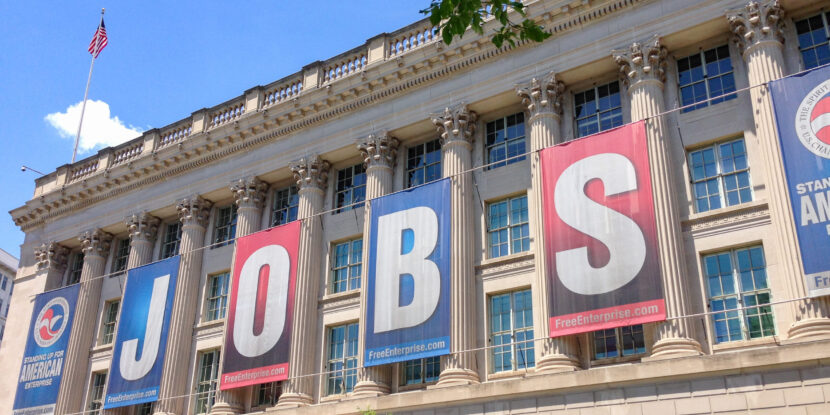
Image by Tony Webster.

Join Pulse+ to comment below, and receive exclusive e-mail analyses.

show less
show more
By Popular Demand.
The National Pulse Now has an on-site comments section for members. Sign up today and be part of the conversation in our community of almost 15,000.

WE ARE 100% INDEPENDENT AND READER-FUNDED. FOR A GUARANTEED AD-FREE EXPERIENCE AND TO SUPPORT REAL NEWS, PLEASE SIGN UP HERE, TODAY.

Throat-Slashing Venezuelan Migrant Feared to Be Serial Killer ‘Copycat.’

PULSE POINTS

WHAT HAPPENED: A Venezuelan man has been charged with attempted murder following a throat-slashing incident, raising fears of a potential serial killer copycat.

👤WHO WAS INVOLVED: Ruben Guanipa Ramirez, 26, and an unidentified male victim.

📍WHEN & WHERE: The incident occurred at a remote beach in Suffolk County, New York.

💬KEY QUOTE: “The evidence recovered from his vehicle raises serious questions about what he intended that night.” – Ray Tierney

🎯IMPACT: The incident fuels concerns of a copycat crime linked to the Gilgo Beach serial killer case.

IN FULL

New York prosecutors have charged 26-year-old Venezuelan national Ruben Guanipa Ramirez with attempted murder in an incident that has raised concerns about a possible copycat attack modeled after alleged Gilgo Beach serial killer Rex Heuermann. According to the authorities, Ramirez drove a man to an isolated beach, then attacked him from behind with a knife. The victim was smothered with a rag, stabbed on the left side, and an attempt was made to slash his throat.

“During the altercation, the victim sustained defensive wounds to his hands but was able to wrestle the knife away from Ramirez,” Suffolk County District Attorney Ray Tierney’s office said in a statement. The victim then took control of Ramirez’s car, called 911, and drove himself to a friend’s apartment in Queens, where he was met by New York City Police Department (NYPD) officers and received medical care.

A search of Ramirez’s vehicle turned up knives, rope, duct tape, and a “large-wheeled bag,” items that have prompted serious alarm. Although no direct connection to the Gilgo Beach case has been confirmed, retired NYPD sergeant Joseph Giacalone, former head of the Bronx Cold Case Unit, highlighted disturbing parallels. “Was this a copycat crime… related to what is happening with Rex Heuermann in the news?” he asked. “They need to take a long, hard look at this guy.”

Giacalone pointed out that the recovered items were especially troubling, noting that Heuermann’s alleged victims had been bound with duct tape and wrapped in burlap or plastic, with some dismembered.

Ramirez is being held at Suffolk County Jail—the same facility housing Heuermann. If convicted, the Venezuelan could face up to 25 years in prison.

Join Pulse+ to comment below, and receive exclusive e-mail analyses.

show less
show more
By Popular Demand.
The National Pulse Now has an on-site comments section for members. Sign up today and be part of the conversation in our community of almost 15,000.

WE ARE 100% INDEPENDENT AND READER-FUNDED. FOR A GUARANTEED AD-FREE EXPERIENCE AND TO SUPPORT REAL NEWS, PLEASE SIGN UP HERE, TODAY.

Two States Enact Strict Proof of Citizenship Requirements to Vote.

PULSE POINTS

WHAT HAPPENED: Florida and Mississippi have enacted measures requiring proof of citizenship to vote.

👤WHO WAS INVOLVED: Officials in Florida and Mississippi, voters in both states.

📍WHEN & WHERE: April 2, 2026, in the states of Florida and Mississippi.

💬KEY QUOTE: “This is another win for election integrity in Mississippi (and America),” said Mississippi Governor Tate Reeves.

🎯IMPACT: These measures aim to prevent voter fraud and ensure election integrity, aligning with reforms pursued by President Donald J. Trump.

IN FULL

Florida and Mississippi have passed strict measures requiring proof of citizenship in order to vote. Florida’s new measures require potential voters to provide a birth certificate, naturalization certificate, or passport. Those seeking to vote must also match their citizenship status with the status shown on their driver’s license. Similarly, Mississippi’s new measures compel electoral officials to check if those registering to vote have driver’s license numbers on their voter application. Mississippi’s law also mandates annual checks of the voter roll against a U.S. Immigration and Customs Enforcement (ICE) database to flag any potential voter fraud.

“This is another win for election integrity in Mississippi (and America),” Mississippi Governor Tate Reeves (R) said on X (formerly Twitter), adding: “We will continue to do everything in our power to make it infinitely harder—with a goal to make it impossible—to cheat in our elections!”

Florida and Mississippi are among four Republican-controlled states, along with South Dakota and Utah, that have enacted proof-of-citizenship measures this year. These measures reflect election integrity reforms demanded by President Donald J. Trump, such as requiring a birth certificate, naturalization certificate, or passport.

President Trump has also issued an executive order to reform mail-in ballot voting, which is facing obstruction from Democrat lawmakers, left-wing activists, and liberal judges.

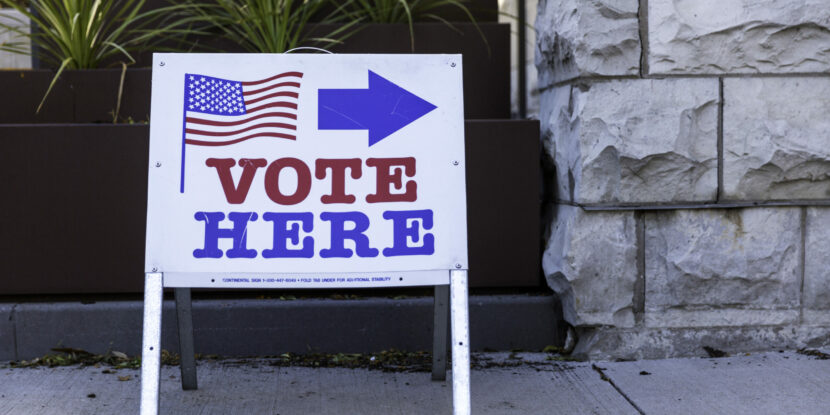
Image by Lorie Shaull.

Join Pulse+ to comment below, and receive exclusive e-mail analyses.

show less
show more
By Popular Demand.
The National Pulse Now has an on-site comments section for members. Sign up today and be part of the conversation in our community of almost 15,000.

WE ARE 100% INDEPENDENT AND READER-FUNDED. FOR A GUARANTEED AD-FREE EXPERIENCE AND TO SUPPORT REAL NEWS, PLEASE SIGN UP HERE, TODAY.

The Trump Admin Has Begun Working Around the SCOTUS Ruling Against Tariffs, Here’s How:

PULSE POINTS

WHAT HAPPENED: President Donald J. Trump imposed tariffs on patented pharmaceuticals and their ingredients under Section 232 of the Trade Expansion Act of 1962, to enhance national security and public health.

👤WHO WAS INVOLVED: President Trump, the Department of Commerce, and the Department of Health and Human Services (HHS).

📍WHEN & WHERE: The tariffs take effect in 120 days for large companies and 180 days for smaller companies, with pathways for compliance provided by the U.S. government.

💬KEY QUOTE: “America must manufacture pharmaceutical products in order to be safe, secure, and healthy.” – The White House

🎯IMPACT: The action aims to strengthen domestic manufacturing, reduce reliance on foreign imports, and protect national security.

IN FULL

President Donald J. Trump issued two directives on Thursday as part of his White House’s effort to reinstitute tariffs that were struck down by the U.S. Supreme Court earlier this year. In February, the high court, in a mixed decision, ruled that Trump’s imposition of trade duties under the International Emergency Economic Powers Act (IEEPA) was unlawful, as the regulatory powers granted to the President by Congress do not extend to forms of taxation like tariffs.

The new tariff order targets patented pharmaceuticals and their ingredients under Section 232 of the Trade Expansion Act of 1962, with President Trump citing the law’s national security provisions as grounds for the measure. Importantly, the use of the 1962 trade law allows Trump to circumvent objections to his use of IEEPA, though the implementation process for the tariffs is more drawn out.

According to the order, a 100 percent tariff rate will be imposed on foreign patented pharmaceutical products. However, countries and regional blocs that have already entered into established trade deals with the United States—such as the European Union, Japan, Korea, Switzerland, and the United Kingdom—will only face a 15 percent rate.

Notably, pharmaceutical companies entering into Most Favored Nation (MFN) pricing agreements with the Department of Health and Human Services (HHS) and onshoring agreements with the Department of Commerce can secure a zero percent tariff through January 20, 2029. Generic pharmaceuticals and specialty products are exempt from tariffs, though they will be reassessed next April.

“America must manufacture pharmaceutical products in order to be safe, secure, and healthy,” the White House stated in announcing the new trade measures, adding that the tariffs take effect in 120 days for large companies and 180 days for smaller companies.

In addition to imposing new pharmaceutical tariff rates, President Trump also issued updated guidance to strengthen existing tariffs on imported steel, aluminum, and copper. Under the new rules, products made entirely or almost entirely of aluminum, steel, or copper will face a flat 50 percent tariff on their full value, while derivative articles will incur a 25 percent tariff. Certain metal-intensive industrial and electrical grid equipment will face a 15 percent tariff through 2027 to support the ongoing expansion of the United States’ industrial base. Products manufactured abroad but composed entirely of American steel, aluminum, or copper will benefit from a lower tariff of 10 percent. Additionally, items with 15 percent or less steel, aluminum, or copper content will no longer be subject to Section 232 tariffs.

The preferential tariff treatment of foreign products containing U.S.-sourced aluminum, steel, or copper will likely face challenges from foreign governments at the World Trade Organization (WTO). In January this year, a WTO panel report found that certain tax credits enacted through the Inflation Reduction Act (IRA) violated international trade rules by favoring U.S. steel. According to the WTO, the measures violate international trade rules against subsidies contingent upon the use of domestic over imported products.

Join Pulse+ to comment below, and receive exclusive e-mail analyses.
show less
show more
By Popular Demand.
The National Pulse Now has an on-site comments section for members. Sign up today and be part of the conversation in our community of almost 15,000.

WE ARE 100% INDEPENDENT AND READER-FUNDED. FOR A GUARANTEED AD-FREE EXPERIENCE AND TO SUPPORT REAL NEWS, PLEASE SIGN UP HERE, TODAY.

Dems Reverse Support for Laken Riley Act to Appease Far Left.

PULSE POINTS

WHAT HAPPENED: Democrat lawmakers are retracting their support for the Laken Riley Act,  backed by President Donald J. Trump, as they face primary pressure from the pro-illegal immigrant far left.

👤WHO WAS INVOLVED: Representative Angie Craig (D-MN), Sen. Mark Warner (D-VA), Rep. April McClain Delaney (D-MD), and Rep. Jahana Hayes (D-CT) are among those disavowing the law.

📍WHEN & WHERE: The disavowals are occurring in 2026 as the party prepares for internal primaries.

💬KEY QUOTE: “I regret my vote,” wrote Rep. Angie Craig in a local newspaper.

🎯IMPACT: The shift in stance reflects the growing influence of the far left in the Democrats’ internal party dynamics.

IN FULL

As the Democratic Party faces internal primary contests, several of its lawmakers have begun to distance themselves from the Laken Riley Act, a law championed by President Donald J. Trump that mandates the detention of non-citizens arrested for various crimes committed within the United States. The Act was passed with some Democrat support in late January 2025, following the murder of Laken Riley, a 22-year-old university student from the state of Georgia, by Venezuelan illegal immigrant José Antonio Ibarra. At the time of the murder, he was at large despite having previously been charged with “acting in a manner to injure a child less than 17 and a motor vehicle license violation.”

Representative Angie Craig of Minnesota, facing criticism from a progressive opponent in the race for the Democrat Senate nomination in Minnesota, said of her prior support for the Act, “I regret my vote.” Joining Craig in retracting support are Senator Mark Warner (D-VA), Rep. April McClain Delaney (D-MD), and Rep. Jahana Hayes (D-CT), all of whom have faced increasing pressure from leftist factions within their party.

Ibarra was convicted of both felony and malicious murder, kidnapping with bodily injury, aggravated battery and aggravated assault with intent to rape, false imprisonment, hindering an emergency phone call, concealing the death of another person, and criminal invasion of privacy.

Join Pulse+ to comment below, and receive exclusive e-mail analyses.

show less
show more
By Popular Demand.
The National Pulse Now has an on-site comments section for members. Sign up today and be part of the conversation in our community of almost 15,000.

WE ARE 100% INDEPENDENT AND READER-FUNDED. FOR A GUARANTEED AD-FREE EXPERIENCE AND TO SUPPORT REAL NEWS, PLEASE SIGN UP HERE, TODAY.

Negotiations for Three New U.S. Bases in Greenland Confirmed.

PULSE POINTS

WHAT HAPPENED: The United States is in talks with Denmark to expand its military presence in Greenland.

👤WHO WAS INVOLVED: The United States, Denmark, Greenland, and General Gregory Guillot, head of U.S. Northern Command.

📍WHEN & WHERE: Negotiations are ongoing as of April 2026, involving sites at Narsarsuaq and Kangerlussuag in southern and western Greenland, respectively.

💬KEY QUOTE: “I’m working with our department and others to try to develop more ports, more airfields, which leads to more options for our secretary and for the president, should we need them up in the Arctic.” – Gen Gregory Guillot

🎯IMPACT: Potential restoration and expansion of several U.S. bases in Greenland, strengthening the U.S. in the High North.

IN FULL

The United States is in talks with Denmark to establish three new military bases in Greenland. According to U.S. Northern Command, the U.S. intends to develop bases near Narsarsuaq, situated at Greenland’s southern tip, and Kangerlussuaq, situated on Greenland’s western coast. These talks involve the potential development of airfields and ports at three sites, including two abandoned former U.S. bases.

“I’m working with our department and others to try to develop more ports, more airfields, which leads to more options for our Secretary and for the President,” General Gregory Guillot, head of U.S. Northern Command (NORTHCOM), told a congressional hearing last month. Under the 1951 U.S-Denmark Defense Agreement, the U.S. is permitted to establish and expand military sites in Greenland.

These talks represent the first major step towards increasing U.S. presence in Greenland since President Donald J. Trump agreed on a new framework with NATO earlier this year. The new framework covered defense cooperation between the U.S. and Denmark, as well as rights to rare-earth minerals.

The Trump administration has repeatedly expressed a desire to acquire Greenland from Denmark. “For the purposes of National Security and Freedom throughout the World, the United States of America feels that the ownership and control of Greenland is an absolute necessity,” Trump said.

According to U.S. Vice President J.D. Vance, despite vocal public opposition from Europe, the U.S. has received far greater concessions on Greenland in private from European leaders.

Join Pulse+ to comment below, and receive exclusive e-mail analyses.
show less
show more
By Popular Demand.
The National Pulse Now has an on-site comments section for members. Sign up today and be part of the conversation in our community of almost 15,000.

WE ARE 100% INDEPENDENT AND READER-FUNDED. FOR A GUARANTEED AD-FREE EXPERIENCE AND TO SUPPORT REAL NEWS, PLEASE SIGN UP HERE, TODAY.

Federal Court Ends In-State Tuition for Illegal Immigrants.

PULSE POINTS

WHAT HAPPENED: A federal judge has permanently blocked Kentucky’s policy of granting in-state tuition to illegal immigrants, ruling it violates U.S. law.

👤WHO WAS INVOLVED: U.S. District Court Judge Gregory F. Van Tatenhove, Kentucky Attorney General Russell Coleman (R), and the Trump administration.

📍WHEN & WHERE: The ruling was issued earlier this week in Kentucky following a months-long legal challenge.

💬KEY QUOTE: “Federal law is clear: illegal immigrants don’t get preferential treatment at Kentucky’s public universities, and Kentucky taxpayers certainly shouldn’t be footing the bill.” – Russell Coleman

🎯IMPACT: Kentucky’s higher education system must end in-state tuition discounts for illegal immigrants, ensuring compliance with federal law.

IN FULL

A federal judge has ruled against Kentucky‘s policy of granting in-state tuition to illegal immigrants, declaring it unlawful under federal statute. U.S. District Court Judge Gregory F. Van Tatenhove—a Bush appointee—issued the decision, permanently blocking the state’s tuition law on the grounds it violates the Constitution’s Supremacy Clause.

The ruling follows a legal challenge by Kentucky Attorney General Russell Coleman (R) and the Trump administration, who argued the policy unlawfully provided benefits to migrants in the country illegally. Federal law states that “an alien who is not lawfully present in the United States shall not be eligible on the basis of residence within a state for any post-secondary education benefit unless a citizen or national of the United States is eligible for such a benefit … without regard to whether the citizen or national is such a resident.”

“Federal law is clear: illegal immigrants don’t get preferential treatment at Kentucky’s public universities, and Kentucky taxpayers certainly shouldn’t be footing the bill. As Kentucky’s chief law officer, I was proud to join the Trump Administration to make sure our Commonwealth is upholding federal law and fundamental fairness for American citizens,” Coleman stated regarding the ruling, adding: “We’ll continue focusing on helping Kentucky students reach for their full potential.”

The lawsuit initially named Kentucky Governor Andy Beshear (D) as a defendant. However, Beshear’s office clarified that the Kentucky Council on Postsecondary Education (KCPE), which enforced the regulation, operates independently. Although the KCPE agreed with the Trump administration that the regulation was preempted, the court found it necessary to issue a ruling on the matter’s constitutionality.

Judge Van Tatenhove’s 22-page decision noted that states can extend certain benefits to illegal immigrants but must do so through laws passed by legislatures, not through agency-based regulations. The court’s ruling also highlighted a February 2025 Executive Order signed by President Donald J. Trump, aimed at ending taxpayer subsidization of open borders, as a factor influencing the decision.

Join Pulse+ to comment below, and receive exclusive e-mail analyses.
show less
show more
By Popular Demand.
The National Pulse Now has an on-site comments section for members. Sign up today and be part of the conversation in our community of almost 15,000.