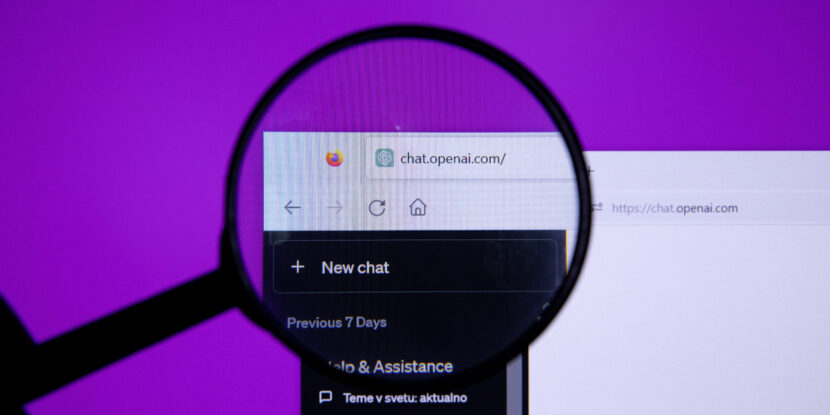
❓WHAT HAPPENED: OpenAI has introduced a new feature called ChatGPT Health, which uses medical records to generate personalized responses, despite warnings from experts about the risks of relying on artificial intelligence (AI) for health advice.
👤WHO WAS INVOLVED: OpenAI, medical professionals, legal experts, and organizations like the Center for Democracy and Technology and the Electronic Privacy Information Center.
Newsletter
Need to Know.
Your free, daily feed from The National Pulse.
Thank You!
You are now subscribed to our newsletter.
📍WHEN & WHERE: The feature was recently launched by OpenAI.
💬KEY QUOTE: “New AI health tools offer the promise of empowering patients and promoting better health outcomes, but health data is some of the most sensitive information people can share, and it must be protected.” – Andrew Crawford, Center for Democracy and Technology.
🎯IMPACT: The launch of ChatGPT Health raises concerns over data privacy, potential misuse of health advice, and the lack of regulatory oversight for AI-driven health tools.
IN FULL
OpenAI has launched a new feature called ChatGPT Health, which aims to use medical records to provide more personalized responses for users. The company claims the tool is “designed in close collaboration with physicians” and built with “strong privacy, security, and data controls.” However, it also emphasizes that the feature is “not intended for diagnosis or treatment,” raising questions about its practical application.
The move has sparked criticism from experts who warn that artificial intelligence (AI) health advice can be inaccurate and potentially dangerous. A recent investigation revealed that Google’s AI Overviews frequently provided incorrect health information, which could lead to serious risks if followed. People are already using the standard ChatGPT AI assistant to draft legal and medical claims, often based on nonexistent case law or hallucinated data. Last December, The National Pulse reported that a U.S. Department of Justice (DOJ) indictment alleges the OpenAI-developed chatbot encouraged a man—accused of harassing over a dozen women across five states—to persist in his stalking behavior.
Privacy concerns are at the forefront of the debate, with critics highlighting the lack of federal regulations like HIPAA governing consumer AI products. Andrew Crawford from the Center for Democracy and Technology recently noted, “Health data is some of the most sensitive information people can share, and it must be protected.” He warned that inadequate data protections could put users at risk, particularly as companies like OpenAI explore advertising as a business model.
Concerns also extend to law enforcement’s access to sensitive data. “How does OpenAI handle [law enforcement] requests?” Crawford asked, adding, “Do they just turn over the information? Is the user in any way informed?” Sara Geoghegan of the Electronic Privacy Information Center echoed these concerns, noting that AI companies can change their terms of service at any time without regulation.
Despite these warnings, OpenAI says it is pushing forward with ChatGPT Health, which the company contends will help users “take a more active role in understanding and managing their health and wellness.”
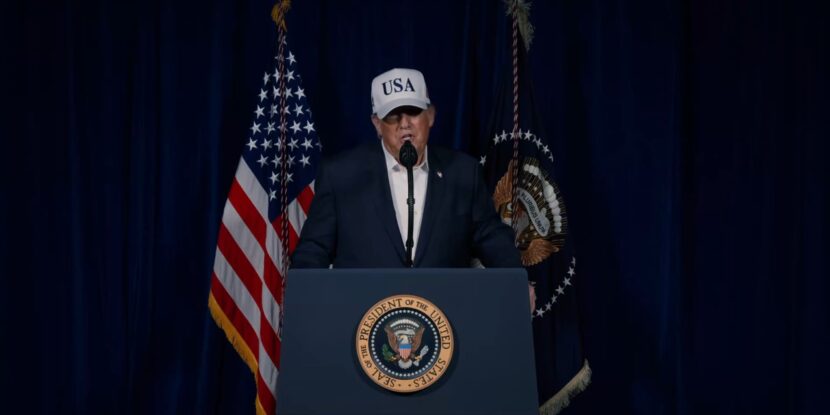
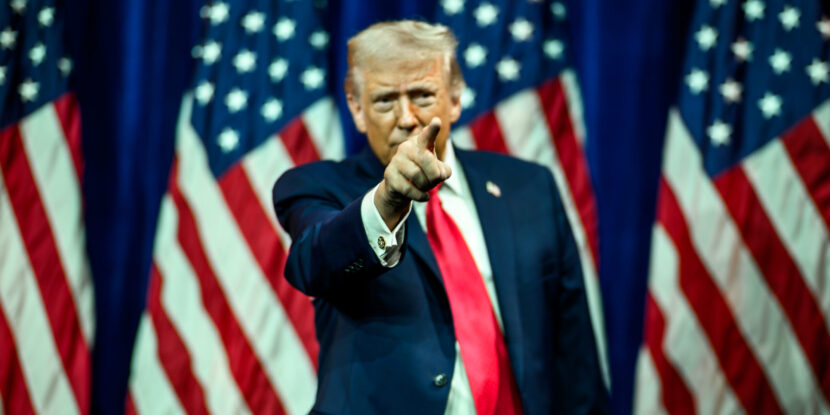
President Donald J. Trump has issued the following statement on the joint U.S.-Israeli strikes on Iran. As ever, The National Pulse is first to the full story. Please donate today to support our work. Read the story as it broke.
A short time ago, the United States military began major combat operations in Iran.
Our objective is to defend the American people by eliminating imminent threats from the Iranian regime, a vicious group of very hard, terrible people.
Its menacing activities directly endanger the United States, our troops, our bases overseas, and our allies throughout the world.
For 47 years, the Iranian regime has chanted “Death to America and waged an unending campaign of bloodshed and mass murder, targeting the United States, our troops, and the innocent people in many, many countries.
Among the regime’s very first acts was to back a violent takeover of the U.S. Embassy in Tehran, holding dozens of American hostages for 444 days.
In 1983, Iran’s proxies carried out the Marine barracks bombing in Beirut that killed 241 American military personnel.
In 2000, they knew and were probably involved with the attack on the USS Cole.
Many died.
Iranian forces killed and maimed hundreds of American service members in Iraq.
The regime’s proxies have continued to launch countless attacks against American forces stationed in the Middle East in recent years, as well as U.S. Naval and commercial vessels in international shipping lanes.
It’s been mass terror, and we’re not going to put up with it any longer.
From Lebanon to Yemen and Syria to Iraq, the regime has armed, trained, and funded terrorist militias that have soaked the earth with blood and guts.
And it was a ranch proxy, Hamas, that launched the monstrous October 7th attacks on Israel, slaughtering more than 1,000 innocent people, including 46 Americans, while taking 12 of our citizens hostage.
It was brutal.
Something like the world has never seen before.
Iran is the world’s number one state sponsor of terror, and just recently killed tens of thousands of its own citizens on the street as they protested.
It has always been the policy of the United States, in particular, my administration, that this terrorist regime can never have a nuclear weapon.
I’ll say it again.
They can never have a nuclear weapon.
That is why in Operation Midnight Hammer last June, we obliterated the regime’s nuclear program at Fordow, Natanz, and Isfahan.
After that attack, we warned them never to resume their malicious pursuit of nuclear weapons, and we sought repeatedly to make a deal.
We tried, they wanted to do it, they didn’t want to do it.
Again, they wanted to do it, they didn’t want to do it, they didn’t know what was happening.
They just wanted to practice evil.
But Iran refused, just as it has for decades and decades; they’ve rejected every opportunity to renounce their nuclear ambitions, and we can’t take it anymore.
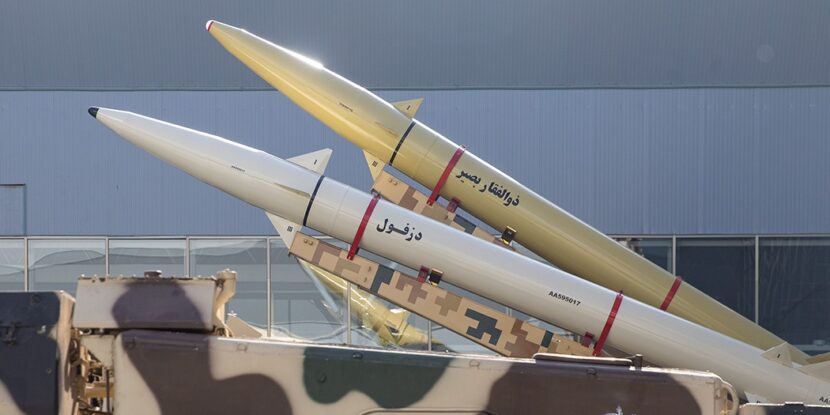
Instead, they attempted to rebuild their nuclear program and to continue developing long-range missiles that can now threaten our very good friends and allies in Europe, our troops stationed overseas, and could soon reach the American homeland.
Just imagine how emboldened this regime would be if they ever had and actually were armed with nuclear weapons as a means to deliver their message.
For these reasons, the United States military has undertaken a massive and ongoing operation to prevent this very wicked, radical, dictatorship from threatening America and our core national security interests.
We are going to destroy their missiles and raze their missile industry to the ground.
It will be totally, again, obliterated.
We’re going to annihilate their Navy.
We are going to ensure that the region’s terrorist proxies can no longer destabilize the region or the world and attack our forces and no longer use their IEDs or roadside bombs, as they are sometimes called, to so gravely wound and kill thousands and thousands of people, including many Americans, and we will ensure that Iran does not obtain a nuclear weapon.
It’s a very simple message.
They will never have a nuclear weapon.
This regime will soon learn that no one should challenge the strength and might of the United States armed forces.
I built and rebuilt our military and my first administration, and there is no military on Earth, even close to its power, strength, or sophistication.
My administration has taken every possible step to minimize the risk to U.S. Personnel in the region.
Even so, and I do not make this statement lightly, the Iranian regime seeks to kill.
The lives of courageous American heroes may be lost, and we may have casualties. That often happens in war, but we’re doing this, not for now.
We’re doing this for the future, and it is a noble mission.
We pray for every service member, as they selflessly risk their lives to ensure that Americans and our children will never be threatened by a nuclear-armed Iran.
We ask God to protect all of our heroes in harm’s way, and we trust that, with his help, the men and women of the armed forces will prevail.
We have the greatest in the world, and they will prevail.
To the members of the Islamic Revolutionary Guard, the armed forces, and all of the police, I say tonight that you must lay down your weapons and have complete immunity, or in the alternative, face certain death.
So, lay down your arms, you will be treated fairly with total immunity, or you will face certain death.
Finally, to the great proud people of Iran, I say tonight that the hour of your freedom is at hand.
Stay sheltered, don’t leave your home.
It’s very dangerous outside.
Bombs will be dropping everywhere.
When we are finished, take over your government.
It will be yours to take.
This will be probably your only chance for generations.
For many years, you have asked for America’s help, but you never got it.
No president was willing to do what I am willing to do tonight.
Now you have a president who is giving you what you want.
So let’s see how you respond.
America is backing you with overwhelming strength and devastating force.
Now is the time to seize control of your destiny and to unleash the prosperous and glorious future that is close within your reach.
This is the moment for action.
Do not let it pass.
May God bless the brave men and women of America’s armed forces. May God bless the United States of America.
May God bless you all.
Thank you.
show less
President Donald J. Trump has issued the following statement on the joint U.S.-Israeli strikes on Iran. As ever, The National Pulse is first to the full story. Please donate today to support our work. Read the story as it broke.show more
By Popular Demand.
The National Pulse Now has an on-site comments section for members. Sign up today and be part of the conversation in our community of almost 15,000.
WE ARE 100% INDEPENDENT AND READER-FUNDED. FOR A GUARANTEED AD-FREE EXPERIENCE AND TO SUPPORT REAL NEWS, PLEASE SIGN UP HERE, TODAY.
❓WHAT HAPPENED: Israel and the United launched a series of missile attacks on Iran early Saturday morning, causing explosions in Tehran, according to U.S. officials quoted in the Wall Street Journal and New York Times as of early Saturday morning.
👤WHO WAS INVOLVED: The U.S. military, Israeli Defense Forces (IDF), Israeli Defense Minister Israel Katz, and Iranian state officials.
Newsletter
Need to Know.
Your free, daily feed from The National Pulse.
Thank You!
You are now subscribed to our newsletter.
📍WHEN & WHERE: Saturday morning, February 28, 2026, in Tehran, Iran, and across Israel.
💬KEY QUOTE: “This is a proactive alert to prepare the public for the possibility of missiles being launched toward the State of Israel.” – IDF national warning
🎯IMPACT: Rising tensions in the Middle East, with heightened concerns over Iran’s nuclear ambitions and potential retaliatory strikes.
IN FULL
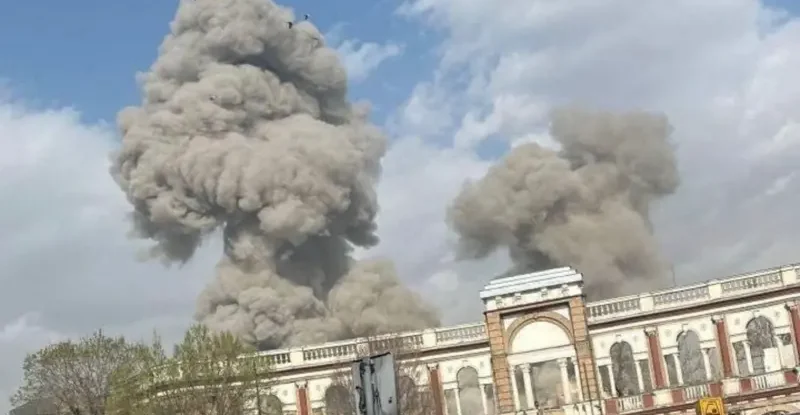
Israel and the United States reportedly carried out a series of missile attacks on Iran early Saturday morning, with explosions reported in Tehran. The Israeli Defense Forces (IDF) issued a warning to its citizens, urging them to prepare for potential retaliatory strikes. Sirens were heard across Israel as tensions escalated in the region.
As of 3:15AM EST, Iran is believed to have retaliated with ballistic missiles headed towards Israel, though it is unclear if any of the missiles struck their targets at the time of publication. This report will be updated as and when confirmation is received.
The New York Times and Wall Street Journal reported the strikes were a joint operation between U.S. and Israeli forces, though we are awaiting confirmation at the time of publication.
“The U.S. and Israel launched an attack on Iran on Saturday, bringing war to the country for the second time in eight months and risking a wider regional conflict in one of the most economically sensitive parts of the world,” the Wall Street Journal reported as of 1:50am EST.
Israeli Defense Minister Israel Katz declared a state of emergency as thick smoke rose from the explosion sites in downtown Tehran. Iranian state media confirmed the reports of explosions in the capital city.
The IDF released a national warning, stating, “This is a proactive alert to prepare the public for the possibility of missiles being launched toward the State of Israel.” The attack comes amid heightened tensions between Iran and the United States over Tehran’s nuclear program.
Earlier this week, former President Donald Trump warned during his State of the Union address that Iran is “working on missiles that will soon reach” the United States. Trump also described Iran as the “number one sponsor of terrorism” and vowed to prevent the regime from acquiring nuclear weapons. U.S. intelligence, however, has not yet concluded that Iran possesses the capability to develop intercontinental ballistic missiles (ICBMs) capable of reaching the U.S. homeland.
The situation remains tense, with two U.S. aircraft carrier strike groups in the region and ongoing diplomatic meetings involving key figures, such as Jared Kushner and Oman’s foreign minister, Sayyid Badr bin Hamad Al Busaidi. Additional talks are reportedly scheduled as efforts to address the escalating crisis continue.
Join Pulse+ to comment below, and receive exclusive e-mail analyses.
show less
show more
By Popular Demand.
The National Pulse Now has an on-site comments section for members. Sign up today and be part of the conversation in our community of almost 15,000.
WE ARE 100% INDEPENDENT AND READER-FUNDED. FOR A GUARANTEED AD-FREE EXPERIENCE AND TO SUPPORT REAL NEWS, PLEASE SIGN UP HERE, TODAY.
❓WHAT HAPPENED: Britain withdrew its diplomatic staff from Iran due to escalating tensions in the region, as U.S. President Donald J. Trump’s ten-day ultimatum for Iran to reach a nuclear deal comes to an end.
👤WHO WAS INVOLVED: The British Foreign Office, the U.S. State Department, President Trump, U.S. Ambassador to Israel Mike Huckabee, and Iranian officials.
Newsletter
Need to Know.
Your free, daily feed from The National Pulse.
Thank You!
You are now subscribed to our newsletter.
📍WHEN & WHERE: The developments unfolded on Friday, with actions in Iran, Israel, and the Arabian Sea.
💬KEY QUOTE: “There is no need to panic. But for those desiring to leave, it’s important to make plans to depart sooner rather than later.” – Mike Huckabee
🎯IMPACT: Rising tensions have prompted evacuations, heightened military presence, and concerns of a broader conflict in the region.
IN FULL
The British government announced on Friday that it had withdrawn its staff from Iran, citing security concerns amid escalating tensions between the Islamic Republic and the United States over a stalled nuclear deal. A Foreign Office spokesperson stated, “Due to the ongoing security situation, we have taken the precautionary measure to temporarily withdraw UK staff from Iran.” The embassy will continue to operate remotely, officials said.
Meanwhile, Turkey took the extraordinary move to cancel outbound commercial flights to Tehran this evening as speculation mounts that a U.S. military strike against targets in Iran could be imminent. The Trump administration issued a notice earlier on Friday allowing non-essential government staff and their families to leave Israel. U.S. Ambassador to Israel Mike Huckabee told staff in an email, “There is no need to panic. But for those desiring to leave, it’s important to make plans to depart sooner rather than later.” Earlier this week, the U.S. evacuated non-essential personnel from its embassy in Lebanon.
The French government has advised its citizens in Israel to locate bomb shelters and avoid travel to the region. The Chinese embassy in Israel also urged its nationals to prepare for emergencies, warning of “rising security risks in the Middle East.”
President Donald J. Trump has significantly bolstered the U.S. military presence in the region. The USS Gerald R. Ford, the world’s largest warship, is believed to have arrived off the coast of Israel, accompanied by a dozen F-22 fighter jets. Meanwhile, the USS Theodore Roosevelt, another aircraft carrier, is positioned in the Arabian Sea with a large escort contingent. Diplomats have attempted to ease tensions through talks in Geneva, but reports suggest little progress has been made.
❓WHAT HAPPENED: Late Friday afternoon, the Trump administration announced that the Department of War will formally label the artificial intelligence (AI) company Anthropic with the Supply Chain Risk designation.
Newsletter
Need to Know.
Your free, daily feed from The National Pulse.
Thank You!
You are now subscribed to our newsletter.
👤WHO WAS INVOLVED: President Donald J. Trump, Secretary of War Pete Hegseth, the Department of War, the federal government, government contractors, and Anthropic.
📍WHEN & WHERE: Friday, February 27, 2026.
💬KEY QUOTE: “I am directing the Department of War to designate Anthropic a Supply-Chain Risk to National Security. Effective immediately, no contractor, supplier, or partner that does business with the United States military may conduct any commercial activity with Anthropic.” — Pete Hegseth
🎯IMPACT: The end of the federal government’s relationship with Anthropic—and the Department of War’s Supply Chain Risk designation—is likely to have a significant impact on the company, which was seen as one of the world’s leading AI firms.
IN FULL
Late Friday afternoon, the Trump administration announced that the Department of War will formally label the artificial intelligence (AI) company Anthropic with the Supply Chain Risk designation. The move bars not just federal agencies but also contractors and other private companies doing business with the federal government from utilizing Anthropic’s AI tools, including its Claude chatbot.
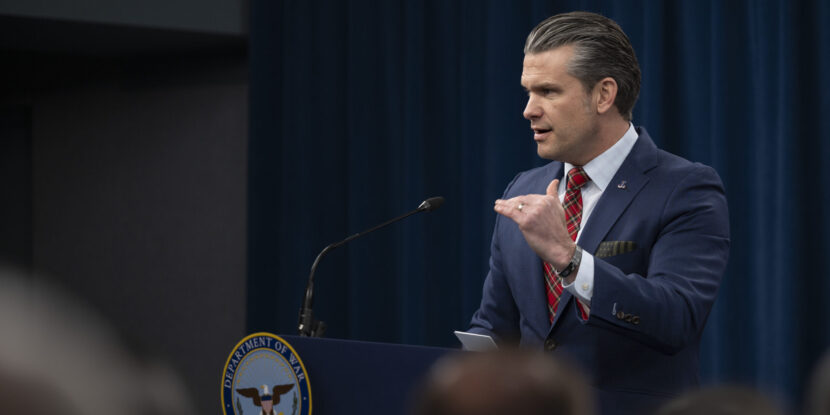
“This week, Anthropic delivered a master class in arrogance and betrayal as well as a textbook case of how not to do business with the United States Government or the Pentagon,” Secretary of War Pete Hegseth said in a statement posted on X (formerly Twitter). He continued, “Our position has never wavered and will never waver: the Department of War must have full, unrestricted access to Anthropic’s models for every LAWFUL purpose in defense of the Republic.”
“The Terms of Service of Anthropic’s defective altruism will never outweigh the safety, the readiness, or the lives of American troops on the battlefield. Their true objective is unmistakable: to seize veto power over the operational decisions of the United States military. That is unacceptable,” Hegseth stated, adding, “I am directing the Department of War to designate Anthropic a Supply-Chain Risk to National Security. Effective immediately, no contractor, supplier, or partner that does business with the United States military may conduct any commercial activity with Anthropic. Anthropic will continue to provide the Department of War its services for a period of no more than six months to allow for a seamless transition to a better and more patriotic service.”
The National Pulse reported earlier on Friday that President Donald J. Trump announced that the entirety of the U.S. federal government will cease its use of artificial intelligence (AI) technology provided by Anthropic. The move came after protracted negotiations with the AI company and the Department of War broke down over the former’s objections to its technology’s potential use for certain kinetic actions during wartime. Notably, the end of the federal government’s relationship with Anthropic is likely to have a significant impact on the company, which was seen as one of the world’s leading AI firms.
Join Pulse+ to comment below, and receive exclusive e-mail analyses.
show less
show more
By Popular Demand.
The National Pulse Now has an on-site comments section for members. Sign up today and be part of the conversation in our community of almost 15,000.
WE ARE 100% INDEPENDENT AND READER-FUNDED. FOR A GUARANTEED AD-FREE EXPERIENCE AND TO SUPPORT REAL NEWS, PLEASE SIGN UP HERE, TODAY.
❓WHAT HAPPENED: A superseding indictment was returned in the Don Lemon Minnesota church storming case, resulting in 30 further arrests.
Newsletter
Need to Know.
Your free, daily feed from The National Pulse.
Thank You!
You are now subscribed to our newsletter.
👤WHO WAS INVOLVED: Former CNN host Don Lemon, radical black activist Nekima Levy Armstrong, and other arrestees.
📍WHEN & WHERE: February 27, 2026; St. Paul, Minnesota.
💬KEY QUOTE: “[I] can’t tell you what is going to happen, but you’re going to watch it live unfold here on The Don Lemon Show.” – Don Lemon
🎯IMPACT: Several suspects, including Don Lemon, have been charged with federal offenses related to civil rights violations.
IN FULL
A superseding indictment was handed down on Friday resulting in 30 more individuals—involved in the storming of Cities Church in St. Paul, Minnesota, last month—being arrested and charged with violations of the FACE Act and other federal laws by the U.S. Department of Justice (DOJ). The National Pulse previously reported that former CNN host Don Lemon, along with radical black activist Nekima Levy Armstrong who organized the violent protest, were charged earlier this month—with both pleading not guilty.
Initially, Twin Cities NBC affiliate KARE 11 has confirmed the existence of the superseding indictment and nine arrests. However, Attorney General Pam Bondi later clarified in a statement posted to X (formerly Twitter) that 30 individuals have been arrested. “Today, [the DOJ] unsealed an indictment charging 30 more people who took part in the attack on Cities Church in Minnesota,” Bondi wrote, adding, “At my direction, federal agents have already arrested 25 of them, with more to come throughout the day.” The suspects are expected to be arraigned in federal court in St. Paul at some point on Friday afternoon.
The arrests stem from a group of anti-ICE agitators—led by Levy Armstrong and accompanied and allegedly aided by Lemon—who stormed a worship service at Cities Church on January 18, 2026. A pastor at the church was the target of the demonstration, with protestors asserting the man worked for U.S. Immigration and Customs Enforcement (ICE). In his livestream prior to the storming, Lemon referred to the operation as “secret” and stated, “[I] can’t tell you what is going to happen, but you’re going to watch it live unfold here on the Don Lemon Show.”
During the storming, the anti-ICE agitators can be seen on video blocking aisles and menacing parishioners. The public fallout from the incident even drove Governor Tim Walz (D-MN) to distance himself from the protestors, with his office stating at the time, “The Governor has repeatedly and unequivocally urged protesters to do so peacefully. While people have a right to speak out, he in no way supports interrupting a place of worship.”
Join Pulse+ to comment below, and receive exclusive e-mail analyses.
show less
show more
By Popular Demand.
The National Pulse Now has an on-site comments section for members. Sign up today and be part of the conversation in our community of almost 15,000.
WE ARE 100% INDEPENDENT AND READER-FUNDED. FOR A GUARANTEED AD-FREE EXPERIENCE AND TO SUPPORT REAL NEWS, PLEASE SIGN UP HERE, TODAY.
❓WHAT HAPPENED: President Donald J. Trump announced on Friday that the entirety of the U.S. federal government will cease its use of artificial intelligence (AI) technology provided by Anthropic.
Newsletter
Need to Know.
Your free, daily feed from The National Pulse.
Thank You!
You are now subscribed to our newsletter.
👤WHO WAS INVOLVED: President Donald Trump, the U.S. federal government, the Department of War, and AI technology company Anthropic.
📍WHEN & WHERE: The announcement was made on Friday, February 27, 2026.
💬KEY QUOTE: “I am directing EVERY Federal Agency in the United States Government to IMMEDIATELY CEASE all use of Anthropic’s technology. We don’t need it, we don’t want it, and will not do business with them again!” — Donald Trump
🎯IMPACT: According to President Trump, federal agencies will have a six-month phase-out period to cease the use of Anthropic’s AI tools.
IN FULL
President Donald J. Trump announced on Friday that the entirety of the U.S. federal government will cease its use of artificial intelligence (AI) technology provided by Anthropic. The move comes after protracted negotiations with the AI company and the Department of War broke down over the former’s objections to its technology’s potential use for certain kinetic actions during wartime.
“The Leftwing nut jobs at Anthropic have made a DISASTROUS MISTAKE trying to STRONG-ARM the Department of War, and force them to obey their Terms of Service instead of our Constitution. Their selfishness is putting AMERICAN LIVES at risk, our Troops in danger, and our National Security in JEOPARDY,” President Trump wrote in a post on Truth Social.
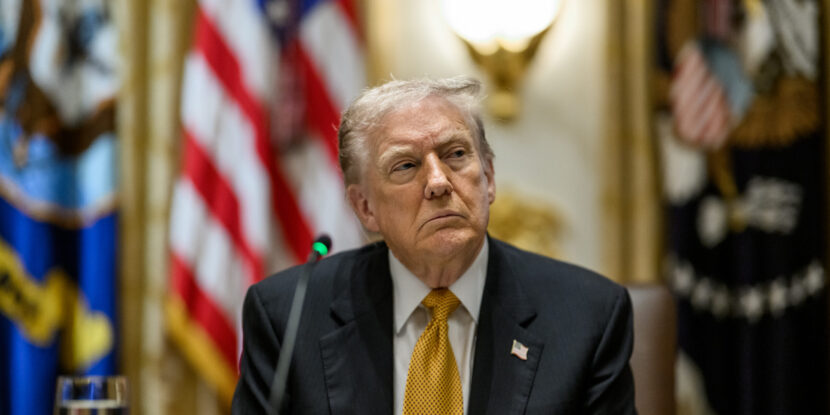
Trump continued, “Therefore, I am directing EVERY Federal Agency in the United States Government to IMMEDIATELY CEASE all use of Anthropic’s technology. We don’t need it, we don’t want it, and will not do business with them again!”
According to the America First leader, agencies will have a six-month phase-out period. “Anthropic better get their act together, and be helpful during this phase out period, or I will use the Full Power of the Presidency to make them comply, with major civil and criminal consequences to follow,” Trump warned. “WE will decide the fate of our Country—NOT some out-of-control, Radical Left AI company run by people who have no idea what the real World is all about.”
The National Pulse reported earlier this February that the leader of the Safeguards Research Team for Anthropic‘s Claude chatbot abruptly resigned, issuing a bizarre, poetry-laden letter that warned of a world “in peril.” Mrinank Sharma, who led the safety team since its inception in 2023, also indicated in his letter that internal pressure to ignore artificial intelligence (AI) safety protocols played a significant role in his decision to resign. It is unclear if Sharma’s resignation stemmed from the company’s discussions with the Pentagon.
Join Pulse+ to comment below, and receive exclusive e-mail analyses.
show less
show more
By Popular Demand.
The National Pulse Now has an on-site comments section for members. Sign up today and be part of the conversation in our community of almost 15,000.
WE ARE 100% INDEPENDENT AND READER-FUNDED. FOR A GUARANTEED AD-FREE EXPERIENCE AND TO SUPPORT REAL NEWS, PLEASE SIGN UP HERE, TODAY.
❓WHAT HAPPENED: Former President Bill Clinton lashed out during his deposition by the House Oversight Committee over his wife, Hillary Clinton, also being required to testify the day prior. However, according to Chairman James Comer, Bill Clinton did confirm, under oath, that to his knowledge, President Donald J. Trump had no involvement with Jeffrey Epstein.
👤WHO WAS INVOLVED: Bill Clinton, Hillary Clinton, President Donald Trump, Representatives Nancy Mace (R-SC) and James Comer (R-KY), and other members of the House Oversight Committee.
Newsletter
Need to Know.
Your free, daily feed from The National Pulse.
Thank You!
You are now subscribed to our newsletter.
📍WHEN & WHERE: Bill Clinton’s deposition took place on February 27, 2026, in Chappaqua, New York.
💬KEY QUOTE: “No matter how many photos you show me… I know what I did, and more importantly, what I didn’t do. I saw nothing and I did nothing wrong,” Clinton insisted.
🎯IMPACT: The committee continues to seek clarity on the Clintons’ connections to Jeffrey Epstein, with questions about transparency and accountability remaining central to the investigation.
IN FULL
Former President Bill Clinton appeared before the House Oversight Committee to address his connections to deceased pedophile financier Jeffrey Epstein, who supported the Clinton Foundation. In his opening statement, Clinton stated, “I had no idea of the crimes Epstein was committing. No matter how many photos you show me, I have two things that, at the end of the day, matter more than your interpretation of those 20-year-old photos. I know what I saw, and more importantly, what I didn’t see. I know what I did, and more importantly, what I didn’t do. I saw nothing and I did nothing wrong.”
The former president also lashed out at the committee for forcing his wife, former Secretary of State Hillary Clinton, to testify on Thursday, saying, “[B]efore we start, I have to get personal. You made Hillary come in. She had nothing to do with Jeffrey Epstein. Nothing. She has no memory of even meeting him.”
Clinton’s remarks appear to come in response to comments made by Representative Nancy Mace (R-SC) about his wife, with Mace claiming, “I asked her very pointed questions, and you’ll see that in the transcript and the video that comes out, and you’ll see how she responded as well, screaming.” She further described Hillary Clinton as “unhinged.”
Throughout the deposition on Friday, several Democrat members of the House Oversight Committee attempted to deflect allegations against Bill Clinton onto President Donald J. Trump instead. However, according to Chairman James Comer (R-KY), “The President [Clinton] went on to say that the President… Trump… has never said anything to me to make me think he was involved—and he meant with Epstein.”
Join Pulse+ to comment below, and receive exclusive e-mail analyses.
show less
show more
By Popular Demand.
The National Pulse Now has an on-site comments section for members. Sign up today and be part of the conversation in our community of almost 15,000.
WE ARE 100% INDEPENDENT AND READER-FUNDED. FOR A GUARANTEED AD-FREE EXPERIENCE AND TO SUPPORT REAL NEWS, PLEASE SIGN UP HERE, TODAY.
❓WHAT HAPPENED: Pakistan and Afghanistan are engaged in “open war,” with Pakistan accusing Afghanistan of harboring militants and Afghanistan retaliating against cross-border airstrikes.
👤WHO WAS INVOLVED: Pakistan’s Defense Minister Khawaja Mohammad Asif, the Afghan Taliban, the Pakistani Taliban (Tehrik-e-Taliban Pakistan/TTP), and other militant groups.
Newsletter
Need to Know.
Your free, daily feed from The National Pulse.
Thank You!
You are now subscribed to our newsletter.
📍WHEN & WHERE: Fighting restarted on February 26, 2026, along the Pakistan-Afghanistan border.
💬KEY QUOTE: “Pakistan made every effort to keep the situation normal through direct means and through friendly countries. It engaged in full-fledged diplomacy. But the Taliban became a proxy for India.” — Khawaja Mohammad Asif.
🎯IMPACT: The conflict has led to significant casualties, regional instability, and international concern over militant group activity and refugee displacement.
IN FULL
Pakistan and Afghanistan are experiencing their most serious armed confrontation since a Qatari-mediated ceasefire in October. The conflict escalated when Afghanistan launched cross-border attacks in retaliation for Pakistani airstrikes that reportedly targeted militants but allegedly killed civilians, including women and children.
“After the withdrawal of NATO forces, it was expected that there would be peace in Afghanistan and that the Taliban would focus on the interests of the Afghan people and peace in the region. However, the Taliban turned Afghanistan into a colony of India,” Pakistan’s Defense Minister, Khawaja Mohammad Asif, wrote in a post on X (formerly Twitter). He continued, “They gathered all the terrorists of the world in Afghanistan and began exporting terrorism. They deprived their own people of basic human rights. They snatched away the rights that Islam grants to women.”
“Pakistan made every effort to keep the situation normal through direct means and through friendly countries. It engaged in full-fledged diplomacy. But the Taliban became a proxy for India,” Asif stated, adding that Pakistan is now in “open war” with Afghanistan and that the country’s “cup of patience has overflowed.”
Notably, the Pakistani government has accused Afghanistan of providing a safe haven to the Pakistani Taliban, or Tehrik-e-Taliban Pakistan (TTP), a militant group responsible for numerous terrorist attacks in Pakistan. Kabul denies these accusations, asserting that Afghan soil is not used for attacks on other nations. However, the TTP, created in 2007, does have known ties to the Afghan Taliban, and has sought stricter enforcement of Islamic laws and the removal of Pakistani military presence in certain regions of the country.
The border area, known as the Durand Line, has long been a source of tension. Afghanistan does not recognize the line as an official boundary, and both nations frequently accuse each other of ignoring militant activity along the border. Fighting resumed after a brief ceasefire last October, with airstrikes and ground skirmishes. International actors, including Turkey, Qatar, Saudi Arabia, and Russia, have called for an immediate resolution.
❓WHAT HAPPENED: A woman was found stabbed to death at a bus stop on Richmond Highway; the suspect, Abdul Jollah, has an extensive criminal record, but has frequently had charges against him dropped by George Soros-backed prosecutors.
Newsletter
Need to Know.
Your free, daily feed from The National Pulse.
Thank You!
You are now subscribed to our newsletter.
👤WHO WAS INVOLVED: Victim Stephanie Minter, suspect Abdul Jalloh, Democrat prosecutor Steve Descano, and liberal plutocrat George Soros.
📍WHEN & WHERE: The murder occurred on Monday evening near George Washington’s Mount Vernon home.
💬KEY QUOTE: “It’s like a tragedy. It’s a public area. There’s kids around here.” – Local witness
🎯IMPACT: The community is on edge, and detectives continue to investigate.
IN FULL
Homeless 32-year-old Abdul Jalloh has been charged with murder in the fatal, seemingly random stabbing of 41-year-old Stephanie Minter at a bus stop along Richmond Highway in Fairfax County, Virginia. Jalloh was apprehended after an employee at a nearby store recognized him from law enforcement notifications and alerted officials, leading to his initial detention for a separate theft offense.
Jalloh has a long record of criminal activity, including several instances of assault, theft, and a serious felony charge for malicious wounding from 2025. However, prosecutors have repeatedly dropped or failed to pursue charges against him in prior cases, leaving him free despite the evident danger he presented to the public.
The Fairfax County Commonwealth’s Attorney’s Office is led by “rogue prosecutor” Steve Descano, a Democrat whose rise to office was funded in large part by groups bankrolled by liberal plutocrat George Soros, along with many other leftist prosecutors.
Descano previously dropped charges against violent career criminal Gerald Brevard III, who was facing decades in prison, in 2021, leaving him at liberty to carry out a deadly shooting spree less than a year later. His office is also accused of pressuring the victim of a 39-year-old pedophile, Ryan Duarte, into helping get him a plea deal, in a traumatizing process that included forcing her to recount her abuse “with Duarte sitting only a foot away” from her.
Join Pulse+ to comment below, and receive exclusive e-mail analyses.
show less
show more
By Popular Demand.
The National Pulse Now has an on-site comments section for members. Sign up today and be part of the conversation in our community of almost 15,000.
WE ARE 100% INDEPENDENT AND READER-FUNDED. FOR A GUARANTEED AD-FREE EXPERIENCE AND TO SUPPORT REAL NEWS, PLEASE SIGN UP HERE, TODAY.
❓WHAT HAPPENED: President Donald J. Trump is believed to have previewed a draft executive order proposing new election safeguards, including voter ID requirements and a ban on most mail-in voting.
👤WHO WAS INVOLVED: President Trump, Peter Ticktin, and Director of National Intelligence (DNI) Tulsi Gabbard.
Newsletter
Need to Know.
Your free, daily feed from The National Pulse.
Thank You!
You are now subscribed to our newsletter.
📍WHEN & WHERE: The rumored order was drafted in early 2026, while DNI Gabbard has been involved in election security reviews in Georgia and Puerto Rico.
💬KEY QUOTE: “Here we have a situation where the President is aware that there are foreign interests that are interfering in our election processes,” said Peter Ticktin.
🎯IMPACT: If enacted, the executive order would significantly alter election processes, requiring voter re-registration with photo ID and restricting mail-in voting.
IN FULL
President Donald J. Trump is believed to have reviewed a 17-page draft Executive Order that would declare a national emergency over election security concerns. The order, drafted by Florida attorney Peter Ticktin, proposes new voter ID requirements, a ban on most mail-in voting, and the elimination of voting machines. However, the proposal is facing significant pushback, as elections are largely left to state governments under the U.S. Constitution.
“Here we have a situation where the President is aware that there are foreign interests that are interfering in our election processes. That causes a national emergency where the President has to be able to deal with it,” Ticktin contends, referencing allegations that the Chinese Communist Party (CCP) attempted to interfere in the 2020 election. Notably, the draft order closely mirrors the legislative language of the SAVE Act, which has been adopted by the House of Representatives but has faced opposition in the U.S. Senate.
Meanwhile, Director of National Intelligence (DNI) Tulsi Gabbard has been involved in election security efforts, including overseeing investigations into voting machine vulnerabilities and reviewing foreign influence on past elections. Gabbard was present during the recent Federal Bureau of Investigation (FBI) seizure of 2020 ballots from a Fulton County, Georgia, election office.
A memo defending the legality of the order, authored by Ticktin, largely relies on the statutory text of the National Emergencies Act (NEA) and the International Emergency Economic Powers Act (IEEPA). “The IEEPA further grants the President authority to address ‘unusual and extraordinary threats’ originating outside the United States that impact national security, foreign policy, or the economy,” Ticktin writes in the memo.
“This authority includes the ability to regulate or prohibit transactions involving foreign property or interests, provided the President has declared a national emergency under the NEA,” he continues, adding, “For example, Executive Order 13848, issued under the IEEPA and NEA, declared a national emergency to address foreign interference in U.S. elections, citing such interference as an extraordinary threat to national security and foreign policy.”
Ticktin argues that “the President may utilize emergency powers to address foreign interference in elections, provided the requirements of the NEA and IEEPA are satisfied, and the actions taken fall within the scope of statutory authority.”
However, other legal analysts have pointed out that mere assertions of CCP election interference aren’t likely to be enough to prevent federal judges from enjoining the order. The NEA outlines the limits of presidential emergency powers and requires the President to specify respective authorizing statutes when invoking them. Meanwhile, IEEPA contains several economic emergency powers but does not contain any explicit election provisions.
Join Pulse+ to comment below, and receive exclusive e-mail analyses.
show less
show more
By Popular Demand.
The National Pulse Now has an on-site comments section for members. Sign up today and be part of the conversation in our community of almost 15,000.
Share Story
FacebookTwitterWhatsappTruthTelegramGettrCopy Link
Real News Fan? Show It!
Many people are shocked to learn that because of active censorship, we currently have to spend more time making sure you can even see The National Pulse, than on producing the news itself. Which sucks. Because we do this for the truth, and for you.
But the regime doesn’t want you being informed. That’s why they want us to go away. And that will happen if more people don’t sign up to support our work. It’s basic supply and demand. So demand you get to read The National Pulse, unrestricted. Sign up, today.
We don’t sell ads, and refuse corporate or political cash. It all comes down to you, the reader. I hope you can help.




















.jpg)


