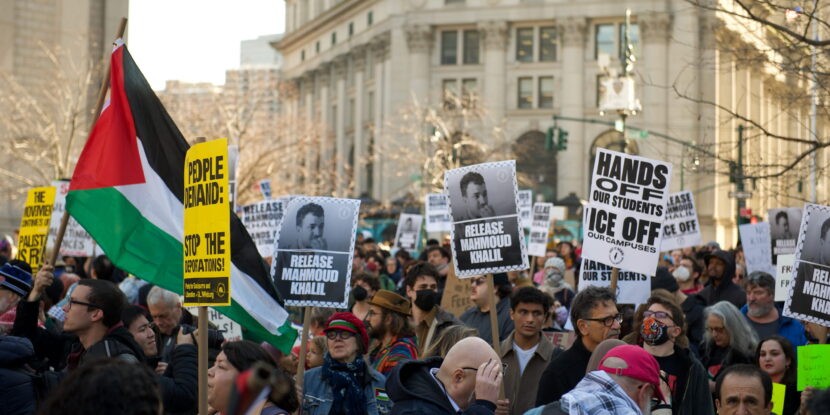
❓WHAT HAPPENED: The Third Circuit Court of Appeals has overturned a lower court decision ordering the release of pro-Hamas activist Mahmoud Khalil, effectively reopening the Trump administration’s deportation case against him and the possibility of his detention.
👤WHO WAS INVOLVED: Mahmoud Khalil, the U.S. Court of Appeals for the Third Circuit, Judges Thomas Hardiman, Stephanos Bibas, and Arianna J. Freeman.
Newsletter
Need to Know.
Your free, daily feed from The National Pulse.
Thank You!
You are now subscribed to our newsletter.
📍WHEN & WHERE: The ruling was handed down on January 15, 2026.
💬KEY QUOTE: “Did the Immigration and Nationality Act (INA) strip the New Jersey District Court of subject matter jurisdiction? It did.” – Court ruling
🎯IMPACT: The ruling marks a significant setback for Khalil, while highlighting the administration’s stance against foreign pro-Hamas agitators.
IN FULL
A federal appeals court on Thursday reopened the Trump administration’s deportation proceedings against pro-Hamas activist and former Columbia University graduate student, Mahmoud Khalil. In a two-to-one decision, a three-judge panel from the U.S. Court of Appeals for the Third Circuit found that the New Jersey District Court Judge Michael E. Farbiarz was not the appropriate authority to rule on Khalil’s petition for release.
“The first question presented is whether the New Jersey District Court had jurisdiction over Khalil’s habeas petition. We hold that it did,” the majority opinion states, continuing: “Our conclusion about habeas jurisdiction requires us to answer a second question: Did the Immigration and Nationality Act (INA) strip the New Jersey District Court of subject matter jurisdiction? It did.”
“Because the INA channels ‘[j]udicial review of all questions of law . . . arising from any action taken or proceeding brought to remove an alien from the United States’ into a single petition for review filed with a federal court of appeals, we hold that the District Court lacked jurisdiction over Khalil’s removal proceedings,” the ruling concludes, before ordering Khalil’s habeas petition vacated and dismissed.
Appellate Judges Thomas Hardiman (a Bush appointee) and Stephanos Bibas (a Trump appointee), who made up the Third Circuit panel’s majority, stated that Khalil’s attorneys should first seek legal redress through the federal immigration court system and, only once that avenue is exhausted, file the habeas petition with the federal district court. Judge Arianna J. Freeman (a Biden appointee) dissented, contending that Khalil’s claims of government violations of his fundamental rights should not be dismissed without judicial review.
The ruling is a significant blow to Khalil and his legal team, after his release from federal custody in March of last year. While an appeal is likely, the ruling—for now—transfers the proceedings to the U.S. immigration court system and could result in Khalil being returned to federal custody as his deportation case continues.
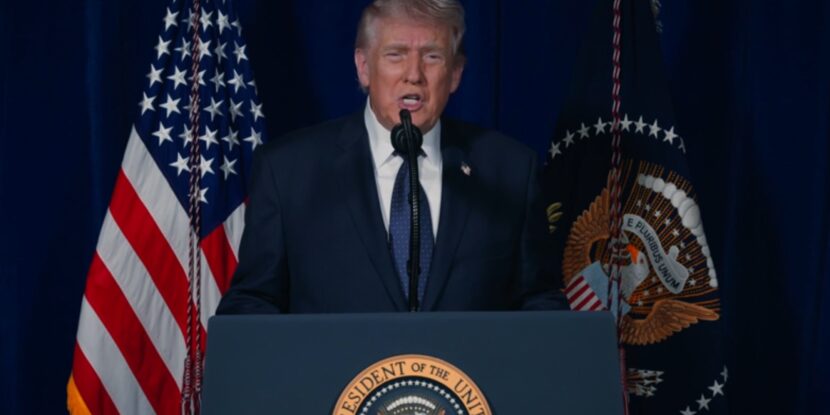
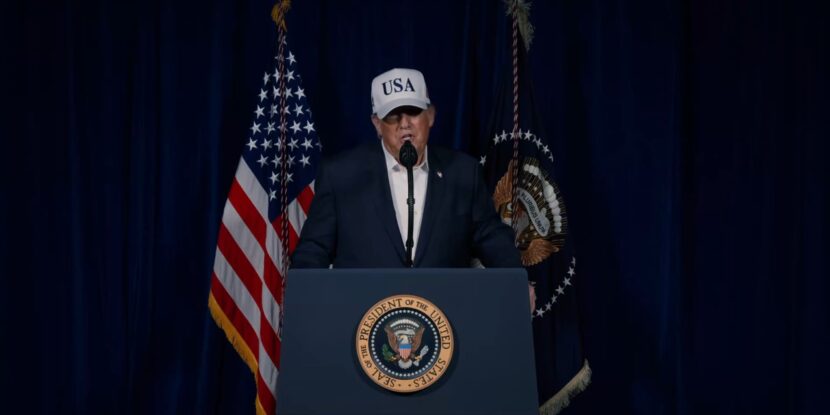
President Donald J. Trump has issued a fresh update on Operation Epic Fury, which began this weekend alongside the Israeli government and military.
Speaking in a recorded message from Mar-a-Lago, Trump said: “Over the past 36 hours, the United States and its partners have launched Operation Epic Fury, one of the largest, most complex, most overwhelming military offensive. The world has ever seen. Nobody’s seen anything like it.
Newsletter
Need to Know.
Your free, daily feed from The National Pulse.
Thank You!
You are now subscribed to our newsletter.
President Trump issues update on Operation Epic Fury on his Truth Social account.
He says "…there will likely be more [U.S. casualties] before it ends, that’s the way it is, likely be more.”
“We have hit hundreds of targets in Iran, including Revolutionary Guard facilities, Iranian air defense systems. Just now, it was announced that we knocked out nine ships plus their naval building, all in a matter of literally minutes.
The President went on: “Earlier today, CENTCOM shared the news that three U.S. military service members have been killed in action. As one nation, we grieve for the true American patrions who have made the ultimate sacrifice for our nation, even as we continue the righteous mission for which they gave their lives, we pray for the full recovery of the wounded and send our immense love and eternal gratitude to the families of the fallen. And sadly, there will likely be more, before it ends, that’s the way it is, likely be more.”
President Trump concluded with another appeal to the Iranian people to rise up against the Islamic regime: “I once again urge the Revolutionary Guard, the Iranian military, and the Police to lay down your arms and receive full immunity or face certain death. It will be certain death. won’t be pretty. I call upon all Iranian patriots who yearn for freedom to seize this moment, to be brave, be bold, be heroic, and take back your country. America is with you. I made a promise to you, and I fulfilled that promise. The rest will be up to you, but we will be there to help.”
show less
President Donald J. Trump has issued a fresh update on Operation Epic Fury, which began this weekend alongside the Israeli government and military.
show more
By Popular Demand.
The National Pulse Now has an on-site comments section for members. Sign up today and be part of the conversation in our community of almost 15,000.
WE ARE 100% INDEPENDENT AND READER-FUNDED. FOR A GUARANTEED AD-FREE EXPERIENCE AND TO SUPPORT REAL NEWS, PLEASE SIGN UP HERE, TODAY.
❓WHAT HAPPENED: Two people were killed, and 14 others were injured, in a mass shooting at a downtown Austin bar early Sunday morning.
👤WHO WAS INVOLVED: The suspect has been identified as Ndiaga Diagne, a Senegal-born American citizen.
Newsletter
Need to Know.
Your free, daily feed from The National Pulse.
Thank You!
You are now subscribed to our newsletter.
📍WHEN & WHERE: The shooting occurred around 2:00 a.m. Sunday at Buford’s Backyard Beer Garden in downtown Austin, near the University of Texas.
💬KEY QUOTE: “There were indicators… that indicate potential nexus to terrorism.” – Alex Doran, FBI San Antonio Field Office.
🎯IMPACT: The FBI’s Joint Terrorism Task Force has joined the investigation, citing potential links to terrorism. Rapid police response likely prevented further casualties.
IN FULL
A mass shooting at Buford’s Backyard Beer Garden in downtown Austin has left two people dead, with 14 others injured. The incident occurred around 2:00 AM near the University of Texas.
The suspect has been identified as Ndiaga Diagne, a Senegal-born U.S. citizen residing in Pflugerville, Texas. He was killed during a confrontation with police. Diagne was wearing a shirt that said “Property of Allah” on it. The suspect also had a Koran and clothing described as Islamic garb in his vehicle.
Officers responded to reports of the shooting in just 57 seconds, confronting the gunman, who was armed with both a handgun and a rifle.
The FBI revealed that the attack is being investigated as ideologically motivated and may have a “potential nexus to terrorism.”
Alex Doran, acting special agent in charge of the FBI San Antonio Field Office, stated, “Obviously, it’s still way too early in the process to determine an exact motivation, but there were indicators… that indicate potential nexus to terrorism.”
First responders arrived on the scene within a minute, transporting the injured to nearby hospitals. Austin Police Chief Lisa Davis praised the quick actions of officers, stating, “Officers immediately transitioned, came over East 6th to West 6th Street and were faced with the individual with a gun.”
BREAKING: New video captures the moment the gunman, identified as Ndiaga Diagne, opened fire at an Austin, Texas bar early Sunday morning, killing two people and injuring 14 others. pic.twitter.com/Ic3VZv7PjE
❓WHAT HAPPENED: Three U.S. service members were killed and five seriously wounded during Operation Epic Fury.
👤WHO WAS INVOLVED: U.S. service members and Iran’s IRGC.
Newsletter
Need to Know.
Your free, daily feed from The National Pulse.
Thank You!
You are now subscribed to our newsletter.
📍WHEN & WHERE: March 1, 9:30 am ET, CENTCOM operations.
💬KEY QUOTE: “The Lincoln was not hit. The missiles launched didn’t even come close.” – CENTCOM
🎯IMPACT: Continuing operations to eliminate threats from the Iranian regime.
IN FULL
Three U.S. service members have been killed in action and five are seriously wounded as part of Operation Epic Fury.
Several others have sustained minor shrapnel injuries and concussions and are in the process of being returned to duty. Major combat operations continue and the response effort from U.S. is ongoing.
No information has thus far been released about the casualties, while the U.S. military alerts the families first.
Iran’s IRGC claims to have struck USS Abraham Lincoln with ballistic missiles. The U.S. said this claim is false, and that the missiles “didn’t come close.”
Join Pulse+ to comment below, and receive exclusive e-mail analyses.
show less
show more
By Popular Demand.
The National Pulse Now has an on-site comments section for members. Sign up today and be part of the conversation in our community of almost 15,000.
WE ARE 100% INDEPENDENT AND READER-FUNDED. FOR A GUARANTEED AD-FREE EXPERIENCE AND TO SUPPORT REAL NEWS, PLEASE SIGN UP HERE, TODAY.
❓WHAT HAPPENED: Iran confirmed the death of Supreme Leader Ali Khamenei amid strikes by Israel and the U.S.
👤WHO WAS INVOLVED: Iran’s Supreme Leader Ali Khamenei, various other high-ranking Iranian officials, the Israeli military, and the U.S. military.
Newsletter
Need to Know.
Your free, daily feed from The National Pulse.
Thank You!
You are now subscribed to our newsletter.
📍WHEN & WHERE: Khamenei was killed on Saturday morning, in Iran.
💬KEY QUOTE: “Khamenei, one of the most evil people in History, is dead.” – President Donald J. Trump
🎯IMPACT: Iranian armed forces chief of staff Abdolrahim Mousavi and Islamic Revolutionary Guard Corps (IRGC) commander Mohammad Pakpour are also dead; Iran has launched retaliatory attacks against Israel and U.S.-aligned states throughout the Middle East.
IN FULL
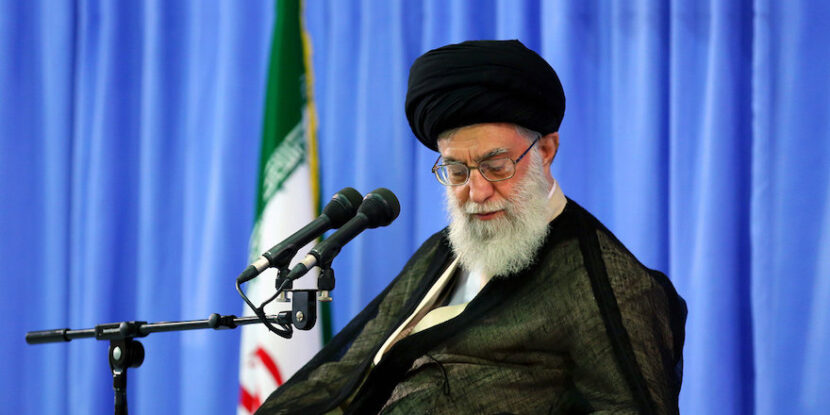
Iran has confirmed the death of the country’s Supreme Leader, Grand Ayatollah Ali Khamenei, in strikes conducted by Israel and the United States. The announcement was issued via a statement from Iran’s Supreme National Security Council, which was aired on various state-run television networks.
Reports indicate that Khamenei was killed in his office during the early hours of Saturday. The regime has announced a 40-day mourning period, but observance is likely to be patchy, with some Iranians openly celebrating the 86-year-old theocrat’s death. The so-called Assembly of Experts for Leadership is expected to attempt to name Khamenei’s successor soon.
President Donald J. Trump announced Khamenei had been killed before Iran officially confirmed it, writing on his Truth Social platform, “Khamenei, one of the most evil people in History, is dead. This is not only Justice for the people of Iran, but for all Great Americans, and those people from many Countries throughout the World, that have been killed or mutilated by Khamenei and his gang of bloodthirsty THUGS.”
He added: “This is the single greatest chance for the Iranian people to take back their Country. We are hearing that many of their IRGC, Military, and other Security and Police Forces, no longer want to fight, and are looking for Immunity from us. As I said last night, ‘Now they can have Immunity, later they only get Death!’ Hopefully, the IRGC and Police will peacefully merge with the Iranian Patriots, and work together as a unit to bring back the Country to the Greatness it deserves.”
The Red Crescent estimates that the strikes on Iran have caused more than 200 fatalities so far. In addition to Khamenei, Iranian armed forces chief of staff Abdolrahim Mousavi and Islamic Revolutionary Guard Corps (IRGC) commander Mohammad Pakpour are also confirmed killed.
Iran has launched missiles at Israel and countries hosting U.S. bases throughout the Middle East, and vowed an escalated response following Khamenei’s slaying. President Trump warned in turn that “THEY BETTER NOT DO THAT… BECAUSE IF THEY DO, WE WILL HIT THEM WITH A FORCE THAT HAS NEVER BEEN SEEN BEFORE!”
President Donald J. Trump has issued the following statement on the joint U.S.-Israeli strikes on Iran. As ever, The National Pulse is first to the full story. Please donate today to support our work. Read the story as it broke.
A short time ago, the United States military began major combat operations in Iran.
Our objective is to defend the American people by eliminating imminent threats from the Iranian regime, a vicious group of very hard, terrible people.
Its menacing activities directly endanger the United States, our troops, our bases overseas, and our allies throughout the world.
For 47 years, the Iranian regime has chanted “Death to America and waged an unending campaign of bloodshed and mass murder, targeting the United States, our troops, and the innocent people in many, many countries.
Among the regime’s very first acts was to back a violent takeover of the U.S. Embassy in Tehran, holding dozens of American hostages for 444 days.
In 1983, Iran’s proxies carried out the Marine barracks bombing in Beirut that killed 241 American military personnel.
In 2000, they knew and were probably involved with the attack on the USS Cole.
Many died.
Iranian forces killed and maimed hundreds of American service members in Iraq.
The regime’s proxies have continued to launch countless attacks against American forces stationed in the Middle East in recent years, as well as U.S. Naval and commercial vessels in international shipping lanes.
It’s been mass terror, and we’re not going to put up with it any longer.
From Lebanon to Yemen and Syria to Iraq, the regime has armed, trained, and funded terrorist militias that have soaked the earth with blood and guts.
And it was a ranch proxy, Hamas, that launched the monstrous October 7th attacks on Israel, slaughtering more than 1,000 innocent people, including 46 Americans, while taking 12 of our citizens hostage.
It was brutal.
Something like the world has never seen before.
Iran is the world’s number one state sponsor of terror, and just recently killed tens of thousands of its own citizens on the street as they protested.
It has always been the policy of the United States, in particular, my administration, that this terrorist regime can never have a nuclear weapon.
I’ll say it again.
They can never have a nuclear weapon.
That is why in Operation Midnight Hammer last June, we obliterated the regime’s nuclear program at Fordow, Natanz, and Isfahan.
After that attack, we warned them never to resume their malicious pursuit of nuclear weapons, and we sought repeatedly to make a deal.
We tried, they wanted to do it, they didn’t want to do it.
Again, they wanted to do it, they didn’t want to do it, they didn’t know what was happening.
They just wanted to practice evil.
But Iran refused, just as it has for decades and decades; they’ve rejected every opportunity to renounce their nuclear ambitions, and we can’t take it anymore.
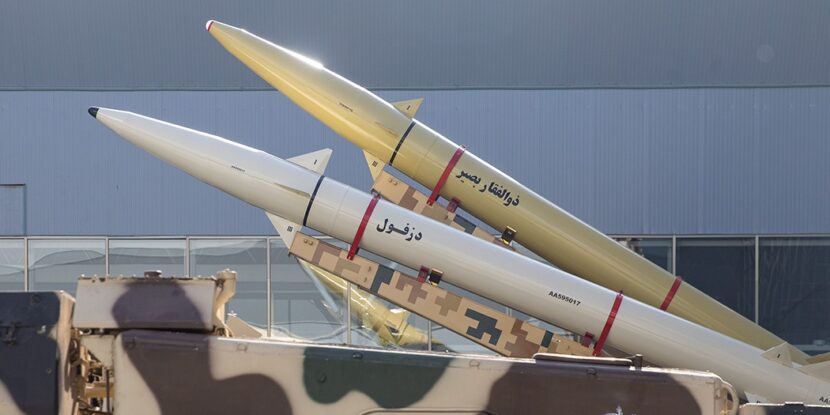
Instead, they attempted to rebuild their nuclear program and to continue developing long-range missiles that can now threaten our very good friends and allies in Europe, our troops stationed overseas, and could soon reach the American homeland.
Just imagine how emboldened this regime would be if they ever had and actually were armed with nuclear weapons as a means to deliver their message.
For these reasons, the United States military has undertaken a massive and ongoing operation to prevent this very wicked, radical, dictatorship from threatening America and our core national security interests.
We are going to destroy their missiles and raze their missile industry to the ground.
It will be totally, again, obliterated.
We’re going to annihilate their Navy.
We are going to ensure that the region’s terrorist proxies can no longer destabilize the region or the world and attack our forces and no longer use their IEDs or roadside bombs, as they are sometimes called, to so gravely wound and kill thousands and thousands of people, including many Americans, and we will ensure that Iran does not obtain a nuclear weapon.
It’s a very simple message.
They will never have a nuclear weapon.
This regime will soon learn that no one should challenge the strength and might of the United States armed forces.
I built and rebuilt our military and my first administration, and there is no military on Earth, even close to its power, strength, or sophistication.
My administration has taken every possible step to minimize the risk to U.S. Personnel in the region.
Even so, and I do not make this statement lightly, the Iranian regime seeks to kill.
The lives of courageous American heroes may be lost, and we may have casualties. That often happens in war, but we’re doing this, not for now.
We’re doing this for the future, and it is a noble mission.
We pray for every service member, as they selflessly risk their lives to ensure that Americans and our children will never be threatened by a nuclear-armed Iran.
We ask God to protect all of our heroes in harm’s way, and we trust that, with his help, the men and women of the armed forces will prevail.
We have the greatest in the world, and they will prevail.
To the members of the Islamic Revolutionary Guard, the armed forces, and all of the police, I say tonight that you must lay down your weapons and have complete immunity, or in the alternative, face certain death.
So, lay down your arms, you will be treated fairly with total immunity, or you will face certain death.
Finally, to the great proud people of Iran, I say tonight that the hour of your freedom is at hand.
Stay sheltered, don’t leave your home.
It’s very dangerous outside.
Bombs will be dropping everywhere.
When we are finished, take over your government.
It will be yours to take.
This will be probably your only chance for generations.
For many years, you have asked for America’s help, but you never got it.
No president was willing to do what I am willing to do tonight.
Now you have a president who is giving you what you want.
So let’s see how you respond.
America is backing you with overwhelming strength and devastating force.
Now is the time to seize control of your destiny and to unleash the prosperous and glorious future that is close within your reach.
This is the moment for action.
Do not let it pass.
May God bless the brave men and women of America’s armed forces. May God bless the United States of America.
May God bless you all.
Thank you.
show less
President Donald J. Trump has issued the following statement on the joint U.S.-Israeli strikes on Iran. As ever, The National Pulse is first to the full story. Please donate today to support our work. Read the story as it broke.show more
By Popular Demand.
The National Pulse Now has an on-site comments section for members. Sign up today and be part of the conversation in our community of almost 15,000.
WE ARE 100% INDEPENDENT AND READER-FUNDED. FOR A GUARANTEED AD-FREE EXPERIENCE AND TO SUPPORT REAL NEWS, PLEASE SIGN UP HERE, TODAY.
❓WHAT HAPPENED: Israel and the United launched a series of missile attacks on Iran early Saturday morning, causing explosions in Tehran, according to U.S. officials quoted in the Wall Street Journal and New York Times as of early Saturday morning.
👤WHO WAS INVOLVED: The U.S. military, Israeli Defense Forces (IDF), Israeli Defense Minister Israel Katz, and Iranian state officials.
Newsletter
Need to Know.
Your free, daily feed from The National Pulse.
Thank You!
You are now subscribed to our newsletter.
📍WHEN & WHERE: Saturday morning, February 28, 2026, in Tehran, Iran, and across Israel.
💬KEY QUOTE: “This is a proactive alert to prepare the public for the possibility of missiles being launched toward the State of Israel.” – IDF national warning
🎯IMPACT: Rising tensions in the Middle East, with heightened concerns over Iran’s nuclear ambitions and potential retaliatory strikes.
IN FULL
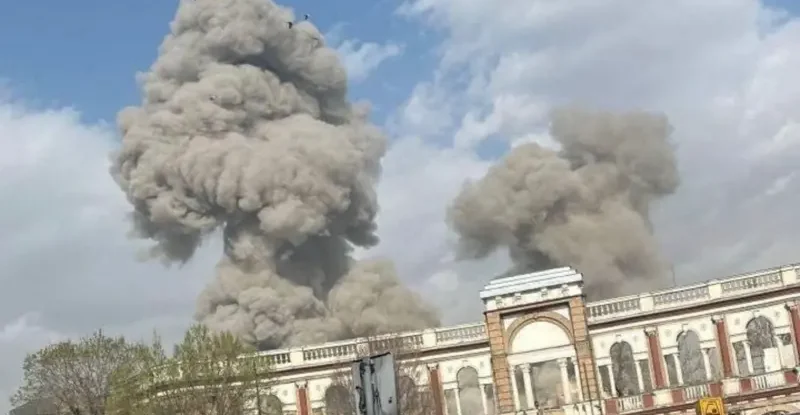
Israel and the United States reportedly carried out a series of missile attacks on Iran early Saturday morning, with explosions reported in Tehran. The Israeli Defense Forces (IDF) issued a warning to its citizens, urging them to prepare for potential retaliatory strikes. Sirens were heard across Israel as tensions escalated in the region.
As of 3:15AM EST, Iran is believed to have retaliated with ballistic missiles headed towards Israel, though it is unclear if any of the missiles struck their targets at the time of publication. This report will be updated as and when confirmation is received.
The New York Times and Wall Street Journal reported the strikes were a joint operation between U.S. and Israeli forces, though we are awaiting confirmation at the time of publication.
“The U.S. and Israel launched an attack on Iran on Saturday, bringing war to the country for the second time in eight months and risking a wider regional conflict in one of the most economically sensitive parts of the world,” the Wall Street Journal reported as of 1:50am EST.
Israeli Defense Minister Israel Katz declared a state of emergency as thick smoke rose from the explosion sites in downtown Tehran. Iranian state media confirmed the reports of explosions in the capital city.
The IDF released a national warning, stating, “This is a proactive alert to prepare the public for the possibility of missiles being launched toward the State of Israel.” The attack comes amid heightened tensions between Iran and the United States over Tehran’s nuclear program.
Earlier this week, former President Donald Trump warned during his State of the Union address that Iran is “working on missiles that will soon reach” the United States. Trump also described Iran as the “number one sponsor of terrorism” and vowed to prevent the regime from acquiring nuclear weapons. U.S. intelligence, however, has not yet concluded that Iran possesses the capability to develop intercontinental ballistic missiles (ICBMs) capable of reaching the U.S. homeland.
The situation remains tense, with two U.S. aircraft carrier strike groups in the region and ongoing diplomatic meetings involving key figures, such as Jared Kushner and Oman’s foreign minister, Sayyid Badr bin Hamad Al Busaidi. Additional talks are reportedly scheduled as efforts to address the escalating crisis continue.
Join Pulse+ to comment below, and receive exclusive e-mail analyses.
show less
show more
By Popular Demand.
The National Pulse Now has an on-site comments section for members. Sign up today and be part of the conversation in our community of almost 15,000.
WE ARE 100% INDEPENDENT AND READER-FUNDED. FOR A GUARANTEED AD-FREE EXPERIENCE AND TO SUPPORT REAL NEWS, PLEASE SIGN UP HERE, TODAY.
❓WHAT HAPPENED: Britain withdrew its diplomatic staff from Iran due to escalating tensions in the region, as U.S. President Donald J. Trump’s ten-day ultimatum for Iran to reach a nuclear deal comes to an end.
👤WHO WAS INVOLVED: The British Foreign Office, the U.S. State Department, President Trump, U.S. Ambassador to Israel Mike Huckabee, and Iranian officials.
Newsletter
Need to Know.
Your free, daily feed from The National Pulse.
Thank You!
You are now subscribed to our newsletter.
📍WHEN & WHERE: The developments unfolded on Friday, with actions in Iran, Israel, and the Arabian Sea.
💬KEY QUOTE: “There is no need to panic. But for those desiring to leave, it’s important to make plans to depart sooner rather than later.” – Mike Huckabee
🎯IMPACT: Rising tensions have prompted evacuations, heightened military presence, and concerns of a broader conflict in the region.
IN FULL
The British government announced on Friday that it had withdrawn its staff from Iran, citing security concerns amid escalating tensions between the Islamic Republic and the United States over a stalled nuclear deal. A Foreign Office spokesperson stated, “Due to the ongoing security situation, we have taken the precautionary measure to temporarily withdraw UK staff from Iran.” The embassy will continue to operate remotely, officials said.
Meanwhile, Turkey took the extraordinary move to cancel outbound commercial flights to Tehran this evening as speculation mounts that a U.S. military strike against targets in Iran could be imminent. The Trump administration issued a notice earlier on Friday allowing non-essential government staff and their families to leave Israel. U.S. Ambassador to Israel Mike Huckabee told staff in an email, “There is no need to panic. But for those desiring to leave, it’s important to make plans to depart sooner rather than later.” Earlier this week, the U.S. evacuated non-essential personnel from its embassy in Lebanon.
The French government has advised its citizens in Israel to locate bomb shelters and avoid travel to the region. The Chinese embassy in Israel also urged its nationals to prepare for emergencies, warning of “rising security risks in the Middle East.”
President Donald J. Trump has significantly bolstered the U.S. military presence in the region. The USS Gerald R. Ford, the world’s largest warship, is believed to have arrived off the coast of Israel, accompanied by a dozen F-22 fighter jets. Meanwhile, the USS Theodore Roosevelt, another aircraft carrier, is positioned in the Arabian Sea with a large escort contingent. Diplomats have attempted to ease tensions through talks in Geneva, but reports suggest little progress has been made.
❓WHAT HAPPENED: Late Friday afternoon, the Trump administration announced that the Department of War will formally label the artificial intelligence (AI) company Anthropic with the Supply Chain Risk designation.
Newsletter
Need to Know.
Your free, daily feed from The National Pulse.
Thank You!
You are now subscribed to our newsletter.
👤WHO WAS INVOLVED: President Donald J. Trump, Secretary of War Pete Hegseth, the Department of War, the federal government, government contractors, and Anthropic.
📍WHEN & WHERE: Friday, February 27, 2026.
💬KEY QUOTE: “I am directing the Department of War to designate Anthropic a Supply-Chain Risk to National Security. Effective immediately, no contractor, supplier, or partner that does business with the United States military may conduct any commercial activity with Anthropic.” — Pete Hegseth
🎯IMPACT: The end of the federal government’s relationship with Anthropic—and the Department of War’s Supply Chain Risk designation—is likely to have a significant impact on the company, which was seen as one of the world’s leading AI firms.
IN FULL
Late Friday afternoon, the Trump administration announced that the Department of War will formally label the artificial intelligence (AI) company Anthropic with the Supply Chain Risk designation. The move bars not just federal agencies but also contractors and other private companies doing business with the federal government from utilizing Anthropic’s AI tools, including its Claude chatbot.
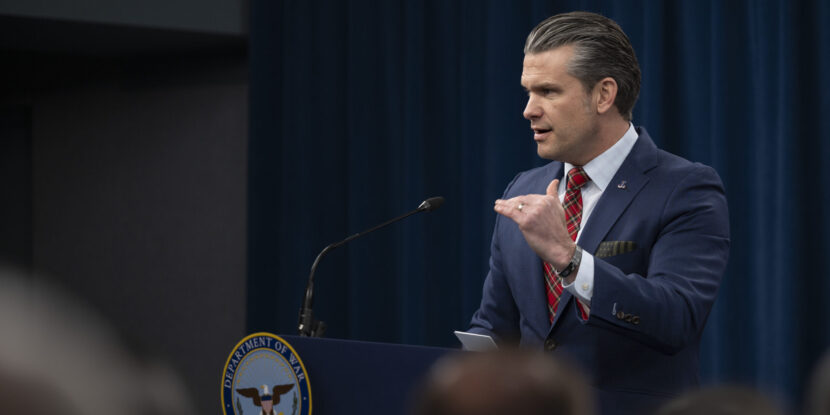
“This week, Anthropic delivered a master class in arrogance and betrayal as well as a textbook case of how not to do business with the United States Government or the Pentagon,” Secretary of War Pete Hegseth said in a statement posted on X (formerly Twitter). He continued, “Our position has never wavered and will never waver: the Department of War must have full, unrestricted access to Anthropic’s models for every LAWFUL purpose in defense of the Republic.”
“The Terms of Service of Anthropic’s defective altruism will never outweigh the safety, the readiness, or the lives of American troops on the battlefield. Their true objective is unmistakable: to seize veto power over the operational decisions of the United States military. That is unacceptable,” Hegseth stated, adding, “I am directing the Department of War to designate Anthropic a Supply-Chain Risk to National Security. Effective immediately, no contractor, supplier, or partner that does business with the United States military may conduct any commercial activity with Anthropic. Anthropic will continue to provide the Department of War its services for a period of no more than six months to allow for a seamless transition to a better and more patriotic service.”
The National Pulse reported earlier on Friday that President Donald J. Trump announced that the entirety of the U.S. federal government will cease its use of artificial intelligence (AI) technology provided by Anthropic. The move came after protracted negotiations with the AI company and the Department of War broke down over the former’s objections to its technology’s potential use for certain kinetic actions during wartime. Notably, the end of the federal government’s relationship with Anthropic is likely to have a significant impact on the company, which was seen as one of the world’s leading AI firms.
Join Pulse+ to comment below, and receive exclusive e-mail analyses.
show less
show more
By Popular Demand.
The National Pulse Now has an on-site comments section for members. Sign up today and be part of the conversation in our community of almost 15,000.
WE ARE 100% INDEPENDENT AND READER-FUNDED. FOR A GUARANTEED AD-FREE EXPERIENCE AND TO SUPPORT REAL NEWS, PLEASE SIGN UP HERE, TODAY.
❓WHAT HAPPENED: A superseding indictment was returned in the Don Lemon Minnesota church storming case, resulting in 30 further arrests.
Newsletter
Need to Know.
Your free, daily feed from The National Pulse.
Thank You!
You are now subscribed to our newsletter.
👤WHO WAS INVOLVED: Former CNN host Don Lemon, radical black activist Nekima Levy Armstrong, and other arrestees.
📍WHEN & WHERE: February 27, 2026; St. Paul, Minnesota.
💬KEY QUOTE: “[I] can’t tell you what is going to happen, but you’re going to watch it live unfold here on The Don Lemon Show.” – Don Lemon
🎯IMPACT: Several suspects, including Don Lemon, have been charged with federal offenses related to civil rights violations.
IN FULL
A superseding indictment was handed down on Friday resulting in 30 more individuals—involved in the storming of Cities Church in St. Paul, Minnesota, last month—being arrested and charged with violations of the FACE Act and other federal laws by the U.S. Department of Justice (DOJ). The National Pulse previously reported that former CNN host Don Lemon, along with radical black activist Nekima Levy Armstrong who organized the violent protest, were charged earlier this month—with both pleading not guilty.
Initially, Twin Cities NBC affiliate KARE 11 has confirmed the existence of the superseding indictment and nine arrests. However, Attorney General Pam Bondi later clarified in a statement posted to X (formerly Twitter) that 30 individuals have been arrested. “Today, [the DOJ] unsealed an indictment charging 30 more people who took part in the attack on Cities Church in Minnesota,” Bondi wrote, adding, “At my direction, federal agents have already arrested 25 of them, with more to come throughout the day.” The suspects are expected to be arraigned in federal court in St. Paul at some point on Friday afternoon.
The arrests stem from a group of anti-ICE agitators—led by Levy Armstrong and accompanied and allegedly aided by Lemon—who stormed a worship service at Cities Church on January 18, 2026. A pastor at the church was the target of the demonstration, with protestors asserting the man worked for U.S. Immigration and Customs Enforcement (ICE). In his livestream prior to the storming, Lemon referred to the operation as “secret” and stated, “[I] can’t tell you what is going to happen, but you’re going to watch it live unfold here on the Don Lemon Show.”
During the storming, the anti-ICE agitators can be seen on video blocking aisles and menacing parishioners. The public fallout from the incident even drove Governor Tim Walz (D-MN) to distance himself from the protestors, with his office stating at the time, “The Governor has repeatedly and unequivocally urged protesters to do so peacefully. While people have a right to speak out, he in no way supports interrupting a place of worship.”
Join Pulse+ to comment below, and receive exclusive e-mail analyses.
show less
show more
By Popular Demand.
The National Pulse Now has an on-site comments section for members. Sign up today and be part of the conversation in our community of almost 15,000.
WE ARE 100% INDEPENDENT AND READER-FUNDED. FOR A GUARANTEED AD-FREE EXPERIENCE AND TO SUPPORT REAL NEWS, PLEASE SIGN UP HERE, TODAY.
❓WHAT HAPPENED: President Donald J. Trump announced on Friday that the entirety of the U.S. federal government will cease its use of artificial intelligence (AI) technology provided by Anthropic.
Newsletter
Need to Know.
Your free, daily feed from The National Pulse.
Thank You!
You are now subscribed to our newsletter.
👤WHO WAS INVOLVED: President Donald Trump, the U.S. federal government, the Department of War, and AI technology company Anthropic.
📍WHEN & WHERE: The announcement was made on Friday, February 27, 2026.
💬KEY QUOTE: “I am directing EVERY Federal Agency in the United States Government to IMMEDIATELY CEASE all use of Anthropic’s technology. We don’t need it, we don’t want it, and will not do business with them again!” — Donald Trump
🎯IMPACT: According to President Trump, federal agencies will have a six-month phase-out period to cease the use of Anthropic’s AI tools.
IN FULL
President Donald J. Trump announced on Friday that the entirety of the U.S. federal government will cease its use of artificial intelligence (AI) technology provided by Anthropic. The move comes after protracted negotiations with the AI company and the Department of War broke down over the former’s objections to its technology’s potential use for certain kinetic actions during wartime.
“The Leftwing nut jobs at Anthropic have made a DISASTROUS MISTAKE trying to STRONG-ARM the Department of War, and force them to obey their Terms of Service instead of our Constitution. Their selfishness is putting AMERICAN LIVES at risk, our Troops in danger, and our National Security in JEOPARDY,” President Trump wrote in a post on Truth Social.
Trump continued, “Therefore, I am directing EVERY Federal Agency in the United States Government to IMMEDIATELY CEASE all use of Anthropic’s technology. We don’t need it, we don’t want it, and will not do business with them again!”
According to the America First leader, agencies will have a six-month phase-out period. “Anthropic better get their act together, and be helpful during this phase out period, or I will use the Full Power of the Presidency to make them comply, with major civil and criminal consequences to follow,” Trump warned. “WE will decide the fate of our Country—NOT some out-of-control, Radical Left AI company run by people who have no idea what the real World is all about.”
The National Pulse reported earlier this February that the leader of the Safeguards Research Team for Anthropic‘s Claude chatbot abruptly resigned, issuing a bizarre, poetry-laden letter that warned of a world “in peril.” Mrinank Sharma, who led the safety team since its inception in 2023, also indicated in his letter that internal pressure to ignore artificial intelligence (AI) safety protocols played a significant role in his decision to resign. It is unclear if Sharma’s resignation stemmed from the company’s discussions with the Pentagon.
Join Pulse+ to comment below, and receive exclusive e-mail analyses.
show less
show more
By Popular Demand.
The National Pulse Now has an on-site comments section for members. Sign up today and be part of the conversation in our community of almost 15,000.
Share Story
FacebookTwitterWhatsappTruthTelegramGettrCopy Link
Real News Fan? Show It!
Many people are shocked to learn that because of active censorship, we currently have to spend more time making sure you can even see The National Pulse, than on producing the news itself. Which sucks. Because we do this for the truth, and for you.
But the regime doesn’t want you being informed. That’s why they want us to go away. And that will happen if more people don’t sign up to support our work. It’s basic supply and demand. So demand you get to read The National Pulse, unrestricted. Sign up, today.
We don’t sell ads, and refuse corporate or political cash. It all comes down to you, the reader. I hope you can help.