❓WHAT HAPPENED: The United States and Taiwan reached a deal to lower tariffs on Taiwanese goods and boost Taiwanese semiconductor financing for U.S. operations.
👤WHO WAS INVOLVED: The Trump administration, Taiwanese semiconductor companies, and the U.S. Department of Commerce.
Newsletter
Need to Know.
Your free, daily feed from The National Pulse.
Thank You!
You are now subscribed to our newsletter.
📍WHEN & WHERE: Announced on Thursday by the Department of Commerce.
🎯IMPACT: The deal aims to strengthen U.S.-Taiwan economic ties and reduce reliance on China for semiconductor manufacturing.
IN FULL
The United States and Taiwan have finalized an agreement to lower tariffs on Taiwanese goods to no more than 15 percent, while Taiwan will provide credit guarantees totaling $250 billion to expand the U.S. semiconductor supply chain. The Trump administration announced the deal on Thursday, emphasizing its potential to boost energy, artificial intelligence (AI), and innovation in the U.S.
The 15 percent tariff rate is lower than the 20 percent previously imposed under President Donald J. Trump’s reciprocal tariff policy. Taiwanese companies, including major semiconductor producers, are expected to invest at least $250 billion in new U.S. operations. Taiwan Semiconductor Manufacturing Company (TSMC), the world’s largest semiconductor producer, is among the companies likely to benefit from the deal.
The U.S. Department of Commerce stated that the agreement will allow Taiwanese companies to avoid tariffs on certain imports, such as generic pharmaceuticals, aircraft components, and natural resources unavailable domestically. This move is intended to bolster the U.S. semiconductor industry and reduce dependence on Chinese manufacturing.
Notably, the Trump administration emphasized the strategic importance of semiconductor chips, describing them as critical to future innovation and global competition. Taiwan currently produces the majority of the world’s semiconductor chips, including the most advanced technologies.
Join Pulse+ to comment below, and receive exclusive e-mail analyses.
By Popular Demand.
The National Pulse Now has an on-site comments section for members. Sign up today and be part of the conversation in our community of almost 15,000.
More From The Pulse
WE ARE 100% INDEPENDENT AND READER-FUNDED. FOR A GUARANTEED AD-FREE EXPERIENCE AND TO SUPPORT REAL NEWS, PLEASE SIGN UP HERE, TODAY.
❓WHAT HAPPENED: At least 22 people were killed and over 120 injured after pro-Iran rioters stormed a U.S. consulate and United Nations (UN) offices in Pakistan, where President Asif Ali Zardari has backed Tehran.
👤WHO WAS INVOLVED: Pro-Iran rioters, Pakistani security forces, U.S. and U.N. personnel, and Pakistani officials.
Newsletter
Need to Know.
Your free, daily feed from The National Pulse.
Thank You!
You are now subscribed to our newsletter.
📍WHEN & WHERE: The riots occurred across multiple cities in Pakistan, including Karachi, Islamabad, Lahore, and Peshawar, following U.S. and Israeli strikes on Iran.
💬KEY QUOTE: “Pakistan stands with the Iranian nation in this moment of grief and shares in their loss.” – Pakistani President Asif Ali Zardari
🎯IMPACT: The unrest has led to deaths, injuries, and heightened tensions, prompting Pakistani officials to deploy troops and appeal for calm.
IN FULL
Pro-Iran rioters have stormed a U.S. consulate and United Nations (UN) offices in the Islamic Republic of Pakistan, killing at least 22 people and injuring more than 120. The chaos broke out in the wake of ongoing U.S. and Israeli strikes on the Islamic Republic of Iran, which have killed multiple senior officials, including the country’s Supreme Leader, Grand Ayatollah Ali Khamenei.
Pakistani President Asif Ali Zardari sent condolences to Iran after Khamenei’s “martyrdom,” saying, “Pakistan stands with the Iranian nation in this moment of grief and shares in their loss.” However, Interior Minister Mohsin Naqvi urged public restraint, asking citizens to avoid taking matters into their own hands while also referring to Khamenei as a martyr.
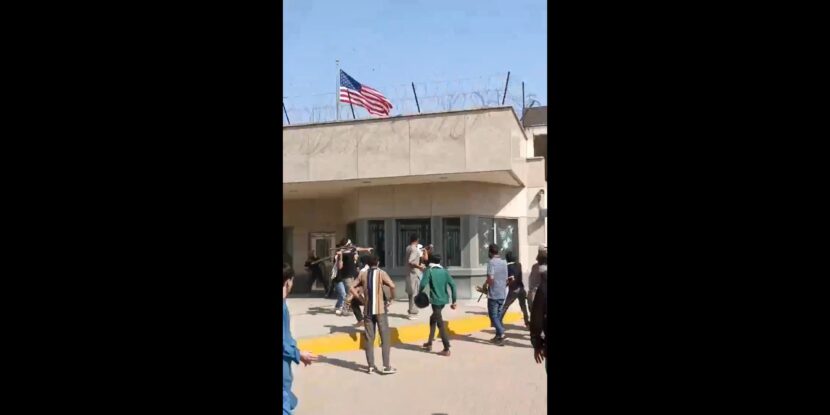
In Karachi, rioters managed a brief assault on the U.S. Consulate’s outer perimeter before police stepped in to scatter them. In the capital of Islamabad, rioters pushed toward the U.S. Embassy, leading police to deploy tear gas and batons to hold back the crowd from entering the diplomatic zone.
Locals protesting stikes on Iran have stormed the entrance area of the US Consulate in Karachi, Pakistan. pic.twitter.com/fiqSoRRpPt
In the northern region of Gilgit-Baltistan, violence claimed 12 lives and left over 80 people injured when thousands descended on UN offices. Local authorities confirmed that staff inside were unharmed, though the rioters caused significant damage to property and set fire to police stations. More skirmishes took place near the U.S. Consulate in Lahore and in the northwestern city of Peshawar.
Security has been ramped up at American diplomatic sites across Pakistan in an attempt to deter further violence.
🚨 BREAKING: Leftists are SLAMMING President Trump after US Marines opened fire on Pakistanis who STORMED the US Consulate in Karachi
REMINDER: Obama is NO LONGER the President. Trump is NOT going to allow another Benghazi.
❓WHAT HAPPENED: Lebanon’s Prime Minister Nawaf Salam has announced “the immediate ban of all Hezbollah security and military activities… considering them illegal.”
Newsletter
Need to Know.
Your free, daily feed from The National Pulse.
Thank You!
You are now subscribed to our newsletter.
👤WHO WAS INVOLVED: Lebanese Prime Minister Nawaf Salam, Hezbollah, the Israel Defense Forces (IDF), Hezbollah leader Mohammad Raad, and Iran’s deceased Supreme Leader Ali Khamenei.
📍WHEN & WHERE: The announcement was made on Monday, March 2, 2026.
💬KEY QUOTE: Salam says the Lebanese government is enforcing “the immediate ban of all Hezbollah security and military activities… considering them illegal.”
🎯IMPACT: The move against Hezbollah could trigger violent internal conflict in Lebanon. The country is nearly evenly split into sectarian thirds, with about one-third Christian, one-third Shia Muslim, and one-third Sunni Muslim.
IN FULL
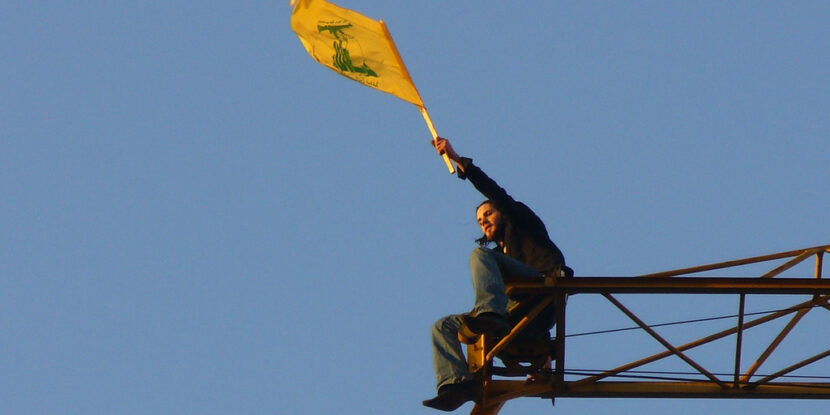
Lebanon’s Prime Minister Nawaf Salam has announced “the immediate ban of all Hezbollah security and military activities and considering them illegal.” Salam is demanding that Hezbollah—an Iranian-backed Islamist terror group—lay down its arms and turn themselves over to Lebanese government forces.
The demand comes after elements of Hezbollah launched unsuccessful rocket attacks against Israel Sunday evening, which appear to have been intercepted by possible Iron Beam—a directed-energy air defense system—technology. An additional suicide drone launched by Hezbollah appears to have struck the Royal Air Force (RAF) base at Akrotiri on the island of Cyprus. Subsequently, Israel‘s decapitation strikes against Hezbollah positions in Lebanon resulted in a new round of significant deaths among the Islamist terror group’s commanders, including its political leader in the Lebanese parliament, Mohammad Raad.
Concerningly, the move against Hezbollah could trigger violent internal conflict in Lebanon. The country is nearly evenly split into sectarian thirds with about one-third Christian, one-third Shia Muslim, and one-third Sunni Muslim. Notably, the Lebanese civil war, which ran from 1975 to 1990, saw the country’s overwhelming Christian majority reduced from around 53 percent of the population to what it is today. Following the civil war, a new power-sharing government was formed, with guaranteed sectarian representation.
Thus far, Hezbollah has been the most active of Iran‘s terror proxies in the Middle East in response to major U.S. and Israeli strikes against the Islamic Republic of Iran. The joint strikes have killed a significant number of Iran’s key political, military, and religious leaders, including the Islamic Republic’s Supreme Leader, Grand Ayatollah Ali Khamenei. Lebanon’s leaders have tried to disarm Hezbollah in the past, with the efforts ending unsuccessfully.
Join Pulse+ to comment below, and receive exclusive e-mail analyses.
show less
show more
By Popular Demand.
The National Pulse Now has an on-site comments section for members. Sign up today and be part of the conversation in our community of almost 15,000.
WE ARE 100% INDEPENDENT AND READER-FUNDED. FOR A GUARANTEED AD-FREE EXPERIENCE AND TO SUPPORT REAL NEWS, PLEASE SIGN UP HERE, TODAY.
❓WHAT HAPPENED: U.S. Secretary of War Pete Hegseth said a joint military operation against Iran, targeting key military and nuclear infrastructure, will not be “endless.”
Newsletter
Need to Know.
Your free, daily feed from The National Pulse.
Thank You!
You are now subscribed to our newsletter.
👤WHO WAS INVOLVED: War Secretary Hegseth, Chairman of the Joint Chiefs of Staff General Dan Caine, President Donald J. Trump, and Israeli forces.
📍WHEN & WHERE: The operation began over the weekend and continues as of March 2, with strikes across Iran and Iranian retaliatory strikes across Israel and the Middle East.
💬KEY QUOTE: “This operation is a clear, devastating, decisive mission: Destroy the missile threat, destroy the navy, no nukes.” – Pete Hegseth
🎯IMPACT: U.S. casualties have been reported, including four U.S. service members killed in action and at least 11 in Israel. Over 555 deaths have been reported in Iran, including Supreme Leader Ali Khamenei, with significant damage to Iranian military infrastructure.
IN FULL
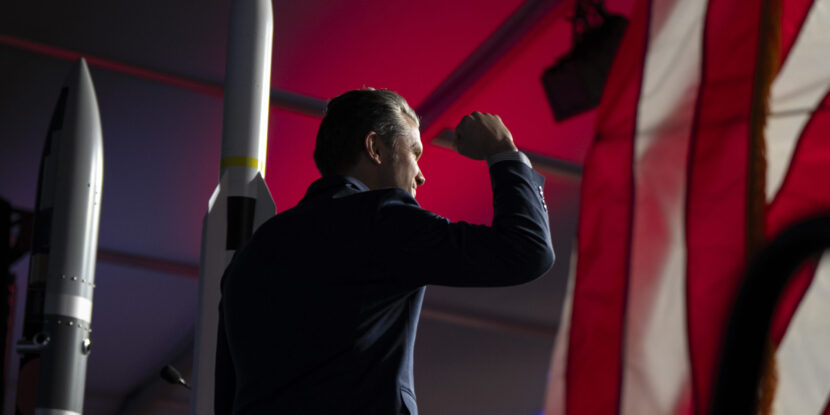
The United States military operations against the Islamic Republic of Iran will unfold over three phases, according to U.S. Secretary of War Pete Hegseth and Joint Chiefs of Staff Chairman Dan Caine. Speaking at a Pentagon press conference on Monday, Hegseth explained that the U.S. military remains “laser-focused” on key objectives: dismantling Iran’s missile production, crippling its naval forces, and destroying security infrastructure linked to its nuclear program.
“We set the terms of this war from start to finish. Our ambitions are not utopian. They are realistic, scoped to our interests and the defense of our people and our allies,” Hegseth said, stressing, “This is not Iraq. This is not endless. I was there for both—our generation knows better, and so does this President. He called the last 20 years of nation-building wars dumb, and he’s right. This is the opposite. This operation is a clear, devastating, decisive mission: Destroy the missile threat, destroy the navy, no nukes.”
Over the weekend, the U.S. and Israeli militaries conducted a massive bombing and missile campaign against high-level targets in the Islamic Republic. Iran’s Supreme Leader, Grand Ayatollah Ali Khamenei, and most of his family were killed, as were Iran’s Defense Minister Amir Nasirzadeh, Islamic Revolutionary Guard Corps (IRGC) commander Mohammed Pakpour, and dozens of others.
According to multiple confirmed reports, the U.S. Central Intelligence Agency (CIA) had tracked numerous Iranian religious, political, and military leaders for months, and tipped off Israeli officials once it had confirmed that most of the Iranian state leadership would be meeting en masse in three locations—prompting the strikes this past weekend.
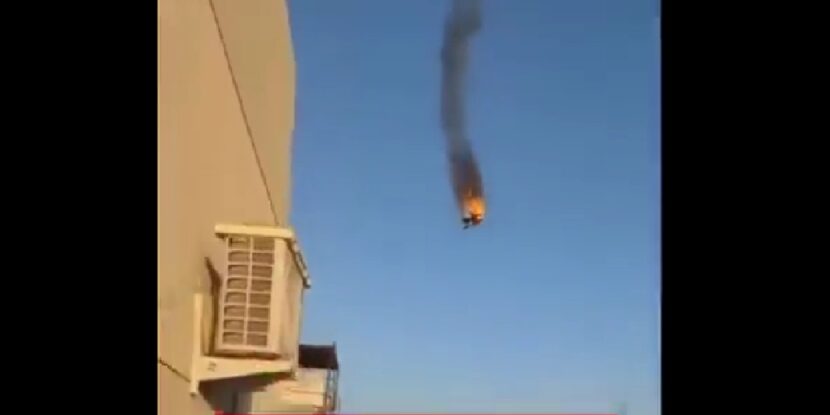
The Pentagon has confirmed four U.S. service members have been killed, three in Kuwait over the weekend and one in a strike on a tactical command center. A separate “friendly fire incident” in Kuwait resulted in three U.S. F-15 fighter jets being shot down, though all crew members survived. Smoke was seen rising from the U.S. Embassy in Kuwait after an apparent Iranian missile strike.
President Donald J. Trump said Sunday the operation would continue “until all of our objectives are achieved,” estimating it could last “four weeks or less,” while acknowledging the possibility of additional casualties. The Trump administration has encouraged the Iranian people to rise up and seize control of their country once U.S. and Israeli forces have degraded the IRGC and Basij forces.
Join Pulse+ to comment below, and receive exclusive e-mail analyses.
show less
show more
By Popular Demand.
The National Pulse Now has an on-site comments section for members. Sign up today and be part of the conversation in our community of almost 15,000.
WE ARE 100% INDEPENDENT AND READER-FUNDED. FOR A GUARANTEED AD-FREE EXPERIENCE AND TO SUPPORT REAL NEWS, PLEASE SIGN UP HERE, TODAY.
❓WHAT HAPPENED: Three U.S. F-15E Strike Eagles were mistakenly shot down over Kuwait during “Operation Epic Fury,” reportedly due to friendly fire from Kuwaiti air defenses. Meanwhile, a fourth U.S. service member is confirmed to have died from injuries sustained during the course of operations.
👤WHO WAS INVOLVED: U.S. Central Command (CENTCOM), Kuwaiti forces, Iranian forces, and President Donald J. Trump.
Newsletter
Need to Know.
Your free, daily feed from The National Pulse.
Thank You!
You are now subscribed to our newsletter.
📍WHEN & WHERE: March 1, 2026, over Kuwaiti airspace during active combat operations.
💬KEY QUOTE: “All six aircrew ejected safely, have been safely recovered, and are in stable condition,” CENTCOM said of the air losses.
🎯IMPACT: The shootdowns and loss of another service member have raised concerns about the conflict escalating, with a growing number of casualties reported among U.S. forces and Gulf allies.
IN FULL
Three U.S. F-15E Strike Eagles were shot down over Kuwait on Monday, in what U.S. Central Command (CENTCOM) described as a “friendly fire incident” involving Kuwaiti air defenses. The jets were operating as part of “Operation Epic Fury,” a U.S.-Israeli campaign that has already claimed the lives of senior Iranian officials, including the Supreme Leader, and included heavy combat with Iranian military assets, including missiles and drones.
“During active combat—that included attacks from Iranian aircraft, ballistic missiles, and drones—the U.S. Air Force fighter jets were mistakenly shot down by Kuwaiti air defenses. All six aircrew ejected safely, have been safely recovered, and are in stable condition,” CENTCOM said, adding that “Kuwait has acknowledged this incident, and we are grateful for the efforts of the Kuwaiti defense forces and their support in this ongoing operation.”
Tensions are now elevated, however, with Iran claiming they, not the Kuwaitis, downed at least one of the U.S. jets. Meanwhile, U.S. fatalities are confirmed to have risen to four, with a service member succumbing to injuries sustained in an earlier clash.
President Donald J. Trump has said of the possibility of talks with Tehran, “They want to talk, and I have agreed to talk, so I will be talking to them.” Yet the conflict continues to escalate, with Iran carrying out significant retaliatory strikes across the region, including targets in Israel and various Gulf states, where U.S. bases have come under attack from Iranian missiles and drones.
Even a British base in Cyprus has been struck, despite Prime Minister Sir Keir Starmer initially refusing to allow British bases to be used to facilitate the U.S. strikes.
US military confirms “several” U.S. fighter jets have crashed over Kuwait, no proper explanations offered. Trump warned that US casualties could get “quite a bit higher.”https://t.co/SIlLArz8RNpic.twitter.com/1VpfpaY5mQ
President Donald J. Trump has issued a fresh update on Operation Epic Fury, which began this weekend alongside the Israeli government and military.
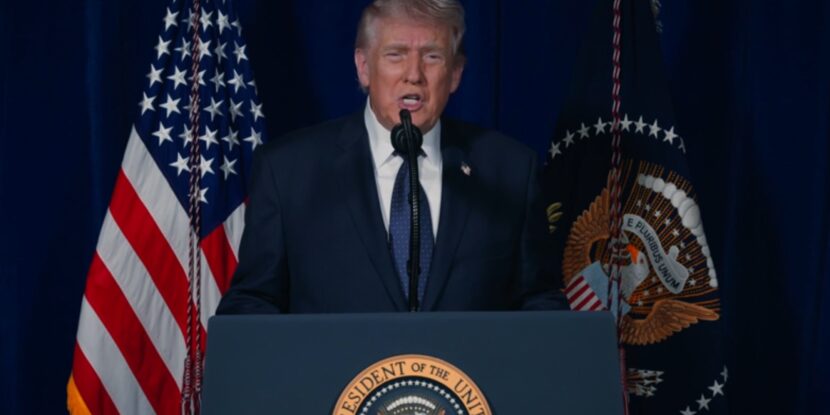
Speaking in a recorded message from Mar-a-Lago, Trump said: “Over the past 36 hours, the United States and its partners have launched Operation Epic Fury, one of the largest, most complex, most overwhelming military offensive. The world has ever seen. Nobody’s seen anything like it.
Newsletter
Need to Know.
Your free, daily feed from The National Pulse.
Thank You!
You are now subscribed to our newsletter.
President Trump issues update on Operation Epic Fury on his Truth Social account.
He says "…there will likely be more [U.S. casualties] before it ends, that’s the way it is, likely be more.”
“We have hit hundreds of targets in Iran, including Revolutionary Guard facilities, Iranian air defense systems. Just now, it was announced that we knocked out nine ships plus their naval building, all in a matter of literally minutes.
The President went on: “Earlier today, CENTCOM shared the news that three U.S. military service members have been killed in action. As one nation, we grieve for the true American patrions who have made the ultimate sacrifice for our nation, even as we continue the righteous mission for which they gave their lives, we pray for the full recovery of the wounded and send our immense love and eternal gratitude to the families of the fallen. And sadly, there will likely be more, before it ends, that’s the way it is, likely be more.”
President Trump concluded with another appeal to the Iranian people to rise up against the Islamic regime: “I once again urge the Revolutionary Guard, the Iranian military, and the Police to lay down your arms and receive full immunity or face certain death. It will be certain death. won’t be pretty. I call upon all Iranian patriots who yearn for freedom to seize this moment, to be brave, be bold, be heroic, and take back your country. America is with you. I made a promise to you, and I fulfilled that promise. The rest will be up to you, but we will be there to help.”
show less
President Donald J. Trump has issued a fresh update on Operation Epic Fury, which began this weekend alongside the Israeli government and military.
show more
By Popular Demand.
The National Pulse Now has an on-site comments section for members. Sign up today and be part of the conversation in our community of almost 15,000.
WE ARE 100% INDEPENDENT AND READER-FUNDED. FOR A GUARANTEED AD-FREE EXPERIENCE AND TO SUPPORT REAL NEWS, PLEASE SIGN UP HERE, TODAY.
❓WHAT HAPPENED: Two people were killed, and 14 others were injured, in a mass shooting at a downtown Austin bar early Sunday morning.
👤WHO WAS INVOLVED: The suspect has been identified as Ndiaga Diagne, a Senegal-born American citizen.
Newsletter
Need to Know.
Your free, daily feed from The National Pulse.
Thank You!
You are now subscribed to our newsletter.
📍WHEN & WHERE: The shooting occurred around 2:00 a.m. Sunday at Buford’s Backyard Beer Garden in downtown Austin, near the University of Texas.
💬KEY QUOTE: “There were indicators… that indicate potential nexus to terrorism.” – Alex Doran, FBI San Antonio Field Office.
🎯IMPACT: The FBI’s Joint Terrorism Task Force has joined the investigation, citing potential links to terrorism. Rapid police response likely prevented further casualties.
IN FULL
A mass shooting at Buford’s Backyard Beer Garden in downtown Austin has left two people dead, with 14 others injured. The incident occurred around 2:00 AM near the University of Texas.
The suspect has been identified as Ndiaga Diagne, a Senegal-born U.S. citizen residing in Pflugerville, Texas. He was killed during a confrontation with police. Diagne was wearing a shirt that said “Property of Allah” on it. The suspect also had a Koran and clothing described as Islamic garb in his vehicle.
Officers responded to reports of the shooting in just 57 seconds, confronting the gunman, who was armed with both a handgun and a rifle.
The FBI revealed that the attack is being investigated as ideologically motivated and may have a “potential nexus to terrorism.”
Alex Doran, acting special agent in charge of the FBI San Antonio Field Office, stated, “Obviously, it’s still way too early in the process to determine an exact motivation, but there were indicators… that indicate potential nexus to terrorism.”
First responders arrived on the scene within a minute, transporting the injured to nearby hospitals. Austin Police Chief Lisa Davis praised the quick actions of officers, stating, “Officers immediately transitioned, came over East 6th to West 6th Street and were faced with the individual with a gun.”
BREAKING: New video captures the moment the gunman, identified as Ndiaga Diagne, opened fire at an Austin, Texas bar early Sunday morning, killing two people and injuring 14 others. pic.twitter.com/Ic3VZv7PjE
❓WHAT HAPPENED: Three U.S. service members were killed and five seriously wounded during Operation Epic Fury.
👤WHO WAS INVOLVED: U.S. service members and Iran’s IRGC.
Newsletter
Need to Know.
Your free, daily feed from The National Pulse.
Thank You!
You are now subscribed to our newsletter.
📍WHEN & WHERE: March 1, 9:30 am ET, CENTCOM operations.
💬KEY QUOTE: “The Lincoln was not hit. The missiles launched didn’t even come close.” – CENTCOM
🎯IMPACT: Continuing operations to eliminate threats from the Iranian regime.
IN FULL
Three U.S. service members have been killed in action and five are seriously wounded as part of Operation Epic Fury.
Several others have sustained minor shrapnel injuries and concussions and are in the process of being returned to duty. Major combat operations continue and the response effort from U.S. is ongoing.
No information has thus far been released about the casualties, while the U.S. military alerts the families first.
Iran’s IRGC claims to have struck USS Abraham Lincoln with ballistic missiles. The U.S. said this claim is false, and that the missiles “didn’t come close.”
Join Pulse+ to comment below, and receive exclusive e-mail analyses.
show less
show more
By Popular Demand.
The National Pulse Now has an on-site comments section for members. Sign up today and be part of the conversation in our community of almost 15,000.
WE ARE 100% INDEPENDENT AND READER-FUNDED. FOR A GUARANTEED AD-FREE EXPERIENCE AND TO SUPPORT REAL NEWS, PLEASE SIGN UP HERE, TODAY.
❓WHAT HAPPENED: Iran confirmed the death of Supreme Leader Ali Khamenei amid strikes by Israel and the U.S.
👤WHO WAS INVOLVED: Iran’s Supreme Leader Ali Khamenei, various other high-ranking Iranian officials, the Israeli military, and the U.S. military.
Newsletter
Need to Know.
Your free, daily feed from The National Pulse.
Thank You!
You are now subscribed to our newsletter.
📍WHEN & WHERE: Khamenei was killed on Saturday morning, in Iran.
💬KEY QUOTE: “Khamenei, one of the most evil people in History, is dead.” – President Donald J. Trump
🎯IMPACT: Iranian armed forces chief of staff Abdolrahim Mousavi and Islamic Revolutionary Guard Corps (IRGC) commander Mohammad Pakpour are also dead; Iran has launched retaliatory attacks against Israel and U.S.-aligned states throughout the Middle East.
IN FULL
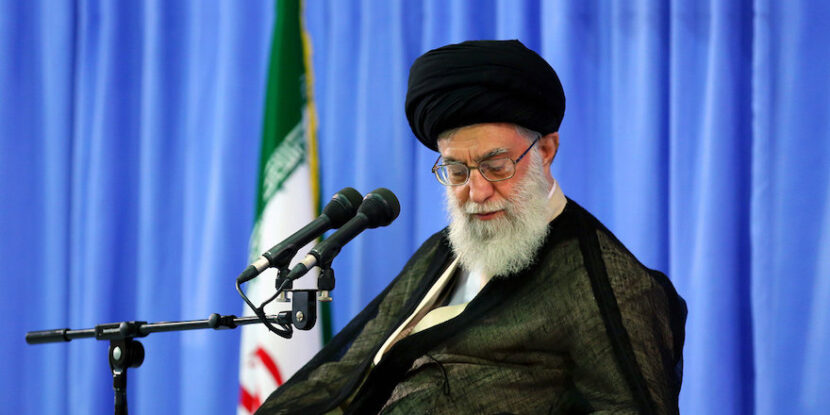
Iran has confirmed the death of the country’s Supreme Leader, Grand Ayatollah Ali Khamenei, in strikes conducted by Israel and the United States. The announcement was issued via a statement from Iran’s Supreme National Security Council, which was aired on various state-run television networks.
Reports indicate that Khamenei was killed in his office during the early hours of Saturday. The regime has announced a 40-day mourning period, but observance is likely to be patchy, with some Iranians openly celebrating the 86-year-old theocrat’s death. The so-called Assembly of Experts for Leadership is expected to attempt to name Khamenei’s successor soon.
President Donald J. Trump announced Khamenei had been killed before Iran officially confirmed it, writing on his Truth Social platform, “Khamenei, one of the most evil people in History, is dead. This is not only Justice for the people of Iran, but for all Great Americans, and those people from many Countries throughout the World, that have been killed or mutilated by Khamenei and his gang of bloodthirsty THUGS.”
He added: “This is the single greatest chance for the Iranian people to take back their Country. We are hearing that many of their IRGC, Military, and other Security and Police Forces, no longer want to fight, and are looking for Immunity from us. As I said last night, ‘Now they can have Immunity, later they only get Death!’ Hopefully, the IRGC and Police will peacefully merge with the Iranian Patriots, and work together as a unit to bring back the Country to the Greatness it deserves.”
The Red Crescent estimates that the strikes on Iran have caused more than 200 fatalities so far. In addition to Khamenei, Iranian armed forces chief of staff Abdolrahim Mousavi and Islamic Revolutionary Guard Corps (IRGC) commander Mohammad Pakpour are also confirmed killed.
Iran has launched missiles at Israel and countries hosting U.S. bases throughout the Middle East, and vowed an escalated response following Khamenei’s slaying. President Trump warned in turn that “THEY BETTER NOT DO THAT… BECAUSE IF THEY DO, WE WILL HIT THEM WITH A FORCE THAT HAS NEVER BEEN SEEN BEFORE!”
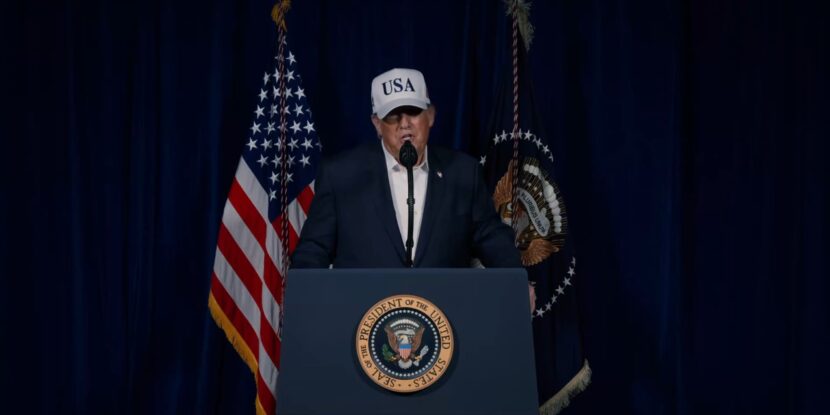
President Donald J. Trump has issued the following statement on the joint U.S.-Israeli strikes on Iran. As ever, The National Pulse is first to the full story. Please donate today to support our work. Read the story as it broke.
A short time ago, the United States military began major combat operations in Iran.
Our objective is to defend the American people by eliminating imminent threats from the Iranian regime, a vicious group of very hard, terrible people.
Its menacing activities directly endanger the United States, our troops, our bases overseas, and our allies throughout the world.
For 47 years, the Iranian regime has chanted “Death to America and waged an unending campaign of bloodshed and mass murder, targeting the United States, our troops, and the innocent people in many, many countries.
Among the regime’s very first acts was to back a violent takeover of the U.S. Embassy in Tehran, holding dozens of American hostages for 444 days.
In 1983, Iran’s proxies carried out the Marine barracks bombing in Beirut that killed 241 American military personnel.
In 2000, they knew and were probably involved with the attack on the USS Cole.
Many died.
Iranian forces killed and maimed hundreds of American service members in Iraq.
The regime’s proxies have continued to launch countless attacks against American forces stationed in the Middle East in recent years, as well as U.S. Naval and commercial vessels in international shipping lanes.
It’s been mass terror, and we’re not going to put up with it any longer.
From Lebanon to Yemen and Syria to Iraq, the regime has armed, trained, and funded terrorist militias that have soaked the earth with blood and guts.
And it was a ranch proxy, Hamas, that launched the monstrous October 7th attacks on Israel, slaughtering more than 1,000 innocent people, including 46 Americans, while taking 12 of our citizens hostage.
It was brutal.
Something like the world has never seen before.
Iran is the world’s number one state sponsor of terror, and just recently killed tens of thousands of its own citizens on the street as they protested.
It has always been the policy of the United States, in particular, my administration, that this terrorist regime can never have a nuclear weapon.
I’ll say it again.
They can never have a nuclear weapon.
That is why in Operation Midnight Hammer last June, we obliterated the regime’s nuclear program at Fordow, Natanz, and Isfahan.
After that attack, we warned them never to resume their malicious pursuit of nuclear weapons, and we sought repeatedly to make a deal.
We tried, they wanted to do it, they didn’t want to do it.
Again, they wanted to do it, they didn’t want to do it, they didn’t know what was happening.
They just wanted to practice evil.
But Iran refused, just as it has for decades and decades; they’ve rejected every opportunity to renounce their nuclear ambitions, and we can’t take it anymore.
Instead, they attempted to rebuild their nuclear program and to continue developing long-range missiles that can now threaten our very good friends and allies in Europe, our troops stationed overseas, and could soon reach the American homeland.
Just imagine how emboldened this regime would be if they ever had and actually were armed with nuclear weapons as a means to deliver their message.
For these reasons, the United States military has undertaken a massive and ongoing operation to prevent this very wicked, radical, dictatorship from threatening America and our core national security interests.
We are going to destroy their missiles and raze their missile industry to the ground.
It will be totally, again, obliterated.
We’re going to annihilate their Navy.
We are going to ensure that the region’s terrorist proxies can no longer destabilize the region or the world and attack our forces and no longer use their IEDs or roadside bombs, as they are sometimes called, to so gravely wound and kill thousands and thousands of people, including many Americans, and we will ensure that Iran does not obtain a nuclear weapon.
It’s a very simple message.
They will never have a nuclear weapon.
This regime will soon learn that no one should challenge the strength and might of the United States armed forces.
I built and rebuilt our military and my first administration, and there is no military on Earth, even close to its power, strength, or sophistication.
My administration has taken every possible step to minimize the risk to U.S. Personnel in the region.
Even so, and I do not make this statement lightly, the Iranian regime seeks to kill.
The lives of courageous American heroes may be lost, and we may have casualties. That often happens in war, but we’re doing this, not for now.
We’re doing this for the future, and it is a noble mission.
We pray for every service member, as they selflessly risk their lives to ensure that Americans and our children will never be threatened by a nuclear-armed Iran.
We ask God to protect all of our heroes in harm’s way, and we trust that, with his help, the men and women of the armed forces will prevail.
We have the greatest in the world, and they will prevail.
To the members of the Islamic Revolutionary Guard, the armed forces, and all of the police, I say tonight that you must lay down your weapons and have complete immunity, or in the alternative, face certain death.
So, lay down your arms, you will be treated fairly with total immunity, or you will face certain death.
Finally, to the great proud people of Iran, I say tonight that the hour of your freedom is at hand.
Stay sheltered, don’t leave your home.
It’s very dangerous outside.
Bombs will be dropping everywhere.
When we are finished, take over your government.
It will be yours to take.
This will be probably your only chance for generations.
For many years, you have asked for America’s help, but you never got it.
No president was willing to do what I am willing to do tonight.
Now you have a president who is giving you what you want.
So let’s see how you respond.
America is backing you with overwhelming strength and devastating force.
Now is the time to seize control of your destiny and to unleash the prosperous and glorious future that is close within your reach.
This is the moment for action.
Do not let it pass.
May God bless the brave men and women of America’s armed forces. May God bless the United States of America.
May God bless you all.
Thank you.
show less
President Donald J. Trump has issued the following statement on the joint U.S.-Israeli strikes on Iran. As ever, The National Pulse is first to the full story. Please donate today to support our work. Read the story as it broke.show more
By Popular Demand.
The National Pulse Now has an on-site comments section for members. Sign up today and be part of the conversation in our community of almost 15,000.
WE ARE 100% INDEPENDENT AND READER-FUNDED. FOR A GUARANTEED AD-FREE EXPERIENCE AND TO SUPPORT REAL NEWS, PLEASE SIGN UP HERE, TODAY.
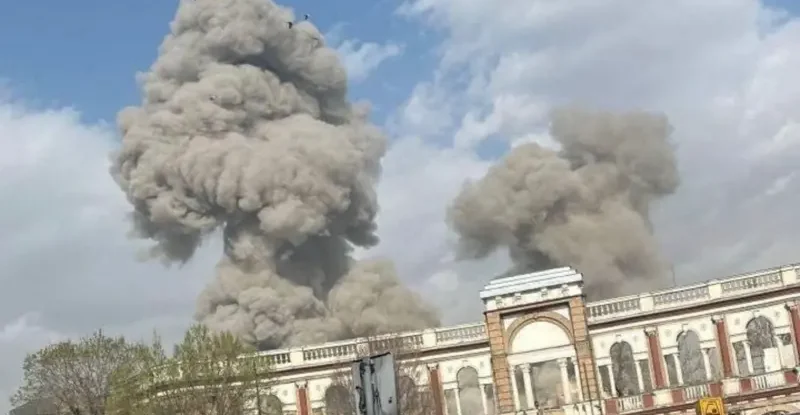
❓WHAT HAPPENED: Israel and the United launched a series of missile attacks on Iran early Saturday morning, causing explosions in Tehran, according to U.S. officials quoted in the Wall Street Journal and New York Times as of early Saturday morning.
👤WHO WAS INVOLVED: The U.S. military, Israeli Defense Forces (IDF), Israeli Defense Minister Israel Katz, and Iranian state officials.
Newsletter
Need to Know.
Your free, daily feed from The National Pulse.
Thank You!
You are now subscribed to our newsletter.
📍WHEN & WHERE: Saturday morning, February 28, 2026, in Tehran, Iran, and across Israel.
💬KEY QUOTE: “This is a proactive alert to prepare the public for the possibility of missiles being launched toward the State of Israel.” – IDF national warning
🎯IMPACT: Rising tensions in the Middle East, with heightened concerns over Iran’s nuclear ambitions and potential retaliatory strikes.
IN FULL
Israel and the United States reportedly carried out a series of missile attacks on Iran early Saturday morning, with explosions reported in Tehran. The Israeli Defense Forces (IDF) issued a warning to its citizens, urging them to prepare for potential retaliatory strikes. Sirens were heard across Israel as tensions escalated in the region.
As of 3:15AM EST, Iran is believed to have retaliated with ballistic missiles headed towards Israel, though it is unclear if any of the missiles struck their targets at the time of publication. This report will be updated as and when confirmation is received.
The New York Times and Wall Street Journal reported the strikes were a joint operation between U.S. and Israeli forces, though we are awaiting confirmation at the time of publication.
“The U.S. and Israel launched an attack on Iran on Saturday, bringing war to the country for the second time in eight months and risking a wider regional conflict in one of the most economically sensitive parts of the world,” the Wall Street Journal reported as of 1:50am EST.
Israeli Defense Minister Israel Katz declared a state of emergency as thick smoke rose from the explosion sites in downtown Tehran. Iranian state media confirmed the reports of explosions in the capital city.
The IDF released a national warning, stating, “This is a proactive alert to prepare the public for the possibility of missiles being launched toward the State of Israel.” The attack comes amid heightened tensions between Iran and the United States over Tehran’s nuclear program.
Earlier this week, former President Donald Trump warned during his State of the Union address that Iran is “working on missiles that will soon reach” the United States. Trump also described Iran as the “number one sponsor of terrorism” and vowed to prevent the regime from acquiring nuclear weapons. U.S. intelligence, however, has not yet concluded that Iran possesses the capability to develop intercontinental ballistic missiles (ICBMs) capable of reaching the U.S. homeland.
The situation remains tense, with two U.S. aircraft carrier strike groups in the region and ongoing diplomatic meetings involving key figures, such as Jared Kushner and Oman’s foreign minister, Sayyid Badr bin Hamad Al Busaidi. Additional talks are reportedly scheduled as efforts to address the escalating crisis continue.
Join Pulse+ to comment below, and receive exclusive e-mail analyses.
show less
show more
By Popular Demand.
The National Pulse Now has an on-site comments section for members. Sign up today and be part of the conversation in our community of almost 15,000.
Share Story
FacebookTwitterWhatsappTruthTelegramGettrCopy Link
Real News Fan? Show It!
Many people are shocked to learn that because of active censorship, we currently have to spend more time making sure you can even see The National Pulse, than on producing the news itself. Which sucks. Because we do this for the truth, and for you.
But the regime doesn’t want you being informed. That’s why they want us to go away. And that will happen if more people don’t sign up to support our work. It’s basic supply and demand. So demand you get to read The National Pulse, unrestricted. Sign up, today.
We don’t sell ads, and refuse corporate or political cash. It all comes down to you, the reader. I hope you can help.