

❓WHAT HAPPENED: The European Union (EU) is considering a new two-tier EU accession system that could expedite Ukraine’s membership.
👤WHO WAS INVOLVED: The European Commission, Ukraine, and EU member states.
📍WHEN & WHERE: Proposals are currently under discussion in Brussels, Belgium, which serves as the EU institutions’ main power center.
💬KEY QUOTE: “Extraordinary times call for extraordinary measures… We’re enlarging the concept of enlargement.” – Senior EU diplomat.
🎯IMPACT: The plan could alter EU accession rules and affect the bloc’s stability.
The European Commission—the European Union’s unelected executive—is working on draft proposals that could significantly reshape the EU accession process, including the possibility of accelerating Ukraine’s entry as part of a negotiated settlement to end the war between Ukraine and Russia. Although the initiative remains at an early stage, it has already unsettled several EU capitals that fear the emergence of an “enlargement-lite” approach that could weaken long-standing standards.
Ukraine, which was granted official EU candidate status after Russia launched its full-scale invasion in February 2022, regards EU membership as a cornerstone of its postwar recovery and its long-term strategic alignment with the West. Ukrainian leaders argue that joining the bloc is essential for economic reconstruction, political reform, and security guarantees beyond the battlefield. Nevertheless, even sympathetic EU officials privately acknowledge that Ukraine may need around a decade to fully satisfy accession requirements, despite a U.S.-backed peace framework that envisions membership by 2027.
Under the Commission’s preliminary thinking, Ukraine could enter the EU under a staged model that limits its initial influence. While the country would be formally admitted, it would not enjoy “normal voting rights at leaders’ summits” during the early phase. Instead, Kiev would gradually gain access to the Single Market, which includes the Free Movement migration regime, and EU funding as it meets a series of post-accession reform targets.
Such an approach would represent a significant departure from the 1993 accession rules, which require candidate states to fully align with EU laws and standards before joining. Supporters inside the bloc argue that exceptional circumstances demand flexibility, particularly given Ukraine’s wartime situation. Critics, however, warn that relaxing the rules risks damaging the already tenuous cohesion of the bloc and diminishing the perceived value of full membership.
“Extraordinary times call for extraordinary measures… We’re not undermining enlargement. We’re enlarging the concept of enlargement,” one EU official said.
The proposal has triggered debate among member states, with some governments concerned it could disadvantage other candidate countries such as Montenegro and Albania, which have spent years progressing through the traditional accession process. Others worry about the broader implications for the EU’s relationships with non-member partners like the United Kingdom and Norway, questioning whether a differentiated model for Ukraine could create new political and economic tensions.
Beyond institutional concerns, political resistance remains strong in parts of the EU. Hungarian Prime Minister Viktor Orbán has repeatedly expressed skepticism about Ukraine joining the bloc, arguing that such a move should not proceed without public consent. He has suggested that European voters should decide whether Ukraine can join and has cautioned that fast-tracking accession could have serious consequences for the union’s economy and stability.
Notably, Ukraine is regularly accused of mistreating its Hungarian minority and of hurting farmers in countries like Poland by dumping their agricultural produce on the EU and driving down prices.
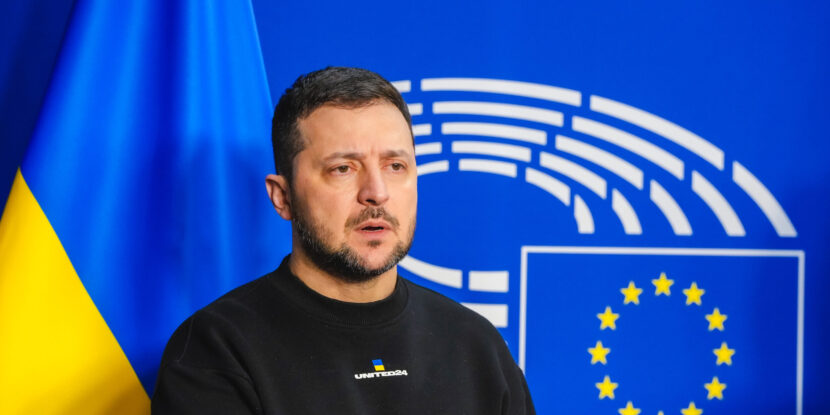
Image via European Union 2023– Source: EP.
Join Pulse+ to comment below, and receive exclusive

 FLASHBACK: