




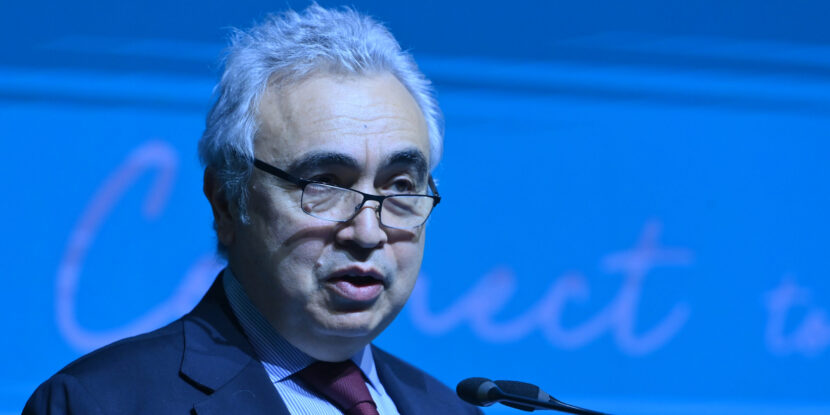
❓WHAT HAPPENED: The International Energy Agency (IEA) proposed ten measures to reduce global energy consumption, citing the ongoing Iran conflict as a significant factor in high energy prices.
👤WHO WAS INVOLVED: The IEA, led by executive director Fatih Birol, along with its 32 member nations, including the United States, the United Kingdom, Canada, and Japan.
📍WHEN & WHERE: The recommendations were issued recently amidst the Gulf conflict, with global implications for energy markets.
💬KEY QUOTE: “I believe the world has not yet well understood the depth of the energy security challenge we are facing,” said Fatih Birol.
🎯IMPACT: The proposals aim to alleviate global energy challenges, though Birol warned recovery could take months even if the Strait of Hormuz is reopened.
The world’s top globalist intergovernmental energy organization, the International Energy Agency (IEA), is urging nations to adopt new policy measures to curb fuel consumption as the oil market continues to experience price volatility amid ongoing U.S. and Israeli military strikes against the Islamic Republic of Iran. The IEA has outlined 10 suggestions, including reducing driving speed limits, promoting public transportation, avoiding air travel, and encouraging remote work.
Fatih Birol, the IEA’s executive director, described the current situation—with the effective closure of the vital oil and gas shipping lanes through the Strait of Hormuz—as “the greatest global energy security threat in history.” He emphasized the need for governments to take proactive steps, acknowledging that such measures could be politically challenging but necessary given the circumstances.
“I believe the world has not yet well understood the depth of the energy security challenge we are facing,” Birol stated, adding, “It is much bigger than what we had in the 1970s… It is also bigger than the natural gas price shock we experienced after Russia’s invasion of Ukraine.”
Several Asian nations have already implemented emergency measures to conserve energy. For example, air conditioning temperatures are restricted in Bangladesh and Thailand, while Pakistan and the Philippines have introduced four-day workweeks for public servants. Other recommendations include car-sharing initiatives, limiting air travel, and switching to electric cooking to preserve liquid petroleum gas for essential uses.
Birol noted that IEA member nations recently agreed to release 400 million barrels of oil from emergency reserves, with the possibility of additional releases to ease economic strain. He pointed to historical responses to energy crises, such as the development of nuclear power plants and advancements in fuel efficiency, as examples of effective strategies.
Looking ahead, Birol expects increased investment in renewable energy, battery technology, and nuclear power. However, he stressed that reopening the Strait of Hormuz is the “single most important solution” to the current crisis. However, even with restored access, it could take months for the region’s energy infrastructure to fully recover from Iranian missile and drone strikes.
Join Pulse+ to comment below, and receive exclusive e-mail analyses.






 FLASHBACK:




_(51716647955).jpg)


