





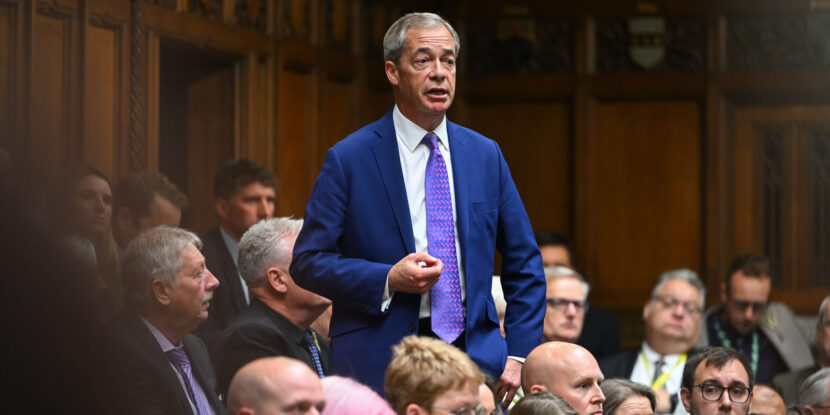
❓WHAT HAPPENED: The British Parliament is poised to pass a “generational smoking ban,” which will ban people born after 2008 from buying cigarettes. Nigel Farage has vowed to scrap it if his Reform Party takes power.
👤WHO WAS INVOLVED: The ban was initially proposed by former Prime Minister Rishi Sunak and has been carried forward by incumbent Prime Minister Sir Keir Starmer.
📍WHEN & WHERE: The ban is being debated in the British Parliament at present.
💬KEY QUOTE: “The puritanical spirit of Oliver Cromwell again stalks the land.” – Nigel Farage
🎯IMPACT: The ban is expected to fuel the illicit cigarette trade and is seen as a move away from personal freedoms. As it does not cover vaping, it will also likely increase the spread of vape stores tied to organized crime across the country.
The British Parliament is on the verge of passing a “generational smoking ban” as part of the Tobacco and Vapes Bill, which would gradually prohibit tobacco sales to anyone born after 2008. Nigel Farage, leader of Britain’s Reform Party, has branded it unjust and unworkable, and vowed to scrap it if his party supplants Prime Minister Sir Keir Starmer’s Labour Party at the next general election.
“Ten years from now, a 27-year-old will not be legally able to buy cigarettes, but a 28-year-old will,” Farage noted in an article for The Telegraph. “A decade later 37-year-olds will not be deemed old enough to smoke, but 38-year-olds will be free to do so. And so forth.”
Farage observed that enforcement of the generational smoking ban will be pushed onto the shopkeeper, who will face a fine of £200 (~$270) if he “fails to carry out his duty as some kind of health policeman.”
“Maybe the much-debated—and much-disliked—plan for digital ID cards is meant to help with enforcement,” he cautioned.
Farage argued that the ban represents not only an erosion of Britons’ personal freedoms—”the puritanical spirit of Oliver Cromwell again stalks the land,” he wrote, referencing the 17th-century Lord Protector who oversaw bans on Christmas and Easter celebrations, traditional dancing, and ale houses, among other “sinful” pleasures—but will also boost the black market for tobacco, as seen in countries like Australia, where high cigarette prices have fueled illicit trade.
Vape stores, often unregistered and proliferating across Britain in increasingly large numbers, are already a major source of illegal cigarettes, along with counterfeit goods, drugs, and other dangerous products. Significantly, the Tobacco and Vapes Bill does not ban vapes generally, only tobacco products—despite the fact that it is vape stores, not traditional tobacconist shops, that are proven hubs of organized crime and illegal immigrant activity in Britain.
Join Pulse+ to comment below, and receive exclusive e-mail analyses.
















.jpg)


.jpg)

_(51716647955).jpg)


.jpg)


