



Monday, January 19, 2026

WE ARE 100% INDEPENDENT AND READER-FUNDED. FOR A GUARANTEED AD-FREE EXPERIENCE AND TO SUPPORT REAL NEWS, PLEASE SIGN UP HERE, TODAY.

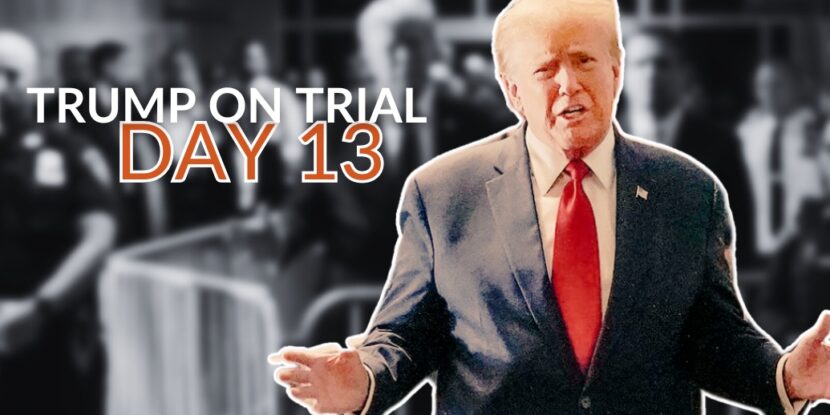
Trump Trial Day 13: Michael Cohen Brings Bragg’s Case To A Disastrous End.

The thirteenth day of former President Donald J. Trump‘s Manhattan-based hush money trial continued with the prosecution’s direct examination of their star witness, serial perjurer Michael Cohen. Much like Monday’s testimony, Cohen and prosecutor Susan Hoffinger spent much of the morning and early afternoon discussing invoices and verbal payment agreements that may or may not have only existed in Cohen‘s head. Todd Blanche handled Cohen’s cross-examination, with the two clashing from the start.

Also of note, court transcripts of a sidebar conversation between Trump‘s defense team, Judge Juan Merchan, and prosecutor Joshua Steinglass revealed that Michael Cohen is the last witness for the prosecution. Previously, District Attorney Alvin Bragg’s office had indicated they’d be bringing one additional witness after Cohen. With the prosecution’s case coming to a close, they have yet to detail what, if any, underlying crime former President Trump has committed.

The court won’t be in session Wednesday or Friday. Michael Cohen’s cross-examination will continue on Thursday.

A MATTER OF LOYALTY. 

Starting the second day of direct examination by prosecutor Susan Hoffinger, Cohen claimed he had been Trump‘s personal counsel for “approximately 15 months.” When Hoffinger asked him why he lied for Trump, Cohen responded, “Out of loyalty and to protect him.” The disgraced attorney’s insistence on terms like “loyalty” and “respect” is likely why prosecutors focused so much with prior witnesses on Trump’s use of similar terms. Prosecutors had quotes using similar words from several books authored by Trump entered into the evidentiary record.

Much like Cohen‘s recollections of what Trump may or may not have said, his understanding of “loyalty” and “respect” isn’t derived from Trump but is his own. A secondary problem for the prosecution and Cohen’s discussion of “loyalty” is the fact that the disgraced attorney admitted to unethically recording a conversation with his client — over which he may have also perjured himself again.

COHEN ADMITS HE LIED TO CONGRESS.

As the morning wore on, Hoffinger — likely acknowledging her witness’s past inability to be truthful — asked Cohen to address his conviction for lying to Congress. The disgraced attorney explained the circumstances of his perjury charge and sentence. “They dealt with the Trump Tower Moscow real estate project, specifically the number of times that I claimed to have spoken to Mr. Trump about the project as well as the time period for those conversations,” Cohen testified.

Hoffinger next asked Cohen why he lied. “Because I was staying on Mr. Trump’s message that there was no Russia, Russia, Russia, and again in coordination with the joint defense team, that’s what was preferred,” he responded, appearing to mock a turn of phrase often used by Trump when the corporate media brings up the Russia Hoax.

THE TIMELINE STILL MAKES NO SENSE.

During yesterday’s testimony, The National Pulse highlighted an issue with Cohen and the District Attorney’s prosecutors’ timeline of alleged crimes. The alleged hush money repayments made to Cohen were all said to have occurred in 2017, well after the 2016 election, casting doubt on the prosecution’s assertion that the hush money payments were made to influence the election.

This morning, Cohen muddied the timeline even further, testifying that he continued to pressure individuals around both Stormy Daniels and Karen McDougal to lie about their alleged affairs with Trump well into 2018. When asked why he continued to work on the Daniels and McDougal stories, Cohen replied: “In order to protect Mr. Trump.”

If the primary concern was the impact the Daniels and McDougal stories could have on the 2016 presidential election, Cohen offered no reason to the court and jury for continuing to work as a ‘fixer‘ on the stories nearly two years later.

NOTHING COHEN SAYS CAN BE BELIEVED. 

The disgraced and disbarred attorney spent much of the late morning describing a bevy of instances in which he claims he lied on behalf of former President Trump. District Attorney Alvin Bragg‘s prosecutors likely felt they had to go down this path as it would be exposed during Cohen’s cross-examination beginning in the afternoon.

However, Cohen‘s admissions of being untruthful to an almost pathological degree cast a shadow on the remainder of his direct examination. The one-time Trump associate claimed he spoke with the former President regarding the false statement he gave to the media about the hush money payment to Daniels. According to Cohen, he told Trump “that I had paid the money on his behalf without his knowledge because just because something isn’t true doesn’t mean it can’t hurt you and that I did it.”

Cohen then dubiously claimed Trump replied, “That’s good, good.”

STORMY DANIEL’S DENIAL.

In another moment, Cohen may have let slip that many of his actions were of his own accord. He testified that he was the one to inform former President Trump that Stormy Daniels would be issuing a statement denying the affair allegation. When asked by Hoffinger why he was the one who told Trump, Cohen responded, “One to get credit for expressing that I was continuing to ensure that he was protected and stayed loyal. And the other so we could have this matter taken care of.”

Cohen told Hoffinger that Stormy Daniels’s denial statement was false. When asked how he knew, Cohen responded it was because he had written the statement. Again, while his claim may appear damaging on the surface, it reinforces the contention that he is untrustworthy and lacks credibility.

The direct examination of Cohen did not improve from here in terms of bolstering his credibility. When the prosecution submitted his 2018 letter to the Federal Election Commission (FEC) regarding the Stormy Daniels payment, Cohen was asked why he had lied about the Trump Organization and campaign not having knowledge of the payment. Again, Cohen — without directly implicating Trump — said the letter was meant to be misleading “in order to protect Mr Trump, stay on message, demonstrate my continued loyalty.”

JUDGE MERCHAN’S INSTRUCTIONS. 

At this point, Judge Juan Merchan stopped the direct examination to instruct the jury regarding Cohen’s FEC letter and statement. He told the jurors that Cohen’s statement was only admissible in the context of their assessment of the serial perjurer’s credibility as a witness. Merchan continued, instructing the jury that the fact that an FEC investigation into the Trump campaign occurred was not admissible and should have no bearing on their deliberations.

A little over an hour later, Judge Merchan issued a second set of jury instructions regarding Cohen having pleaded guilty to lying to Congress. Merchan said the guilty plea was not to have any bearing as evidence of Trump‘s guilt but could be used to assess Cohen’s credibility.

“Mr. Cohen’s plea is not evidence of the defendant’s guilt, and you may not consider it in determining whether the defendant is guilty or not guilty of the charged crimes,” Merchan said.

COHEN ‘STOPPED LYING IN 2018.’

The prosecution’s direct examination of Cohen wound down just before the court broke for lunch. Hoffinger walked Cohen through how he communicated with other business associates and confidants within the Trump orbit. In addition, the context and whether the recording Cohen had made of his conversation with Donald Trump regarding David Pecker and the McDougal payment was altered in any way was raised again.

“At any time, did you alter or modify the audio recording of your conversation with Mr. Trump as contained in PX246?” Hoffinger asked Cohen. He replied, “No, ma’am.”

The disgraced attorney told the jury that he hasn’t lied since 2018, suggesting that the several criminal cases against him and his subsequent three-year prison sentence caused him to have a moral revelation. “I regret doing things for him that I should not have — lying, bullying people in order to effectuate a goal. I don’t regret working with the Trump Organization,” Cohen said. Again, he stopped short of firmly stating he was ordered to do anything illegal. Instead, Cohen again focused on the need to “keep the loyalty.”

CROSS-EXAMINATION BEGINS.

Former President Trump‘s lead defense attorney, Todd Blanche, handled Michael Cohen‘s cross-examination and the long-expected fireworks kicking off immediately. “You went on TikTok and called me a crying little sh*t,” asked Blanche in an opening salvo. Cohen responded, “Sounds like something I would say.” As Cohen finished, prosecutors frantically objected to the question, which Judge Merchan sustained, striking the question and response from the record.

Blanche’s opening strategy appears to have been to paint Cohen as someone who runs their mouth and still demeans others, undermining his claims to have turned a new leaf.

Taking another shot at Cohen’s credibility and personal investment in the trial outcome, Blanche asked: “Is this trial important to you, Mr. Cohen?” The disgraced attorney answered: “Personally, yes.”

COHEN HAMMERED ON TIKTOK POSTS.

After lunch, Blanche spent a sustained period hammering Cohen on his social media posts throughout the trial. “You also talked on social media, during this trial, about President Trump, have you not?” Trump‘s attorney asked Cohen. The serial perjurer replied: “Sounds correct, yes.”

Addressing Michael Cohen’s TikTok video posts, Blanche asked him if he had referred to Trump as a “dictator douchebag.” Cohen again acknowledged that he likely had. “On that same TikTok on April 23, you referred to President Trump when he left the courtroom — you said that he goes right into that little cage, which is where he belongs in a f**king cage like an animal?” Blanche asked Cohen next.

“I recall saying that,” Cohen responded.

Blanche’s line of questioning served two purposes. One illustrates the extreme degree of hostility Cohen still holds for former President Trump, which could color his testimony as possibly false or biased. The other highlights Cohen’s hazy recollection of recent comments. During the prosecution’s direct examination, Cohen was able to recall — evidently in great detail — conversations between five and ten years old with former President Trump.

A HAZY MEMORY. 

“Do you remember in February 2021, you were going on TV talking about the investigation?” Blanche asked Cohen, referring to the District Attorney investigation prior to Bragg’s indictment of Trump. Cohen could not give a concrete response, instead replying: “I go on TV often, so I’m not sure what the topic was.”

Blanche continued to press Cohen, asking him if he had often talked to the press about the investigation. Cohen, again, refused to give a firm answer, stating instead: “It sounds correct.”

The response prompted another terse exchange between Blanche and Cohen, with Trump‘s defense attorney firing back: “I don’t want it to sound correct. Is it correct?” Michael Cohen finally relented, responding, “Yes, it would be correct.”

Zeroing in on conversations Cohen had with his attorney, Lanny Davis, regarding media appearances, Blanche drew Cohen’s memory problems out into the open for the jury: “You testified yesterday about very specific recollections that you have about telephone conversations you had with President Trump in 2016 — but you have no recollection that last month just over a year ago that you promised the district attorney that you would stop going on TV?”

“What I was saying to you, sir, I don’t recall even having these conversations with Lanny Davis about not going on television,” Cohen replied before adding: “I recall the conversations with President Trump at the time, yes.”

COHEN MAKES MONEY OFF TRUMP.

Moving on, Blanche focused on Cohen’s financial motivations for attacking and ostensibly lying about former President Trump. He asked Cohen about his social media activity, specifically his TikTok videos. Cohen testified he spends about an hour on TikTok every night. When Blanche asked if he makes money off his social media posts, Cohen admitted he does but contended, “It’s not significant.”

Continuing the social media theme, Blanche asked Cohen if he uses TikTok to make money. The serial perjurer replied, “Money is made from it, yes.”

“That’s not my question. One of the reasons you do it is to make money, yes or no?” Blanche fired back.

“Yes,” is all Cohen said in response.

OBSESSION.

Cohen’s ‘obsession’ with Trump was the final theme of Blanche’s cross-examination before the court adjourned for the day. Blanche read a series of glowing statements about Trump that Cohen has made over the years. “At the time, you weren’t lying, right?” Trump’s defense attorney asked Cohen. “At that time, I was knee-deep into the cult of Donald Trump, yes,” Cohen responded, adding: “I was not lying, it’s how I felt.”

Blanche asked Cohen if he was obsessed with Donald Trump. “I wouldn’t say obsessed. I admired him tremendously,” Cohen replied. He continued: “I can’t recall using that word. I wouldn’t say it would be wrong.”

Pivoting into a darker form of obsession, Blanche confronted Cohen over claims he now wants to see Trump in prison: “Have you regularly commented on your podcasts that you want President Trump to be convicted in this case?”

“Yes, probably,” Cohen responded.

When pressed further on why he responded with “probably,” Cohen said: “Because I don’t specifically know if I used those words, but yes, I would like to see that.”

You can read The National Pulse’s Day Twelve trial coverage here, and if you find our work worthwhile, consider joining as a supporter.

By Popular Demand.
The National Pulse Now has an on-site comments section for members. Sign up today and be part of the conversation in our community of almost 15,000.
More From The Pulse

WE ARE 100% INDEPENDENT AND READER-FUNDED. FOR A GUARANTEED AD-FREE EXPERIENCE AND TO SUPPORT REAL NEWS, PLEASE SIGN UP HERE, TODAY.

BREAKING: ANOTHER British MP Defects to Reform Party, Joining Farage’s Growing Movement.

PULSE POINTS

WHAT HAPPENED: Andrew Rosindell, a long-time Tory, defected to the Reform Party.

👤WHO WAS INVOLVED: Andrew Rosindell MP, Nigel Farage, and the Reform Party.

📍WHEN & WHERE: The defection was announced on Sunday, shortly after Robert Jenrick’s defection earlier in the week.

💬KEY QUOTE: Rosindell expressed his objections to Tory policy and leadership in a tweet.

🎯IMPACT: Rosindell’s move makes him the 7th MP to join Reform, with Farage setting a May deadline for further defections.

IN FULL

Following Robert Jenrick MP’s defection from the UK Conservative Party to the Reform Party earlier this week, Andrew Rosindell has also switched allegiances.

Rosindell, who has been a member of the Conservative Party since he was 14, cited his discontent with the party’s policies and leadership as reasons for his departure. He made his views known in a tweet on Sunday.

This makes Rosindell the 7th MP to join the Reform Party, which is led by Nigel Farage. Farage has issued a deadline in May for any further defections, including those from MPs and local councillors.

The move signals another shift in the UK political landscape, as the Reform Party continues to expand its influence and challenge the political establishment.

Rosindell’s decision to join Reform underscores ongoing dissatisfaction within the Conservative Party, potentially leading to more changes in the coming months.

Join Pulse+ to comment below, and receive exclusive e-mail analyses.

show less
show more
By Popular Demand.
The National Pulse Now has an on-site comments section for members. Sign up today and be part of the conversation in our community of almost 15,000.

WE ARE 100% INDEPENDENT AND READER-FUNDED. FOR A GUARANTEED AD-FREE EXPERIENCE AND TO SUPPORT REAL NEWS, PLEASE SIGN UP HERE, TODAY.

Foreigners Responsible for Most Train Thefts, Huge Share of Violent and Sexual Crimes.

PULSE POINTS

WHAT HAPPENED: Data from the British Transport Police (BTP) revealed that foreign nationals accounted for 79 percent of all arrests for theft on British trains in 2025, and 40 percent of all railway arrests overall.

👤WHO WAS INVOLVED: British Transport Police, the Centre for Migration Control (CMC) think tank, and foreign nationals involved in various offenses.

📍WHEN & WHERE: Data pertains to arrests across England, Wales, and Scotland in 2025.

💬KEY QUOTE: “They have made our trains unsafe. It is the responsibility of any sane government to end immigration and begin a programme of mass deportations to protect the British people,” said Robert Bates, research director at CMC.

🎯IMPACT: The data has prompted calls for stricter immigration policies, with recommendations for immediate deportations of foreign nationals convicted of crimes.

IN FULL

Foreign nationals accounted for a large share of arrests on Britain’s rail network in 2025, according to figures released by the British Transport Police (BTP) following a Freedom of Information request from the Centre for Migration Control (CMC). The data shows that foreign nationals were responsible for 79 percent of all theft arrests on British trains and 40 percent of arrests overall across the railway system.

The CMC said the figures also point to disproportionate involvement by foreign nationals in other serious crimes on the rail network. According to the group’s analysis, foreign nationals made up 40 percent of arrests for drug-related offenses, 37 percent of arrests for sexual offenses, and 36 percent of arrests for violent crime. Overall, they accounted for 37.7 percent of all railway arrests. “We have imported a huge problem,” the CMC said in a post on X.

CMC research director Robert Bates blamed government immigration policy for the trend. “They have made our trains unsafe. It is the responsibility of any sane government to end immigration and begin a programme of mass deportations to protect the British people,” he said. The CMC has also called for the introduction of a visa “red list” barring entry from certain countries whose nations have high rates of criminality, similar to policies implemented by President Donald J. Trump, and for legal changes to ensure foreign nationals convicted of crimes are deported immediately.

The railway data aligns with broader crime statistics that have fueled debate over immigration and public safety. Recent analyses of conviction records indicate that migrants were significantly overrepresented in sexual offense convictions compared with Britons, with foreign nationals estimated to be around 70 percent more likely to be convicted of sex crimes during the early 2020s.

Concerns have also been raised about enforcement, with reports suggesting that staffing shortages and administrative pressures have led to some foreign criminals being wrongly released rather than removed from the country.

Similar patterns have been reported elsewhere in Western Europe. In France, foreigners were responsible for 64 percent of violent crimes on Paris public transport in 2024, with North Africans disproportionately represented. In Germany, foreigners accounted for 59 percent of sexual crimes committed on trains and at train stations in 2024.

Image by Andrew Abbott.

Join Pulse+ to comment below, and receive exclusive e-mail analyses.

show less
show more
By Popular Demand.
The National Pulse Now has an on-site comments section for members. Sign up today and be part of the conversation in our community of almost 15,000.

WE ARE 100% INDEPENDENT AND READER-FUNDED. FOR A GUARANTEED AD-FREE EXPERIENCE AND TO SUPPORT REAL NEWS, PLEASE SIGN UP HERE, TODAY.

Trump Stuns With Sweeping Greenland Acquisition Tariffs.

PULSE POINTS

WHAT HAPPENED: President Trump announced tariffs on countries obstructing the U.S. purchase of Greenland.

👤WHO WAS INVOLVED: Donald J. Trump and countries including Denmark, Norway, Sweden, France, Germany, the UK, the Netherlands, and Finland.

📍WHEN & WHERE: Tariffs to begin on February 1st, 2026, with an increase on June 1st, 2026.

💬KEY QUOTE: “We have subsidized Denmark, and all of the Countries of the European Union, and others, for many years by not charging them Tariffs.” – Donald J. Trump

🎯IMPACT: Tariffs aimed at compelling a deal for the U.S. purchase of Greenland, citing national security concerns.

IN FULL

President Donald J. Trump has announced new tariffs on several European countries, including Denmark, Norway, Sweden, France, Germany, the United Kingdom, the Netherlands, and Finland. These tariffs are in response to these nations’ obstruction of the United States’ efforts to purchase Greenland.

The tariffs will start at 10% on February 1st, 2026, and will increase to 25% on June 1st, 2026. Trump argues that these tariffs are necessary to protect global peace and security, as the strategic importance of Greenland is paramount.

“We have subsidized Denmark, and all of the Countries of the European Union, and others, for many years by not charging them Tariffs, or any other forms of remuneration,” Trump stated, emphasizing the need for Denmark to “give back” as world peace is at stake.

The former president also highlighted concerns over other nations, such as China and Russia, expressing interest in Greenland, asserting that only the United States can effectively safeguard this “sacred piece of Land.”

Trump’s statement also mentioned the significant investment in security programs related to “The Golden Dome,” and how acquiring Greenland is crucial for maximizing the potential of these systems. The U.S. remains open to negotiation with Denmark and the other involved nations.

Read the full post here.

show less
show more
By Popular Demand.
The National Pulse Now has an on-site comments section for members. Sign up today and be part of the conversation in our community of almost 15,000.

WE ARE 100% INDEPENDENT AND READER-FUNDED. FOR A GUARANTEED AD-FREE EXPERIENCE AND TO SUPPORT REAL NEWS, PLEASE SIGN UP HERE, TODAY.

Culture of Death: Britain Hits 300,000 Annual Abortions.

PULSE POINTS

WHAT HAPPENED: Abortion numbers reached a record high in 2023, with an estimated 299,614 abortions taking place across Britain.

👤WHO WAS INVOLVED: The Department of Health and Social Care, Right To Life UK, and British abortionists.

📍WHEN & WHERE: 2023, United Kingdom.

💬KEY QUOTE: “It is a national tragedy and a national scandal that so many lives were lost to abortion in England and Wales in 2023.” – Catherine Robinson

🎯IMPACT: The figures have prompted calls for a national conversation about abortion laws, and renewed pressure for the British government to release the figures for more recent years, which they have been delaying.

IN FULL

Britain recorded its highest number of abortions in 2023, with an estimated 299,614 procedures carried out across the country, according to official figures. Data released by the Department of Health and Social Care show that 278,740 abortions took place in England and Wales, an increase of 10.56 percent compared with the previous year. Scotland reported 18,242 abortions, while Northern Ireland recorded an estimated 2,632, bringing the total to a new national high.

The increase came during the third consecutive year in which at-home abortion services have been widely available in England and Wales. These services, introduced during the COVID-19 pandemic, allow women to receive abortion pills following a remote consultation, rather than attending a clinic in person. Supporters argue the model improves access to care, while critics say it reduces medical oversight and safeguards, and allows people to acquire abortifacients without the consent of the expectant mother.

Right To Life UK has responded to the figures by calling for a nationwide discussion on abortion law and policy. The group has emphasized the need for stronger protections for unborn children alongside expanded practical and financial support for women facing unplanned pregnancies. Polling cited by the organization suggests that a majority of women support changes to current abortion regulations, including the reinstatement of mandatory in-person consultations.

Catherine Robinson, a spokeswoman for Right To Life UK, said, “It is a national tragedy and a national scandal that so many lives were lost to abortion in England and Wales in 2023.” Pro-life organizations stress that figures for more recent years are unavailable because the British government is delaying their release, suspecting they show abortions have increased even more since 2023.

The British debate is unfolding amid wider international controversy over abortion. In Canada, undercover footage released has reignited criticism from pro-life groups by showing how easily late-term abortions can be accessed. The United States appears to be the only Anglo-Sphere country countering the growing abortion trend. President Donald J. Trump’s Big Beautiful Bill, introduced last year, has led to the closure of several abortion-providing clinics by restricting public funding.

Image by mykaul.

Join Pulse+ to comment below, and receive exclusive e-mail analyses.

show less
show more
By Popular Demand.
The National Pulse Now has an on-site comments section for members. Sign up today and be part of the conversation in our community of almost 15,000.

WE ARE 100% INDEPENDENT AND READER-FUNDED. FOR A GUARANTEED AD-FREE EXPERIENCE AND TO SUPPORT REAL NEWS, PLEASE SIGN UP HERE, TODAY.

Canada’s Carney Sells Out to CCP After Trump Trade Clash.

PULSE POINTS

WHAT HAPPENED: Canadian Prime Minister Mark Carney and Chinese President Xi Jinping have agreed to a major trade deal, which could flood the Canadian market with Chinese electric vehicles, while reducing tariffs on Canadian goods exported to China.

👤WHO WAS INVOLVED: Prime Minister Mark Carney, President Xi Jinping, Ontario Premier Doug Ford, and Canadian farmers.

📍WHEN & WHERE: The preliminary deal was announced on January 16, following talks between Carney and Xi in Beijing.

💬KEY QUOTE: “Make no mistake: China now has a foothold in the Canadian market and will use it to their full advantage at the expense of Canadian workers.” – Doug Ford.

🎯IMPACT: The agreement is a major reset of Canadian-Chinese relations and could further complicate a potential Canadian trade deal with the United States.

IN FULL

Canada is moving to deepen economic ties with Communist China after fumbling trade negotiations with the United States late last year, marking a notable shift in Ottawa’s foreign and trade policy. During a visit to Beijing this week, Prime Minister Mark Carney announced a preliminary trade agreement with China that lowers barriers on both sides.

Under the deal, Canada will allow China to flood the Canadian market with up to 49,000 Chinese-made electric vehicles each year at a tariff of 6.1 per cent, a huge reduction from the 100 per cent duty previously imposed. In exchange, China will reduce tariffs on Canadian agricultural exports, including canola seed oil, which will fall to about 15 per cent by March, down from levels exceeding 80 per cent. Duties on canola meal, lobster, crab, and peas will also be lifted for the remainder of the year.

Carney claimed the agreement is a pragmatic step to support Canadian farmers and consumers while diversifying the country’s trade relationships. He said the deal would help restore access to a key export market for agriculture and could make lower-cost electric vehicles more available to Canadians.

However, the agreement comes as Canada’s economic relationship with the United States has grown increasingly unstable. Last year, Carney and Trump held talks at the White House that appeared to bring the two countries closer to a new trade deal, with both sides publicly expressing optimism. However, those discussions later broke down. In October, Trump abruptly halted trade negotiations with Canada, citing anger over a provincial anti-tariff advertising campaign in Ontario produced and paid for by Premier Doug Ford that targeted U.S. trade measures using edited, misleading footage of former President Ronald Reagan. Trump accused Canada of acting in bad faith.

Ford also commented on the new China deal, saying, “Make no mistake: China now has a foothold in the Canadian market and will use it to their full advantage at the expense of Canadian workers.” Some industry leaders and provincial officials have also raised concerns that opening the door to Chinese electric vehicles could further complicate relations with Washington.

The collapse of negotiations with Washington has heightened concerns in Ottawa about Canada’s heavy reliance on the U.S. market, which absorbs roughly three-quarters of Canadian exports. Against that backdrop, the agreement with China represents the most significant reset in relations between Ottawa and Beijing in years. Trade ties had deteriorated following earlier disputes and retaliatory tariffs, particularly in agriculture. Canadian canola exports to China were among the hardest hit, costing farmers billions of dollars in lost sales.

Join Pulse+ to comment below, and receive exclusive e-mail analyses.

show less
show more
By Popular Demand.
The National Pulse Now has an on-site comments section for members. Sign up today and be part of the conversation in our community of almost 15,000.

WE ARE 100% INDEPENDENT AND READER-FUNDED. FOR A GUARANTEED AD-FREE EXPERIENCE AND TO SUPPORT REAL NEWS, PLEASE SIGN UP HERE, TODAY.

Socialist Mayor Hit With Ethics Fine for Concealing $10K Parental Donation.

PULSE POINTS

WHAT HAPPENED: Seattle Mayor Katie Wilson (D) was fined $250 for failing to disclose over $10,000 in contributions from her parents during her campaign.

👤WHO WAS INVOLVED: Seattle Mayor Katie Wilson, her parents, and the Seattle Ethics and Elections Commission.

📍WHEN & WHERE: The fine was issued following her November election victory in Seattle.

💬KEY QUOTE: “Seattle is one of the most expensive cities in the country… I think that a lot of people of my generation… found it very relatable that during this stressful campaign my parents chipped in to help pay for the cost of their granddaughter’s daycare.” – Katie Wilson

🎯IMPACT: The case highlighted potential loopholes in campaign finance laws and resulted in a small fine.

IN FULL

Seattle Mayor Katie Wilson (D) was fined $250 by the City of Seattle’s Ethics and Elections Commission after failing to disclose more than $10,000 in financial support from her parents during her mayoral campaign. The commission ruled that the money constituted campaign contributions, even though Wilson said the funds were used to pay for daycare expenses, and required corrective action to bring the campaign into compliance with city election laws.

According to the commission, the penalty was kept low because the issue had not previously arisen in a Seattle municipal campaign. Commission representative Jessica Pisane said, “It’s the first time it has arisen in a City election campaign.”

Following her victory in November, Wilson defended the assistance she received from her parents, saying, “Seattle is one of the most expensive cities in the country, our childcare is off-the-charts expensive and, honestly, I think that a lot of people of my generation, and younger and older, found it very relatable that during this stressful campaign my parents chipped in to help pay for the cost of their granddaughter’s daycare.”

Before entering city politics, Wilson founded the Transit Riders Union. Financial disclosures filed during her campaign showed that she earned between $60,000 and $99,000 annually prior to running for mayor. She also reported additional income from writing as a columnist for left-leaning publications.

Since taking office, Wilson has drawn criticism over several progressive policy positions. She has faced backlash related to public safety after reports that Seattle police officers were being directed to divert many drug abusers away from arrest and toward social service programs, a move critics argue amounts to de facto non-enforcement of drug laws. Wilson’s administration has denied that officers have been told not to make arrests, but the issue has fueled tension with police unions and public safety advocates.

Wilson has also come under national scrutiny following comments about independent journalists reporting on childcare providers in Seattle. After she characterized certain citizen journalists as engaging in harassment, a senior U.S. Justice Department official publicly warned that citizen journalism and asking questions are protected speech under the Constitution.

During her campaign, Wilson supported proposals such as defunding the police and exploring government-run grocery stores, drawing comparisons to other socialist politicians like New York City Mayor Zohran Mamdani.

Image by nathantain.

Join Pulse+ to comment below, and receive exclusive e-mail analyses.

show less
show more
By Popular Demand.
The National Pulse Now has an on-site comments section for members. Sign up today and be part of the conversation in our community of almost 15,000.

WE ARE 100% INDEPENDENT AND READER-FUNDED. FOR A GUARANTEED AD-FREE EXPERIENCE AND TO SUPPORT REAL NEWS, PLEASE SIGN UP HERE, TODAY.

GOP Advances Ban on Congressional Stock Trading Without a SINGLE Democrat Supporter.

PULSE POINTS

WHAT HAPPENED: Republican Representative Bryan Steil’s “Stop Insider Trading Act” passed the House Administration Committee without any Democrat support and moves to the House floor.

👤WHO WAS INVOLVED: Rep. Bryan Steil (R-WI), Democrat committee members, and other lawmakers.

📍WHEN & WHERE: House Administration Committee markup session on January 14, 2026.

💬KEY QUOTE: “The focus of the bill is to prohibit insider trading, not to make elected officials poor.” – Rep. Bryan Steil

🎯IMPACT: The bill aims to restrict insider trading among members of Congress while allowing certain investments.

IN FULL

Representative Bryan Steil (R-WI) advanced his “Stop Insider Trading Act” out of the House Administration Committee without support from a single Democrat, clearing the way for consideration by the full House. The proposal would prohibit members of Congress from purchasing individual stocks and require lawmakers to give seven to 14 days’ notice before selling securities. Investments in index and mutual funds would still be allowed, as would the reinvestment of dividends from previously owned assets.

Democrats claim the bill fails to fully address conflicts of interest arising from lawmakers trading stocks. During a two-hour markup session, Rep. Joe Morelle (D-NY) proposed requiring “Congress and the President and the Vice President” to fully divest from individual securities. Rep. Julie Johnson (D-TX) introduced an amendment mandating complete divestment without exemptions for capital gains taxes.

Steil rejected those proposals, cautioning that mandatory divestment could discourage qualified candidates from seeking office. “Under the amendment offered by our colleague from Texas, that [capital gains tax] would obviously continue to apply, and for some people, that may be a very significant financial impact,” he said. He warned that the added financial burden could cause “some individuals… to not come to Congress—and not because they did anything wrong, but because they had a successful private sector career.”

Democrats attempted one final change when Rep. Norma Torres (D-CA) introduced an amendment to prohibit the reinvestment of dividends. Republicans voted it down, with Steil arguing that dividend income does not present insider trading risks. “Those dividends are structured within the company with advanced notice, outside of the control of any given member. It does not carry the risk of insider trading,” he said. He added, “The focus of the bill is to prohibit insider trading, not to make elected officials poor.”

Despite the disagreement over Steil’s bill, concerns about insider trading in Congress have been acknowledged across party lines. Rep. Alexandria Ocasio-Cortez (D-NY) has previously warned that such practices undermine public trust, stating that insider trading occurs among Democrats as well as Republicans and contributes to widespread cynicism about Washington.

Image by Ted Eytan.

Join Pulse+ to comment below, and receive exclusive e-mail analyses.

show less
show more
By Popular Demand.
The National Pulse Now has an on-site comments section for members. Sign up today and be part of the conversation in our community of almost 15,000.

WE ARE 100% INDEPENDENT AND READER-FUNDED. FOR A GUARANTEED AD-FREE EXPERIENCE AND TO SUPPORT REAL NEWS, PLEASE SIGN UP HERE, TODAY.

Feds Offer $15K for Capture of Illegal Who Rammed ICE Agents.

PULSE POINTS

WHAT HAPPENED: An illegal immigrant allegedly rammed his car into U.S. Immigration and Customs Enforcement (ICE) vehicles, injuring multiple agents during a traffic stop in Dallas, Texas, with federal officials offering a reward for information leading to his arrest.

👤WHO WAS INVOLVED: Jerson Lopez-Sanchez, a 28-year-old Honduran national, ICE agents, the Federal Bureau of Investigation (FBI), and federal authorities.

📍WHEN & WHERE: The incident occurred on December 1, 2025, in Dallas, Texas, with the indictment filed on January 14, 2026.

💬KEY QUOTE: “The ramming was so violent that it deployed all the airbags in the vehicle,” said Jay Combs, interim U.S. attorney for the district.

🎯IMPACT: Multiple ICE agents were injured, and the FBI is offering a $15,000 reward for information leading to Lopez-Sanchez’s arrest.

IN FULL

Federal authorities are searching for Jerson Lopez-Sanchez, a 28-year-old illegal migrant from Honduras, after he allegedly rammed his vehicle into U.S. Immigration and Customs Enforcement (ICE) vehicles during a traffic stop in Dallas on December 1, 2025. The attack injured multiple agents, according to federal prosecutors. The Federal Bureau of Investigation (FBI) is offering a reward of up to $15,000 for information leading to the arrest of Lopez-Sanchez, who remains at large.

Lopez-Sanchez reportedly attempted to flee when his Chevy Silverado was surrounded by three ICE vehicles. He reversed into a law enforcement Jeep, injuring an ICE agent who had one leg outside the vehicle. Prosecutors allege he then drove around the other law enforcement vehicles to escape.

According to the federal indictment, Lopez-Sanchez later rammed into a Chrysler van operated by ICE agents, injuring two more agents inside. Photos in the indictment reveal severe damage to the van, including a smashed front and smoke coming from the engine block. “The ramming was so violent that it deployed all the airbags in the vehicle,” said Jay Combs, interim U.S. Attorney for the Eastern District of Texas.

The chase continued for 10 minutes before the truck stopped on a median, and all five occupants fled on foot. While three were detained with the help of civilians, Lopez-Sanchez remains at large. He faces three counts of assaulting ICE agents and could face up to 20 years in prison if convicted.

Join Pulse+ to comment below, and receive exclusive e-mail analyses.

show less
show more
By Popular Demand.
The National Pulse Now has an on-site comments section for members. Sign up today and be part of the conversation in our community of almost 15,000.

WE ARE 100% INDEPENDENT AND READER-FUNDED. FOR A GUARANTEED AD-FREE EXPERIENCE AND TO SUPPORT REAL NEWS, PLEASE SIGN UP HERE, TODAY.

Trump Dismisses Insurrection Act Use… For Now.

PULSE POINTS

WHAT HAPPENED: President Donald J. Trump addressed the potential use of the Insurrection Act amid ongoing clashes in Minneapolis, Minnesota, involving federal immigration authorities.

👤WHO WAS INVOLVED: President Trump, federal immigration authorities, local officials in Minnesota, and Republican senators.

📍WHEN & WHERE: Friday, during Trump’s departure from the White House, with events escalating in Minneapolis.

💬KEY QUOTE: “If, and when, I am forced to act, it will be solved, QUICKLY and EFFECTIVELY!” – Donald Trump

🎯IMPACT: The Insurrection Act remains a contentious option, with Republican leaders expressing reservations and urging reliance on local law enforcement.

IN FULL

President Donald J. Trump stated on Friday that there was no immediate need to invoke the Insurrection Act, despite ongoing unrest in Minneapolis where federal immigration authorities have faced violent confrontations. The 1807 law, which Trump had previously threatened to use, allows the president to deploy the military to enforce federal laws and suppress rebellions.

“I believe it was Bush, the elder Bush, he used it, I think 28 times,” Trump told reporters while departing the White House. He added, “It’s been used a lot. And if I needed it, I’d use it. I don’t think there’s any reason right now to use it, but if I needed it, I’d use it. It’s very powerful.”

The law was last invoked during the 1992 Los Angeles riots following the acquittal of police officers in the Rodney King case. However, some Republican leaders have expressed hesitation about its use. Senate Majority Leader John Thune (R-SD) remarked, “Hopefully the local officials working with not only the federal law enforcement, ICE and other agencies, but also the local law enforcement officials will be able to settle things down.”

Trump, in a Truth Social post, referred to those confronting federal officers as “Troublemakers, Agitators, and Insurrectionists,” and accused local leaders of losing control, adding: “The Governor and Mayor don’t know what to do, they have totally lost control,” he wrote. “If, and when, I am forced to act, it will be solved, QUICKLY and EFFECTIVELY!”

Join Pulse+ to comment below, and receive exclusive e-mail analyses.

show less
show more
By Popular Demand.
The National Pulse Now has an on-site comments section for members. Sign up today and be part of the conversation in our community of almost 15,000.

WE ARE 100% INDEPENDENT AND READER-FUNDED. FOR A GUARANTEED AD-FREE EXPERIENCE AND TO SUPPORT REAL NEWS, PLEASE SIGN UP HERE, TODAY.

Mexico Claims Successful Cartel Crackdown as Trump Threatens Intervention.

PULSE POINTS

WHAT HAPPENED: Mexican President Claudia Sheinbaum stated that efforts to combat cartels and migration are yielding “compelling results” amid U.S. pressure for tougher action and threats of military intervention on Mexican soil.

👤WHO WAS INVOLVED: Mexican President Claudia Sheinbaum, President Donald J. Trump, U.S. Secretary of State Marco Rubio, and Mexican Foreign Secretary Juan Ramón de la Fuente.

📍WHEN & WHERE: Statements were made during Sheinbaum’s press briefing on Friday, following a joint U.S.-Mexico call on Thursday and a phone conversation between Sheinbaum and Trump on Monday.

💬KEY QUOTE: “There are very compelling results from the joint cooperation and the work that Mexico has been doing.” – Claudia Sheinbaum.

🎯IMPACT: The U.S. is working to address cartels and illegal immigration, but tensions with the Mexican government remain over sovereignty.

IN FULL

Mexican President Claudia Sheinbaum claimed her administration has made progress in combating organized crime and reducing northward illegal immigration during a press briefing on January 16, emphasizing cooperation with the United States. Her remarks come after President J. Donald Trump recently suggested taking direct action against Mexican cartels on Mexican soil, saying, “We’ve knocked out 97 percent of the drugs coming in by water. And we are going to start now hitting land, with regard to the cartels.”

Sheinbaum pointed to a reduction in homicides, decreased fentanyl seizures at the U.S. border, and a major methamphetamine seizure earlier in the week as evidence of progress. “There are very compelling results from the joint cooperation and the work that Mexico has been doing,” she said.

A joint statement issued Thursday night by U.S. Secretary of State Marco Rubio and Mexican Foreign Secretary Juan Ramón de la Fuente emphasized the need for further efforts to address shared security threats. The statement followed a phone call between Sheinbaum and Trump, which the Mexican president described as “very good.” She said Mexico’s “sovereignty and territorial integrity were respected” and added, “We told him, so far it’s going very well, it’s not necessary, and furthermore, there is Mexico’s sovereignty and territorial integrity, and he understood.”

Sheinbaum also called on the United States to address its domestic drug consumption crisis and curb the flow of firearms into Mexico from the U.S. “The other side also has to do its part. This consumption crisis they have over there also has to be addressed from a public health perspective, through education campaigns,” she said.

Mexico has one of the strictest gun control regimes in the world, but officials say most weapons seized at crime scenes come from the United States, often through illegal purchases and smuggling. Last year, the U.S. Supreme Court dismissed Mexico’s lawsuit seeking damages from U.S. gun companies, ruling that it did not meet the legal standards required under the Protection of Lawful Commerce in Arms Act.

Tensions have also arisen over the U.S. designation of certain cartels as foreign terrorist organizations, which Mexico protested, warning that any action violating its territorial sovereignty would be unacceptable.

Image via Mexico City Government.

Join Pulse+ to comment below, and receive exclusive e-mail analyses.

show less
show more
By Popular Demand.
The National Pulse Now has an on-site comments section for members. Sign up today and be part of the conversation in our community of almost 15,000.