❓WHAT HAPPENED: Police in Britain are trialing AI technologies to prevent crime before it happens, reminiscent of Minority Report.
Newsletter
Need to Know.
Your free, daily feed from The National Pulse.
Thank You!
You are now subscribed to our newsletter.
👤WHO WAS INVOLVED: Shabana Mahmood, the British Home Secretary, and Sir Andy Marsh, head of the College of Policing.
📍WHEN & WHERE: January 18, 2026, in the Britain.
💬KEY QUOTE: “[M]y ultimate vision… was to achieve, by means of AI and technology, what Jeremy Bentham tried to do with his Panopticon. That is that the eyes of the state can be on you at all times.” – Shabana Mahmood
🎯IMPACT: The initiative is drawing criticism for weaponizing AI technology to undermine citizens’ privacy.
IN FULL
Police forces across Britain are exploring the use of artificial intelligence (AI) to identify and deter criminal activity before offenses take place, a move that has drawn comparisons to the predictive policing depicted in the film Minority Report. Around 100 separate projects are currently being reviewed by police chiefs as part of efforts to integrate AI tools into crime-fighting and public-order strategies.
Home Secretary Shabana Mahmood—roughly equivalent to the U.S. Homeland Security Secretary—is expected to formalise the expanded role of AI in policing in a white paper due to be published next week. The proposals form part of a broader reform agenda at the Home Office. Sir Andy Marsh, chief executive of the College of Policing, has said that “predictive analytics” could help forces analyse data patterns and intervene earlier to prevent crime.
Mahmood, who previously served as Justice Secretary, has also argued for a significant expansion of GPS tagging for offenders. She has suggested that increased electronic monitoring could amount to “virtual prisons” for those serving community sentences, allowing authorities to maintain close supervision without custodial sentences. Since taking over the British Home Office, she has overseen the announcement of a nationwide rollout of live facial-recognition technology by police forces.
In a recent interview with arch globalist and former Prime Minister, Sir Tony Blair, Ms Mahmood said, “AI and technology can be transformative to the whole of the law and order space.” She added that, as Justice Secretary, her “ultimate vision… was to achieve, by means of AI and technology, what Jeremy Bentham tried to do with his Panopticon. That is that the eyes of the state can be on you at all times.”
The Panopticon, an 18th-century prison design proposed by philosopher Jeremy Bentham, allowed inmates to be observed at any moment, without knowing when they were being watched. Critics argue that Bentham’s concept has become an increasingly apt metaphor for modern surveillance technology. What was once a theoretical model is now cited by civil liberties groups concerned about the scale and reach of data collection, monitoring, and algorithmic decision-making being pursued by the state.
The push for AI-driven policing comes amid wider controversy over surveillance and free speech in Britain. The government has recently reinstated a COVID-era monitoring unit tasked with spying on online commentary related to immigration and public order, prompting accusations that lawful political speech is being spied on by the state. At the same time, government ministers have defended censorship of online platforms, arguing that restrictions are necessary to maintain public safety.
Internationally, Britain’s Labour Party government has faced criticism from President Donald J. Trump, who compared Britain to China after reports that the government pressured Apple to weaken iCloud security to assist law enforcement access.
The campaign director and spokesman for Rupert Lowe’s Restore Britain party, Charlie Downes, has attacked Marine Le Pen, leader of France’s National Rally (RN) party, continuing Restore’s attacks on successful populist politicians across the West.
The National Pulse provides you with critical insights into current affairs. If you value the work of Raheem J. Kassam and his team, please JOIN THE NATIONAL PULSE or MAKE A DONATION today.
Newsletter
Need to Know.
Your free, daily feed from The National Pulse.
Thank You!
You are now subscribed to our newsletter.
‘France’s Farage.’
On Thursday, Le Pen shared a clip of an interview she conducted on French television. During the interview, Le Pen criticized France Unbowed (LFI), a far-left party led by Jean-Luc Mélenchon, another contender for the French presidency.
In the post sharing the clip, Le Pen wrote: “French citizens of the Muslim faith who are considering leaving if I am elected are mistaken: this is their country; they are French. Unlike LFI, we show respect for all French people.”
In response to the clip, Downes posted “France’s Farage,” in reference to Nigel Farage, leader of the Reform UK party in Britain, suggesting that the National Rally leader’s stance on Muslims is too moderate. Significantly, however, Lowe has previously stated he has “no problem with a multicultural society,” and his son married a Libyan woman in a wedding with a halal menu earlier this year, rendering any criticism of Le Pen as insufficiently extreme on Islam hypocritical.
Downes’s comment reflects Restore Britain’s bitter opposition to Farage. Restore was founded in June 2025 as a pressure group after Lowe, elected as a Reform Member of Parliament in 2024, was removed from Reform amid accusations of bullying staff and attacking Farage in an interview with The Daily Mail newspaper. Lowe described Reform as a “protest party led by the Messiah” and cast doubt on Farage’s ability to “deliver the goods” as Prime Minister.
Downes has previously been accused of insinuating that Farage has been “bought by Jews,” responding to a February social media post by Farage stating “I can’t be bullied. I can’t be bought. I’ve stood for the same principles for many decades” with a picture of the Reform leader standing at a podium with the Reform Jewish Alliance’s Star of David-themed logo behind him. Downes has also previously argued that “Britain is a people defined by indigenous British ancestry and Christian faith,” which would exclude Jews.
Following Restore’s launch as a political party in February 2026. Since its launch, the party has not surpassed ten percent in the polls. At present, Restore is polling at three percent and may only be competitive in Lowe’s Great Yarmouth seat at the next general election.
Despite polling poorly, Restore is nevertheless splitting the right-wing vote, potentially allowing Prime Minister Andy Burnham’s left-wing Labour Party to edge out Reform in just enough seats to remain in power. As such, Restore is seen by many as restoring the electoral viability of the British establishment uniparty comprised of Labour and the center-left Conservatives, who have been working with Lowe.
Restore could cost Reform as many as 77 seats and help the incumbent Labour Party achieve a majority in the House of Commons.
Le Pen and Farage are not the only populist politicians to attract the ire of Restore’s campaign director. Back in May, in the run-up to the Makerfield by-election, during which the incumbent Labour Prime Minister Andy Burnham was elected, Downes posted: “Restore Britain is the enemy of populism. Yes. 2010s populism, as embodied in the figure of Trump and his friends like Farage, has been utterly defeated as a radical force. It now belongs to the establishment and has no teeth.”
The comments, coupled with Downes’s disdain for Le Pen, demonstrate that Restore is motivated by more than personal hostility to Farage, but an ideological hostility to the populist, anti-establishment parties who have achieved power or are on the cusp of achieving power across the West.
Restore is backed by billionaire X owner Elon Musk, who has amplified the party’s messaging across the platform. “There’s a huge question mark over whether or not Elon Musk and all of these guys are actually working hand in hand with the British political establishment to stop a real change coming in the United Kingdom,” said The National Pulse Editor-in-Chief Raheem Kassam during an episode of Stephen K. Bannon’s War Room show back in May.
Musk famously came to blows with the MAGA grassroots over the issue of H-1B migrant visas in late 2024. While MAGA’s grassroots sought to curtail the number of H-1B visas being issued to protect American workers and jobseekers, Musk sought to protect and expand the H-1B visa program. The Trump administration is currently seeking to make it more expensive to fire H-1B workers from overseas in a bid to put American workers first.
Le Pen’s Prospects.
Le Pen remains the favorite to win the French presidential election, the first round of which is scheduled for April next year. France uses a two-round system for presidential elections, in which all candidates are permitted to run in the first round, but only the two most popular candidates are permitted to advance to the second round, assuming no candidate achieves more than 50 percent of the vote. According to recent polling, Le Pen is projected to win both the first and second round in all hypothetical match-ups. Polling has regularly suggested that she will face off against the far-left Mélenchon and win a landslide victory.
This follows a landmark Memorandum of Understanding (MoU) between the National Rally and Reform to stop illegal migrants leaving France, crossing the English Channel, and entering the United Kingdom. The MoU was signed by Farage and Jordan Bardella, President of the National Rally and favorite to become the next Prime Minister of France under Le Pen. The MoU was signed at Reform’s annual party conference last month.
A huge moment in Birmingham just now as Reform UK Leader Nigel Farage and National Rally President Jordan Bardella have signed a landmark Memorandum of Understanding (MoU) on the main stage of the Reform UK 2026 National Conference in Birmingham to put an end to the illegal… pic.twitter.com/fgD9fEIqzj
The National Pulse keeps you updated on the latest news in global politics. If you value the work of Raheem J. Kassam and his team, please JOIN THE NATIONAL PULSE or MAKE A DONATION today.
Join Pulse+ to comment below, and receive exclusive e-mail analyses.
show less
The campaign director and spokesman for Rupert Lowe's Restore Britain party, Charlie Downes, has attacked Marine Le Pen, leader of France's National Rally (RN) party, continuing Restore's attacks on successful populist politicians across the West.
show more
By Popular Demand.
The National Pulse Now has an on-site comments section for members. Sign up today and be part of the conversation in our community of almost 15,000.
WE ARE 100% INDEPENDENT AND READER-FUNDED. FOR A GUARANTEED AD-FREE EXPERIENCE AND TO SUPPORT REAL NEWS, PLEASE SIGN UP HERE, TODAY.
Following several successes in the 2026 Democratic primaries, the far-left Democratic Socialists of America (DSA) are seeking to create a far-left bloc in the House of Representatives to influence the Democrats’ congressional leadership. The plan was outlined in a proposal titled ‘Socialists in Congress Should Hold the Speakership Hostage,’ posted by the organization’s official publication, Democratic Left, earlier this week.
The National Pulse needs your help to investigate far left. If you value the work of Raheem J. Kassam and his team, please JOIN THE NATIONAL PULSE or MAKE A DONATION today.
Newsletter
Need to Know.
Your free, daily feed from The National Pulse.
Thank You!
You are now subscribed to our newsletter.
The DSA Versus Hakeem Jeffries.
If Democrats win the House in November, the DSA intend to make Hakeem Jeffries’s path to the speakership difficult. The DSA has called for DSA-aligned Representatives elected in November to withhold their votes for Speaker unless Jeffries agrees to changes that would give the far-left bloc within the Democrats greater influence.
Jeffries has marked himself as an opponent of the DSA within the Democratic Party, signaling his opposition to several key DSA proposals. “I do not support abolishing the Senate… I don’t support the DSA agenda as has been articulated by the DSA itself,” said Jeffries earlier this year.
Discharge Petitions.
The DSA’s first major objective is to lower the threshold for discharge petitions, which can force legislation onto the House floor when party leaders refuse to bring it up. This would allow a hypothetical far-left, DSA-aligned bloc within the Congressional Democrats to force votes on specific issues, such as defunding U.S. Immigration and Customs Enforcement, ending U.S. aid to Israel, and reducing military spending, as well as advance key DSA proposals such as universal healthcare. Fundamentally, lowering the threshold for discharge petitions could increase the relative power of DSA-aligned Representatives compared to the Democrats’ congressional leadership.
“By making it easier for discharge petitions to succeed, democratic socialists will be able to force their preferred legislation onto the floor for a vote at nearly any time they please. Each vote taken on our terms is then one in which working people are clearly informed as to who their friends are, and as to who their enemies are,” reads the proposal.
The National Pulse carries out deep research to keep you informed about the factions shaping party politics. If you value the work of Raheem J. Kassam and his team, please JOIN THE NATIONAL PULSE or MAKE A DONATION today.
Vacating the Chair.
The DSA’s other objective is to lower the threshold for “vacating the chair,” the procedure used to remove the Speaker and trigger a new election. The proposal is presented as insurance against Democrat leaders failing to follow through on DSA-aligned promises. As such, lowering the threshold to “vacate the chair” could allow a hypothetical far-left, DSA-aligned bloc to force a leadership crisis and even shut down the House.
“By making it easier to ‘vacate the chair,’ to remove the speaker and call for new elections, we ensure that any effort by leadership to cross our red lines is one which shuts the House down indefinitely. Together these rules ensure that even if we cannot always have the policies and leadership we want, we can have the best terrain on which to organize the working class even when in the minority,” reads the DSA proposal.
The DSA cites the Republican Freedom Caucus’s removal of former Speaker of the House Kevin McCarthy as a model, arguing that the far left should pursue the same strategy to advance their own political goals. In October 2023, Freedom Caucus members moved to remove McCarthy as Speaker over his spending deal with Democrats, which dropped key border security provisions.
Towards a Socialist Congressional Bloc.
The broader goal is to establish an organized far-left faction within the House Democrats that can operate independently of the party’s leadership. The DSA has called on its aligned Representatives to publicly campaign around the organization’s demands. The DSA explicitly seeks to replicate the Freedom Caucus’s use of congressional leverage.
“Policy gains are unlikely so long as Trump holds the presidency — but a historically large socialist bloc in Congress could demand changes to how the House is run that would shape the body’s post-Trump trajectory,” reads the DSA proposal.
This suggests that the DSA views the Congressional Progressive Caucus (CPC), the current hard-left organization within the House Democrats, as insufficiently radical. The CPC currently includes DSA members Alexandria “AOC” Ocasio-Cortez (D-NY) and Rashida Tlaib (D-MI), the former of whom is the CPC’s executive board member at-large. The DSA is currently heavily divided over whether to endorse Rep. Ocasio-Cortez. The organization withdrew its national endorsement of AOC in July 2024 for failing to meet its red lines on Israel. Earlier this year, AOC re-joined the DSA.
While any hypothetical far-left, DSA-aligned bloc is unlikely to constitute a large faction within the House after the November midterms, it may have the ability to exercise influence that far exceeds its size, especially in the event that the party secures only a narrow majority.
It also demonstrates that the DSA is not merely seeking to undermine the Trump administration in the short term but to reshape post-Trump American politics.
Join Pulse+ to comment below, and receive exclusive e-mail analyses.
show less
Following several successes in the 2026 Democratic primaries, the far-left Democratic Socialists of America (DSA) are seeking to create a far-left bloc in the House of Representatives to influence the Democrats' congressional leadership. The plan was outlined in a proposal titled 'Socialists in Congress Should Hold the Speakership Hostage,' posted by the organization's official publication, Democratic Left, earlier this week.
show more
By Popular Demand.
The National Pulse Now has an on-site comments section for members. Sign up today and be part of the conversation in our community of almost 15,000.
WE ARE 100% INDEPENDENT AND READER-FUNDED. FOR A GUARANTEED AD-FREE EXPERIENCE AND TO SUPPORT REAL NEWS, PLEASE SIGN UP HERE, TODAY.
Reform UK party leader Nigel Farage wants to prosecute so-called charities and activists who facilitate illegal immigration into Britain, becoming the first major British politician to promise actions against the multimillion-dollar industry operating around them.
The National Pulse is dedicated to bringing you original reporting and analysis every week. To support Raheem J. Kassam and his team in their work, please JOIN THE NATIONAL PULSE or MAKE A DONATION today. We are 100% reader-funded.
Newsletter
Need to Know.
Your free, daily feed from The National Pulse.
Thank You!
You are now subscribed to our newsletter.
Speaking to U.S. commentator Benny Johnson, Farage accused NGOs and taxpayer-supported organizations of “aiding and abetting criminality,” arguing that organizations assisting migrants should face criminal consequences when their activities facilitate unlawful entry. His comments follow Reform’s increasingly aggressive approach toward organizations operating around the English Channel, particularly Care4Calais, which aids asylum seekers in northern France who are looking to enter Britain illegally.
The NGO-asylum seeker complex is a booming industry, but who funds it, and how many activists have not only blurred the lines between helping asylum seekers but have been caught outright helping people-smugglers?
Calais: The Multimillion-Dollar Operation on Britain’s Doorstep.
The French port city of Calais has become a major gathering point for migrants attempting to reach Britain for well over a decade, both by stowing away in trucks and, in recent years, by boat, with numerous charities and activist organizations providing food, clothing, shelter, and legal assistance to them.
Among the most prominent is Care4Calais, which operates across Britain, France, and Belgium. According to the British Charity Commission, Care4Calais reported approximately $2.59 million in income and $2.39 million in expenditure during the financial year ending September 2024. It reported 25 employees and approximately 800 volunteers.
The organization provides legal referrals and practical assistance to asylum seekers, while campaigning for Britain to open its borders to anyone and everyone who wants to come. Reform Shadow Home Secretary Zia Yusuf has accused the charity of operating a “criminal racket” and warned that its workers could face prosecution under a future Reform government.
The party has also targeted Vodafone for providing free cell phone SIM cards through Care4Calais. The charity reported distributing 2,221 cards, prompting Yusuf to demand that the telecommunications company terminate the arrangement. However, Vodafone maintained that the cards were provided through a regulated charitable program for use within Britain.
The scale of the Care4Calais operation shows just a small section of the massive infrastructure supporting asylum seekers and illegal migrants across Europe.
Greece: NGOs Tried for Migrant Smuggling.
NGO workers and volunteers have been directly accused of helping people-smugglers in recent years. In 2018, Greek authorities arrested volunteers associated with Emergency Response Centre International (ERCI), a so-called rescue organization operating on the island of Lesbos.
Among those arrested were Syrian migrant Sarah Mardini and German volunteer Seán Binder. Prosecutors alleged that members of the organization had participated in a criminal network facilitating illegal migrant arrivals, alongside accusations involving money laundering and other offenses.
The case attracted international attention and highlighted the increasingly contentious relationship between border authorities and civilian “rescue” organizations. However, after years of legal proceedings, a Greek court acquitted all 24 defendants in January 2026.
Undercover footage in 2018 showed that another charity operating in Greece was allegedly coaching migrants to lie in their applications in order to have a better chance at a successful claim. A member of the NGO Advocates Abroad stated, “We teach them… how to keep their private trauma private because all this acting is a shield. I tell them this is acting, all of this is acting, it’s all acting as though this is theater. So for them to get through they must act their part in the theatre, and that is the refugee in trauma because these EASO officers are so f**king stupid, all they know is written on the paper.”
Italy: Migrant Taxi Ships and Allegations of Cooperation With Smugglers.
Similar controversies have emerged in the Mediterranean, where privately operated rescue vessels have repeatedly clashed with Italian authorities. In 2017, Italian investigators seized the Iuventa, a rescue ship operated by German humanitarian organization Jugend Rettet, following allegations that its crew had improperly coordinated with migrant smugglers operating from Libya.
Prosecutors investigated whether rescue operations had facilitated unauthorized crossings rather than simply responding to emergencies. The case became a flashpoint in the European immigration debate, particularly as Italian governments sought to restrict civilian rescue operations. The prosecution ultimately collapsed, with the criminal case against the crew dismissed in 2024 after prosecutors decided to drop it.
Other organizations, including Sea-Watch, Sea-Eye, and SOS Méditerranée, continue to operate migrant taxi services in the Mediterranean, supported by charitable donations, often from governments and foundations, as well as international fundraising.
Their operations have drawn criticism from politicians who argue that predictable rescue arrangements may encourage dangerous crossings. Fabrice Leggeri, former head of the European Union border agency Frontex, has criticized the NGOs, saying migrants treated them like taxis.
In at least one case, a people-smuggler claimed to an undercover Italian journalist that he worked with the NGOs and was in contact with them.
Soros, Tides, and Caritas: Who Finances the Network?
Beyond the individual organizations lies a much larger international funding infrastructure supporting refugee assistance, migration advocacy, and humanitarian operations. The Open Society Foundations (OSF), established by billionaire George Soros, finances “civil society” and human-rights initiatives internationally, including projects concerning migrants and refugees. From 2016 to 2023, Open Society spent about $90 million on NGOs headquartered in Brussels, including groups that push for open borders and aid for asylum seekers.
The American Tides Foundation likewise distributes substantial charitable funding across advocacy and humanitarian causes. These institutions have attracted scrutiny from conservative politicians concerned about the influence of wealthy private foundations over immigration policy. In 2024 alone, Tides distributed over $442 million in grants to various charities, mostly in the United States. In Europe, Tides has contributed to migrant NGOs in Britain and elsewhere.
Another major institution is Caritas, the international Catholic humanitarian network. According to its 2024 annual report, Caritas International Belgium recorded approximately $55.8 million in annual income and expenditure, including $44.9 million in government funding. Its expenditure included approximately $19.3 million for asylum-seeker reception and $8 million for voluntary-return activities.
These figures demonstrate the substantial financial scale of organized migrant assistance in Europe, an industry worth possibly hundreds of millions of dollars.
The Question Farage Wants Answered.
While providing food, clothing, medical treatment, or legal representation is not inherently criminal, knowingly arranging unlawful transport, coordinating with smugglers, or providing operational assistance to criminal trafficking networks raises fundamentally different legal questions.
Farage wants the British government to investigate and prosecute organizations that cross that boundary, as past governments have not even bothered to investigate their activities. Effective border enforcement requires scrutiny of the entire ecosystem surrounding illegal migration, including well-funded charities and activist organizations.
If Farage can establish that NGOs are knowingly assisting people-smuggling operations, prosecutions could become a significant new weapon in Britain’s border-control strategy. Dismantling the migrant-NGO complex would be a major blow to open borders advocates and a major step toward Britain regaining actual control of its borders.
To help Raheem J. Kassam and his team keep delivering you RADICALLY INDEPENDENT news and analysis, please JOIN THE NATIONAL PULSE or MAKE A DONATION today.
Join Pulse+ to comment below, and receive exclusive e-mail analyses.
show less
Reform UK party leader Nigel Farage wants to prosecute so-called charities and activists who facilitate illegal immigration into Britain, becoming the first major British politician to promise actions against the multimillion-dollar industry operating around them.
show more
By Popular Demand.
The National Pulse Now has an on-site comments section for members. Sign up today and be part of the conversation in our community of almost 15,000.
WE ARE 100% INDEPENDENT AND READER-FUNDED. FOR A GUARANTEED AD-FREE EXPERIENCE AND TO SUPPORT REAL NEWS, PLEASE SIGN UP HERE, TODAY.
A recent speech by hard-left Labour Member of Parliament Jon Trickett at an Islam Channel event is raising further concerns about the developing alliance between Britain’s hard-left and Islamist-linked groups.
The National Pulse maps the networks of the Islamo-Leftist alliance. If you value the work of Raheem J. Kassam and his team, please JOIN THE NATIONAL PULSE or MAKE A DONATION today.
Newsletter
Need to Know.
Your free, daily feed from The National Pulse.
Thank You!
You are now subscribed to our newsletter.
Who is Jon Trickett?
Trickett is the Labour MP for Normanton and Hemsworth in West Yorkshire in northern England. He has represented the area since 1996. Trickett served as Parliamentary Private Secretary (PPS) to former Labour Prime Minister Gordon Brown from 2007 to 201o and Epstein-linked former Labour Business Secretary Lord Peter Mandelson from 1997 to 1998. He is a member of the Socialist Campaign Group, a hard-left grouping of Labour MPs. Trickett was among 36 MPs who originally nominated far-left former Labour MP Jeremy Corbyn for party leader in 2015.
The Islam Channel Gala Dinner.
In September 2026, Trickett was invited to speak at the annual gala dinner of the Islam Channel, a Britain-based English-language Islamic television channel. The channel was founded by Mohamed Ali Harrath, a Tunisian activist who co-founded the Tunisian Islamic Front and was convicted in absentia of multiple terrorism-related offenses and handed a 56-year prison sentence by the Tunisian courts.
Trickett opened his speech with “Assalamu Alaikum” and lauded Ali Harrath and the Muslim community. “Islam is one of the great religions,” said Trickett, going on to suggest that Muslims in the United Kingdom were more valuable than the country’s farmers. “I don’t know if you know this, but the farmers, all the farmers of the whole country, produce only £15 billion, you [Muslims] produce £70 billion. You are a very significant player in our economic growth.”
Trickett sent the greetings of Prime Minister and Labour leader Andy Burnham, who was said to think “very highly” of the Muslim community, before reassuring the crowd of the British government’s position on Palestinian issues. “I hope you’ve seen progress on Palestine since he [Burnham] became Prime Minister.”
He also used his speech at the Islam Channel Business Awards to attack Nigel Farage’s Reform UK party, referring to the party as “extreme right.” “They [Reform] are our enemies,” declared Trickett.
The National Pulse delivers you the information that matters. If you value the work of Raheem J. Kassam and his team, please JOIN THE NATIONAL PULSE or MAKE A DONATION today.
The Hamas Connection.
Ali Harrath has been pictured with Ismail Haniyeh, a Palestinian politician and former leader of Hamas’ Political Bureau from 2017 to 2024, when he was assassinated. Haniyeh also served as leader of the Palestinian National Authority from 2006 to 2014 and the first Hamas leader in the Gaza Strip from 2007 to 2017. Following the death of Osama bin Laden in 2011, Haniyeh lauded bin Laden as an “Arab holy warrior.”
The picture was taken during a meeting in Gaza in 2011 during the Miles of Smiles 3 aid convoy, which brought activists and supplies into the Hamas-controlled Gaza Strip. Reporting by the Amit Terrorism and Intelligence Research Institute from 2011 identified Ali Harrath in the photograph alongside Haniyeh, the former being described as “an Islamic activist and CEO of the British Islam Channel.”
🚨 WATCH: Extraordinary speech of submission from Labour MP Jon Trickett at the recent Islam Channel Business Awards, calling Reform UK “our enemies”.
> “And can I first of all say to all my brothers and sisters here today, Assalamu alaikum…” > “I know that Islam is one of the… pic.twitter.com/VPjgIp1dYh
The Islam Channel has regularly faced scrutiny for airing extremist content. In 2023, the channel was fined by Ofcom, the United Kingdom’s regulatory body for communications, for airing anti-Semitic conspiracy theories.
Islam Channel presenters also defended Muslim men being allowed to beat their wives, as per Islamic custom. “Ofcom considered that the presenter was clear that some form of physical punishment was acceptable,” reads Ofcom’s investigation.
In addition to airing extremist content, Islam Channel has faced scrutiny for using extremist ads, such as those promoting the works of Islamists, such as Anwar Al-Awlaki, an American-Yemeni Islamic cleric, propagandist, and organizer for Al-Qaeda.
The Islamo-Leftist Alliance.
In June 2025, E Media Group, the parent company of the Islam Channel, acquired Tribune, the flagship magazine of democratic socialism in the United Kingdom. The Socialist Campaign Group is a splinter of the Tribune Group of MPs, another left-wing faction of Labour MPs historically associated with the magazine.
Ali Harrath became responsible for the publication through the newly created Tribune Media Group. While existing editorial staff remained, Trickett was appointed to the magazine’s advisory board as chairman. The board includes Bhaskar Sunkara, the founder of Jacobin, an American hard-left magazine.
“We need to work together… Tribune, yourselves, and other people involved in civil society,” said Trickett in his closing remarks, while complaining about the historic combined £72 million donation to Reform from British cryptocurrency entrepreneurs Christopher Harborne and Ben Delo back in September.
Join Pulse+ to comment below, and receive exclusive e-mail analyses.
show less
A recent speech by hard-left Labour Member of Parliament Jon Trickett at an Islam Channel event is raising further concerns about the developing alliance between Britain's hard-left and Islamist-linked groups.
show more
By Popular Demand.
The National Pulse Now has an on-site comments section for members. Sign up today and be part of the conversation in our community of almost 15,000.
WE ARE 100% INDEPENDENT AND READER-FUNDED. FOR A GUARANTEED AD-FREE EXPERIENCE AND TO SUPPORT REAL NEWS, PLEASE SIGN UP HERE, TODAY.
Reform UK party leader Nigel Farage owes much of his popularity to his record of being ahead of the political curve, from raising the alarm about the illegal migration crisis in the English Channel to predicting the election of President Donald J. Trump.
The National Pulse helps you remember the information that matters. If you value the work of Raheem J. Kassam and his team, please JOIN THE NATIONAL PULSE or MAKE A DONATION today.
Newsletter
Need to Know.
Your free, daily feed from The National Pulse.
Thank You!
You are now subscribed to our newsletter.
The Channel Crisis.
Despite his later-reversed retirement from frontline politics after the Brexit referendum in 2016, Farage became one of the first people to begin covering the boat migrants crisis in the English Channel in 2018, personally sailing into the waterway to monitor and report on crossings, and the collusion of the French and British authorities facilitating them.
In May 2020, Farage reported sighting a small boat which was “massively overloaded” and being “escorted” into British waters by the French navy. Farage’s intervention came at a time when migration was being treated as a solved issue by Britain’s political class.
As of October 2026, Britain faces an ongoing border crisis involving boats carrying illegal migrants across the English Channel, with over 200,000 illegal migrants arriving in the country since 2018. Earlier this year, Farage signed a memorandum of understanding with Jordan Bardella, President of the National Rally party and favorite to become France’s next Prime Minister, to ensure co-operation between Britain and France to stop boats carrying illegal migrants from crossing the English Channel.
Millions of you have watched my video so far.
The full version will be uploaded to YouTube at 5pm.
In March 2014, following the Maidan coup in Ukraine, which resulted in then-President Viktor Yanukovych being overthrown, Farage warned that Europe encouraging the putsch and failing to pursue diplomacy with Russia would result in war. In a speech in the European Parliament, Farage warned EU officials: “If you poke the Russian bear with a stick, don’t be surprised when he reacts.”
The then-UKIP leader was widely attacked for his comments at the time. He proved correct, however, with Russia occupying Crime and parts of the Donbas region following the Maidan and launching a full-scale invasion of Ukraine in February 2022. In a BBC interview in June 2024, Farage noted: “I’m the only person in British politics that predicted what would happen.”
The National Pulse keeps you updated on the latest political news. If you value the work of Raheem J. Kassam and his team, please JOIN THE NATIONAL PULSE or MAKE A DONATION today.
The Election of President Donald J. Trump.
In August 2016, during an interview with ITV News, Farage predicted that Donald Trump would win the 2016 presidential election in the United States, despite polling and media consensus suggesting that he would lose.
“If he [Trump] sticks to his disciplined campaign messages, he’s got every chance of winning,” said Farage at the time. He also campaigned alongside Trump. In November 2016, the MAGA kingpin was elected the 45th President of the United States, with Farage among the first international political figures he met as President-elect.
Britain Leaving The European Union.
In April 2014, during a BBC debate with then-British Deputy Prime Minister and leader of the Liberal Democrats Nick Clegg, Farage predicted: “[I]n ten years’ time, we won’t be members of the European Union. We will have had our referendum. We will have got our democracy back.”
In June 2016, the United Kingdom voted to Leave the European Union. It officially exited the bloc in January 2020. According to YouGov polling conducted at the time of the debate, 68 percent of viewers said that Farage was the most persuasive, compared to just 27 percent of viewers who backed Clegg.
Iranian Operatives Crossing The Channel.
In May 2026, Farage warned the House of Commons that Iranian terrorists could have infiltrated Britain through illegal migration routes. Farage’s prediction was condemned by rival Members of Parliament, with several crying “shame on you” in the chamber.
To keep independent reporting at The National Pulse alive, we need your support. Please JOIN THE NATIONAL PULSE or MAKE A DONATION today. We are 100% reader-funded.
Join Pulse+ to comment below, and receive exclusive e-mail analyses.
show less
Reform UK party leader Nigel Farage owes much of his popularity to his record of being ahead of the political curve, from raising the alarm about the illegal migration crisis in the English Channel to predicting the election of President Donald J. Trump.
show more
By Popular Demand.
The National Pulse Now has an on-site comments section for members. Sign up today and be part of the conversation in our community of almost 15,000.
WE ARE 100% INDEPENDENT AND READER-FUNDED. FOR A GUARANTEED AD-FREE EXPERIENCE AND TO SUPPORT REAL NEWS, PLEASE SIGN UP HERE, TODAY.
BBC Radio 4 aired interviews on October 15 featuring a Ukrainian soldier who called the Trump administration “one of the stupidest” and Kurt Volker, a witness in the 2019 impeachmenthoax centered on President Trump’s “perfect call” with Ukrainian President Volodymyr Zelensky. Both discussed recent limits on Starshield, the Pentagon-controlled military version of SpaceX’s satellite service that Ukrainian forces use for drone operations.
The National Pulse keeps you informed on how the corporate media is trying to influence the public. To help support Raheem J. Kassam and his team, please JOIN THE NATIONAL PULSE or MAKE A DONATION today.
Newsletter
Need to Know.
Your free, daily feed from The National Pulse.
Thank You!
You are now subscribed to our newsletter.
Ukrainian units reported that terminals lost reliable connections above roughly 100 mph overnight into October 14, interrupting some strike and interceptor missions. Advisers to Zelensky linked the change to U.S. pressure over Ukrainian strikes on Russian energy sites, which have contributed to higher diesel prices worldwide.
President Trump has pressed for limits on those strikes, as well as Russian strikes on Ukrainian energy sites, at the same time as he has been pursuing a deal to bring Russian diesel to the market to alleviate price pressures. Zelensky has called the Starshield episode deliberate, although connectivity was partially restored on Thursday.
‘One of the Stupidest.’
The Ukrainian soldier, who was not identified for security reasons, told the BBC: “It’s funny part that Trump administration is considered to be one of the stupidest in, like, its general observation [sic],” speculating that the administration limited Starshield speeds to stop Ukrainian forces from hitting Russian refineries, which he said “makes no sense.”
Goaded by the BBC host on “the way in which Donald Trump has turned in his attitude again,” the soldier answered: “Honestly, no surprise. Every time Russia starts failing or starts losing, Donald Trump is there to help. I think that’s a betrayal not to us, per se… it’s a betrayal of the entire world, including [Britain], as their biggest allies.”
Volker Returns as Critic.
The program then interviewed Kurt Volker, who served as U.S. Special Representative for Ukraine in the first Trump administration, testifying in the House impeachment inquiry centered on the July 2019 “perfect call” between Trump and Zelensky, in which Trump was alleged to have improperly pressured the Ukrainian leader to investigate Joe Biden. The process ended in Trump’s acquittal by the Senate, and Volker went on to become a regular critic of Trump’s foreign policy.
Volker alleged that, because of the upcoming November midterm elections, Trump was subordinating “life and death issues” to “domestic politics.”
“It’s about power, as well,” he added, stating that Trump wants Zelensky to “follow his orders.” Volker did concede that “lower officials in the Pentagon” often cause “havoc” and that Trump may not have had any involvement in the Starshield issues, but still described the President’s overall posture as an attempt to show that “he is the person in power.”
The National Pulse brings you original reporting and analysis free of corporate influence. To keep us RADICALLY INDEPENDENT, please JOIN THE NATIONAL PULSE or MAKE A DONATION today. We are 100% reader-funded.
Framing.
The interviews presented the Starshield limits and Trump’s energy diplomacy as evidence of bad faith toward Ukraine and its European partners, with the BBC actively coaxing negative commentary on the Trump administration from its guests.
Coverage of this kind has repeatedly treated Trump administration efforts to wind down the conflict, manage domestic fuel prices, and retain control over U.S. government-owned systems as contrary to the interests of Kiev, or even as evidence of collusion with the Kremlin. Significantly, the BBC is required to be impartial, as it is funded by a compulsory television license fee backed by criminal fines, which must be paid on pain of imprisonment.
There is a broad consensus that the broadcaster fails in its duty to remain neutral. Its coverage displays a clear bias in favor of diversity, equity, and inclusion ideology, and against Eurosceptic, socially conservative, and immigration restrictionist views. It is particularly partisan on Donald Trump, even being sued by the U.S. leader for doctoring a speech he made on January 6 to make it appear as though he had issued a direct call for violence.
The BBC displaying its "impartiality" once again by inviting on a Ukrainian soldier to call the Trump administration "one of the stupidest" and allege collusion with Russia, followed by a Trump-critical former official who testified in the "perfect call" impeachment probe. pic.twitter.com/Bhfdj1UC7m
The National Pulse cannot hold media organizations like the BBC accountable without the support of readers like you. To help us continue our work, please JOIN THE NATIONAL PULSE or MAKE A DONATION today.
Join Pulse+ to comment below, and receive exclusive e-mail analyses.
show less
BBC Radio 4 aired interviews on October 15 featuring a Ukrainian soldier who called the Trump administration “one of the stupidest” and Kurt Volker, a witness in the 2019 impeachment hoax centered on President Trump’s "perfect call" with Ukrainian President Volodymyr Zelensky. Both discussed recent limits on Starshield, the Pentagon-controlled military version of SpaceX’s satellite service that Ukrainian forces use for drone operations.
show more
By Popular Demand.
The National Pulse Now has an on-site comments section for members. Sign up today and be part of the conversation in our community of almost 15,000.
WE ARE 100% INDEPENDENT AND READER-FUNDED. FOR A GUARANTEED AD-FREE EXPERIENCE AND TO SUPPORT REAL NEWS, PLEASE SIGN UP HERE, TODAY.
Marine Le Pen is looking to become the next President of France in 2027, and polling for next year’s presidential elections makes her the heavy favorite to win. A Le Pen victory would be an earthquake in Europe and could have dramatic consequences for the European Union.
The National Pulse gives you original analysis of trends across the globe. To help support Raheem J. Kassam and his team continue this work, please JOIN THE NATIONAL PULSE or MAKE A DONATION today. We are 100% reader-funded.
Newsletter
Need to Know.
Your free, daily feed from The National Pulse.
Thank You!
You are now subscribed to our newsletter.
A likely confrontation between a future President Le Pen and Brussels, the EU’s main seat of power, could fundamentally reshape the bloc, as France is one of the largest and most powerful countries in the bloc, by population, economy, and military power.
In an interview with the Financial Times published on Wednesday, Le Pen outlined her plans to challenge the EU’s budget and institutional authority if she wins the 2027 presidential election. Her proposals include substantially cutting France’s financial contributions to Brussels and moving to limit the powers of the European Commission, the EU’s unelected executive.
The new statements are a break from her previous support for leaving the euro currency and holding a referendum on France’s EU membership. Rather than following the example of Brexit, Le Pen wants to challenge the EU from within at least over the short term, using France’s massive economic and political influence over the bloc to force concessions from its elites.
With nationalist and populist-right parties wielding increasing influence across Europe, a Le Pen presidency could unite what has historically been a fractured collection of Eurosceptic parties across the EU into a powerful lobby capable of obstructing the EU’s centralizing ambitions.
An Alternative to ‘Frexit.’
Le Pen’s opposition to European integration stretches back decades. Her father, Jean-Marie Le Pen, built her National Rally (RN) party’s predecessor, Front National, into one of Europe’s most prominent nationalist movements, opposing the erosion of French sovereignty and the transfer of political authority to EU institutions. Marine Le Pen initially embraced a similarly confrontational approach. During her 2017 presidential campaign against Emmanuel Macron, she advocated abandoning the euro and renegotiating France’s relationship with the EU, with the possibility of a referendum on membership.
However, her defeat to Macron, partly attributed to public concerns over the economic consequences of leaving the single currency, prompted a strategic rethink. By the 2022 presidential election, Le Pen had backed away from Frexit, switching to advocating for a Europe of sovereign nations in which national governments would reclaim powers over immigration, borders, and economic policy from the EU.
The fundamental objective remained unchanged: reducing the authority of Brussels and restoring decision-making powers to national capitals.
Le Pen’s Long War.
Le Pen’s relationship with European institutions has been defined by confrontation, culminating in legal proceedings that threatened to derail her presidential ambitions. The issue centered on allegations that Le Pen and other officials in her party improperly used European Parliament funds intended for parliamentary assistants to finance political party operations.
French prosecutors pursued criminal proceedings. In March 2025, a French court convicted Le Pen of misappropriation of public funds and imposed a five-year ban on her holding elected office, initially threatening to exclude her from the 2027 presidential election.
Le Pen denounced the ruling as politically motivated, arguing that the French judiciary was effectively being used to prevent voters from electing one of the country’s most prominent opposition figures. Even some liberal commentators expressed misgivings about the ruling, noting that most establishment parties used their European Parliament funds in the same way without sanctions.
On July 7, 2026, a French appeals court upheld her conviction, but reduced the timeline of her electoral ban, leaving her eligible to contest the 2027 election. The court also imposed a sentence involving electronic monitoring, subject to further legal proceedings.
How France Could Grind the EU to a Halt.
Le Pen’s greatest weapon against Brussels is France’s position as one of the EU’s largest economies and biggest financial contributors. The EU depends on agreement between its member states for some of its most consequential decisions. According to the Council of the European Union, unanimity is required for the bloc’s long-term budget, its system of financing, EU enlargement, certain foreign policy decisions, and changes to important areas of taxation. France also possesses an effective veto over several major EU initiatives.
Brussels is also currently negotiating its 2028–2034 financial framework, with European governments divided over spending priorities and the proposed size of the budget. Le Pen reportedly wants to substantially reduce France’s EU contributions. She has also challenged efforts to finalize the next long-term budget before French voters go to the polls.
However, France cannot legally reduce its existing contributions on its own. Any major long-term restructuring of the EU’s financing arrangements would require negotiations with other member states. A Le Pen presidency could, however, withhold agreement on future financial frameworks, potentially forcing Brussels into difficult negotiations over its spending priorities and institutional powers.
A Populist-Nationalist Alliance?
Le Pen may find a growing number of allies who support her plans to regain national sovereignty from the EU. Italian Prime Minister Giorgia Meloni has had her disagreements with Le Pen, particularly regarding Russia’s war with Ukraine, as Le Pen has called for an end to France’s financing of Ukraine while Meloni is a staunch supporter of President Volodymyr Zelensky. However, the Italian premier has expressed support for reforming the EU and giving more sovereignty to member states.
Meanwhile, Poland’s 2027 parliamentary election could potentially return the Eurosceptic Law and Justice (PiS) party to government, reopening the disputes over sovereignty and judicial authority with Brussels that characterized its previous administration. Other populist-right movements in Austria, Slovakia, and the Czech Republic could provide additional allies, depending on electoral outcomes and coalition arrangements.
Under the EU’s qualified majority voting (QMV) rules, legislation normally requires support from at least 15 of the 27 EU member states, representing 65 percent of the bloc’s population. A blocking minority must generally contain at least four governments representing more than 35 percent of the population. France, Italy, and Poland, joined by another substantial member state or a wider coalition, could therefore frustrate legislation that does not require unanimity.
The Historical Record.
The EU establishment has previously demonstrated its willingness to confront and push back against the involvement of populist parties in member state governments. In 2000, Austria faced coordinated diplomatic measures from the then-14 other EU member states after Jörg Haider’s Freedom Party (FPOe) entered a governing coalition with the center-right People’s Party.
The measures included restrictions on bilateral political contacts and diplomatic cooperation. Although they were imposed by national governments rather than by EU institutions, they established a precedent for European leaders seeking to isolate an elected government over ideological differences.
More recently, Brussels has employed financial and legal mechanisms against Hungary and Poland. Under former Prime Minister Viktor Orbán, Hungary faced the suspension of billions of euros in EU funding over various disputes over immigration and other issues. Poland’s former Law and Justice government similarly clashed with the European Commission over judicial reforms, culminating in Article 7 proceedings and disputes over European funding.
However, confronting France would present an entirely different challenge, with it being an EU founder member with a substantially larger population and economy than those three countries, and more political leverage than Italy.
The Best Hope for a Return to Sovereignty.
The European Commission’s core powers are established in EU treaties. Fundamentally reducing those powers technically requires treaty amendments and ratification by member states. A populist-nationalist coalition would also need to move beyond simply blocking legislation toward agreeing on an alternative institutional framework.
The emergence of a powerful bloc of Eurosceptic governments could fundamentally change how the EU operates, even without formally dismantling its institutions. Le Pen’s emerging strategy presents Brussels with a significant challenge: a founding member too big to bully and sanction.
For decades, European integration has largely proceeded on the assumption that national governments would gradually surrender more and more authority to Brussels. A Le Pen presidency could test whether that process can be reversed, and whether the European Union can survive politically if one of its most powerful members decides that national sovereignty must come first.
To help Raheem J. Kassam and his team keep providing you with the news and analysis you deserve, please JOIN THE NATIONAL PULSE or MAKE A DONATION today.
Join Pulse+ to comment below, and receive exclusive e-mail analyses.
show less
Marine Le Pen is looking to become the next President of France in 2027, and polling for next year's presidential elections makes her the heavy favorite to win. A Le Pen victory would be an earthquake in Europe and could have dramatic consequences for the European Union.
show more
By Popular Demand.
The National Pulse Now has an on-site comments section for members. Sign up today and be part of the conversation in our community of almost 15,000.
WE ARE 100% INDEPENDENT AND READER-FUNDED. FOR A GUARANTEED AD-FREE EXPERIENCE AND TO SUPPORT REAL NEWS, PLEASE SIGN UP HERE, TODAY.
The Trump administration has publicly rebuked British Conservative Party leader Kemi Badenoch for claiming that Nigel Farage has said he would give away the British Indian Ocean Territory, or Chagos Islands, to the U.S. What Farage did say is that he would give the U.S. the use of the islands, Diego Garcia, in “perpetuity.” But why is the British-American military base on the island so important, and why are the British government’s moves to surrender sovereignty over Chagos to Mauritius such a source of geopolitical tension?
The Chagos Islands are a group of over 60 islands in the Indian Ocean, about 1,000 miles southwest of the Indian Subcontinent. The United Kingdom captured them from Napoleonic France in 1814, and has administered them as the British Indian Ocean Territory since 1965. Mauritius, an island nation off East Africa over a thousand nautical miles from the Chagos Islands, has advanced a rival, fraudulent sovereignty claim for decades.
In the 1960s, the British government removed the resident population, who were the descendants of plantation laborers brought over by British and French colonists rather than indigenous people, to construct a permanent joint military base with the United States on the island of Diego Garcia. These Chagossian exiles, who wish to return to the archipelago, are near-universally opposed to their being transferred to Mauritius.
What Is Diego Garcia?
Diego Garcia is the largest and southernmost island in the archipelago. Since the early 1970s, the island has hosted a joint British-American military base. The base has control towers, hangars, radar installations, fuel storage facilities, desalination plants, and a 12,000-foot concrete runway capable of handling heavy strategic bombers, as well as aircraft used for refueling, reconnaissance, and transportation. The base also has a deepwater port that can handle large naval vessels and submarines.
Most importantly, Diego Garcia hosts approximately 4,000 U.S. and British military servicemen, support staff, and civilian contractors. The island has no permanent civilian population.
Since its creation, the base, officially called the Permanent Joint Operating Base Diego Garcia, has supported American and British military operations across the Indian Ocean, the Middle East, and the wider Indo-Pacific.
The military base at Diego Garcia provides the United States with a strategically important military position between Africa, the Middle East, and Asia. Its isolated location also provides a secure base for long-range aircraft, naval forces, surveillance, and logistics. Back in March, the United States deployed six stealth bombers to Diego Garcia amid the country’s ongoing campaign against the Houthis, a Yemen-based terrorist organization backed by the Islamic Republic of Iran.
Mauritius is allied with People’s Republic China, having elevated their relationship to a “strategic partnership” in 2024 and entered into a bilateral free trade agreement in 2019. China has supported Mauritius’ fraudulent claim to the Chagos Islands in exchange for adhering to the “One China” policy, which recognizes the Chinese Communist Party regime as the sole legitimate rulers of China, including Taiwan.
Britain’s Decision.
In May 2025, under former British Prime Minister Sir Keir Starmer, Britain signed a treaty to surrender sovereignty over the Chagos Islands, including Diego Garcia, to Mauritius. Under the treaty, the United Kingdom would retain rights to operate the base for an initial 99-year period and pay Mauritius an average of £101 million (~$132,000,000) annually for the privilege.
The treaty sparked widespread criticism, including from President Donald J. Trump. “I don’t support it. It’s terrible. It was a terrible deal. All of a sudden [Mauritius] say they have ownership… after decades and centuries, I think it’s ridiculous. No. We were talking about that. It’s strategically very important. Very important… It’s amazing how strategic it is, and I think the Prime Minister’s going to be looking at it,” said the President last month to reporters at the United Nations General Assembly, during his first meeting with incumbent Prime Minister Andy Burnham.
As a result of U.S. opposition, Britain paused ratification of the treaty earlier this year. Following the resignation of Starmer, as well as former Attorney General Lord Hermer, the chief architect of the treaty, the deal has been in limbo. Trump and Farage, who has lobbied the White House extensively on Chagos, have used their respective influence to delay the deal and prevent the region from falling under the influence of China.
Crucially, even if the lease were to maintain basing rights, it would not prevent Mauritius from leasing another of the Chagos islands to China or another adversary state, drastically undermining its privacy and security.
The National Pulse provides you with the information that matters. If you value the work of Raheem J. Kassam and his team, please JOIN THE NATIONAL PULSE or MAKE A DONATION today.
Join Pulse+ to comment below, and receive exclusive e-mail analyses.
show less
The Trump administration has publicly rebuked British Conservative Party leader Kemi Badenoch for claiming that Nigel Farage has said he would give away the British Indian Ocean Territory, or Chagos Islands, to the U.S. What Farage did say is that he would give the U.S. the use of the islands, Diego Garcia, in "perpetuity." But why is the British-American military base on the island so important, and why are the British government's moves to surrender sovereignty over Chagos to Mauritius such a source of geopolitical tension?
show more
By Popular Demand.
The National Pulse Now has an on-site comments section for members. Sign up today and be part of the conversation in our community of almost 15,000.
WE ARE 100% INDEPENDENT AND READER-FUNDED. FOR A GUARANTEED AD-FREE EXPERIENCE AND TO SUPPORT REAL NEWS, PLEASE SIGN UP HERE, TODAY.
Reid Hoffman, the billionaire co-founder of LinkedIn, has established himself as a major benefactor of Democrat causes and politicians, including James Talarico.
Hoffman has donated at least $11.5 million to the campaign of Senate candidate James Talarico. He donated $500,000 in January, $1 million in February, and $10 million in June. The donations were made through Lone Star Rising, the main super PAC supporting Talarico.
Hoffman’s $10 million donation in June accounted for approximately 80 percent of the PAC’s funds during the second quarter. Talarico’s campaign took the money from the billionaire Epstein-linked Hoffman despite campaigning against “billionaires” and the “Epstein Class.”
Talarico has previously suggested that Republican Senate candidate and Texas Attorney General Ken Paxton is aligned with the interests of the “Epstein Class,” but it is Hoffman, a former guest of Epstein’s infamous island, who is Talarico’s biggest backer, with donations over twice as large as the second-largest donor.
In April, it was revealed that Talarico received over $27 million during the first quarter, making his race one of the most well-funded Senate campaigns of the 2026 election cycle.
Nikki Haley.
Despite being a staunch Democrat, Hoffman is prepared to back Republicans if he believes doing so will hurt President Donald J. Trump. In an interview with New York Magazine in 2023, Hoffman said: “The short answer is I will spend as much as I possibly can and it takes and is effective [to beat Trump].”
Hoffman provided financial support for Nimarata ‘Nikki’ Haley’s presidential primary campaign against Trump ahead of the 2024 election, saying, “If America is to avoid another Trump presidency, it will be because Trump loses an election next year. If he is to lose, it will either be to Nikki Haley in the primary, or Joe Biden in the general.”
Hoffman donated at least $250,000 to a pro-Haley Super PAC around the time he made those remarks. After Haley lost to President Trump in the New Hampshire Republican primary, Hoffman withdrew his financial support and focused entirely on backing the Democrats.
E. Jean Carroll.
Hoffman donated $7 million through American Future Republic, a non-profit he created, to Kaplan Hecker & Fink, the law firm representing E. Jean Carroll in her litigation against President Trump, to cover her legal costs. Carroll had initially claimed that her lawsuit received no outside funding. However, Judge Lewis Kaplan, appointed by former President Bill Clinton, did not sanction her.
In January 2024, President Trump blasted Hoffman on Truth Social. The then-former President called the LinkedIn co-founder “piglet Reid Hoffman” and stated that the Democrat megadonor was bankrolling a “Witch Hunt” against him, while proclaiming his innocence. In May this year, the Department of Justice (DOJ) launched a perjury investigation into Carroll over her claims of not receiving outside funding while taking money from Hoffman during her 2022 deposition. Carroll claims that she was unaware of the external funding.
Epstein.
Hoffman’s funding of Carroll’s lawfare campaign against the President was widely seen as hypocritical given his relationship with Jeffrey Epstein. The two met roughly five years after Epstein pleaded guilty to charges of soliciting and procuring a minor for prostitution in July 2013.
The following year, Hoffman visited Little Saint James, colloquially known as Epstein Island. Hoffman later sent an email reading: “Jeffrey has exquisite taste in people (myself excepted).” At Christmas Eve, Hoffman sent ice cream to Epstein, writing that it was for him and “the girls.”
In 2015, Hoffman had dinner with Epstein, and in 2019 Hoffman admitted to helping Epstein gain access to MIT’s Media Lab fundraising network after Joi Ito, then-director of the Media Lab, asked for fundraising assistance. Hoffman participated in discussions about soliciting donations from Epstein. He later admitted that he had “helped to repair [Epstein’s] reputation and perpetuate injustice.”
I only knew Jeffrey Epstein because of a fundraising relationship with MIT, which I very much regret. In 2019 I told Axios the last meeting I had with him was in 2015 but I was mistaken, as according to calendar entries I have become aware there were additional fundraising…
The National Pulse does not take corporate cash, s0 we need your support. Please JOIN THE NATIONAL PULSE or MAKE A DONATION today. We are 100% reader-funded.
MeidasTouch and FusionGPS.
Hoffman is also a backer of MeidasTouch, a Democrat-aligned media organization founded by brothers Ben, Brett, and Jordan Meiselas. The outlet, which began as a Democrat-aligned PAC, spearheaded the March 2024 “bloodbath hoax,” which involved a cropped clip of President Trump predicting an economic “bloodbath” for the American automotive industry under an additional four years of Democrat executive control during a speech in Ohio.
The “bloodbath hoax” was circulated by Democrats and Democrat-aligned corporate media, which portrayed the then-former President’s comments as a threat of political violence if he lost the election. Hoffman was an early financial backer of MeidasTouch, having given $12,000 to “MeidasTouch PAC” back in August 2020.
A few months after the “bloodbath hoax,” Shirley Halperin, then-Editor-in-Chief of Los Angeles Magazine, which is currently owned by Engine Vision Media LLC, a company co-founded by Ben Meiselas, resigned, citing the owners’ refusal to pay staff. Kenny Meiselas, the father of the Meiselas brothers, represented rapper Sean “Diddy” Combs, who was convicted in July 2025 of two counts of transportation for prostitution.
In May 2024, it was revealed that MeidasTouch was selling merchandise themed around “Dark Brandon,” an evil version of former President Joe Biden inspired by allegations that Biden had molested his daughter, Ashley Biden.
The LinkedIn co-founder also donated over $600,000 through Integrity First for America, a nonprofit founded by attorney Roberta Kaplan, to the legal defense fund of Bean LLC, also known as Fusion GPS, the Democrat-aligned opposition research firm behind the fraudulent Steele Dossier used to perpetuate the hoax that President Trump won the 2016 election due to Russian interference.
FusionGPS was funded by Hillary Clinton’s 2016 presidential campaign and the Democratic National Committee (DNC).
Smartmatic.
Hoffman is also prepared to fund opposition to right-wing media. In July 2024, it was reported that Hoffman had invested in Smartmatic, an electronic voting company that sued Fox News and Newsmax for defamation following reporting on allegations of voter fraud during the 2020 presidential election. This came a year after Smartmatic had claimed that no third-party entities were underwriting its litigation efforts.
Hoffman has channeled funds to Clear Choice, a Super PAC set up to undermine Robert F. Kennedy Jr.’s previous independent presidential bid. Founded by Pete Kavanaugh, former deputy campaign manager to then-incumbent President Joe Biden, those behind the PAC feared that RFK Jr.’s campaign was harming Biden’s prospects of re-election. Hoffman contributed $125,000 of the $375,000 collected during the first quarter.
The Future.
In December 2024, Hoffman confessed that he was worried that the Trump administration would investigate him during an episode of the Diary of a CEO podcast. “I hope it’s only in soft ends of the range, like IRS audits or phone calls like Trump made, saying, deny Bezos that [Department of Defense] contract because he owns The Washington Post and I don’t like him… It could get much worse, but I don’t really want to speculate on it because I don’t want to give anybody any ideas,” he said at the time.
This coincided with reports that Silicon Valley moguls, such as Hoffman, were eager for former Vice President Kamala Harris to win the 2024 election due to fears that President Trump would release the Epstein client list. Almost exactly a year later, in November 2025, President Trump signaled that Hoffman should be investigated.
“That creep fund guy was with him all the time. What’s his name? Reid Hoffman. I don’t know Reid Hoffman, but I know he spends a lot of money on the radical left. Reid Hoffman, in my opinion, should be under investigation,” the President said during questions from the press at the White House.
The National Pulse keeps you updated on the latest political news. If you value the work of Raheem J. Kassam and his team, please JOIN THE NATIONAL PULSE or MAKE A DONATION today.
Join Pulse+ to comment below, and receive exclusive e-mail analyses.
show less
Reid Hoffman, the billionaire co-founder of LinkedIn, has established himself as a major benefactor of Democrat causes and politicians, including James Talarico.
show more
By Popular Demand.
The National Pulse Now has an on-site comments section for members. Sign up today and be part of the conversation in our community of almost 15,000.
WE ARE 100% INDEPENDENT AND READER-FUNDED. FOR A GUARANTEED AD-FREE EXPERIENCE AND TO SUPPORT REAL NEWS, PLEASE SIGN UP HERE, TODAY.
British Conservative (Tory) Party leader Kemi Badenoch has been rebuked by the White House after she attacked Reform UK party leader Nigel Farage over recent comments about the Chagos Islands, with a senior official accusing her of spreading “fake news” and undermining the British-American alliance. The rebuke is a major public embarrassment for the gaffe-prone party leader, who has a long history of peddling half-truths and outright deceptions.
The National Pulse brings you in-depth analysis from around the world. To help Raheem J. Kassam and his team keep you informed, please JOIN THE NATIONAL PULSE or MAKE A DONATION today. We are 100% reader-funded.
Newsletter
Need to Know.
Your free, daily feed from The National Pulse.
Thank You!
You are now subscribed to our newsletter.
The Chagos Debacle.
The Chagos row began after Farage said in an interview that, if he was Prime Minister, he would have offered President Trump guaranteed use of the Diego Garcia base—the strategically vital joint British-American facility in the British Indian Ocean Territory, or Chagos Islands—in “perpetuity,” while pressing the American leader to stop counter-signaling Britain on the Falkland Islands, a British territory in the South Atlantic claimed by Argentina. Badenoch responded by calling the remarks “humiliating” for Britain and declaring that “giving away British territory in return for someone keeping quiet is not a deal.”
A senior White House official pushed back sharply. “At no point did anyone in the administration construe Nigel’s comments as suggesting that he was giving away the Chagos Islands. He was obviously referring to the use of the Diego Garcia military base, which is critical to countering threats from China and Iran,” the official said. “Anyone claiming otherwise is peddling fake news and undermining the Anglo-American relationship, including, apparently, Conservative Party leader Kemi Badenoch.”
A second US official adds:
“At no point did anyone in the administration construe Nigel’s comments as suggesting that he was giving away the Chagos Islands.
“He was obviously referring to the use of the Diego Garcia military base, which is critical to countering threats from…
Currently, Britain’s incumbent Labour Party government is attempting to surrender the Chagos Islands to Mauritius, a China-aligned state with no real claim to the archipelago, in deference to a non-binding ruling of the United Nations’ International Court of Justice. The deal would involve Britain paying Mauritius to maintain a lease on Diego Garcia, which it currently owns outright for free, but security on the base would still be undermined by the possibility of Mauritius allowing China or another power to establish a presence on one of the archipelago’s other islands. Significantly, the negotiations to surrender the islands were initiated by Badenoch’s Conservatives.
Badenoch’s misrepresentation of Farage, who has doggedly opposed transferring the islands to Mauritian sovereignty and was instrumental in prompting the U.S. to intervene against the deal, fits a broader pattern: she has repeatedly faced accusations of exaggeration, selective memory, and inconsistency on her personal story, her record in government, and her current policies.
Championing DEI.
As Equalities Minister when the Conservatives were still in government, Badenoch led the so-called ‘Inclusive Britain’ framework that included work on ethnicity pay gaps in the National Health Service (NHS) and other diversity-related measures, such as pushing for increased racial diversity in the judiciary and law enforcement. She now claims to be a sharp critic of DEI schemes in opposition.
Farage has called her “totally disingenuous” on the subject, arguing that she should be judged by what happened under her ministerial watch rather than her current rhetoric.
The European Convention on Human Rights.
Badenoch previously insisted that leaving the European Convention on Human Rights (ECHR), which binds Britain to the jurisdiction of the European Court of Human Rights, would not be a “silver bullet” for immigration control. She now claims she would leave the ECHR, which is regularly used to block the deportation of illegal migrants and foreign criminals on highly dubious human rights grounds, but critics have stressed that the Conservatives had 14 years in government from 2010 to 2024 to do so, and that the promise is likely false, similar to its broken promises to substantially reduce immigration.
More broadly, her time in previous Conservative governments ties her to the party’s record of overseeing unprecedented mass migration, which she now claims ministers “didn’t notice,” corporation tax increases, net zero energy policies, and incomplete delivery of Brexit.
🚨 Statement from Misley Mandarin, First Minister of the Chagossian Government. pic.twitter.com/iSm47N8zDg
The National Pulse relies on the support of readers like you to remain free from corporate influence. To keep us RADICALLY INDEPENDENT, please JOIN THE NATIONAL PULSE or MAKE A DONATION today.
Hypocrisy on Identity.
At the Conservatives’ recent annual party conference, Badenoch took aim at Reform figures, including former colleague Suella Braverman, for suggesting English people have an ethnic identity. She mischaracterized this as a “debate whether my mixed-race children are English” and framed such discussions as divisive, racist identity politics.
Yet Badenoch has previously been explicit about her own pride in her ethnic identity. “I find it interesting that everybody defines me as being Nigerian. I identify less with the country than with the specific ethnicity [Yoruba]. That’s what I really am.” She added that she has “nothing in common with the people from the north of the country… those were our ethnic enemies.”
Critics, including Nigerians, have noted the double standard of resisting any suggestion of an English ethnic identity while asserting an exclusive Yoruba ethnic identity.
Exaggerated Childhood Hardship.
Badenoch has described a difficult upbringing in Nigeria marked by fear, corruption, and material hardship, including claims of limited access to clean water and other struggles. Nigerian officials, media, and people familiar with her family have pushed back. Her father was a family doctor who owned a private clinic serving wealthier clients; her mother held a prominent academic role; and she attended the elite private International School Lagos.
Nigerian officials have publicly accused her of being “someone who has obviously lied about everything she said about her upbringing in Nigeria,” with the Nigerian Vice President personally rebuking her for “denigrating her nation of origin.”
Badenoch has also faced criticism for a profile on her website claiming she was “a bright child, excelling at maths and English, who loved beating boys in her class at chess, at seven winning a national girls’ chess tournament.” It was subsequently revealed that she was one of only two girls who competed.
Born In a Muslim Country?
While attempting to appeal to Muslim voters in April, Badenoch stated on LBC Radio, “My grandmother was a Muslim. I was born in a country that was 50 percent Muslim. I said Muslim prayers on Friday because that’s what happened there when I was at school. I have good friends who are Muslim.”
Badenoch was referring to Nigeria, where she was raised. Officially, however, she was born in London, not Nigeria, in 1980, after her mother flew there specifically to give birth. Because of this, Badenoch was entitled to birthright citizenship in the United Kingdom, even though her parents took her back to Nigeria shortly afterward. She did not return to Britain until she was 16. Significantly, the rules governing birthright citizenship were tightened shortly after she was born, meaning she would not have been eligible for citizenship today.
The Stanford Fantasy.
Badenoch has long claimed that at age 16 she received an offer and partial scholarship to study medicine or “pre-med” at Stanford University on the basis of strong SAT scores, but her family could not afford it. Former Stanford admissions staff, including the officer responsible for international admissions and financial aid at the time, have described this as implausible or even impossible.
Stanford does not offer an undergraduate pre-med degree. Admissions were not made on test scores alone, and partial scholarships of the kind described were not standard practice. Nevertheless, Badenoch has stood by her recollection, while insisting she cannot prove it because she no longer has the paperwork.
Melonigate.
Prior to the public takedown by the Trump administration for her misleading comments about Farage and the Chagos Islands, the most significant foreign policy disaster of Badenoch’s tenure centered on Italy, and an apparently invented conversation between the Conservative leader and Italian Prime Minister Giorgia Meloni.
The Times, Britain’s de facto newspaper of record, reported in August that Meloni had advised Badenoch not to countenance an electoral pact with Reform, urging her to “be your own woman and stand your ground. Shortly afterward, however, sources close to Meloni told The National Pulse that no such discussion took place, with Meloni’s Brothers of Italy party stating publicly that she never suggested that Badenoch should not consider allying with Farage.
The incident became a major scandal for The Times, which had to gut the story with extensive stealth edits, but did not indicate the changes in an editor’s note or issue a correction or contraction. If the false claim came from Badenoch’s team, it likely substantially burned the Conservatives’ credibility with the paper.
Is Walter Kemi “crashing out?”
Between her scholarship claims, her reverse ferret on immigration and net zero, her falling out with VP Vance, and now her retraction of this Meloni story, it appears so.
The National Pulse brings you deep dives that take time and research to put together. To support our work, please JOIN THE NATIONAL PULSE or MAKE A DONATION today.
Join Pulse+ to comment below, and receive exclusive e-mail analyses.
show less
British Conservative (Tory) Party leader Kemi Badenoch has been rebuked by the White House after she attacked Reform UK party leader Nigel Farage over recent comments about the Chagos Islands, with a senior official accusing her of spreading “fake news” and undermining the British-American alliance. The rebuke is a major public embarrassment for the gaffe-prone party leader, who has a long history of peddling half-truths and outright deceptions.
show more
By Popular Demand.
The National Pulse Now has an on-site comments section for members. Sign up today and be part of the conversation in our community of almost 15,000.
Share Story
FacebookTwitterWhatsappTruthTelegramGettrCopy Link
Real News Fan? Show It!
Many people are shocked to learn that because of active censorship, we currently have to spend more time making sure you can even see The National Pulse, than on producing the news itself. Which sucks. Because we do this for the truth, and for you.
But the regime doesn’t want you being informed. That’s why they want us to go away. And that will happen if more people don’t sign up to support our work. It’s basic supply and demand. So demand you get to read The National Pulse, unrestricted. Sign up, today.
We don’t sell ads, and refuse corporate or political cash. It all comes down to you, the reader. I hope you can help.





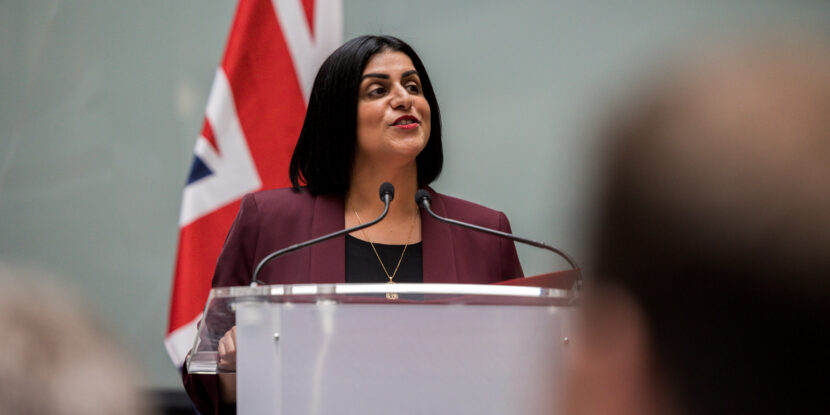



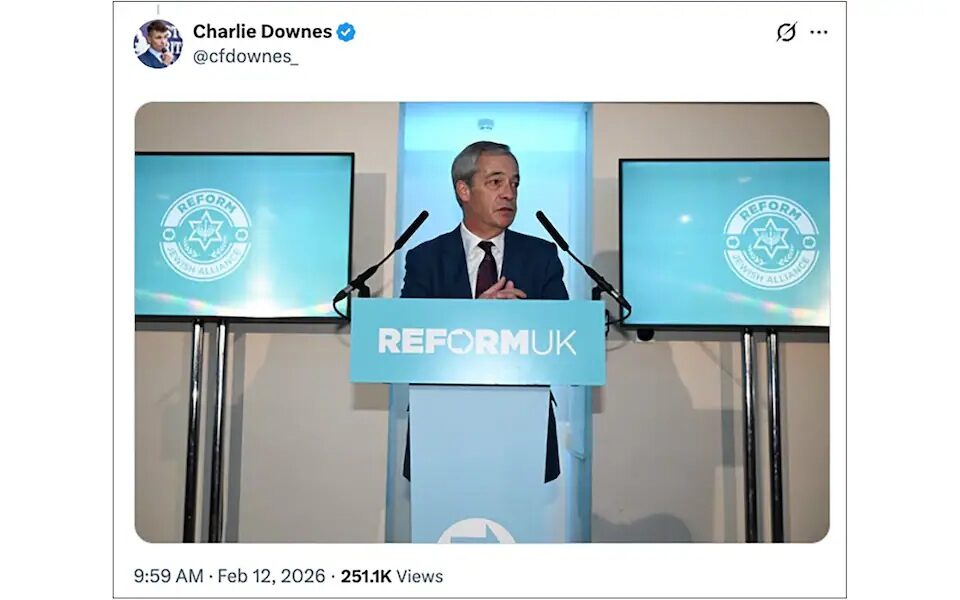
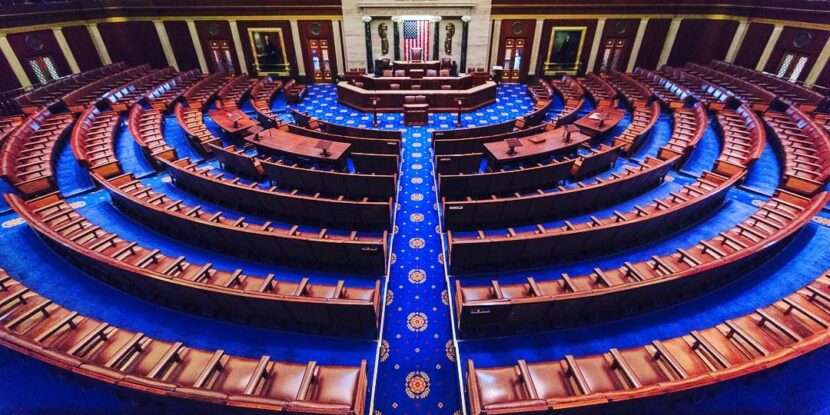




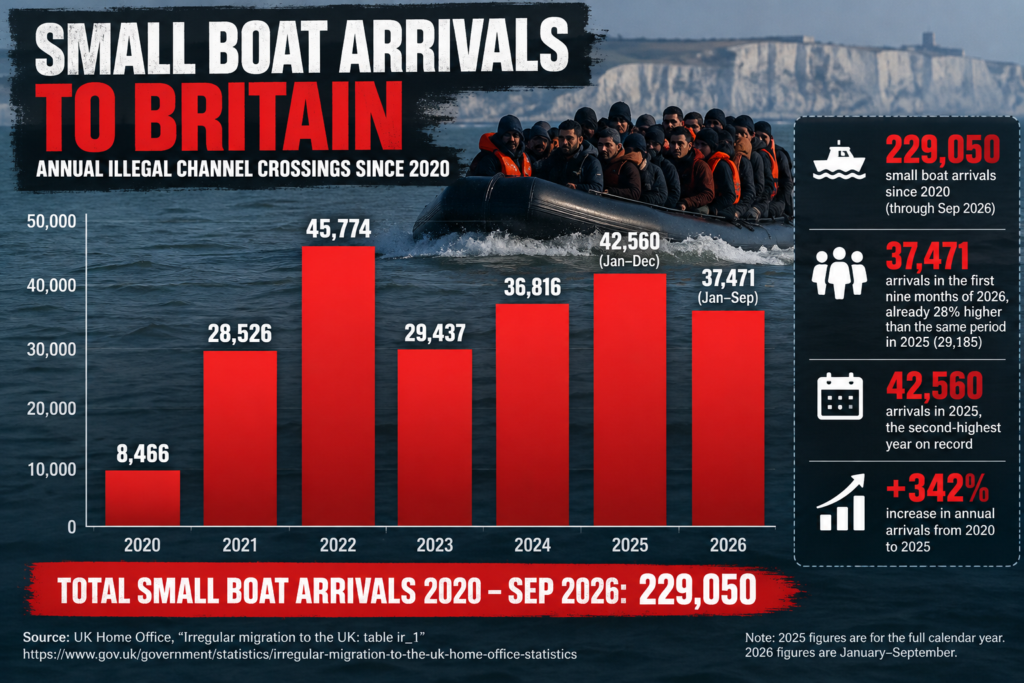
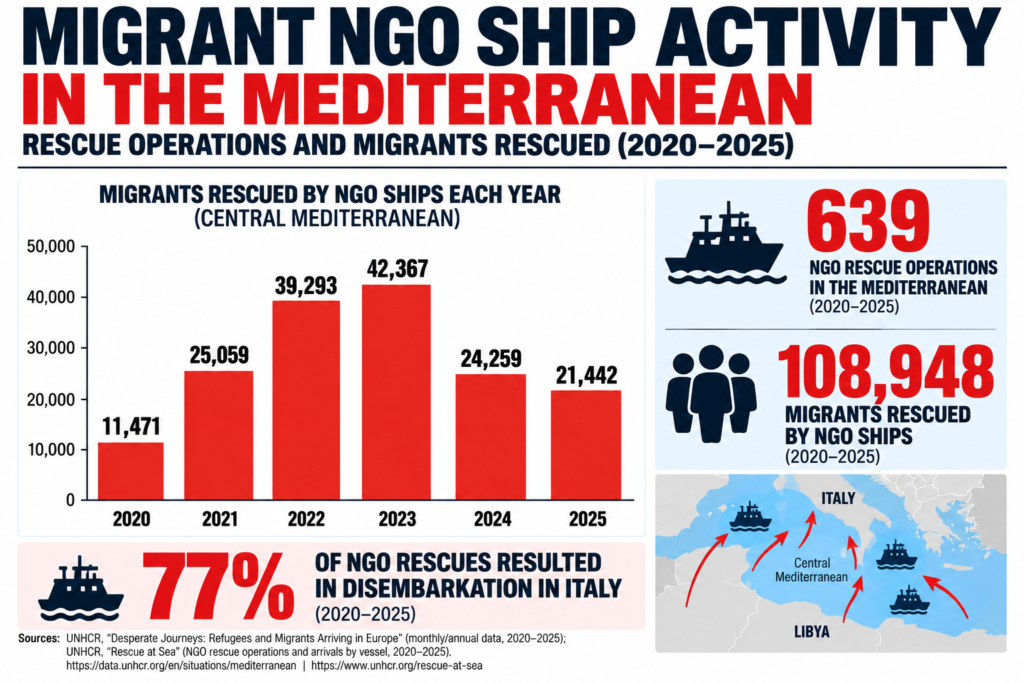
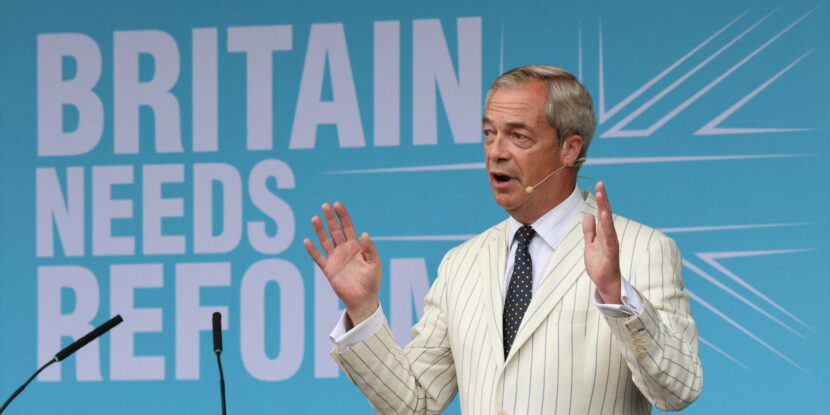



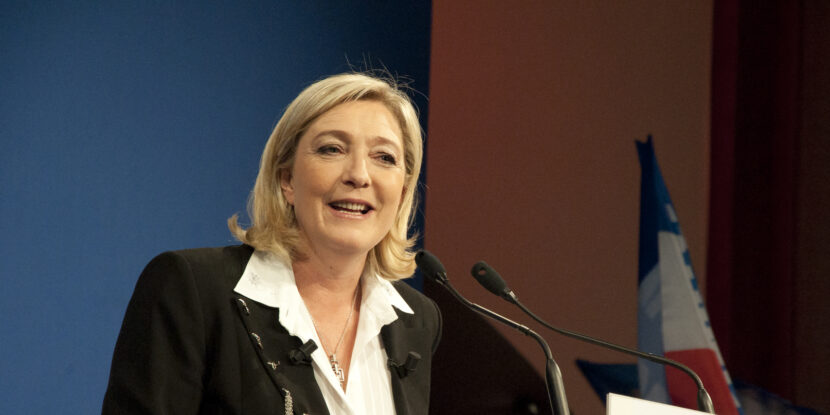
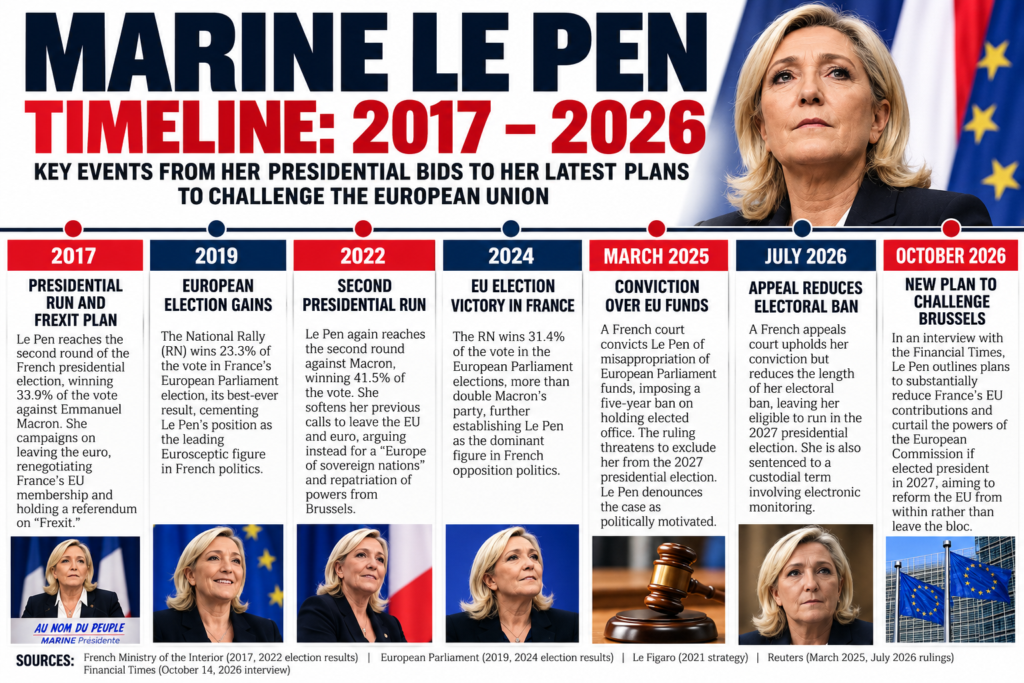
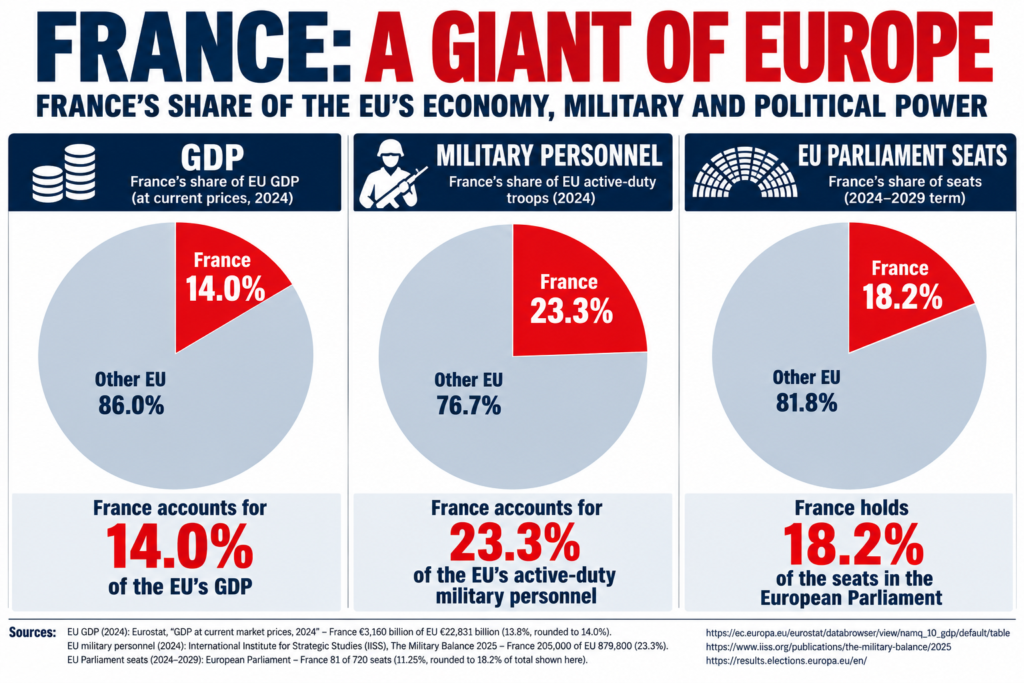


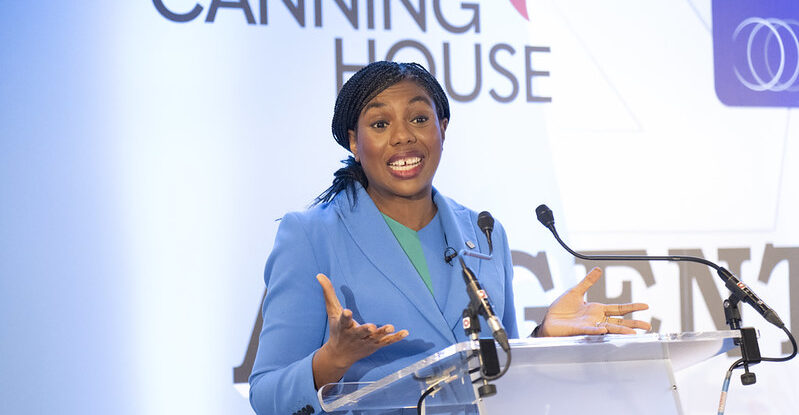

.jpg)


.jpg)


