


British Prime Minister Sir Keir Starmer has ruled out additional defense funding despite the resignation of his Defence Secretary and Under-Secretary of State for the Armed Forces, prompting warnings from military leaders about the country’s waning military capabilities.
| PULSE POINTS |
❓ WHAT HAPPENED: British Prime Minister Sir Keir Starmer has announced that no additional funding will be allocated to Britain’s military despite security concerns, despite his Secretary of Defence and Under-Secretary of State for the Armed Forces resigning, citing dangerous underfunding. 📺 DETAIL: Starmer insisted on Tuesday at the G7 summit in France, “The position on investment in defense is firstly that we increased, last year, defense spending from 2.3 percent to 2.6 percent. That’s the biggest increase since the 1980s… I’ve been really clear that that’s required difficult decisions.” However, high-ranking British military officials, such as Air Chief Marshal Sir Richard Knighton of the Royal Air Force (RAF), have warned that without an increase in the current £13.5bn (~$18.10bn) funding, operational capabilities and training may need to be scaled back. “We would prioritize those activities around what the government cared about most, but it would be disingenuous of me to suggest that there is not going to be a consequence of this settlement,” the Air Chief Marshall said of the government’s spending plans. 💬 KEY QUOTE: “We will have to dial back our activities and our exercise and operational activity if the level of resource funding that is available to us does not increase… The levers that we have to pull to reduce that expenditure are principally around our activities, which means exercises, training, operations.” – Air Chief Marshal Sir Richard Knighton to the International Relations and Defence Committee in the House of Lords on Tuesday. 🎯 IMPACT: The refusal of the Prime Minister to raise defense spending follows the resignation of John Healey, the now-former Defence Secretary, and Al Carns, the now-former Under-Secretary of State for the Armed Forces, who was previously a colonel in the Royal Marines. Specifically, the two resigned because the extra money allocated to fund national defense fell short of what is required to meet defense spending targets by the next parliament. Healey accused the Treasury of being “unwilling, to commit the resources that the nation needs to defend the country at this time of rising threats,” while Carns accused the government of “asking our Armed Forces to operate in a more dangerous world on a budget written for a calmer one.” Notably, President Donald J. Trump has long accused European NATO allies of not spending their fair share on defense. |
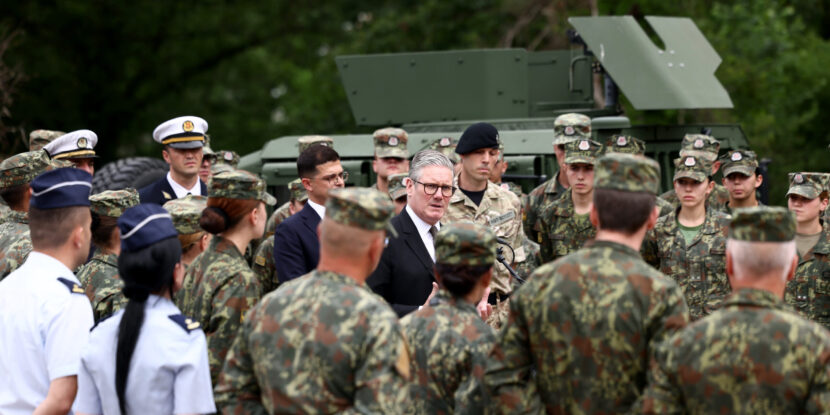
Image by Simon Dawson / No 10 Downing Street.
Join Pulse+ to comment below, and receive exclusive e-mail analyses.