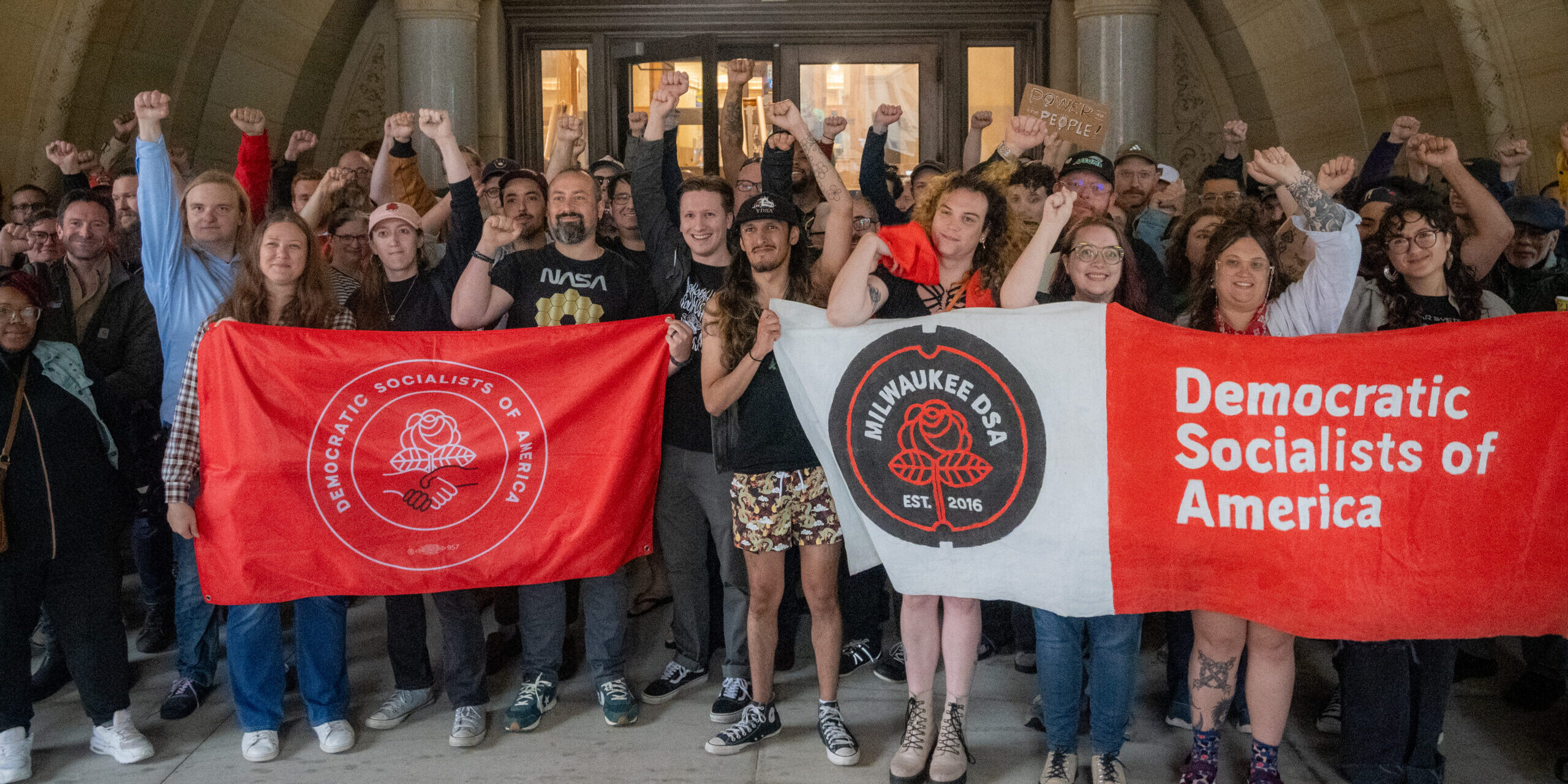
The far-left Democratic Socialists of America (DSA) have hailed their gains in the midterm elections, claiming that their growing electoral influence powered the party’s nationwide success. In an article published in Democratic Left, the DSA’s official publication, titled “Socialist Surge Powers Bluenami,” the organization celebrated the election of more than 100 DSA-endorsed candidates across 37 states.
The ‘Socialist Surge.’
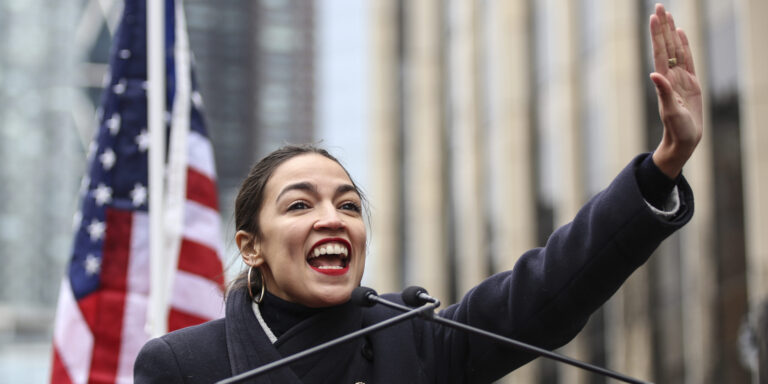
Successful DSA candidates included six new members of Congress and the re-election of two incumbent members: Representative Alexandria Ocasio-Cortez (D-NY) and Representative Rashida Tlaib (D-MI). The midterms quadrupled the DSA’s previous representation in the House of Representatives.
“We have a world to win, and the world is looking to us,” said Angela Gonzalez-Torres, one of the DSA’s new representatives from California.
“There is no blue wave without a socialist surge,” said Claire Valdez, another of the DSA’s new representatives from New York, who further claimed that “democratic socialists stepped into the leadership vacuum” and that DSA-aligned figures, such as New York City Mayor Zohran Mamdani, have shown that “moral clarity on the Gaza genocide and economic populist agenda would inspire people.”
Suffering from Success.
The DSA had openly floated using its leverage during the Speaker’s race to extract concessions from the party leadership if Democrats won by a narrow margin. However, while most DSA-endorsed House candidates won their races, only eight were elected in total. The Democrats secured over 250 seats in the House of Representatives, well above the 218 required for a majority. As such, the DSA’s influence as a bloc in the House has been significantly diluted.
DSA representatives have nevertheless expressed their conditional opposition to electing House Minority Leader Hakeem Jeffries (D-NY) as Speaker of the House. “As of right now, my vote is no… What I don’t know is what Representative Hakeem Jeffries is offering my community,” said Gonzales-Torres earlier this week.
The feeling of distrust is very much mutual, as Jeffries said back in August: “I don’t support the DSA agenda, as has been articulated by the DSA itself.”
Centrists vs Progressives.
While there is little doubt that the midterm elections were a historic triumph for the Democrats, there is growing division over whether the so-called “Blue Wave” was achieved by tacking towards the center or embracing the party’s more hard-left elements, as exemplified by organizations like the DSA.
Whereas the party’s left-wing points to the electoral success of overtly socialist candidates and the popularity of many “economic populist” policies, the party’s centrists have emphasized the larger margins of victory secured by supposedly moderate Democrats compared to more radical Democrats, particularly in traditional Republican strongholds.
On the whole, while Republicans are debating why they lost, Democrats are preparing to argue over how they won.