Tuesday, 10 November 202610 Nov 2026 Washington, D.C. 2:13:54 PM London 7:13:54 PM
Donate
The National Pulse.

Radically independent. Brutally honest. Ruthlessly right.

Tuesday, November 10, 2026
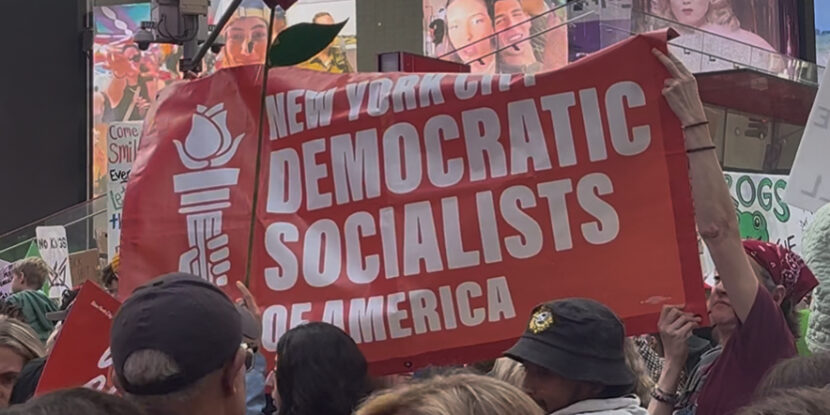
Protesters in a crowd holding a red New York City Democratic Socialists of America banner

DSA Targets NYC Speakership to Push Mamdani Even Further to the Left.

The far-left Democratic Socialists of America (DSA) are seeking to elect a DSA-aligned candidate to the New York City Council speakership in 2029, to ensure Mayor Zohran Mamdani, a DSA member, does not moderate in office.

The DSA’s Resolution.

On Saturday, the DSA’s New York City chapter (NYC-DSA) is set to vote on a resolution to capture the speakership of the New York City Council, the city’s legislative body. Specifically, the resolution states that the “DSA will maintain an organized socialist pole in New York City politics that is analytically and programmatically independent of the Mamdani administration, even as it supports his re-election and governance.”

The proposal also states that the DSA seeks to make the City Council the site where the organization “tests and normalizes bolder policy” and “will work in coalition with other left and progressive organizations and with organized labor toward this end.” However, the resolution clarifies that its purpose is “to strengthen Zohran against the right, not to weaken him.”

A DSA Speakership.

The current New York City Council speaker, Julie Menin, will be term-limited out of the position in 2029. At present, there are four DSA-aligned representatives on New York City Council: Tiffany Cabán, Alexa Avilés, Chi Ossé and Shahana Hanif. However, all four are expected to be term-limited out in 2029, meaning the group will need to recruit and support replacement candidates.

The DSA intends to help Mamdani pass a city budget and will side with the Mayor in disputes with the state government while pushing him leftward in several areas, such as police reform, with the DSA seeking to develop the Office of Community Safety into a full department capable of taking over responsibilities from the New York City Police Department.

Going Forward.

The DSA’s proposal concedes that getting a DSA-aligned member elected to the speakership of the 51-member body will be an uphill battle. “Recognizing that Speakers are rarely first-term members and that a socialist Speaker may not be achievable in 2029, DSA will, as a fallback, support the most left-aligned viable candidate who commits to the bloc’s priorities,” reads the resolution.

Nevertheless, the DSA’s push for a socialist speakership underscores the organization’s growing influence in New York City. NYC-DSA is the largest DSA chapter in the country, and New York has the largest DSA congressional delegation of any U.S. state. The proposal to capture the speakership is similar to the DSA’s federal strategy of using its leverage in the House of Representatives to influence the congressional race for Speaker of the House. This follows the midterm elections, during which the Democrats took control of the lower chamber.

The resolution represents the first substantive attempt by the DSA to assert itself amid its growing rift with Mamdani, particularly over police reform, housing policy, and Israel, since the Mayor entered office back in January.
show less
The far-left Democratic Socialists of America (DSA) are seeking to elect a DSA-aligned candidate to the New York City Council speakership in 2029, to ensure Mayor Zohran Mamdani, a DSA member, does not moderate in office. show more

A Majority of DSA-Endorsed Democrats Won Their Midterm Races.

The far-left Democratic Socialists of America (DSA) endorsed ten Democrat candidates for the House of Representatives during the midterm elections, with a majority of the endorsed candidates being elected or re-elected. Based on current results, the DSA is on track to quadruple its representation in Congress.


Alexandria Ocasio-Cortez.

Representative Alexandria “AOC” Ocasio-Cortez won re-election in New York’s 14th Congressional District, which covers parts of Queens and the Bronx. The incumbent Democrat defeated Republican challenger Diamant Hysenaj with 78 percent of the vote. A prospective DSA-backed candidate for the 2028 presidential race, Ocasio-Cortez ran on a number of far-left positions, including abolishing U.S. Immigration and Customs Enforcement.

“ICE is a rogue, lawless paramilitary and surveillance agency. It does not belong in New York City and it should not exist in the United States of America. Abolish ICE,” read a press statement from Ocasio-Cortez’s congressional office from early October.

Rashida Tlaib.

Representative Rashida Tlaib secured another term representing Michigan’s 12th Congressional District, which includes Detroit and surrounding communities. The incumbent Democrat defeated Republican challenger James Hooper with 83 percent of the vote.

“I refuse to give another dime toward Trump’s reckless war and racist mass deportations,” read a press statement from Tlaib’s congressional office from early September.

Chris Rabb.

Chris Rabb won Pennsylvania’s 3rd Congressional District, encompassing Philadelphia. Rabb secured the Democrat nomination after Dwight Evans, the former Democrat representative, retired from office, creating an open seat. Rabb received 94 percent of the vote.

“I want to end all deportations,” said Rabb in a Fox News interview with Sean Hannity back in August.

Donavan McKinney.

Donavan McKinney won Michigan’s 13th Congressional District, representing Detroit and surrounding communities, and defeated Republican challenger T.P. Nykoriak. This follows McKinney’s victory over former incumbent Democrat Shri Thanedar in the party’s August primary. McKinney received 81 percent of the vote.

“We must abolish ICE as it is right now,” said McKinney in an interview with Detroit Public Radio back in April.

Melat Kiros.

Melat Kiros won Colorado’s 1st Congressional District, which includes Denver, defeating Republican rival Christy Peterson. Kiros secured the Democrat nomination after defeating her party’s former incumbent Diana DeGette in the June primary. Kiros received 78 percent of the vote.

“We will not wait to abolish ICE and pass Medicare for all. And no, we will not wait to end the genocide in Palestine,” declared Kiros following her victory in the Democrat primaries.


Darializa Avila Chevalier.

Darializa Avila Chevalier won New York’s 13th Congressional District, which covers upper Manhattan and parts of the Bronx, defeating Republican challenger Jomo Williams. Chevalier previously ousted longtime Democrat incumbent Adriano Espaillat during the primaries. Chevalier received 87 percent of the vote.

“I forgot to get napkins so I just wiped my hand on the American flag behind me,” wrote Chevalier in a resurfaced 2019 post on X (formerly Twitter).

Claire Valdez.

Claire Valdez won New York’s 7th Congressional District, which includes parts of Brooklyn and Queens. The New York state assemblywoman defeated Republican rival Melvin Rivera after securing the Democrat nomination to run in the open seat. Valdez received 83 percent of the vote.

“215 years ago, Mexicans fought an empire that demanded our land and our labor. And we won… I’ll carry that fight with me to Congress as New York’s first Mexican-American representative,” declared Valdez on X back in September.

Angela Gonzales-Torres

Angela Gonzales-Torres defeated incumbent Democrat congressman Jimmy Gomez in California’s 34th Congressional District, which covers parts of Los Angeles. Gonzalez-Torres received 58 percent of the vote.

Her campaign website vows to “Abolish ICE and end the mass deportation apparatus.”

Mai Vang.

Mai Vang, a Sacramento City Council member, is running against incumbent Democrat congresswoman Doris Matsui in California’s 7th Congressional District, which covers south Sacramento. At the time of reporting, no winner has been declared, although 41 percent of the vote has been counted Matsui leads Vang by 57.4 percent to 42.6 percent.

Lauren Jewett.

Lauren Jewett, a special education teacher, challenged Republican House Majority Leader Steve Scalise in Louisiana’s 1st Congressional District, which covers the New Orleans area. Jewett had the most uphill battle of any DSA-endorsed House candidate, given that she was running in staunchly Republican territory.

Jewett received 33 percent of the vote, compared to Scalise’s 61 percent, making her the DSA’s first confirmed House race loss. This also marks Scalise’s tenth full term in Congress.


Image by Dimitri Rodriguez.

show less
The far-left Democratic Socialists of America (DSA) endorsed ten Democrat candidates for the House of Representatives during the midterm elections, with a majority of the endorsed candidates being elected or re-elected. Based on current results, the DSA is on track to quadruple its representation in Congress. show more
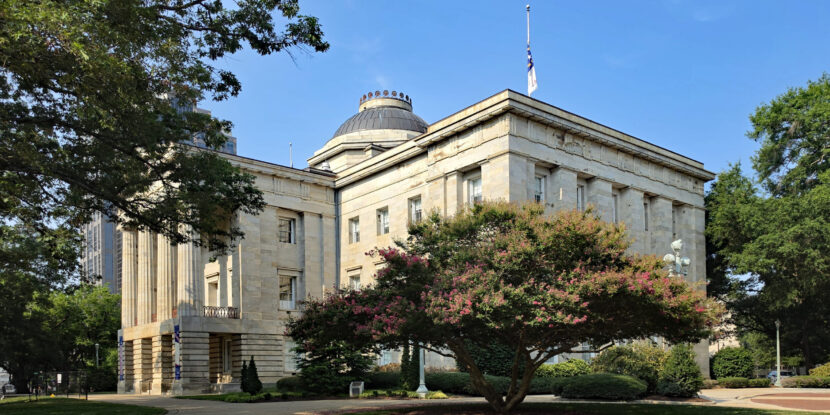
Historic stone state capitol building with a dome, framed by green trees and a flowering tree

Three Key States Passed Voter ID Measures During the Midterms.

In addition to voting for congressional and state representatives in Tuesday’s midterms, voters in several states took part in referendums on voter ID measures, resulting in victories for election integrity in two swing states and Ohio.


Ohio.

Ohio voters overwhelmingly approved a constitutional amendment to strengthen the state’s voter identification requirements. Specifically, the amendment requires voters to present an unexpired, government-issued photo ID when voting in person.

Acceptable identification includes an Ohio driver’s license or state ID card, a U.S. passport or passport card, and military identification, including cards issued by the Ohio National Guard and the Department of Veterans Affairs.

The measure also establishes identification requirements for absentee voting, with specified alternatives. The amendment, known as Issue 3, was backed by a projected 64.7 percent of voters. As this is a constitutional amendment, it will be difficult for Democrat legislators to repeal or weaken.

The result reflects data published earlier this year showing overwhelming support in the state for a photo ID requirement to vote.

North Carolina.

Voters in the swing state of North Carolina approved a constitutional amendment to strengthen the state’s voter identification requirements. Specifically, the amendment extends the state’s constitutional photo ID requirement to all voters, including those casting absentee ballots by mail. The constitutional requirement previously only applied to in-person voting.

Approximately 60 percent of voters in North Carolina supported the Republican-backed amendment, despite Democrat state-wide victories. This reflects data from earlier this year showing that support for voter ID cuts across traditional party lines, despite opposition from Democrat politicians to election security measures.

Similar to Issue 3 in Ohio, the measure is a constitutional amendment, meaning it will be harder to repeal or weaken.


The National Pulse does not take government funds or corporate cash. Please JOIN THE PULSE+ or MAKE A DONATION to keep us RADICALLY INDEPENDENT.


Nevada.

In Nevada, a tightly contested swing state, voters have backed a constitutional amendment requiring photo identification for in-person voting and additional identity checks for mail-in ballots. The measure was already backed in a 2024 referendum, although it required a second public vote to become a constitutional amendment. Roughly 61 percent of voters are projected to have backed the measures.

The amendment, known as Question 7, requires voters to present government-issued photo identification at polling places. Voters can use driver’s licenses, U.S. passports, military identification, tribal identification, and student cards issued by Nevada public colleges. Documents used as voter ID must be current or have expired within the previous four years. However, voters aged 70 and older are exempt from the four-year limit.

The amendment would also require mail-in voters to provide the last four digits of their driver’s license, Social Security number, or an alternative number supplied by their county clerk.

Consequences.

Not every measure to strengthen voter ID was approved. Arizona’s Proposition 144, California’s Proposition 39, and Colorado’s Amendment 84 were all rejected by their state’s respective voters. Nevertheless, while Arizona is considered a swing state, California and Colorado lean solidly to the Democrats following large-scale demographic changes, so the balance of the results likely favors the GOP, as unlawful voters lean to the Democrats.

Implementing voter ID and reforming mail-in voting have been cornerstone ambitions of the Trump administration, so the victories in Ohio, North Carolina, and Nevada may provide some hope that elements of the White House agenda can continue to advance despite losing both chambers of Congress.


Image by P. Hughes.

show less
In addition to voting for congressional and state representatives in Tuesday's midterms, voters in several states took part in referendums on voter ID measures, resulting in victories for election integrity in two swing states and Ohio. show more
Protesters in a crowd holding a red New York City Democratic Socialists of America banner

Inside the DSA’s Plan to Abolish the Constitution and Turn America Into a ‘Democratic Socialist Republic.’

In a resurfaced clip shared on social media this week, Cliff Connolly, a member of the steering committee of the far-left Democratic Socialists of America (DSA), emphasized the DSA’s “hatred” of the Constitution. The DSA may quadruple its presence in the House of Representatives and potentially force concessions from Hakeem Jeffries in any bid for Speaker following the midterms.


Replacing the Constitution and the Presidency.

The DSA’s program calls on members to “win the battle for democracy, draft a new constitution, and create a democratic socialist republic.” Rather than having an independently elected president heading the executive branch, the DSA proposes an executive “chosen by and subordinate to Congress,” ending the separation of powers.

Abolishing the Senate and Expanding the House.

The DSA proposes to “abolish the Senate” and “expand the House of Representatives.” It argues that the Senate is undemocratic, given that each state, regardless of population, has two senators, a measure that was intended to stop large states from bulldozing smaller ones.

The DSA claims that a proportionally elected House would have a stronger claim to represent the national population.

Ranked-Choice Voting and Multiparty Politics.

The program also seeks to replace the “two-party system with a multi-party democracy.” Specifically, the DSA proposes implementing proportional representation and ranked-choice voting. This would end the current first-past-the-post system, in which the candidate with the most votes is elected to represent an electoral district. Under a ranked-choice system, voters rank candidates rather than selecting only one.

Voting Rights for Noncitizens.

The program also includes expanding voting rights to foreign nationals. Specifically, the DSA calls for “full voting rights to all permanent U.S. residents,” while also restoring voting rights to prisoners and those with serious criminal convictions. This would make noncitizens politically equal to U.S. citizens.

The DSA also proposes to “expand and protect voting rights and end voter suppression,” suggesting a rollback of any voter ID measures.


The National Pulse does not take government funds or corporate cash. Please JOIN THE NATIONAL PULSE or MAKE A DONATION to help keep our reporting independent.


Ending the Electoral College.

The DSA also wants to “abolish the Electoral College,” one of the central mechanisms of America’s presidential system. Under the current system, Americans vote for presidential electors allocated among the states, rather than directly electing the President through a single national vote. The proposal to abolish the Electoral College ties into the DSA’s plan to have the President chosen by Congress.

Subordinating the Judiciary.

Similar to the presidency, the DSA’s program calls for the Supreme Court to be “chosen by and subordinate to Congress.” This would end the mechanism of independent checks and balances facilitated by the separation of powers since the creation of the U.S. political system.

D.C. Statehood.

The DSA program seeks to “establish statehood for Washington, D.C.” and “the right to self-determination for all U.S. territories,” which it characterizes as “colonies.” While the program remains open-ended about granting statehood to U.S. territories, it emphasizes that people living in territories currently lack the same political power as residents of states

Publicly-Financed Elections.

The DSA wants to end private financing of elections, calling for them to be publicly financed. This would concentrate a considerable degree of power in the federal bureaucracy, potentially giving the reigning party significant leverage over who can participate in the election process.


Image by Personisinterest.

show less
In a resurfaced clip shared on social media this week, Cliff Connolly, a member of the steering committee of the far-left Democratic Socialists of America (DSA), emphasized the DSA's "hatred" of the Constitution. The DSA may quadruple its presence in the House of Representatives and potentially force concessions from Hakeem Jeffries in any bid for Speaker following the midterms. show more
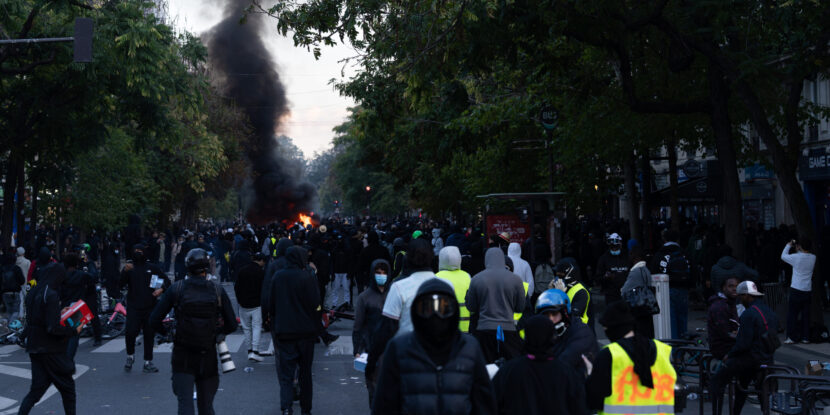
Crowd of people in a Paris street at dusk with black smoke and a fire in the distance

France Banned a Remigration Summit Amid Nationwide Riots.

A remigration conference has been canceled by the French authorities, raising questions about the government’s priorities as violent protests continue to spread across the country.


Background.

Since September, France has been gripped by nationwide protests. The protests ostensibly began in response to school conditions, large class sizes, and related student complaints. The protests rapidly developed into opportunistic rioting and expressions of anger toward the French Republic, much of it carried out by immigrants and ethnic and religious minorities carrying foreign flags.

Violence reached a major peak on October 17, when hundreds of thousands of people rioted in several cities. In one highly publicized case, protestors destroyed the Limoges City Hall, a 143-year-old building in central France. More than 2,700 people were arrested and over 1,000 police officers were injured, according to figures reported after the violence.

The riots come just months before France’s 2027 presidential election, in which, according to recent polling, National Rally party leader Marine Le Pen is on track to win, regardless of who she faces in the second round of voting, assuming she does not win the first round outright. The salience of law and order has allowed Le Pen to extend a steady lead over her globalist and leftist rivals.

The Summit.

An international conference titled “Remigration: Let’s Open the Debate” was scheduled for October 31 at the Maison des Arts in Le Plessis-Robinson in the Paris area. The conference was organized by Polémia, a French nationalist think tank, and Objectif Remigration, a pro-remigration activist movement.

The event sought to bring together European and American proponents of remigration, the idea that European and American governments should reverse demographic change across the West using mass deportations, and to discuss how to push the idea into the mainstream. Keynote speakers include French writer Renaud Camus, who coined the phrase “Great Replacement,” and Austrian remigration activist Martin Sellner. Reconquête (Reconquest) party leader Éric Zemmour was also expected to attend the conference via video call.


The National Pulse relies on reader support, not government or corporate cash. Please JOIN THE NATIONAL PULSE or MAKE A DONATION to keep it that way.


The Ban.

The local authorities in Hauts-de-Seine banned the conference from taking place. Parisian authorities also banned a remigration demonstration that had been set to take place the following day. It has also been reported that Sellner was served with an administrative order preventing him from entering France after he arrived at Beauvais-Tillé Airport. The decisions were made at the request of Interior Minister Laurent Nuñez, a member of Renaissance, the party of President Emmanuel Macron.

The authorities justified the measures primarily on public-order grounds, citing potential clashes between the protestors and the conference’s attendees. The organizers have since announced their intention to challenge the measures in court on free speech and assembly grounds. A fast-track legal challenge was brought before the administrative court in Cergy-Pontoise, also north-west of Paris.

This echoes a similar incident in Germany last year, when activists were arrested at Munich airport while en route to a remigration conference in Milan, Italy.

Remigration.

Remigration is no longer confined to European identitarian movements. Last year, the Trump administration established the Office of Remigration within the U.S. State Department. The office is responsible for facilitating both voluntary and involuntary removals of migrants from the United States.

This makes banning remigration-related events on ideological grounds or concerns regarding fringe extremism far less tenable.


Image by Jorge Jaramillo.

show less
A remigration conference has been canceled by the French authorities, raising questions about the government's priorities as violent protests continue to spread across the country. show more
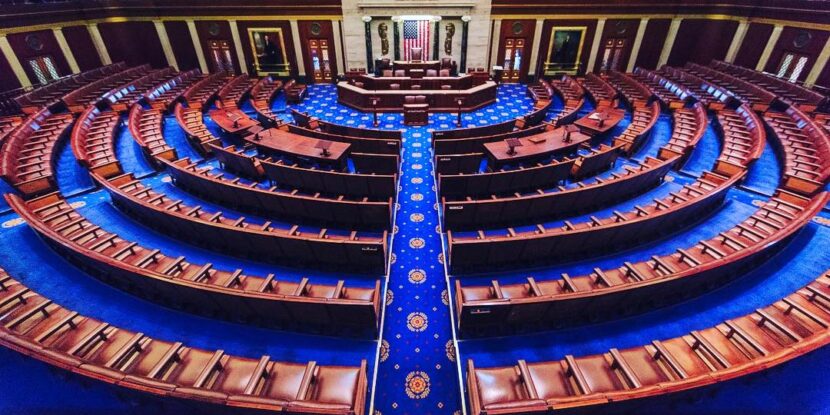
Curved rows of leather benches and blue carpet inside a large legislative chamber with a flag at the far end

The U.S. National Debt Has Reached 100 Percent of GDP.

This year, the United States’ national debt reached 100 percent of the country’s economic output. The rising debt is due to government spending leading to deficits, borrowing, and rising interest payments.


$20.1 Trillion in Interest Payments.

According to the Congressional Budget Office’s (CBO) federal receipts and expenditures report published earlier this week, the U.S. Treasury will spend about $20.1 trillion on interest payments between 2026 and 2036. This means a significant chunk of federal revenue will go toward servicing accumulated debt, rather than funding new programs or investments.

In 2026 alone, the Treasury is expected to pay approximately $1.2 trillion in interest. By 2036, the amount is projected to rise to $2.5 trillion, equivalent to around $200 billion per month. This means that federal interest payments are projected to be more than twice as large as defense spending by 2036, when the Pentagon is projected to receive roughly $1.1 trillion. This mirrors a problem in other Western countries, many of which spend more servicing their debt than funding defense, including the United Kingdom, France, Italy, and Spain, among others.

$25.6 Trillion in New Deficits.

The Treasury has reported a fiscal 2026 deficit of approximately $2 trillion, and the CBO expects the deficit to grow to more than $3 trillion by 2036. The CBO also projects that the federal debt will reach 101 percent of U.S. Gross Domestic Product (GDP) in 2026, and 120 percent of GDP in 2036. This would surpass the current post-World War II record of 106 percent of GDP, which was reached in 1946 and follows the rapid rise during the COVID-19 pandemic.

Over the next decade, the cumulative deficit is projected at approximately $25.6 trillion. Over the same period, the deficit will rise from 5.8 percent of GDP to 6.7 percent, according to the CBO. The average deficit over the previous 50 years was 3.8 percent of GDP, indicating that the U.S. is spending a disproportionately high amount of money.

“[Last year’s tax cuts are] a hit now to the deficit, but we are creating productive assets for future growth which will be paying taxes down the line… I think of that more as like pulling back a slingshot and creating a lot of potential energy that becomes kinetic,” said Treasury Secretary Scott Bessent, explaining the federal government’s economic strategy back in August.


$6.1 Trillion in Social Benefits.

Spending on federal social programs is a major driver of the deficit. According to the CBO, spending on federal social programs is set to reach $3.7 trillion in 2026 and $6.1 trillion in 2036. The CBO’s report notes that the Social Security trust fund is projected to run out of money in just over seven years, while Medicare’s trust fund is expected to face depletion over the next six and a half years.

Spending on federal social programs reflects the aging population, as more Americans reach retirement age and become eligible for programs like Social Security and Medicare. The demographic problem compounds the debt problem as the cost of caring for elderly citizens continues to rise and spending cuts can trigger democratic backlash. The Trump administration is attempting to mitigate these costs through a massive anti-fraud drive spearheaded by Vice President J.D. Vance.

$40 Trillion in National Debt.

U.S. gross federal debt currently stands at $40 trillion, while the amount of debt held by the American public is projected to reach $32.10 trillion by the end of the year. The amount of publicly-held debt is also projected to rise to $40.28 trillion by the end of 2030, $53.10 trillion by the end of 2035, and $56.15 trillion by the end of 2036.

Gross federal debt is the total amount the U.S. government owes, including money it owes to other federal government accounts, while debt held by the public is only the money owed to creditors outside the federal government, such as investors, businesses, foreign governments, and the Federal Reserve.

“I think there is understanding about the challenging fiscal trajectory… Of course, the difficulty is that the U.S. is a divided country and a divided society and we’re divided politically,” said CBO Director Phil Swagel to The Wall Street Journal.


show less
This year, the United States' national debt reached 100 percent of the country's economic output. The rising debt is due to government spending leading to deficits, borrowing, and rising interest payments. show more

The DSA Could Quadruple Its Congressional Representation in the Midterms.

The far-left Democratic Socialists of America (DSA) have endorsed several Democrat candidates for the midterm elections. How many candidates has the DSA endorsed, where are they standing, and what does this mean for Congress?


The Numbers.

The DSA and its local chapters have endorsed 131 candidates for the midterm elections, spanning 30 states and Washington, D.C. While most DSA-endorsed candidates are seeking state or local office, the organization has also endorsed candidates for the U.S. Congress.

The DSA has endorsed 69 candidates for local offices, including city councils and ten mayoral candidates, along with 52 candidates for statewide offices, including state senates and state assemblies. Most of the DSA-backed local candidates are running in California, while New York has the largest contingent of state candidates.

Meanwhile, at the federal level, the DSA has endorsed ten candidates for the U.S. House of Representatives. This includes three candidates in New York, two candidates in California, two candidates in Michigan, one candidate in Colorado, one candidate in Louisiana, and one candidate in Pennsylvania.

The Candidates.

Out of the ten House candidates, two are incumbents, two are running for open seats, two are challenging Democrat incumbents, three defeated Democrat incumbents in their primaries, and one is challenging a Republican incumbent.

In New York, the DSA had endorsed Darializa Avila Chevalier and Claire Valdez, who are running in NY-13 and NY-7, respectively.

Simultaneously, Representative Alexandria Ocasio-Cortez is defending her NY-14 seat, having rejoined the DSA earlier this year.

The DSA-endorsed candidates in California, Angela Gonzales-Torres and Mai Vang, are running in CA-34 and CA-7, respectively.

In Michigan, Donavan McKinney aims to win MI-13, while Representative Rashida Tlaib aims to defend her MI-12 constituency.

Meanwhile, in Colorado, Melat Kiros is running in CO-1, and in Louisiana, Lauren Jewett is running in LA-1.

Chris Rabb is the DSA-endorsed candidate running in PA-3 in Pennsylvania.


The Odds.

Eight of the ten DSA-endorsed House candidates are running in districts where Democrats are heavily favored.

Rep. Ocasio-Cortez and Rep. Tlaib are expected to win re-election comfortably. Similarly, Avila Chevalier, Valdez, Kiros, and McKinney are strongly favored to win their respective congressional races, while Rabb is essentially guaranteed to win his race in Pennsylvania. Gonzales-Torres and Vang are both running against fellow Democrats, and while both are expected to win, polling suggests Gonzales-Torres’ district is more competitive than Vang’s.

In contrast, Jewett is highly likely to lose her race in Louisiana as her district strongly favors Republicans. She is challenging Republican incumbent Steve Scalise, the House Majority Leader.

Nevertheless, pollsters indicate that the vast majority of the DSA-backed House candidates are likely to be elected or re-elected in November.

The Consequences.

If current projections hold, the DSA is set to gain approximately eight representatives in the House. As the DSA currently has only two representatives (Ocasio-Cortez and Tlaib), this would quadruple the organization’s presence in the House.

This would prove especially important in the event that the Democrats secure a narrow majority in the House. According to polling conducted by the non-partisan Cook Political Report earlier this month, the Democrats are projected to win between 224 and 234 seats in the House. In order to secure a majority in the House, a party requires 218 seats. Therefore, if the Democrats secure a slimmer majority, close to the 220-seat mark, the DSA could have significant leverage in the subsequent election for Speaker of the House.

The DSA has already signaled its intention to use its leverage within the House to extract concessions from Rep. Hakeem Jeffries (D), the current House Minority leader, in his bid for the speakership. Specifically, the DSA aims to lower the thresholds for both discharge petitions and vacating the chair to make it easier to force votes on DSA-aligned objectives and topple the House leadership.


Image by Ted Eytan.

show less
The far-left Democratic Socialists of America (DSA) have endorsed several Democrat candidates for the midterm elections. How many candidates has the DSA endorsed, where are they standing, and what does this mean for Congress? show more

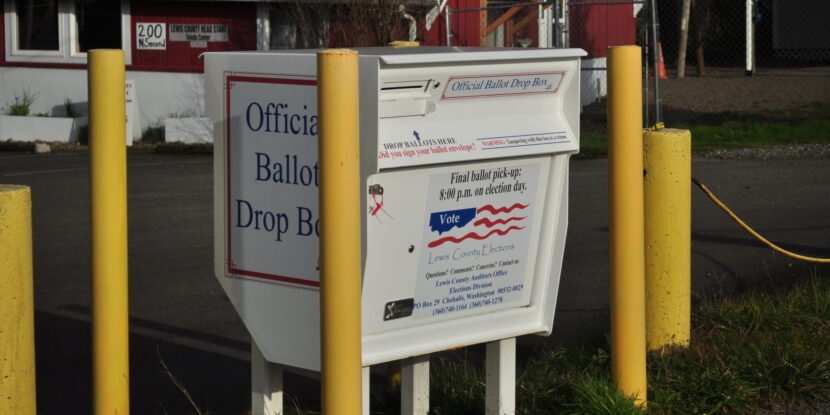
Trump DOJ is Demanding That This State Set Aside Ballots From Hundreds of Suspected Noncitizens.

The Department of Justice (DOJ) has asked Washington state officials to set aside more than 400 ballots cast by suspected noncitizens to confirm their eligibility, roughly a week before the midterm elections.


Context.

In the run-up to the midterm elections, which are scheduled for November 3, the Trump administration has been cracking down on noncitizen voting.

Earlier this month, the federal government asked California election officials to set aside ballots from approximately 20,000 suspected noncitizens until their citizenship is verified. Specifically, the Trump administration has argued that California’s decision to count the alleged noncitizen ballots violates the U.S. Constitution’s Supremacy Clause, as federal law states that only U.S. citizens can vote, and this takes precedence over state management of federal elections.

Simultaneously, the Trump administration sued Alaska to prevent certification of its Senate election if Republican Senator Dan Sullivan loses, citing potential confusion caused by the inclusion of another candidate named Daniel J. Sullivan.

As such, the recent request should be viewed as another front in the Trump administration’s ongoing campaign to strengthen election integrity.

The DOJ’s Request.

The DOJ has asked Washington election officials to set aside 405 ballots suspected to have been cast by noncitizens. Specifically, the DOJ has asked state officials to separate any ballots these potential noncitizens submit in the upcoming midterms until they can confirm their citizenship and eligibility.

Federal prosecutors have claimed that the DOJ’s investigation has uncovered approximately 1,500 votes cast by noncitizens in previous elections, and that several have been identified as lawful permanent residents, also known as green card holders, who can live and work in the United States but cannot legally vote.

As with federal investigations in other states, the suspected noncitizen voters were identified by comparing federal immigration information with voter records. However, federal prosecutors have emphasized that determining whether the suspected noncitizens actually voted illegally requires access to Washington’s election records. The DOJ has asked for addresses, dates of birth, driver’s license numbers, and partial Social Security numbers.

“Because of limitations the state has placed on our investigation, we’ve only been able to uncover a fraction of the total number,” said Charles Neil Floyd, the acting U.S. attorney for the Western District of Washington.


Washington State’s Response.

Washington state officials have not agreed to automatically set aside the ballots. In response to the DOJ request, Washington Secretary of State Steve Hobbs questioned both the timing and implications of the request.

“The timing of this request—one week before the General Election—is no doubt intended to cast unfounded suspicion on the results,” said Hobbs in response to the federal government’s request.

Washington officials have also expressed concern that federal data can produce inaccurate matches. For example, people who were once noncitizens may subsequently have become naturalized U.S. citizens.

Nevertheless, the Washington Secretary of State has confirmed that his office is reviewing the federal government’s information and will determine how to respond under state and federal law.

Looking Forward.

If Washington ultimately accepts the DOJ’s request, election officials would have to separate ballots cast by people on the federal list until their citizenship and voting eligibility could be established.

While there is no indication that there are enough noncitizen votes to swing the state-wide outcome, the decision may impact competitive races within Washington itself. For example, Washington’s 3rd Congressional District is among the country’s most competitive House contests, meaning a small number of disputed ballots could attract intense political and legal scrutiny.

The outcome of the dispute could result in federal officials playing a more direct role in managing state elections, potentially leading to similar federal challenges in other states, especially where the result is close.

This could lead to further exposures of noncitizen voting across the United States, which could subsequently strengthen the case for implementing election integrity measures, such as voter ID, a long-standing cornerstone objective of the Trump administration and an overwhelmingly popular measure with Americans.


Image by Joe Mabel.

show less
The Department of Justice (DOJ) has asked Washington state officials to set aside more than 400 ballots cast by suspected noncitizens to confirm their eligibility, roughly a week before the midterm elections. show more
Protesters in a crowd holding a red New York City Democratic Socialists of America banner

DATA: Who is the Average DSA Member, and What Do They Believe?

The Democratic Socialists of America (DSA) claim to represent the working class and minority communities, while promising a clean break from the Democratic Party establishment. However, survey data on the organization’s membership suggests otherwise.


Profile of DSA Members.

According to a 2025 membership survey, 66 percent of Democratic Socialists of America (DSA) members are white. The same survey found that Women and so-called “non-binary” people account for 54 percent of the membership.

The DSA’s official 2021 membership survey shows that 32 percent of members identify as “LGBTQIA+,” 80 percent of members hold a bachelor’s degree, and 60 percent identify as irreligious. It also found that 57 percent of DSA members live in urban areas and that 96 percent of members live in an area with a DSA chapter. The average member is approximately 33 years old, significantly younger than the average DSA member before 2016.

DSA membership data from 2021 also indicates that 56 percent work in white collar professional or managerial occupations and that 28 percent earn more than $100,000 a year.

This means that the average DSA member is whiter, younger, more secular, more LGBT, and wealthier than the average American.

In contrast, 57 percent of Americans are non-Hispanic white, the average age of an American is 39 years old, and approximately nine percent of Americans identify as LGBT. Around one percent of Americans identify as “non-binary.” Roughly 28 percent of Americans are religiously unaffiliated, 38 percent have at least a bachelor’s degree, and 18 percent earn at least $100,000 a year.

This matters because white, college-educated, relatively affluent, urban voters were one of the few demographic constituencies to shift toward the Democrats between 2020 and 2024, when Kamala Harris lost both the electoral and popular vote to President Donald J. Trump. As such, it appears that the kind of people currently lining the ranks of the DSA are scarcely different from those currently lining the ranks of the Democrat establishment.


Priorities of DSA Members.

According to the University of Massachusetts Amherst’s August 2026 National Public Opinion Poll, 96 percent of Democrats who identify very strongly with the DSA support raising taxes on the wealthy, the most popular policy in the survey.

However, support for giving citizenship to illegal immigrants polled at 91 percent among strongly DSA-aligned Democrats. According to its official policy program, the DSA seeks to “grant amnesty for all immigrants regardless of status.” As such, it is reasonable to assume that the figure represents overwhelming support among DSA-aligned Democrats for effectively open borders.

This means that open borders is just as popular with DSA-aligned Democrats as free healthcare and more popular than several proposals the DSA has become identified with, such as defunding the police (85 percent support) and recognizing a Palestinian state (84 percent support). The survey also revealed that 62 percent of Democrats who identify very strongly with the DSA support giving non-citizens voting rights, compared to just 29 percent of non-DSA Democrats.

According to polling conducted immediately after the 2024 presidential election by Blueprint, a Democrat-aligned public research firm, 77 percent of swing voters believed that the Democrats had not been tough enough on illegal immigration. The poll showed that 73 percent of swing voters believed that Democrats “support immigrants more than American citizens” and that 72 percent believed that Democrats “don’t care about securing the border.” Blueprint’s research also showed that the issue of immigration was practically tied with inflation as the most important reason for voters rejecting Harris.

This followed Blueprint polling from December 2023, which showed that 56 percent of Americans believed then-President Joe Biden was “more liberal” than themselves on immigration. The same poll showed that 42 percent of Americans viewed Biden as “far more liberal” than themselves on immigration and that 53 percent wanted stricter asylum and refugee rules. This included 61 percent of registered Independents.

Therefore, not only do DSA members bear a striking resemblance to the Democrat establishment they claim to oppose, but they also share the same fundamental priorities, despite some shades of difference over economic and foreign policy.


Image by Personisinsterest.

show less
The Democratic Socialists of America (DSA) claim to represent the working class and minority communities, while promising a clean break from the Democratic Party establishment. However, survey data on the organization's membership suggests otherwise. show more

Trump is Trying to Stop States from Counting Suspected Noncitizen Ballots. Can He Do It?

On Thursday, the Department of Justice (DOJ) sued California over suspected noncitizen ballots being counted in the state, marking another major election integrity push by President Donald J. Trump.


The Background.

The Department of Justice (DOJ) lawsuit follows a 48-hour ultimatum for California to stop counting approximately 20,000 mail-in ballots suspected of having been cast by noncitizens and to review an alleged noncitizen voter list. The deadline has since expired, and the DOJ has asked a federal judge to stop the count. Under U.S. electoral law, noncitizens are legally barred from voting in federal elections, but vetting is not stringent. The case is part of a broader effort by the Trump administration to boost election security ahead of the November midterms, which recent polling suggests will be tight.

“This is not political or controversial. 18 U.S.C. § 611 [voting by aliens] makes it a federal offense for noncitizens to vote in a federal election. We will not allow California to dilute the votes of American citizens,” posted First Assistant United States Attorney for the Central District of California Bill Essayli.

The dispute follows months of growing tension between the federal and state governments over access to voter registration data and efforts to identify potentially ineligible voters. Back in May, the DOJ said it had authority to obtain statewide voter rolls and share them with the Department of Homeland Security.

What Can the DOJ Do?

According to the DOJ, the Department of Homeland Security (DHS) identified the alleged noncitizen voters by comparing California voter registration records with federal immigration data and other databases. The DOJ wants California to verify voters’ citizenship before counting their ballots. This follows a U.S. Census Bureau report published in August which revealed that more than 24,000 noncitizens voted in the 2020 presidential election, and a September DHS investigation into 1,620 cases of noncitizens casting ballots. Noncitizen voting in California, specifically, has been a problem for over 20 years.

The DOJ’s complaint argues that California’s decision to count the alleged noncitizen votes conflicts with the federal government’s authority under the U.S. Constitution’s Supremacy Clause, as federal law prohibits noncitizens from voting in federal elections. As such, California cannot implement state measures or make decisions that contradict that rule. The complaint also argues that California’s decision to count the alleged noncitizen votes contradicts the Constitution’s Elections Clause, which allows Congress to impose federal election requirements.

“California declined to work with the Federal Government to determine whether those individuals are citizens who are legally entitled to vote in the federal election,” reads the complaint.


How Has California Responded?

Californian officials have disputed the federal government’s conclusions. “The USDOJ’s relentless efforts ​to unlawfully gain access to states’ protected ​voter data and purge voter rolls ⁠serve only to cause chaos and fuel public distrust in our elections,” said California Secretary of State Shirley Weber. State officials also maintain that voter eligibility is governed through the state’s registration and election processes, rather than the federal election requirements.

However, California state law automatically mails a vote-by-mail ballot to every registered voter. As such, it is very plausible that noncitizens have managed to vote by mail-in ballot. This ties into the Trump administration’s parallel push to reform mail-in ballots, which Democrats and their allies have sought to derail in the courts.

Legal Hurdles and Public Concerns.

The immediate issue is whether the federal court will order California to withhold and verify the disputed ballots before counting them. The lawsuit could face significant legal obstacles. For instance, the DOJ’s demand could conflict with federal restrictions on large-scale voter roll removals within 90 days of an election. The court must first decide whether to grant the DOJ’s request. The ruling could affect how states handle citizenship verification and the scope of federal electoral oversight.

Regardless of the outcome, the lawsuit reflects widespread public concerns regarding election security, hence the Trump administration’s support for the SAVE America Act, which aims to introduce voter ID,  and the Trump administration’s decision to send a record 1,000 election observers to monitor the midterms.


Image by Sophie Brown.

show less
On Thursday, the Department of Justice (DOJ) sued California over suspected noncitizen ballots being counted in the state, marking another major election integrity push by President Donald J. Trump. show more