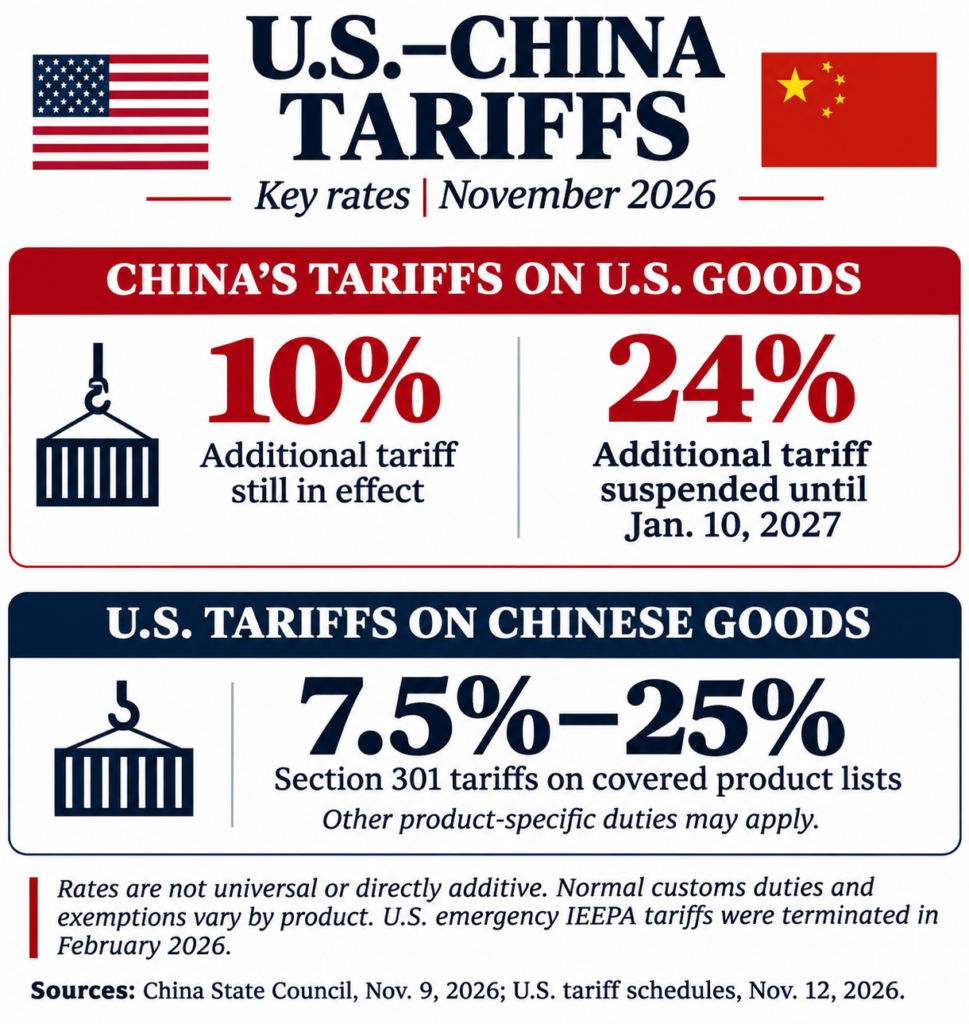
Beijing announced on November 9 that it would extend the suspension of an additional 24 percent tariff on American imports until January 10, 2027. However, an existing 10 percent tariff will remain in place, meaning the Chinese Communist Party (CCP) is offering Washington a temporary reprieve rather than a permanent settlement.
The announcement comes as the incoming Democrat congressional majority is preparing to interrogate and potentially reverse Trump’s tariff strategy, potentially complicating negotiations between the world’s two largest economies.
Beijing Is Buying Time.
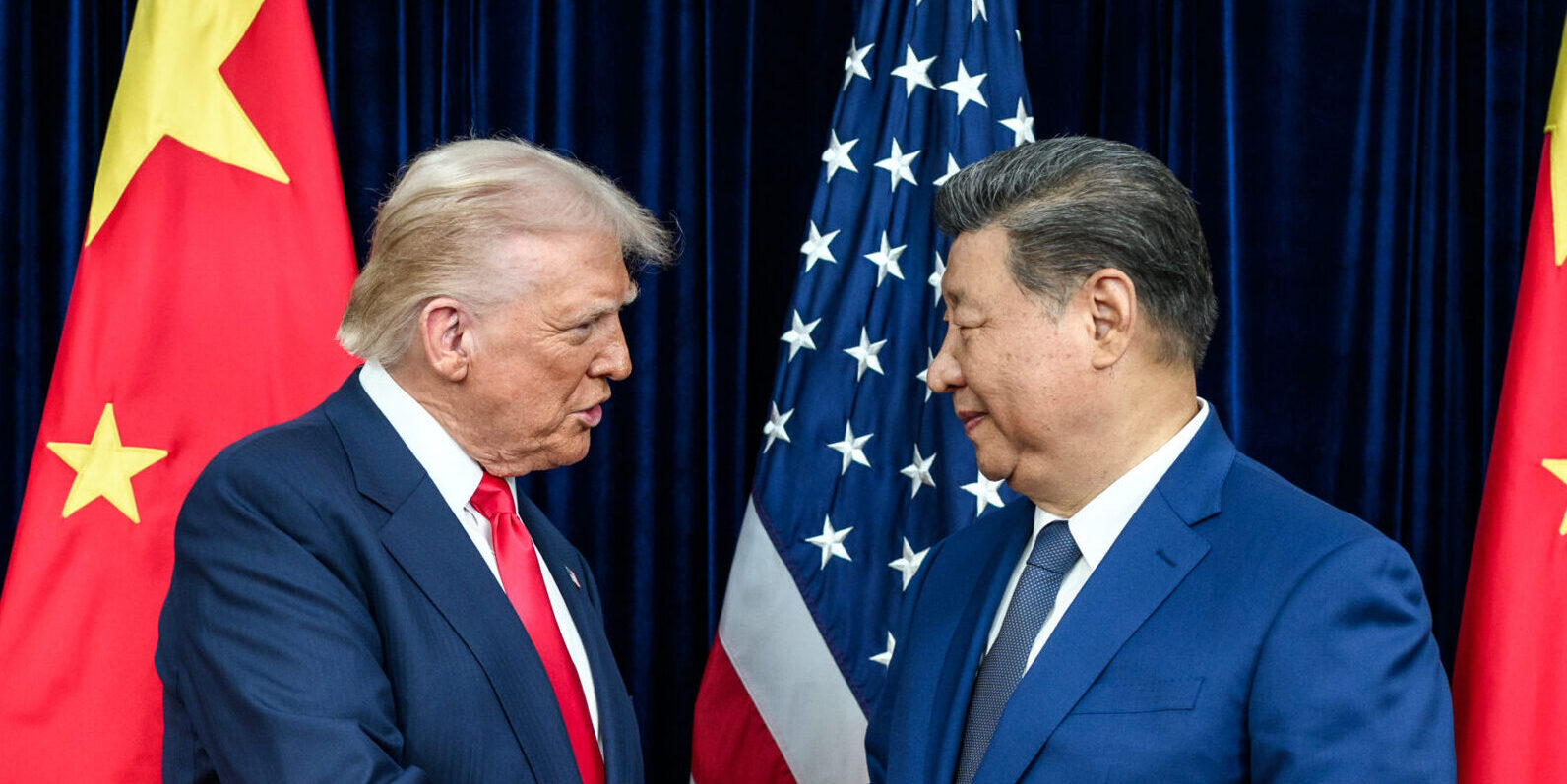
The extension preserves elements of the trade arrangements negotiated between Trump and Chinese President Xi Jinping, including the suspension of special port fees targeting U.S.-linked vessels.
Following their September summit in Washington, the two countries proposed approximately $60 billion in reciprocal tariff reductions, including concessions involving roughly $17 billion in American agricultural exports. However, the package has not been finalized.
For American farmers and exporters, the continued suspension provides temporary protection against another escalation. For Beijing, it preserves economic stability while negotiations continue. China has also made clear that its concessions are conditional. Its tariff commission warned that Beijing would monitor subsequent American trade measures and adjust its countermeasures as needed.
Democrats Prepare to Challenge Trump’s Tariff Powers.
Following their midterm victories, Democrats are preparing to assume control of both chambers of Congress in January. Their new majorities will provide expanded opportunities to investigate the administration’s tariffs, challenge their economic impact, and demand greater congressional oversight.
However, trade experts warn that the Democrats face substantial obstacles in dismantling Trump’s existing policies. Although the Constitution grants Congress authority over foreign commerce, lawmakers have delegated considerable tariff powers to the presidency through legislation, including Section 232 of the Trade Expansion Act of 1962 and Section 301 of the Trade Act of 1974. Democrats could attempt to reclaim those powers, but legislation restricting presidential authority would face Trump’s veto. Overriding it would require two-thirds majorities in both chambers, which is unlikely.
However, some bipartisan proposals already exist to subject presidential tariffs to congressional review, suggesting opposition to Trump’s trade powers is not confined to Democrats.
China’s Economic Leverage Remains Intact.
The tariff dispute also obscures a more dangerous strategic vulnerability: America’s dependence on Chinese-controlled supply chains. China has extended the suspension of certain rare-earth export restrictions until January 10. These materials are essential to advanced manufacturing, military equipment, and high-technology industries like consumer electronics and electric vehicles.
A 2026 assessment of critical mineral supply chains found that Chinese restrictions had exposed serious weaknesses in American defense, semiconductor, and automotive production. Meanwhile, Democrats are already demanding greater scrutiny of advanced semiconductor exports to China.
The Next Trade Confrontation Is Already Approaching.
The January deadline leaves Trump with less than two months to convert temporary concessions into a more durable agreement. Washington has already extended 178 existing tariff exclusions on Chinese products, reinforcing the administration’s willingness to negotiate while preserving broader trade restrictions.
Any lasting agreement must address more than just tariffs alone. America’s dependence on Chinese critical minerals and competition over advanced technology like artificial intelligence are also issues that need to be addressed.
China has bought itself another two months of relative stability. Trump must now decide how to use that time before a Democrat Congress attempts to assert its influence over America’s trade confrontation with Beijing.