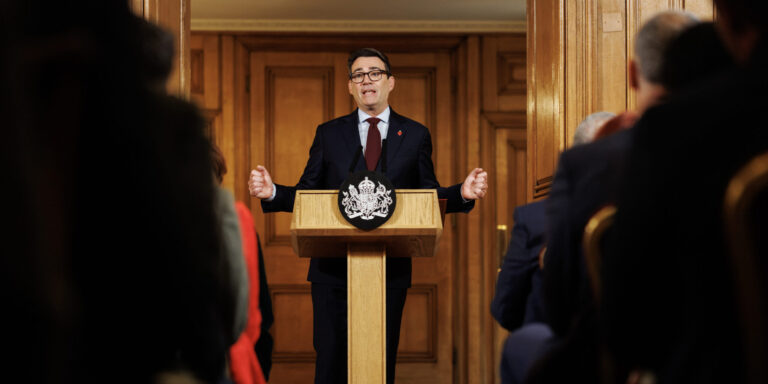
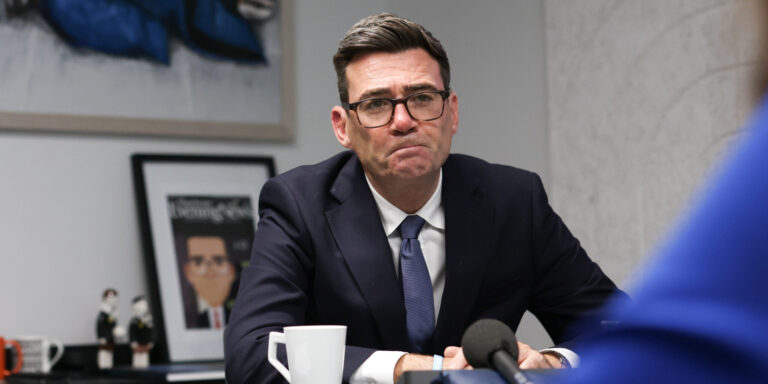
Andy Burnham’s government is resisting a European Union demand that Britain match the bloc’s tariffs on Chinese goods, according to a draft summit communiqué reported on Wednesday, two days before the Prime Minister goes to Brussels for Friday’s UK–EU summit.
The communiqué is still being finalised. Brussels reportedly wanted Britain “bound to ensure in its policies and national legal order the same outcomes as regards other international partners” as the bloc in agreed sectors. The British wording reportedly commits only to “aim to protect supply chains consistently across our markets and guard against potential risks of circumvention.” The stance cuts Britain’s chances of winning subsidies and public contracts under the EU’s planned “Made in Europe” rules, and an EU diplomat reportedly called the talks “surprisingly chilly.”
The gap is stark. Britain charges its standard 10% duty on Chinese electric cars, with no China-specific levy. The EU adds countervailing duties of between 7.8% and 35.3% on top of its own 10%, taking the total to as much as 45.3%. BYD pays 17% extra, and SAIC pays 35.3%.
Business Secretary Jonathan Reynolds set out the line in October. “I just want to be clear: when we make any trade decision in terms of trade defence tariffs in relation to the EU, that’s based on the UK interest – it’s not based on any other country asking for that,” he said. He has also said British levies remain under review, while warning of retaliation against car exports to China.
Aligned Everywhere Else.
The resistance on China stands out against the rest of Friday’s package. The government’s own factsheet lists a Youth Experience Scheme letting young people “live, study and travel on the continent,” a food and drink deal tying Britain to EU farm rules, and a link to the EU’s emissions trading system.
On Wednesday, Northern Ireland Secretary Sir Chris Bryant refused a request from 34 unionist MLAs to pull the Stormont Brake on the EU’s new Union Customs Code, which creates an EU Customs Authority and a handling fee on certain parcel movements. It is only the second time a British government has refused the Brake.
Burnham himself has called Chinese imports a shared problem. “On Made in Europe, Europe’s issue is Britain’s issue, which is obviously, particularly imports from China, causing the problem,” he said in Dublin last week. His trade minister, Anas Sarwar, said in October that Britain and the EU must “act in lockstep” against China’s carmaking dominance.
Chinese brands took 28.1% of British car registrations across electric and hybrid models from January to August, up from 12.9% a year earlier, according to Jato Dynamics. China’s embassy in London has warned it is “firmly opposed to any discriminatory practice involving tariff hikes or restrictive measures on Chinese products.”
Labour’s accommodation of Beijing predates Burnham. The National Pulse has previously reported that Sir Keir Starmer’s government approved China’s embassy at Royal Mint Court in January 2026. Liam Byrne, the Labour chairman of the Commons business committee, has said: “Our China strategy is simply not where it needs to be.”
Leaders meet in Brussels on Friday to settle the final text. Burnham’s government is ready to follow Brussels on food rules, carbon trading, and Northern Ireland customs, but not on tariffs against China.