On Thursday, France’s media regulator Arcom said it would, for the first time, put qualifying political video creators under the stringent fairness and equal time rules that govern television and radio for the upcoming presidential elections, limiting their ability to discuss them and share their views as they see fit. Online channels devoted to a political candidate’s or supporting party’s electoral propaganda will be exempt. Arcom’s president, Martin Ajdari, signed the recommendation, which covers the first and second rounds on April 18 and May 2, 2027.
Ajdari’s signed editorial said Arcom would regulate content creators “given the decisive role they are now liable to play in the campaign,” under the same principles as corporate television and radio. The formal duties for covered creators begin on March 16, 2027, the day the Constitutional Council is due to publish the candidate list. From April 5 until April 30, they must give equal speaking time and equal airtime, under comparable conditions of format, length, title, thumbnail, catalog position, and promotion. Creators need not invite every candidate. If they give candidates a platform, they must respect fairness and equality throughout the period.
Who Is Covered?
A creator is subject to the rules if they provide coverage of public interest subjects, have a significant audience “in the manner of an audiovisual medium,” and more than a single viral video. France has “several tens of thousands” of creators distributing work on on-demand audiovisual media services, the regulator said, and it will focus on those whose impact is comparable to traditional media.
There is no subscriber, audience, or revenue threshold, and no list of named creators. A claimed politically committed editorial line is not an escape hatch. Audio-only podcasts are outside the new video rules, Ajdari said.
Speaking on RTL on Friday, Ajdari claimed the rules would apply only to a “very tiny minority” whose YouTube channels gather millions of viewers, comparable to a television prime-time audience, and that “the vast majority of them will be able to carry on with their programmes as before.” He said Arcom was in dialogue with the creators concerned and would apply the rules “with pragmatism and humility.”
Ajdari said Arcom “can take sanctions” against creators as publishers “on the same footing as a television channel or radio station,” with a warning, then a formal notice, then financial sanctions for repeated breaches. He said: “If, during the official campaign, an influencer invites one or two candidates and denigrates the others, we would be led to intervene.”
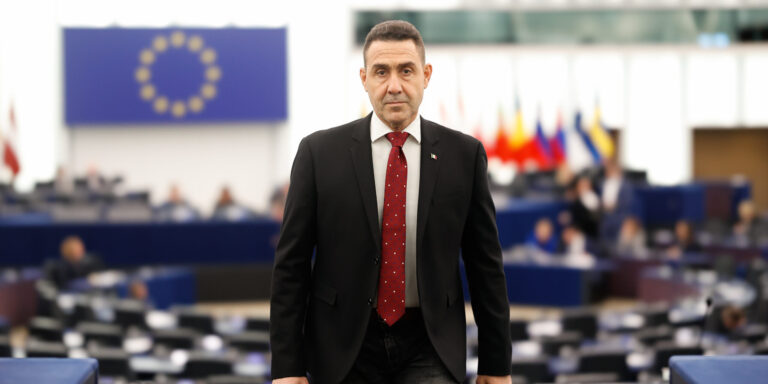
Sarah Knafo, an opposition Member of the European Parliament (MEP), denounced the announcement as a “coup d’État against the internet,” and said: “No law requires this of it: it has given itself this power all on its own.” Jean Massiet, host of Backseat, said he was “scandalized, outraged by this attack on fundamental freedoms,” and was considering legal action.
Independent political YouTubers who meet Arcom’s tests will be held to broadcast-style election rules from March 16.
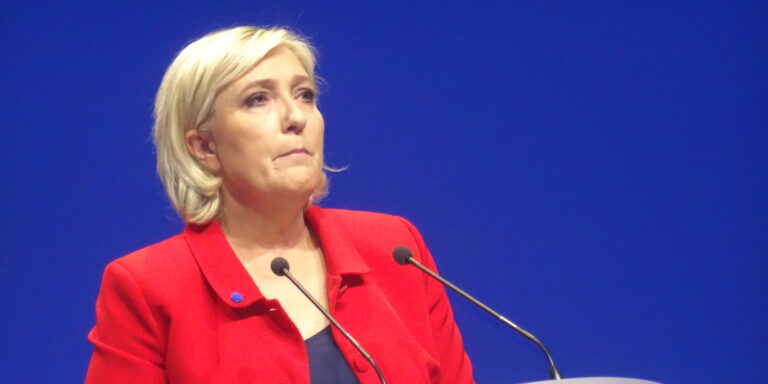
Marine Le Pen, the National Rally party’s presidential candidate, leads first-round polling, on 32 percent in a YouGov survey of 12–17 November, ahead of the far-left Jean-Luc Mélenchon on 19 percent. The National Pulse has previously reported her widening lead.