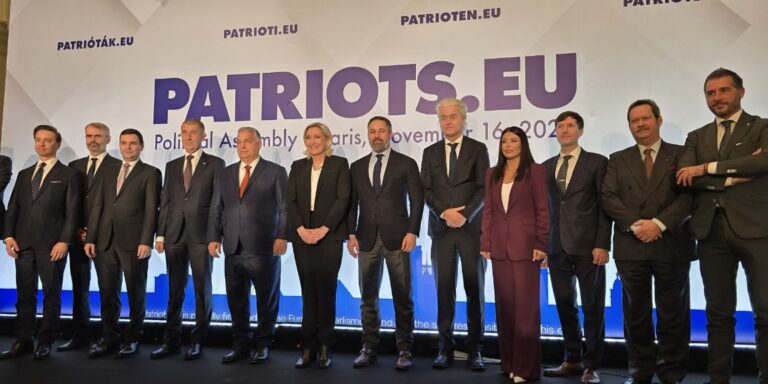
Looming over the negotiations is the prospect of significant electoral gains for Europe’s populist-nationalist parties, particularly Marine Le Pen’s National Rally (RN), as the populist leader leads the polls heading into France’s 2027 presidential election.
Brussels’ Trillion-Euro Spending Spree.
EU leaders convened in Brussels on November 26 for a two-day summit aimed at resolving disagreements over the bloc’s Multiannual Financial Framework (MFF), which will determine European spending priorities between 2028 and 2034.
European Council President António Costa has proposed cutting approximately €204 billion ($235 billion) from the European Commission’s original spending plan to reconcile competing demands among member states. Italian Prime Minister Giorgia Meloni warned, however, that European leaders remain “light-years away” from reaching an agreement.
Germany leads a group of net contributors to the EU budget seeking to reduce overall spending, while southern and eastern governments, net beneficiaries, oppose cuts to agricultural subsidies and regional development funding.
Meanwhile, Costa’s letter to European leaders calls for increased spending on economic competitiveness, security, and defense, as well as new sources of revenue for the European Union.
Brussels Wants to Le Pen-Proof Its Budget.
There also appears to be an urgency among European leaders to secure an agreement before European voters head to the polls next year. France’s Marine Le Pen, who is leading presidential opinion polls, has pledged to substantially reduce French contributions to the European Union and terminate French financial assistance to Ukraine.
Current French President Emmanuel Macron has also increased pressure on his European counterparts, threatening to withdraw from negotiations if an agreement cannot be reached before 2027.
However, France is not the only country where opposition to Brussels’ spending priorities is growing. Germany’s AfD has challenged Berlin’s continued financial and military support for Ukraine, arguing that the German government’s policies are coming at the expense of its own citizens while risking further military escalation with Russia.
For Ukraine’s European allies, securing legally binding financial commitments before a potential Le Pen presidency would provide greater certainty. For eurosceptics, however, an agreement could lock in spending they may otherwise have used in their own national interests.
Ukraine Is Dividing European Governments.
German Chancellor Friedrich Merz has further complicated negotiations by making an agreement on the EU budget conditional on every member state participating in additional financing for Ukraine. Brussels is seeking an additional €45 billion (~$52 billion) loan for Ukraine in 2027, with further contributions from countries outside the EU expected to help cover Kiev’s estimated funding shortfall.
Under the proposed arrangement, the European Union would borrow against its existing budget and lend the money to Ukraine, with repayment largely reliant on Russia paying war reparations.
Slovakia, Hungary, the Czech Republic, and Bulgaria have expressed opposition to participating in the loan. Slovak Prime Minister Robert Fico has accused Germany of “blackmail.” The dispute comes as Brussels is also considering allocating up to €100 billion ($115 billion) to Ukraine under its next seven-year budget.
The proposed borrowing raises questions regarding who will ultimately bear the financial burden if the Russians refuse to pay reparations.
Brussels Wants New Revenue-Raising Powers.
Under European Council President António Costa’s revised budget proposal, defense expenditure would increase by 232 percent compared to the current seven-year budget, while funding for economic competitiveness would increase by 120 percent.
At the same time, the proportion of the budget allocated to agriculture, fisheries, and regional development would fall from 59.1 percent to 42.4 percent. Repaying pandemic-era borrowing would consume as much as 8.9 percent of the budget, up from just 2.1 percent.
To finance its spending ambitions, Brussels is proposing a package of revenue measures designed to generate approximately €60 billion ($69 billion) annually when combined with existing sources of revenue. These include contributions linked to tobacco taxation, electronic waste, and carbon emissions.
A proposed three percent digital services tax targeting revenues generated by large technology companies, potentially including American giants Google, Amazon, and Meta, has become contentious. The Trump administration has already warned Brussels against imposing the levy, arguing that digital services taxes discriminate against American businesses and harm consumers.
Europe’s Looming Electoral Reckoning.
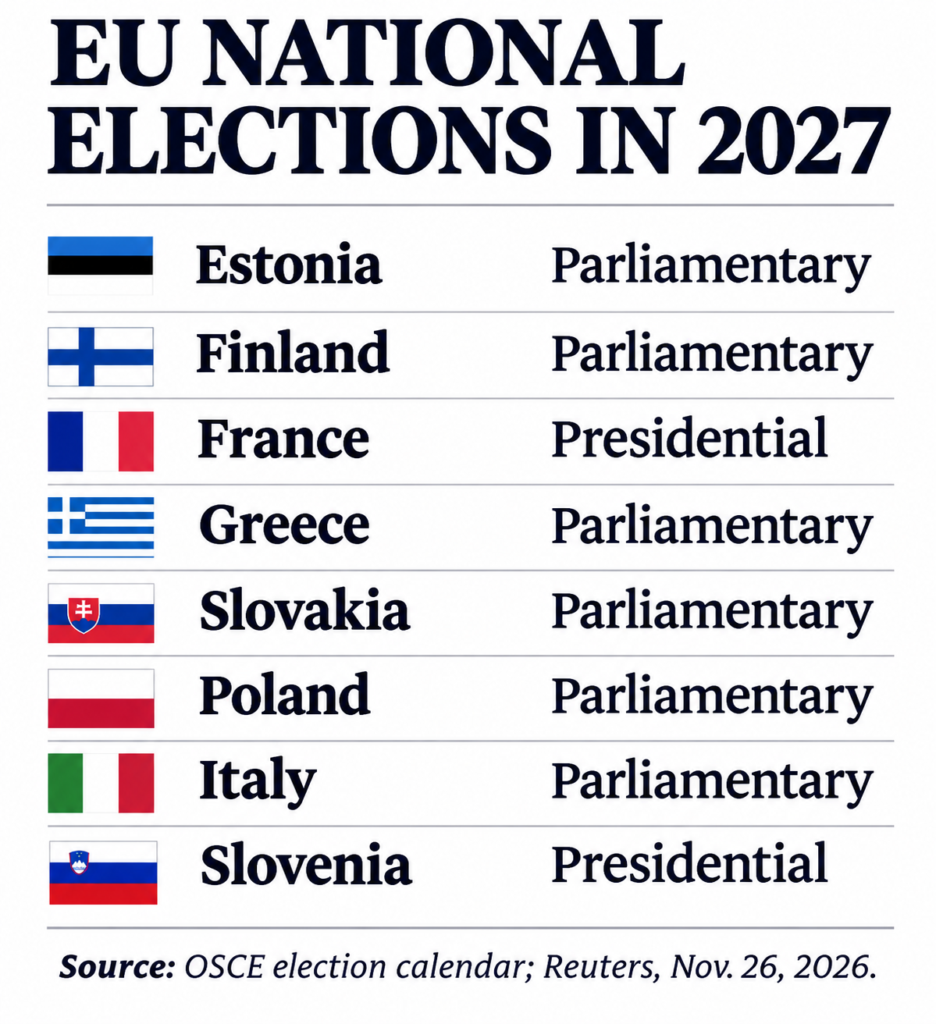
The EU’s determination to secure a budget agreement before the end of December is significant given that seven member states face elections in 2027, including France, Italy, and Poland.
The seven-year budget requires unanimous approval from member states and the consent of the European Parliament. A change of government in even one major European country could substantially alter future negotiations, especially when populist eurosceptics come to power.
The battle over the EU’s budget is ultimately about more than spending. It could come down to defining the EU’s future, as voters are poised to elect leaders critical of the entire project.