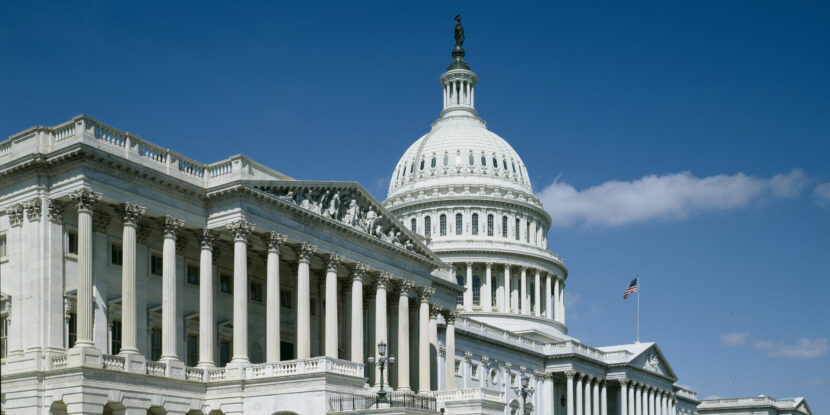
Washington D.C. witnessed 13 homicides within the first five days of August as the city’s authorities continue struggling in their effort to prevent the uptick in violent crime occurring in the United States capital.
The recent spate of killings took place in various locations in the city, with one occurring at 1900 13th St NW – walking distance from the White House.
Newsletter
Need to Know.
Your free, daily feed from The National Pulse.
Thank You!
You are now subscribed to our newsletter.
The total number of homicides in the Capitol this year alone is at least 161, which represents an increase of 28 percent compared to last year, according to the District Crime Data. The city also passed 100 annual homicides at the “fastest rate in 20 years” earlier this summer.
Local Democrat city councilor Trayon White Sr has even suggested calling the National Guard to the city to assist as the D.C. police force – with the number of officers at the lowest level in half a century – is unable to control the surge in criminality. “Crime is out of control and getting worse by the day… kids and innocent people are getting killed. It’s becoming status quo with no end in sight,” argues White.
The Washington D.C. council took to passing an emergency safety bill last month after July, similarly to August, began with ten killings in the first five days. The legislation made it easier for authorities to detain those accused of violent crimes and felonized firing a gun in public. However, its impact has so far been limited.
Criminality in general has been skyrocketing in the U.S. Capitol, with offenses, including sexual abuse, assault with a weapon, and robbery, having increased by 37 percent in 2023 compared to last year.
By Popular Demand.
The National Pulse Now has an on-site comments section for members. Sign up today and be part of the conversation in our community of almost 15,000.
More From The Pulse
WE ARE 100% INDEPENDENT AND READER-FUNDED. FOR A GUARANTEED AD-FREE EXPERIENCE AND TO SUPPORT REAL NEWS, PLEASE SIGN UP HERE, TODAY.
The far-left Democratic Socialists of America (DSA) endorsed ten Democrat candidates for the House of Representatives during the midterm elections, with a majority of the endorsed candidates being elected or re-elected. Based on current results, the DSA is on track to quadruple its representation in Congress.
Representative Alexandria “AOC” Ocasio-Cortez won re-election in New York’s 14th Congressional District, which covers parts of Queens and the Bronx. The incumbent Democrat defeated Republican challenger Diamant Hysenaj with 78 percent of the vote. A prospective DSA-backed candidate for the 2028 presidential race, Ocasio-Cortez ran on a number of far-left positions, including abolishing U.S. Immigration and Customs Enforcement.
“ICE is a rogue, lawless paramilitary and surveillance agency. It does not belong in New York City and it should not exist in the United States of America. Abolish ICE,” read a press statement from Ocasio-Cortez’s congressional office from early October.
Rashida Tlaib.
Representative Rashida Tlaib secured another term representing Michigan’s 12th Congressional District, which includes Detroit and surrounding communities. The incumbent Democrat defeated Republican challenger James Hooper with 83 percent of the vote.
Chris Rabb won Pennsylvania’s 3rd Congressional District, encompassing Philadelphia. Rabb secured the Democrat nomination after Dwight Evans, the former Democrat representative, retired from office, creating an open seat. Rabb received 94 percent of the vote.
Donavan McKinney won Michigan’s 13th Congressional District, representing Detroit and surrounding communities, and defeated Republican challenger T.P. Nykoriak. This follows McKinney’s victory over former incumbent Democrat Shri Thanedar in the party’s August primary. McKinney received 81 percent of the vote.
Melat Kiros won Colorado’s 1st Congressional District, which includes Denver, defeating Republican rival Christy Peterson. Kiros secured the Democrat nomination after defeating her party’s former incumbent Diana DeGette in the June primary. Kiros received 78 percent of the vote.
“We will not wait to abolish ICE and pass Medicare for all. And no, we will not wait to end the genocide in Palestine,” declared Kiros following her victory in the Democrat primaries.
Darializa Avila Chevalier won New York’s 13th Congressional District, which covers upper Manhattan and parts of the Bronx, defeating Republican challenger Jomo Williams. Chevalier previously ousted longtime Democrat incumbent Adriano Espaillat during the primaries. Chevalier received 87 percent of the vote.
Claire Valdez won New York’s 7th Congressional District, which includes parts of Brooklyn and Queens. The New York state assemblywoman defeated Republican rival Melvin Rivera after securing the Democrat nomination to run in the open seat. Valdez received 83 percent of the vote.
“215 years ago, Mexicans fought an empire that demanded our land and our labor. And we won… I’ll carry that fight with me to Congress as New York’s first Mexican-American representative,” declared Valdez on X back in September.
Angela Gonzales-Torres
Angela Gonzales-Torres defeated incumbent Democrat congressman Jimmy Gomez in California’s 34th Congressional District, which covers parts of Los Angeles. Gonzalez-Torres received 58 percent of the vote.
Mai Vang, a Sacramento City Council member, is running against incumbent Democrat congresswoman Doris Matsui in California’s 7th Congressional District, which covers south Sacramento. At the time of reporting, no winner has been declared, although 41 percent of the vote has been counted Matsui leads Vang by 57.4 percent to 42.6 percent.
Lauren Jewett.
Lauren Jewett, a special education teacher, challenged Republican House Majority Leader Steve Scalise in Louisiana’s 1st Congressional District, which covers the New Orleans area. Jewett had the most uphill battle of any DSA-endorsed House candidate, given that she was running in staunchly Republican territory.
Jewett received 33 percent of the vote, compared to Scalise’s 61 percent, making her the DSA’s first confirmed House race loss. This also marks Scalise’s tenth full term in Congress.
Join Pulse+ to comment below, and receive exclusive e-mail analyses.
show less
The far-left Democratic Socialists of America (DSA) endorsed ten Democrat candidates for the House of Representatives during the midterm elections, with a majority of the endorsed candidates being elected or re-elected. Based on current results, the DSA is on track to quadruple its representation in Congress.show more
By Popular Demand.
The National Pulse Now has an on-site comments section for members. Sign up today and be part of the conversation in our community of almost 15,000.
WE ARE 100% INDEPENDENT AND READER-FUNDED. FOR A GUARANTEED AD-FREE EXPERIENCE AND TO SUPPORT REAL NEWS, PLEASE SIGN UP HERE, TODAY.
Germany’s Axel Springer, which completed a £575 million takeover of Britain’s Telegraph Media Group in June, runs an LGBT employee network whose materials support gender ideology and transitioning minors. Historically, The Telegraph‘s editorial position was broadly opposed to transing children and allowing males into female-only spaces and activities, but the newspaper has already begun culling conservative staffers under its new ownership.
The Axel Springer Queerseite network, which has operated since 2014, describes itself as “not just a nice benefit for LGBTQ+ employees,” but “more like a safe harbour or a queer family,” while “wants to drive a positive cultural change for all queer people and allies.”
Queerseite is clear that this extends to its properties beyond Germany, which include Business Insider and POLITICO alongside The Telegraph, stating, “We want all people working and being at Axel Springer to have a safety feeling that we are standing for queer rights and principles globally.”
Its published values are listed under a PRIDE acronym, for Professionality, Respect, Integrity, Diversity, and Education, with “Education” defined as “educat[ing] people outside of the LGBTQ+ community about the grievances and realities of life of queer people.”
Language Policing.
In 2023, Queerseite published a glossary of LGBTQ+ terms for colleagues and others. Entries push gender ideology concepts such as “genderfluid/genderflux,” “genderqueer,” and “nonbinary,” argue that the “expectations” of biological sex are “proved wrong by the existence of intersex people and by the medical changes undertaken by some trans people,” and denounce “the (frequently violent) enforcing of binary sex upon bodies.”
Queerseite’s channels have marked “Trans* Day of Remembrance,” held on November 20 each year. Posts describe the date as an annual observance that “honors the memory of trans* individuals who have lost their lives due to anti-trans* violence” and as a reminder of “discrimination, violence, and prejudice.”
The network has also marked “Non-Binary People’s Day,” “Trans* Awareness Week,” and sponsored various Pride events, and collaborated with individuals wearing dog-themed fetish gear on social media.
Axel Springer has claimed that the group intends to preserve The Telegraph‘s character. However, its new management has begun restructuring to eliminate up to around 100 roles at risk and announced plans to turn the newspaper into “a global, AI-powered premium media and intelligence business.”
Regular columns by right-wing commentators including Allison Pearson and Reform UK leader Nigel Farage have ended, which may be connected to Axel Springer CEO Mathias Döpfner stating that values such as “support for a united Europe, Israel’s right to exist and a free-market economy, among others” are “like a constitution” at Axel Springer, and that anyone who disagrees “should not work for Axel Springer, very clearly.”
The Telegraph and the bulk of its readership supported Brexit in 2016, and indications that it may be winding down this position, alongside the ownership’s support for far-left gender ideology, are likely to increase the ongoing subscriber exodus the newspaper is already facing.
The Telegraph’s new owner’s LGBTQ+ network – “Axel Springer Queerseite”
“Since 2014 Axel Springer Queerseite has represented the interests of the LGBTQ+ community of companies and their employees at Axel Springer SE.
The National Pulse is 100% reader-funded. If you value the work of Raheem J. Kassam and his team, please JOIN THE NATIONAL PULSE or MAKE A DONATION today.
Join Pulse+ to comment below, and receive exclusive e-mail analyses.
show less
Germany's Axel Springer, which completed a £575 million takeover of Britain's Telegraph Media Group in June, runs an LGBT employee network whose materials support gender ideology and transitioning minors. Historically, The Telegraph's editorial position was broadly opposed to transing children and allowing males into female-only spaces and activities, but the newspaper has already begun culling conservative staffers under its new ownership.
show more
By Popular Demand.
The National Pulse Now has an on-site comments section for members. Sign up today and be part of the conversation in our community of almost 15,000.
WE ARE 100% INDEPENDENT AND READER-FUNDED. FOR A GUARANTEED AD-FREE EXPERIENCE AND TO SUPPORT REAL NEWS, PLEASE SIGN UP HERE, TODAY.
Britain’s Conservative Party has turned to its former pre-Brexit Prime Minister David Cameron to prop up its finances, according to the Financial Times. The man who campaigned to Remain in the European Union is now taking top billing at Tory events and working the phones to lapsed donors.
To help Raheem J. Kassam and his team hold the political establishment to account, please JOIN PULSE+ or MAKE A DONATION today. We are 100% reader-funded.
Newsletter
Need to Know.
Your free, daily feed from The National Pulse.
Thank You!
You are now subscribed to our newsletter.
Dave’s Back.
The FT’s story, headlined “Tories turn to former PM David Cameron to boost party fundraising,” reports that the ex-leader “takes top billing at Conservative events just as his party secures poll lead over Reform UK for first time in almost two years.”
According to the paper’s Whitehall Editor, Lucy Fisher, Cameron is set to appear next month at the Two Cities Conservative association’s annual lunch, where tickets cost up to £345. He has done it before: Cameron headlined the same lunch in July 2016, just weeks after the Brexit referendum.
Fisher adds that Cameron has also been “calling on existing and lapsed Tory donors to try to entice them back into the tent and open their wallets.”
Follow the Money.
The party needs the wallets. Tory donations fell to £14.97 million in 2025, down from £28.1 million the year before, ConservativeHome reported in August. UnHerd noted that this was the lowest level since 2012, while in 2025, Reform UK took £22.9 million, with donors including Harborne and Haidar defecting.
Her area of policy focus at the time was foreignaid, specifically to Africa.
In a Ted Talk, Kemi Badenoch explained how she joined the Conservative Party because she wanted a role in "international development" and she was angry that more "Africans" were not consulted on the matter.
It is not the first time Badenoch has leaned on her predecessor. The Times revealed in April 2025 that Cameron had helped her prepare for Prime Minister’s Questions. Badenoch confirmed it on Times Radio, saying he “helped me… a few months ago.”
The National Pulse brings you unfiltered news and analysis free of corporate influence. To keep us RADICALLY INDEPENDENT, please JOIN PULSE+ or MAKE A DONATION today.
Join Pulse+ to comment below, and receive exclusive e-mail analyses.
show less
Britain's Conservative Party has turned to its former pre-Brexit Prime Minister David Cameron to prop up its finances, according to the Financial Times. The man who campaigned to Remain in the European Union is now taking top billing at Tory events and working the phones to lapsed donors.
show more
By Popular Demand.
The National Pulse Now has an on-site comments section for members. Sign up today and be part of the conversation in our community of almost 15,000.
WE ARE 100% INDEPENDENT AND READER-FUNDED. FOR A GUARANTEED AD-FREE EXPERIENCE AND TO SUPPORT REAL NEWS, PLEASE SIGN UP HERE, TODAY.
In addition to voting for congressional and state representatives in Tuesday’s midterms, voters in several states took part in referendums on voter ID measures, resulting in victories for election integrity in two swing states and Ohio.
Ohio voters overwhelmingly approved a constitutional amendment to strengthen the state’s voter identification requirements. Specifically, the amendment requires voters to present an unexpired, government-issued photo ID when voting in person.
Acceptable identification includes an Ohio driver’s license or state ID card, a U.S. passport or passport card, and military identification, including cards issued by the Ohio National Guard and the Department of Veterans Affairs.
The measure also establishes identification requirements for absentee voting, with specified alternatives. The amendment, known as Issue 3, was backed by a projected 64.7 percent of voters. As this is a constitutional amendment, it will be difficult for Democrat legislators to repeal or weaken.
Voters in the swing state of North Carolina approved a constitutional amendment to strengthen the state’s voter identification requirements. Specifically, the amendment extends the state’s constitutional photo ID requirement to all voters, including those casting absentee ballots by mail. The constitutional requirement previously only applied to in-person voting.
Approximately 60 percent of voters in North Carolina supported the Republican-backed amendment, despite Democrat state-wide victories. This reflects data from earlier this year showing that support for voter ID cuts across traditional party lines, despite opposition from Democrat politicians to election security measures.
Similar to Issue 3 in Ohio, the measure is a constitutional amendment, meaning it will be harder to repeal or weaken.
🚨 BREAKING: Ohio voters APPROVE Issue 3, amending the state CONSTITUTION to require PHOTO ID to vote in person
This is DESPITE the Democrat sweep in Ohio
It's COMMON-SENSE legislation that John Thune should've passed FEDERALLY while we had the chance pic.twitter.com/fMMAW9FqOu
The National Pulse does not take government funds or corporate cash. Please JOIN THE PULSE+ or MAKE A DONATION to keep us RADICALLY INDEPENDENT.
Nevada.
In Nevada, a tightly contested swing state, voters have backed a constitutional amendment requiring photo identification for in-person voting and additional identity checks for mail-in ballots. The measure was already backed in a 2024 referendum, although it required a second public vote to become a constitutional amendment. Roughly 61 percent of voters are projected to have backed the measures.
The amendment, known as Question 7, requires voters to present government-issued photo identification at polling places. Voters can use driver’s licenses, U.S. passports, military identification, tribal identification, and student cards issued by Nevada public colleges. Documents used as voter ID must be current or have expired within the previous four years. However, voters aged 70 and older are exempt from the four-year limit.
The amendment would also require mail-in voters to provide the last four digits of their driver’s license, Social Security number, or an alternative number supplied by their county clerk.
Decision Desk HQ projects Yes wins the NV Question 7 – Require Voter Identification Nonpartisan Ballot Question#DecisionMade: 3:11 AM EST
Not every measure to strengthen voter ID was approved. Arizona’s Proposition 144, California’s Proposition 39, and Colorado’s Amendment 84 were all rejected by their state’s respective voters. Nevertheless, while Arizona is considered a swing state, California and Colorado lean solidly to the Democrats following large-scale demographic changes, so the balance of the results likely favors the GOP, as unlawful voters lean to the Democrats.
Implementing voter ID and reforming mail-in voting have been cornerstone ambitions of the Trump administration, so the victories in Ohio, North Carolina, and Nevada may provide some hope that elements of the White House agenda can continue to advance despite losing both chambers of Congress.
Join Pulse+ to comment below, and receive exclusive e-mail analyses.
show less
In addition to voting for congressional and state representatives in Tuesday's midterms, voters in several states took part in referendums on voter ID measures, resulting in victories for election integrity in two swing states and Ohio.
show more
By Popular Demand.
The National Pulse Now has an on-site comments section for members. Sign up today and be part of the conversation in our community of almost 15,000.
WE ARE 100% INDEPENDENT AND READER-FUNDED. FOR A GUARANTEED AD-FREE EXPERIENCE AND TO SUPPORT REAL NEWS, PLEASE SIGN UP HERE, TODAY.
New data from the British government suggests that 1.4 million migrants will remain eligible for Indefinite Leave to Remain (ILR) despite the ruling Labour Party’s recent tweaks to settlement rights, sparking backlash from Nigel Farage’s Reform UK.
The National Pulse brings you original reporting and analysis free of corporate influence. To keep us RADICALLY INDEPENDENT, please JOIN THE NATIONAL PULSE or MAKE A DONATION today.
Newsletter
Need to Know.
Your free, daily feed from The National Pulse.
Thank You!
You are now subscribed to our newsletter.
Background.
Labour Party Home Secretary Shabana Mahmood initially proposed plans to make lower-skilled migrants wait from ten to 15 years for Indefinite Leave to Remain (ILR), the British equivalent of permanent residency. This is an increase from the original five-year qualifying period for ILR, which had been called into question following the unprecedented “Boriswave” influx of over four million immigrants under the formerly governing Conservatives.
However, Mahmood’s initial proposals quickly ran into opposition from Labour Members of Parliament (MPs) on the left of the party, including Housing Secretary Angela Rayner and Liberia-born Energy Secretary Miatta Fahnbulleh, along with various Labour-aligned activist organizations.
Mahmood diluted her reforms after Andy Burnham replaced Keir Starmer as Labour leader and Prime Minister, announcing that hundreds of thousands of care workers will be exempt from the longer settlement waiting period. The Home Secretary’s reforms take effect next year and apply retrospectively to migrants already in Britain.
1.4 Million Eligible Migrants.
According to estimates by the British government, Mahmood’s diluted reforms mean that approximately 1.4 million migrants will still qualify for permanent residence by 2030. The figure includes migrants who arrived in Britain from 2021 onward and who could qualify for settlement by 2030 under the new rules.
After exempting care workers from the extended ILR qualifying period, the British government estimates that Mahmood’s reforms will reduce the number of migrants eligible for ILR by approximately 500,00o. The figure concerns the number of migrants who arrived in the country from 2021 onward and could have acquired ILR by 2030 before the Home Secretary’s reforms.
As such, for every migrant whose settlement prospects are affected by Mahmood’s reforms, almost three others will remain eligible to settle by 2030. Significantly, migrants with ILR become eligible for British citizenship after just one year.
Nigel Farage’s Reform UK party has responded by committing to not only abolish ILR altogether and replace the system with renewable five-year work visas, but to potentially denaturalize Boriswave migrants found to be a net drain on the public finances. “Normal countries don’t give out work visas, allow you to bring dependents, automatically give you Indefinite Leave to Remain, and then one year later citizenship,” said Farage.
This places Reform’s immigration policy firmly to the right of Restore Britain, a party established and led by former Reform MP Rupert Lowe, who collaborates with the Conservatives and is backed by Elon Musk. Notably, the Conservatives’ current leader, Kemi Badenoch, helped to create the Boriswave by lobbying for the elimination of annual limits on migrant workers and foreign students, leaving her with little credibility on the issue.
Going Forward.
Boriswave migrants tend to work in low-skill, low-wage occupations. As such, these migrants are more likely to be financially burdensome when they obtain ILR, which comes with full access to Britain’s welfare state. The move to accommodate them regardless, despite public spending being extremely tight, underlines the extent to which Britain’s governing Labour Party’s agenda is driven by its hard left faction.
It also affirms Farage’s warning that the British government under the leadership of Prime Minister Andy Burnham would move significantly to the left on immigration, among other issues.
Join Pulse+ to comment below, and receive exclusive e-mail analyses.
show less
New data from the British government suggests that 1.4 million migrants will remain eligible for Indefinite Leave to Remain (ILR) despite the ruling Labour Party's recent tweaks to settlement rights, sparking backlash from Nigel Farage's Reform UK.
show more
By Popular Demand.
The National Pulse Now has an on-site comments section for members. Sign up today and be part of the conversation in our community of almost 15,000.
WE ARE 100% INDEPENDENT AND READER-FUNDED. FOR A GUARANTEED AD-FREE EXPERIENCE AND TO SUPPORT REAL NEWS, PLEASE SIGN UP HERE, TODAY.
The Democrats have secured majorities in both the House and Senate in the midterm elections, ending Republican control of Congress for the final two years of President Trump’s second term. Under the 20th Amendment, the terms of the newly elected members begin on January 3, 2027, when the 120th Congress convenes and members are sworn in, leaving the outgoing 119th Congress a brief window to secure key appointments and funding commitments before the Democrats gain full control.
The White House has prepared to govern without Congress using existing constitutional powers and powers delegated to the executive by statute, but will be substantially constrained by congressional control over appointments, lawmaking, and government funding.
Newsletter
Need to Know.
Your free, daily feed from The National Pulse.
Thank You!
You are now subscribed to our newsletter.
The National Pulse brings you original, deeply researched news and analysis free of corporate funding every week. To support our work, please JOIN THE NATIONAL PULSE or MAKE A DONATION today.
Legislation and Appointments.
With majorities in both chambers, the Democrats can set the legislative agenda and block Republican bills. However, Republicans will likely be able to block most Democrat bills in the Senate, where Democrats will struggle to achieve the 60 votes needed to overcome a filibuster despite their midterm gains.
Budget reconciliation measures that address taxes and spending operate under different rules than most legislation, and can pass the Senate with a simple majority, but their scope is limited. Notably, any bill that clears both chambers can still be vetoed by the President, and Congress cannot override such vetoes without the support of two-thirds of each chamber, a threshold that is unlikely to be met without substantial Republican support.
The Senate must confirm presidential nominees for Supreme Court justices, lower court federal judges, Cabinet positions, and many other important offices. A Democrat Senate majority will make it substantially harder, if not impossible, for the Trump administration to secure the confirmation of contested picks. President Trump will retain the power to remove executive branch officials he appointed, so Cabinet changes can still occur without Senate involvement, but filling vacancies permanently will be much more difficult.
Investigations, Subpoenas, and Impeachment.
Control of the House grants Democrats the ability to issue subpoenas for documents and testimony by administration officials. The party leadership has indicated it will make extensive use of these powers to harass the Trump administration over various executive actions, alleged conflicts involving family or business interests, and the conduct of agencies such as the Department of Justice and the FBI.
To impeach President Trump and other officials, such as Secretary of War Pete Hegseth and Health and Human Services Secretary Robert F. Kennedy Jr., only a simple majority is required in the House. A two-thirds vote in the Senate is required for conviction and removal, which the Democrats are unlikely to secure, but impeachment and Senate trial processes could still consume a significant amount of the administration’s bandwidth.
Immigration Enforcement.
ICE and other immigration enforcement agencies operate under the Immigration and Nationality Act. The administration can continue to direct enforcement priorities and tighten visa processing for students, temporary workers, and other groups, and protections previously extended to immigrant groups by executive action can be narrowed or ended, albeit within the bounds of statute and subject to judicial review.
However, future funding for personnel and detention capacity could prove to be a powerful lever for the Democrats, who will be able to restrict or condition future appropriations once they control the relevant congressional committees and the power of the purse.
Tariffs and Trade Measures.
Delegated authority under statutes such as Section 232 of the Trade Expansion Act of 1962 and Section 301 of the Trade Act of 1974 permits the President to impose or adjust tariffs on goods linked to national security concerns or unfair trade practices. Critical minerals, certain industrial products, and items tied to energy or technology supply chains have been addressed through these channels without fresh authorizing legislation.
Significantly, any attempt by the new Congress to repeal or sharply limit these powers would require legislation, which President Trump could veto. A two-thirds majority in both chambers is needed to override a presidential veto, which will prove highly challenging for the Democrats even after their midterm gains.
Foreign Policy Continuity.
As Commander in Chief and chief diplomat under Article II of the Constitution, the President retains latitude to conduct military operations and negotiations and to adjust diplomatic relations on issues involving Ukraine, Russia, China, and Iran. These actions do not require new congressional authorization, though they remain subject to funding constraints.
The Coming Confrontation.
Congress having exclusive authority over appropriations means the Democrats will be able to interfere in areas where the executive has fairly broad freedom of action, such as immigration enforcement and operations overseas, by withholding or conditioning funding for specific activities.
The Trump administration can attempt to reprogram existing funds, which will likely lead to the courts adjudicating disputes between the White House and Congress over statutory authority, procedural compliance, and the scope of executive discretion in a series of lawfare battles.
The period between the midterm elections and the January 3 swearing-in leaves limited time for the current GOP-controlled Congress to address must-pass items such as government funding before existing authorities expire. Once the new majorities take over, the result is likely to be an extended contest between unilateral executive tools and congressional control over legislation, confirmations, investigations, and spending. Both sides possess significant checks on each other, although deadlocks are likely to be more harmful to the White House than to the Democrats by hindering the administration’s ability to govern effectively.
Join Pulse+ to comment below, and receive exclusive e-mail analyses.
show less
The Democrats have secured majorities in both the House and Senate in the midterm elections, ending Republican control of Congress for the final two years of President Trump’s second term. Under the 20th Amendment, the terms of the newly elected members begin on January 3, 2027, when the 120th Congress convenes and members are sworn in, leaving the outgoing 119th Congress a brief window to secure key appointments and funding commitments before the Democrats gain full control.
show more
By Popular Demand.
The National Pulse Now has an on-site comments section for members. Sign up today and be part of the conversation in our community of almost 15,000.
WE ARE 100% INDEPENDENT AND READER-FUNDED. FOR A GUARANTEED AD-FREE EXPERIENCE AND TO SUPPORT REAL NEWS, PLEASE SIGN UP HERE, TODAY.
President Donald J. Trump’s efforts to boost election integrity have encountered yet another judicial setback, as a federal judge appointed by Barack Obama has restricted his administration’s efforts to identify suspected noncitizens on state voter rolls as Americans head to the polls for the November 3 midterm elections.
The latest ruling is part of a widening constitutional confrontation between the White House, federal judges, congressional Democrats, and state election officials over who ultimately controls American elections, and whether the federal government can impose stricter citizenship-verification procedures without new legislation.
At the center of the dispute is a straightforward legal principle: noncitizens are already prohibited from voting in federal elections. The issue is how that prohibition should be enforced, what information federal agencies can share with states, and whether President Trump can act without congressional authorization.
Federal Judges Move Against Trump’s Election Agenda.
The latest injunction from U.S. District Judge Tanya Chutkan prevents the Justice Department and Department of Homeland Security from distributing lists of suspected noncitizen voters to states or encouraging officials to withhold or segregate their ballots pending verification. Chutkan, who previously worked at the Biden-linked Boies Schiller Flexner law firm, which also represented Burisma, where Hunter Biden was a board member, is an immigrant from a Jamaican Marxist family.
Her decision follows another ruling on November 2, when anti-Trump U.S. District Judge James Boasberg ordered the administration to stop demanding that California election officials segregate ballots associated with suspected noncitizens. Boasberg, another Obama appointee, ruled that the federal government had exceeded its authority by attempting to dictate how California verifies voter citizenship.
The administration has encountered similar resistance since Trump returned to the White House in January 2025.
In April 2025, U.S. District Judge Colleen Kollar-Kotelly blocked provisions of Trump’s election-integrity executive order. The measure sought to introduce documentary proof-of-citizenship requirements into federal voter-registration procedures. In January 2026, Kollar-Kotelly permanently blocked additional provisions concerning citizenship verification at federal agencies and applications used by military and overseas voters.
However, the administration later secured an important victory. On September 25, the Supreme Court voted 6–3 to suspend Sooknanan’s restrictions while litigation continued, allowing federal authorities to resume using the expanded database.
California Becomes a Major Battleground.
On October 28, U.S. District Judge David Carter rejected a Justice Department request to prevent officials from counting mail ballots associated with more than 20,000 registered voters in California suspected of being non-citizens.
The administration then sought emergency intervention from the Supreme Court, which declined on November 2 to require the ballots to be segregated.
By late October, federal authorities had issued more than 100 subpoenas seeking records involving tens of thousands of voters across at least 13 states. The administration has also sued states that refused to surrender voter-registration information, including sensitive identifying data.
The SAVE America Act.
While federal judges have restricted the president’s executive actions, congressional Democrats have opposed President Trump’s attempts at a legislative solution.
The Safeguard American Voter Eligibility Act, commonly called the SAVE Act, would require documentary proof of American citizenship when registering to vote in federal elections. An expanded version, the SAVE America Act, would also establish federal voter-identification requirements.
The original legislation passed the House in April 2025 by 220 votes to 208. A revised version passed in February 2026 by 218 votes to 213. However, the Republican-controlled Senate has been unable to overcome Democratic opposition and the chamber’s 60-vote procedural threshold.
Republicans argue that citizenship documentation and photographic identification are reasonable safeguards against unlawful participation in elections. Democrats oppose the reforms, despite overwhelming public support for them, including among Democrat voters.
Join Pulse+ to comment below, and receive exclusive e-mail analyses.
show less
President Donald J. Trump's efforts to boost election integrity have encountered yet another judicial setback, as a federal judge appointed by Barack Obama has restricted his administration's efforts to identify suspected noncitizens on state voter rolls as Americans head to the polls for the November 3 midterm elections.
show more
By Popular Demand.
The National Pulse Now has an on-site comments section for members. Sign up today and be part of the conversation in our community of almost 15,000.
WE ARE 100% INDEPENDENT AND READER-FUNDED. FOR A GUARANTEED AD-FREE EXPERIENCE AND TO SUPPORT REAL NEWS, PLEASE SIGN UP HERE, TODAY.
In a resurfaced clip shared on social media this week, Cliff Connolly, a member of the steering committee of the far-left Democratic Socialists of America (DSA), emphasized the DSA’s “hatred” of the Constitution. The DSA may quadruple its presence in the House of Representatives and potentially force concessions from Hakeem Jeffries in any bid for Speaker following the midterms.
The DSA’s program calls on members to “win the battle for democracy, draft a new constitution, and create a democratic socialist republic.” Rather than having an independently elected president heading the executive branch, the DSA proposes an executive “chosen by and subordinate to Congress,” ending the separation of powers.
Abolishing the Senate and Expanding the House.
The DSA proposes to “abolish the Senate” and “expand the House of Representatives.” It argues that the Senate is undemocratic, given that each state, regardless of population, has two senators, a measure that was intended to stop large states from bulldozing smaller ones.
The DSA claims that a proportionally elected House would have a stronger claim to represent the national population.
Ranked-Choice Voting and Multiparty Politics.
The program also seeks to replace the “two-party system with a multi-party democracy.” Specifically, the DSA proposes implementing proportional representation and ranked-choice voting. This would end the current first-past-the-post system, in which the candidate with the most votes is elected to represent an electoral district. Under a ranked-choice system, voters rank candidates rather than selecting only one.
Voting Rights for Noncitizens.
The program also includes expanding voting rights to foreign nationals. Specifically, the DSA calls for “full voting rights to all permanent U.S. residents,” while also restoring voting rights to prisoners and those with serious criminal convictions. This would make noncitizens politically equal to U.S. citizens.
The National Pulse does not take government funds or corporate cash. Please JOIN THE NATIONAL PULSE or MAKE A DONATION to help keep our reporting independent.
Ending the Electoral College.
The DSA also wants to “abolish the Electoral College,” one of the central mechanisms of America’s presidential system. Under the current system, Americans vote for presidential electors allocated among the states, rather than directly electing the President through a single national vote. The proposal to abolish the Electoral College ties into the DSA’s plan to have the President chosen by Congress.
Subordinating the Judiciary.
Similar to the presidency, the DSA’s program calls for the Supreme Court to be “chosen by and subordinate to Congress.” This would end the mechanism of independent checks and balances facilitated by the separation of powers since the creation of the U.S. political system.
D.C. Statehood.
The DSA program seeks to “establish statehood for Washington, D.C.” and “the right to self-determination for all U.S. territories,” which it characterizes as “colonies.” While the program remains open-ended about granting statehood to U.S. territories, it emphasizes that people living in territories currently lack the same political power as residents of states
Publicly-Financed Elections.
The DSA wants to end private financing of elections, calling for them to be publicly financed. This would concentrate a considerable degree of power in the federal bureaucracy, potentially giving the reigning party significant leverage over who can participate in the election process.
Join Pulse+ to comment below, and receive exclusive e-mail analyses.
show less
In a resurfaced clip shared on social media this week, Cliff Connolly, a member of the steering committee of the far-left Democratic Socialists of America (DSA), emphasized the DSA's "hatred" of the Constitution. The DSA may quadruple its presence in the House of Representatives and potentially force concessions from Hakeem Jeffries in any bid for Speaker following the midterms.
show more
By Popular Demand.
The National Pulse Now has an on-site comments section for members. Sign up today and be part of the conversation in our community of almost 15,000.
WE ARE 100% INDEPENDENT AND READER-FUNDED. FOR A GUARANTEED AD-FREE EXPERIENCE AND TO SUPPORT REAL NEWS, PLEASE SIGN UP HERE, TODAY.
Reform UK leader Nigel Farage has pledged that his party will review and potentially revoke citizenship granted to migrants under a revised immigration framework announced by Labour Home Secretary Shabana Mahmood, specifically targeting those who impose a net fiscal burden on the country. This places Reform firmly to the right of Elon Musk-backed Reform splinter party Restore Britain, whose leader, Rupert Lowe, has insisted that “we can’t be unfair or illegal towards” migrants who have been encouraged to settle in Britain by prior governments.
Please JOIN PULSE+ or MAKE A DONATION to help The National Pulse bring you more high-quality news and analysis every week.
Newsletter
Need to Know.
Your free, daily feed from The National Pulse.
Thank You!
You are now subscribed to our newsletter.
Just to be clear, Reform UK policy is now well to the right of Rupert Lowe, who says it’s “unfair” and “illegal” to remove Boriswavers.
He’s using LITERALLY the same language as Angela Rayner and Shabana Mahmood.
On Monday, Mahmood abandoned various previously announced restrictions on migrants being granted Indefinite Leave to Remain (ILR) after just five years in Britain, following sustained pressure from Labor’s left. Significantly, migrants granted ILR can gain citizenship after just one year. The revised approach looks set to retain the current ILR pathway for many migrants, while opening additional pathways for migrants who entered Britain illegally to secure citizenship.
Responding that evening, Farage said a Reform government would scrutinize every citizenship awarded under these arrangements and withdraw it from anyone found to be a net economic liability. “Normal countries don’t give out work visas, allow you to bring dependents, automatically give you Indefinite Leave to Remain, and then one year later citizenship. We are uniquely stupid in doing this, and we’ve been uniquely stupid in doing this for far too many years,” he said.
“Our position is very, very clear: Anybody under this scheme that’s been opened today, and I believe today is just the opening of the door, anybody that goes through to ILR and citizenship under this scheme, we will review each and every single one of those citizenships, if they are granted. This goes against the grain of everything that British citizenship is supposed to have meant over the centuries, and we will go through each and every one and analyze whether they’re of benefit to the British economy.”
Reform Versus Restore.
Reform believes radical action is needed on grants of ILR and citizenship due to the unprecedented scale of the migrant influx under Conservative former Prime Minister Boris Johnson and his immediate successors, who allowed over four million people to flood into the country from the end of the COVID-19 pandemic to 2024. Many of the initial “Boriswave” migrants have now been in the country long enough to receive ILR and citizenship.
Farage’s pledge to denaturalize many of these migrants contrasts with the publicly stated position of Restore leader and Conservative Party ally Rupert Lowe, who argues that the Boriswave migrants have “come here in good faith, and we cannot treat them in a way which is not either legal or fair.”
Reform has projected that the Boriswave will leave taxpayers £622.5 billion ($849 billion) worse off by 2085. Farage has committed to ending Indefinite Leave to Remain altogether and replacing it with renewable five-year work visas. Separately, the party intends to bar all non-citizens from welfare payments, which migrants with ILR can currently access.
To help keep Raheem J. Kassam and his team RADICALLY INDEPENDENT, please JOIN PULSE+ or MAKE A DONATION today. We are 100% reader-funded.
Join Pulse+ to comment below, and receive exclusive e-mail analyses.
show less
Reform UK leader Nigel Farage has pledged that his party will review and potentially revoke citizenship granted to migrants under a revised immigration framework announced by Labour Home Secretary Shabana Mahmood, specifically targeting those who impose a net fiscal burden on the country. This places Reform firmly to the right of Elon Musk-backed Reform splinter party Restore Britain, whose leader, Rupert Lowe, has insisted that "we can't be unfair or illegal towards" migrants who have been encouraged to settle in Britain by prior governments.
show more
By Popular Demand.
The National Pulse Now has an on-site comments section for members. Sign up today and be part of the conversation in our community of almost 15,000.
WE ARE 100% INDEPENDENT AND READER-FUNDED. FOR A GUARANTEED AD-FREE EXPERIENCE AND TO SUPPORT REAL NEWS, PLEASE SIGN UP HERE, TODAY.
The Conservative (Tory) Party has changed its “Stronger Economy, Stronger Borders” slogan to “Stronger Economy, Stronger Country.” The change, noted by The National Pulse Editor-in-Chief Raheem Kassam, signals that the party is moving away from immigration enforcement as a core focus of its platform, after presiding over record-breaking mass migration in government from 2010 to 2024.
At the 2025 Conservative conference in Manchester, England, party leader Kemi Badenoch told attendees: “Conference, [the British people] are crying out for a Stronger Economy, where hard work is rewarded and everyone has a chance to get on. For Stronger Borders, where we control who comes here and can remove those with no right to stay,” adding that “This is our political DNA as Conservatives” despite the party flooding the country with over four million migrants during the post-pandemic Boriswave. The party’s official branding that year carried the slogan “Stronger Economy, Stronger Borders.”
This year, the branding shifted to “Stronger Economy, Stronger Country,” ditching the prominent commitment to immigration enforcement. The phrase “Stronger Borders” has already disappeared from lecterns and signage at events attended by Badenoch.
Edelman, the world’s largest independent public relations and strategic communications firm, noted following the Conservatives’ 2026 conference that “During Badenoch’s first year as leader, considerable effort went into rebuilding the Party’s credibility on immigration,” but there now seems to be “a growing acceptance within the Party that competing with Reform primarily on borders is a contest they are unlikely to win.”
It's interesting to me how the Tories have recently stealth-edited their lectern graphic, quietly removing "Stronger Borders" as a core part of their platform.
The Conservatives entered the 2010, 2015, and 2017 elections with an explicit commitment to reduce annual net immigration “from the hundreds of thousands to the tens of thousands.” The target was never met, with the annual inflow remaining largely the same as under Labour prime ministers Tony Blair and Gordon Brown. After being ousted from office following the vote for Brexit in 2016, former Chancellor of the Exchequer George Osborne publicly admitted that Conservative Cabinet members were all privately opposed to immigration reductions, and chose not to reduce the number of non-EU immigrants even though it could have been done.
For the 2019 election under Boris Johnson, the party dropped the specific “from the hundreds of thousands to the tens of thousands” pledge. The Conservative manifesto instead stated that “there will be fewer lower-skilled migrants and overall numbers will come down.” Johnson told interviewers he could “make sure that numbers will come down” once Free Movement from the EU was ended by Brexit. In fact, he greatly relaxed immigration controls, resulting in the “Boriswave” surge following the COVID-19 pandemic, with the annual influx peaking at almost 950,000 in the year to March 2023.
Badenoch’s Role.
Badenoch personally lobbied for the elimination of immigration controls, welcoming their removal in the House of Commons when she said to then-Home Secretary Sajid Javid, “As a first-generation immigrant, can I welcome the Home Secretary’s statement? I feel this immigration white paper is a move from the 20th century to a much better future immigration system. In particular, I’d like to thank the Home Secretary for removing annual limits on work visas and also on international students, both of which I lobbied for on behalf of the Wellcome Sanger Institute and Anglia Ruskin University, which serve my constituency.”
To help Raheem J. Kassam and his team hold the political establishment to account, please JOIN PULSE+ or MAKE A DONATION today. We are 100% reader-funded.
Join Pulse+ to comment below, and receive exclusive e-mail analyses.
show less
The Conservative (Tory) Party has changed its “Stronger Economy, Stronger Borders” slogan to “Stronger Economy, Stronger Country.” The change, noted by The National Pulse Editor-in-Chief Raheem Kassam, signals that the party is moving away from immigration enforcement as a core focus of its platform, after presiding over record-breaking mass migration in government from 2010 to 2024.
show more
By Popular Demand.
The National Pulse Now has an on-site comments section for members. Sign up today and be part of the conversation in our community of almost 15,000.
Share Story
FacebookTwitterWhatsappTruthTelegramGettrCopy Link
Real News Fan? Show It!
Many people are shocked to learn that because of active censorship, we currently have to spend more time making sure you can even see The National Pulse, than on producing the news itself. Which sucks. Because we do this for the truth, and for you.
But the regime doesn’t want you being informed. That’s why they want us to go away. And that will happen if more people don’t sign up to support our work. It’s basic supply and demand. So demand you get to read The National Pulse, unrestricted. Sign up, today.
We don’t sell ads, and refuse corporate or political cash. It all comes down to you, the reader. I hope you can help.