



Thursday, December 11, 2025

WE ARE 100% INDEPENDENT AND READER-FUNDED. FOR A GUARANTEED AD-FREE EXPERIENCE AND TO SUPPORT REAL NEWS, PLEASE SIGN UP HERE, TODAY.

READ: Biden Indulged in 10 Minute Rant About Country Clubs and Burnt Penises During Special Counsel Testimony.

President Joe Biden delivered a long and rambling response when pressed by Department of Justice special counsel Robert Hur regarding document retention during the final days of the Obama government. The 81-year-old Biden, ignoring Hur’s question, went on a nearly 10-minute rant discussing country clubs, interview practices of almost 60 years ago, and how a man he knew lost his genitals in a fire.

Hur asked Biden: “So now let’s talk about the Naval Observatory. So you’ve been living there for eight years. So at the end of your vice presidency, what kinds of papers or documents or files were at the Naval Observatory as you were preparing to leave and move out?”

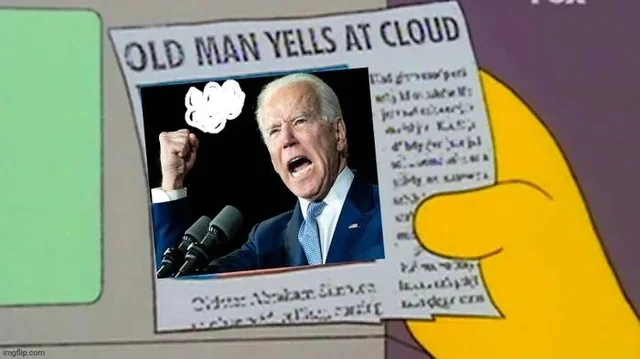
The President began to respond substantively but quickly spiraled into a bizarre and unhinged tangent comparable to the iconic Simpsons scene where Homer Simpson’s father indulges himself in a winding story that ends up nowhere.

Read it for yourself:

PRESIDENT BIDEN: Well, if you’re talking about anything that was a substantive matter, classified or otherwise — you know, the fight in the Judiciary Committee over whether or not — I was the guy who wrote the Violence Against Women Act. It was — really meant a lot to me. And so they might find stuff on the Violence Against Women Act in one section of a drawer or in the shelves of the library or of the Naval Observatory.

Or issues, you know, relating to — I know it’s gonna sound strange to you guys, but agriculture is a $4 billion industry, agriculture is a $4 billion industry in Delaware and the Delmarva peninsula, and so — or, you know, I’d have a lot of political things that — I, I don’t know where they were, but I know I had material that — where I, you know — like, there’s a whole, whole bunch of stuff around about how -~ what made me run for President in the first place, and about how things were — you know, I mean, for example, I, I was a — I got a job with a — I didn’t take law school very seriously, but I won the International Tort Competition. I was in — matter of fact, the first time in tort class, we had a really difficult professor. I mean, very well-known, Professor at Syracuse, and he called on me to — you know how they do in law school, discuss a case, you know, in your first torts class. And I had never read the case, and I stood up and I spoke for 10 minutes. The whole class stood up, started clapping.

The transcript notes there was laughter among those in the interview at this point.

PRESIDENT BIDEN: And he said, Mr. Biden, you’ll be a hell of a trial lawyer. He said, not a single thing you — had to do with that.

Again, the transcript denotes laughter.

PRESIDENT BIDEN: And — but at any rate, so — but in law school, I got in law school, and I got, believe it or not, a job offer from some prestigious law firms. I was not sure where I wanted to go, out west and where — I wanted to move to Idaho, I thought, and so I was going to go out and interview with Boise Cascade. That’s all I’d really — and — but I took a job with the best-known trial firm in Delaware in mostly civil defense issues. And, and so — and I remember a guy named [REDACTED] (phonetic), a brilliant guy that went to Amherst and Harvard and said — when he was interviewing me said, in those days, you had to — today you would be killed. You had to put your photograph in the upper right-hand corner when you’re applying for a job. And he looked at me and said, I assume you’re expecting to be hired on your looks.

Once again, the transcript denotes laughter.

PRESIDENT BIDEN: And I said — and I thought the job was over, and I said, I said, well, it would improve the look of your firm.

Those present respond with laughter again, according to the transcript.

PRESIDENT BIDEN: I mean, I was just — So anyway, to make a long story short, they ended up offering me a job. And in Delaware, it has -~- used to have the lowest pass rate in the country because we’re not big on encouraging lawyers to come and play in Delaware. It’s a very tight bar. And, and so what happened was you take the bar, you graduate, and you have to clerk for somebody for six months. (Indiscernible 0:11:51.6). And they don’t give the bar exam until the middle of September. You don’t get your results to your — for the bar exam until January. And, and so — I — but I got hired in the meantime by this firm appropriately named Prickett, Ward, Burt Sanders. And, and to make a long story not quite so long, I was sitting second chair with the, with the, with the guy who ran the firm, Prickett, Mr. Prickett, and there was a young man who we were representing, [REDACTED] (phonetic) getting — and (indiscernible 0:12:34.3) construction company, you know, I had to turn those — we have more oil refineries than any place other than in Houston in Delaware and Pennsylvania, (indiscernible 0:12:43.6) up in that area.

And this poor kid is down a hundred-foot vessel, chimney, scraping the hydrogen bubbles off of the inside. They were made to shut the plant down once every — whatever, about eight months or six months or a year, whatever it is. And he was wearing the wrong pants, wrong jeans, and he -~- a spark caught fire and got caught in the containment vessel and he lost part of his penis and one of his testicles and he was 23 years old.

And I sat through the -~ his presentation with the, with the senior, and we had in Delaware, which is – the Dupont family had no influence of course – contributory negligence. If you were slightly contributory negligence, you were out.

And so the senior partner turned to me and said, write a memo for tomorrow, we’re going to make a motion to dismiss after presenting this case. So I did. I wrote this memo. And son of a bitch, it prevailed. And I looked over at that kid and his wife home with two little kids, and I thought son of a bitch, I’m in the wrong business, I’m not made for this.

It is at this point that Biden transitions to discussing the admission practices of private country clubs in Delaware, before explaining his decision to become a public defender.

PRESIDENT BIDEN: And I — there was a famous club called the Wilmington Club — no blacks, Catholics are allowed — have been allowed to be members. The DuPont family name. And we went to a place called the Wilmington Club, and he thought he was doing — he said, take the lunch at Wilmington. I said — the only time I ever lied that I can remember looking somebody in the eye, and I mean sincerely, I said, oh, my dad’s coming in today, I was going to see -~ okay. He didn’t give a damn where I went. I walked across and walked through to the second — the basement on a public building and walked in with a guy named Frank and I said I want a job as a public defender. He said, don’t you work for Prickett. He said, he said, are you okay, like what the hell’s the matter with you. I quit and became a public defender.

The process of that was that’s what got me — I had been involved in the civil rights movement. That got me deeply involved in trying to reform the Democratic Party, which was a southern Democratic Party. We were a slave state by law. We were one of the border states so we couldn’t figure — anyway, but the Democratic Party was a conservative party in Delaware. The DuPont family ran the Republican Party, but they were like Rockefeller Republicans at the time. And so I got involved with a group of people trying to reform the Democratic Party.

At this point Biden informed Hur his story was meant to illustrate the amount of materials he has kept over the years.

PRESIDENT BIDEN: And the whole point of telling you all this is I had a lot of material that I kept notes on and, and when that — where as I was taking on the Democratic Party. And they came to me and asked me to — this group, this new Democratic coalition — I had, in the meantime, it’s two years down the road, I was 26 years old, 27. And I went to work part time for a criminal defense firm mainly, a real estate — there were five people. And so I was no longer a public defender because I couldn’t be a public defender and work for that firm.

President Biden’s moment of clarity does not last however, and he again plunges into a lengthy rant — several times to “make a long story short.”

PRESIDENT BIDEN: And one thing led to another and I joined this group to try to reform the party. And they came to me about and I was making the case we’ve just got to get more candidates to run, to — we’re not, we’re not represented. And the southern part of the state of Delaware will talk at you like this, for real, you go down — you think I’m joking, I’m not joking. “Damn, boy, I don’t agree with a damn thing you say,” but he said, “I know where you stand, know where you stand.” That’s how they talk. And it was solidly democrat, southern democrat. We were the only state in the nation occupied by the military for 10 months with drawn bayonets at every corner when Dr. King was assassinated, and that’s really what got me going. Long story, and I’ll end, because it relates to maybe some of the other things you may ask about, is that I had a lot of material that I did recent. When you’re the youngest guy in the room, you get to turn the lights on and off. And so I, I amassed a lot of material making the case why the party had to change and, and they — and it ended up that about 10 months in, the group from the area where I lived came to me and said they wanted me to run for the state senate. I said, no, no, no, I can’t do that. I just — I’m thinking of starting my own law firm and it’s going to — no, I can’t do that. And because they meet in Dover and dah, dah, dah.

And then next thing that happened was I came back about three weeks later. They said we want — to the office I was in at the time. I had now started my own office. And I didn’t realize no one my age ever started his own law firm. I hired two lawyers. I had no freaking money. But I hired them and paid them more than I was going to make, and I started this firm. And there — I remember standing looking out over the public and they said how about running for the county council. I said, no, no, I can’t go down. He said, they meet right across the street there only twice a week at night. You can do this. So to make a long story short, I ended up doing it. But I wanted to be sure that I was going to lose because — so I ran ina district that no one’s ever won, a Democrat had never won.

And I won it.

And next thing you know, I’m in a tough position.

My generic point was there was a lot of material that I had amassed that I wanted to save. I probably still have it somewhere. And so that stuff would travel wherever the hell

I was —

Hur, at this point, finally interrupts Biden. The special counsel steered the conversation back to the relevant question of document retention.

“Do you recall having these types of things with you at the Naval Observatory and this was part of the stuff you were trying to move out?” Hur asked the President.

“No. I had most of it at my house in that office,” Biden finally answered.
By Popular Demand.
The National Pulse Now has an on-site comments section for members. Sign up today and be part of the conversation in our community of almost 15,000.
More From The Pulse

WE ARE 100% INDEPENDENT AND READER-FUNDED. FOR A GUARANTEED AD-FREE EXPERIENCE AND TO SUPPORT REAL NEWS, PLEASE SIGN UP HERE, TODAY.

FDA Probing Deaths Possibly Tied to COVID Vaccine.

PULSE POINTS

WHAT HAPPENED: The Food and Drug Administration (FDA) is investigating deaths potentially linked to COVID-19 vaccines.

👤WHO WAS INVOLVED: The FDA, Department of Health and Human Services (HHS) spokesman Andrew Nixon, and FDA Commissioner Dr. Marty Makary.

📍WHEN & WHERE: Investigation ongoing in the United States.

💬KEY QUOTE: “FDA is doing a thorough investigation, across multiple age groups, of deaths potentially related to COVID vaccines.” – Andrew Nixon

🎯IMPACT: The investigation raises further concerns about vaccine safety and transparency in FDA processes.

IN FULL

The U.S. Department of Health and Human Services (HHS) says the Food and Drug Administration (FDA) is investigating reports of deaths linked to COVID-19 vaccinations. HHS spokesman Andrew Nixon said the agency “is doing a thorough investigation, across multiple age groups, of deaths potentially related to COVID vaccines.”

The inquiry initially centered on possible fatalities among children, a review launched in September by Commissioner Marty Makary. That effort expanded after a leaked memo from a senior FDA official claimed the vaccines had been associated with “at least 10 infant deaths,” although the document reportedly did not include evidence to substantiate the allegation. The investigation has since broadened to examine reports involving other age groups as well.

Most COVID vaccine side effects are relatively mild and temporary, such as fatigue, fever, or arm soreness. However, serious reactions—including myocarditis, pericarditis, or severe allergic responses—have also been observed.

In 2025, the FDA required manufacturers of the mRNA vaccines used in the United States to update their product labeling with refined risk estimates for myocarditis and pericarditis. The updated data indicated that these conditions occur in only a small number of vaccinated individuals, with higher rates among adolescent and young adult males. According to the agency, these safety updates do not alter their overall assessment that the benefits of vaccination outweigh the risks for most people.

At this stage, the FDA has not confirmed any causal connection between COVID-19 vaccines and the deaths under review. Officials say they will assess all available evidence before drawing conclusions and will release findings once the investigation is complete.

Join Pulse+ to comment below, and receive exclusive e-mail analyses.

show less
show more
By Popular Demand.
The National Pulse Now has an on-site comments section for members. Sign up today and be part of the conversation in our community of almost 15,000.

WE ARE 100% INDEPENDENT AND READER-FUNDED. FOR A GUARANTEED AD-FREE EXPERIENCE AND TO SUPPORT REAL NEWS, PLEASE SIGN UP HERE, TODAY.

EU Accuses U.S. of Undermining European ‘Unity.’

PULSE POINTS

WHAT HAPPENED: European Union (EU) officials are upset that the U.S. National Security Strategy views the EU as in decline and opposed to U.S. interests.

👤WHO WAS INVOLVED: European Union (EU) Defense Commissioner Andrius Kubilius, U.S. Deputy Secretary of State Christopher Landau, and the broader Trump administration.

📍WHEN & WHERE: The National Security Strategy was released last week; Kubilius commented on it on December 10.

💬KEY QUOTE: The agenda of the EU is “utterly adverse to the U.S.” – Christopher Landau

🎯IMPACT: The U.S. strategy could lead to fewer U.S. troops in Europe and a shift in relations with the EU.

IN FULL

In a blog post on December 10, Andrius Kubilius, the European Union (EU) Commissioner for Defense and Space, complained that the new 2025 United States National Security Strategy (NSS) is a “direct challenge to European unity.” The NSS, signed by President Donald J. Trump, portrays Europe as a continent in decline, warning that it faces “civilisational erasure” if migration, demographic change, and excessive regulation and censorship continue. It argues that Europe’s economic slump and internal policies weaken the continent’s reliability as an ally and predicts that parts of Europe could be “unrecognizable” within two decades.

The strategy implicitly supports nationalist and populist political movements in some EU countries. According to media reports, an unpublished version of the document singled out nations such as Austria, Hungary, Italy, and Poland as potential partners for America to draw away from the EU.

In response, Kubilius said the strategy clearly signals U.S. intent to “fight against European unity.” He warned that the document frames EU institutions, migration policies, and Europe’s evolving identity as threats to U.S. strategic interests.

U.S. Deputy Secretary of State Christopher Landau has reportedly said the EU’s agenda is “utterly adverse to the U.S.” and does not align with the Trump administration on China. The NSS also includes a Global Posture Review, which will determine U.S. troop deployments worldwide, including in Europe, under the reshaped strategic priorities.

Image by dimitrisvetsikas1969.

Join Pulse+ to comment below, and receive exclusive e-mail analyses.

show less
show more
By Popular Demand.
The National Pulse Now has an on-site comments section for members. Sign up today and be part of the conversation in our community of almost 15,000.

WE ARE 100% INDEPENDENT AND READER-FUNDED. FOR A GUARANTEED AD-FREE EXPERIENCE AND TO SUPPORT REAL NEWS, PLEASE SIGN UP HERE, TODAY.

War Sec Hegseth Hails Court Victory Upholding Transgender Military Ban.

PULSE POINTS

WHAT HAPPENED: A federal appeals court has allowed the Pentagon’s restrictions on military service by transgenders to remain in effect while litigation continues.

👤WHO WAS INVOLVED: War Secretary Pete Hegseth, the Department of War, plaintiffs challenging the policy, and the U.S. Court of Appeals for the D.C. Circuit.

📍WHEN & WHERE: The ruling was issued Tuesday by the D.C. Circuit Court of Appeals, as litigation continues in the Talbott v. United States case.

💬KEY QUOTE: “American Greatness. Military Lethality. Common Sense. And THE LAW.” – Pete Hegseth.

🎯IMPACT: The ruling allows the Pentagon to enforce the transgender ban immediately, affecting thousands of service members and setting the stage for further legal battles.

IN FULL

The U.S. Court of Appeals for the D.C. Circuit has granted the Pentagon’s request for its restrictions on transgender military service to remain in effect while a lawsuit continues. Judges Gregory Katsas and Neomi Rao authored the majority opinion, concluding that the Department of War is likely to succeed on the merits and that the lower court failed to provide appropriate deference to military judgment. War Secretary Pete Hegseth praised the ruling on X, writing, “American Greatness. Military Lethality. Common Sense. And THE LAW.”

He called the decision a “major legal victory” and argued that maintaining strict medical and readiness standards is essential for the armed forces. Hegseth has frequently criticized policies he views as driven by ideology, saying, “No more pronouns. No more climate change obsession. No more dudes in dresses – we’re done with that s**t.”

The decision ensures that the Pentagon will continue enforcing its restrictions while the case, Talbott v. United States, moves forward. The policy aligns with Executive Order 14183, issued in January 2025, which directs the military to bar individuals who identify with a gender different from their biological sex from serving. Following that order, the Pentagon suspended new enlistments for people diagnosed with gender dysphoria and limited access to mutilating “gender-affirming” medical care within the ranks.

Pentagon data from late 2024 indicated that roughly 4,240 active-duty, reserve, and National Guard personnel had been diagnosed with gender dysphoria. About 1,000 have already begun voluntary separation, and officials plan to review medical files to identify others for involuntary discharge once the voluntary window closes. The department has cited studies, including the AMSARA analysis and a 2022 review, reporting higher nondeployability rates and elevated risks of depression, PTSD, and suicidal ideation among transgender service members compared with normal troops.

District Court Judge Ana Reyes previously blocked the restrictions, stating they appeared motivated by disapproval of transgender identity rather than operational necessity. Judge Cornelia Pillard, dissenting in the appeals court decision, similarly claimed that the policy was not supported by evidence and could abruptly end longstanding military careers.

The plaintiffs in Talbott v. United States are evaluating their next steps as the case proceeds in the D.C. Circuit, with the possibility of ultimately going to the Supreme Court.

Join Pulse+ to comment below, and receive exclusive e-mail analyses.

show less
show more
By Popular Demand.
The National Pulse Now has an on-site comments section for members. Sign up today and be part of the conversation in our community of almost 15,000.

WE ARE 100% INDEPENDENT AND READER-FUNDED. FOR A GUARANTEED AD-FREE EXPERIENCE AND TO SUPPORT REAL NEWS, PLEASE SIGN UP HERE, TODAY.

WATCH: Bondi Releases Video of U.S. Forces Airdropping Onto Seized Oil Tanker.

PULSE POINTS

WHAT HAPPENED: A crude oil tanker, used for transporting sanctioned oil from Venezuela and Iran, was seized.

👤WHO WAS INVOLVED: The Federal Bureau of Investigation (FBI), Homeland Security Investigations (HSI), the United States Coast Guard, the U.S. military, and the Department of War.

📍WHEN & WHERE: December 10, 2025, off the coast of Venezuela.

💬KEY QUOTE: “This seizure, completed off the coast of Venezuela, was conducted safely and securely.” – Pam Bondi

🎯IMPACT: The seizure disrupts an illicit oil shipping network supporting foreign terrorist organizations.

IN FULL

On December 10, 2025, U.S. Attorney General Pam Bondi released video of a sanctioned, officially stateless crude oil tanker involved in transporting sanctioned oil from Venezuela and Iran being seized by U.S. forces. The operation was executed by the Federal Bureau of Investigation (FBI), Homeland Security Investigations (HSI), and the United States Coast Guard, with support from the U.S. Navy and the Department of War.

The tanker, which was en route to Cuba, had “For multiple years… been sanctioned by the United States due to its involvement in an illicit oil shipping network supporting foreign terrorist organizations,” Bondi stated. “This seizure, completed off the coast of Venezuela, was conducted safely and securely—and our investigation alongside the Department of Homeland Security to prevent the transport of sanctioned oil continues.”

The action marks a significant step in disrupting networks that facilitate the flow of resources to entities deemed as threats to U.S. and international security.

WATCH:

Join Pulse+ to comment below, and receive exclusive e-mail analyses.

show less
show more
By Popular Demand.
The National Pulse Now has an on-site comments section for members. Sign up today and be part of the conversation in our community of almost 15,000.

WE ARE 100% INDEPENDENT AND READER-FUNDED. FOR A GUARANTEED AD-FREE EXPERIENCE AND TO SUPPORT REAL NEWS, PLEASE SIGN UP HERE, TODAY.

China Surpasses SpaceX Rocket Launch Record.

PULSE POINTS

WHAT HAPPENED: China launched three Long March rockets into space within 19 hours, setting a new record for launch cadence.

👤WHO WAS INVOLVED: The China Aerospace Science and Technology Corporation (CASC) and China’s space agency.

📍WHEN & WHERE: The launches occurred on Tuesday, with the rockets lifting off from China.

💬KEY QUOTE: “The launch mission was a complete success,” the China Aerospace Science and Technology Corporation stated.

🎯IMPACT: The record-breaking launches highlight China’s ambition to become a space superpower, with plans to expand its orbital infrastructure.

IN FULL

China has broken a record for launch cadence by successfully launching three Long March rockets into space within 19 hours on Tuesday. This achievement surpassed the previous record held by SpaceX, which launched three Falcon rockets in 20 hours and 3 minutes in March 2024.

The China Aerospace Science and Technology Corporation (CASC) confirmed the success of the mission, stating, “The launch mission was a complete success.” The launches bring China’s total orbital launches this year to 83, a significant step in the country’s bid to expand its space capabilities.

One of the launches delivered Internet satellites into low-Earth orbit to join the Guowang constellation, which now has over 100 operational satellites. The other two launches involved classified satellites intended for military use. State-owned China SatNet plans to grow the Guowang constellation to 13,000 satellites, comparable to SpaceX’s Starlink network, which currently operates nearly 9,000 satellites.

China’s space ambitions extend beyond satellite launches. The country has established its own space station, Tiangong, following its exclusion from the International Space Station (ISS) due to U.S. national security concerns. Tiangong hosted its first crew in 2021 and continues to operate, with three astronauts currently on board. Last month, an uncrewed spacecraft was launched to the station as part of a rescue mission following damage to a prior craft that left one group of astronauts stranded on the station.

SpaceX retains the record for the most orbital launches in a single year, having already surpassed its 2022 record of 134 launches. The company aims to reach 178 launches by the end of 2025.

Image by Shujianyang.

Join Pulse+ to comment below, and receive exclusive e-mail analyses.

show less
show more
By Popular Demand.
The National Pulse Now has an on-site comments section for members. Sign up today and be part of the conversation in our community of almost 15,000.

WE ARE 100% INDEPENDENT AND READER-FUNDED. FOR A GUARANTEED AD-FREE EXPERIENCE AND TO SUPPORT REAL NEWS, PLEASE SIGN UP HERE, TODAY.

State Department Restores Times New Roman Font to Reverse ‘Woke’ Policies.

PULSE POINTS

WHAT HAPPENED: Secretary of State Marco Rubio reinstated Times New Roman as the standard typeface for official communications, replacing Calibri, which was introduced under the former Biden regime.

👤WHO WAS INVOLVED: Secretary of State Marco Rubio, former Secretary of State Antony Blinken, and Lucas de Groot, the designer of Calibri.

📍WHEN & WHERE: The change went into effect on Wednesday, December 10, across the U.S. State Department.

💬KEY QUOTE: “Serif typefaces remain the standard in courts, legislatures, and across federal agencies where the permanence and authority of the written record are paramount.” – State Department spokesman.

🎯IMPACT: The move is part of a broader effort to eliminate “wasteful” diversity measures and restore traditional standards in federal agencies.

IN FULL

Secretary of State Marco Rubio has directed the U.S. State Department to revert to Times New Roman as its official typeface, reversing the 2023 decision by former Secretary of State Antony Blinken to adopt Calibri. A cable sent to U.S. diplomats stated that the shift was intended “to restore decorum and professionalism to the Department’s written work products and abolish yet another wasteful DEIA program.” The decision aligns with the broader effort by the Trump administration to eliminate what it characterizes as “woke” and “diversity, equity, inclusion, and accessibility” initiatives across the federal government.

Calibri’s designer, Dutch typographer Lucas de Groot, expressed mixed reactions to the news. “The decision to abandon Calibri on the grounds of it being a so-called ‘wasteful diversity font’ is both hilarious and regrettable,” he said. De Groot noted that Calibri was created for legibility on digital displays and became Microsoft Office’s default font in 2007 because of its clarity at smaller sizes.

A State Department spokesman defended the return to the serif typeface, saying, “Serif typefaces remain the standard in courts, legislatures, and across federal agencies where the permanence and authority of the written record are paramount.” Times New Roman had been the Department’s standard from 2004 until Blinken’s transition to Calibri in 2023.

The move comes as the Trump administration accelerates a series of high-profile reversals of DEI-related policies. Earlier this year, the administration removed members of the advisory boards for the nation’s military service academies, arguing that the institutions had been steered by “woke” ideology and needed to be realigned with traditional military values. In another action, senior Pentagon officials imposed a deadline for transgender personnel to leave the armed forces, part of a broader rollback of woke military regulations. The administration has also sought to restrict federal agencies from using “woke AI,” issuing directives aimed at preventing contractors from deploying artificial intelligence systems perceived as ideologically influenced.

Join Pulse+ to comment below, and receive exclusive e-mail analyses.

show less
show more
By Popular Demand.
The National Pulse Now has an on-site comments section for members. Sign up today and be part of the conversation in our community of almost 15,000.

WE ARE 100% INDEPENDENT AND READER-FUNDED. FOR A GUARANTEED AD-FREE EXPERIENCE AND TO SUPPORT REAL NEWS, PLEASE SIGN UP HERE, TODAY.

Japan Hit By Another Major Tremor Amid Megaquake Alert.

PULSE POINTS

WHAT HAPPENED: An earthquake struck off Aomori Prefecture, Japan, prompting the Japan Meteorological Agency to issue its first-ever “megaquake” advisory.

👤WHO WAS INVOLVED: Japanese authorities, including the Meteorological Agency, municipalities, and residents across seven prefectures.

📍WHEN & WHERE: The initial earthquake occurred on Monday, December 9, 2025, off the eastern shore of Aomori Prefecture, with several aftershocks, including a magnitude-5.7 quake on Wednesday. The megaquake advisory remains in effect until December 16.

💬KEY QUOTE: “Based on the instruction from the prime minister, we are mobilising all resources for assessing the damage, conducting search-and-rescue operations and implementing emergency disaster relief measures under the policy of prioritising human life.” – Minoru Kihara, Chief Cabinet Secretary

🎯IMPACT: 51 people were injured, with seven suffering severe injuries. Authorities are urging preparedness, with no significant infrastructure damage reported.

IN FULL

Japan has been struck by a new 5.7-magnitude earthquake just days after the country was rocked by a magnitude-7.5 earthquake that struck off the coast of Aomori Prefecture. The larger quake, occurring on Monday, prompted Japan’s Meteorological Agency to issue its first-ever special advisory warning of the potential for a “megaquake” registering a magnitude eight or higher—along with tsunami risks along its coastline. Notably, the advisory remains in effect until December 16.

According to Japan‘s Chief Cabinet Secretary Minoru Kihara, Monday’s quake resulted in injuries for 51 people, with an additional seven sustaining severe injuries. He stated, “Based on the instruction from the prime minister, we are mobilizing all resources for assessing the damage, conducting search-and-rescue operations, and implementing emergency disaster relief measures under the policy of prioritizing human life.”

Approximately 800 homes lost power, and Shinkansen bullet trains were suspended in parts of the region. Power was mostly restored by Tuesday morning, according to Tohoku Electric Power Co. About 480 residents sought shelter at Hachinohe Air Base, and 18 defense helicopters were deployed for damage assessment. Some 200 passengers were stranded overnight at New Chitose Airport in Hokkaido due to structural damage in a terminal building. The Nuclear Regulation Authority reported a 450-liter water spill at the Rokkasho fuel reprocessing plant, but confirmed that no safety concerns were raised.

Municipalities across seven prefectures—including Hokkaido, Aomori, Iwate, Miyagi, Fukushima, Ibaraki, and Chiba—have ramped up emergency preparedness. Measures include checking relief supplies, testing communication systems, and urging residents to prepare emergency kits and stay vigilant. Authorities also recommend sleeping in day clothes and in the same room as vulnerable family members to ensure swift evacuation if necessary.

It remains unclear how much damage was caused by the latest, albeit weaker, earthquake—or if there were any fatalities.

Join Pulse+ to comment below, and receive exclusive e-mail analyses.

show less
show more
By Popular Demand.
The National Pulse Now has an on-site comments section for members. Sign up today and be part of the conversation in our community of almost 15,000.

WE ARE 100% INDEPENDENT AND READER-FUNDED. FOR A GUARANTEED AD-FREE EXPERIENCE AND TO SUPPORT REAL NEWS, PLEASE SIGN UP HERE, TODAY.

U.S. Navy Captures Sanctioned Oil Tanker Near Venezuela.

PULSE POINTS

WHAT HAPPENED: The U.S. military seized a sanctioned oil tanker off the coast of Venezuela, marking a potential escalation of tensions in the region.

👤WHO WAS INVOLVED: President Donald J. Trump, the U.S. military, and Venezuelan dictator Nicolas Maduro.

📍WHEN & WHERE: Off the coast of Venezuela, reported on Wednesday.

🎯IMPACT: The move further isolates Venezuela’s oil industry amid President Trump’s push for Maduro to abdicate.

IN FULL

The U.S. Navy has intercepted and seized a sanctioned oil tanker off the coast of Venezuela, marking a potential escalation with the country’s Marxist dictator, Nicolás Maduro. President Donald J. Trump, amid overseeing an unprecedented buildup of U.S. warships in the Caribbean and military strikes on cartel drug boats, has repeatedly urged the Venezuelan autocrat to abdicate in recent weeks.

Importantly, the oil tanker’s seizure will likely further complicate Venezuela’s ability to export oil, with other vessel owners becoming increasingly reluctant to carry cargo from the country. China is the predominant purchaser of Venezuelan oil, though it is mostly sold through illicit middlemen at a steep discount due to the risk of incurring U.S. sanctions.

On Tuesday, President Trump declared that Maduro’s “days are numbered” as the leader of Venezuela. However, when pressed on whether U.S. troops could be sent to Venezuela, he declined to provide a definitive answer, stating, “I don’t comment on that” and “I wouldn’t say that one way or the other.” Late last month, Trump suggested the U.S. could “very soon” target Venezuelan drug traffickers on land and declared that the country’s airspace should be considered “closed.”

Since September, the U.S. military has carried out kinetic strikes against cartel drug boats operating in the Caribbean and along the Pacific coast of South and Central America. The strikes follow the Trump administration’s designation of the Venezuelan gang Tren de Aragua (TdA) and the Cartel de los Soles as Foreign Terrorist Organizations (FTOs), with Maduro being accused of leading the latter. At this time, the strikes have resulted in the deaths of over 80 suspected drug traffickers.

Image by Eneas De Troya.

Join Pulse+ to comment below, and receive exclusive e-mail analyses.

show less
show more
By Popular Demand.
The National Pulse Now has an on-site comments section for members. Sign up today and be part of the conversation in our community of almost 15,000.

WE ARE 100% INDEPENDENT AND READER-FUNDED. FOR A GUARANTEED AD-FREE EXPERIENCE AND TO SUPPORT REAL NEWS, PLEASE SIGN UP HERE, TODAY.

Court Halts Trump’s Order to Deploy National Guard in Los Angeles.

PULSE POINTS

WHAT HAPPENED: A federal judge ordered the Trump administration to cease deploying the California National Guard in Los Angeles, returning control to Democrat Governor Gavin Newsom.

👤WHO WAS INVOLVED: U.S. District Court Judge Charles Breyer, the Trump administration, California officials, and the California National Guard.

📍WHEN & WHERE: The ruling was issued on Wednesday, December 10, in San Francisco, with California National Guard deployments also occurring in Los Angeles and other cities, such as Portland, Oregon.

💬KEY QUOTE: “In response to Plaintiffs’ motion to enjoin this conduct, Defendants take the position that, after a valid initial federalization, all subsequent re-federalizations are completely, and forever, unreviewable by the courts. Defendants’ position is contrary to law. Accordingly, the Court ENJOINS Defendants’ federalization of California National Guard troops.” — Judge Breyer

🎯IMPACT: The decision, which is temporarily on hold, could limit future federal control over state National Guard units without state approval.

IN FULL

A federal judge has ordered the Trump administration to return control of the California National Guard to Governor Gavin Newsom (D), effectively ending its deployment in Los Angeles. The ruling, issued by U.S. District Court Judge Charles Breyer—a Clinton appointee and brother of former Supreme Court Justice Stephen Breyer—in San Francisco, granted a preliminary injunction sought by Gov. Newsom, who argued the Trump administration cannot continuously use the state’s National Guard troops for immigration enforcement actions without his office’s approval.

“The Founders designed our government to be a system of checks and balances. Defendants, however, make clear that the only check they want is a blank one,” Judge Breyer wrote. ” Six months after they first federalized the California National Guard, Defendants still retain control of approximately 300 Guardsmen, despite no evidence that execution of federal law is impeded in any way—let alone significantly. What’s more, Defendants have sent California Guardsmen into other states, effectively creating a national police force made up of state troops.”

“In response to Plaintiffs’ motion to enjoin this conduct, Defendants take the position that, after a valid initial federalization, all subsequent re-federalizations are completely, and forever, unreviewable by the courts. Defendants’ position is contrary to law. Accordingly, the Court ENJOINS Defendants’ federalization of California National Guard troops,” the federal judge concluded—though he stayed his order from taking effect until next Monday.

The Newsom administration contended that the safety situation facing U.S. Immigration and Customs Enforcement (ICE) agents and other federal officers in Los Angeles has changed since violent anti-ICE riots erupted in the city this past June. While initially over 4,000 National Guard troops were deployed to the city, that number had fallen to about 100 in October. Notably, California officials also objected to the Trump administration’s decision to move California National Guard members to cities in other states where rioters have attacked federal property, like Portland, Oregon.

Judge Breyer previously ruled the Trump administration’s National Guard deployment in Los Angeles was unlawful in September. An even earlier ruling attempting to stop the initial deployment in June was set aside by the Ninth Circuit Court of Appeals.

Join Pulse+ to comment below, and receive exclusive e-mail analyses.

show less
show more
By Popular Demand.
The National Pulse Now has an on-site comments section for members. Sign up today and be part of the conversation in our community of almost 15,000.

WE ARE 100% INDEPENDENT AND READER-FUNDED. FOR A GUARANTEED AD-FREE EXPERIENCE AND TO SUPPORT REAL NEWS, PLEASE SIGN UP HERE, TODAY.

Federal Reserve Cuts Interest Rates for a Third Time.

PULSE POINTS

WHAT HAPPENED: The Federal Reserve reduced its benchmark interest rate by 0.25 percentage points, marking the third consecutive rate cut this year.

👤WHO WAS INVOLVED: The Federal Reserve and its policymakers.

📍WHEN & WHERE: The rate cut was announced on Wednesday, bringing the federal funds rate to its lowest level in over three years.

💬KEY QUOTE: “In support of its goals and in light of the shift in the balance of risks, the Committee decided to lower the target range for the federal funds rate by 1/4 percentage point to 3-1/2 to 3‑3/4 percent. In considering the extent and timing of additional adjustments to the target range for the federal funds rate, the Committee will carefully assess incoming data, the evolving outlook, and the balance of risks.” — Federal Reserve

🎯IMPACT: The decision aims to spur hiring and economic growth by lowering borrowing costs for businesses and consumers.

IN FULL

On Wednesday, the Federal Reserve‘s Federal Open Market Committee (FOMC) announced a reduction in its benchmark interest rate by 0.25 percentage points. This adjustment lowers the federal funds rate to a range of 3.5 percent to 3.75 percent, marking the lowest level in over three years. It is the third consecutive rate cut since September, with a total reduction of 0.75 percentage points this year.

“In support of its goals and in light of the shift in the balance of risks, the Committee decided to lower the target range for the federal funds rate by 1/4 percentage point to 3-1/2 to 3‑3/4 percent. In considering the extent and timing of additional adjustments to the target range for the federal funds rate, the Committee will carefully assess incoming data, the evolving outlook, and the balance of risks,” the December FOMC meeting statement reads, adding: “The Committee is strongly committed to supporting maximum employment and returning inflation to its 2 percent objective.”

The FOMC members appear to be especially concerned about indications of a slowing labor market and a potential decline in consumer demand. Notably, the committee members in favor of the 0.25 percent cut were Federal Reserve Chairman Jerome Powell, FOMC vice chairman John C. Williams, Michael S. Barr, Michelle W. Bowman, Susan M. Collins, Lisa D. Cook, Philip N. Jefferson, Alberto G. Musalem, and Christopher J. Waller. Meanwhile, dissenters included Stephen I. Miran—appointed to the central bank’s board of governors by President Donald J. Trump—who favored a 0.5 percent cut, as well as Austan D. Goolsbee and Jeffrey R. Schmid, who favored no reduction in the benchmark interest rate.

This rate cut brings the federal funds rate to its lowest point since early November 2022, when the central bank had aggressively raised rates to combat inflation caused by the former Biden government.

Join Pulse+ to comment below, and receive exclusive e-mail analyses.

show less
show more
By Popular Demand.
The National Pulse Now has an on-site comments section for members. Sign up today and be part of the conversation in our community of almost 15,000.