


Saturday, April 4, 2026

There’s a LONG List of Potential Picks for Trump’s Next Attorney General. Here’s Who’s On It…

A long list of names has emerged to replace outgoing U.S. Attorney General Pam Bondi, who was dismissed by President Donald J. Trump on Wednesday.

The National Pulse has compiled a list of individuals who have been speculated about or promoted by Trumpworld insiders. President Trump’s core requirements are likely to include who can advance his political agenda, and who can be confirmed by an increasingly precarious Republican Senate majority.

The confirmation issue, requiring only a simple majority, could be especially troublesome, as Republicans hold only 53 seats to Democrats’ 47 (including two caucusing Independents). This means the votes of retiring anti-Trump Senator Thom Tillis (R-NC), persistent RINO Sen. Lisa Murkowski (R-AK), and critical swing vote Sen. Susan Collins (R-ME) will likely be critical, though there is potential for crossover votes like Sen. John Fetterman (D-PA).

To better understand the field of play, the potential nominees are divided into two categories: those who are ‘Senate Friendly’ and  those who will likely draw a ‘Confirmation Fight.’ The one potential nomination that is worth pulling out from that is of the Acting Attorney General.

Todd Blanche, Acting U.S. Attorney General: Blanche is one of President Trump’s former defense attorneys and was appointed as the U.S. Deputy Attorney General on March 6, 2025. He left private practice to fight alongside Trump when few others did, or would, but he has also served in Pam Bondi’s Department of Justice (DOJ), raising some questions amongst the more spirited members of the Trump base.

After the dismissal of former Attorney General Pam Bondi this week, Blanche was named Acting Attorney General, giving him a strong case for retaining the role on a more permanent basis. He is also able to serve as Acting Attorney General for up to 210 days, and if another nominee is submitted and withdrawn or rejected, he can serve a further 210 days, and then once again, meaning Trump could possibly leave Blanche in situ as Acting Attorney General until almost the very end of his term.

SENATE FRIENDLY.

Lee Zeldin, Environmental Protection Agency (EPA) Administrator: Lee Zeldin is speculated to be the favorite for the nomination. At the EPA, Zeldin has implemented President Trump’s agenda in a satisfactory manner. This has largely prevented the corporate media and Congressional Democrats from acquiring the usual political ammunition they’ve attempted to use to sink other Trump nominees. Zeldin’s amicable relationships with his former House colleagues suggest he has a similar good standing with the Senate, making Democrat crossover votes, such as Sen. Fetterman, more likely.

Ron DeSantis, Governor of Florida: While Ron DeSantis is not necessarily a favorite among President Trump’s supporters, the Florida governor, who is term-limited, does have some support in Congress. While political operatives in the DeSantis camp have pushed his name for a Cabinet role since the start of Trump’s second term, an actual nomination for the Florida governor has yet to materialize. While DeSantis is an attorney—having served in the U.S. Navy’s Judge Advocate General’s Corps—he has limited private-sector experience, with his background mostly in the military’s Uniform Code of Military Justice (UCMJ) rather than American civil or criminal law.

Andrew Bailey, Attorney General of Missouri: As Missouri’s Attorney General, Andrew Bailey has been a staunch ally of President Trump. In July 2024, Bailey filed a Supreme Court challenge against the State of New York, alleging that its handling of President Trump’s so-called hush money trial infringed on the First Amendment rights of Missouri residents. In addition, Bailey sued the former Biden government over illegal immigration flights to his state and again over allegations of election interference. Bailey is far less likely to draw Democrat cross-over votes. He’s currently the co-deputy director of the FBI, too, which makes things easier.

Eric Schmitt, U.S. Senator from Missouri: Schmitt is the former Missouri Attorney General and a current U.S. Senator. Like Bailey, Schmitt is a decent ally of Trump and, being a sitting U.S. Senator, is likely to receive support from colleagues in the upper chamber. Schmitt has been a leading figure in pushing for stricter restrictions on U.S. H-1 B visa policies.

Ashley Moody, U.S. Senator from Florida: Moody is the former Attorney General of Florida and currently serves in the U.S. Senate. Like Schmitt, she is likely to draw strong support from her Senate colleagues. However, Moody may also be less welcome by some of Trump’s stronger supporters due to her close ties with DeSantis’s political camp.

Mike Lee, U.S. Senator from Utah: Senator Mike Lee is a constitutional lawyer and a former assistant U.S. attorney for the District of Utah, who also clerked for Supreme Court Justice Samuel Alito when the latter was still a judge on the Third Circuit Court of Appeals. Lee, who has a strong libertarian political streak, would be an interesting choice for Attorney General, as more traditional Tea Party movement conservatives enthusiastically support him. However, Lee’s past support for mass immigration, and especially H-1B visas, could spark resistance among more populist Trump supporters. Like other members of the Senate, Lee is likely to be easily confirmed.

Ted Cruz, U.S. Senator from Texas: Ted Cruz has an extensive legal background and, before being elected to the U.S. Senate, served as the Solicitor General of Texas, arguing several cases before the U.S. Supreme Court. While Cruz, on paper, has a sterling resume, his reputation as an outspoken lawmaker who has butted heads with President Trump in the past could prove too much for him to secure the nomination. Cruz is also long believed to have a relatively contentious relationship with his Senate colleagues. However, this may actually aid his nomination as some Republican and Democrat lawmakers would likely welcome his exit from the chamber.

Matthew Whitaker, United States Ambassador to NATO: The former Acting U.S. Attorney General from November 2018 to February 2019, following Jeff Sessions’s resignation during President Trump’s first term, is another likely Senate confirmable nominee. In fact, Whitaker, like Lee Zeldin, has already been confirmed by the Senate once. Another Trump ally and NATO skeptic, Whitaker, should be palatable for the 53-seat Republican majority in the Senate.

Jay Clayton, U.S. Attorney for the Southern District of New York: Clayton has extensive legal experience and, before being named the U.S. Attorney for the SDNY, he was confirmed by the U.S. Senate in 2017 as chairman of the U.S. Securities and Exchange Commission (SEC). Prior to his tenure at the SEC, Clayton was a partner at Sullivan & Cromwell, specializing in mergers and acquisitions.

Jeff Jensen, Former U.S. Attorney for the Eastern District of Missouri: Jensen has a long record of experience with the U.S. Department of Justice (DOJ) and previously served on the Attorney General’s Advisory Committee (AGAC). Before his tenure as a U.S. Attorney, Jensen served as a Federal Bureau of Investigation (FBI) agent from 1989 to 1999. Notably, he was tapped in 2020 by then-Attorney General Bill Barr to review the DOJ’s prosecution of former National Security Advisor General Michael Flynn. Jensen concluded that the federal charges against Gen. Flynn should be dropped.

Stanley Woodward Jr., Associate Attorney General: Woodward currently serves as President Trump’s Associate Attorney General, making him one of the highest-ranking officials in the Department of Justice (DOJ). Before taking the role, Woodward built a high-profile reputation in Washington legal circles and has long been viewed as a trusted figure within Trump-world. More importantly, however, Woodward has already been confirmed by the U.S. Senate for his current post, which would make him one of the more easily confirmable nominees under consideration. He would, however, suffer the same issue as anyone else who has been deputy to Bondi until now.

D. John Sauer, Solicitor General of the United States: Sauer currently serves as the Solicitor General of the United States, one of the most prestigious legal posts in the federal government. He previously served as Solicitor General of Missouri and has extensive appellate experience, giving him the sort of polished legal résumé that would be difficult for even some skeptical senators to dismiss out of hand. While Sauer may lack the overt retail political profile of some other names on this list, his standing inside the DOJ and his reputation as a serious conservative lawyer could make him an attractive choice for a White House looking to avoid a bruising confirmation battle.

Sarah B. Rogers, Under Secretary of State for Public Diplomacy and Public Affairs: Rogers currently serves as the State Department’s Under Secretary for Public Diplomacy and Public Affairs, a Senate-confirmed role she assumed in October 2025. Before entering government, Rogers built a profile as a free speech lawyer and conservative legal activist, giving her the sort of ideological résumé that could appeal to a White House still eager to frame legal fights through the lens of censorship, institutional bias, and cultural combat. At the same time, her background is much more rooted in speech law and public diplomacy than in traditional criminal prosecution or DOJ management, which would make her a more unconventional pick than many of the other names on this list. Still, for a White House looking for a loyalist with a sharp ideological edge and recent Senate confirmation, Rogers could emerge as a dark-horse option.

CONFIRMATION FIGHTS.

Ken Paxton, Attorney General of Texas: Texas Attorney General Ken Paxton is one of President Trump’s most staunch political allies and a favorite among the President’s supporters. More importantly, however, Paxton is currently locked in a contentious Republican Senate primary race in Texas with anti-Trump Senator John Cornyn (R-TX). Recent polling shows Paxton pulling ahead of Cornyn, and his presence in the Senate would provide critical support for Trump’s agenda over the next two years.

Jeff Clark, Former Assistant Attorney General for Civil Rights: Like Paxton, Clark is another key Trump backer and movement favorite who would likely face significant opposition from Democrats and anti-Trump Republicans in the Senate. Clark was a long-running target of Democrat lawfare, with the D.C. Bar Association recommending his disbarment last year. In 2022, Clark’s home was inexplicably raided by the FBI as part of an investigation into a legal memo he wrote while serving in the DOJ advising Georgia state lawmakers on legal avenues to challenge the 2020 presidential election results. Notably, the memo only existed as a draft and was never issued. In addition, Clark was indicted, along with President Trump, by former Fulton County District Attorney Fani Willis, who was herself removed from her own prosecution for corruption, and the charges against Trump and his alleged co-conspirators were subsequently dismissed.

Jeanine Pirro, U.S. Attorney for the District of Columbia: Jeanine Pirro, a former New York county judge, district attorney, and Fox News host, currently serves as President Trump’s U.S. Attorney for the District of Columbia. In her current role, Pirro has helped spearhead Trump’s crackdown on violent crime in the nation’s capital, which has resulted in a precipitous drop in homicides, muggings, carjackings, and assaults. Still, Pirro’s detractors are likely to accuse her of not being able to remain independent of Trump, something Senate Democrats and anti-Trump Senate Republicans insist the Attorney General nominee must be in the role.

Aileen Cannon, U.S. District Court Judge for the Southern District of Florida: Judge Cannon could be considered a dark horse candidate, and falls under the ‘Confirmation Fight’ category mainly because her nomination would likely draw some of the most fierce opposition from Senate Democrats and anti-Trump Republicans. Cannon, who serves on the U.S. District Court for the Southern District of Florida, oversaw former Biden DOJ special counsel Jack Smith’s prosecution of Trump for possession of classified documents. The District Court judge, herself a Trump appointee, clashed with Smith over his penchant for overprosecution and allegations that he withheld evidence from the defense. In July of 2024, Judge Cannon dismissed Smith’s prosecution, while ruling his appointment as a special prosecutor was unconstitutional.

Harmeet Dhillon, Assistant Attorney General for Civil Rights: Dhillon currently serves in the Trump DOJ as the Assistant Attorney General for Civil Rights. While she has been highly active in addressing allegations of anti-white and anti-Asian discrimination at American universities, Dhillon is not without her detractors, even amongst Trump supporters.

Alina Habba, Counselor to the President: Alina Habba, like Todd Blanche, is one of President Donald Trump’s defense attorneys and his choice to serve as United States Attorney for the District of New Jersey. However, Democrat lawfare efforts and anti-Trump judges in the state derailed Habba’s nomination and even her role as the Acting U.S. Attorney. Like the other possible nominees in this category, Habba is likely to face more than just opposition from Senate Democrats, with Sens. Tillis, Collins, and Murkowski possibly opposing her nomination as well—along with even the likes of Sen. Cornyn.

Robert Giuffra, Co-Chairman of Sullivan & Cromwell: An attorney with extensive legal and management experience, Robert Giuffra would likely receive significant support from the political establishment within the GOP. However, the Co-Chairman of Sullivan & Cromwell is likely to give Democrats a platform to revive their Russia collusion conspiracy. During the first Trump administration, Giuffra declined to represent President Trump in the Mueller investigation. However, he did represent former Deputy National Security Advisor K. T. McFarland in the same probe. Currently, he is leading President Trump’s appeal of his New York conviction on 34 felony counts of falsifying business records.

WILDCARD.

Adam Candeub, General Counsel of the FCC: Candeub currently serves as General Counsel of the Federal Communications Commission (FCC), where he has emerged as one of the administration’s most aggressive legal voices against Big Tech. A law professor by background, Candeub previously served in President Trump’s first administration at the National Telecommunications and Information Administration (NTIA), including as Acting Assistant Secretary, before later joining the Department of Justice as Deputy Associate Attorney General. He is perhaps best known in conservative legal circles for his arguments against Section 230 protections and for treating social media platforms less like neutral hosts than ideological actors that can and should be regulated. That record would make him a highly unconventional but intellectually coherent choice for Attorney General, though Big Tech firms would likely pour a lot of time and money into opposing him.


If you found this article useful, and value the work that goes into something like this, please consider making a donation to The National Pulse today, or joining as a monthly member for just $9, to ensure we can reach more people with bias-free, responsible journalism. We really do rely on our readers giving $5, $10, or $100 a time to sustain our work. We’re very grateful for anything you can afford. Thank you.

show less
A long list of names has emerged to replace outgoing U.S. Attorney General Pam Bondi, who was dismissed by President Donald J. Trump on Wednesday. show more

Republicans Are Leaving Congress in Numbers Not Seen Since 1930 – Here’s Why…

PULSE POINTS

WHAT HAPPENED: A near record number of Republican lawmakers in the modern political era are retiring from Congress ahead of the 2026 midterm elections. As of the end of March, seven Republicans have announced they will not seek reelection to the U.S. Senate, while a whopping 37 Republicans are forgoing reelection to the House of Representatives.

👤WHO WAS INVOLVED: House Republicans, House Democrats, Senate Republicans, Senate Democrats, President Donald J. Trump, and American voters.

📍WHEN & WHERE: The 2026 midterm elections will take place on Tuesday, November 3, 2026.

🎯IMPACT: While some retirements are explainable by advanced age and health issues, as in the case of Senator Mitch McConnell (R-KY), they are, on the whole, a foreboding signal that the GOP anticipates losing control of at least one chamber of Congress, and perhaps both.

fast
IN FULL

A near-record number of Republican lawmakers in the modern political era are retiring from Congress ahead of the 2026 midterm elections, an exclusive analysis from The National Pulse can reveal.

As of the end of March, seven Republicans have announced they will not seek reelection to the U.S. Senate, while 37 Republicans are forgoing reelection to the House of Representatives. While some retirements are explainable by advanced age and health, as in the case of Senator Mitch McConnell (R-KY), they are, on the whole, a foreboding signal that the GOP anticipates losing control of at least one chamber of Congress and perhaps both.

Earlier this month, Representative Darrell Issa (R-CA) became the 36th Republican in the House to announce he will not seek reelection. The 72-year-old Issa is an example of a trend particular to House Republicans, in which senior lawmakers retire ahead of what they believe will be a bad election cycle that will prevent them from being elevated to a committee chairmanship.

Similar to Issa, Rep. Sam Graves (R-MO)—a 25-year incumbent and chairman of the House Transportation and Infrastructure Committee—announced late last week that he will not seek reelection, marking the 37th retirement. Graves, who is 62, is another example of a senior Republican House member whose decision to exit Congress likely revolves around the politics of committee chairmanships. Meanwhile, Rep. Dan Crenshaw (R-TX) was forced into retirement after losing his primary race on March 3.

EXPECTING TO LOSE, AND FAILING TO REDISTRICT.

House Republicans have traditionally imposed term limits on their committee chairs, which forces senior lawmakers to rotate through various committees. When they believe the party will be out of the majority for at least one election cycle, these senior members will often opt for retirement since it could be a number of years before the GOP returns to the majority and they are rotated back in as a committee chairman.

The high number of House retirements—which appears to be the most in a single cycle since 1930—is at least in part explained by the committee chairmanship dynamic. However, it also likely reflects the anticipation of further Republican losses due to the failure of several states to shore up the narrow majority through mid-decade redistricting. Efforts to draw new district lines in states like Indiana failed to be adopted despite a concerted push by President Donald J. Trump, with Texas being the most successful redistricting plan, increasing Republican House margins by a significant number. Other GOP redistricting plans adopted in North Carolina, Missouri, and Ohio could add one Republican seat each, while Utah’s attempt to draw a more favorable Republican congressional map has languished amid court challenges.

The last time the GOP saw a similar number of retirements was during the 2018 midterm election cycle, when 34 House members retired. Subsequently, Democrats took the House majority, picking up 41 seats. Democrat redistricting efforts in California alone will likely net the Democrats five seats in that state.

TROUBLE IN THE SENATE?

The Senate retirements should also be of concern.

Currently, seven Republican lawmakers in the upper chamber have announced they will not seek reelection. Critically for the GOP, the only seat expected to be hotly contested is in North Carolina, which is being vacated by anti-Trump Sen. Thom Tillis (R-NC). The open seat will see former RNC co-chairman Michael Whatley face off against former Governor Roy Cooper (D-NC). Iowa will also have an open Senate race with the retirement of Sen. Joni Ernst (R-IA).

The other Senate retirements include Sen. Mitch McConnell (R-KY)—the former Republican Senate leader and outspoken critic of President Trump—who is 84 years old and has suffered a significant decline in his physical and cognitive health in recent years. Joining McConnell in not seeking reelection is Sen. Cynthia Lummis (R-WY), who is 71 years old. Lumis’s retirement decision appears mostly influenced by her legislative efforts in support of cryptocurrency, with political speculation suggesting she intends to cash in on that influence as a lobbyist for the industry.

While the technical number of retirements is seven, Sen. Alan Armstrong (R-OK)—who was appointed earlier this week to fill the seat held by now-Department of Homeland Security Secretary Markwayne Mullin—is barred under Oklahoma law from running in November’s election due to his appointment. Rep. Kevin Hern (R-OK), who announced he will run for the seat, has already received backing from President Trump and is expected to easily win the race.

Another departure is Sen. Tommy Tuberville (R-AL), though the former Auburn University football coach is instead running for Governor of Alabama and not exiting politics. Similarly, Sen. Marsha Blackburn (R-TN) is running for governor of her state.

However, the most surprising has been Sen. Steve Daines’s (R-MT) retirement announcement. At 63, Daines is just under the median age for a Republican senator, which currently sits at 64.5. Notably, Daines led the National Republican Senatorial Committee (NRSC) efforts during the 2024 election cycle, which saw Republicans capture the Senate majority and pick up critical seats in Ohio, Pennsylvania, West Virginia, and Montana—with razor-thin losses in Wisconsin and Michigan.

VOTER DATA IS BLEAK.

Polling data continues to show voters believe the Trump administration is too focused on foreign policy and not doing enough to address domestic matters. The economy is of particular concern, along with renewed inflation fears—though the latter is primarily driven by pressure on housing and energy affordability.

While several recent surveys have shown Republican candidates remaining competitive with Democrats on the generic Congressional ballot, record-low approval ratings for President Trump could have a downward drag, swinging close races toward Democrat candidates. This has become especially evident in a slew of off-year and special elections, in which the Democrat Party has largely won, with its candidates overperforming and Republicans underperforming prior election cycle results.

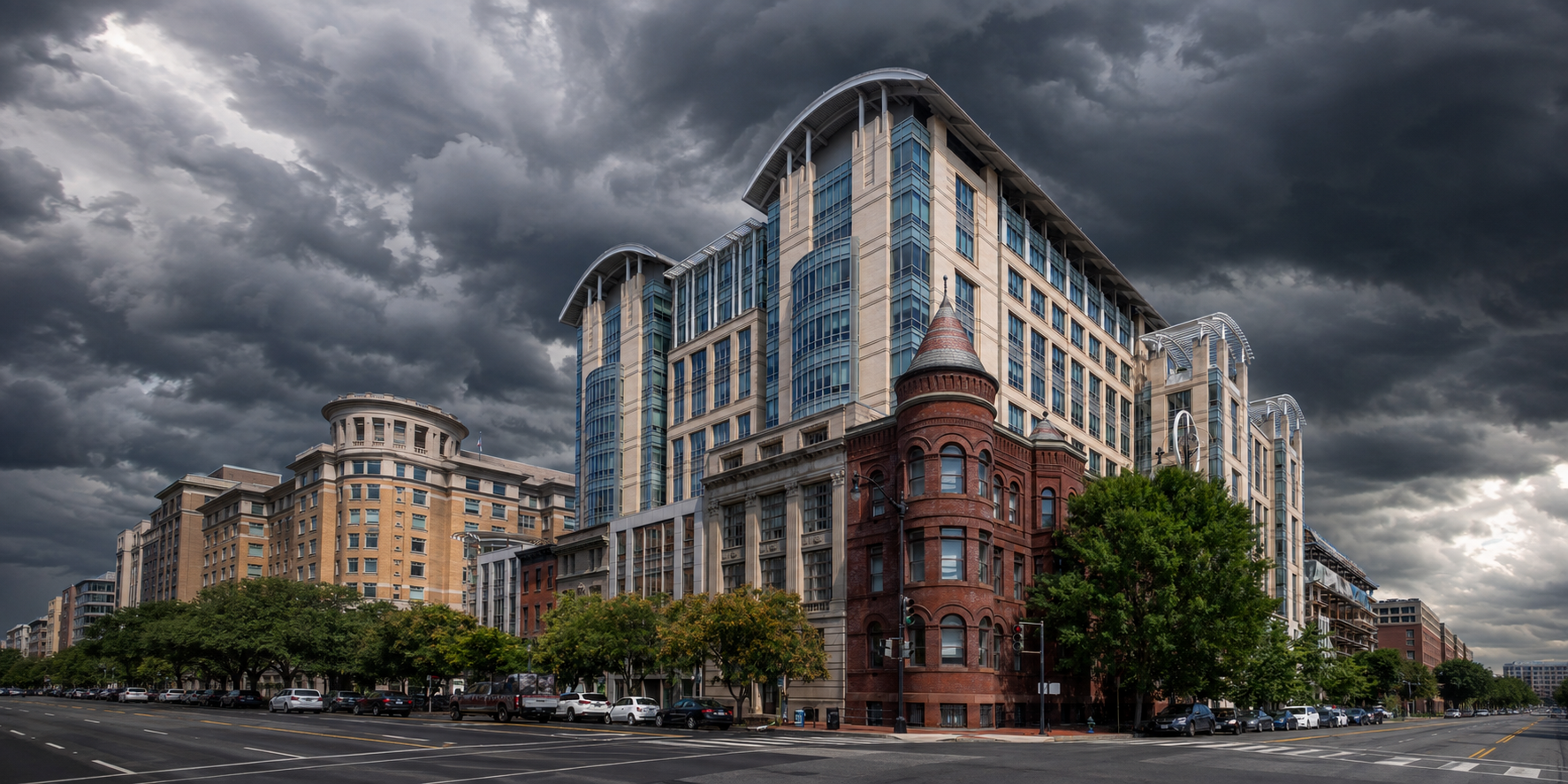
Image by Ted Eytan.

Join Pulse+ to comment below, and receive exclusive e-mail analyses.

show less
show more

Georgia’s Kratom Crackdown Runs Against RFK’s Health Vision, Creates Govt Database of Buyers.

Most people aren’t spending their afternoons thinking about the availability of things like kratom, or about 7OH, the kratom compound now sitting squarely in lawmakers’ sights, which is precisely why they think they can get away with using this market as a test case.

Kratom, for those who have never encountered it outside a smoke shop, supplement store, or conversation about alternatives to conventional medicine, is a plant from Southeast Asia that has built a sizeable American following. We’ve written about it previously, here. People buy it in powders, capsules, drinks, and extracts for all sorts of reasons, and whatever one thinks of the product itself (I personally have never tried it), it has existed largely outside the usual pharmacy pipeline.

But 7OH, short for 7-hydroxymitragynine, is now one of the key targets of Georgia’s legislation, and lawmakers are using it as the wedge to drag the wider kratom market into a pharmacist-gated, state-tracked system.

House Bill 968, moving through the legislature in Atlanta, is presented in the oh-so-familiar language of public safety, consumer protection, and responsible oversight. Read past the pieties, and the direction of travel becomes unmistakable. This is an effort to push kratom out of an independent retail market and into a tightly managed, pharmacist-gated, state-tracked system that looks and feels far more like the conventional pharmaceutical model than the marketplace that exists today.

Critics of this approach will recognize the playbook because a version of it surfaced years ago in Nevada and went nowhere. Now the same basic scheme has turned up again in Georgia.

It’s important because it runs counter to what HHS Secretary Robert F. Kennedy Jr has outlined over the last year. He told Joe Rogan, on the subject of peptides, “My hope is that they’re going to get moved to a place where people have access from ethical suppliers.” He was specifically talking about wanting to reverse an FDA decision that prohibited almost 20 peptides from being produced by compounding pharmacies.

At the center of the bill is 7OH. Once Georgia pushes 7OH and related compounds toward Schedule I, the rest of the kratom market can be shoved behind the counter and placed under pharmacist supervision.

“If this can happen to Kratom, which is a botanical that over 24 million Americans are using, nationwide, this can happen to any botanical that they might think is psychoactive or potentially dangerous, even though the science doesn’t support that,” neuroscientist Dr. Michele Ross told The National Pulse.

“Instead of being free and empowered as a consumer to take your health into your own hands, now the state is deciding, hey, ‘we need to track how much you’re using, when you use it, put hours on when it’s available. And you think about a traditional vitamin, or a supplement, right? People take ashwaganda, for example, to relieve stress. That’s psychoactive. Is that going to be put behind the counter, pharmacy style?”

There may be no formal prescription requirement written on the tin, but once a licensed pharmacist has to be present or available for the sale, the practical effect is obvious enough. Out-of-hours access will disappear, casual retail access will narrow sharply, and the online market will cease to be a real market, except for operators who can meet the new licensing and oversight requirements.

This is a full-throated transfer of power from consumers and small retailers to regulators, licensed intermediaries, and the sort of larger corporate interests that do very well whenever a market gets squeezed through a narrower gate.

“I think this is a lot less about safety than it is actually about control here,” Dr. Ross concluded.

CONSUMER TRACKING.

The tracking system is perhaps the most revealing part of the whole thing, because it shows how the state wants this market treated.

Georgia would require retailers to enter purchaser information into a real-time electronic logging system, complete with names, addresses, identification details, product information, and timestamps, and law enforcement would have direct access to the data.

Some of you will remember how pseudoephedrine was pushed behind the counter in the name of stopping methamphetamine production. It is the Sudafed framework, dusted off and applied to kratom. That comparison alone should give people pause, because it means lawful consumers are being folded into a surveillance architecture normally associated with products the state views through a quasi-criminal lens. Critics also worry, not unreasonably, that once such a database exists, it will not stay confined to simple record-keeping and could eventually be used to flag or restrict consumers in the broader world of opioid or Suboxone prescribing and monitoring.

Let us be honest about what all of this adds up to. The endgame looks very much like a market for so-called pharmaceutical-grade kratom, narrow, standardized, bottlenecked, and far easier for large corporate players to monetize. That is how alternative products are usually absorbed into the mainstream system. First, they are demonized, then fenced in, then handed over to approved channels, and by the time the process is complete, the independent sellers are gone, the prices are higher, and everyone is expected to pretend this was simply the natural march of progress. Big Pharma does not need to own every square inch of a market at the start to benefit from this sort of restructuring; it only needs the market remade in a form that suits pharmaceutical logic, distribution, and margins.

MARKET ENDING.

Georgia’s bill would allow only American-grown kratom, which sounds neat in a press release until one remembers that very few kratom trees are grown in the United States compared with the broader supply that exists today. That alone would constrict supply. Then comes the pharmacist requirement, which many consumers will regard as a feature of a system they were trying to avoid in the first place.

Plenty of people have no desire to walk into a pharmacy and explain themselves to a white coat for a product they previously bought lawfully and without fuss, and it is far from clear that the major chains will have any appetite to take this business on anyway. CVS and Walgreens are not exactly known for their enthusiasm for niche products. The likely result is not some seamless transition to a mature and efficient market, but reduced availability, higher prices, and a serious blow to the small shops and specialty retailers for whom kratom is not some decorative side shelf but a meaningful share of revenue. Many of those businesses would struggle to survive the squeeze.

Even the enforcement case is shakier than the bill’s architects would like people to believe. Kratom is a plant, not a laboratory blueprint, and the chemical profile of plant products changes over time. Some of the compounds lawmakers are so eager to police can increase as the material ages and oxidizes, which leaves regulators with a problem they cannot simply legislate away. They may want a clean distinction between natural chemistry and intentional enrichment, but the real world is untidy, and trying to impose a rigid enforcement regime on a changing botanical product is a fine way to create confusion, selective enforcement, and plenty of opportunities for the bureaucracy to get things badly wrong.

All of this matters politically because it cuts directly against the broader rhetoric now coming from Robert F. Kennedy Jr. and the populist health-policy wing that claims to oppose a pharma-dominated system. Kennedy’s appeal in this area has rested on a simple observation that too much of American health care is controlled by pharmaceutical interests, regulatory gatekeepers, and the retail pharmacy model that keeps ordinary people dependent on approved channels.

If you believe the country needs fewer bottlenecks, fewer corporate choke points, fewer licensed gatekeepers, and more room for independent suppliers outside the usual pharmaceutical pipeline, then Georgia is heading in exactly the wrong direction. This bill does not loosen the grip of that system. It expands it, taking a product that has existed outside the pharmacy state and pushing it back inside, complete with pharmacist oversight, surveillance-style tracking, and the quiet promise that everything will be safer once the approved people are in charge.

Today, the excuse is 7OH. Tomorrow, it will be whatever botanical or supplement grows too large outside the pharmacy state.

HB 968 is about far more than kratom. What Georgia is really debating here is whether every product that grows too large outside the conventional medical and pharmaceutical structure must eventually be dragged back into it, catalogued, monitored, bottlenecked, and priced accordingly. Call it safety if you like. Call it modernization if that makes the lobbyists happy. The plain English version is simpler. A market that grew outside the usual corporate channels is being lined up for a familiar sort of capture, and anybody who has spent the past few years railing against the pharmacy state should at least have the decency to admit what this is when it arrives wearing legislative robes.

show less

Most people aren't spending their afternoons thinking about the availability of things like kratom, or about 7OH, the kratom compound now sitting squarely in lawmakers' sights, which is precisely why they think they can get away with using this market as a test case.

show more

Ken Paxton’s Genius Move Turning the Texas Primary Into a Referendum on the SAVE Act and the Future of America’s Elections.

PULSE POINTS

WHAT HAPPENED: Texas Attorney General Ken Paxton has indicated he would consider withdrawing from the Texas primary run-off for Senator John Cornyn’s seat, but only if the Senate GOP eliminates the filibuster and passes the Safeguard American Voter Eligibility (SAVE America) Act.

👤WHO WAS INVOLVED: Ken Paxton, John Cornyn, Donald Trump, Susie Wiles, Chris LaCivita, and Senate Leadership.

📍WHEN & WHERE: March 5, 2026, in Texas.

💬KEY QUOTE: “The Save America Act is the most important bill the U.S. Senate could ever pass, and I’m committed to helping President Trump get it done.” – Ken Paxton

🎯IMPACT: GOP commentators expressed disappointment at Paxton’s offer, but he actually appears to be calling the bluff of those who expect him to stand aside for Cornyn, demanding they advance President Donald J. Trump’s agenda if they want to keep their Republican-in-name-only (RINO) colleague in post.

IN FULL

Texas Attorney General Ken Paxton (R) has announced he is only willing to exit the primary run-off for Texas Senator John Cornyn’s seat if the leadership of the Senate GOP agrees to abolish the filibuster and pass the Safeguard American Voter Eligibility (SAVE America) Act. The legislation, which has been stalled in the Senate for months, aims to enhance election integrity through new voter ID requirements and other measures.

Having spoken with a number of sources in Paxton-world this morning and early afternoon, The National Pulse understands that Paxton’s position is designed to empower, rather than harm or offend, President Trump in his pursuit of passing the SAVE Act.

It is yet another example of Paxton helping push the MAGA agenda forward and may even win him the Texas primary along the way.

The National Pulse’s reporting remains free in the public interest for now, but urgently requires donations to support our work and keep people informed.

Thank you for anything you can give.

“The Save America Act is the most important bill the U.S. Senate could ever pass, and I’m committed to helping President Trump get it done,” Paxton wrote on X. “I would consider dropping out of this race if Senate Leadership agrees to lift the filibuster and passes the SAVE America Act.”

Commentators and online observers were quick to express concern that this means Paxton is dropping out. But with the Senate intent on dragging its feet on the SAVE Act, there is minimal chance the Senate GOP meets Paxton’s criteria. This reframes the Texas primary, taking the pressure off the President’s endorsement and effectively forcing voters to consider not just the man they are electing, but the very future of American elections.

Just last week, Senate Majority Leader John Thune told reporters, “…you’re talking about the need to table what are going to be numerous amendments and an ability to keep 50 Republicans unified, pretty much on every single vote. And there’s just not, there isn’t support for doing that at this point.”

In other words, Thune can’t get his own party to vote the way he needs it to, and there isn’t the strength, passion, or endurance on the Republican benches to set about the process of a talking filibuster, which would lower the vote threshold, but require incredible feats of stamina from a Republican set of Senators whose average age is 64. Plus, some of them wouldn’t even support the bill itself.

Paxton added, in his Thursday statement, that John Cornyn – a Republican-in-name-only (RINO) who has a long history of backstabbing President Donald J. Trump and the MAGA movement – “is a coward who has refused to support abolishing the filibuster to pass this bill.”

This is true.

Effectively, Paxton is setting up the Texas primary as a referendum on the SAVE Act, and tossing Trump more leverage to go back to Thune and demand some action in exchange for saving Cornyn’s seat.

Closely held polling also suggests that in the likely scenario that Thune and Cornyn cannot wrangle their colleagues to pass the SAVE Act, Paxton still has a path to victory. He would likely need to raise a lot more money for the late May run-off, but setting it up as a referendum on voter fraud, illegal voting, and voter ID is a nightmare scenario for Cornyn and his consultants such as Chris LaCivita and Susie Wiles to defend, especially given Cornyn’s history of opposing key Trump legislation and achievements, including his border wall.

Complicating matters immeasurably is that LaCivita and Wiles were Trump’s campaign chiefs just over a year ago. LaCivita found himself at loggerheads with Trump after gouging money from his campaign, denying it, pretending to sue media outlets, only to quietly drop the cases earlier this year. Wiles is still Trump’s Chief of Staff and has been furiously trying to block the President from hearing alternative opinions on the race.

Trump’s endorsement of Cornyn was, in fact, expected immediately after the primary results on Tuesday, though Trump is believed to have exploded in anger after learning that LaCivita and Wiles had pre-briefed details of the forthcoming endorsement to corporate media outlets such as Axios, POLITICO, and The Atlantic magazine.

As a result, he has slow-rolled the endorsement, though it is still expected to come.

The National Pulse’s reporting remains free in the public interest for now, but urgently requires donations to support our work and keep people informed.

show less
show more

EXC: Survey Shows MAGA Base Rates First Year of Trump Admin 8.3/10, Pre-Iran War.

A readers’ survey conducted by The National Pulse has shown that the mostly MAGA-leaning readership rated President Trump’s first year in office at an average of 8.3/10. The results were finalized before the commencement of the U.S.-Israeli attacks on Iran’s Islamic Republic regime, with a new poll posted live yesterday to gauge any change in sentiment.

You can take the follow-up readers’ survey here.

The survey captured the opinions of 712 participant readers of The National Pulse, most of whom identify as part of President Trump’s MAGA base.

Asked to elaborate on their ratings, responses ranged from: “Promises made promises kept,” to “Not enough accountability for past agency heads. And still driving away independents with style issues. I like the style, but they don’t.”

Though the average rating was high, many expressed that they have not yet seen real changes in their lives.

“I wanted to vote for Pres Trump and I did. But things have not changed in anyway at all for me and my family. Gas is still the same price. My grocery bill is still climbing. The tariffs absolutely are getting passed on to us,” wrote one respondent, with another stating: “Not enough make America Great Again, too much make Israel great. Need to prosecute convict and jail the past political criminals.”

Nevertheless, overall optimism within the MAGA base remains high, perhaps even disturbingly so, with a full 61 percent of respondents saying Republicans should keep the House of Representatives at the midterm elections – an increasingly unlikely scenario.

Asked about the Senate, which is more likely to remain Republican-controlled, though trending in the wrong direction, a full 61 percent also supported the idea that Republicans would retain control, with 20 percent choosing Democrats, and one in five respondents expecting a tie.

Asked about their political priorities, answers ranged from mass deportations to stopping radical Islam to fixing corrupted election processes.

“Deport illegals, secure the vote, jail the political criminals,” wrote one respondent, with another adding: “The administration has done a great job of reviving the blue collar middle class by closing the border and getting started on deportations. Now it must do the same for the white collar middle class by driving to near zero the H1B and OPT visas. It’s the only way to prevent more cities from electing communist Mayors.”

Asked about their thoughts for Presidential candidates in 2028, an overwhelming majority of readers picked Vice President J.D. Vance, with Secretary of State Marco Rubio in a distant second.

Seventy-three percent of respondents chose Vance, with 21 percent picking Rubio. This part of the survey was an exclusively write-in section, and we did not prompt for candidates. The idea was to see if any outliers, such as Robert F. Kennedy Jr, Stephen K. Bannon, or others, would make the list. There was almost no noteworthy deviation from what was expected.

Asked for additional thoughts or “any other business,” the most common response was “Keep up the good work,” a sentiement for which we at The National Pulse are truly grateful. Other responses included: “All of Trumps cabinet picks are great,” as well as, “Get rid of the Epstein class and set laws to stop this madness happening in the future.”

A counter-point added: “The Panicans, blackpillers, and doomposting grifters are living in a terminally online bubble that does not reflect reality nor the mood of many voters. The American people do not care about Epstein or Israel – they care about what makes their lives better. President Trump understands this and is pursuing this agenda in ways that the armchair critics could never comprehend.”

Please take part in the post-Iran version of this survey today, and let us know if your views have changed as a result.

show less
A readers' survey conducted by The National Pulse has shown that the mostly MAGA-leaning readership rated President Trump's first year in office at an average of 8.3/10. The results were finalized before the commencement of the U.S.-Israeli attacks on Iran's Islamic Republic regime, with a new poll posted live yesterday to gauge any change in sentiment. show more

How a WWI-Era Boondoggle Laid the Groundwork for America’s AI-Energy Future.

One hundred and ten years ago, on May 9th, 1916, The Gazette Times of Pittsburgh printed a special telegram from Washington, D.C. entitled ‘Nitrate Plant Wins in House With Changes.’

The report made the second page, with the front reserved for a slightly more pressing matter: World War I. One year prior, the Germans had torpedoed the British ocean liner the RMS Lusitania, killing over one hundred Americans in the process. While the Americans had not formally entered the war by May 1916, it was only a matter of time.

As a result, the nation was once again confronted with Alexander Hamilton’s thesis from his 1791 Report on the Subject of Manufactures, which concluded: “In countries where there is great private wealth much may be effected by the voluntary contributions of patriotic individuals, but in a community situated like that of the United States, the public purse must supply the deficiency of private resource. In what can it be so useful as in prompting and improving the efforts of industry?”

As a result of the war, America was becoming increasingly concerned about the availability of nitrates, or the German ability to disrupt the trade from Chile. Nitrates were especially important for the production of explosives, the likes of which the U.S. would need when it eventually joined the war a year later.

The National Defense Act (1916) mandated the construction of two new plants, with an adjacent hydroelectric plant. The location? Muscle Shoals, Alabama, right on the Tennessee River – a particularly treacherous terrain that had long stymied trade, commerce, and economic growth.

The location of the Wilson Dam.

There was just one problem. The war ended before the plant – known as the Wilson Dam – had been completed. The government, stuck with a massive boondoggle, almost sold the whole thing to Henry Ford for just three percent of its total value. Sadly for him, the political will to shift this giant operation into private hands for a fraction of the cost simply wasn’t there, and in 1933, President Franklin Delano Roosevelt (FDR) established the Tennessee Valley Authority (TVA) in the hope of providing cheap energy for locals. It worked.

Today, the Wilson Dam has 21 generating units with a net dependable capacity of 663 megawatts. It is a National Historic Landmark and serves over 10 million people across seven states.

Neither Woodrow Wilson, for whom the dam is named, nor FDR, nor the 18,000 workers who built the dam could have ever realised what an important role the TVA would play over a century later. Though perhaps Hamilton foresaw it all.

American energy demand is currently skyrocketing, with power-hungry AI data centers creating genuine political and logistical insecurity and anxiety, especially on Capitol Hill.

Meanwhile, legislators long dead are having a greater impact than the current crop, with the TVA recently voting unanimously to reverse plans to shutter its critical Kingston and Cumberland coal plants and build a bridge to high-tech nuclear power.

A map showing all TVA’s facilities, in interactive form, here.

The decision was predicated on arguments President Trump and his team have been making for over a decade now: that you can’t run a 21st-century superpower on unreliable “renewals” and the wishful thinking that surrounds them.

When the TVA board, bolstered by Trump-appointed members, ran the numbers, the threat became abundantly obvious. Earlier plans had been tied to a 2035 full-coal retirement goal that prioritized green ideology over America’s energy grid needs. Massive shortfalls loomed, with electricity demands on track to double in some areas.

Without this course correction, ratepayers face sky-high bills, and industry faces blackouts. Sticking to the old retirement schedule, which would have forced Kingston offline in 2027 and Cumberland into a phased retirement starting in 2026, would have been outright economic self-sabotage, the likes of which Americans 100 years into the future could not have forgiven.

Now, Kingston and Cumberland will stay online indefinitely, modernized to work alongside new natural gas and battery storage facilities. Their combined 3.8 gigawatts of output will help keep the grid stable and bills low, ensuring energy security while the next generation of clean, reliable power plants comes of age: small, nuclear-powered modular reactors, or SMRs.

But the TVA is not constructing new coal-fired facilities. It doesn’t need to.

GE Vernova Hitachi’s BWRX-300 small modular reactor to be located at Clinch River, Oak Ridge, Tennessee.

It’s preserving American energy infrastructure and local jobs to provide the breathing room needed to scale up new technologies without spiking prices. One source close to the TVA explained it to me as follows: “With data centers and manufacturing booming, we can’t risk reliability on unproven timelines. Coal extensions buy time for nuclear to scale.”

The TVA’s nuclear deployment program may now be the largest in American history.

Already in 2025, it submitted the nation’s first utility-led construction permit application for a small modular reactor (SMR) at a site near Oak Ridge to the Nuclear Regulatory Commission (NRC). With $400 million in Department of Energy funding already secured in late 2025, the project is moving at a pace rarely seen in nuclear.

Construction of its GE Vernova Hitachi BWRX-300 model reactor is likely to begin in late 2028, with commercial operations targeted for 2032. This, they say, is just the tip of the spear, with the TVA already exploring up to six gigawatts of capacity across its service area through agreements with firms such as ENTRA1 Energy and NuScale.

This is a genuinely future-proof energy strategy.

Like so-called renewables, nuclear produces zero air pollution. Unlike renewables, it also produces reliable, 24/7 baseload power that isn’t held hostage by things like weather, or birds, or mechanical failures.

By maintaining existing coal assets, the TVA is effectively self-funding its own high-tech future, using the energy of today to attract, support, and expand the AI and advanced manufacturing industries that will eventually run on the small modular reactors of tomorrow.

It’s fitting that a firm with such an august history in national security, manufacturing, and energy production appears to be living up to the promise of those who first brought it into existence. It’s a very American story.

show less
One hundred and ten years ago, on May 9th, 1916, The Gazette Times of Pittsburgh printed a special telegram from Washington, D.C. entitled 'Nitrate Plant Wins in House With Changes.' show more

KASSAM: Why Netflix Turned Tail and Abandoned Its Warner Bros Bid.

For months, the assumption in both political and media circles was that the Netflix-Warner Bros-Paramount throuple’s argument would end in a bidding war. Paramount made an offer for Warner Bros. Netflix retained the contractual right to match. Paramount nudged its bid up by another dollar per share this week. Netflix had every legal right — and more than enough cash — to respond.

But in the end, Netflix backed down, in a victory for antitrust policy that will be studied and cited for years, perhaps decades, to come.

Netflix has held more than $9 billion in cash for three consecutive years, so none of its retreat was about balance sheet capacity. Indeed, it was about a regulatory reality set in place by figures like the recently ousted Gail Slater, who pledged a Goldilocks approach to antitrust.

William Kovacic, former FTC chairman and antitrust guru, recently noted: “One of Gail Slater’s frequently recited mantras is, we are not Biden, we are not Bush. And she points to Bush and says, not active enough. Biden hyperactive.”

Under the Justice Department’s long-standing Philadelphia National Bank framework, a 30 percent market share marks the point at which serious antitrust concerns begin. A Netflix acquisition of HBO Max (owned by Warner Bros) would have produced a combined streaming entity controlling more than 45 percent of the market, even after accounting for subscriber overlap. Number one buying number three.

That represents a form of structural dominance that puts consumers not just on the back foot, but indeed on their knees.

Conversely, Paramount’s purported acquisition of Warner Bros presents an entirely different configuration. Paramount sits in fifth place in streaming and is seeking to combine with third. Ignoring duplicate subscribers, a merged Paramount–HBO platform would total roughly 220 million subscribers — still about 100 million fewer than Netflix alone. The leader remains Netflix. The market does not tip into one-firm command.

That distinction explains why Paramount was able to certify compliance with the DOJ’s standard request for information. Its path to clearance is far more straightforward than Netflix’s. Reports that the Justice Department was already examining aspects of Netflix’s market conduct only underscored the risk.

The bottom line is that Netflix bowed out because it understood it would not clear antitrust scrutiny.

This is what effective antitrust deterrence looks like in practice. Regulators did not even need to block the transaction. The mere prospect of rejection was enough to keep Netflix’s woke talons off brands like Superman, Harry Potter, Friends, Game of Thrones, and more, as Joel Thayer explained to me during this interview.

What emerges now is not market contraction but market recalibration. A Netflix–Warner combination would have entrenched the dominant streaming platform. A Paramount–Warner combination creates something else: two subordinate competitors combining to form a more viable challenger capable of standing alongside the top tier. The numbers bear this out beyond streaming.

In the theatrical production space, Netflix does not even operate a traditional movie studio. Paramount ranked fifth among major studios in 2024; Warner ranked third. Combined, Paramount and Warner would control roughly 24 percent of the box office market — broadly in line with Disney at 21 percent and Universal at 20 percent. That is competitive parity among established firms, not the creation of an unassailable behemoth.

Now, consumers stand to gain from a streaming market that features genuine rivalry. Netflix has raised subscription prices repeatedly during its period of dominance. A strengthened competitor with comparable content depth introduces discipline. Price increases become strategic decisions rather than assumptions.

Creative professionals can now gain leverage because when multiple buyers compete for compelling content, bargaining dynamics shift. Award-winning director James Cameron publicly argued for a more competitive landscape, fully aware that Netflix might not appreciate the sentiment. Within days, Netflix CEO Ted Sarandos responded by calling Cameron “disingenuous” and “completely untrue.” The sensitivity is quite revealing.

Warner has struggled as a standalone entity for years and was unlikely to reverse course organically. A buyer appears inevitable.

The policy question was whether regulators would permit the dominant streaming platform to swallow it whole or allow two mid-tier competitors to combine into a viable rival.

They made the correct calculation by making the first option implausible.

For once, the guardrails held, and the market adjusted accordingly. The ball is now in Paramount’s court.

show less

For months, the assumption in both political and media circles was that the Netflix-Warner Bros-Paramount throuple's argument would end in a bidding war. Paramount made an offer for Warner Bros. Netflix retained the contractual right to match. Paramount nudged its bid up by another dollar per share this week. Netflix had every legal right — and more than enough cash — to respond.

show more

The ‘Bombshell’ Trump Impeachment That Imploded.

On the night of Thursday, February 5, President Trump’s Truth Social account posted a video about election fraud that included a two-second splice featuring Barack and Michelle Obama, portrayed as apes in the style of The Lion King.

The outrage machine swung into gear, culminating in the likes of CNN’s Bakari Sellers demanding a “fumigation” of Trump and MAGA from the United States.

But as the aching “anti-racism industry” locomotive groaned back into a pathetic trundle, distracted editors at the Guardian – a 205-year-old progressive publication – were weighing a story that would have staggering implications for President Trump, his Director of National Intelligence, Tulsi Gabbard, his Chief of Staff Susie Wiles, and indeed his entire administration.

It was, in large part, an attempt to lay the foundations for a fresh impeachment of the 47th President of the United States.

“NSA detected phone call between foreign intelligence and a person close to Trump,” the headline roared.

The Guardian’s story as it first appeared on Saturday.

It could have been a stomach-dropping, monster revelation… if it was true.

The story was immediately seized upon by NeverTrump™ figures like Bill Kristol, Rick Wilson, Michael Weiss, and even the band Wheatus – of ‘Teenage Dirtbag’ fame – garnering millions of impressions over the next few hours.

At the time of publication of this Substack piece, the Guardian’s author, Cate Brown, still hadn’t removed her original tweet, asserting what would soon be debunked as “fake news.”

A cornucopia of anti-Trump accounts immediately peddled the falsehoods.

If the story had even been a little bit true, it could have triggered months of investigations, jamming up the Trump agenda in a Russia collusion-style hoax.

There was just one problem: when the Guardian’s single source saw what they had written about his testimony, it was his stomach that dropped.

They had the story wildly wrong. Was it their mistake, or his? There was no “person close to Trump” on any call, he hurriedly informed them. Either the Guardian reporter misheard or he misspoke.

Over Saturday afternoon, evening, and late into the night, the Guardian agonized about what to do with this damaging revelation. They even considered eschewing a correction and instead publishing a whole new story, with more accurate details.

Eventually, they succumbed to basic journalistic standards. Eventually.

It was only on Sunday morning that they decided to change the headline to: “NSA detected foreign intelligence phone call about a person close to Trump.” [Emphasis added]

The amended headline.

In other words, there was never a “person close to Trump” picked up on a foreign intelligence intercept. Instead, a “person close to Trump” was being discussed by two other, unidentified people.

Furthermore, the paper admits: “The person close to Trump is not understood to be an administration official or a special government employee.”

Well, if that ain’t just the non-story of the year.

Editors reluctantly added a humiliating addendum, right at the bottom, with a sort of jaw-dropping nonchalance about it all:

Editor’s Note: This story was updated to clarify that the phone call was between two people associated with foreign intelligence who discussed someone close to Donald Trump, not between someone and a person close to Trump. The earlier version was based on multiple phone calls with a source who later said he mispoke and clarified the actual details of the call.

This also then changed, with the Guardian forced into naming the source himself:

This story was amended on 7 February 2026 to clarify that the phone call was between two people associated with foreign intelligence who discussed someone close to Donald Trump, not between someone and a person close to Trump. The earlier version was based on multiple phone calls with the whistleblower’s attorney, Andrew Bakaj, who later said he misspoke and clarified the actual details of the call.

The Guardian’s report isn’t the first time a claim was made that a “whistleblower” had filed an inspector general (IG) complaint. Rupert Murdoch’s Wall Street Journal popped a story on February 2, which alleged in an uncharacteristically alarming tone:

A cloak-and-dagger mystery reminiscent of a John le Carré novel is swirling around the complaint, which is said to be locked in a safe. Disclosure of its contents could cause “grave damage to national security,” one official said. It also implicates another federal agency beyond Gabbard’s, and raises potential claims of executive privilege that may involve the White House, officials said.

In journalistic parlance, this means it is being heavily “shopped around.”

The complaint itself appears to date back to May 2025, just two and a half months into Tulsi Gabbard having her feet under the DNI desk. And despite a spokesman for the IG telling the Wall Street Journal that allegations against Gabbard weren’t credible, the Guardian pursued the story.

It was only on Friday, February 6, that Guardian reporter Catherine (“Cate”) Anne Brown would speak with the alleged whistleblower’s lawyer, Andrew Bakaj (say: ‘Buh-kai’), at length.

Brown herself began a formal career in investigative reporting around four years ago, starting with the Washington Post in late 2022, before her final piece was published in January 2026. Before that, she worked as a freelancer for outlets like Business Insider and completed what she calls “OSINT research training” with Bellingcat, an “intelligence agency” closely linked to pro-establishment U.S. and UK operatives. Bellingcat has received funding from the “CIA sidekick,” the National Endowment for Democracy (NED), as well as from George Soros’s Open Society Foundations.

Brown and Bakaj would speak about the whistleblower’s claims, with Bakaj taking the final rap for the factual flub on the front page of one of the world’s oldest newspapers. And while it is unclear whether the two knew each other very well before their call, almost everyone in Washington, D.C., knows to treat Bakaj’s claims with a ladleful of salt, given his role in the first failed Trump impeachment effort.

Bakaj, of Ukrainian descent, is a former CIA officer who also worked for Hillary Clinton and the Bush State Department in Kiev. After bouncing around government, he landed with Democrat lawyer and ‘Disney adult’ Mark Zaid at the Compass Rose Legal Group.

The pair cooked up the first Trump impeachment, with Bakaj serving as legal counsel for whistleblower Yevgeny “Eugene” Vindman. His twin brother, Alexander Vindman, now running for Senate as a Democrat, served as one of the most hyped witnesses in this process before anyone knew his own brother was the progenitor of the claim against President Trump. Vindman was even offered the job as Ukrainian defense secretary, a bizarre turn of events for a U.S. Army officer inside America’s national security apparatus.

So Bakaj’s claims, at least to a serious investigative reporter, should be viewed as extremely partisan – especially when it comes to whistleblowers and national security. His previous clients failed in their attempt to oust a sitting president, and repeatedly disgraced themselves in apparent fealty to a foreign nation of which they all share recent ancestral lineage.

For Brown, however, these characters would become the backbone of a story rushed out amid the media’s monkey meltdown, provided on a “single source” basis and without appropriate consultation with ODNI and its communications team.

For a story as explosive as the Guardian’s, one would expect a reputable news outlet to:

  1. Have more than a single, hyper-partisan source;
  2. Wait to hear back from the government department they’re reporting on;
  3. Consult with its other employees and reporters in town;
  4. Work overtime to verify the claims made by the partisan lawyers.

The Guardian’s editors did none of these things, with sources indicating they were transfixed on the Trump Truth Social monkey mania, distracting them from what should have been basic journalistic rigor.

If this had been a Breitbart News report about Hillary Clinton gone wrong, it would currently be leading the nightly news and even have pseudo-comedic mentions on late-night.

Instead, it is being hurriedly brushed under the carpet. There has been no accountability inside the Guardian, thus far. No one has been suspended. No one has been taken off their beat. And no form of apology has been offered, neither to the subjects of the piece nor to the Guardian’s readership.

Andrew Bakaj won’t be disinvited from any television shows. The American Bar Association will do nothing to him. His firm will not place any sanctions on him. The swamp, as they say, is alive and well.

The story here is of critical importance because this is precisely the playbook that was run during the first impeachment, and almost certainly represents a botched trial run for new impeachments come November 2026, if the Republicans lose the House.

show less
On the night of Thursday, February 5, President Trump’s Truth Social account posted a video about election fraud that included a two-second splice featuring Barack and Michelle Obama, portrayed as apes in the style of The Lion King. show more