


Monday, February 9, 2026

WATCH: The Dodgy Super Bowl Ad Funded by the CEO Who Donates to ‘The Squad.’

With TrumpRx launching this week, immediately bringing down the costs of America’s new favorite medication, GLP-1, the knock-off merchants are surely panicking. Hims and Hers will spend millions of dollars during America’s other favorite medication, the Super Bowl, to hawk a new concierge service rooted in left-wing populism.

Predictably, the ad only uses white actors for the scenes depicting the out-of-touch, moneyed elite, while every scene about ordinary people has an ethnic minority portraying America. But in Hims’ case, that’s beside the point.

The firm that was referred to the Department of Justice today, and its commercial has rightly raised eyebrows for its use of Galleri cancer detection, which “missed more cases of cancer than it found,” according to Eric Topol, director of the Scripps Research Translational Institute.

Voiced by ‘conscious rapper’ Common, who himself is worth a very uncommon $20 million, the ad implies Hims and Hers will be the Robin Hood of the healthcare industry, giving ordinary people access to things only rich people (like Common) have.

Rich people get concierge IV drips, customized peptides, preventative care, and specialists on call. And you’ll basically get the exact same thing if you download their app! Except you won’t. You’ll get what companies like Hims are really good at providing: cheap knockoffs and left-wing politics.

“It’s all about democratizing access to the things that are available to the super rich, and we’re bringing them to people,” said Hims’ chief design officer, Dan Kenger.

It is no surprise the ad copy sounds like it was written by a Bernie Sanders staffer. It probably was.

Hims’ CEO Andrew Dudum is a repeat donor to members of the far-left “squad” or “Justice Democrats” such as illegal immigrant Ilhan Omar, Islamist loudmouth Rashida Tlaib, as well as Joe Biden, Kamala Harris, and Cori Bush. His list of political donations makes for very interesting reading, and of course concludes with the same Bernie Sanders he’s seeking to channel in Hims’ Super Bowl ad.

Last year, Dudum offered to hire “Gaza Solidarity” protesters after writing about the “Nakba” – an Arabic term for the “catastrophe” of the founding of the State of Israel, on his Medium page. The company famously lost almost $210 million in stock value after his woke tweet.

“As a father whose children are both the descendants of Palestinian refugees who fled the Nakba in 1948, and the descendants of Holocaust survivors from Poland, I have a deep consideration for nuance in my life,” Dudum wrote in 2023.

If only he had deep consideration for the nuances in the world of medicine.

The centerpiece of the ad campaign is a new $49 oral semaglutide pill. It is positioned as an alternative to Novo Nordisk’s Wegovy pill, which launched just weeks ago after years of development, testing, and regulatory review. Novo’s product relies on a patented system designed to protect the active ingredient during digestion and ensure absorption.

Hims does not have that patent, nor do they disclose how their pill survives the digestive process.

They are effectively launching a product using an unproven technology, with no publicly available evidence that the active ingredient is even bioavailable.

Novo’s CEO, Mike Doustdar, was blunt in his reaction. “You’re wasting $49, in my opinion,” he said, explaining that Novo’s patents exist precisely because protecting semaglutide through digestion is the hard part.

Some biotech investors have labeled Hims’ product a “scam.” Hims is effectively conducting a mass experiment without transparency, regulatory approval, or proof of effectiveness, and laundering their untested pharmaceutical behavior through the Super Bowl and a ‘conscious’ (read: woke) Grammy-winning rapper.

Trump-appointed FDA Commissioner Marty Makary issued a pointed warning on Thursday, writing on X: “FDA will take swift action against companies mass-marketing illegal copycat drugs, claiming they are similar to FDA-approved products.”

Hims doesn’t disclose where it sources its active pharmaceutical ingredients. The company says they come from “FDA registered” facilities, but registration is not approval. When a drug itself lacks FDA approval, sourcing becomes even more important.

As we have previously noted, much of the knockoff drug supply chain runs through China, where quality control and oversight are persistent concerns. American consumers have no way of knowing what they are taking or whether it will have any effect.

In practice, Hims is selling leftist populism using America’s collective waistline as its hook. They’re quite explicit about it, in fact, with Kenger telling Variety: “There’s probably going to be a lot of weight loss commercials this year, and they’re probably going to try to be funny and they’re probably going to be relatable and they’re probably going to have a celebrity, right? And that’s great,” he says. “I think we’re past that conversation. You know, we did that. We talked about it. The prices are down. Now let’s talk about something else.”

That “something else” appears to be peddling a pill with no track record of success. Thankfully, the TrumpRx launch this week means fewer Americans will risk whatever it is Hims is putting in its knockoff Wegovy.

show less

With TrumpRx launching this week, immediately bringing down the costs of America's new favorite medication, GLP-1, the knock-off merchants are surely panicking. Hims and Hers will spend millions of dollars during America's other favorite medication, the Super Bowl, to hawk a new concierge service rooted in left-wing populism.

show more

SUHR: The Illegal Amnesty Group Weirdly Wading Into Trump’s FCC Policy Fight.

The pay-television industry’s newest ally in a fight over media ownership is a virulently anti-Trump, illegal migrant advocacy group.

Mi Familia Vota is currently airing an attack ad targeting President Trump and his Federal Communications Commission chairman, Brendan Carr, in a hamfisted attempt to keep more conservative voices off America’s airwaves, as previously explained here.

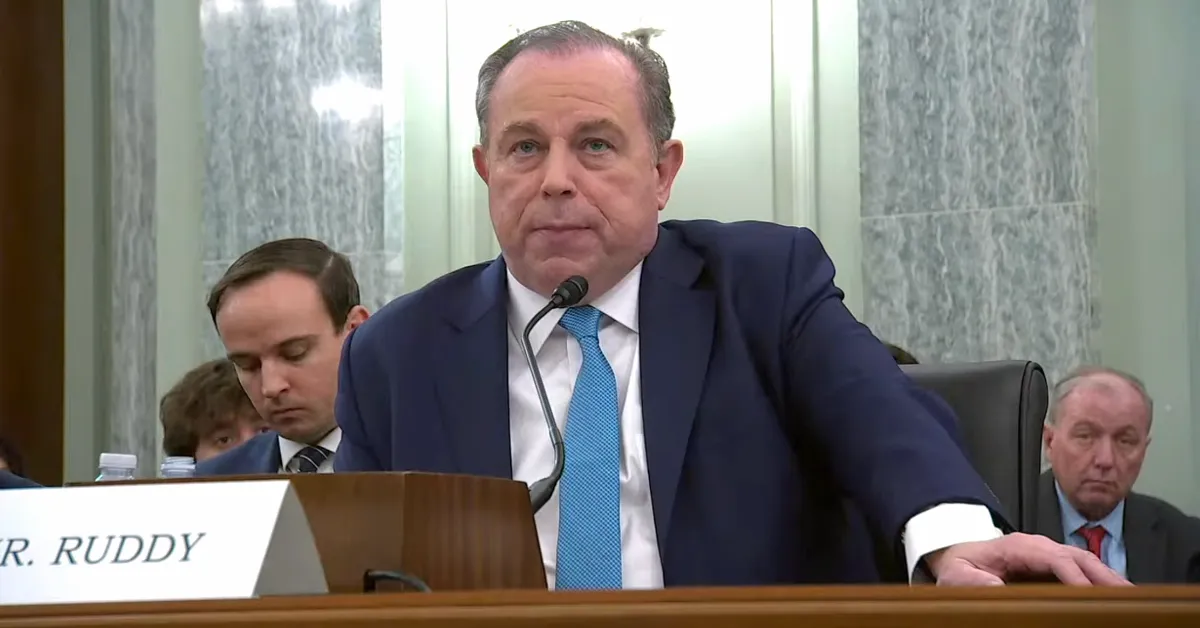
The timing is no accident, as the Senate Commerce Committee convenes a hearing on the issue set for Tuesday, February 10, which has also raised eyebrows. The development also puts Chris Ruddy’s Newsmax in a curious alliance with a far-left, open borders group.

Waging political war on President Trump and his administration is par for the course for Mi Familia Vota.

The group supports amnesty for illegal immigrants, opposes stronger border enforcement, and wants taxpayer-funded welfare benefits like in-state tuition and Medicaid for illegals. No wonder they’re critical of the man who locked down the border and his agency head, who has stood up for ICE.

On other issues, the Mi Familia Vota organization has opposed tax credits for school choice, worked for “environmental justice,” and “champion[ed] comprehensive reproductive rights for minority communities,” i.e., abortion.

Given those policy positions, it’s little surprise that Mi Familia Vota is harshly critical of Donald Trump. The group has blasted his policies as “hateful and divisive,” lamented the “reign of terror associated with Donald Trump’s harmful MAGA agenda,” and called his 2024 election “a dark day for our democracy.”

In fact, Mi Familia Vota did not think that the American people should even be allowed to vote on whether to elect Trump in 2024.

The group said Trump is “dangerous” and “not fit to hold office” and believed the Supreme Court should have barred him from the ballot under the 14th Amendment. That’s an ironic position for a group that otherwise says it supports voting rights—just not for Republicans who want to vote for Trump, apparently.

And when the election did happen, Mi Familia backed Kamala Harris with its endorsement, with $300,000 in independent expenditures, and with untold millions in generic Get Out the Vote efforts for Democrats, taking credit for wins in Arizona, Nevada, and North Carolina.

Mi Familia Vota’s leadership is as left-wing as its policy positions. Its board includes the national teachers union’s senior director for Racial and Social Justice, and the organization’s CEO is himself board chairman for Planned Parenthood Global. He’s also on the board of the Tides Network, a leading progressive dark money network supported by George Soros.

Speaking of Soros, Mi Familia Vota has received over $2 million from Soros’s foundations, the Open Society Foundations, and the Fund for Policy Reform. Its other major donors include the AFSCME public employee union and the League of Conservation Voters.

The Mi Familia Vota ad attacking Trump and Carr was placed by Screen Strategies Media, a left-wing political consulting firm whose past clients include liberal darlings like Elizabeth Warren and Beto O’Rourke.

The Latino group joins a number of other committed leftwing activists in opposition to reforming the FCC’s media policy, from Al Sharpton’s National Action Network to a constellation of Hollywood labor unions. Reflecting these same politics, Democratic elected officials also argue against change, including Senators Bernie Sanders, Amy Klobuchar, and Sheldon Whitehouse.

That’s not to say that Mi Familia Vota or any other liberal group will have an influence on the final outcome of this fight—they won’t, given the FCC’s 2-to-1 GOP majority. But when the White House, Chairman Carr, or Republican members of Congress think about this issue, they can have a good hint where to land by looking at who’s on the other side.

Daniel Suhr is president of the Center for American Rights, a conservative public-interest law firm focused on media issues.

show less
The pay-television industry’s newest ally in a fight over media ownership is a virulently anti-Trump, illegal migrant advocacy group. show more

Trump Must Ignore Coinbase’s CEO’s China PR and Keep Crypto Free from State Control.

Coinbase CEO Brian Armstrong said the stupid part out loud, recently opining on how the Chinese Communist Party’s (CCP) state-sponsored digital yuan will soon be paying out “interest.”

Now the central bank digital currency (CBDC) argument has to be had all over again.

Armstrong heaped praise on the CCP’s approach: “China has decided to pay interest on its own stablecoin, because it benefits ordinary people, and they recognize it as a competitive advantage.”

Alarm bells toll. The guy with all our crypto accounts at his fingertips has developed a taste for putting the blockchain in government hands. It would be bad enough if it were a U.S. central digital bank. It’s all the worse for being China.

The CCP is not running some stablecoin marketing gimmick. It is building a state-administered financial control grid. The digital yuan is a central bank digital currency in its purest form: programmable, surveilled, and designed to bring money flows closer to government oversight. Interest payments are not altruism – they are bait.

Critics online saw it immediately. One replied: “China’s version is a CBDC at best. Not a stablecoin.”

Interest-bearing digital currency changes virtually everything, by the way. The moment a token starts paying yield, it stops acting like neutral digital cash and becomes a deposit account. And deposit accounts always come with a supervisor, a regulator, a central bank, and eventually the long arm of the Federal Reserve.

Central banks have long wanted the ability to reach directly into consumer monetary behavior, to reward saving, punish spending, impose negative rates, or distribute stimulus with conditions attached. A CBDC makes that possible. The Cato Institute has warned that CBDCs could give governments sweeping power over individual financial activity, including surveillance and control that would make cash obsolete. That was never the point of the blockchain.

Bitcoin was born in the shadow of the 2008 financial crisis as a rejection of centralized monetary authority. Satoshi did not design a system in which governments could pay you interest in exchange for total visibility into your transactions. Crypto was meant to remove middlemen, not replace them with something worse.

China’s model makes the intention clear. Commercial banks are subsidizing digital yuan interest payments because adoption has lagged. The state wants citizens using the official wallet, inside the official rails, under official monitoring. And once people accept yield as the hook, they accept the architecture behind it.

In the United States, stablecoin policy is already becoming a battleground. The GENIUS Act passed in July 2025 opened the door for platforms like Coinbase to share rewards with users, and banking lobby groups are now fighting to shut it down, warning it will pull deposits out of the traditional system.

But the deeper issue is ideological. Once stablecoins become savings instruments, the distinction between private digital money and government digital money collapses. Regulators will argue that anything paying interest must be treated as a bank product. Central banks will argue that only state-issued money should carry the weight of monetary policy. The path leads in one direction.

That is why President Trump, early in his second term, issued an executive order to protect Americans from the risks posed by central bank digital currencies. He was right to do it. A CBDC is not financial progress. It is financial consolidation.

Armstrong may think praising Beijing is pragmatic. It is not. China is the clearest example of what digital currency becomes when the state holds the keys: a tool of centralized power dressed up as modern convenience. The crypto industry should remember what it was built to resist.

Interest-bearing stablecoins are not the future of freedom. They are the opening act for state-run digital money.

And once that door is opened, it does not close again.

show less

Coinbase CEO Brian Armstrong said the stupid part out loud, recently opining on how the Chinese Communist Party's (CCP) state-sponsored digital yuan will soon be paying out "interest."

show more

Trump Thumps Davos’ ‘You’ll Own Nothing’ Plan. And Here’s Another Target for His Sights.

Housing affordability is one of the defining issues in American life. President Trump waxed lyrical about it from the stage at Davos this week, decrying major corporations for gobbling up U.S. housing stock.

“Homes are built for people, not for corporations, and America will not become a nation of renters,” the President told the World Economic Forum (WEF). “That’s why I have signed an executive order banning large institutional investors from buying single-family homes. It’s just not fair to the public. They’re not able to buy a house.”

The numbers are pretty grim. The frustration is palpable and widespread. The sense that the system is now rigged beyond salvation grows stronger year by year.

America’s median homebuyer is now 59 years old. That is not a functioning housing market. That is a country where adults are being shut out of homeownership.

Trump’s comments, as well as his actions, are a direct negation of the WEF’s 2016 slogan: “You’ll own nothing, and you’ll be happy.”

But one executive order and one speech do not a summer make.

If the Trump Administration wants to ratchet up its pursuit of affordability for Americans, it should take a long, hard look at another powerful actor shaping the housing market in ways most do not comprehend. It may be sitting right on your phone as you read this.

It’s Zillow.

For many, Zillow is just a harmless app where you can scroll through listings and daydream. In practice, the company has become something much bigger. Zillow is no longer just a platform that shows you what is available. It has grown into a vertically integrated housing company with its own internal ecosystem. That ecosystem now includes its own mortgage operation, called Zillow Home Loans.

Now, Zillow is not just a participant in the housing market. It has become one of the market’s gatekeepers. It can influence what buyers see, who they contact, and how quickly all these pieces can move. When a company has that kind of sway, it can shape consumer behavior without ever having to announce it.

According to a new lawsuit, that power may be getting used in a way that hurts buyers at the worst possible time, when every dollar counts.

Reuters recently reported: “Online real estate platform Zillow is facing a new consumer lawsuit in federal court in Seattle that accuses the company of pressuring homebuyers into using its mortgage lending division. The proposed class action filed on Friday, claims Zillow operates programs in which its affiliated real estate agents receive high-value sales leads only if they meet internal quotas for securing pre-approved mortgages from Zillow Home Loans.”

Now factor this into the equation: Zillow Home Loans’ mortgages cost $4,600 more than its competitors, on average.

If the allegations in the lawsuit prove accurate, they point to a system designed to steer buyers toward Zillow’s more expensive mortgage products through behind-the-scenes incentives. Agents who want access to valuable leads are pressured to meet internal targets. Buyers who think they are simply shopping for a home may be nudged toward a specific lender without realizing how the machinery is working around them.

What may seem like a minor detail is, in practice, a form of gouging American homebuyers at a critical juncture.

Georgetown professor Steven Salop dug into this late last year, analysing nearly 11,000 Zillow Home Loans from 2022 through 2024, and comparing them against other mortgages in the Home Mortgage Disclosure Act (HMDA) database.

He concluded: “This study provides empirical evidence that Zillow Home Loans charged higher prices than other mortgage lenders for conventional 30-year fixed-rate purchase mortgages during the three-year 2022-2024 period, after controlling for a set of borrower, loan, geographic, and temporal characteristics available in the public HMDA data.”

Zillow’s overcharge was $4,579 on an average loan size of $337,000.

That is real money for a working family. It is money that could go toward repairs, moving costs, childcare, savings, or simply staying afloat in an economy that has already punished them with higher prices across the board. It also makes it harder for buyers to compete in the first place, because every extra cost pushes the monthly payment higher and narrows the range of homes they can afford.

The study also found that veterans were hit especially hard.

For VA loans in 2024, the Zillow overcharge was $7,279 on an average loan size of $407,860. At a time when the country talks endlessly about supporting veterans, Zillow is heinously treating them as a premium revenue stream.

This is why Zillow presents such a clear opportunity for the Trump Administration.

With the President returning to his populist economic instincts this year, not only with his proposal on single-family housing but also with ideas like capping punishing credit card interest rates, the public mood is scarcely pro-corporate monopoly. Voters want someone to take on the greedy institutions that have made ordinary life more expensive and more unsettled.

The FTC and the DOJ have the authority to investigate and enforce the rules, and they should do it without hesitation.

Housing is not just another consumer product. It is the foundation of stability for families and communities. When homeownership gets pushed further out of reach, the country becomes less rooted, less secure, and less confident about the future. Americans feel that decline in their own lives, and they are done being lectured by the same people who helped create the mess.

If the goal is to restore the American Dream, then we have to Make America Affordable Again. That starts with breaking the grip of players who treat families as data points and neighborhoods as cash cows. Zillow is towards the very top of that list.

show less

Housing affordability is one of the defining issues in American life. President Trump waxed lyrical about it from the stage at Davos this week, decrying major corporations for gobbling up U.S. housing stock.

show more

You Still Can’t Trust Anything Coming Out of Ukraine.

Ukraine’s long-standing reputation as one of the most corrupt countries in Europe has only gotten worse under President Volodymyr Zelensky, especially during the war with Russia. Very recently, a top ally of Zelensky fled to Israel after being accused of taking part in a $100 million corruption scheme. Despite previously being close to Zelensky and his right-hand man, Andriy Yermak, Timur Mindich is now claiming he never was.

It’s the same situation over and again in the embattled nation.

Political corruption is now so common that the country was forced to create a National Anti-Corruption Bureau (NABU) in 2015. While NABU was intended to be independent and non-partisan, Zelensky and his allies attempted to bring it under their direct control just last year, sparking protests across the country. Once again, they backpedaled when caught out.

This smash-and-grab culture is as responsible for the nation’s fortunes as its misplaced trust in Brussels.

The military fares no better, with countless stories of bribes from men who wish to avoid being sent to the front lines against the Russian armed forces. In 2023, Zelensky and his regime fired conscription officials and promised criminal cases against at least 30 people, some of whom were accused of accepting cryptocurrency bribes to help men avoid military service. The problem has not disappeared, however, as another corruption case involving a lieutenant colonel was reported just this month.

The corruption in Ukrainian media, however, is rarely discussed, but appears to be just as prevalent as in other sectors of society, from pay-to-play articles to outright coercion from the Zelensky government.

It’s not a new phenomenon, but it does appear to be worsening.

JEANSA.

In 2013, the European Journalism Observatory (EJO) decried a phenomenon known in Ukraine as “jeansa,” a term for media bribery in which politicians, companies, and others pay journalists or outlets for favourable coverage disguised as traditional “unbiased” news.

“Unlike direct advertising, “jeansa” disguises itself as traditional news, with money or other benefits received by journalists for publication going into their jeans pockets – hence the name “jeansa” bribery, as the urban legend suggests,” the non-profit stated. The EJO claimed that as much as $2.5 billion was spent on “jeansa” bribes in 2012, and that some journalists could be bought off for as little as $1000.

The Institute of Mass Information (IMI), a media watchdog created by Ukrainian and Western journalists in the 1990s, states that this form of bribery is still relatively common in 2025. That politically motivated bribes account for around 26 percent of paid influence in online media, most of which comes from corporations.

Regarding specific political figures, the head of Zelensky‘s Servant of the People Party, Olena Shulyak, appeared to be most fawned over by material showing signs of jeansa bribes, according to the IMI. Paid attacks on activists and other politicians were also reported. Kiev Mayor Vitali Klitschko has also reportedly been a major beneficiary of jeansa.

It is not only Ukrainian businesses, organizations, and individuals paying off journalists for favourable coverage. On a much larger scale, Ukrainian journalism, almost entirely, was beholden to funding from the United States Agency for International Development (USAID) under the Biden government.

IMI stated that up to 90 percent of Ukrainian media relied on USAID funding, claiming that actual regular advertising accounted for as little as 3 percent of revenues. President Donald J. Trump overhauled and reformed USAID earlier this year, canceling billions of dollars in taxpayer funds spent on various woke projects globally.

While some journalists are bribed to give favourable coverage to politicians and government figures, others face active coercion from the government and other authority figures, particularly when reporting on government corruption.

Sevgil Musayeva is the editor of Ukrainska Pravda, one of Ukraine’s largest online news websites, and claimed in July of last year that Zelensky and his regime were actively threatening the website’s advertisers, telling them not to pay the site.

“I don’t like what is happening with people that criticise the government. In this terrible time, with all these Shahed [drones hitting Kiev], Zelensky still has time to pressure journalists,” Musayeva stated. She claimed the presidential office pressured large businesses to drop their ads, resulting in a loss of over $240,000 to the website from just six major companies. According to Musayeva, the pressure was related to investigative work done by the outlets’ journalists regarding corruption.

Ukrainian authorities have also put pressure on individual journalists for exposing corruption. In one case, investigative journalist Yevhenii Shulhat claimed that soldiers handed him a draft notice in a shopping mall after he had published a story about corruption within the country’s secret intelligence service, the SBU.

“I regard this as intimidation and obstruction of my journalistic activity,” Shulhat said.

Ukraine’s corruption problem is not confined to politics and procurement. It extends into the information space itself—where paid narratives, foreign dependence, and alleged government pressure risk turning “independent media” into just another managed institution.

After decades, you still can’t trust much coming out of Ukraine, and President Trump and his State Department would do well to ensure that any funding that has landed in the pockets of corrupt individuals–politicians, reporters, or otherwise–is not just highlighted, but also clawed back.

Chris Tomlinson and Raheem Kassam contributed to this editorial.

show less
Ukraine's long-standing reputation as one of the most corrupt countries in Europe has only gotten worse under President Volodymyr Zelensky, especially during the war with Russia. Very recently, a top ally of Zelensky fled to Israel after being accused of taking part in a $100 million corruption scheme. Despite previously being close to Zelensky and his right-hand man, Andriy Yermak, Timur Mindich is now claiming he never was. show more

SUHR: Setting the Reagan Record Straight on Broadcasting.

President Ronald Reagan’s name has been taken in vain a lot lately by conservatives eager to use his sainted persona to bash President Trump’s Federal Communications Commission (FCC). The worst offender has been Newsmax and its CEO, Chris Ruddy, a well-known figure who tries to mask his opposition to free-market principles by invoking Reagan as his inspiration and imprimatur.

Over and over again, Newsmax and Ruddy have cited Reagan in opposing proposed FCC reforms that would lift regulatory restrictions on television station ownership. In an alert to Newsmax readers this week, the channel wrote, “The Cap is a policy originally started by President Ronald Reagan to prevent massive TV media consolidation. . . . Reagan understood immediately the danger of big media. Now, Chairman Carr and the FCC want to abolish Reagan’s cap entirely.”

Newsmax has also reported this not just as its corporate view but as a news fact, saying in a recent report: “The cap was first instituted by then-President Ronald Reagan to limit major networks and station groups from owning a majority of stations across the nation.”

Newsmax has said this not only to its viewers, but to the FCC itself, asserting in a recent filing that “the national cap [is] good policy rooted in conservative values and decisions by the Reagan Administration.”

That’s not really true.

Though it is correct that the first percentage cap was instituted in 1985 by Reagan appointees on the FCC, this was actually a deregulatory move that provided relief from the previous hard cap of seven television stations, set for the first time in 1954 and upheld by the Supreme Court in 1956.

In 1984, President Reagan’s FCC appointees moved to totally repeal that national ownership cap. The Commission adopted a “phase out” such that “at the end of six years, multiple ownership would be unrestricted.”

After the Democrat-controlled Congress pushed back, the FCC compromised by creating a new rule limiting any single television company from reaching more than 25 percent of the nation’s viewers via their local station licenses (of course, the national networks themselves—ABC, NBC, CBS, PBS—could reach 100 percent of viewers, but this never seemed a problem for liberals—only local station owners are subject to caps). Though the 25 percent national audience limit was still a cap, it marked significant freedom for corporate growth compared to the prior hard cap at just seven stations.

Reagan’s FCC chairman Mark Fowler, who started as an aide on the 1980 Reagan campaign, explained at the time that the initial effort to entirely lift the cap was a deregulatory move to open up a free market for station ownership: “Broadcasting will then be able to rejoin the family of American businesses under the general laws that regulate competition, no longer arbitrarily singled out for straight-jacket treatment.”

He predicted that if television companies owned stations in multiple markets, that would actually result in “more program competition, on a local and national basis. While there is no magic in group ownership that ensures better service, the sharing of costs that can go on among more stations is likely to permit larger-scale program undertakings.”

Fowler’s point—that larger station groups can actually increase competition by conferring the scale necessary to independently produce widespread programming—is what conservatives should want instead of total dependence on networks like ABC and NBC. The growth of shows like Sinclair’s The National Desk as an alternative to network news is a great example of Fowler’s vision in action.

Newsmax says “Reagan understood immediately the danger of big media,” but in fact his FCC specifically called out the Left’s scare tactics against “big media.”

Fowler wrote in his opinion on lifting the ownership cap: “Bigness is not necessarily badness, sometimes it is goodness, sometimes it is just bigness and nothing more. But without a good reason to forbid growth, this Commission should not just utter the magic word ‘Television’ and treat the industry differently.”

Just so, there is nothing inherently wrong with corporations that provide services customers want, leading to their market growth, as long as they don’t employ unlawful anticompetitive tactics.

Reagan was a champion for free markets and economic growth. His eight years marked a renewal of the national economy, achieved largely through tax cuts and regulatory relief. His FCC pursued the same goals by providing greater freedom for broadcasting companies to grow and thrive. President Trump’s FCC should pursue the same policy and brush aside the mistaken invocation of the Gipper.

Daniel Suhr is president of the Center for American Rights, a conservative public interest law firm.

show less

President Ronald Reagan’s name has been taken in vain a lot lately by conservatives eager to use his sainted persona to bash President Trump’s Federal Communications Commission (FCC). The worst offender has been Newsmax and its CEO, Chris Ruddy, a well-known figure who tries to mask his opposition to free-market principles by invoking Reagan as his inspiration and imprimatur.

show more

KASSAM: Farage Must Proceed With Caution. The Likes of Robert Jenrick Can’t be Trusted.

Nigel Farage’s Reform Party has landed its most significant defection to date: former Conservative Party MP and Shadow Cabinet Minister Robert Jenrick. If you’re a Farage fan, you might think this sounds like a good thing. But as someone who considers Farage a personal friend and mentor, as well as a future Prime Minister, I urge him to exercise extreme caution with so many Conservative Party (Tory) members now flooding Reform.

In 2014, when Robert Jenrick was first elected at the Newark by-election (special election), I commissioned a piece by one of our Breitbart London columnists, Alex Wickham, now the Political Editor of Bloomberg UK. Wickham, then a libertarian-right-leaning gossip blogger, identified some critical flaws in the man he labelled “Robert Generic.”

Jenrick, he argued well, represented a special kind of carpetbagging, establishment politics. He paraded around with the likes of former Chancellor Ken Clarke, who to this day speaks only vituperatively of Nigel Farage and the Brexit movement. He lived in multi-million-pound dwellings in London, rather than the constituency in which he was running. And perhaps worst of all, he wholeheartedly endorsed David Cameron and George Osborne’s Conservative Party platform – the spark that lit the fuse of how and why Britain is in such dire straits today.

Naturally, Jenrick won. Beating off stiff competition from Farage’s then potential Member of Parliament, Roger Helmer, who himself had left the Conservative Party three years prior, in 2011.

Robert Jenrick, to my knowledge, is no Roger Helmer. He opposed Brexit in the 2016 referendum and has been widely ridiculed for championing the Conservative Party’s weak immigration policies.

Jenrick’s motivations for drastically altering his public platform over the past few years are more likely borne of frustration at bleeding votes to Farage’s Reform and at losing the 2024 Conservative Party leadership election than a more Helmer-esque philosophical consistency.

Indeed, old Generic has recently been badmouthing Farage, with the Reform leader appearing all too happy to throw it right back at him.

Just eight months ago, Jenrick told TalkTV’s Julia Hartley-Brewer: “I want to put Reform out of business. I want to send Nigel back to retirement.”

I believe this part of Jenrick will never change. Unable to oust Tory Leader Badenoch, he will undoubtedly make a run at Farage when he feels the time is right. Farage has been through this a dozen times in his career. I personally helped him put down several internal coups within UKIP, and I’d be more than happy to swing the axe again in case Jenrick (or anyone else) gets lairy.

One month prior, Farage had told Sky News: “Don’t forget… this is Robert Generic. This is Robert the Remainer. This is the Robert the ‘I don’t stand particularly for anything at all’ who suddenly appears to be … on this Damascene conversion.”

That was the astute reading of the man. Today’s embrace of him into the Reform Party is the astute realism of a Nigel Farage whose entire political strategy often hinges on just one word: momentum.

Farage’s embrace of Jenrick isn’t an endorsement of the man, or of his sudden Damascene conversion. It’s a daring — and dangerous — tactic in his three-decade war against the Conservative Party machine.

He should exercise maximum caution with politicians like Jenrick, Zahawi, and Dorries. These aren’t just converts. They’re also potential infiltrators. And they’re exactly the sort of people you never turn your back on. Not for a second.

show less
Nigel Farage's Reform Party has landed its most significant defection to date: former Conservative Party MP and Shadow Cabinet Minister Robert Jenrick. If you're a Farage fan, you might think this sounds like a good thing. But as someone who considers Farage a personal friend and mentor, as well as a future Prime Minister, I urge him to exercise extreme caution with so many Conservative Party (Tory) members now flooding Reform. show more

Leaked Emails Reveal How Industry Insiders Bent Federal Regulators.

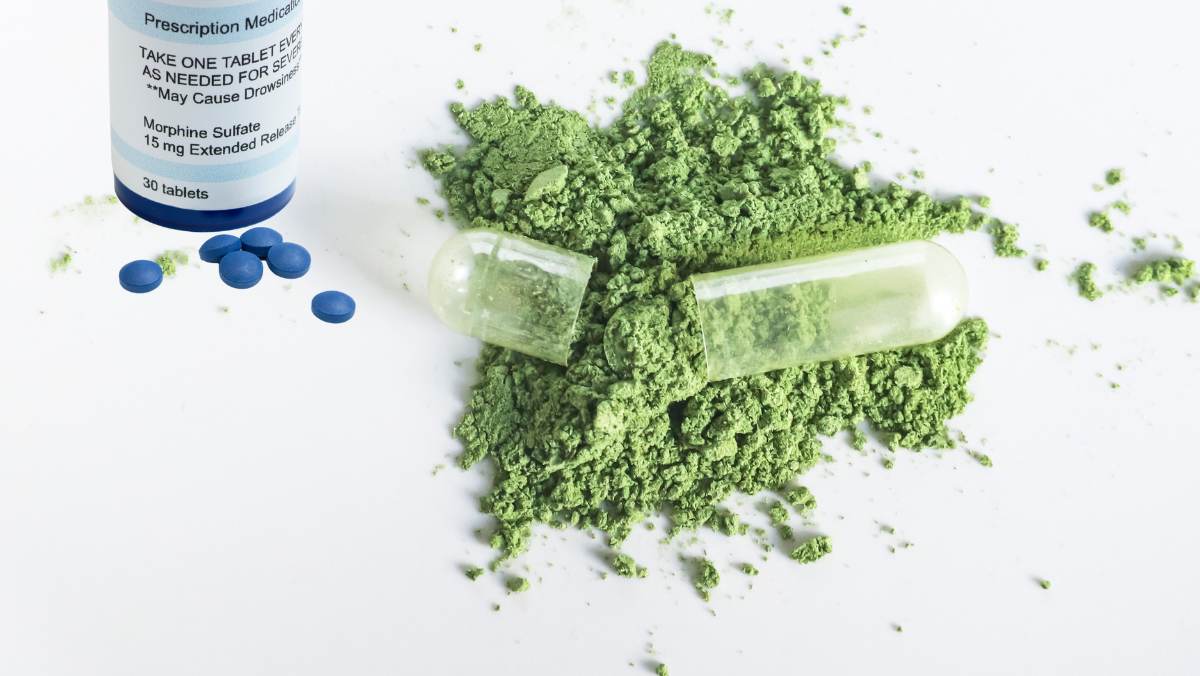
For years, the kratom industry in America has presented itself as a loose coalition of small businesses, consumer advocates, and scientists working toward responsible regulation and harm reduction. The plant, chewed or smoked or turned into a tea, is said to have “opioid-like properties” and “stimulant-like effects.” Moreover, it has been used to get people off opioids themselves, with a recent competitor compound, 7-OH, becoming increasingly popular due to it being “significantly more potent than morphine at pain relief.” 

Searching for 7-OH online provides pages and pages of alarmist headlines, with federal regulators pushing for its classification as a controlled substance in the summer of 2025.

Internal emails, public records, and leaked documents reviewed by this publication tell a fascinating story, however, of an internecine industry fight that appears more concerned with profit motives than with consumer choice or patient care.

IN BRIEF.

Over the past eighteen months, a coordinated campaign has emerged. But the effort did not originate with new safety data or a sudden public health emergency. It originated with market pressure.

As 7-OH products gained popularity among consumers for their consistency and predictable effects, legacy kratom manufacturers began losing ground. Retailers shifted shelf space. Customers followed. Industry insiders describe severe revenue losses in specific product categories, in some cases enough to threaten entire business lines.

Rather than compete directly, industry leaders pursued a different approach. They turned to regulators.

THE FDA MEETING.

In January 2025, a group of scientists and consultants was invited to participate in an informational meeting with the Food and Drug Administration (FDA). Emails show the meeting was not initiated by FDA scientists, but requested and organized by Sheldon Bradshaw, a former FDA Chief Counsel now serving as regulatory counsel to kratom-aligned interests.

Bradshaw’s stated purpose was explicit. In emails circulated ahead of the meeting, he wrote that the goal was to educate FDA regulatory enforcement officials, rather than scientists, about the dangers of 7-OH and to push the agency to remove 7-OH products from the U.S. market.

The agenda reflected that objective. It was not limited to chemistry or pharmacology. It included a segment devoted to highlighting alleged criminal histories of individuals associated with 7-OH products. The meeting was scheduled with FDA enforcement lawyers and criminal investigators, not with scientific review staff. Indeed, several invited scientists declined to attend.

Johns Hopkins pharmacologist Kirsten Smith cited a lack of transparency about who was organizing the meeting and said she was uncomfortable being asked to discuss criminality as a scientist. Ohio State and Harvard professor Edward Boyer declined as well, writing that removing 7-OH would conveniently preserve market share for kratom vendors and warning that participation could damage his credibility. University of Florida professor Oliver Grundmann withdrew, citing conflicts related to ongoing litigation.

Others did attend, including University of Florida medicinal chemist Dr. Christopher McCurdy and consultant Paula Brown. Brown acknowledged in emails that she had asked Bradshaw to organize the meeting specifically to reach FDA enforcement officials.

By the time the meeting took place, its purpose was clear. This was not a neutral scientific consultation. It was an enforcement strategy.

UNIVERSITY OF FLORIDA’S ROLE.

As internal industry disputes unfolded, public records requests began to reveal the importance of a single academic institution.

Emails and documents obtained from the University of Florida show that UF, and McCurdy’s lab in particular, had become a central reference point for kratom policy discussions. McCurdy communicated directly with both FDA and DEA officials. His research was repeatedly cited in regulatory materials. His views appeared to shape how federal agencies discussed risk, synthesis, and scheduling.

In August 2025, McCurdy emailed a DEA official, noting that he had been invited to attend an announcement recommending that 7-OH be placed into Schedule I. He requested guidance on obtaining a Schedule I research license in advance, even though the substance had not been scheduled heretofore.

The concentration of influence is notable. One laboratory, and specifically one researcher, advised industry groups, corresponded with regulators, and produced the scientific literature used to justify enforcement decisions.

This created a dependency, with Federal agencies coming to rely on a single authority whose work intersected directly with industry objectives.

HOW THE DATA WAS PRODUCED.

The most consequential evidence is revealed in a brief email chain from February 2025.

Malaysia restricts the export of kratom plant material to recognized research institutions. Private companies and trade groups are not legally entitled to receive it. Emails indicate that the Global Kratom Coalition required Malaysian kratom material to achieve specific regulatory objectives, including arguments related to the status of Old Dietary Ingredients and contributions to an American Herbal Pharmacopoeia monograph.

Because the industry could not legally receive the material, the University of Florida agreed to act as the recipient.

Emails show UF would accept the shipment, perform herbarium documentation, DNA barcoding, and alkaloid analysis, and that McCurdy expected the industry group to reimburse the university for the work.

The arrangement allowed industry-directed research to enter the regulatory system under the banner of academic independence. Regulators later treated data generated at UF as neutral, university-produced science.

Industry defined the objective. The university executed the work. Regulators relied on the output.

THE NARRATIVE SHIFT.

With enforcement channels established, public messaging followed. That’s why, if you Google any of this, there’s just a cavalcade of negative, industry-sponsored information with little evidence to back it up.

Media stories began framing 7-OH as a “dangerous” synthetic drug. Isolated incidents were amplified into broader warnings. Claims circulated about contaminated products and criminal supply chains, despite the absence of validated toxicology tying those events to 7-OH.

The timing coincided with state enforcement actions and proposed legislative changes. The goal was urgency. Pressure regulators to act quickly, before deeper scrutiny could take place.

WHAT THE RECORD REALLY SHOWS.

The research does not indicate an organic public health response. It shows a structured campaign.

Industry leaders faced market disruption. Political operatives translated commercial concerns into regulatory language. Academic institutions provided credibility. Regulators acted on data shaped upstream by private interests.

Whether 7-OH ultimately warrants regulation is a legitimate question, and that isn’t up for debate. Like anything in this space, the safety of the consumer should take precedence over any business interest or profit motive. But the process documented here did not answer questions through open scientific inquiry.

The outcome was decided first. The machinery followed.

show less

For years, the kratom industry in America has presented itself as a loose coalition of small businesses, consumer advocates, and scientists working toward responsible regulation and harm reduction. The plant, chewed or smoked or turned into a tea, is said to have "opioid-like properties" and "stimulant-like effects." Moreover, it has been used to get people off opioids themselves, with a recent competitor compound, 7-OH, becoming increasingly popular due to it being "significantly more potent than morphine at pain relief." 

show more