Wednesday, January 7, 2026

DATA: Vehicle Attacks Against ICE Skyrocketed 1300% in One Year.

PULSE POINTS

WHAT HAPPENED: Vehicle attacks against DHS law enforcement have more than doubled this year, with nearly 100 incidents reported so far.

👤WHO WAS INVOLVED: Immigration and Customs Enforcement (ICE), Customs and Border Protection (CBP), and criminal suspects, including illegal aliens and U.S. citizens.

📍WHEN & WHERE: Since January 20, 2025, across various locations in the United States, including Maryland, Illinois, and Florida.

💬KEY QUOTE: “We are seeing the results of the Left’s constant demonization of the men and women of law enforcement. Dangerous criminals – whether they be illegal aliens or U.S. citizens – are turning their vehicles into weapons to attack ICE and CBP.” – Assistant Secretary Tricia McLaughlin

🎯IMPACT: A significant increase in risk to law enforcement officers and the public, with federal authorities vowing to prosecute offenders to the fullest extent of the law.

IN FULL

The men and women of Immigration and Customs Enforcement (ICE) and Customs and Border Protection (CBP) are facing a surge in vehicle attacks, a trend attributed to inflammatory rhetoric from sanctuary politicians, leftist activists, and the mainstream media. The latest attack in Minneapolis this morning is just the latest in a long line of vehicle attacks against law enforcement in America.

Since January 20, there have been over 100 reported vehicular attacks against federal law enforcement, more than double the 47 incidents during the same period last year.

Attacks against CBP have risen 58 percent, with 71 incidents reported this year compared to 45 last year. ICE has seen an even more dramatic rise, with 28 vehicular assaults compared to only two during the same period in 2024 – a 1,300 percent increase.

Assistant Secretary Tricia McLaughlin remarked, “We are seeing the results of the Left’s constant demonization of the men and women of law enforcement. Dangerous criminals – whether they be illegal aliens or U.S. citizens – are turning their vehicles into weapons to attack ICE and CBP. Still, the brave men and women of DHS will not be deterred and will continue arresting the worst of the worst criminal illegal aliens. Anyone who attacks law enforcement, especially using their vehicles, will be prosecuted to the fullest extent of the law.”

Some of the most recent examples of vehicular assaults against law enforcement include:

  • November 13: Ever Gabriel Alvarez-Campos, a criminal illegal alien from El Salvador with pending criminal charges for second-degree assault, intentionally rammed his car into an ICE vehicle and fled the scene, endangering officers and members of the Adelphi, Maryland community. Alvarez then hit another vehicle and fled the scene on foot before being apprehended by ICE officers.
Car involved in ramming of an ICE vehicle where the suspect fled the scene and was later captured
  • November 8: While conducting immigration enforcement operations in Chicago, Border Patrol faced four different vehicular ramming attacks in just one day. Four suspects were arrested, while one was thwarted by a Controlled Tire Deflation Device, and another remains at large.
Wagoneer Car Damage from Targeted Violence Against Law Enforcement
  • October 22: On a day in which Border Patrol agents faced numerous attacks throughout Chicago, there were three different vehicular attacks against law enforcement. Several of the arrested suspects had criminal histories, including a Latin Kings gang member with convictions for unlawful possession of a firearm, destroying evidence, and DUI.
  • October 14: During an immigration enforcement operation in Chicago, an illegal alien rammed CBP vehicles with his own and attempted to flee. Border Patrol pursued the suspect and managed to bring him to a stop using an authorized precision immobilization technique maneuver. The driver and his passenger, both illegal aliens from Venezuela, were arrested for assault on a federal agent and accessory to assault, respectively.
  • October 2: ICE officers were targets of two different vehicular assaults in Illinois on the same day, with one in Bensenville and the other in Norridge. The suspects in both cases were criminal illegal aliens who were arrested.
SUV used by criminal illegal alien was weaponized in a deliberate attempt to ram and injure officers carrying out their sworn duty to upload the nation's immigration laws.
Car used by criminal illegal alien was weaponized in a deliberate attempt to ram and injure officers carrying out their sworn duty to upload the nation's immigration laws.
  • September 14: An ICE officer was injured in a vehicular assault in Homestead, Florida. The driver, an illegal alien from Guatemala, reversed his car into the officer during a traffic stop in an attempt to flee, hitting the officer in the leg and nearly crushing him. The suspect rammed into multiple ICE vehicles and then sped away into incoming traffic, colliding with a utility van. The driver and three other illegal aliens were arrested.
On September 14, an illegal alien resisted arrest and drove his car into an ICE officer nearly crushing him, hitting two government vehicles, and sped into oncoming traffic hitting another innocent bystander’s vehicle.
Utility van damaged in accident with vehicle involved in a vehicular assault on an ICE officer in Florida, on September 14,

Join Pulse+ to comment below and receive exclusive email analyses.

show less
show more

GAETZ: Trump Drew the Line. Now His Team Must Hold It: Why the Netflix–Warner Brothers Discovery Merger Must Be Stopped.

President Trump has never been subtle about power. He’s seen its abuses weaponized against the American people and himself.  He knows who pays the price when it’s left unchecked. When it comes to Big Tech, Big Media, and the increasingly incestuous relationship between Silicon Valley ideology and corporate monopolies, Trump has been consistent: concentrated power is dangerous to free markets, free speech, and ultimately to the American people.

That’s why the proposed merger between Netflix and WBD deserves outright opposition. The Associated Press quoted President Trump last month saying this proposed merger “could be a problem” because of size and market share. And he’s right. It’s a big problem.

Now it’s time for his administration to extinguish this merger like it’s Kristi Noem’s dog. This deal isn’t about efficiency. It isn’t about innovation. It isn’t even about competition. It’s about control—over content, over distribution, over culture, and over what Americans are allowed to see, hear, and believe.

This isn’t a merger to foster competition. The objective is outright control. Netflix already dominates streaming content. WBD already dominates content with a massive library and content creation ability at scale. Put them together and you don’t get “synergies.” You get a vertically integrated behemoth that controls what gets made, what gets promoted, what loads fastest on your screen, and what quietly disappears.

This is classic monopoly behavior dressed up in a hoodie and a DEI PowerPoint. A combined Netflix–WBD would have unprecedented leverage over:

  • Content creation (what stories get funded);
  • Content distribution (what loads, buffers, or gets buried);
  • Advertising markets (who pays and who gets frozen out);
  • Independent creators and studios (submit or die);
  • Consumers (fewer choices, higher prices, more ideological filtering).

Antitrust law was written for exactly this kind of moment. Not to protect corporations from competition—but to protect competition from corporations. As law professor John Yun has noted, “a combined Netflix and HBO Max would represent approximately 35% of all streaming hours, which would make it the largest single player in the market and, crucially, place it above the [antitrust] threshold.”

Trump has said repeatedly that when a handful of companies control speech platforms, the result is censorship by proxy. He was right when he said it about social media. He’s right now.

Netflix has not been subtle about its ideological project. It has become a case study in how cultural lecturing replaces storytelling, how identity quotas replace merit, and how dissenting viewpoints are quietly excluded from the room.

The company didn’t just “go woke.” It made wokeism part of its corporate operating system—content mandates, internal speech codes, activist HR regimes, and an executive culture that treats half the country as a moral defect.

Now imagine that worldview fused with WBD’s mechanized content creation power.

That’s not just a media company. That’s an ideological toll booth on American culture.

You don’t like the message? Too bad—it’s what loads fastest.
You don’t like the programming? It’s what gets promoted.

This isn’t theory. This is how power behaves when it stops being challenged.

Fortunately, the Trump-Vance Administration has reinvigorated antitrust enforcement.

One of the biggest lies in Washington is that antitrust enforcement is a “progressive” idea. It’s not. It’s an American idea. Teddy Roosevelt understood it. Ronald Reagan used it when necessary. President Trump is reviving it with clarity and purpose.

Trump’s position has always been simple: markets work best when they are competitive, not captured. Consumers win when companies fear losing them. Speech survives when no single gatekeeper can silence it.

This is why Trump opposed media consolidation when it threatened viewpoint diversity. This is why he warned about tech platforms acting as unaccountable arbiters of truth. And this is why a Netflix–WBD merger crosses a line. I’m glad President Trump has such an excellent team in place to stop it.

At the Federal Communications Commission, Chairman Brendan Carr has been reliably pushing back against ideological capture. He took an active role in pushing back against DEI policies in Big Media. Now, he’s in a key position to administer maximum scrutiny to the Netflix/Comcast DEI extravaganza.

Chairman Carr understands that communications policy is not abstract. It shapes who gets heard. He has been unafraid to call out corporate double standards, to question sweetheart deals, and to resist the idea that size plus “good intentions” equals public benefit.

A Netflix–WBD merger would test the FCC’s spine. Carr has shown he has one.  The FCC has authority over licenses, spectrum, and transactions that affect the public interest. “Public interest” does not mean what makes executives happy in Aspen. It means competition, access, and viewpoint diversity for ordinary Americans.

If there was ever a deal that fails that test, this is it.

At the Department of Justice, Gail Slater leads the Antitrust Division. She is a hero within the monopoly-busting movement. She represents a return to something Washington forgot existed: antitrust enforcement that actually serves consumers rather than donors.

Her work has emphasized real-world effects—prices, choice, innovation—not academic theories that conveniently excuse consolidation as long as consultants can model a short-term efficiency.

A Netflix–Comcast merger would crush independent streaming competitors, marginalize smaller studios, and tilt the advertising and broadband markets even further toward incumbents. DOJ’s Antitrust Division exists to stop that before it happens, not to clean up afterward. Blocking this deal wouldn’t be radical. It would be textbook.

The merger’s defenders will say this is just about TV shows and movies. That argument belongs in 1998.

Streaming platforms now shape political narratives, cultural norms, historical memory, and social legitimacy. They decide which stories are “problematic,” which voices are “harmful,” and which viewpoints are allowed to exist without a warning label.

When control over that ecosystem consolidates, pluralism dies quietly.

Trump has always understood that culture matters. He’s never pretended that politics stops at tax policy. The left certainly doesn’t believe that—and Netflix has proven it.

This is the moment.

Trump has assembled a team that understands power and is willing to use lawful authority to defend the public interest.

  • A President who sees through corporate narratives;
  • An FCC Chairman who resists woke capture;
  • A DOJ antitrust leader focused on consumers, not consolidation;
  • A base that understands this fight is about more than stock prices.

The message should be unmistakable: this merger ends here.

Every lawful tool should be used. Every regulatory lever should be pulled. Every claim of “inevitability” should be laughed out of the room.

Corporate America doesn’t get to fuse content control and infrastructure dominance just because it hired the right consultants and said the right buzzwords.

Trump drew the line, standing up for the regular folks in our nation. His administration should hold it.

Not for Netflix’s critics. Not for WBD’s rivals. But for competition, culture, and the country.

show less
President Trump has never been subtle about power. He’s seen its abuses weaponized against the American people and himself.  He knows who pays the price when it’s left unchecked. When it comes to Big Tech, Big Media, and the increasingly incestuous relationship between Silicon Valley ideology and corporate monopolies, Trump has been consistent: concentrated power is dangerous to free markets, free speech, and ultimately to the American people. show more

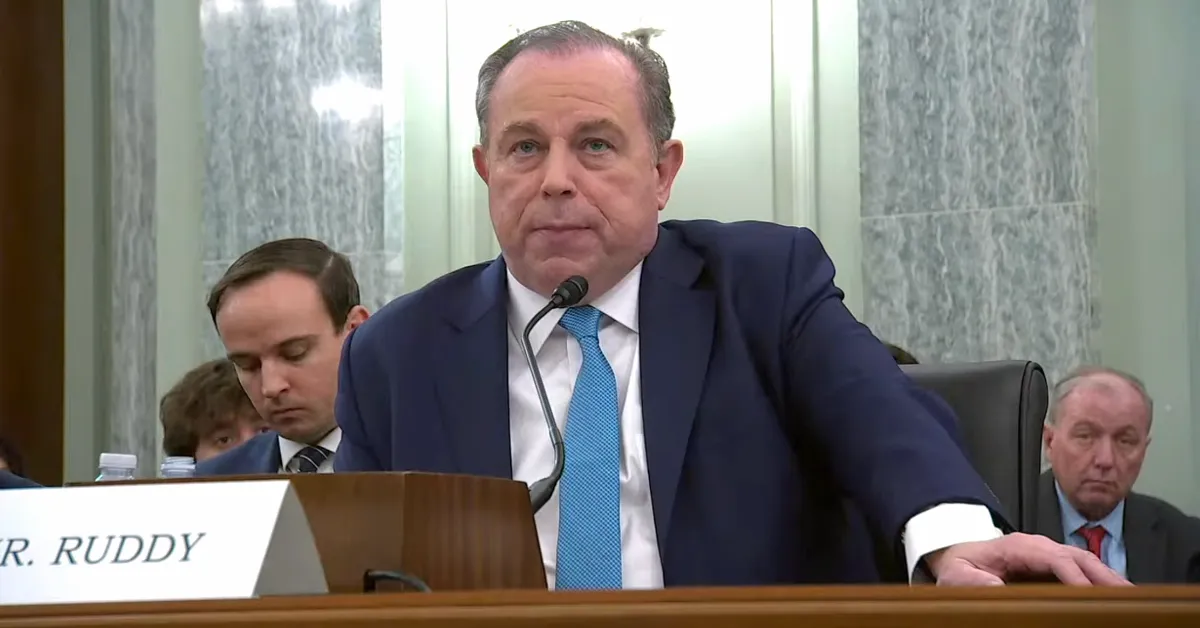
Why Does Chris Ruddy Want Fewer Conservatives on TV?

As you know, I’ve had it up to here *gestures quite high indeed* with ‘Conservative, Inc.’ Twas ever thus, perhaps. But at the same time, never more so than with Newsmax’s Chris Ruddy. I declare a pre-existing disdain for their treatment staff during COVID-19, including some of my friends at the time. No coincidence that I haven’t been invited back on the network since critiquing their Cuomo-style mandates.

But today’s beef is slightly more well-rounded and with more depth than the simple smash burger they cooked up during COVID. As surprisingly well argued by the Wall Street Journal‘s Editorial Board last month, the Newsmax chief’s latest scheme of self-interest would stifle upcoming conservative networks (think Real America’s Voice, Sinclair, etc.), especially in the unforgiving battle against big corporate internet giants like Google (i.e., YouTubeTV).

Ruddy keeps telling President Trump that easing television ownership caps, as I discussed with Daniel Suhr on my War Room Boxing Day special, is a bad idea. It is. But only if you want to maintain the status quo of broadcast in America. Dominance by a handful of networks in the face of what should be a reasonably competitive marketplace. Some barriers to entry have never been lower – think about how much it now costs to put together a passable TV studio, for example.

Which is why it makes little sense in a digital streaming age to have an antiquated, government-imposed limit on broadcast “reach” when anyone can pick up their phones and get whatever they want online. In the long term, this would leave the one remaining corporate cartel in place, perhaps as the final broadcasters in American history, doomed to go down with the ship.

But broadcast news is essential. Millions of people still tune into it every night, especially at a local level, to find local news that major cable networks don’t cover, and that don’t ‘trend’ online. Think about, say, Sinclair – a company imperative to challenging both liberal and RINO orthodoxies.

This makes it foolish not to lift the existing 39 percent cap and open up the marketplace, as long as there are safeguards in place to prevent existing corporates from dominating the entire market.

The rule currently limits broadcast organizations from owning stations that reach more than 39 percent of American households. It dates back to the 1940s, when broadcast television operated in a closed world with almost no competition.

Ruddy argues that easing ownership limits would empower left-wing networks and damage Republican electoral prospects. But what have we had under the EXISTING system, until now? Precisely that. What he’s actually upset about is that a more consistently conservative broadcaster than Newsmax (one that won’t fire staff for breaching COVID rules, perhaps?) might come along and eat his lunch. And boy does he love a Smith & Wollensky lunch.

To make his case, Ruddy invokes Ronald Reagan. The historical record, however, does not cooperate. Reagan’s Federal Communications Commission (FCC) aggressively deregulated broadcast ownership because he believed in competition, not petty protectionism for Newsmax and its portfolio of paywalled content.

Even Ruddy’s case against left-wing broadcast dominance is losing weight, with CBS having just been bought out, and Bari Weiss being named Editor-in-Chief. It was remarkable to watch, for instance, the Trump-Kennedy Center Honors being broadcast on CBS in all its glory (trust me, I attended in person), and even the correct new name for the institution being used. None of this would’ve been possible in Ruddy’s pessimistic little world.

Maybe under the new proposals, you won’t see more conservatives on television. However, you certainly won’t see fewer, which is what might happen if the anti-market forces prevail. See, if we leave the current system in place, we have to wait for another Skydance-Paramount style merger, or indeed a blue moon. In the other scenario, both current and new networks will race to create new stations and content to serve emerging markets.

Ruddy recently also opposed the proposed Tegna and Nexstar merger because it would give NewsNation, which just brought on Katie Pavlich, greater scale. His concern is not philosophical, and he should stop taking Reagan’s name in vain. At the end of the day, he’s worried about his business flanks. Which is fair, but he should just come out and say as much.

A movement that claims to oppose monopolies and elite capture should not defend media protectionism when it suits a friendly executive. President Trump should reject his entreaties.

His FCC chairman is trying to unwind rules that belong to another century. Conservatives should support that effort on principle, not abandon it because one network prefers a protected marketplace.

show less

As you know, I've had it up to here *gestures quite high indeed* with 'Conservative, Inc.' Twas ever thus, perhaps. But at the same time, never more so than with Newsmax's Chris Ruddy. I declare a pre-existing disdain for their treatment staff during COVID-19, including some of my friends at the time. No coincidence that I haven't been invited back on the network since critiquing their Cuomo-style mandates.

show more

The Tenth and Eleventh Days of Christmas: The Holy Name and the Coming of the Three Kings.

The Tenth Day of Christmas (January 3) honored the Holy Name of Jesus. Notably, the name was not chosen by the Virgin Mary or St. Joseph but revealed by the Archangel Gabriel, who told the Virgin Mary, “Fear not… thou shalt conceive in thy womb, and bring forth a son, and shalt call his name Jesus.”

The name means “God saves” or “God is salvation,” perfectly expressing both Christ’s purpose. St. Paul captured the exalted place of  the Holy Name in Christian faith when he wrote that it is “above every name,” and that “at the name of Jesus every knee should bow” and “every tongue should confess that Jesus Christ is Lord, to the glory of God the Father.”

For centuries, Christians showed respect by slightly bowing their heads whenever the name of Jesus was spoken or heard. In an era when the Holy Name is too often reduced to a casual exclamation—even among those who otherwise value tradition—the Feast of the Hoyl Name can offer a gentle reminder to treat it with some reverence.

Today, the Eleventh Day of Christmas, marks Epiphany in the United States—although many other countries will still observe this on its traditional date of January 6. Epiphany commemorates the arrival of the Magi, also known as the Three Kings of Wise Men, to adore the newborn King in Bethlehem.

The Three Kings represent the Gentile nations, showing that Jesus is not only the promised Messiah of Israel but the Savior of all men As the Lord would later teach, “many shall come from the east and west, and shall sit down with Abraham, and Isaac, and Jacob, in the kingdom of heaven.”

Children in many cultures receive a second round of gifts on Epiphany, popularly known as Three Kings Day, symbolizing the presents the Magi brought to the Christ Child. For this reason, it is sometimes called “Little Christmas”—the perfect occasion to surprise a child with something they had hoped for but did not find under the tree on December 25.

In Ireland, Epiphany was once known as Women’s Christmas. Men traditionally took over household duties and prepared a special dinner—often roast goose—so their could enjoy a well-earned rest after all their cooking and hosting over the festive period. Families inclined toward traditional roles might find the gesture a charming way to mark the day.

One culinary tradition is the baking of a king cake, which varies by region but frequently contains a hidden figure of the baby Jesus. Whoever finds it in their slice is declared king or queen for the day and often enjoys a small prize or special privilege.

In Catholic countries, many families will invite a priest to bless their house. Alternatively, the father of the household can perform a similar rite, sprinkling each room with holy water while praying for peace in the home and all who live in it. One traditional prayer recalls the journey of the Magi: “From the east came the Magi to Bethlehem to adore the Lord; and opening their treasures they offered precious gifts: gold for the great King, incense for the true God, and myrrh in symbol of His burial.”

Another custom is chalking the door. Above the main entrance of the home, the head of the household inscribes the year with the initials C ☩ M ☩ B and the numbers of the current year. The letters stand for the traditional names of the three kings—Caspar, Melchior, and Balthasar—and also for the Latin blessing Christus Mansionem Benedicat: “May Christ bless this house.”

Such small acts root the Christmas season in the home, carrying its grace into the new year—and reminding all who enter of the central place of Christ, the King revealed to the nations on Epiphany.

Image credit: Ввласенко.

Join Pulse+ to comment below, and receive exclusive e-mail analyses.

show less
The Tenth Day of Christmas (January 3) honored the Holy Name of Jesus. Notably, the name was not chosen by the Virgin Mary or St. Joseph but revealed by the Archangel Gabriel, who told the Virgin Mary, “Fear not… thou shalt conceive in thy womb, and bring forth a son, and shalt call his name Jesus.” show more

EDITORIAL: Why We’re Not ‘Panicans’ Over Iranian Regime Collapse.

No boots on the ground. No blood and treasure. Not even a lost B-2 bomber, thank you.

Sentiments like these have been the lifeblood of The National Pulse’s broadly non-interventionist foreign policy stance since our inception almost a decade ago.

However, we are not naive or dogmatic. Nor are we isolationists. A philosophy of rugged realism runs through our body of work: we acknowledge the ideal, pursue it to its most potent, but maintain an old Tory realism. An understanding that power should only be exercised with restraint, precision, and cultural literacy. You cannot talk someone out of their history. But you can play a part in starving a hostile regime. As long as you’re not trying to play savior.

Hostile regimes like the Islamic barbarians in Tehran should be weakened and not legitimized, as per the previous Obama and Biden governments. At one point, the 44th and 46th presidents even had Iranian agents with security clearances working in their administrations.

The post-Cold War establishment’s morally-hectoring foreign policy, beyond just Iraq and Afghanistan, has been an outstanding failure. A farce of humiliating proportions for America, emboldening and enriching competitors like the Chinese Communist Party along the way. Iran doesn’t need to work out the same way.

In Trump’s America, little rests solely on abstract universal moral purposes. Policy isn’t made with the fulminations of a Davos-world public philosopher in mind. Plus, you don’t need to publicly claim goodness if you have good motivations. And good motivations for political leadership, as indeed the Persian people might tell you, find their grounding in the will of the people.

Rugged realists are foreign policy populists.

Absolutist non-interventionists would dismiss all of this as a mere excuse to maraud, albeit occasionally, overseas. But absolutism has as much place in a foreign policy conversation as Absolut vodka does in a gin martini: none. It is a denial of reality, as much as neoconservatism is. They are two sides of a dirty penny, which is fitting as both sides usually have some financial incentive attached to their claims, as motivation.

Take, for instance, a poll released by YouGov in June 2025, which declared: “a majority of Iranian Americans oppose U.S. military action against Iran.”

There are two problems here. Firstly, I’m not certain the views of 53% of 585 “Iranian Americans” polled (i.e., 310 people) should be informing U.S. foreign policy. Secondly, the poll was commissioned by the National Iranian American Council (NIAC), a pro-Tehran lobby shop which operates freely in Washington, D.C. under the tutelage of Trita Parsi, who also heads the Quincy Institute.

The Quincy Institute was named for John Quincy Adams, America’s sixth president, who declared, America goes not abroad, in search of monsters to destroy.”

He was, of course, correct. But the Islamic Republic is a monster that needs no seeking out, and which is in the process of destroying itself, or at least being destroyed by the Persian people. America’s job is not to deploy troops, boots, bombs, or boats. It aims to reflect the will of the American people on the matter, a subject that the Reagan Presidential Foundation explored in its 2025 National Defense Survey. That’s an American poll of over 2,500 American people, by the way.

In that survey, nearly 80 percent of respondents called the regimes in Moscow, Tehran, and Beijing “enemies.” Seventy-nine percent of self-described “MAGA Republicans” said so, as did 78 percent of Democrats. In the same survey, 73 percent supported instituting economic sanctions, 70 percent said the U.S. should use cyber capabilities, and 54 percent said using military force was justified to stop the Islamic regime from obtaining a nuclear weapon.

Eighty-three percent of Republicans and 39 percent of Democrats supported the “US military’s targeted airstrike against Iran’s nuclear facilities this past summer.”

Folks often speak of “regime change” in places like Iran as if a nation, its leaders, or its people expressing a preference of leadership in another country is the same as the violent overthrow of a legitimate government. However, the Trump administration is not pursuing “regime change,” even though the Iranian regime is believed to have been behind at least one of his assassination attempts. It was certainly behind the hack and distribution of Trump campaign documents.

Instead, it is willing to facilitate the hostile regime’s collapse using softer tools to aid the nation’s people.

In the summer of 2025, Elon Musk’s Starlink soared in popularity despite the regime threatening the death penalty for those caught using it. With technology like this, opposition groups and activists on the ground can coordinate even when the government shuts off the internet, as it does routinely.

The same sort of pressure has been used by the Trump administration when negotiating trade deals. Tariffs have not shaken out as “a weapon of economic war,” as Trump’s detractors suggested. Instead, they have been effectively used to neutralize those taking advantage of the United States and to shift control back in favor of the American people.

Similarly, realists and non-interventionists are not required to participate in a hostile regime’s continuance so as not to appear as neocons or warmongers. This is precisely the moral turpitude exercised under Obama and Biden.

Pressure must remain limited in scope, targeting ruling elites rather than civilian populations, and be grounded in an understanding of a society’s internal traditions, grievances, and sources of legitimacy. Influence can be exerted indirectly, through the erosion of a regime’s control over information, patronage, and coercion. This allows organic forces within a nation to determine their own political futures.

This is not passivity, but disciplined realism: moral clarity without crusading, strength without occupation, and pressure without ownership. This is rugged realism. This is the Trump doctrine.

This is a doctrine that eschews unnecessary loss of life or long-term international entanglements, pursues peace and partnership, and sticks it to America’s adversaries – especially China – whenever sensible. Trump’s attitude and approach to Iran are archetypal of a new and successful America First foreign policy.

show less
No boots on the ground. No blood and treasure. Not even a lost B-2 bomber, thank you. show more

Defending the Trinity on the Ninth Day of Christmas.

The New Year festivities may be over, but Christmastide is still underway. January 2 marks the Ninth Day of Christmas, commemorating two of the great Doctors of the Church.

Saint Basil the Great, Bishop of Caesarea, and Saint Gregory of Nazianzus, Patriarch of Constantinople, were towering figures of the Patristic era. Both hailed from Cappadocia in Asia Minor, a region that remained ethnically and culturally Greek at the time, long before the arrival of the Turks. They are especially revered in Eastern Orthodoxy, where, together with Saint John Chrysostom, they are celebrated as the Three Holy Hierarchs. However, Orthodox Christians do not celebrate them today, as they do not observe the same calendar as Western Christians.

The two share January 2 as a feast day in the Western calendar—notably, they lived before the Great Schism between Roman Catholicism and Eastern Orthodoxy—partly because of their deep friendship: St. Basil ordained St. Gregory as a bishop, and after St. Basil’s death, St. Gregory delivered a funeral oration in his honor.

Their theological writings, though often challenging for laymen, continue to be an essential study for serious scholars of theology more than seventeen hundred years later. Both were unwavering champions of Nicene Christianity in the face of Arianism—the heresy whose founder, Arius, famously received a slap from Saint Nicholas. Arius and his supporters rejected the Trinity as understood today, viewing the Son as a created being. St. Basil and St. Gregory vigorously upheld both the full divinity and full humanity of Christ, while also defending the Holy Spirit’s equal place within the Godhead against those who diminished Him.

The bishops’ legacy extends far beyond doctrine. St. Basil, in particular, was a pioneering philanthropist who founded almshouses, hospitals, hospices, orphanages, and soup kitchens. He is said to have donated his entire personal fortune to these efforts, creating a vast complex of charitable facilities outside his city, known as the Basiliad.

Thus, the Ninth Day of Christmas offers not only an opportunity to explore theology and deepen your faith, but also serves as a reminder of the command to treat others as we wish to be treated.

Join Pulse+ to comment below, and receive exclusive e-mail analyses.

show less
The New Year festivities may be over, but Christmastide is still underway. January 2 marks the Ninth Day of Christmas, commemorating two of the great Doctors of the Church. show more

Honoring Christ’s Mother on the Eighth Day of Christmas.

January 1 marks the Eighth Day of Christmas, known to the Catholic Church as the Solemnity of Mary, Mother of God. A solemnity is the highest-ranking type of Christian feast, and many are Holy Days of Obligation, meaning Catholics are expected to attend Mass unless they have a serious reason or dispensation not to. While Christmas and Easter stand as the greatest solemnities—celebrating Christ’s birth and resurrection—the Solemnity of Mary is not far behind.

Catholics and Orthodox Christians have long given the Virgin Mary a place of profound honor. For many Protestants, however, devotion to her can feel uncomfortable. Is it appropriate to dedicate services to the mother of Jesus or to ask for her intercession instead of addressing God directly? Might such practices risk sliding into idolatry or a form of goddess worship?

Catholics and Orthodox argue that the Virgin Mary, like all who are saved, is alive in Christ, not dead, as Scripture promises those who believe in Him “everlasting life.” Asking her—or any of the faithful departed who form the “cloud of witnesses” mentioned in the New Testament—to pray for us is therefore seen as no different from asking living friends, relatives, and fellow believers to pray for us.

The longstanding disagreements over venerating the Virgin Mary cannot be settled here. Still, it’s worth noting that many Protestants across history have held her in profound esteem—not only Anglicans and Episcopalians, whose faith retains some Catholic elements, but even the arch-Protestant Martin Luther.

Despite his sharp criticisms of the Catholic Church and certain of its doctrines, Luther never rejected personal devotion to the Virgin Mary. In 1522, he stated, “The veneration of Mary is inscribed in the very depths of the human heart.” Nearly ten years later, in 1531, he preached that she was the “highest woman and the noblest gem in Christianity after Christ… nobility, wisdom, and holiness personified,” adding that “We can never honor her enough”—while cautioning that such honor “must be given to her in such a way as to injure neither Christ nor the Scriptures.”

Whether your tradition leads you to join a Catholic Mass honoring the Mother of God on the Eighth Day of Christmas or not, it may still be fitting to pause and reflect on her indispensable role in the story of the Incarnation today. And if she’s still with you, consider reaching out to your own mother today.

Image by Nheyob.

Join Pulse+ to comment below, and receive exclusive e-mail analyses.

show less
January 1 marks the Eighth Day of Christmas, known to the Catholic Church as the Solemnity of Mary, Mother of God. A solemnity is the highest-ranking type of Christian feast, and many are Holy Days of Obligation, meaning Catholics are expected to attend Mass unless they have a serious reason or dispensation not to. While Christmas and Easter stand as the greatest solemnities—celebrating Christ’s birth and resurrection—the Solemnity of Mary is not far behind. show more

St. Sylvester, Santa Claus, and the Seventh Day of Christmas.

While you may mark December 31 on your calendar as New Year’s Eve or Hogmanay, in Old World nations such as Germany and Poland, the day is still known as Silvester, after the Feast of Saint Sylvester, which falls on the Seventh Day of Christmas.

(You may have noticed we did not mark the Sixth Day of Christmas—that’s because it’s kept clear for the Feast of the Holy Family, which falls on December 30 if there is no Sunday between Christmas Day and New Year to host it.)

St. Sylvester served as Pope from 314 to 335 A.D., during an era when the Roman Catholics, the Eastern Orthodox, and the Oriental Orthodox—if you’ve heard of the Coptic Pope in Egypt, that’s them—were united in a single Church, with the Protestant movement still over a thousand years into the future.

Significantly, St. Sylvester’s papacy began just one year after Emperor Constantine issued the Edict of Milan, which permanently ended the state persecution of Christians and permitted them to practice their faith openly. Perhaps still more significantly, St. Sylvester was the pope who approved the original version of the Nicene Creed, a text that remains the core profession of faith for Catholics, Orthodox, and the majority of Protestants to this day:

We believe in one God, the Father almighty, maker of all things visible and invisible; And in one Lord, Jesus Christ, the Son of God, begotten from the Father, only-begotten, that is, from the substance of the Father, God from God, light from light, true God from true God, begotten not made, of one substance with the Father, through Whom all things came into being, things in heaven and things on earth, Who because of us men and because of our salvation came down, and became incarnate and became man, and suffered, and rose again on the third day, and ascended to the heavens, and will come to judge the living and dead, And in the Holy Spirit.

But as for those who say, There was when He was not, and, Before being born He was not, and that He came into existence out of nothing, or who assert that the Son of God is of a different hypostasis or substance, or created, or is subject to alteration or change – these the Catholic and apostolic Church anathematizes.

Another famous Christmastime figure also played a role at the Council of Nicaea, where the Creed originated, was Saint Nicholas—better known today as Santa Claus—who, according to tradition, gifted the heretic Arius a lump of coal in the form of a physical slap when he denied the full divinity of Christ.

Many customs linked to Silvester have evolved significantly over time, but they often resemble modern New Year’s Eve celebrations, including fireworks to welcome the new year. Similar to Childermas, the day also lends itself to playful tricks; in Germany, for example, people share jelly donuts, though one or two may be sneakily filled with mustard instead of jam.

A Polish tradition especially appealing to housewives suggests there should be no household cleaning on Silvester, lest you “sweep away” your good fortune for the year ahead—a welcome break in the middle of Twelve Days that can demand quite a lot of work around the house.

Happy New Year! 

Image by Slices of Light.

Join Pulse+ to comment below, and receive exclusive e-mail analyses.

show less
While you may mark December 31 on your calendar as New Year’s Eve or Hogmanay, in Old World nations such as Germany and Poland, the day is still known as Silvester, after the Feast of Saint Sylvester, which falls on the Seventh Day of Christmas. show more