


Monday, December 22, 2025

This BIG Insurer Is Now Punishing Hospitals for Putting Patients First.

There’s a new policy by healthcare insurance provider Anthem, currently rebranding as Elevance Health, that would actually penalize hospitals when out-of-network physicians provide care for patients.

Snuck out earlier this year, and due to take effect on January 1, 2026, the policy threatens administrative penalties of 10 percent and termination of network agreements if hospitals end up using out-of-network specialists. This is corporate-led healthcare at its worst, and easily rivals the insanity of European socialised, government-monopoly healthcare, albeit as the flip-side of the same anti-free-market coin.

Anthem claims this is about preventing abuse of the No Surprises Act, designed to stop patients from getting hit with unexpected medical bills. However, the truth is that it’s a blunt instrument designed to control doctors, intimidate hospitals, and limit patient choice.

Anthem’s new policy punishes hospitals and physicians for something that should be non-negotiable: discussing all appropriate clinical options with patients. When an insurer tells a hospital which specialists it may use and threatens retaliation for deviating from that list, patient care takes a back seat, once again, to corporate leverage.

It’s not a surprising statement to acknowledge that affordability remains one of the most significant concerns for Americans, and Anthem’s move pushes costs in the wrong direction.

Limiting networks doesn’t reduce healthcare spending in any meaningful way. It just concentrates power in the hands of insurers, forces hospitals into defensive staffing decisions, and drives independent physicians further toward burnout or consolidation. None of that lowers premiums for families, and none of it improves outcomes.

The timing behind this also matters.

While Anthem is strong-arming hospitals, Elevance Health is posting record financial results. In the third quarter of 2025 alone, the company reported more than $50 billion in revenue. That didn’t come from efficiency gains that benefited patients. It came from premiums paid by American families.

Across the country, people are being hit with staggering increases in their costs. Premiums rose by 34 percent in Colorado, 25 percent in Georgia, 24 percent in Kentucky, 33 percent in Wisconsin, and a jaw-dropping 48 percent in Arizona. This scale of increase presents real shocks to household budgets. Americans are paying more for insurance that covers fewer doctors and offers less flexibility at the point of care.

Hospitals, particularly in small towns and rural communities, are now caught in the middle of this dilemma. They face rising labor costs, lingering staffing shortages, and increasing regulatory demands. Now they are being told that if they bring in the wrong specialist at the wrong time, Anthem will take a cut or pull the plug entirely. That is coercion, not a partnership.

Independent doctors feel the squeeze just as acutely. Many want to be in-network. However, many cannot secure a fair contract, or any contract at all, because the negotiating table is tilted in favor of insurers. Anthem’s policy deepens that imbalance, while pretending the problem lies with providers rather than corporate consolidation.

The consequences will, of course, land squarely on patients. Families will pay higher premiums, face longer waits, and will be told certain specialists are unavailable, even when clinically appropriate.

This approach runs directly counter to the Trump administration’s stated goal of making life more affordable for American families.

President Donald J. Trump has emphasized lower costs, stronger families, and an America First approach to health policy. The MAHA agenda is founded on the principle that healthcare should prioritize the needs of patients and communities, not just shareholders.

What Anthem is doing reflects a broader cultural problem in corporate healthcare. Decisions are made in boardrooms far removed from emergency rooms, operating theaters, and rural clinics. The people who built this country, including nurses, doctors, and hospital staff who keep communities alive, are treated as line items. Small town hospitals are bled dry so Wall Street numbers can tick upward.

Anthem generated $50 billion in revenue last quarter. Then it turned around and penalized local hospitals for doing their jobs. The bill does not disappear. It lands on the kitchen tables of working families who are already paying more every month for insurance they increasingly cannot use.

The message is not complicated. Anthem’s profits are rising because your costs are. And unless policymakers, providers, and the public push back, this model will only spread. Patients will have fewer choices, doctors will have less autonomy, and families will continue to pay more for less.

show less

There's a new policy by healthcare insurance provider Anthem, currently rebranding as Elevance Health, that would actually penalize hospitals when out-of-network physicians provide care for patients.

show more

Trump vs. The EU – How Brussels is Bankrupting American Companies and Aiding China.

The European Union continues to hammer away at American companies under the guise of “digital regulation.”

The Digital Markets Act (DMA) and the Digital Services Act (DSA) have become tools of economic and political aggression, masquerading as consumer protection. All of this, of course, under the European guise of “protecting democracy.”

President Trump’s administration has, thus far, taken the right tone, characterizing the EU’s recent fine on X as an assault on Americans. What the EU is doing is nothing less than an extraterritorial power play meant to export European censorship norms into America. Biden’s government let this hostility slide, but Trump’s White House doesn’t have to.

The DMA and DSA are explicitly and aggressively designed to target U.S. technology companies. Five of the seven companies designated by the EU as so-called “gatekeepers” under the DMA are American. That is not a coincidence.

At the same time, European competitors are effectively exempted from the same level of regulatory scrutiny, while Chinese firms face far lighter compliance pressure. European regulators are now wielding these regulatory weapons almost exclusively against U.S. companies, creating a two-tier digital economy that disadvantages American businesses from the outset.

The result is a regulatory environment in which American workers, innovators, and speech rights are penalized because Europe failed to establish its own competitive tech sector.

As a particularly timely example, iRobot filed for bankruptcy this week, and a Chinese supplier will take control of the company.

Three years ago, Amazon, one of the companies listed as a “gatekeeper” under the DMA, had offered to acquire iRobot. However, EU regulators, with the support of the Lina Khan-led FTC, blocked the potential deal, arguing that it would limit competition. EU regulations have led to the bankruptcy of an American company, and Chinese companies will have greater market control.

EU BETRAYAL.

This failure is compounded by the EU’s lack of seriousness in implementing the joint U.S.-EU trade framework agreed upon last August. Despite repeated assurances, Brussels has made no meaningful progress in removing digital trade barriers. Actually, it has doubled down. U.S. Trade Representative Jamieson Greer recently said he is “disappointed” to see “zero moderation” by the bloc on the DSA and DMA. That admission underscores what many American companies already know: the EU has no intention of recalibrating its approach.

And then there’s the censorship angle. The DSA claims to combat “harmful content,” but in practice, it empowers Brussels to dictate how American platforms moderate speech. Even speech that is entirely lawful in the United States. Americans don’t want European speech norms creeping into their nation over the internet. So it is long past time to treat this as the violation it is.

A Section 301 investigation is not only appropriate, but rather, it is overdue. Under the existing U.S.-EU trade framework, both parties are obligated to ensure that each other’s industries receive non-discriminatory treatment.

Despite this, the DMA and DSA are written and enforced in a way that selectively burdens U.S. companies while carving out breathing room for European firms. When a supposed “trade partner” designs a regulatory superstructure that intentionally disadvantages American industry, Washington is obliged to respond.

WHAT IS SECTION 301?

Section 301 of the Trade Act of 1974 is the tool built for precisely this kind of problem. Congress gave the U.S. Trade Representative (USTR), under direction of the President, authority to investigate and hit back against foreign laws and practices that violate trade agreements or are “unjustifiable,” “unreasonable,” or “discriminatory” and that burden U.S. commerce.

A Section 301 case can be opened either because an “interested party” – a company, industry association, or union – files a petition, or because the USTR launches one on its own initiative or at the President’s direction. In practice, that means the Trump White House could instruct the USTR to begin a focused investigation into the DMA and DSA as a coordinated EU scheme that discriminates against American platforms, workers, and exporters.

Once an investigation is opened, the process is formal and public. USTR publishes a notice in the Federal Register, sets a timeline, and invites written comments and hearing testimony from affected companies, workers, and other stakeholders. The EU is formally consulted and given the chance to explain or adjust its measures.

But this ain’t an open-ended talking shop. Section 301 investigations operate on a strict timeline. The USTR generally must reach a determination within approximately a year, and any response measures are typically decided upon within 12 to 18 months. At the end of that process, the USTR determines whether the foreign measure constitutes a trade-agreement violation or an “unreasonable” or “discriminatory” practice, and then decides whether to recommend action.

If the EU refuses to change course, Section 301 allows the United States to suspend trade concessions, raise tariffs, or take other restrictions against the offending country’s exports. In other words, if Brussels insists on weaponizing regulation against American firms, Washington has a legal pathway to weaponize market access against Brussels.

WHAT WOULD THIS ACHIEVE?

Applied to the DMA and DSA, a Trump-directed Section 301 case would do three things.

First, it would formally frame the EU’s censorship regime and its discriminatory digital rules as a trade problem, not just a tech-policy disagreement. By documenting how these laws disproportionately affect a handful of “gatekeepers” and large platforms, while sparing their European rivals, the USTR can establish a pattern of discrimination and the concrete burden on U.S. commerce.

Second, it would test the EU’s behaviour against the commitments both sides have made to treat each other’s industries fairly under the broader U.S.–EU trade framework and WTO rules. Those commitments include non-discriminatory treatment and good-faith regulatory cooperation. When the EU designs an entire legal architecture that effectively says “American companies pay; European competitors benefit,” it is hard to argue that those commitments are being honoured.

Third, it would create leverage. The Trump admin would suddenly have a live, statutory case on the books, backed by evidence, witness testimony, and clear findings. That case could support targeted pressure on politically sensitive EU exports if Brussels refuses to narrow or recalibrate the DMA and DSA. As recent 301 cases against China, the EU, and others have shown, the mere prospect of retaliatory tariffs can concentrate minds in foreign capitals.

The alternative is to let Europe continue writing American rules from Brussels.

The EU is already using the DSA to justify fines and speech controls on U.S. platforms, while insisting its laws are non-negotiable in trade talks. Senior U.S. officials have rightly warned that this model of regulation is incompatible with America’s free-speech tradition and with a healthy transatlantic partnership. But statements are not enough. The law already sitting on the books in Washington gives President Trump something far more potent than a press release or Truth Social post.

A targeted Section 301 investigation into the DMA and DSA would put the EU on notice that censorship by regulation and discrimination by design carry real costs. It would align U.S. trade policy with the Trump administration’s stated priority of defending American workers, American companies, and American speech against hostile foreign systems.

ZERO TOLERANCE.

If Brussels wants to regulate its own internet into irrelevance, that is its choice. It does not get to do the same to America, and certainly not without consequence.

President Trump’s second administration has an opportunity to restore balance to a relationship that has been lopsided for too long. A forceful Section 301 investigation would send a clear message: America will not tolerate an economic bloc weaponizing regulation to undermine U.S. competitiveness or impose foreign speech codes.

The EU has enjoyed years of asymmetric leverage because Washington refused to push back. That era should end now.

show less
The European Union continues to hammer away at American companies under the guise of “digital regulation.” show more

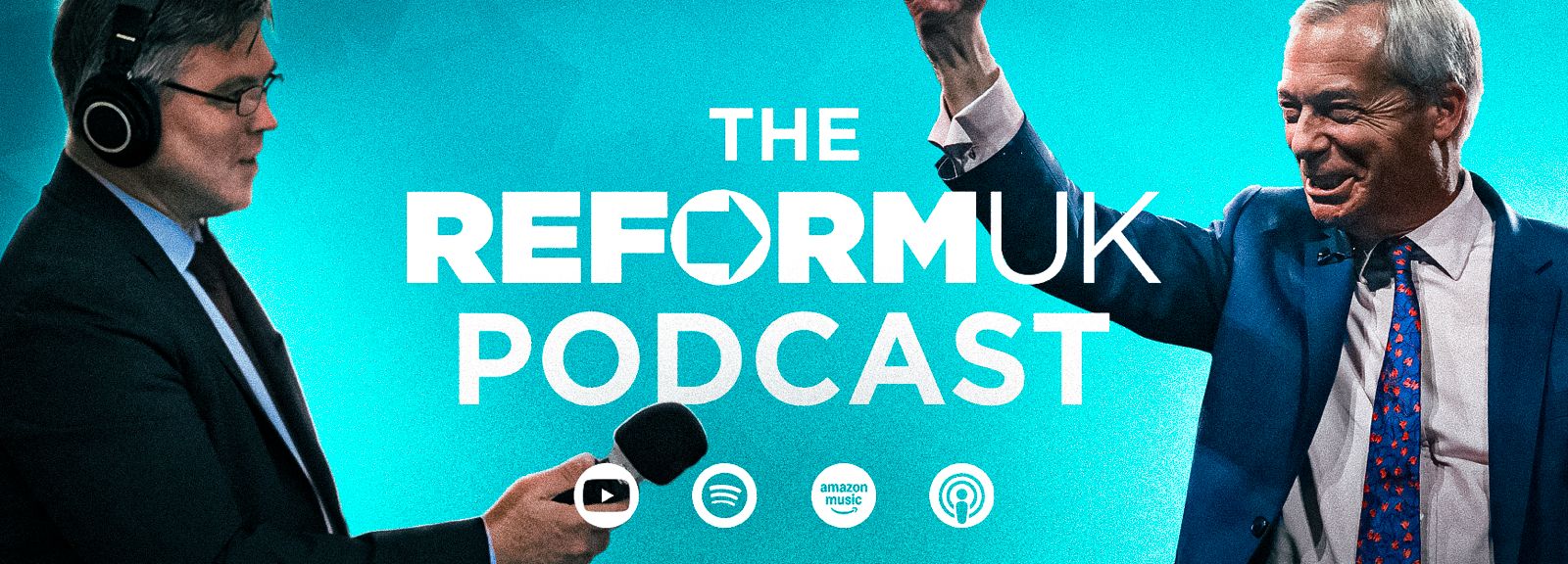
NEW VLOG: Inside Nigel Farage’s Reform Party Conference.

In September, The National Pulse’s Editor-in-Chief Raheem Kassam travelled to the United Kingdom to attend the Reform Party conference, as Nigel Farage’s party surged into first place in the polls in Britain.

Kassam shows things the news cameras won’t, such as the professionalisation of the party, the staggering backstage operations, and the massive turnout.

WATCH: 

show less
In September, The National Pulse's Editor-in-Chief Raheem Kassam travelled to the United Kingdom to attend the Reform Party conference, as Nigel Farage's party surged into first place in the polls in Britain. show more

So, What’s Marjorie Taylor Greene’s Plan?

Earlier this week, I mentioned in a members-only email for The National Pulse that I would elaborate on what I know about Marjorie Taylor Greene’s resignation and her future plans. I will volunteer that I have not spoken with Marjorie herself, but rather, with several people who have been around her – including staff –…

Membership Required

Already a member? Log in here
show less
Earlier this week, I mentioned in a members-only email for The National Pulse that I would elaborate on what I know about Marjorie Taylor Greene's resignation and her future plans. I will volunteer that I have not spoken with Marjorie herself, but rather, with several people who have been around her – including staff – over the past few months, as well as confidantes. show more

The Stock Market and Bitcoin Volatility, Explained.

PULSE POINTS

WHAT HAPPENED: Stocks and other investments like Bitcoin have seen significant volatility in recent days as fears over an artificial intelligence (AI) industry-fueled economic bubble mount.

👤WHO WAS INVOLVED: Nvidia, former Facebook executive Julie Zhou, the Bank of England, the AI industry, institutional investors, retail investors, and major stock indexes like the Dow Jones, the Nasdaq, and the S&P 500.

📍WHEN & WHERE: The fears of a bubble have been mounting for months, though Wednesday’s earnings report from Nvidia could prove a critical moment.

🎯IMPACT: The current loss in market index value is being driven primarily by institutional investors who have begun to fear that the AI sector and those tied to it are caught in an economic bubble with the potential to cause a 2008 or DotCom-style crash when it bursts.

IN FULL

Stocks and other investments, such as Bitcoin, have seen significant volatility in recent days as fears over an artificial intelligence (AI)- fueled economic bubble mount. However, this isn’t the full story behind the declining market returns, as a broader issue of asset inflation and a long-anticipated cryptocurrency correction also contribute to the market slide.

While the Dow Jones, Nasdaq, and S&P 500 remain near all-time highs for the year, all three indexes have lost some ground since Monday, with the Dow losing over 400 points on Tuesday. The loss in value is being driven primarily by institutional investors—think major funds, banks, and billionaires—who have begun to fear that the AI sector and those tied to it are caught in an economic bubble with the potential to cause a 2008 or DotCom-style crash when it bursts.

THE NVIDIA PROBLEM.

The possibility of a bubble in the AI industry is a topic of hot debate. Notably, the primary concern centers on chip-maker Nvidia and its sales and market ecosystem. From a 30,000-foot view, it often appears as though Nvidia is essentially selling its products—by and large—to itself.

This fear over Nvidia and whether its meteoric rise and returns are real has underpinned some of the market chaos. The company will release its earnings report today after the market close, with the report itself expected between 4:20 PM and 4:30 PM. Executives will address shareholders at 5:00 PM.

Currently, there is little concrete evidence to suggest that Nvidia will miss its earnings expectations. However, the remote possibility and potential economic impact of Nvidia missing its earnings have spooked large swaths of the market. This is because Nvidia comprises somewhere between five percent and 10 percent of the S&P 500, and the AI industry overall comprises an even larger chunk of the index. A single stock index having so much exposure to one industry and one company has raised serious concerns about just what happens when that company and/or industry stumbles.

IS THERE AN AI BUBBLE?

Maybe.

The Bank of England has warned that an AI sector-fueled bubble is increasingly likely and could trigger a “sudden correction” in global financial markets. “The risk of a sharp market correction has increased,” said the Bank of England’s financial policy committee during a September meeting, warning that “equity market valuations appear stretched, particularly for technology companies focused on artificial intelligence.”

Additionally, former Facebook executive Julie Zhou believes that much of the AI industry’s growth is not being driven by robust data-driven business strategies, but rather by “good instincts and good vibes.” Zhou argues that while the AI industry holds tremendous promise, the technology is still far from achieving what many of its adherents claim. This has left the AI technology sector rife with speculative investment on a scale that could potentially threaten the U.S. economy should the bubble burst.

Adding to the concern are rumors that influential market figures, such as Dr. Michael Burry—famous for having shorted the housing market ahead of its 2008 collapse—have taken similar positions on Nvidia and the broader AI sector. Still, strong earnings from Nvidia and other companies tied to the AI industry would likely assuage investor fears and suggest that fears of a bubble may be overblown.

WHY IS BITCOIN SLIDING THEN? 

The fall of Bitcoin is a bit more complicated but still tied to the broader bubble fears currently among institutional investors. When market volatility increases, investors tend to flock to safe-haven investments—think Treasuries or very stable currencies like the Japanese yen. While many retail investors consider Bitcoin a safe haven, institutional investors view it as having too much exposure and a risk in a bubble situation.

Hence, the bubble fears are also impacting Bitcoin, along with other market correction forces. Some consider the cryptocurrency to be severely overvalued and thus a bubble in its own right. Conversely, JP Morgan has a price target of $170,000 on BTC within six to twelve months, leading some to “buy the dip” currently.

Join Pulse+ to comment below and receive exclusive email analyses. None of this should be considered financial advice.

show less
show more

Trump’s Midterm Performance Could Define a Populist Decade, or Cause Carnage the World Over…

The Western world is watching the second Trump term with as much attentiveness as American citizens. Why? Because they have almost as much ‘skin in the game.’

Next year doesn’t simply mark a decade since the MAGA movement forcefully took the global stage, but also a decade since the United Kingdom voted to leave the European Union, a decade since Italy’s globalist government collapsed, and a decade since Marine Le Pen broke through in national polling in France.

Austria’s Freedom Party ran the establishment close; Duterte won in the Philippines, the Alternative fur Deutschland (AfD) became a significant fixture in domestic German politics for the first time, and Geert Wilders’s PVV began making its breakthrough.

All of this happened in the shadow of the 2015/16 mass migration crisis, which took some of its most heinous victims, harbingers of what was to come, in the form of the Cologne mass sex assault scandal that we first broke in the English language.

One can never do justice to the shock that pulsated across Europe and the United States that year. It was the defining moment in politics for over 1/6th of the global population, and it would have further knock-on effects in Russia, India, China, and the Middle East. Twenty-sixteen, ironically, was a global year. We can expect 2026 to be equally important, in a Newtonian sense.

What started in Europe a decade ago, in the small seaside towns of England, the suburbs of France and Germany, and indeed across the continent, swiftly made its way Stateside, and is now about to bounce back across the Atlantic.

The last two analyses from The National Pulse have focused on the inglorious disaster of November 4, 2025, and the impending catastrophe of November 3, 2026. If nothing is done, if no warnings are heeded, the failures of a Republican Party with gale force winds at their backs will certainly be felt and suffered by Europe’s populist-nationalists and indeed beyond.

Will Nigel Farage become Prime Minister? Will the Rassemblement National recover from the lawfare against Marine Le Pen? Will Hungary, though voting by April next year, choose stability in the form of Viktor Orban, or will the globalists and leftists form the kind of alliance they did in New York just ten days ago? The list of examples goes on.

“While there’s still a lot of time until the midterm elections in the US, there’s no question that a strong showing from the Republican Party and the MAGA movement would contribute momentum to Hungarian-American relations and Viktor Orbán’s party,” Rajmund Fekete, a historian and director of the Institute for the Research of Communism, told The National Pulse this week.

“The Biden era was not good for Hungary. The relationship really suffered. So many in Hungary are understandably rooting for the success of MAGA and Republicans next year.”

Colleagues across the old world echo his concerns.

“The midterms will matter almost as much to Brits as they do to Americans. The success of the second Trump administration will have knock-on effects in England just as Brexit did in America back in 2016. We’re watching closely and as always, rooting for the President,” said Andy Wigmore, an original ‘bad boy’ of Brexit, and top ally of Reform Party leader Nigel Farage.

French conservatives have similar sentiments, with Kate Pesey of The Tocqueville Fellowship telling me: “What I have heard in my travels is that the right in Europe is wondering if it’s already the comeback of the extreme left? Will what happened in NY happen elsewhere in the US? Are these the type of Democrats who are winning? Will it weaken Trump’s policies and his allies around the world? Meloni, Orban, etc. What is the plan to stop the damage done by these Islamo-gauchistes?”

Thierry Baudet, who leads the We are totally supportive of the Trump movement and are watching closely. This is a global attempt to recapture power from the international left, and Europe is directly affected by any wins or losses in America.”

The stakes, it appears, couldn’t be higher. And behind almost all closed doors, whether on Capitol Hill or anywhere in the developed world, politicos whisper about whether Trump’s economy will be roaring by the time Americans vote in under a year, or whether his administration has become too consumed by foreign affairs, scandals such as the Epstein saga, and indeed the recent government shutdown.

“It’s obvious that everyone — populist-nationalists and everyone else — will be watching these results closely, because the stakes are huge. The real question is whether this political program can show results that the public actually recognizes and supports. This movement is constantly attacked on its credibility and whether its ideas can even work, which is exactly why these results matter,” said Charlotte D’Ornellas, a firebrand conservative columnist in Paris.

The War Room’s Benjamin Harnwell equally opined: “The various populist-nationalist iterations around the world are certainly intrinsically linked. I see it as a worldwide convoy movement — rather than a unified battalion — a flotilla. An armada. An association of free-standing vessels that independently travel together.

“But the US is the convoy’s flagship — that’s precisely why what happens in America in 2026 is so important. I’d say it adds plus or minus 50 percent to what we’re doing here in Occupied Europe. A good result in America will give our movements a boost of 50 percent, whereas a bad result will probably give us a setback of 50 percent. It’s a headwinds/tailwinds thing.”

With so much on the line, populists, nationalists, and conservatives across the world appear increasingly concerned that a far-left Democrat victory next November will usher in a new dark age of extreme, authoritarian, Islam-allied populism from the far-left.

If Republicans lose badly next year, the final two Trump years will be punctuated by subpoenas, impeachments, and other deep state shenanigans that would leave so much of the world teetering on the brink of domination by America’s adversaries.

President Trump, many people are saying, must quickly return to his own populist roots and campaign pledges, rather than entertaining the Big Pharma or Big Bank bosses, and floating non-starter ideas like 50-year mortgages.

As goes America, so goes the world.

show less
The Western world is watching the second Trump term with as much attentiveness as American citizens. Why? Because they have almost as much 'skin in the game.' show more

Some Constructive Criticism.

Happy Veteran’s Day to my American friends. Happy Remembrance Day to my British and Commonwealth friends. Happy Constructive Criticism Day to my Trump administration friends! Most of you I hope will remember some of my concerns expressed about the economy a few weeks ago, both in this e-mail and in interviews. Those warnings appear to have…

Membership Required

Already a member? Log in here
show less
Happy Veteran's Day to my American friends. show more

A Brief History of Veterans Day—A Uniquely American Holiday.

While much of the world celebrates Remembrance Day, the people of the United States celebrate Veterans Day. The federal holiday, which began as Armistice Day—much like Remembrance Day holidays—originally commemorated the end of World War I on November 11, 1918. In the first commemoration of Armistice Day in 1919, then-President Woodrow Wilson declared, “To us in America the reflections of Armistice Day will be filled with solemn pride in the heroism of those who died in the country’s service, and with gratitude for the victory, both because of the thing from which it has freed us and because of the opportunity it has given America to show her sympathy with peace and justice in the councils of nations.”

However, with the United States’ history being separated from much of the strife of Europe, the holiday evolved over the years into a day to honor living veterans of the country’s military. Meanwhile, Memorial Day—observed on the last Monday of May—is held as a day of honor and mourning for those who have died fighting for the United States. The evolution of the two federal holidays is a reflection of the uniqueness of the American experience and our history of conflict.

Memorial Day’s roots are in the U.S. Civil War, first instituted in 1868 as “Decoration Day” to remember fallen Union soldiers. As Memorial Day became established in the American tradition, it entered a sort of calendar conflict with the Anglosphere’s Remembrance Day nearly five decades later. For about a 50-year period, the United States marked both memorials.

The initial push to change Armistice Day began after World War II, when veterans pushed to have a national day of recognition. President Dwight D. Eisenhower embraced the idea, and urged Congress to take action.

In 1954—following the Korean War—the United States Congress moved to change Armistice Day to Veterans Day, a holiday that celebrates and honors those who have served the country in any armed conflict. Instead of just the American doughboys who crossed the Atlantic as part of the expeditionary force that provided much-needed relief to Western Europe in the waning years of World War I, Veterans Day became a day to encompass those who fought against the tyranny of Nazism in World War II, and against international communism in the Korean and Vietnam Wars.

Veterans Day now encompasses all who have served and—though no longer in arms and combat—still serve the nation.

show less
While much of the world celebrates Remembrance Day, the people of the United States celebrate Veterans Day. The federal holiday, which began as Armistice Day—much like Remembrance Day holidays—originally commemorated the end of World War I on November 11, 1918. In the first commemoration of Armistice Day in 1919, then-President Woodrow Wilson declared, "To us in America the reflections of Armistice Day will be filled with solemn pride in the heroism of those who died in the country's service, and with gratitude for the victory, both because of the thing from which it has freed us and because of the opportunity it has given America to show her sympathy with peace and justice in the councils of nations." show more