




Thursday, April 2, 2026

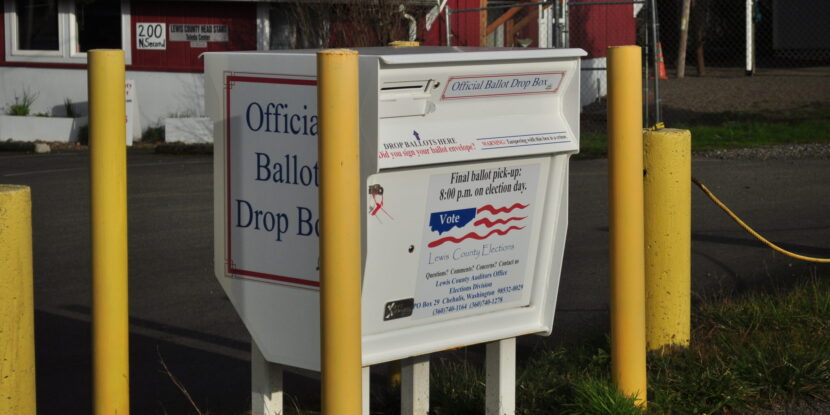
Illegal Immigrant Faces Charges for Voting in FIVE U.S. Presidential Elections.

PULSE POINTS

WHAT HAPPENED: An illegal immigrant from Mauritania was charged with fraudulent voting after allegedly casting ballots in five presidential elections in Pennsylvania.

👤WHO WAS INVOLVED: Mahady Sacko, a 50-year-old illegal immigrant, and the U.S. Attorney’s Office for the Eastern District of Pennsylvania.

📍WHEN & WHERE: Sacko allegedly voted in elections from 2008 to 2024 in Pennsylvania, despite a deportation order issued in 2000.

🎯IMPACT: If convicted, Sacko faces a maximum sentence of five years in prison.

IN FULL

Mahady Sacko, an illegal immigrant from Mauritania living in Philadelphia, has been charged with fraudulent voting after allegedly participating in five presidential elections in Pennsylvania despite being under a deportation order since 2000. The U.S. Attorney’s Office for the Eastern District of Pennsylvania announced the charges, which include falsely representing U.S. citizenship to vote and register to vote.

According to the Federal Bureau of Investigation (FBI), Pennsylvania state voting records show Sacko voted in multiple federal elections, including the 2008, 2012, 2016, 2020, and 2024 general elections, as well as the 2016 and 2020 primary elections. The complaint stated that Sacko voted in person for most of these elections, except for the 2020 primary, which he voted by mail. On each occasion, he allegedly misrepresented his citizenship status.

The complaint also detailed Sacko’s immigration history. He entered the U.S. in 1998 and was ordered deported by an immigration judge in 2000. Sacko appealed the decision, but the Board of Immigration Appeals dismissed his appeal in 2002. Despite this, Sacko remained in the U.S., and U.S. Immigration and Customs Enforcement (ICE) was unable to enforce the deportation order due to a lack of a valid Mauritanian passport.

Sacko was arrested in 2007, but was placed under ICE supervision due to the inability to secure travel documents. While under supervision, he reportedly registered to vote multiple times, starting in January 2005. The Philadelphia Inquirer reported that voting records show Sacko registered as a Democrat.

If convicted, Sacko could face up to five years in prison.

Join Pulse+ to comment below, and receive exclusive e-mail analyses.
show less
show more

Trump Reviewing Draft Order Declaring Need for Voter ID a ‘National Emergency.’

PULSE POINTS

WHAT HAPPENED: President Donald J. Trump is believed to have previewed a draft executive order proposing new election safeguards, including voter ID requirements and a ban on most mail-in voting.

👤WHO WAS INVOLVED: President Trump, Peter Ticktin, and Director of National Intelligence (DNI) Tulsi Gabbard.

📍WHEN & WHERE: The rumored order was drafted in early 2026, while DNI Gabbard has been involved in election security reviews in Georgia and Puerto Rico.

💬KEY QUOTE: “Here we have a situation where the President is aware that there are foreign interests that are interfering in our election processes,” said Peter Ticktin.

🎯IMPACT: If enacted, the executive order would significantly alter election processes, requiring voter re-registration with photo ID and restricting mail-in voting.

IN FULL

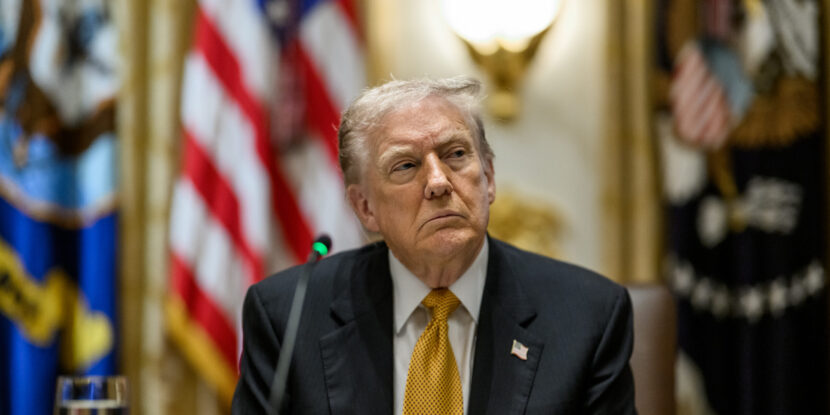
President Donald J. Trump is believed to have reviewed a 17-page draft Executive Order that would declare a national emergency over election security concerns. The order, drafted by Florida attorney Peter Ticktin, proposes new voter ID requirements, a ban on most mail-in voting, and the elimination of voting machines. However, the proposal is facing significant pushback, as elections are largely left to state governments under the U.S. Constitution.

“Here we have a situation where the President is aware that there are foreign interests that are interfering in our election processes. That causes a national emergency where the President has to be able to deal with it,” Ticktin contends, referencing allegations that the Chinese Communist Party (CCP) attempted to interfere in the 2020 election. Notably, the draft order closely mirrors the legislative language of the SAVE Act, which has been adopted by the House of Representatives but has faced opposition in the U.S. Senate.

Meanwhile, Director of National Intelligence (DNI) Tulsi Gabbard has been involved in election security efforts, including overseeing investigations into voting machine vulnerabilities and reviewing foreign influence on past elections. Gabbard was present during the recent Federal Bureau of Investigation (FBI) seizure of 2020 ballots from a Fulton County, Georgia, election office.

A memo defending the legality of the order, authored by Ticktin, largely relies on the statutory text of the National Emergencies Act (NEA) and the International Emergency Economic Powers Act (IEEPA). “The IEEPA further grants the President authority to address ‘unusual and extraordinary threats’ originating outside the United States that impact national security, foreign policy, or the economy,” Ticktin writes in the memo.

“This authority includes the ability to regulate or prohibit transactions involving foreign property or interests, provided the President has declared a national emergency under the NEA,” he continues, adding, “For example, Executive Order 13848, issued under the IEEPA and NEA, declared a national emergency to address foreign interference in U.S. elections, citing such interference as an extraordinary threat to national security and foreign policy.”

Ticktin argues that “the President may utilize emergency powers to address foreign interference in elections, provided the requirements of the NEA and IEEPA are satisfied, and the actions taken fall within the scope of statutory authority.”

However, other legal analysts have pointed out that mere assertions of CCP election interference aren’t likely to be enough to prevent federal judges from enjoining the order. The NEA outlines the limits of presidential emergency powers and requires the President to specify respective authorizing statutes when invoking them. Meanwhile, IEEPA contains several economic emergency powers but does not contain any explicit election provisions.

Join Pulse+ to comment below, and receive exclusive e-mail analyses.
show less
show more

Britain is Holding a Key Special Election Today. Voter ID is Required.

PULSE POINTS

WHAT HAPPENED: A parliamentary by-election (special election) in England on Thursday will be subject to voter ID requirements.

👤WHO WAS INVOLVED: The British government, the Electoral Commission, and voters in Britain.

📍WHEN & WHERE: Voter ID requirements were introduced by the Elections Act 2022, affecting today’s Gorton and Denton by-election in Manchester, England.

💬KEY QUOTE: “At least 50,000 voters were initially turned away at polling stations [during the] 2024 general election, with 34,000 returning. This meant 16,000 did not return.” – House of Commons Library research briefing

🎯IMPACT: Britain’s in-person voting is more secure than America’s although Prime Minister Sir Keir Starmer’s governing Labour Party is moving to weaken existing safeguards, and postal (mail-in) voting on-demand remains highly vulnerable.

IN FULL

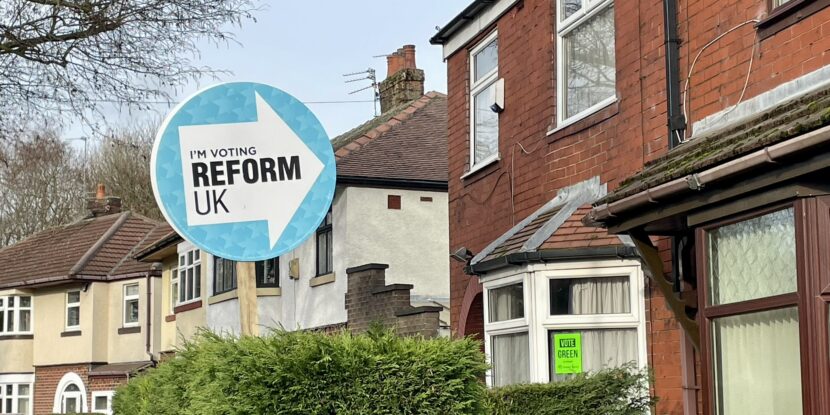
Voters in the Gorton and Denton constituency (electoral district) in Greater Manchester, England, are heading to the polls for a by-election (special election) to choose a new Member of Parliament (MP), in what is expected to be a tight contest between Matt Goodwin, representing Nigel Farage’s Reform Party, and far-left candidates for Prime Minister Sir Keir Starmer’s ruling Labour Party and the Greens. Unlike in the United States, voters will be required to present a valid ID.

The Elections Act 2022 made photo ID compulsory for in-person voting in British Parliament elections and in English and Northern Irish local and regional elections, although Northern Ireland had required photo ID for much longer, with basic ID checks starting in 1985 and photo ID specifically mandated since 2003 to address concerns about electoral fraud. Elections to the Scottish Parliament or the Senedd (Welsh Parliament)—roughly equivalent to U.S. state legislatures—do not have voter ID requirements, nor do most of those countries’ local elections, which are subject to weaker regional regulations set by leftist regional governments.

Acceptable forms of photo ID are broad, including passports, driving licences, and bus passes. The document must be original (not a photocopy or photo on a phone), but it can be expired as long as the photo still resembles the voter reasonably well. For those without a suitable ID, the government provides a free Voter Authority Certificate (VAC), which serves as an alternative form of photo ID. Applications can be made online or through local electoral offices.

Implementation has generally been smooth administratively, with low numbers of people ultimately unable to vote. According to a House of Commons Library research briefing, “At least 50,000 voters were initially turned away at polling stations [during the] 2024 general election, with 34,000 returning. This meant 16,000 did not return.” This suggests the regulations have thwarted some fraudulent voters.

The rules were introduced by the formerly governing Conservative (Tory) Party, with the incumbent Labour Party opposed to them. Labour, under Prime Minister Sir Keir Starmer, now says it will not abolish the ID requirements, but does plan to expand the list of acceptable IDs in the future, potentially including bank cards, which the Electoral Commission has flagged as a safety risk.

As in the United States, mail-in or postal voting on demand remains a significant vulnerability, with historic cases of fraud on an “industrial scale” in Labour-voting Muslim communities. Judge Richard Mawrey QC, sitting as an election commissioner in one case, found that the postal voting system was “wide open to fraud and any would-be political fraudster knows that it’s wide open to fraud,” and would “disgrace a banana republic.”

Notably, Mawrey warned ahead of the 2020 elections in the United States that American mail-in voting has even fewer safeguards than British postal voting and could “easily” be rigged.

Image by Rcsprinter123.

Join Pulse+ to comment below, and receive exclusive e-mail analyses.

show less
show more

Democrats Cheer as Bid to Keep 73k Voters Without ID on Rolls Succeeds.

PULSE POINTS

WHAT HAPPENED: North Carolina’s elections board reached a settlement to allow 73,000 voters extra time to update their voter registrations.

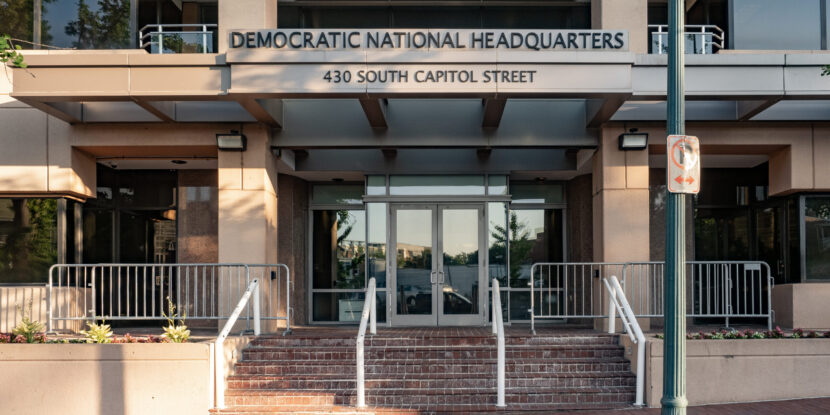
👤WHO WAS INVOLVED: The North Carolina State Board of Elections, the Republican National Committee, the North Carolina GOP, and the Democratic National Committee.

📍WHEN & WHERE: The settlement was reached on Monday in North Carolina following a legal battle stemming from 2024.

💬KEY QUOTE: “This latest victory is a win for Americans and yet another blow to the Republicans’ scheme to disenfranchise voters ahead of the midterm elections,” gloated Democratic National Committee (DNC) Chairman Ken Martin.

🎯IMPACT: The agreement keeps 73,000 voters on the rolls, with their information to be updated when they vote, amid ongoing debates over voter ID laws.

IN FULL

The North Carolina State Board of Elections has approved a settlement that permits approximately 73,000 voters who failed to submit sufficient identifying information additional time to correct incomplete registration records before any removal from the voter rolls. The agreement resolves a 2024 lawsuit filed by the Republican National Committee (RNC) and the North Carolina Republican Party, which claimed that roughly 250,000 registrations lacked required identification information, such as the last four digits of a Social Security number or driver’s license number.

The Republican plaintiffs had sought immediate removal of these voters and invalidation of any votes they cast in the 2024 elections. The settlement instead keeps these voters on the rolls, with their information to be updated when they vote, consistent with North Carolina’s requirement to present identification at the polls. Democratic National Committee (DNC) Chairman Ken Martin claimed the outcome was a victory for American voters and a setback for Republican efforts to “disenfranchise voters ahead of the midterm elections.”

The board reported that about 100,000 voters lacked proper identification last summer, a figure that had dropped to 73,000 by December. The decision comes amid America First conservatives’ efforts to advance the Safeguarding American Voter Eligibility (SAVE) Act, which has passed the House and awaits a Senate vote. The legislation would require documentary proof of citizenship for voter registration, mandate state verification of voter rolls, and authorize the Department of Homeland Security (DHS) to address noncitizen registrations.

Senate Democrats, led by Minority Leader Chuck Schumer (D-NY), have pledged to block the bill, which Schumer called “Jim Crow 2.0,” despite the fact that Pew Research shows 71 percent of Democrats and 83 percent of Americans overall—including a substantial majority of black Americans—favor voter ID.

Join Pulse+ to comment below, and receive exclusive e-mail analyses.
show less
show more

Court Unseals FBI Affidavit for Fulton County Election Raid, Here’s What It Says:

PULSE POINTS

WHAT HAPPENED: A federal court in Georgia unsealed records tied to the Federal Bureau of Investigation (FBI) seizure of 2020 election materials from Fulton County.

👤WHO WAS INVOLVED: Fulton County election officials, U.S. District Court Judge J.P. Boulee, and the FBI.

📍WHEN & WHERE: Documents pertaining to the Fulton County raid were ordered unsealed on February 10, 2026, with the raid having occurred on January 29, 2026.

🎯IMPACT: The unsealing provides greater clarity into what materials the FBI was searching for during the late January raid.

IN FULL

A federal court in Georgia has unsealed crucial records related to the Federal Bureau of Investigation’s (FBI) seizure of 2020 election materials from Fulton County. The development comes after an emergency lawsuit filed by Fulton County officials last week seeking the return of over 650 boxes of election-related files.

According to the unsealed affidavit, the FBI—as approved by a magistrate judge—was authorized to seize “All physical ballots from the 2020 General Election in Fulton County… All tabulator tapes for every voting machine used in Fulton County… All ballot images produced during the original ballot count beginning on November 3, 2020… All voter rolls from the 2020 General Election in Fulton County from absentee, early voting, in person, and any other voter roll that indicates voters…” Additionally, the document states that “there is probable cause to believe that violations of Title 52, United States Code, Sections 20701 (Retention and Preservation of Records of Elections); and 20511 (Deprivation of a Fair Election) have been committed by unknown persons.”

Importantly, the warrant document confirms a number of allegations regarding the Fulton County vote tabulation in the 2020 election, including that the county “admitted that it does not have scanned images of all the 528,777 ballots counted during the Original Count or the 527,925 ballots counted during the Recount.” In addition, the affidavit notes, “Fulton County has confirmed that during the Recount of votes, some ballots were scanned multiple times.”

The warrant also states, “Auditors assisting in the Risk Limiting Audit reported counting purported absentee ballots that had never been creased or folded, as would be required for the ballot to be mailed to the voter and for the ballot to be returned in the sealed envelope requiring the voter’s signature for authentication,” and that, “On the day of the deadline to report the Recount results, Fulton County reported a recount totaling 511,343 ballots, 17,434 ballots fewer than original counted. The following day, Fulton County then reported a total of 527,925 ballots counted.”

The FBI executed a search warrant on January 29, 2026, at a Fulton County elections office. The warrant authorized the seizure of ballots, vote-tabulating machine tapes, ballot images, and voter rolls as part of an ongoing investigation into potential violations of federal election laws.

Earlier on Tuesday, U.S. District Court Judge J.P. Boulee ordered the unsealing of case documents, including the county’s motions to return the materials and to unseal the law enforcement affidavit that justified the raid. The county has requested the return of all original materials and has asked the government not to review any copies until the matter is resolved.

The unsealing order follows the announcement earlier on Tuesday that the U.S. Attorney for the Eastern District of Missouri, Thomas Albus, would take over the case. Albus has been heading up investigations into election violence for the Trump administration.

Join Pulse+ to comment below, and receive exclusive e-mail analyses.
show less
show more

RINO Senator Breaks With GOP to Oppose Voter ID Law.

PULSE POINTS

WHAT HAPPENED: Senator Lisa Murkowski (R-AK) announced her opposition to two GOP-backed voter ID and election integrity bills, signaling significant challenges for the legislation in the Senate.

👤WHO WAS INVOLVED: Sen. Murkowski, Congressional Republicans, President Donald J. Trump, and Senate Democrats.

📍WHEN & WHERE: Murkowski made her announcement on X (formerly Twitter) on Tuesday, February 10, 2026, as the bills progress through Congress.

💬KEY QUOTE: “Once again, I do not support these efforts. Not only does the U.S. Constitution clearly provide states the authority to regulate the ‘times, places, and manner’ of holding federal elections, but one-size-fits-all mandates from Washington, D.C., seldom work in places like Alaska.” — Sen. Murkowski

🎯IMPACT: Murkowski’s opposition, combined with the Senate’s 60-vote filibuster threshold, likely dooms the voter ID bills without significant bipartisan support—unless Senate Majority Leader John Thune (R-SD) moves to end the legislative filibuster.

IN FULL

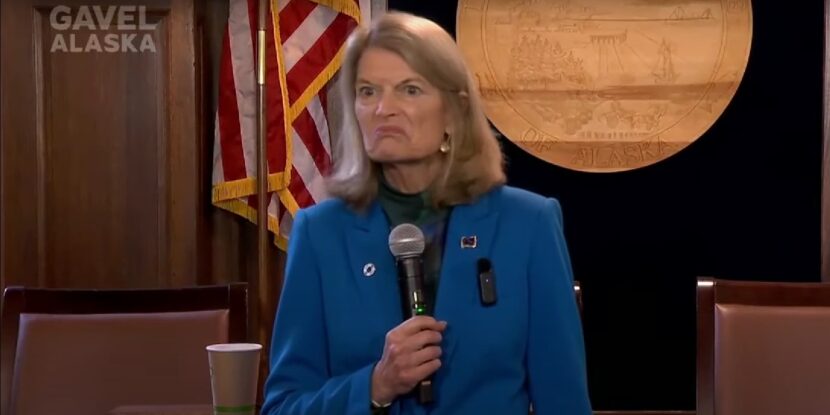
Senator Lisa Murkowski (R-AK) has emerged as one of the key hurdles preventing the passage of two Republican voter ID and election integrity bills in Congress. With the House of Representatives set to take up a revised version of the Safeguarding American Voter Eligibility (SAVE) Act and the Make Elections Great Again (MEGA) Act as early as Tuesday, the Alaska senator took to social media to announce her intention to oppose the measures—significantly reducing the likelihood that Senate Republicans can overcome a Democrat-led filibuster.

“When Democrats attempted to advance sweeping election reform legislation in 2021, Republicans were unanimous in opposition because it would have federalized elections, something we have long opposed. Now, I’m seeing proposals such as the SAVE Act and MEGA that would effectively do just that,” Sen. Murkowski wrote in a post on X (formerly Twitter) on Tuesday. She added, “Once again, I do not support these efforts. Not only does the U.S. Constitution clearly provide states the authority to regulate the ‘times, places, and manner’ of holding federal elections, but one-size-fits-all mandates from Washington, D.C., seldom work in places like Alaska.”

The passage of the SAVE Act—which would federally mandate voter ID—has become a priority for supporters of President Donald J. Trump and voters at large. Data from Gallup shows 84 percent of voters, including a large majority of Democrat and ethnic minority voters, back voter ID laws, while other polling shows 74 percent back the election integrity measure.

Still, setting aside Murkowski’s opposition, both the SAVE Act and the MEGA Act face an uphill battle in the Senate, where Democrat lawmakers are expected to filibuster the bills. This has led to increasing calls from Trump supporters for Senate Majority Leader John Thune (R-SD) to move forward with the so-called “nuclear option,” amending the chamber’s rules to abolish the legislative filibuster.

Attempts to pass the SAVE Act through both chambers of Congress in 2024 proved unfruitful, though the bill was adopted by the House of Representatives.

Join Pulse+ to comment below, and receive exclusive e-mail analyses.
show less
show more

Dem Officials Are Resisting Federal Push to Boost Election Integrity in This State.

PULSE POINTS

WHAT HAPPENED: Election oversight in Michigan is under scrutiny as President Donald J. Trump and Michigan Republicans advocate for federal oversight, while Governor Gretchen Whitmer and other Democrats resist.

👤WHO WAS INVOLVED: President Donald J. Trump, Gov. Whitmer, Michigan Secretary of State Jocelyn Benson (D), and Michigan lawmakers.

📍WHEN & WHERE: Discussions intensified this week in Michigan, with federal and state officials exchanging statements and letters regarding the 2026 midterm elections.

💬KEY QUOTE: “President Trump is 100% right because Michigan voters cannot trust Jocelyn Benson. She continues to fight against transparency and accountability, refuses to remove dead people from our state’s voter rolls and is happy to let noncitizens vote in our elections. ” – Aric Nesbitt, Minority Leader of the Michigan Senate (R)

🎯IMPACT: The debate highlights growing tensions over election oversight, as the Trump administration seeks to increase integrity and Democrats resist.

IN FULL

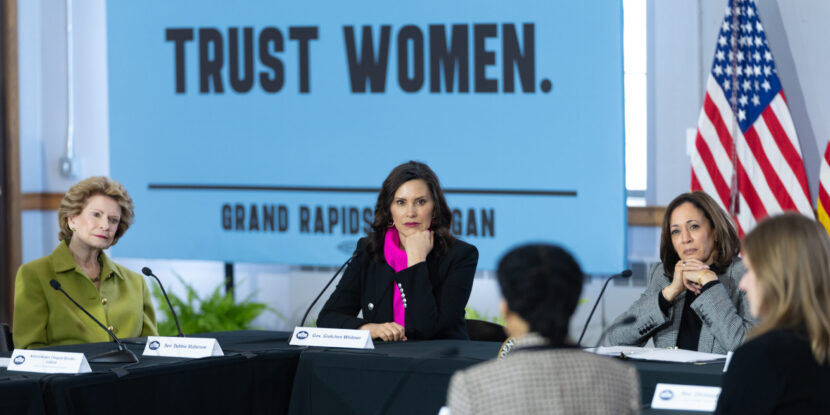
President Donald J. Trump this week floated the idea of federalizing elections to increase their integrity and security, arguing that some states cannot be trusted to administer voting fairly. Michigan Governor Gretchen Whitmer (D) has responded forcefully, rejecting any federal takeover despite issues in her state. In a video posted to social media this week, she said, “Let me be very clear: elections will continue to be run at the state level in Michigan. Any attempt by the federal government to take over Michigan elections should be seen for what it is – an attempt to take away your constitutional right to vote. Now, it’s not going to happen on my watch.”

Michigan Republicans countered that Trump’s proposal reflects legitimate concerns about transparency and accountability. Michigan Senate Republican Leader Aric Nesbitt accused controversial Secretary of State Jocelyn Benson (D) of mismanaging elections, saying, “President Trump is 100% right because Michigan voters cannot trust Jocelyn Benson. She continues to fight against transparency and accountability, refuses to remove dead people from our state’s voter rolls and is happy to let noncitizens vote in our elections. She’s the worst secretary of state in America and shouldn’t be running our elections without checks and balances.”

Last November, Nesbitt joined 21 other Republican lawmakers in a letter to U.S. Attorney General Pam Bondi requesting federal election monitors and “comprehensive oversight” of Michigan’s 2026 elections. The lawmakers cited what they described as an “inherent and unavoidable conflict of interest,” noting that Benson is serving as the state’s chief elections official while running for Governor.

The debate intensified after Macomb County Clerk Anthony Forlini, a Republican candidate for Secretary of State, reported in January that his office identified noncitizens registered to vote.

The Michigan clash mirrors a broader national fight over election integrity. Congressional Republicans have pushed legislation requiring proof of citizenship to vote in federal elections, while Democrats have challenged such efforts in court despite overwhelming public support—including among Democrat voters—with Senate Minority Leader Chuck Schumer (D-NY) comparing voter ID to Jim Crow.

Join Pulse+ to comment below, and receive exclusive e-mail analyses.
show less
show more

Schumer Vows to Block Voter ID Despite 71% of Dems Supporting It: ‘Jim Crow 2.0.’

PULSE POINTS

WHAT HAPPENED: Senate Minority Leader Chuck Schumer (D-NY) rejected the GOP-backed Safeguard American Voter Eligibility Act (SAVE) Act, comparing it to Jim Crow, despite overwhelming public support for voter ID laws.

👤WHO WAS INVOLVED: Chuck Schumer, Democratic voters, Republican lawmakers, and President Donald J. Trump.

📍WHEN & WHERE: Schumer made the comments on Thursday during an appearance on MS NOW.

💬KEY QUOTE: “It will not pass the Senate. You will not get a single Democratic vote in the Senate. We’re not reviving Jim Crow all over the country.” – Chuck Schumer

🎯IMPACT: The SAVE Act faces strong opposition from Senate Democrats, despite overwhelming voter support for voter ID.

IN FULL

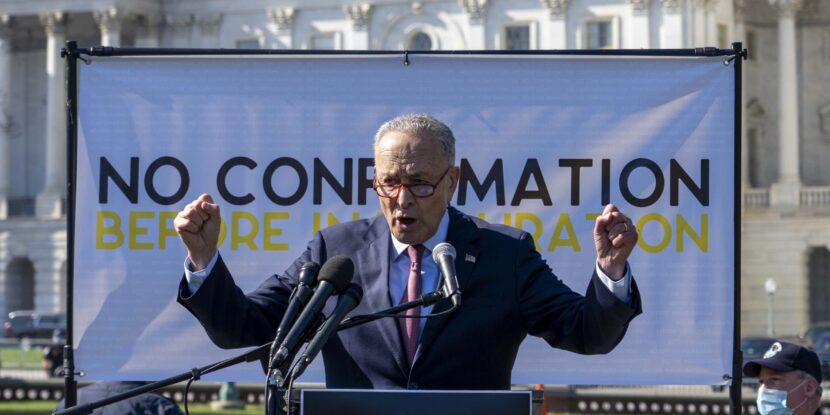
Senate Minority Leader Chuck Schumer (D-NY) said February 5 he was surprised to learn that a huge majority of Democratic voters support nationwide voter ID requirements, but insisted that he will oppose Republican efforts to enact such laws regardless. During an interview, Schumer was presented with data showing that around 71 percent of Democrat voters back voter ID rules.

The Senate Minority Leader argued that the measures are designed to limit access to the ballot rather than protect elections. “It’s Jim Crow 2.0,” he claimed, adding: “What they’re trying to do here is the same thing that was done in the South for decades: to prevent people of color from voting,” he said. “If you can’t find a proper ID, you will be discriminated against. This is vicious and nasty.”

The comments came as Republicans push the Safeguard American Voter Eligibility Act, or SAVE Act, which would require proof of U.S. citizenship to vote in federal elections. Under the bill, acceptable documentation would include REAL-ID-compliant identification, a passport, or a birth certificate. The legislation would also bar states from registering voters without proper identification. Schumer vowed that Democrats will block the bill in the Senate, saying, “It will not pass the Senate. You will not get a single Democratic vote in the Senate. We’re not reviving Jim Crow all over the country.”

Despite opposition from Democratic leaders, voter ID laws continue to draw broad public support. Polling has consistently shown that Americans want photo identification requirements, along with other election measures such as paper ballots, early voting options, and making Election Day a national holiday. Support for voter ID crosses party lines among the general public, with massive majorities of Republicans, independents, and even Democrats backing the policy.

President Donald J. Trump has long promoted voter ID as a way to secure elections and made it a central issue in his 2024 campaign. Republicans in Congress and state legislatures are also pressing for proof-of-citizenship and voter ID laws, arguing they are necessary to protect election integrity and public confidence in elections.

Image via Senate Democrats.

Join Pulse+ to comment below, and receive exclusive e-mail analyses.
show less
show more

Liberal College Accused of Election Interference, Student Data Privacy Breaches.

PULSE POINTS

WHAT HAPPENED: The Department of Education has launched two investigations into a Tufts University program over potential violations of federal privacy laws related to student data collection and sharing with the possible intention to influence American elections.

👤WHO WAS INVOLVED: The Department of Education, Tufts University, the National Student Clearinghouse (NSC), and the National Study of Learning, Voting, and Engagement (NSLVE).

📍WHEN & WHERE: The investigations were announced on Thursday, with the program operating out of Tufts University.

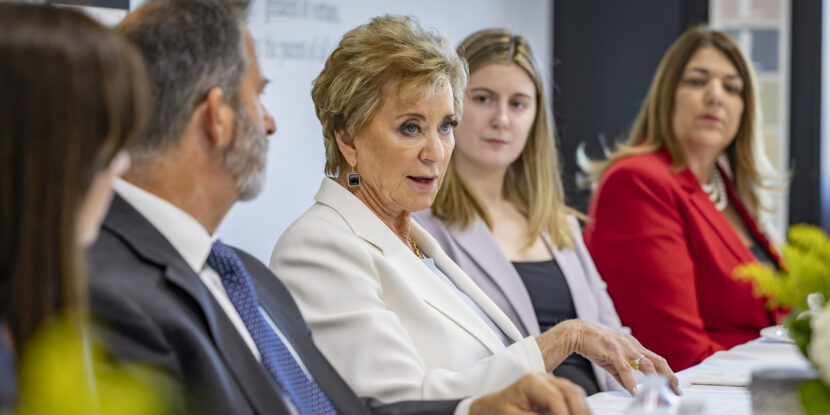
💬KEY QUOTE: “American colleges and universities should be focused on teaching, learning, and research—not influencing elections.” — Secretary of Education Linda McMahon.

🎯IMPACT: Both investigations center on potential violations of the Family Educational Rights and Privacy Act (FERPA), which grants students and their legal guardians the right to control the disclosure of personal data.

IN FULL

The U.S. Department of Education revealed on Thursday that it has launched two investigations into a program at Tufts University that may be illegally collecting and sharing student information to influence elections. The department’s Student Privacy Policy Office (SPPO) is examining whether the National Study of Learning, Voting, and Engagement (NSLVE) complies with federal privacy laws.

The NSLVE program is able to access student data from thousands of campuses through various partnerships. Federal officials say they are concerned that this data may be shared with third-party political organizations aiming to influence American elections. An investigation has also been launched into the National Student Clearinghouse (NSC), which collaborates with NSLVE and has access to data from numerous colleges.

Both investigations center on potential violations of the Family Educational Rights and Privacy Act (FERPA), which grants students and their legal guardians the right to control the disclosure of personal data. Notably, the partnership between NSLVE and NSC was pushed by the former Obama government as part of an effort to boost student voter participation in elections.

“American colleges and universities should be focused on teaching, learning, and research—not influencing elections,” Secretary of Education Linda McMahon stated. She accused the former Biden government of encouraging institutions to share student data recklessly, adding that the department is revoking all Biden-era guidance that promoted such practices.

NSLVE provides reports to over 1,000 campuses to analyze student voting and registration rates, while NSC collects personal information, enrollment details, and academic records from nearly all U.S. colleges. Consequently, the Department of Education has issued guidance reminding institutions of their privacy obligations under FERPA, warning that using NSLVE data could place them in violation of federal law.

Join Pulse+ to comment below, and receive exclusive e-mail analyses.
show less
show more

Top Democrat Wants to Ban ICE from Polling Stations – Despite Dems Claiming Illegals Don’t Vote?

PULSE POINTS

WHAT HAPPENED: Former Washington Governor Jay Inslee (D) called for a ban on ICE agents near polling places in the upcoming spending bill, sparking criticism online.

👤WHO WAS INVOLVED: Jay Inslee, Senate Democrats, and conservative critics.

📍WHEN & WHERE: The statement was made on January 28, with the issue tied to national election policies and legislation.

💬KEY QUOTE: “Hmmm. Interesting that you think ICE would suppress voting.” – Wade Miller, Center for Renewing America.

🎯IMPACT: Inslee’s remarks have reignited debates over election integrity, with non-citizens technically being banned from voting, but few safeguards in place to detect them doing so.

IN FULL

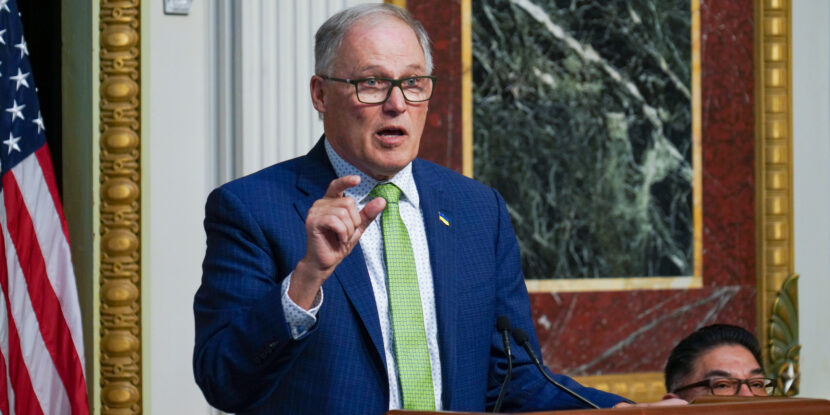
Former Washington Governor Jay Inslee (D) ignited backlash this week after urging Congress to block U.S. Immigration and Customs Enforcement (ICE) agents from operating near polling places, calling the proposal a “must have” and warning it could be the “last chance to do this” as lawmakers negotiate a federal spending bill.

“In the midst of ICE horror, the Senate needs to prohibit Trump from using ICE as a voter suppression tool,” Inslee said, pressing Senate Democrats to include language barring ICE agents from being near polling locations on Election Day.

His remarks quickly drew criticism from conservative commentators, who argued that the proposal implicitly suggests that, contrary to longstanding Democrat claims that elections are safe and secure, illegal immigrants are voting in elections. Wade Miller, an advisor at the Center for Renewing America, remarked, “Hmmm. Interesting that you think ICE would suppress voting.”

The dispute comes amid heightened national debate over illegal immigration and election integrity. Congressional Republicans are advancing the Safeguard American Voter Eligibility (SAVE) Act, which would require proof of U.S. citizenship to register to vote in federal elections. Supporters say the bill is necessary to prevent noncitizens from voting, while Democrats dubiously argue that it would create barriers for eligible voters.

Peer-reviewed academic research suggests non-citizens do vote illegally in U.S. elections, usually for Democrats, in sufficient numbers to change outcomes, and “likely gave Senate Democrats the pivotal 60th vote needed to overcome filibusters in order to pass health care reform and other Obama administration priorities in the 111th Congress.”

Join Pulse+ to comment below, and receive exclusive e-mail analyses.
show less
show more