




Sunday, April 12, 2026

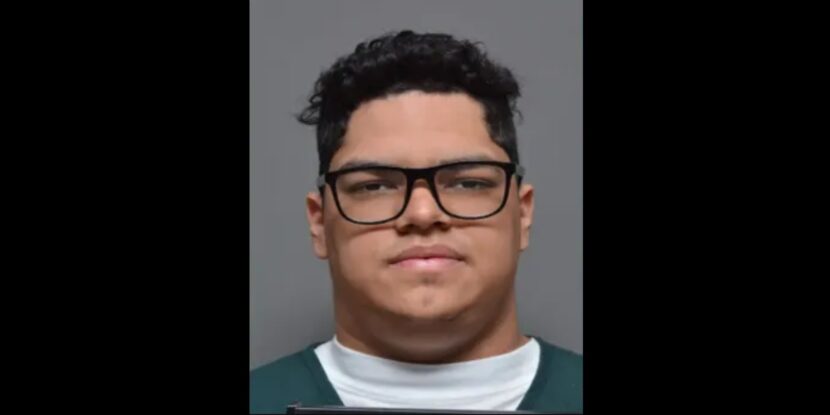
Throat-Slashing Venezuelan Migrant Feared to Be Serial Killer ‘Copycat.’

PULSE POINTS

WHAT HAPPENED: A Venezuelan man has been charged with attempted murder following a throat-slashing incident, raising fears of a potential serial killer copycat.

👤WHO WAS INVOLVED: Ruben Guanipa Ramirez, 26, and an unidentified male victim.

📍WHEN & WHERE: The incident occurred at a remote beach in Suffolk County, New York.

💬KEY QUOTE: “The evidence recovered from his vehicle raises serious questions about what he intended that night.” – Ray Tierney

🎯IMPACT: The incident fuels concerns of a copycat crime linked to the Gilgo Beach serial killer case.

IN FULL

New York prosecutors have charged 26-year-old Venezuelan national Ruben Guanipa Ramirez with attempted murder in an incident that has raised concerns about a possible copycat attack modeled after alleged Gilgo Beach serial killer Rex Heuermann. According to the authorities, Ramirez drove a man to an isolated beach, then attacked him from behind with a knife. The victim was smothered with a rag, stabbed on the left side, and an attempt was made to slash his throat.

“During the altercation, the victim sustained defensive wounds to his hands but was able to wrestle the knife away from Ramirez,” Suffolk County District Attorney Ray Tierney’s office said in a statement. The victim then took control of Ramirez’s car, called 911, and drove himself to a friend’s apartment in Queens, where he was met by New York City Police Department (NYPD) officers and received medical care.

A search of Ramirez’s vehicle turned up knives, rope, duct tape, and a “large-wheeled bag,” items that have prompted serious alarm. Although no direct connection to the Gilgo Beach case has been confirmed, retired NYPD sergeant Joseph Giacalone, former head of the Bronx Cold Case Unit, highlighted disturbing parallels. “Was this a copycat crime… related to what is happening with Rex Heuermann in the news?” he asked. “They need to take a long, hard look at this guy.”

Giacalone pointed out that the recovered items were especially troubling, noting that Heuermann’s alleged victims had been bound with duct tape and wrapped in burlap or plastic, with some dismembered.

Ramirez is being held at Suffolk County Jail—the same facility housing Heuermann. If convicted, the Venezuelan could face up to 25 years in prison.

Join Pulse+ to comment below, and receive exclusive e-mail analyses.
show less
show more

Dems Reverse Support for Laken Riley Act to Appease Far Left.

PULSE POINTS

WHAT HAPPENED: Democrat lawmakers are retracting their support for the Laken Riley Act,  backed by President Donald J. Trump, as they face primary pressure from the pro-illegal immigrant far left.

👤WHO WAS INVOLVED: Representative Angie Craig (D-MN), Sen. Mark Warner (D-VA), Rep. April McClain Delaney (D-MD), and Rep. Jahana Hayes (D-CT) are among those disavowing the law.

📍WHEN & WHERE: The disavowals are occurring in 2026 as the party prepares for internal primaries.

💬KEY QUOTE: “I regret my vote,” wrote Rep. Angie Craig in a local newspaper.

🎯IMPACT: The shift in stance reflects the growing influence of the far left in the Democrats’ internal party dynamics.

IN FULL

As the Democratic Party faces internal primary contests, several of its lawmakers have begun to distance themselves from the Laken Riley Act, a law championed by President Donald J. Trump that mandates the detention of non-citizens arrested for various crimes committed within the United States. The Act was passed with some Democrat support in late January 2025, following the murder of Laken Riley, a 22-year-old university student from the state of Georgia, by Venezuelan illegal immigrant José Antonio Ibarra. At the time of the murder, he was at large despite having previously been charged with “acting in a manner to injure a child less than 17 and a motor vehicle license violation.”

Representative Angie Craig of Minnesota, facing criticism from a progressive opponent in the race for the Democrat Senate nomination in Minnesota, said of her prior support for the Act, “I regret my vote.” Joining Craig in retracting support are Senator Mark Warner (D-VA), Rep. April McClain Delaney (D-MD), and Rep. Jahana Hayes (D-CT), all of whom have faced increasing pressure from leftist factions within their party.

Ibarra was convicted of both felony and malicious murder, kidnapping with bodily injury, aggravated battery and aggravated assault with intent to rape, false imprisonment, hindering an emergency phone call, concealing the death of another person, and criminal invasion of privacy.

Join Pulse+ to comment below, and receive exclusive e-mail analyses.

show less
show more

Federal Court Ends In-State Tuition for Illegal Immigrants.

PULSE POINTS

WHAT HAPPENED: A federal judge has permanently blocked Kentucky’s policy of granting in-state tuition to illegal immigrants, ruling it violates U.S. law.

👤WHO WAS INVOLVED: U.S. District Court Judge Gregory F. Van Tatenhove, Kentucky Attorney General Russell Coleman (R), and the Trump administration.

📍WHEN & WHERE: The ruling was issued earlier this week in Kentucky following a months-long legal challenge.

💬KEY QUOTE: “Federal law is clear: illegal immigrants don’t get preferential treatment at Kentucky’s public universities, and Kentucky taxpayers certainly shouldn’t be footing the bill.” – Russell Coleman

🎯IMPACT: Kentucky’s higher education system must end in-state tuition discounts for illegal immigrants, ensuring compliance with federal law.

IN FULL

A federal judge has ruled against Kentucky‘s policy of granting in-state tuition to illegal immigrants, declaring it unlawful under federal statute. U.S. District Court Judge Gregory F. Van Tatenhove—a Bush appointee—issued the decision, permanently blocking the state’s tuition law on the grounds it violates the Constitution’s Supremacy Clause.

The ruling follows a legal challenge by Kentucky Attorney General Russell Coleman (R) and the Trump administration, who argued the policy unlawfully provided benefits to migrants in the country illegally. Federal law states that “an alien who is not lawfully present in the United States shall not be eligible on the basis of residence within a state for any post-secondary education benefit unless a citizen or national of the United States is eligible for such a benefit … without regard to whether the citizen or national is such a resident.”

“Federal law is clear: illegal immigrants don’t get preferential treatment at Kentucky’s public universities, and Kentucky taxpayers certainly shouldn’t be footing the bill. As Kentucky’s chief law officer, I was proud to join the Trump Administration to make sure our Commonwealth is upholding federal law and fundamental fairness for American citizens,” Coleman stated regarding the ruling, adding: “We’ll continue focusing on helping Kentucky students reach for their full potential.”

The lawsuit initially named Kentucky Governor Andy Beshear (D) as a defendant. However, Beshear’s office clarified that the Kentucky Council on Postsecondary Education (KCPE), which enforced the regulation, operates independently. Although the KCPE agreed with the Trump administration that the regulation was preempted, the court found it necessary to issue a ruling on the matter’s constitutionality.

Judge Van Tatenhove’s 22-page decision noted that states can extend certain benefits to illegal immigrants but must do so through laws passed by legislatures, not through agency-based regulations. The court’s ruling also highlighted a February 2025 Executive Order signed by President Donald J. Trump, aimed at ending taxpayer subsidization of open borders, as a factor influencing the decision.

Join Pulse+ to comment below, and receive exclusive e-mail analyses.

show less
show more

Large Majority of French Believe Anti-White Racism is a Significant Issue Now.

PULSE POINTS

WHAT HAPPENED: Over two-thirds of the French population say “anti-white racism” has become a significant problem in their country.

👤WHO WAS INVOLVED: The CSA (Institut d’Études), the French people, and French political parties.

📍WHEN & WHERE: The polling was published on April 2, 2026.

🎯IMPACT: French views on anti-white racism are highly polarized based on political identification; with the far-left rejecting that it exists, while the center-left and political right both acknowledge that it is a problem in France.

IN FULL

Over two-thirds of the French population say “anti-white racism” has become a significant problem in their country. According to a new survey conducted by the CSA (Institut d’Études), a prominent French research institute, 67 percent of respondents see discrimination against white people as a reality in modern France.

Notably, French views on anti-white racism are highly polarized based on political identification. The CSA survey found that political leftists overwhelmingly reject the idea that the country has fostered a culture of anti-white discrimination, with 64 percent of voters who affiliate with far-left La France Insoumise (France Unbowed) saying it is not a problem, and 72 percent of Green Party voters denying that anti-white racism exists.

However, on France’s center-left, 52 percent of respondents affiliated with President Emmanuel Macron‘s Renaissance party say anti-white racism exists. Likewise, 51 percent of Socialist Party voters acknowledge that discrimination against whites in France does occur.

Respondents who identify with France’s political right overwhelmingly say they believe anti-white racism is a problem in the country. Eighty-one percent of those affiliated with Les Républicains, a center-right party, say discrimination against white people is a problem, while 91 percent of respondents who support Marine Le Pen’s National Rally party believe anti-white racism exists in France.

The National Pulse reported this past January that French authorities had barred ten members of the British anti-mass migration activist group Raise the Colours from entering or remaining in France, citing their involvement in actions protesting boats along France’s northern coastline carrying illegal immigrants to Britain. In a statement, the French Interior Ministry accused the activists of having carried out “propaganda activities” along the coast.

Image by Sharpening16.

Join Pulse+ to comment below, and receive exclusive e-mail analyses.

show less
show more

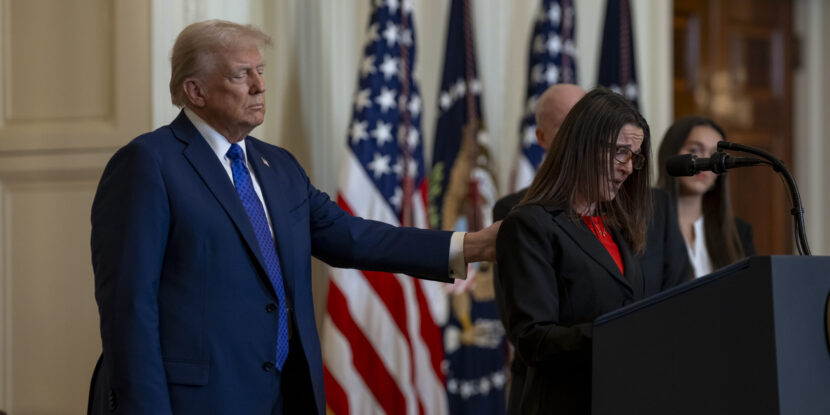
Senate Unanimously Approves DHS Funding – But Now It Must Pass the House.

PULSE POINTS

WHAT HAPPENED: The U.S. Senate unanimously passed a bill to partially reopen the Department of Homeland Security (DHS), with the funding deal now advancing to the House for approval.

👤WHO WAS INVOLVED: Senate Majority Leader John Thune (R-SD), House Speaker Mike Johnson (R-LA), and members of Congress in both chambers.

📍WHEN & WHERE: The Senate vote took place on Thursday in Washington, D.C., as Congress approaches a two-week recess.

🎯IMPACT: The bill’s passage signals a potential resolution to the partial government shutdown, contingent on further action by the House.

IN FULL

The U.S. Senate unanimously approved a bill on Thursday to partially reopen the Department of Homeland Security (DHS), marking a step toward ending the longest-ever partial government shutdown. Last week, House Republicans rejected a nearly identical funding bill over its failure to include appropriations for U.S. Immigration and Customs Enforcement (ICE) and Customs and Border Protection (CBP) deportation operations. However, on Wednesday, President Donald J. Trump assured Republican lawmakers that DHS immigration enforcement operations will be funded through the end of his term in a second budget reconciliation bill he intends to sign by June 1.

With the deal’s adoption by the Senate, the DHS funding bill will now be sent back to the House for consideration. Still, the timeline for a House vote remains unclear, as lawmakers are currently on a two-week recess. Despite this, brief “pro forma” sessions continue on Capitol Hill, meaning Speaker Mike Johnson (R-LA) could bring the bill to the floor for adoption by unanimous consent, barring any objections.

Notably, the Senate vote follows a joint statement issued on Wednesday by Senate Majority Leader John Thune (R-SD) and Speaker Johnson laying out their plan for a two-step process to reopen DHS and fund ICE and CBP. Earlier in the day, President Trump announced that his administration was working with Republican lawmakers to craft a new budget reconciliation bill to fund the immigration enforcement operations and deportation actions, with the reconciliation process allowing the Senate to effectively circumvent the Democrat filibuster blocking the funding.

Join Pulse+ to comment below, and receive exclusive e-mail analyses.
show less
show more

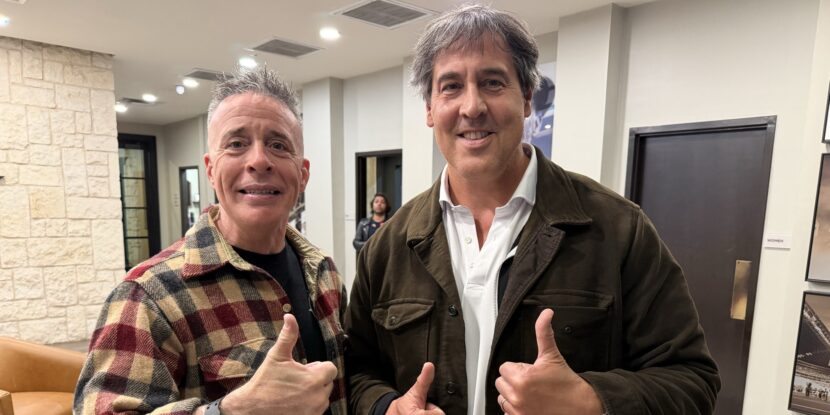
Paul Dans Picks Up Major Endorsement in Bid to Oust Lindsey Graham.

PULSE POINTS

WHAT HAPPENED: Former U.S. Border Patrol Commander-at-Large Gregory Bovino is backing Project 2025 architect and former Trump administration official Paul Dans in his primary challenge against neoconservative Senator Lindsey Graham (R-SC).

👤WHO WAS INVOLVED: Gregory Bovino, Paul Dans, Sen. Lindsey Graham, and South Carolina voters.

📍WHEN & WHERE: Bovino’s endorsement was announced at the end of March after a meeting with Dans.

💬KEY QUOTE: “Paul, you’re a thoughtful patriot who cares deeply about family, community safety and restoring America. You are needed in SC – I fully endorse you!! Good luck, sir!” — Gregory Bovino

🎯IMPACT: The endorsement is likely to increase Dans’s standing with MAGA voters opposed to illegal immigration, and starkly contrasts with Sen. Graham’s pro-amnesty, pro-mass immigration positions.

IN FULL

Former U.S. Border Patrol Commander-at-Large Gregory Bovino is backing Project 2025 architect and former Trump administration official Paul Dans‘s primary challenge against neoconservative Senator Lindsey Graham (R-SC). Bovino, who retired from the Border Patrol at the end of March after his removal earlier this year from leading immigration enforcement operations in Minnesota, recently met with Dans, where the latter emphasized his commitment to deporting all illegal immigrants.

“Paul, you’re a thoughtful patriot who cares deeply about family, community safety and restoring America,” Bovino wrote in a post on X (formerly Twitter). He added, “You are needed in SC – I fully endorse you!! Good luck, sir!”


The former chief of the Heritage Foundation’s Project 2025 effort to staff the second Trump administration, Dans announced his primary challenge against Graham—a 23-year incumbent—last July in Charleston, South Carolina.

“What we’ve done with Project 2025 is really change the game in terms of closing the door on the progressive era. If you look at where the chokepoint is, it’s the United States Senate. That’s the headwaters of the swamp,” Dans said at the time, while singling out Sen. Graham as a central figure in the political establishment’s obstruction of the MAGA agenda: “It’s time to show him the door.”

Notably, Bovino was a key force within President Donald J. Trump’s immigration enforcement initiatives, directing operations in major urban areas including Los Angeles, Chicago, and New Orleans. In Los Angeles, the “Operation Trojan Horse” effort resulted in more than 5,000 arrests, while “Operation Midway Blitz” in Chicago led to over 3,000 arrests. Bovino often deployed alongside agents in person, tangling with pro-illegal immigrant agitators hand-to-hand.

Image via @DansForSenate.

Join Pulse+ to comment below, and receive exclusive e-mail analyses.

show less
show more

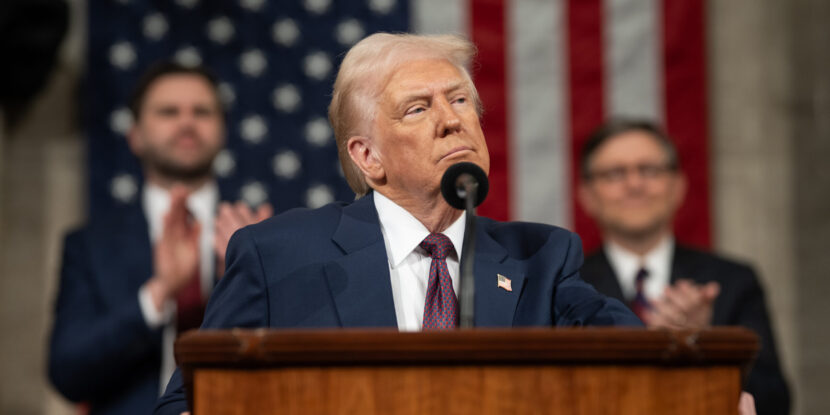
Trump Demands Congress Deliver Major DHS Funding Bill by June Deadline.

PULSE POINTS

WHAT HAPPENED: President Donald J. Trump announced Wednesday afternoon that his administration is working with Republican leaders in the House and Senate to draft a second budget reconciliation bill aimed at funding the Department of Homeland Security (DHS) for the remainder of his second term.

👤WHO WAS INVOLVED: President Trump, Senate Minority Leader Chuck Schumer (D-NY), Senate Majority Leader John Thune (R-SD), Senate Republicans, and Senate Democrats.

📍WHEN & WHERE: The funding lapse has lasted 47 days as of April 2026. Discussions are ongoing in Washington, D.C., with potential legislative action by June 1.

💬KEY QUOTE: “I am asking that the Bill be on my desk NO LATER than June 1st.” – Donald Trump

🎯IMPACT: The budget reconciliation process could bypass Democratic opposition, but it may extend the funding lapse and require significant spending cuts to succeed.

IN FULL

President Donald J. Trump announced Wednesday afternoon that his administration is working with Republican leaders in the House and Senate to draft a second budget reconciliation bill aimed at funding the Department of Homeland Security (DHS) for the remainder of his second term. The move, if successful, would bring to an end the Senate Democrat-led partial government shutdown that has withheld funding for DHS, including core subagencies like the Transportation Security Administration (TSA) and the Federal Emergency Management Agency (FEMA), for 47 days so far.

“[W]e are going forward to fund our incredible ICE Agents and Border Patrol through a process that doesn’t need Radical Left Democrat votes, and bypasses the Senate Filibuster (which should be repealed, IMMEDIATELY!), working in close conjunction with House Speaker Mike Johnson and Senate Leader John Thune,” President Trump wrote in a post on Truth Social. He continued, “I am asking that the Bill be on my desk NO LATER than June 1st.”

“In the meantime, we will continue to use funding from THE GREAT BIG BEAUTIFUL BILL, which is giving Record Tax Rebates to Citizens all over the Country, to ensure that ICE and Border Patrol Agents are paid ON TIME, and IN FULL, as we have been doing for them throughout the Democrat Shutdown,” the President added.

Since the partial government shutdown began in late February, multiple Republican attempts to pass DHS funding in the Senate have been defeated by Democrats. Senate Minority Leader Chuck Schumer (D-NY) has leveraged the chamber’s 60-vote cloture rule to end debate and exert veto power over any DHS appropriations package unless Republicans agree to progressive-backed provisions that would effectively gut President Trump’s immigration enforcement actions.

By using the budget reconciliation process, Senate Republicans would be able to sidestep the Democrats’ use of the filibuster and adopt DHS funding by a simple majority vote. Notably, Senate Majority Leader John Thune (R-SD) had previously floated using budget reconciliation to pass certain election integrity provisions in the SAVE America Act. However, the lack of revenue provisions in the election integrity bill would likely result in the Senate parliamentarian ruling them out under the Byrd Rule, which prohibits non-budgetary provisions in reconciliation bills.

Republican leaders quickly announced they will back President Trump’s plan, with Sen. Thune stating, “In the coming days, Republicans in the Senate and House will be following through on the President’s directive by fully funding the entire Department of Homeland Security on two parallel tracks: through the appropriations process and through the reconciliation process.”

Join Pulse+ to comment below, and receive exclusive e-mail analyses.
show less
show more

Trump Admin Closes U.S.-Canada Border Road.

PULSE POINTS

WHAT HAPPENED: The Trump administration announced the closure of a key road connecting the U.S. and Canada to enhance border security.

👤WHO WAS INVOLVED: The Trump administration, Alberta officials, and the U.S. Department of Homeland Security (DHS).

📍WHEN & WHERE: The nine-mile Border Road, connecting Montana and Alberta, will close on July 1.

💬KEY QUOTE: “Regardless of the line on the map, you’ll have farmers on both sides of the border, you’ll have family friends on both sides of the border. I think obviously that will continue.” – Alberta Transportation Minister Devin Dreeshen

🎯IMPACT: The closure ends 80 years of free movement, impacting farming communities and prompting Alberta to plan a replacement road.

IN FULL

The Trump administration has announced the closure of the nine-mile Border Road, which connects Montana and Alberta, Canada, effective July 1. The move is part of broader efforts to tighten U.S. border security and address concerns about smuggling and unauthorized crossings.

Notably, the closure marks the end of over 80 years of free movement along this stretch of highway, which has been a vital link for farming communities on both sides of the border. While the Trump administration has not commented directly on the Border Road closure, the decision aligns with the President’s previous commitments to enhance border security. In 2025, Trump highlighted concerns over fentanyl trafficking, noting that seizures at the northern border had increased, though they remained lower than those at the southern border.

“Regardless of the line on the map, you’ll have farmers on both sides of the border, you’ll have family friends on both sides of the border. I think obviously that will continue,” Alberta, Canada’s Transportation Minister Devin Dreeshen stated regarding the closure. He added that the provincial government has been working with the U.S. Department of Homeland Security (DHS) regarding the closure, with Alberta allocating an estimated $8 million in Canadian dollars ($5.74 million U.S.) to alter area roadway infrastructure for continued use.

The National Pulse reported last April that President Trump’s imposition of stricter border security measures led to a 95 percent drop in illegal crossings along the U.S.-Canadian border. This reduction followed a series of tariff threats and negotiations between the two nations, which saw Canada eventually commit additional resources to help halt fentanyl trafficking and boost border security infrastructure.

Image by Wing-Chi Poon.

Join Pulse+ to comment below, and receive exclusive e-mail analyses.

show less
show more

Trump Slams ‘Stupid’ U.S. Birthright Citizenship Law After Attending SCOTUS Arguments in Historic First.

PULSE POINTS

WHAT HAPPENED: President Donald J. Trump weighed in on the Supreme Court hearing regarding his Executive Order ending birthright citizenship after attending the oral arguments in a historic first for a sitting President.

👤WHO WAS INVOLVED: President Trump, Solicitor General D. John Sauer, American Civil Liberties Union (ACLU) counsel Cecillia Wang, and Supreme Court Justices.

📍WHEN & WHERE: Wednesday, during oral arguments at the Supreme Court in Washington, D.C.

💬KEY QUOTE: “We are the only Country in the World STUPID enough to allow ‘Birthright’ Citizenship!” – Donald J. Trump

🎯IMPACT: During the course of the arguments, all nine justices expressed degrees of skepticism regarding the Trump administration’s position, namely that birthright citizenship is limited to those “domiciled” in the United States.

IN FULL

President Donald J. Trump weighed in on the Supreme Court hearing regarding his Executive Order ending birthright citizenship after attending the oral arguments in a historic first for a sitting President. “We are the only Country in the World STUPID enough to allow ‘Birthright’ Citizenship!” Trump wrote in a post on Truth Social after leaving the Supreme Court on Wednesday.

The case, one of the most complicated to be taken up by the high court in decades, stems from President Trump’s challenge to a lower court ruling that struck down his Executive Order. For just over two hours, the nine justices peppered the Trump administration’s Solicitor General D. John Sauer and the challengers’ attorney, American Civil Liberties Union (ACLU) counsel Cecillia Wang, with questions regarding the scope of the order and the legal implications of domicile-based citizenship.

During the arguments, all nine justices expressed varying degrees of skepticism regarding the Trump administration’s position, namely that birthright citizenship is limited to those “domiciled” in the United States. In this legal context, only the children of individuals intending to maintain a permanent and legal presence in the United States could attain citizenship at birth. Notably, this would exclude almost all illegal immigrants.

George Washington University law professor and constitutional scholar Jonathan Turley, writing on X (formerly Twitter), remarked that the Supreme Court overall appears skeptical of the government’s arguments, but stopped short of suggesting the case will be a defeat for President Trump. “The ACLU clearly had a lock on the three liberals, but had more justices in play than the government would have hoped. We ended where we began: the odds do not favor the Administration, but there is no firm evidence of a majority,” Trurley wrote, adding, “Majorities can certainly shift in conference and in drafting. The devil is in the details and the details remain murky at best. Many justices correctly found the historical record, according to one, ‘a mess.’ Indeed, it is maddening to try to divine the intent of the drafters.”

For most of the arguments, the justices focused heavily on a series of past civil rights laws and court decisions that have formed the nebulous—and admittedly murky—legal justification for birthright citizenship as it stands today. Notably, the United States stands almost entirely alone among developed Western nations in its permissive approach to birthright citizenship.

Not a single European state allows unrestricted birthright citizenship, with most requiring either that one parent be a citizen or a legal permanent resident and, in some cases, mandating that at least one parent reside in the country for a set period. As of 2004—when Ireland abolished its expansive jus soli (“right of the soil”) laws—Europe ceased offering unrestricted birthright citizenship entirely. Canada is the only other Western nation with similar statutes granting unrestricted birthright citizenship. Meanwhile, Australia and New Zealand abolished their permissive birthright citizenship laws in 1986 and in 2006, respectively.

Join Pulse+ to comment below, and receive exclusive e-mail analyses.

show less
show more

Illegal Immigrant Sentenced for Counterfeit Document Scheme.

PULSE POINTS

WHAT HAPPENED: A Guatemalan national, Edgidio Vasquez-Mencho, was sentenced for his role in a counterfeit document-selling scheme in Michigan.

👤WHO WAS INVOLVED: Vasquez-Mencho, two other Guatemalan nationals, and the U.S. Attorney for the Western District of Michigan.

📍WHEN & WHERE: The case originated in September 2025 in Grand Rapids, Michigan; sentencing occurred in March 2026.

💬KEY QUOTE: “Vasquez-Mencho deserved to be prosecuted and punished. It is bad enough that he has repeatedly violated our immigration laws by crossing the border without permission. Worse than that, once he got here, he operated an illegal document business that enabled others like him to obtain employment illegally and claim taxpayer-supported public services. This conduct must stop.” – U.S. Attorney Timothy VerHey

🎯IMPACT: Vasquez-Mencho will serve six months in federal prison before being deported to Guatemala for the third time.

IN FULL

The U.S. Attorney’s Office for the Western District of Michigan reported the sentencing of 41-year-old Guatemalan illegal Edgidio Vasquez-Mencho. He was convicted of participating in an operation that sold counterfeit Social Security cards and permanent resident alien cards to other illegal immigrants in the Grand Rapids area.

Vasquez-Mencho received a six-month federal prison term. He is the second of three Guatemalan nationals charged in the scheme, which supplied fake documents so that illegals could secure jobs and obtain public services reserved for lawful residents. His specific responsibilities involved handing over the counterfeit items and collecting the payments from buyers.

U.S. Attorney Timothy VerHey stated, “Vasquez-Mencho deserved to be prosecuted and punished. It is bad enough that he has repeatedly violated our immigration laws by crossing the border without permission. Worse than that, once he got here, he operated an illegal document business that enabled others like him to obtain employment illegally and claim taxpayer-supported public services. This conduct must stop.”

This was Vasquez-Mencho’s third time being caught unlawfully present in the United States. After the first incident, he was permitted to leave voluntarily. After the second, he was formally removed to Guatemala. Once he finishes serving his current sentence, he will be deported yet again.

The investigation began with a grand-jury indictment in Grand Rapids in September 2025 that named Vasquez-Mencho, Norma Yanari Ayala, and Rigoberto Vasquez-Vasquez. The three were accused of conspiring to produce and sell fake permanent resident cards and Social Security cards. On March 16, U.S. Attorney VerHey also announced the sentencing of Ayala—who had previously been deported four times—to eight months in federal prison for her part in the same scheme.

Join Pulse+ to comment below, and receive exclusive e-mail analyses.

show less
show more