




Wednesday, April 1, 2026

Tren de Aragua Gang Clashes with NYPD in Times Square Brawl.

PULSE POINTS:

What Happened: A group of gang members attacked New York City Police Department (NYPD) officers in Times Square after a boxing match, marking the second such incident involving migrants in the area in under two years.

👥 Who’s Involved: Members of the Venezuelan gang Tren de Aragua and its offshoot, Diablos de la 42, including a 12-year-old ringleader, were involved. NYPD officers were attacked.

📍 Where & When: The incident occurred in Times Square, New York City, following a boxing match on Friday night.

💬 Key Quote: “Is this what a sanctuary city is supposed to be?” questioned a frustrated officer, highlighting the challenges posed by Democrat policies.

⚠️ Impact: The attack raises concerns about public safety and the policies governing sanctuary cities, with several young gang members already linked to previous crimes.

IN FULL:

In a brazen attack captured on video, members of the Venezuelan gang Tren de Aragua and its offshoot, Diablos de la 42, targeted New York City Police Department (NYPD) officers in Times Square following a Friday night boxing match. The altercation unfolded as officers attempted to stop the gang members from robbing two young people.

A 12-year-old illegal immigrant is believed to be the ringleader of the robbery ring. The three suspects were apprehended by police on Sunday and are believed to be responsible for several other robberies that have occurred in Central Park. Notably, the suspects were living at Manhattan’s Row Hotel, one of many sites housing illegal immigrant asylum seekers at public expense.

While New York City Mayor Eric Adams has pledged to close a number of hotels being used to house illegal immigrants, the arrest of the three illegal immigrants for the Times Square assault on police and robberies has reignited the debate over the shelters and the city’s sanctuary status. A frustrated officer questioned, “Is this what a sanctuary city is supposed to be?”

An NYPD spokesman confirmed that two migrants, aged 16 and 17, face charges including obstructing governmental administration and assault on a police officer. The 12-year-old was released pending a family court hearing, while investigations continue into other gang members involved in the attack.

This latest incident adds to the growing strain on New York City’s resources, as the influx of migrants over the U.S. border since 2022—now stemmed by the Trump administration—has introduced a new wave of criminal elements. The NYPD is grappling with the challenges posed by these migrants, trying to maintain order in a city where Democrats long prided themselves on offering “sanctuary” to illegal aliens.

WATCH:

Image by Krokodyl.

show less

PULSE POINTS:

show more

Trump Admin Seeks Supreme Court Decision Allowing Deportation of 350K Venezuelans.

PULSE POINTS:

What Happened: The Trump administration requested the Supreme Court allow its attempt to end a Joe Biden-era immigration program protecting Venezuelan nationals from deportation.

👥 Who’s Involved: The key figures include U.S. Solicitor General John Sauer, Homeland Security Secretary Kristi Noem, and U.S. Senior District Court Judge Edward Chen.

📍 Where & When: The appeal was filed with the United States Supreme Court after a federal judge in March blocked the Trump administration’s revocation of Temporary Protected Status (TPS) for illegal immigrants from Venezuela.

💬 Key Quote: “The Secretary’s decision whether to designate, extend, or terminate TPS implicates sensitive judgments as to foreign policy and, in this case, the ‘national interest’—a discretionary determination that Congress expressly committed to her judgment,” wrote President Trump’s Solicitor General, John Sauer, in an emergency appeal filed with the high court.

⚠️ Impact: The decision could affect 348,202 Venezuelan nationals in the U.S., facilitating more deportations.

IN FULL:

The Trump administration has filed an emergency appeal with the United States Supreme Court asking it to overturn a lower court order barring Homeland Security Secretary Kristi Noem from ending the Joe Biden-era Temporary Protected Status (TPS) designation granted to Venezuelan illegal immigrants residing in the United States. At the end of March this year, U.S. Senior District Court Judge Edward Chen issued an order preventing the Trump administration from ending the TPS designation, insisting revoking the protections would “inflict irreparable harm on hundreds of thousands of persons whose lives, families, and livelihoods will be severely disrupted, cost the United States billions in economic activity, and injure public health and safety in communities throughout the United States.”

“The Secretary’s decision whether to designate, extend, or terminate TPS implicates sensitive judgments as to foreign policy and, in this case, the ‘national interest’—a discretionary determination that Congress expressly committed to her judgment,” U.S. Solicitor General John Sauer wrote in the Trump administration appeal. He continued, referencing the District Court’s ruling: “The court contravened an express bar on judicial review, sidestepped black-letter law authorizing agencies to reverse as-yet-inoperative actions, and embraced a baseless equal-protection theory on the road to issuing impermissible universal relief that intrudes on central Executive Branch operations.”

“It’s order upsets the judgments of the political branches, prohibiting the Executive Branch from enforcing a time-sensitive immigration policy and indefinitely extending an immigration status that Congress intended to be ‘temporary,” Saur concluded.

Under former President Joe Biden, the TPS program was radically altered by the then-Department of Homeland Security Secretary Alejandro Mayorkas, who originally arrived in the U.S. as a migrant. Congress initially intended the program to be narrow in scope, only granting a short period of protection to individuals who had been displaced by natural disasters or armed conflict. However, the Biden government implemented policy changes turning TPS into a de facto amnesty program.

At the end of January this year, Secretary Noem announced that the Department of Homeland Security was revoking an extension of TPS status for Venezuelans that Biden had enacted just before he left office. The move prompted a group of Venezuelan illegal immigrants to sue the Trump administration with the backing of the ACLU Foundation of Northern California, the Center for Immigration Law and Policy at UCLA School of Law, California, the ACLU Foundation of Southern California, and the National Day Laborer Organizing Network

Image by Domenico Convertini.

show less

PULSE POINTS:

show more
Migrant Crime

ICE Nets Over 1,100 Illegals in Biggest-Ever Single-State Operation.

PULSE POINTS:

❓What Happened: Operation Tidal Wave, a first-of-its-kind joint operation in Florida from April 21 to April 26, 2025, led to the arrest of 1,120 criminal illegal aliens, the largest single-state operation in U.S. Immigration and Customs Enforcement (ICE) history.

👥 Who’s Involved: U.S. Immigration and Customs Enforcement (ICE), Florida Gov. Ron DeSantis, Department of Homeland Security (DHS), U.S. Customs and Border Protection (CBP), and multiple Florida sheriff’s offices.

📍 Where & When: Statewide operation across Florida, conducted from April 21 to April 26, 2025.

💬 Key Quote: “Florida is proud to work closely with the Trump administration and help deliver on the 2024 mandate from America that our borders be secured and our immigration laws be followed.” — Gov. Ron DeSantis.

⚠️ Impact: The operation underscores the Trump administration’s commitment to mass deportations, setting a model for federal-state collaboration to enhance public safety nationwide.

IN FULL:

In a historic crackdown on illegal immigration, Operation Tidal Wave swept through Florida from April 21 to April 26, 2025, resulting in the arrest of 1,120 illegal aliens—the largest single-state operation in ICE history. The first-of-its-kind partnership between U.S. Immigration and Customs Enforcement (ICE), the Department of Homeland Security (DHS), U.S. Customs and Border Protection (CBP), and Florida state agencies targeted violent offenders, gang members, and public safety threats, with 63 percent of those arrested having prior criminal arrests or convictions.

The operation apprehended 378 individuals with final orders of removal, including members of notorious gangs like MS-13, Tren de Aragua, Brown Pride Aztecas, Barrio Azteca, Surenos, and the 18th Street Gang. Among the arrests were active gang members like Luis Melito Gonzalez Arrellanno (Brown Pride Aztecas) and Aron Isaak Morazan Izaguirre (18th Street Gang), both with extensive criminal histories. The arrested individuals hailed primarily from Guatemala (437), Mexico (280), Honduras (153), Venezuela (48), and El Salvador (24), with 178 from other countries. Those with final orders or prior illegal reentries face immediate removal, while others await processing.

ICE Deputy Director Madison Sheahan praised the effort, stating, “Last week’s operational success of arresting more than 1,100 criminal illegal aliens was truly a collaborative whole-of-government effort by our federal, state, and local law enforcement partners in Florida.” She highlighted the daily risks officers take to remove dangerous criminals and restore integrity to the immigration system.

Florida Gov. Ron DeSantis, a key supporter of the operation, affirmed the state’s role, saying, “Florida is proud to work closely with the Trump administration and help deliver on the 2024 mandate from America that our borders be secured and our immigration laws be followed.” DeSantis added, “I’ve insisted that Florida be the tip of the spear when it comes to state support of federal immigration enforcement.”

Florida’s leadership in 287(g) partnerships, which delegate federal immigration enforcement to state and local officials, was instrumental, with significant assistance from sheriff’s offices in many counties. Miami Sector Border Patrol Chief Patrol Agent Jeffrey Dinise emphasized the operation’s impact, stating, “Dangerous criminals have no place in our country. We will apply CBP’s collective intelligence and operational capabilities to target those here illegally who endanger our citizens and the American way of life.”

The landmark operation sets a powerful precedent for state authorities collaborating with federal authorities to assist the Trump administration’s immigration policies—something activist judges are trying to prevent.

show less

PULSE POINTS:

show more

Footage From 2022 Traffic Stop Suggests Deported Kilmar Abrego Garcia Was Involved in Human Trafficking.

PULSE POINTS:

What Happened: Newly released bodycam footage shows a 2022 Tennessee traffic stop involving the recently deported Salvadoran illegal alien Kilmar Abrego Garcia, an alleged member of MS-13, where state highway patrol officers interrogated him over the large sum of money he had on his person, an invalid driver’s license, and the presence of eight other men crammed into his vehicle. The Trump administration cites the footage as additional evidence justifying its decision to remove Abrego Garcia from the United States.

👥 Who’s Involved: Kilmar Abrego Garcia, Tennessee Highway Patrol officers, the Trump White House, and U.S. Immigration and Customs Enforcement (ICE).

📍 Where & When: The traffic stop occurred in Tennessee on November 30, 2022, with the body camera footage being released late on May 1, 2025.

💬 Key Quote: “He’s hauling these people for money,” a state trooper is heard saying in the video.

⚠️ Impact: Abrego Garcia was deported to El Salvador in March, although a federal immigration judge had previously issued a ruling preventing him from being returned to his country of origin, specifically. Following the deportation, the Supreme Court ruled that the Trump administration should work to facilitate his return to the U.S., despite his alleged gang ties.

IN FULL:

Footage from a Tennessee traffic stop in 2022, released publicly this past Thursday, is being cited by the Trump administration as a basis for deporting Kilmar Abrego Garcia. State troopers pulled Abrego Garcia over for speeding on November 30, 2022, and upon inspection, found eight additional passengers in a modified SUV with an unusual four-row seating arrangement.

During the stop, officers questioned Garcia about his possession of $1,400 in cash and an invalid Maryland driver’s license. A trooper remarked on the unusual seating arrangement and asked Abrego Garcia about the alterations to the vehicle. “How many rows have you got in here? Four seats? Four rows of seats?” a state trooper can be heard asking the Salvadoran national and accused member of the MS-13. The law enforcement officer continued: “Did y’all put an extra one in? Huh? Did y’all put another one in, no? They come like this? I’ve never seen one with that many seats in it.”

After additional questioning, another Tennessee state trooper can be heard telling his colleagues: “He’s hauling these people for money.”

Following the traffic stop and questioning, the Tennessee state troopers entered Abrego Garcia’s name into the National Crime Information Center (NCIC) index and saw he was flagged as potentially being a gang member. Abrego Garcia said the SUV belonged to his “boss,” Jose Ramon Hernandez Reyes, another Salvadoran illegal who had been convicted of human trafficking in 2020.

The state troopers contacted ICE to notify the immigration enforcement agency of their encounter with Abrego Garcia. However, sources close to Tennessee state law enforcement state that ICE never arrived, allowing the alleged gang member to slip away.

The National Pulse previously reported that Abrego Garcia was the subject of a 2021 protective order filed in Maryland by his wife, Jennifer Vasquez, due to multiple alleged incidents of domestic violence. Despite the preponderance of evidence indicating that the Salvadoran illegal immigrant is affiliated with the violent MS-13 gang and has previously engaged in other acts of criminality, Congressional Democrats have tried to use Abrego Garcia’s removal from the U.S. as a platform to criticize President Trump’s deportation efforts, even traveling to El Salvador to visit him.

WATCH:

show less

PULSE POINTS:

show more

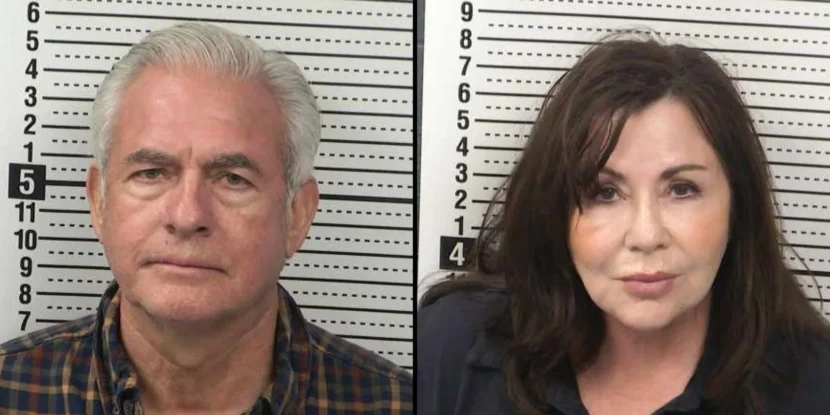
Ex-Judge and Wife Accused of Harboring Foreign Gang Member Released on Bond.

PULSE POINTS:

What Happened: A former judge from New Mexico and his spouse were released on bond after being arrested for allegedly sheltering a Venezuelan gang member and tampering with evidence.

👥 Who’s Involved: Former Doña Ana County Magistrate Judge Joel Cano, his wife Nancy Cano, and Cristhian Ortega-Lopez, an alleged member of the Tren de Aragua gang.

📍 Where & When: Las Cruces, New Mexico; arrested in April and released on bond this past Tuesday.

💬 Key Quote: “Jose Cano stated that he destroyed [a] cellphone and further admitted that he believed the cellphone contained photos or videos that would reflect negatively on Ortega,” a federal criminal complaint states.

⚠️ Impact: Joel and Nancy Cano face potential prison sentences of up to 15 years if convicted; Joel Cano has resigned from his judicial position and is permanently barred from holding any judicial office in New Mexico.

IN FULL:

A former judge from New Mexico, Joel Cano, along with his wife, Nancy Cano, has been released on $10,000 bonds after facing charges of tampering with evidence and allegedly harboring a Venezuelan gang member, following a federal raid on their residence. The couple was apprehended in Las Cruces, New Mexico, after Homeland Security Investigations got a tip-off in January 2025 concerning Cristhian Ortega-Lopez. Ortega-Lopez is an alleged member of Tren de Aragua, a Venezuelan gang designated as a foreign terrorist organization (FTO).

Court records detail that Nancy Cano initially hired Ortega for projects around the house, later offering him accommodation in a guesthouse. Ortega reportedly entered the United States in 2023, climbing over a barbed wire fence. He now faces charges related to illegal firearm possession.

Federal agents searched the Canos’ home on April 24, aiming to locate a missing cellphone belonging to Ortega. During an inquiry, Joel Cano admitted to destroying the device with a hammer and disposing of it. “Specifically, Jose Cano stated that he destroyed the cellphone and further admitted that he believed the cellphone contained photos or videos that would reflect negatively on Ortega,” a federal criminal complaint states. “Through further questioning, agents ascertained that Jose Cano destroyed the cellphone, believing that it contained photographs of Ortega holding firearms that Ortega had uploaded onto social media platforms which would be additional incriminating evidence against him.”

Other devices retrieved from Ortega allegedly suggest affiliations with Tren de Aragua and depict him with weaponry.

Joel Cano resigned from his role as a magistrate judge in March. Subsequently, the New Mexico Supreme Court barred him from holding any judicial office within the state. The charges against the Canos could result in 15-year prison sentences if they are found guilty.

show less

PULSE POINTS:

show more

Court Blocks Trump’s Use of Alien Enemies Act Against Venezuelan Migrants in Texas.

PULSE POINTS:

What Happened: A federal judge ruled that the Trump administration cannot use the Alien Enemies Act (AEA) to detain or deport a group of Venezuelan illegal immigrants from a Texas facility.

👥 Who’s Involved: U.S. District Court Judge Fernando Rodriguez, the Trump administration, Venezuelan illegal immigrants alleged to be part of the Tren de Aragua (TdA) gang.

📍 Where & When: Southern Texas, with the ruling issued on Thursday, May 1.

💬 Key Quote: Judge Rodriguez claims the president’s invocation of the AEA through proclamation “exceeds the scope of the statute and is contrary to the plain, ordinary meaning of the statute’s terms.”

⚠️ Impact: The administration is barred from using the AEA and Trump’s proclamation to detain or remove the migrants, but removal proceedings can still proceed under the Immigration and Nationality Act.

IN FULL:

A federal judge has ruled that President Donald J. Trump‘s March 15 proclamation invoking the Alien Enemies Act (AEA) to expedite the deportation of illegal immigrants residing in the United States exceeds the statutory authority laid out in the law. U.S. District Court Judge Fernando Rodriguez—appointed to the bench in 2018 during Trump’s first term in office—issued the decision on Thursday, determining that the America First leader cannot use the AEA as a legal justification for holding or deporting illegal immigrants either residing or detained in the jurisdiction of the Southern District of Texas.

“The Proclamation makes no reference to and in no manner suggests that a threat exists of an organized, armed group of individuals entering the United States at the direction of Venezuela to conquer the country or assume control over a portion of the nation,” Rodriguez wrote in his ruling. He continued: “Thus, the Proclamation’s language cannot be read as describing conduct that falls within the meaning of ‘invasion’ for purposes of the AEA.”

“Neither the Court nor the parties question that the Executive Branch can direct the detention and removal of aliens who engage in criminal activity in the United States… The question that this lawsuit presents is whether the president can utilize a specific statute, the AEA, to detain and remove Venezuelan aliens who are members of TdA,” the judge continued, concluding: “As to that question, the historical record renders clear that the president’s invocation of the AEA through the proclamation exceeds the scope of the statute and is contrary to the plain, ordinary meaning of the statute’s terms.”

Notably, Tren de Aragua has been officially designated as a foreign terrorist organization, and the FBI reportedly has evidence that the Venezuelan government is aiding its infiltration of the U.S.

The lawsuit, initially filed by the American Civil Liberties Union (ACLU), and the subsequent ruling come as a blow to the Trump White House’s push to swiftly deport dangerous, criminal illegal immigrants. Should the administration appeal Judge Rodriguez’s decision, the conservative-dominated 5th U.S. Circuit Court of Appeals, based in New Orleans, would hear the case. However, the 5th Circuit has shown a penchant in the past to rule against actions it sees as constitutional overreach by the Executive Branch, especially on the issue of immigration. Previously, the appellate court ruled against measures enacted by former Presidents Joe Biden and Barack Obama aimed at allowing illegal immigrants to remain in the country.

Notably, Judge Rodriguez took over the case from James Boasberg, who serves as the chief judge for the United States District Court for the District of Columbia. The change in venue and judge occurred after the U.S. Supreme Court ruled that legal challenges to President Trump’s deportations can only be filed in the court district where the deported person resides or is detained. In addition, the Supreme Court determined that lower court rulings on the matter only apply to the judge’s respective judicial district.

While still presiding over the case earlier this year, Judge Boasberg issued a temporary halt to the deportation of illegal Venezuelan immigrants under the AEA in a bizarre order that demanded the Trump administration recall two planes that were over international waters carrying deportees to El Salvador.

show less

PULSE POINTS:

show more

Biden Judge Blocks State Law Criminalizing Illegal Immigration.

PULSE POINTS:

What Happened: A Joe Biden-appointed federal judge in Idaho has temporarily blocked a state immigration law that let local police arrest migrants suspected of unlawful entry if involved in other crimes.

👥 Who’s Involved: Federal Judge Amanda Brailsford, former President Joe Biden, Gov. Brad Little, and the American Civil Liberties Union (ACLU) of Idaho.

📍 Where & When: Idaho, with the law signed in March, and the preliminary injunction issued recently.

💬 Key Quote: “We are pleased the court recognized that enforcement of this law is harmful and unconstitutional,” gloated Emily Croston, ACLU of Idaho Staff Attorney.

⚠️ Impact: The enforcement of the law is halted, pending a review, as state attorneys consider their next steps.

IN FULL:

A federal judge has put a temporary hold on a controversial Idaho immigration bill, pausing local law enforcement’s ability to arrest migrants suspected of illegal entry if involved in other offenses. Federal Judge Amanda Brailsford, appointed by former President Joe Biden, issued a preliminary injunction on parts of House Bill 83, known as the Immigration Cooperation and Enforcement Act. The law, passed by Idaho’s legislature in March and immediately signed by Gov. Brad Little, criminalizes entry and reentry to the state.

The move follows a lawsuit from the American Civil Liberties Union (ACLU) of Idaho. The organization contends that the bill unlawfully attempts to override federal immigration enforcement, effectively turning local police into immigration agents. Judge Brailsford claimed the ACLU showcased a likelihood of success on several claims, including potential violations of the U.S. Constitution’s due process clause and federal immigration preemption.

The court’s decision halts the state’s ability to enforce misdemeanor penalties on individuals entering Idaho unlawfully, which could escalate to felony charges if associated with further criminal activities. Such offenses could lead to federal deportation processes. The ACLU of Idaho has praised the injunction, claiming, “the court recognized that enforcement of this law is harmful and unconstitutional.”

The blockage of the Immigration Cooperation and Enforcement Act mirrors challenges faced by a similar Texas law, actively opposed by the federal government under Biden, highlighting ongoing guerrilla lawfare against border control policies by partisan organizations. Idaho’s Attorney General is currently evaluating the ruling to consider the state’s next steps.

show less

PULSE POINTS:

show more

Biden Judge Blocking Illegal Immigrant Deportations Faces Conflict of Interest Allegations.

PULSE POINTS:

What Happened: The husband of far-left U.S. District Court Judge Jennifer L. Thurston—who issued a preliminary injunction on Tuesday barring U.S. Customs and Border Patrol (CBP) operating within her court jurisdiction from stopping and detaining suspected illegal immigrants without a warrant—has a history of promoting mass immigration and appears to draw significant business from real estate investors that cater to the illegal immigrant and migrant communities. The revelation raises significant concerns as to whether Judge Thurston is ignoring a conflict of interest by presiding over a case dealing with the Trump administration’s efforts to deport the millions of illegal immigrants currently residing in the United States.

👥 Who’s Involved: U.S. District Court Judge Jennifer L. Thurston; her husband, Marc A Thurston, a real estate broker and investment advisor in California’s Central Valley; President Donald J. Trump, Department of Homeland Security (DHS) Secretary Kristi Noem, and federal immigration officials with the CBP.

📍 Where & When: Judge Thurston issued the preliminary injunction on Tuesday, April 27, while investigative journalist Laura Loomer revealed her husband’s business and advocacy ties to illegal immigrants on Thursday, May 1.

💬 Key Quote: “You just can’t walk up to people with brown skin and say, ‘Give me your papers, ‘” Judge Thurston declared during a hearing prior to her ruling.

⚠️ Impact: The injunction temporarily prevents federal immigration officials from stopping and detaining suspected illegal immigrants in the U.S. District Court’s Eastern District of California. However, if a conflict of interest due to her husband’s business interests can be demonstrated, it could force the far-left judge off the case and render the injunction invalid.

IN FULL:

A far-left U.S. District Court judge, who is temporarily barring the Trump administration from stopping and detaining suspected illegal immigrants in the Eastern District of California, is facing allegations that she ignored a potential conflict of interest that could bias how she presides over the matter. Judge Jennifer L. Thurston, appointed to the bench by former President Joe Biden in 2021, likely enjoys financial benefits drawn from the revenue produced by her husband Marc A. Thurston’s real estate brokerage, which appears to cater to landlords and property investors renting to illegal immigrants and migrant workers in California’s Central Valley.

Investigative journalist Laura Loomer revealed Marc Thurston’s business entanglements with illegal immigrants and migrant workers early on Thursday, highlighting that the real estate broker has made numerous public posts critical of the Trump administration’s crackdown on migrants unlawfully residing in the U.S. Additionally, Loomer notes that Judge Thurston’s husband has made multiple social media posts arguing the deporation operations in California will cause significant disruptions in the Central Valley’s real estate market.

“Changes in immigration policies could disrupt the rental market in the Central Valley, California. With 50% of agricultural workers renting and up to 30% of construction labor undocumented, up to 9,500 people could be displaced from their homes,” Mr. Thurston wrote in a post on LinkedIn three months ago. He added, “Landlords, stay proactive—vacancies may spike, and it’s crucial to keep your tenants happy and ready to adapt. Prepare for potential shifts and secure your investments! Let’s plan ahead.”

Notably, Title 28 of the U.S. Code, which lays out the guidelines for the Judiciary and Judicial Procedure, stipulates in clear terms that spousal business interests can present a disqualifying conflict of interest for federal judges. 28 U.S. Code § 455 (b)(4) states that a federal judge “shall disqualify himself in any proceeding in which… He knows that he, individually or as a fiduciary, or his spouse or minor child residing in his household, has a financial interest in the subject matter in controversy or in a party to the proceeding, or any other interest that could be substantially affected by the outcome of the proceeding.”

WATCH:

show less

PULSE POINTS:

show more

Kristi Noem Vows Immediate Deportation if Kilmar Abrego Garcia Returns to U.S.

PULSE POINTS:

What Happened: Homeland Security Secretary Kristi Noem declared that Kilmar Abrego Garcia, a deported Salvadoran illegal immigrant, would be immediately deported again if returned to the U.S.

👥 Who’s Involved: Kristi Noem, President Donald J. Trump, Kilmar Abrego Garcia, U.S. District Judge Paula Xinis, Salvadoran President Nayib Bukele, and CBS News reporters Tony Dokoupil and Caitlin Yilek.

📍 Where & When: CBS News interview, broadcast on April 30, 2025.

💬 Key Quote: Noem stated, “If [Abrego Garcia] were to be brought back to the United States of America, we would immediately deport him again,” emphasizing the administration’s hardline stance against illegal immigrants.

⚠️ Impact: Noem’s remarks underscore Trump’s commitment to targeting alleged gang members, potentially intensifying legal battles over “due process” while prioritizing national security over judicial pushback.

IN FULL:

Homeland Security Secretary Kristi Noem has reaffirmed the Trump administration’s unwavering focus on deporting dangerous migrants, stating that Kilmar Abrego Garcia—a Salvadoran illegal immigrant deported to a mega-prison in El Salvador—would face immediate deportation again if returned to the U.S. In a CBS News interview on April 30, 2025, Noem stated, “We’re focused on going after the worst of the worst and doing it the right way.”

Her comments come amid scrutiny over the vetting process for migrants deported under the Alien Enemies Act of 1798, which the administration has used to send hundreds of alleged Venezuelan and Salvadoran gang members to the CECOT facility in El Salvador.

Abrego Garcia’s case has drawn significant attention due to a court order agreeing he was an illegal immigrant eligible for deportation, but putting a temporary hold on his removal to El Salvador, specifically, due to gang members there supposedly presenting a threat to his life.

Contrary to Democratic and media claims that Abrego Garcia is a simple “Maryland man” with no criminal history, judges have previously ruled that the authorities have presented “sufficient” evidence that he is a member of the terrorist-designated MS-13 gang, and he has previously been accused of domestic abuse by his wife and arrested on suspicion of human trafficking.

“If [Abrego Garcia] were to be brought back to the United States of America, we would immediately deport him again,” Noem told CBS, saying of a court order to “facilitate” his return to the U.S., “He is not under our control. He is an El Salvador citizen. He is home there in his country.”

U.S. District Judge Paula Xinis, who initially ordered the facilitation of Abrego Garcia’s return, accused the Trump administration of making “no meaningful effort to comply” with her demand. Noem defended the administration’s stance, asserting, “President Trump and his administration has adhered to the court and respects the court and its decisions,” while reiterating, “This individual is not under the United States of America’s jurisdiction and he is not one of our citizens. He is home in his home country. And that’s up to that country to decide what to do.”

Salvadoran President Nayib Bukele has previously stated he will not send Abrego Garcia to the U.S., arguing this would be tantamount to smuggling a terrorist into an allied country.

show less

PULSE POINTS:

show more
Migrant Crime

ICE Deports 65,000 Illegal Immigrants in Trump’s First 100 Days.

PULSE POINTS:

What Happened: U.S. Immigration and Customs Enforcement (ICE) removed over 65,000 illegal immigrants during President Trump’s initial 100 days in office.

👥 Who’s Involved: ICE, President Trump, ICE Acting Director Todd M. Lyons, and ICE Deputy Director Madison D. Sheahan.

📍 Where & When: United States, during the first 100 days of President Trump’s administration.

💬 Key Quote: “The brave men and women of ICE protect our families, friends and neighbors by removing public safety and national security threats from our communities,” stated ICE Acting Director Todd M. Lyons.

⚠️ Impact: Arrested individuals included members of gangs and those with serious criminal charges, impacting both public safety and employment practices.

IN FULL:

U.S. Immigration and Customs Enforcement (ICE) reported on Tuesday that it has removed 65,682 illegal immigrants from the United States during the first 100 days of President Donald Trump’s administration. The agency revealed that a significant number of those arrested—66,463 in total—included individuals with prior criminal convictions or charges.

Three-quarters of the arrests were of criminal illegal immigrants, a point highlighted by ICE Acting Director Todd M. Lyons, who described the effort as a measure to ensure public safety and national security. “The brave men and women of ICE protect our families, friends and neighbors by removing threats to our communities,” Lyons stated.

Among those arrested, approximately 2,288 were identified as gang members from notorious groups such as MS-13, 18th Street, and Tren de Aragua. Additionally, the statistics revealed arrests of individuals convicted or accused of serious crimes, including 1,329 sex offenses and 498 murders. Furthermore, 9,639 faced charges or convictions for assaults, 6,398 for DWIs or DUIs, and 1,479 for weapon offenses.

ICE Deputy Director Madison D. Sheahan emphasized that efforts have also targeted workplaces employing illegal workers. Between January 20 and the time of reporting, over 1,000 illegal workers have been arrested, and fines exceeding $1 million have been proposed against non-compliant businesses. Sheahan also noted a recent operation that dismantled a human smuggling network, which allegedly facilitated the illegal entry of hundreds each year, bypassing governmental scrutiny.

Border Czar Tom Homan has previously said that the total number of deportations during President Trump’s first 100 days, including border removals, stood at around 139,000. However, border removals are trending downwards, as the administration’s strong border policies have slashed attempted border crossings.

show less

PULSE POINTS:

show more