





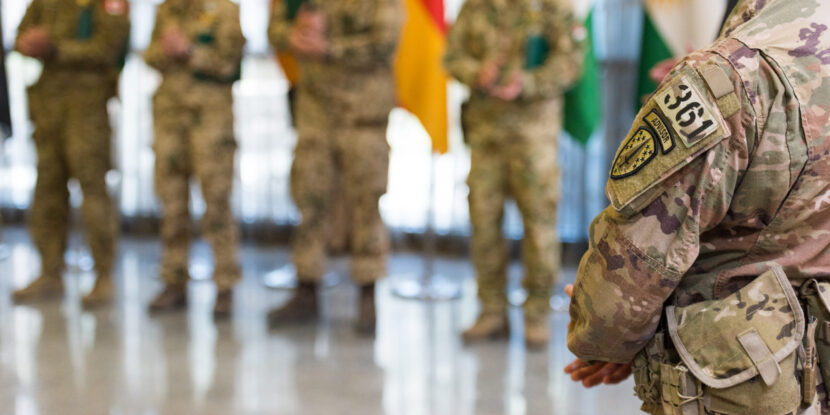

❓WHAT HAPPENED: The Islamic Resistance in Iraq has announced bounties for information leading to the capture or “neutralization” of high-ranking U.S. military or intelligence officials.
👤WHO WAS INVOLVED: The Islamic Resistance in Iraq, U.S. military officials, and intelligence agencies operating in Iraq.
📍WHEN & WHERE: Announced via Telegram, targeting U.S. personnel in Iraq and the wider region.
💬KEY QUOTE: “This pressure affects personnel across all disciplines—whether within the U.S. military or other intelligence and espionage agencies operating in Iraq and the wider region,” the group stated.
🎯IMPACT: The bounty offer represents a significant escalation in threats against American forces and intelligence operations in the region.
An Iran-backed terror proxy in Iraq is offering a bounty of 150 million Iraqi dinars for information that could lead to the capture or “neutralization” of high-ranking U.S. military officials or senior intelligence leadership. The bounties issued by the Islamic Resistance in Iraq were posted on Telegram.
“In the Name of God, the Most Gracious, the Most Merciful: The tightening of the noose around American forces on the ground has led to a curtailment of their security options,” the group stated, before continuing, “This pressure affects personnel across all disciplines—whether within the U.S. military or other intelligence and espionage agencies operating in Iraq and the wider region—compelling them to relocate to alternative (civilian) sites that they perceive as more secure.”
“Accordingly, we hereby announce the allocation of a ‘substantial financial reward’ in exchange for providing information regarding these targets,” the Islamic Resistance in Iraq added.
Iranian-backed terror proxies have long targeted U.S. military and intelligence officials across the Middle East. One of the most horrifying examples of this practice was the 1985 abduction, interrogation, torture, and murder of the Central Intelligence Agency (CIA) station chief in Beirut, William Francis Buckley, by Hezbollah and its Islamic Revolutionary Guard Corps (IRGC) handlers.
Buckley was abducted by the Shia militia called Islamic Jihad—the predecessor to Hezbollah—in March 1984. He was held for an estimated 19 months before his execution. During that time, Buckley was subjected to gruesome torture, including what appears to have been the flaying of his skin while he was still alive. His body was later dumped along a road near the Beirut airport, covered in bandages and blood, while a catheter was also left embedded inside him.
Join Pulse+ to comment below, and receive exclusive e-mail analyses.





.jpeg)


.jpg)


