


Tuesday, November 3, 2026

Farage Targets Migrant Hotels & Net Zero After Major Election Breakthrough.

PULSE POINTS:

❓What Happened: Reform UK plans to use their recent local election success to block illegal migrants and challenge the government’s green agenda.

👥 Who’s Involved: Nigel Farage’s Reform UK party, Chairman Zia Yusuf, Dame Andrea Jenkyns, and the Labour government led by Sir Kier Starmer.

📍 Where & When: England, following the municipal elections last week.

💬 Key Quote: “We will be publishing a plan to deport everybody who is currently in this country illegally in our first term of government,” said Zia Yusuf.

⚠️ Impact: Potential legal challenges against government policies and a push to influence future national elections.

IN FULL:

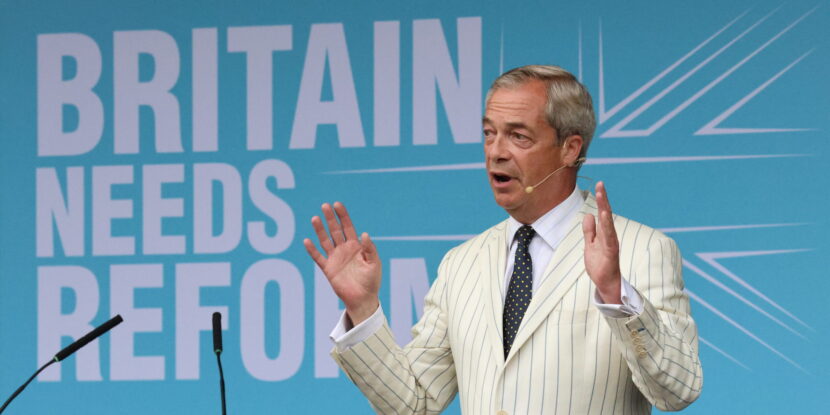
The Reform Party, led by Nigel Farage, is poised to leverage its recent electoral success to challenge immigration and environmental policies in England. Following a significant triumph in local council elections at the beginning of May, the party has articulated plans to prevent illegal immigrants from being housed in areas under its control and to contest the central government’s climate initiatives.

Zia Yusuf, the chairman of Reform, emphasized the party’s commitment to utilizing “every instrument of power available” at the council level to halt the dispersal of asylum seekers throughout England. Many migrants are arriving illegally via safe countries like France, making it highly unlikely they were genuinely in danger prior to entering Britain. The party’s strategy includes legal injunctions, judicial reviews, and leveraging planning laws to counteract the central government, controlled by Prime Minister Sir Keir Starmer’s leftist Labour Party.

Labour is reportedly expanding a program initiated by the notionally right-wing Conservatives, who governed from 2010 to mid-2024, that involves renting private homes for migrants, sparking concerns over public safety and the housing market. Yusuf highlighted that many hotels converted for migrant use may violate regulations, an issue currently being explored by Reform’s legal team.

Dame Andrea Jenkyns, Reform’s newly elected Mayor of Greater Lincolnshire, proposed housing migrants in tents, as seen in France, to deter them from coming to Britain for an easy ride at taxpayers’ expense. More broadly, Yusuf said that Reform would work to deport all illegal immigrants if it wins the next general election.

Reform is also targeting the government’s climate agenda, with Dame Andrea highlighting a plan to challenge Net Zero Minister Ed Milliband’s policies, which increase energy prices for industry and households. This could include legal challenges.

Image courtesy of Stuart Mitchell, IncMonocle.

show less

PULSE POINTS:

show more

Half of ‘Britons’ Say They’re Unwilling to Fight for The Country.

PULSE POINTS:

❓What Happened: Nearly half of Britons surveyed say they would refuse to fight for their country “under any circumstances.”

👥 Who’s Involved: Ipsos survey respondents, Richard Gill, a former British Army officer.

📍 Where & When: United Kingdom, ahead of Victory in Europe (VE) Day commemorations on May 5.

💬 Key Quote: “We’ve stopped teaching pride in our country, its history, and its values… A nation unsure of itself cannot expect its people to defend it. That must change.” — Richard Gill.

⚠️ Impact: The findings highlight a decline in patriotic sentiment, with significant gender and political divides.

IN FULL:

A recent Ipsos survey reveals a significant decline in patriotic sentiment among Britons, with nearly half of those surveyed expressing an unwillingness to fight for their country “under any circumstances.”

The survey, which queried over 1,000 adults, found that only 35 percent of respondents would be willing to take up arms in a time of war, while a notable 48 percent stated there were no conditions under which they would go to war for Britain. An additional 17 percent said they were unsure of their stance.

The survey results emerge as the United Kingdom prepares for Victory in Europe Day (VE Day) commemorations, marking 80 years since the end of the Second World War, with celebrations including a military procession through central London on May 5.

Richard Gill, a former British Army officer with service in Iraq and Afghanistan, commented on the survey’s implications, suggesting a “deeper national malaise” as the root cause. He warned, “We’ve stopped teaching pride in our country, its history, and its values. A nation unsure of itself cannot expect its people to defend it. That must change.”

The survey also uncovered notable gender and age disparities. While nearly half of the men surveyed (49 percent) expressed a willingness to fight, only 21 percent of women shared the same sentiment. Among younger respondents aged 18 to 34, 42 percent indicated they would volunteer, whereas willingness significantly decreased to 28 percent among those aged 35 to 54, with over half of this group asserting they would never take up arms.

Political affiliations also played a role in respondents’ willingness to fight. Supporters of Nigel Farage’s Reform Party were the most inclined to defend their country—despite the establishment media and political parties attempting to paint them as Russian stooges—contrasting sharply with supporters of the fanatically pro-European Union (EU) Liberal Democrats, who were the least likely to do so.

Mass migration has also likely been a contributing factor in the strength of feeling towards the nation, with many first and second generation migrants more likely to fight for the nation from which they came, rather than the one in which they reside.

show less

PULSE POINTS:

show more

UK Cops Detain Iranians in Anti-Terrorism Raids.

PULSE POINTS:

❓What Happened: Eight individuals were detained in the UK as part of anti-terrorism operations, with five men suspected of planning a terrorist act.

👥 Who’s Involved: The main group includes five men, four of whom are Iranian. Their ages range from 29 to 46. Three other Iranian nationals were arrested in a separate operation.

📍 Where & When: Arrests took place on Saturday in London, Swindon, and Greater Manchester.

💬 Key Quote: Dominic Murphy from the Metropolitan Police stated the investigation is in early stages, and authorities are exploring possible motivations and public risk.

⚠️ Impact: The arrests reflect heightened scrutiny of Iran-linked activities in the UK. British police have responded to 20 plots since 2022, believed to have connections to Tehran.

IN FULL:

Eight individuals, including seven Iranian nationals, were apprehended by UK police on Saturday in a pair of anti-terrorism stings. In a primary operation, five men, four of whom are Iranian, were detained on suspicion of preparing a terrorist act. The arrests occurred across London, Swindon, and the Greater Manchester area, according to a statement by London’s Metropolitan Police provided to Agence France-Presse.

The targeted individuals, aged between 29 and 46, were taken into custody under the Terrorism Act, except for one whose nationality is yet to be confirmed and who was arrested under the Police and Criminal Evidence Act. These arrests are linked to an alleged plot to target an unspecified site.

The UK faces increased alertness toward activities possibly backed by Iran. According to a Reuters report quoting Ken McCallum, the head of domestic intelligence, there have been responses to 20 Tehran-connected schemes posing potential threats to UK citizens since 2022. Yvette Cooper, the UK’s Interior Minister, referred to these developments as profound and part of safeguarding national security.

Dominic Murphy, the Metropolitan Police’s counter-terrorism chief, mentioned that the investigation is still unfolding. Various lines of enquiry are being pursued to identify motivations and assess any further risk to public safety.

Additionally, another three Iranian nationals were arrested during a separate operation in London on the same day. This underscores the ongoing vigilance concerning terrorism threats.

show less

PULSE POINTS:

show more
Image by IncMonocle

Nigel Farage Hails Reform’s Triumph as ‘Apocalypse’ for Two-Party System.

PULSE POINTS:

❓What Happened: Nigel Farage’s Reform Party has achieved a significant breakthrough in England, winning local and mayoral elections and securing a parliamentary seat in a by-election (special election).

👥 Who’s Involved: Nigel Farage, voters in England, the Labour and Conservative parties.

📍 Where & When: Various locations across England, including Durham, Northumberland, and Essex, during the 2025 local elections.

💬 Key Quote: Nigel Farage stated, “People vote for us because they want change. They’re sick of the two-party system.”

⚠️ Impact: The election results signify a shift in the political landscape, with challenges for established parties like the governing Labour Party and the formerly governing  Conservatives (Tories).

IN FULL:

Nigel Farage’s Reform Party has made massive inroads in England‘s local elections, taking a pivotal step beyond their previous political influence. The 2025 elections resulted in Reform securing vital positions, including a new parliamentary seat, and control of numerous municipal governments, suggesting a growing disenchantment with the establishment Labour and Conservative parties.

At the heart of this shift was the Runcorn and Helsby by-election, where Reform claimed victory. The leftist Labour Party previously regarded it as a stronghold, with a majority of nearly 14,700 votes from the general election held just last year.

In Durham County Council, Reform captured 17 seats formerly held by both Labour and the Conservatives. Nigel Farage told the media, “Two-party politics just died in front of our eyes. What happened here in County Durham, in Lancashire, and in Runcorn and Helsby, it’s pretty cataclysmic for the Labour Party.”

He emphasized that Reform aims to scrutinize government spending, reduce unnecessary expenditures, and prioritize core services over climate change initiatives. “We need to shrink the size of local government, reduce excessive spending, and get back to delivering the core services that county councils are supposed to provide,” Farage said.

Farage dismissed notions of an immediate bid for the prime ministership, emphasizing focus on forthcoming elections in Scotland and Wales as necessary steps before contemplating higher ambitions.

Image by IncMonocle.

show less

PULSE POINTS:

show more

Farage’s Reform Party Surges in English Elections as Labour Stumbles and Conservatives Crash.

PULSE POINTS:

❓What Happened: The Reform Party, led by Nigel Farage, is making significant inroads in England’s local elections, while the governing Labour Party faces setbacks and the formerly governing Conservative Party suffers major losses.

👥 Who’s Involved: Nigel Farage’s Reform Party, English voters, and Britain’s establishment Labour and Conservative parties.

📍 Where & When: England, local elections results announced on Friday.

💬 Key Quote: Results show Reform’s shift from a single-issue party is achieving success.

⚠️ Impact: Reform has taken a parliamentary seat from Labour in a by-election (special election) and gained many seats and mayoralties in local governments across England, challenging the major political parties.

IN FULL:

As votes continue to be tallied from England’s local elections, early results show Nigel Farage’s Reform Party emerging as the most successful amidst significant losses for the establishment political parties. The elections, involving approximately 1,600 municipal seats across 23 areas and six regional mayor positions, mark the first major voting event since the Labour Party took government from the Conservatives (Tories) last summer.

Reform, formerly the Brexit Party, has also won a parliamentary by-election (special election) for the Runcorn and Helsby constituency (electoral district) in northwestern England, ousting Labour by a narrow margin of just six votes in what was formerly a “safe” seat for the leftist party. Additionally, Farage’s populists secured the newly established mayoralty in Greater Lincolnshire and increased their number of council seats nationwide, with further gains expected as results continue to be announced.

Although Farage’s initial focus was Britain’s withdrawal from the European Union (EU), its rebranding as Reform has seen it take up other issues, such as cutting immigration, deporting illegal aliens, and ending economically damaging net-zero climate policies.

The results indicate that Reform’s strategy to evolve beyond a single-issue platform is yielding dividends. While the votes are still being counted, the initial outcomes suggest that the traditional dominance of the two major political parties has been effectively undermined.

Previously, the Conservatives have often managed to pressure right-leaning voters disappointed by their embrace of climate ideology, broken promises on immigration, and failure to adequately challenge woke ideology through simplistic “Vote Farage, Get Labour” messaging. Today’s results strongly suggest that this messaging has finally failed, and that it will be Farage who can argue that a vote for the Conservatives is liable to empower Labour going into the next general election.

Image by Owain.davies.

show less

PULSE POINTS:

show more

Reform Party, Led by Trump Ally Farage, Beats Governing Labour Party in Special Election.

PULSE POINTS:

❓What Happened: Sarah Pochin, representing Nigel Farage’s Reform Party, has won a by-election (special election) in the Runcorn and Helsby constituency (electoral district), ousting the governing Labour Party by six votes.

👥 Who’s Involved: Sarah Pochin of Reform UK, Karen Shore of Labour, Nigel Farage.

📍 Where & When: Runcorn and Helsby, northwest England; results overnight on May 2, 2025.

💬 Key Quote: Nigel Farage described the victory as a “huge night for Reform.”

⚠️ Impact: The victory highlights Reform’s growing influence in British politics, despite Labour’s substantial parliamentary majority.

IN FULL:

The Reform Party’s Sarah Pochin clinched victory in the Runcorn and Helsby by-election (special election) in England by a margin of just six votes, unseating the governing Labour Party in what was previously a “safe” seat. The election, which took place in northwest England, saw Pochin defeat Labour candidate Karen Shore after a recount. The win marks a significant gain for Nigel Farage’s party and signals a shift in the political landscape.

The by-election was initiated after the previous Labour Member of Parliament (MP) resigned following a criminal conviction. “Victory in Runcorn & Helsby proves we are now the opposition party to this Labour government,” said Reform leader Nigel Farage. “With this and other results tonight, it’s clear that if you vote Conservative you will get Labour. But if you vote Reform, you get Reform.”

The Brexit champion was referring to the broader municipal and mayoral elections across England taking place at the same time as the Runcorn by-election. Results are still coming in, but those declared so far indicate massive gains by Reform, huge losses for the Conservative Party, which governed from 2010 to mid-2024, and comparatively small but still significant losses for Labour.

In the House of Commons, Labour retains a substantial majority, holding 403 MPs compared to Reform’s five, while the Conservatives are the primary opposition, with 121 seats. However, the parties’ relative popularity is not as far apart as this would indicate, and national polls now regularly show Reform equalling and in many cases leading the two establishment parties.

In the Runcorn contest, the Conservative candidate managed only a little over seven percent of the vote, while Reform secured 38.72 percent against Labour’s 38.70 percent. The electoral system in the United Kingdom, which follows a first-past-the-post model, tends to favor larger parties. The Conservatives, in particular, have often pressured right-leaning voters dissatisfied with their left-leaning governance into backing them instead of Farage-led parties to keep Labour out.

The Runcorn results suggest this line of argument is no longer effective, with voters ready to vote for Reform in large numbers regardless of the scare tactics employed by the establishment parties.

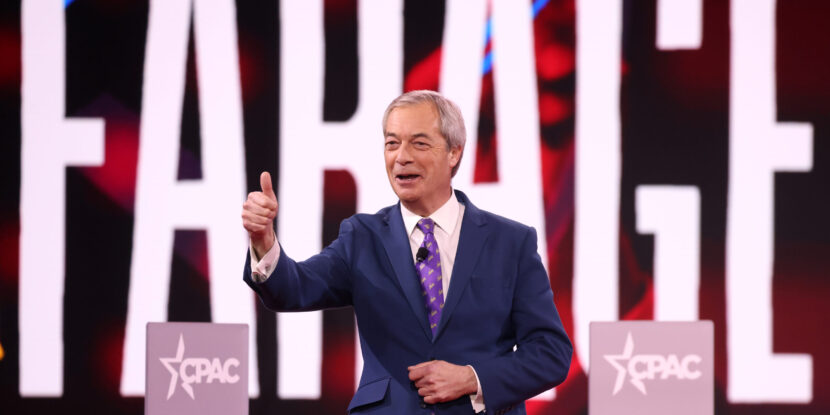
Image by Gage Skidmore.

show less

PULSE POINTS:

show more

Transgenders Banned from Women’s Soccer.

PULSE POINTS:

❓What Happened: The Football Association (FA) in England has issued a decision to prohibit transgenders from participating in women’s soccer teams.

👥 Who’s Involved: The Football Association, the governing body of soccer in England, and male players who claim to be women.

📍 Where & When: England; effective from June 1.

💬 Key Quote: “Transgender women will no longer be able to play in women’s football in England.” — Football Association.

⚠️ Impact: The ruling affects participation in both grassroots and professional women’s soccer, requiring adaptation to a recent Supreme Court ruling that women should be defined in terms of their biology for legal purposes.

IN FULL:

The English Football Association (FA) has announced that transgenders will be barred from competing on women’s soccer teams. This decision, effective from June, follows a recent ruling by the Supreme Court of the United Kingdom. The ruling clarified that Britain’s equality laws are founded on “biological sex,” and that female-identifying males do not meet the legal definition of women.

The FA’s policy shift is part of a broader movement among various organizations to comply with the Supreme Court’s judgment, directing all public and private bodies in Britain to comply regarding the access they provide to single-sex services and spaces.

This new ban affects grassroots soccer, regional leagues governed by the FA, and professional-level competition. The ruling has also prompted changes in other sports organizations. The Scottish Football Association (SFA) has announced that competitive girls’ and women’s football will be restricted to biological females beginning in the 2025-26 season.

The move comes after the London Marathon refused to ban biological men from competing as women in its mass participation category. Transgender athletes were prohibited from elite-level competition, but still able to record their race times as women in the mass participation race.

Image by joshjdss.

show less

PULSE POINTS:

show more

England Elects in Local Ballots That Could Make or Break Farage’s Path to 10 Downing Street.

PULSE POINTS:

❓What Happened: Nigel Farage, leader of Reform UK and key figure in the Brexit initiative, blames the Conservative Party for not executing Brexit effectively, as Reform UK aims to convert its polling popularity into actual council seats in today’s elections.

👥 Who’s Involved: Nigel Farage, Reform UK; the Conservative Party, led by Kemi Badenoch; Labour Party, led by Sir Keir Starmer.

📍 Where & When: United Kingdom, with local elections scheduled for May 1.

⚠️ Impact: The Reform UK party aims to replace the Conservatives as the primary opposition to Labour, influencing local governance. A significant loss could bring about leadership challenges within the Conservative Party and the political landscape across England.

IN FULL:

England goes to the polls today, May 1, with Nigel Farage’s Reform UK positioned ahead, potentially positioning itself to secure seats in various councils.

There are 1,641 council seats across 23 local authorities, including 14 county councils, eight unitary authorities, and one metropolitan borough (Doncaster) in play, as well as six mayoral elections, featuring contests in Greater Lincolnshire, Hull and East Yorkshire, Cambridgeshire & Peterborough, the West of England, Doncaster, and North Tyneside.

Notably, ‘Bad Boy of Brexit’ and long-time Farage ally Arron Banks is up for election as Mayor in the West of England Combined Authority (WECA). Early indications showed Banks as an outsider candidate, though more recently, he has been polling in a position to emerge stunningly victorious, perhaps even to his chagrin.

Voters in the parliamentary constituency of Runcorn & Helsby will also go to the polls today, following a special election triggered by the resignation of Labour Member of Parliament Mike Amesbury, who was convicted earlier this year after assaulting a constituent.

Reform UK seeks to expand its appeal to traditional Labour supporters by advocating for policies such as the renationalization of industries perceived to be failing, including Thames Water. The strategic goal is to erode Labour support while positioning the Reform UK party as a replacement to the Conservatives under Kemi Badenoch’s leadership, without forming a center-right coalition.

The Conservative Party is now under existential pressure. It faces competition from Reform UK in the North and Midlands and the Liberal Democrats in the Southern regions. Kemi Badenoch’s leadership may face challenges should the party see substantial losses in the council seats it currently defends.

The introduction of five-party dynamics, with the rise of the Greens, could result in closely contested council seats, prompting significant implications for future elections. Reform UK’s performance in the upcoming elections will not only signal shifts in political power but also test whether Farage’s party can deliver on its promises or merely expand on electoral rhetoric.

show less

PULSE POINTS:

show more

On The Eve of Major UK Elections, ‘None of the Above’ Polls In First Place.

PULSE POINTS:

❓What Happened: A poll indicated that “none of the above” is the most popular leader choice among voters, highlighting voter disillusionment before local elections.

👥 Who’s Involved: Reform UK, led by Nigel Farage; Labour and Conservative parties; More In Common; Fire Brigades Union.

📍 Where & When: England, ahead of local elections on May 1.

⚠️ Impact: Nigel Farage’s Reform UK is expected to gain significant traction, possibly securing a parliamentary by-election (special election) win and mayoral positions, challenging the legacy political parties.

IN FULL:

According to a recent poll, voter sentiment ahead of local elections in England showcases significant disillusionment with major political parties. The survey revealed that 41 percent of respondents chose “none of the above” when asked who would be most effective at governing, dwarfing named candidates. Reform UK, spearheaded by Nigel Farage, appears poised for a breakthrough, potentially challenging both the governing Labour Party and the recently ousted Conservatives by capturing key seats across England, including a crucial by-election (special election).

Reform UK’s anticipated gains are stirring concern among some left-wing groups. The Fire Brigades Union (FBU) has initiated a campaign in traditionally Labour-voting areas like Runcorn and Helsby, attempting to curb a potential surge by Farage’s party.

Farage emerged as the second choice in polling figures with 23 percent, following the “none of the above” category. Labour’s Keir Starmer received 19 percent, trailed by Conservative leader Kemi Badenoch with a paltry eight percent. Overall polling in election hotspots placed Labour behind with 18 percent, as Reform UK led with 26 percent, while the Conservatives held 25 percent.

With over 1,600 council seats and pivotal mayoral races at stake, the local elections may act as a litmus test for national sentiments. The National Pulse will cover the results as they emerge.

show less

PULSE POINTS:

show more

Editor’s Notes

Behind-the-scenes political intrigue exclusively for Pulse+ subscribers.

RAHEEM J. KASSAM Editor-in-Chief
It is worth remembering that Britain uses voter ID now, which hurts the Labour Party
It is worth remembering that Britain uses voter ID now, which hurts the Labour Party show more
for exclusive members-only insights

Knife Crime and Personal Theft Surging.

PULSE POINTS:

❓What Happened: Recorded knife crime offences in England and Wales are now on the rise following a decrease during the COVID-19 pandemic.

👥 Who’s Involved: Police forces across England and Wales, with London’s Metropolitan Police recording the highest number of cases.

📍 Where & When: The data pertains to England and Wales in the year 2024, annual figures released by the government’s Office for National Statistics (ONS).

💬 Key Quote:  Policing minister Dame Diana Johnson claims the leftist Labour government “will not tolerate the criminality blighting our communities.”

⚠️ Impact: The crime rise may impact the fortunes of Labour and the formerly governing Conservatives in May’s local elections, with Nigel Farage’s Reform Party already outpolling them regularly.

IN FULL:

Knife crime is rising in England and Wales. In 2024, an estimated 54,587 knife crime incidents were reported, an increase of two percent from the previous year’s 53,413 cases. The Office for National Statistics (ONS) released the new stats this week.

Robberies with knives or sharp objects rose by five percent, reaching 23,305 cases, an increase from 2023’s number of 22,189. Threats to kill using knives saw a modest increase, rising three percent from 5,797 in 2023 to 5,979 in 2024. The offences categorized as “possession of an article with a blade or point” have also shown a rise, with 28,150 reported in 2024 compared to the previous year’s 27,892, significantly higher than the pre-pandemic count of 23,264 in 2019/20.

A regional breakdown of the data shows London‘s Metropolitan Police accounted for 31 percent of the total offenses, with a rate of 188 per 100,000 individuals. West Midlands Police followed with a nine percent share, Greater Manchester Police at six percent, and West Yorkshire Police at four percent.

Personal thefts also substantially increased in England and Wales in 2024, up 22 percent compared to 2023. The survey highlighted a 50 percent rise in theft from the person, including mobile phone thefts, and a 19 percent rise in theft from outside residences.

Policing minister Dame Diana Johnson has reacted to the increases in crime, claiming the leftist Labour government “will not tolerate the criminality blighting our communities.”

Image by Alison Benbow.

show less

PULSE POINTS:

show more