





❓WHAT HAPPENED: Statistics reveal that Britain is currently prosecuting more people for speech crimes than the former Soviet Union did.
👤WHO WAS INVOLVED: Commentator Peter Nimitz, analyst Alex Kokcharov, and the British government.
📍WHEN & WHERE: The statistics were posted on X (formerly Twitter) on March 4.
💬KEY QUOTE: “USSR had centralized repression apparati (party officials & secret police) while UK utilizes a combination of secret police, decentralized apparati aligned by judiciary (HR departments), & ethnic auxiliaries in certain territorial police forces,” Peter Nimitz wrote.
🎯IMPACT: The statistics reveal the massive scale of speech suppression in Britain.
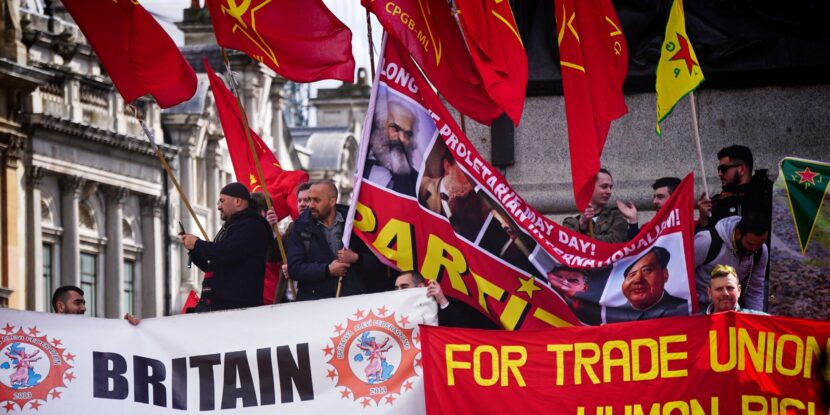
Statistics circulated online suggest that Britain prosecutes far more speech-related cases each year than the former Soviet Union (USSR) did during one of its most repressive periods. According to figures shared by commentator Peter Nimitz, Soviet authorities arrested 3,234 people between 1962 and 1985 under Articles 70 and 190-1 of the criminal code, which targeted “anti-Soviet agitation” and “disinformation.” Meanwhile, Britain recorded 2,341 prosecutions for online speech offenses in 2022 alone, resulting in 1,816 convictions, under legislation such as the Communications Act 2003 and the Malicious Communications Act 1988.
“USSR had centralized repression apparati (party officials & secret police) while UK utilizes a combination of secret police, decentralized apparati aligned by judiciary (HR departments), & ethnic auxiliaries in certain territorial police forces (infamously Leicestershire),” Nimitz said.
The comparison was prompted by a viral video shared by British counter-terror police as part of its sinister “WHAT YOU SHARE LEAVES A TRACE” campaign, showing a white teenager fearing for his future after sharing a link because he “thought it was funny,” only for the authorities to decide it was “terrorist content” and seize his devices.
wtf is happening in the UK man pic.twitter.com/kV9jexyDYr
— Jack Mac (@JackMac) March 5, 2026
The comparison between Britain and the USSR has been seized upon by critics who argue that Britain’s expanding policing of online speech has erased the country’s traditional civil liberties. High-profile recent cases include a mother who was jailed over an anti-immigration social media post shortly after a mass stabbing targeting young girls, perpetrated by the son of two African asylum seekers.
In another case, a British man received a prison sentence after chanting “Who the f*** is Allah?” during unrest over the stabbings, with the judge citing hostility toward Islam as a factor in sentencing. A former professional soccer player was also convicted over abusive messages directed at BBC presenters on social media, with the judge rebuking him in court for wearing a scarf displaying the British flag.
Some argue the comparison of Britain to the USSR is unfair, as the USSR had no social media to police, and the penalties for speech crimes were often harsher than in Britain, including years in labor camps or internal exile. However, Britain’s modern censorship has drawn much international criticism, with the Trump administration in the U.S. concerned that it is impacting American citizens and companies.
Last year, the U.S. State Department released a human rights report critical of British policies, highlighting the censorious Online Safety Act in particular.
Jack Montgomery contributed to this report.
Join Pulse+ to comment below, and receive exclusive e-mail analyses.
show less





.jpg)


