


❓WHAT HAPPENED: The Federal Reserve Bank of Atlanta has updated its gross domestic product (GDP) estimate for the U.S. economy for the 4th Quarter (Q4) of 2025 to an astounding 5.3 percent.
👤WHO WAS INVOLVED: The Federal Reserve Bank of Atlanta, American businesses, economists, and the Trump administration.
📍WHEN & WHERE: The estimate was released earlier in January, with an update scheduled for Wednesday, January 22. The initial 4th Quarter GDP numbers will be released on February 20.
🎯IMPACT: While jobsdata continues to suggest a softening in the job market, overall economic data shows the American economy continues to strengthen.
IN FULL
The Federal Reserve Bank of Atlanta, which maintains the central bank’s GDP Now tracking system, estimates that the 4th Quarter gross domestic product (GDP) in the entire United States expanded by 5.3 percent. This would mark the highest jump in GDP since the 4th Quarter of 2021, when the economy expanded by seven percent—though this was exceptional, being the final significant jump in growth stemming from the lifting of lockdowns during the COVID-19 pandemic.
Before that, a brief surge following a sharp Q1 contraction occurred in 2014, and before that, the last growth rate above 5% was in 2003.
In the Second Quarter of 2025, the economy under President Donald J. Trump grew at three percent. At the same time, the initial Third Quarter number shows the economy grew by 4.3 percent. The robust expansion of the economy has been a key goal of the Trump administration, as high growth levels not only signal increasing economic productivity but also rebalance the United States’s debt-to-GDP ratio.
Notably, the Atlanta Fed’s data suggests almost all of the economic growth in the last quarter will have come from the private sector, allaying ongoing concerns about an economic contraction.
While jobs data continues to suggest a softening in the job market, overall economic data shows the American economy continuing to strengthen. With inflation numbers having fallen to just about the Federal Reserve‘s two percent target, it is likely the central bank will face continued pressure to slash interest rates for the foreseeable future.
Join Pulse+ to comment below and receive exclusive email analyses.
❓WHAT HAPPENED: U.S. President Donald Trump criticized the UK government’s decision to hand over the Chagos Islands to Mauritius, calling it an act of “great stupidity.”
👤WHO WAS INVOLVED: President Donald Trump, UK Prime Minister Sir Keir Starmer, Nigel Farage, and the British government.
📍WHEN & WHERE: The controversy centers on the British Indian Ocean Territory (BIOT), with key comments made on Tuesday.
💬KEY QUOTE: “The UK giving away extremely important land is an act of great stupidity.” – Donald Trump
🎯IMPACT: The decision has raised concerns over national security, U.S.-UK relations, and China’s growing influence.
IN FULL
President Donald J. Trump has sharply criticized the United Kingdom’s much-derided decision to transfer sovereignty over the Chagos Islands, officially the British Indian Ocean Territory, to Mauritius, describing it as “an act of GREAT STUPIDITY.” The archipelago includes Diego Garcia, home to a strategically vital joint British-American military base used for air, naval, and intelligence operations in the Indian Ocean and Asia-Pacific region.
In a post on Truth Social early Tuesday, Trump condemned the move by Prime Minister Sir Keir Starmer and his left-wing Labour Party, writing: “Shockingly, our ‘brilliant’ NATO Ally, the United Kingdom, is currently planning to give away the Island of Diego Garcia, the site of a vital U.S. Military Base, to Mauritius, and to do so FOR NO REASON WHATSOEVER.”
He added: “The UK giving away extremely important land is an act of GREAT STUPIDITY, and is another in a very long line of National Security reasons why Greenland has to be acquired.” Trump noted that there is “no doubt that China and Russia have noticed this act of total weakness. These are International Powers who only recognize STRENGTH,” linking the handover to his broader push for U.S. control over Greenland.
Under its agreement with Mauritius, the British government will cede sovereignty to Mauritius—despite worries about the latter’s growing ties to China—and then lease back the Diego Garcia base for 100 years at exorbitant cost to ensure continued operations. This is despite the fact that Mauritius is thousands of miles from Chagos and has never been sovereign over the archipelago.
While Trump’s comments mark a reversal of his earlier support for the deal, it is widely understood that his administration was highly skeptical of it, and conditional on Britain paying to retain Diego Garcia. Reform Party leader Nigel Farage, a longtime ally of Trump who had previously lobbied him to block the deal, welcomed the belated intervention, stating: “Thank goodness Trump has vetoed the surrender of the Chagos islands.”
A British government spokesman defended the arrangement, claiming, “We acted because the base on Diego Garcia was under threat after court decisions undermined our position and would have prevented it operating as intended in the future… This deal secures the operations of the joint U.S.-UK base on Diego Garcia for generations, with robust provisions for keeping its unique capabilities intact and our adversaries out.”
In fact, International Court of Justice (ICJ) rulings that the islands should be ceded to Mauritius were not legally binding, and even with the expensive lease, Mauritius could render Diego Garcia largely useless by leasing another Chagos island nearby to China or another Western adversary. The decision is likely less to do with the national interest than Labour’s “anti-colonial” ideology, with the British attorney general responsible for negotiating the deal openly despising the “racist” British Empire.
Notably, the Labour government has not addressed the fact that it is transferring Chagos against the wishes of the Chagossians, despite claiming any sale of Greenland would be impossible without the Greenlanders’ consent.
Join Pulse+ to comment below, and receive exclusive e-mail analyses.
❓WHAT HAPPENED: Japanese Prime Minister Sanae Takaichi has announced a plan to dissolve parliament and hold a snap election.
👤WHO WAS INVOLVED: Prime Minister Sanae Takaichi, the Liberal Democratic Party (LDP), the Japan Innovation Party, and the Centrist Reform Alliance.
📍WHEN & WHERE: The snap election is scheduled for February 8, 2026, in Japan, following an announcement on January 19, 2026.
🎯IMPACT: The election aims to restore the LDP’s majority in the Japanese legislature’s lower house and address pressing national issues like economic growth, defense spending, and the rising cost of living.
IN FULL
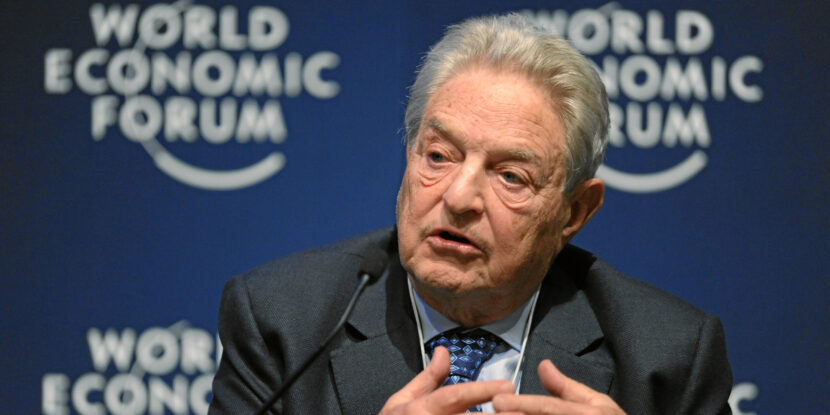
Japanese Prime Minister Sanae Takaichi has announced a snap national election for February 8, 2026. The decision comes as she seeks to capitalise on her surging public popularity and strengthen her party’s position in parliament.
The snap election will be a significant political test for Takaichi, who only took office in October of last year. She inherited a government where her Liberal Democratic Party (LDP) had lost its parliamentary majority, currently holding 199 out of 465 lower house seats. The LDP governs in coalition with the Japan Innovation Party, and Takaichi’s rise to Prime Minister was initially frustrated by a coalition of opposition parties seeking political concessions.
Prime Minister Takaichi is an ally of U.S. President Donald J. Trump and an opponent of immigration, which had been increased in recent years as a supposed solution to Japan’s low birthrate. “It is a fact that unlawful activity and violation of rules by some foreigners are causing the sense of unease and unfairness among Japanese people,” Takaichi said in her first address after taking office, pledging: “The government will respond decisively to these activities. It’s not xenophobia,”
Most see the snap election as a bid to restore the LDP’s majority, thereby strengthening its ability to pass legislation and pursue key initiatives such as increased defense spending and economic growth measures. Cost of living is primarily seen as the top issue for voters, with 45 percent citing it as their main concern in a recent poll. Other key issues include foreign relations and national security, especially amid China’s hostile actions in the region.
Meanwhile, the main opposition has formed a new bloc called the Centrist Reform Alliance, which currently holds 172 seats.
Join Pulse+ to comment below, and receive exclusive e-mail analyses.

❓WHAT HAPPENED: More than 10,000 illegal immigrants have been arrested in Minneapolis, Minnesota since the start of the second Trump administration, with 3,000 taken into custody in the last six weeks alone, according to the Department of Homeland Security (DHS).
👤WHO WAS INVOLVED: DHS Secretary Kristi Noem, federal agents, Minnesota Governor Tim Walz (D), Minneapolis Mayor Jacob Frey (D), and Rep. Ilhan Omar (D).
📍WHEN & WHERE: The arrests occurred in Minneapolis, with intensified operations beginning just after Thanksgiving.
💬KEY QUOTE: “In the last 6 weeks, our brave DHS law enforcement have arrested 3,000 criminal illegal aliens including vicious murderers, rapists, child pedophiles and incredibly dangerous individuals. A HUGE victory for public safety.” – Kristi Noem
🎯IMPACT: The arrests highlight ongoing immigration enforcement efforts and have drawn strong reactions, with claims of widespread fraud and criticism of local leadership.
IN FULL
The Department of Homeland Security (DHS) announced on Monday that over 10,000 illegal immigrants have been arrested in Minneapolis, Minnesota, since the start of the second Trump administration, including roughly 3,000 in the past six weeks. DHS Secretary Kristi Noem highlighted the enforcement surge on social media, declaring, “PEACE AND PUBLIC SAFETY IN MINNEAPOLIS!”
““In the last 6 weeks, our brave DHS law enforcement have arrested 3,000 criminal illegal aliens including vicious murders, rapists, child pedophiles and incredibly dangerous individuals. A HUGE victory for public safety,” Noem said.
Noem criticized Minnesota Governor Tim Walz and Minneapolis Mayor Jacob Frey, accusing them of prioritizing criminals over the safety of residents. She said those arrested “were killing Americans, hurting children and reigning terror in Minneapolis.” Federal agents from Immigration and Customs Enforcement (ICE), Customs and Border Protection (CBP), and Homeland Security Investigations (HSI) have carried out what DHS describes as the largest immigration enforcement operation in the city’s history, with thousands of officers deployed since late November.
Noem said the operation has targeted individuals she called “vicious murderers, rapists, child pedophiles, and incredibly dangerous individuals.” She also pointed to a multibillion-dollar fraud investigation in Minnesota, claiming at least $19 billion has been stolen, double the $9 billion figure previously cited by U.S. Attorney Joe Thompson, and said much of it is connected to members of the Somali community.
President Trump echoed the crackdown on social media, targeting Democratic Rep. Ilhan Omar and writing, “She should be in jail, or even a worse punishment, sent back to Somalia.”
Local officials have strongly criticized the federal enforcement actions. Mayor Frey described the surge as an “invasion” and has sought legal measures to restrict ICE operations. Civil liberties advocates and state authorities have also filed lawsuits, alleging constitutional violations and excessive use of force during arrests.
The crackdown has coincided with several violent incidents. In one case, a migrant allegedly rammed ICE agents with a vehicle in St. Paul, prompting an agent to fire shots. In another case, an ICE officer shot a Venezuelan in the leg after being attacked with a shove, sparking protests. Additional reports have raised concerns about attempts to intimidate federal agents, including live-streamed attempts by far-left activist groups to expose ICE officers’ personal information.
Join Pulse+ to comment below, and receive exclusive e-mail analyses.

❓WHAT HAPPENED: Police in Britain are trialing AI technologies to prevent crime before it happens, reminiscent of Minority Report.
👤WHO WAS INVOLVED: Shabana Mahmood, the British Home Secretary, and Sir Andy Marsh, head of the College of Policing.
📍WHEN & WHERE: January 18, 2026, in the Britain.
💬KEY QUOTE: “[M]y ultimate vision… was to achieve, by means of AI and technology, what Jeremy Bentham tried to do with his Panopticon. That is that the eyes of the state can be on you at all times.” – Shabana Mahmood
🎯IMPACT: The initiative is drawing criticism for weaponizing AI technology to undermine citizens’ privacy.
IN FULL
Police forces across Britain are exploring the use of artificial intelligence (AI) to identify and deter criminal activity before offenses take place, a move that has drawn comparisons to the predictive policing depicted in the film Minority Report. Around 100 separate projects are currently being reviewed by police chiefs as part of efforts to integrate AI tools into crime-fighting and public-order strategies.
Home Secretary Shabana Mahmood—roughly equivalent to the U.S. Homeland Security Secretary—is expected to formalise the expanded role of AI in policing in a white paper due to be published next week. The proposals form part of a broader reform agenda at the Home Office. Sir Andy Marsh, chief executive of the College of Policing, has said that “predictive analytics” could help forces analyse data patterns and intervene earlier to prevent crime.
Mahmood, who previously served as Justice Secretary, has also argued for a significant expansion of GPS tagging for offenders. She has suggested that increased electronic monitoring could amount to “virtual prisons” for those serving community sentences, allowing authorities to maintain close supervision without custodial sentences. Since taking over the British Home Office, she has overseen the announcement of a nationwide rollout of live facial-recognition technology by police forces.
In a recent interview with arch globalist and former Prime Minister, Sir Tony Blair, Ms Mahmood said, “AI and technology can be transformative to the whole of the law and order space.” She added that, as Justice Secretary, her “ultimate vision… was to achieve, by means of AI and technology, what Jeremy Bentham tried to do with his Panopticon. That is that the eyes of the state can be on you at all times.”
The Panopticon, an 18th-century prison design proposed by philosopher Jeremy Bentham, allowed inmates to be observed at any moment, without knowing when they were being watched. Critics argue that Bentham’s concept has become an increasingly apt metaphor for modern surveillance technology. What was once a theoretical model is now cited by civil liberties groups concerned about the scale and reach of data collection, monitoring, and algorithmic decision-making being pursued by the state.
The push for AI-driven policing comes amid wider controversy over surveillance and free speech in Britain. The government has recently reinstated a COVID-era monitoring unit tasked with spying on online commentary related to immigration and public order, prompting accusations that lawful political speech is being spied on by the state. At the same time, government ministers have defended censorship of online platforms, arguing that restrictions are necessary to maintain public safety.
Internationally, Britain’s Labour Party government has faced criticism from President Donald J. Trump, who compared Britain to China after reports that the government pressured Apple to weaken iCloud security to assist law enforcement access.
❓WHAT HAPPENED: Governor Tim Walz (D-MN) is putting distance between himself and anti-U.S. Immigration and Customs Enforcement (ICE) protestors who stormed a church service with Don Lemon in St Paul, Minnesota, on Sunday, amid a U.S. Department of Justice (DOJ) investigation into the incident.
👤WHO WAS INVOLVED: Gov. Tim Walz, Minneapolis Mayor Jacob Frey (D), anti-ICE protesters, and the DOJ.
📍WHEN & WHERE: Sunday at Cities Church in St Paul, Minnesota.
💬KEY QUOTE: “The Governor has repeatedly and unequivocally urged protesters to do so peacefully. While people have a right to speak out, he in no way supports interrupting a place of worship.” – Governor Walz’s office.
🎯IMPACT: A grand jury subpoena has been issued for Governor Walz and Mayor Frey, and the DOJ is investigating their potential involvement in obstructing federal immigration operations.
IN FULL
Governor Tim Walz (D-MN) is now claiming that he has “repeatedly” urged residents to protest “peacefully” following an incident in which anti-U.S. Immigration and Customs Enforcement (ICE) agitators stormed a church service in St. Paul, Minnesota, on Sunday. The U.S. Department of Justice (DOJ) is investigating the incident that occurred during a Christian worship service at Cities Church, as well as Tim Walz and Minneapolis Mayor Jacob Frey’s involvement in violent anti-ICE demonstrations in recent weeks.
“The Governor has repeatedly and unequivocally urged protesters to do so peacefully. While people have a right to speak out, he in no way supports interrupting a place of worship,” Walz’s office claimed in a statement on Monday. The Walz administration, along with Minnesota Attorney General Keith Ellison, Frey, and St. Paul Mayor Kaohly Her, is suing the U.S. Department of Homeland Security (DHS) over ICE operations in the state.
During the church service at Cities Church, one agitator recorded himself harassing attendees, accusing them of living “comfortable lives” while children were detained in “concentration camps.” He added, “You’re living real nice lives with your lattes, doing absolutely nothing for your Latino and Somali brothers and sisters.”
Alina Habba, a senior advisor to U.S. Attorney General Pam Bondi, confirmed on Monday that the DOJ is examining the involvement of Walz and other officials in inciting the incident. Subpoenas have also been issued for Minneapolis Mayor Jacob Frey, who has been vocal in his opposition to federal immigration enforcement, previously telling ICE to “get the f**k out of Minneapolis.”
❓WHAT HAPPENED: Gunmen attacked two churches in Kaduna state, Nigeria, abducting dozens of Christians.
👤WHO WAS INVOLVED: Armed assailants and churchgoers, with state police investigating the incident.
📍WHEN & WHERE: Sunday in Kurmin Wali, Kaduna state, approximately 500 miles northeast of Lagos.
💬KEY QUOTE: “The gunmen used sophisticated weapons in the attack,” according to state police.
🎯IMPACT: Over 160 churchgoers may have been abducted, highlighting a growing trend of targeting Christians in Nigeria.
IN FULL
Armed gunmen in the Kaduna state in Nigeria attacked two churches on Sunday and are believed to have abducted dozens of Christians. While Kaduna police say they are still trying to determine just how many people were taken, senior leaders at the churches claim more than 160 people were taken during the attack.
The churches targeted were located in a remote forest community called Kurmin Wali. Local officials stated that the gunmen—likely members of a radical Islamist group—used “sophisticated weapons.”
Kidnappings and deadly attacks on Christians and churches in Nigeria have seen a concerning rise in recent years. The National Pulse previously reported that last year, Islamists killed an estimated 7,087 Nigerian Christians. In response to the massacres, U.S. President Donald J. Trump announced the designation of Nigeria as a Country of Particular Concern (CPC) on October 31, 2025.
While Nigerian President Bola Tinubu—who is Muslim—has consistently denied that his government has allowed Islamist groups to carry out a genocide against the country’s Christian population, the main opposition party has demanded that he resign if the attacks continue.
Late last year, President Trump announced the U.S. was considering economic sanctions against Nigeria’s government and air strikes against Islamist groups in the country in response to what the American leader termed a “genocide.” On Christmas Day, the U.S. military carried out strikes against Islamic State-linked groups in Nigeria’s Sokoto state.
❓WHAT HAPPENED: The European Union (EU) is considering a new two-tier EU accession system that could expedite Ukraine’s membership.
👤WHO WAS INVOLVED: The European Commission, Ukraine, and EU member states.
📍WHEN & WHERE: Proposals are currently under discussion in Brussels, Belgium, which serves as the EU institutions’ main power center.
💬KEY QUOTE: “Extraordinary times call for extraordinary measures… We’re enlarging the concept of enlargement.” – Senior EU diplomat.
🎯IMPACT: The plan could alter EU accession rules and affect the bloc’s stability.
IN FULL
The European Commission—the European Union’s unelected executive—is working on draft proposals that could significantly reshape the EU accession process, including the possibility of accelerating Ukraine’s entry as part of a negotiated settlement to end the war between Ukraine and Russia. Although the initiative remains at an early stage, it has already unsettled several EU capitals that fear the emergence of an “enlargement-lite” approach that could weaken long-standing standards.
Ukraine, which was granted official EU candidate status after Russia launched its full-scale invasion in February 2022, regards EU membership as a cornerstone of its postwar recovery and its long-term strategic alignment with the West. Ukrainian leaders argue that joining the bloc is essential for economic reconstruction, political reform, and security guarantees beyond the battlefield. Nevertheless, even sympathetic EU officials privately acknowledge that Ukraine may need around a decade to fully satisfy accession requirements, despite a U.S.-backed peace framework that envisions membership by 2027.
Under the Commission’s preliminary thinking, Ukraine could enter the EU under a staged model that limits its initial influence. While the country would be formally admitted, it would not enjoy “normal voting rights at leaders’ summits” during the early phase. Instead, Kiev would gradually gain access to the Single Market, which includes the Free Movement migration regime, and EU funding as it meets a series of post-accession reform targets.
Such an approach would represent a significant departure from the 1993 accession rules, which require candidate states to fully align with EU laws and standards before joining. Supporters inside the bloc argue that exceptional circumstances demand flexibility, particularly given Ukraine’s wartime situation. Critics, however, warn that relaxing the rules risks damaging the already tenuous cohesion of the bloc and diminishing the perceived value of full membership.
“Extraordinary times call for extraordinary measures… We’re not undermining enlargement. We’re enlarging the concept of enlargement,” one EU official said.
The proposal has triggered debate among member states, with some governments concerned it could disadvantage other candidate countries such as Montenegro and Albania, which have spent years progressing through the traditional accession process. Others worry about the broader implications for the EU’s relationships with non-member partners like the United Kingdom and Norway, questioning whether a differentiated model for Ukraine could create new political and economic tensions.
Beyond institutional concerns, political resistance remains strong in parts of the EU. Hungarian Prime Minister Viktor Orbán has repeatedly expressed skepticism about Ukraine joining the bloc, arguing that such a move should not proceed without public consent. He has suggested that European voters should decide whether Ukraine can join and has cautioned that fast-tracking accession could have serious consequences for the union’s economy and stability.
Notably, Ukraine is regularly accused of mistreating its Hungarian minority and of hurting farmers in countries like Poland by dumping their agricultural produce on the EU and driving down prices.
President Ronald Reagan’s name has been taken in vain a lot lately by conservatives eager to use his sainted persona to bash President Trump’s Federal Communications Commission (FCC). The worst offender has been Newsmax and its CEO, Chris Ruddy, a well-known figure who tries to mask his opposition to free-market principles by invoking Reagan as his inspiration and imprimatur.
Over and over again, Newsmax and Ruddy have cited Reagan in opposing proposed FCC reforms that would lift regulatory restrictions on television station ownership. In an alert to Newsmax readers this week, the channel wrote, “The Cap is a policy originally started by President Ronald Reagan to prevent massive TV media consolidation. . . . Reagan understood immediately the danger of big media. Now, Chairman Carr and the FCC want to abolish Reagan’s cap entirely.”
Newsmax has also reported this not just as its corporate view but as a news fact, saying in a recent report: “The cap was first instituted by then-President Ronald Reagan to limit major networks and station groups from owning a majority of stations across the nation.”
Newsmax has said this not only to its viewers, but to the FCC itself, asserting in a recent filing that “the national cap [is] good policy rooted in conservative values and decisions by the Reagan Administration.”
That’s not really true.
Though it is correct that the first percentage cap was instituted in 1985 by Reagan appointees on the FCC, this was actually a deregulatory move that provided relief from the previous hard cap of seven television stations,set for the first time in 1954 and upheld by the Supreme Court in 1956.
In 1984, President Reagan’s FCC appointees moved to totally repeal that national ownership cap. The Commission adopted a “phase out” such that “at the end of six years, multiple ownership would be unrestricted.”
After the Democrat-controlled Congress pushed back, the FCC compromised by creating a new rule limiting any single television company from reaching more than 25 percent of the nation’s viewers via their local station licenses (of course, the national networks themselves—ABC, NBC, CBS, PBS—could reach 100 percent of viewers, but this never seemed a problem for liberals—only local station owners are subject to caps). Though the 25 percent national audience limit was still a cap, it marked significant freedom for corporate growth compared to the prior hard cap at just seven stations.
Reagan’s FCC chairman Mark Fowler, who started as an aide on the 1980 Reagan campaign, explained at the time that the initial effort to entirely lift the cap was a deregulatory move to open up a free market for station ownership: “Broadcasting will then be able to rejoin the family of American businesses under the general laws that regulate competition, no longer arbitrarily singled out for straight-jacket treatment.”
He predicted that if television companies owned stations in multiple markets, that would actually result in “more program competition, on a local and national basis. While there is no magic in group ownership that ensures better service, the sharing of costs that can go on among more stations is likely to permit larger-scale program undertakings.”
Fowler’s point—that larger station groups can actually increase competition by conferring the scale necessary to independently produce widespread programming—is what conservatives should want instead of total dependence on networks like ABC and NBC. The growth of shows like Sinclair’s The National Desk as an alternative to network news is a great example of Fowler’s vision in action.
Newsmax says “Reagan understood immediately the danger of big media,” but in fact his FCC specifically called out the Left’s scare tactics against “big media.”
Fowler wrote in his opinion on lifting the ownership cap: “Bigness is not necessarily badness, sometimes it is goodness, sometimes it is just bigness and nothing more. But without a good reason to forbid growth, this Commission should not just utter the magic word ‘Television’ and treat the industry differently.”
Just so, there is nothing inherently wrong with corporations that provide services customers want, leading to their market growth, as long as they don’t employ unlawful anticompetitive tactics.
Reagan was a champion for free markets and economic growth. His eight years marked a renewal of the national economy, achieved largely through tax cuts and regulatory relief. His FCC pursued the same goals by providing greater freedom for broadcasting companies to grow and thrive. President Trump’s FCC should pursue the same policy and brush aside the mistaken invocation of the Gipper.
Daniel Suhr is president of the Center for American Rights, a conservative public interest law firm.
show less
President Ronald Reagan’s name has been taken in vain a lot lately by conservatives eager to use his sainted persona to bash President Trump’s Federal Communications Commission (FCC). The worst offender has been Newsmax and its CEO, Chris Ruddy, a well-known figure who tries to mask his opposition to free-market principles by invoking Reagan as his inspiration and imprimatur.
❓WHAT HAPPENED: The U.S. Department of Health and Human Services (HHS) is launching a new study into the potential health effects of cellphone radiation.
👤WHO WAS INVOLVED: HHS, President Donald J. Trump’s “Make America Healthy Again” Commission, Health Secretary Robert F. Kennedy Jr., and various federal agencies.
📍WHEN & WHERE: The study was recently announced, with older federal webpages on the topic being quietly removed.
🎯IMPACT: The study aims to address gaps in scientific knowledge, though it contrasts with positions held by many major scientific and regulatory bodies.
IN FULL
The U.S. Department of Health and Human Services (HHS) has launched a study to examine possible health effects linked to cellphone radiation, signaling a shift from earlier federal messaging that emphasized the supposed safety of wireless devices. HHS said the research will focus on electromagnetic radiation and human health, with the goal of identifying gaps in scientific knowledge, particularly as it relates to “newer technologies.” Agency spokesman Andrew Nixon said older federal webpages asserting that cellphones are safe were removed because those conclusions are now considered “outdated.”
The effort was ordered by President Donald J. Trump’s “Make America Healthy Again” (MAHA) Commission and reflects a broader policy direction under Health and Human Services Secretary Robert F. Kennedy Jr. As part of that approach, HHS has pointed to actions taken at the state level, noting that 22 states have enacted restrictions on cellphone use in schools to support children’s health.
The move marks a departure from long-standing positions held by many federal agencies. While the Food and Drug Administration, which operates under HHS, has taken down webpages previously dismissing potential risks from cellphone use, other agencies, including the Centers for Disease Control and Prevention (CDC) and the Federal Communications Commission (FCC), continue to state that existing evidence does not demonstrate a causal link between cellphone radiation and cancer. However, those agencies do acknowledge that continued research is warranted.
Kennedy has long argued that wireless radiation poses serious health risks. Before joining the Trump administration, he represented plaintiffs who claimed cellphone use caused brain tumors and served as chairman of the advocacy group Children’s Health Defense. He has also been involved in legal challenges to FCC radiation exposure standards.
Since becoming HHS secretary, Kennedy has advanced a range of health policy changes aligned with the MAHA agenda. These include a sweeping reorganization of federal health agencies to create a new Administration for a Healthy America, efforts to ban synthetic food dyes from the U.S. food supply, and changes to federal vaccine policy. In late 2025, a reconstituted CDC advisory panel backed by Kennedy voted to end the long-standing recommendation that newborns receive the hepatitis B vaccine on the day of birth, shifting the decision to parents and physicians.
Join Pulse+ to comment below, and receive exclusive e-mail analyses.
show less
show more
Share Story
FacebookTwitterWhatsappTruthTelegramGettrCopy Link
Real News Fan? Show It!
Many people are shocked to learn that because of active censorship, we currently have to spend more time making sure you can even see The National Pulse, than on producing the news itself. Which sucks. Because we do this for the truth, and for you.
But the regime doesn’t want you being informed. That’s why they want us to go away. And that will happen if more people don’t sign up to support our work. It’s basic supply and demand. So demand you get to read The National Pulse, unrestricted. Sign up, today.
We don’t sell ads, and refuse corporate or political cash. It all comes down to you, the reader. I hope you can help.