





Monday, February 23, 2026

FCC Targets ‘The View’ for Enforcement, Dismisses Colbert-Talarico Hoax.

PULSE POINTS

âť“WHAT HAPPENED: The Federal Communications Commission (FCC) is investigating ABC’s The View for potential violations of the Equal Time Rule after featuring Texas Democrat Senate candidate James Talarico.

👤WHO WAS INVOLVED: FCC Chairman Brendan Carr, Texas State Representative James Talarico (D), ABC’s The View, and CBS’s Stephen Colbert.

📍WHEN & WHERE: The investigation was confirmed on Wednesday, February 18, 2026; the events involve ABC, CBS, and FCC guidance issued last month.

đź’¬KEY QUOTE: “We’re taking a look at it.” — Brendan Carr

🎯IMPACT: The investigation will examine political bias in media, while raising questions about the application of the Equal Time Rule.

IN FULL

Federal Communications Commission (FCC) Chairman Brendan Carr confirmed that the agency is investigating ABC’s The View for a potential violation of the Equal Time Rule after the show featured Texas Democrat Senate candidate James Talarico. “We’re taking a look at it,” Carr said on Wednesday.

The Equal Time Rule requires broadcasters to provide airtime to rival candidates if requested. ABC has not commented. The View has previously hosted Representative Jasmine Crockett (D-TX), one of Talarico’s primary opponents, as a guest. CBS’s Stephen Colbert also faced scrutiny after his show declined to air an interview with Talarico, citing legal guidance that it could trigger the FCC rule.

Carr criticized media coverage of the Colbert situation, calling it a “perfect encapsulation of why the American people have more trust in gas station sushi than they do in the national news media.” He noted that Colbert’s actions appeared to be a deliberate effort to raise money for Talarico and generate attention for his bid as early voting began, with the Texas Democrat’s campaign reporting $2.5 million raised since the Colbert interview was posted on YouTube.

In its guidance last month, the FCC clarified that talk shows cannot assume automatic exemption from the Equal Time Rule when featuring political candidates. Carr suggested that factors like a host’s political donations could be considered in determining whether a show’s coverage is partisan. Colbert and other hosts have been involved in fundraising for Democrat candidates.

Join Pulse+ to comment below, and receive exclusive e-mail analyses.

show less
show more

Schumer Pushes Bill to Elevate Pride Flag to Same Status as the American Flag.

PULSE POINTS

❓WHAT HAPPENED: Senate Minority Leader Chuck Schumer (D-NY) announced plans to introduce legislation to recognize the Pride flag as a congressionally authorized flag, granting it protections similar to the U.S. flag and other federally recognized flags.

👤WHO WAS INVOLVED: Chuck Schumer, the Trump administration, the Department of the Interior, and the National Park Service (NPS).

📍WHEN & WHERE: Sen. Schumer announced he would introduce the legislation on February 15, 2026.

đź’¬KEY QUOTE: “Stonewall is sacred ground, and Congress must act now to permanently protect the Pride flag and what it stands for.” – Chuck Schumer

🎯IMPACT: Schumer’s introduction of the bill is largely seen as an attempt to shore up support among more radical and progressive factions in the Democratic Party, which have become increasingly critical of his leadership in Congress.

IN FULL

Senate Minority Leader Chuck Schumer (D-NY) has announced plans on Sunday to introduce legislation that would recognize the Pride flag as a congressionally authorized flag. This move would grant the flag protections similar to those afforded to the U.S. flag, military flags, and other emblems officially recognized by Congress.

The legislative push by Sen. Schumer follows the removal of a Pride flag from the Stonewall National Monument earlier this year. President Donald J. Trump, through a directive from the Department of the Interior, ordered the removal of “non-agency” flags at national parks, which included the Pride flag. The directive, signed by National Park Service (NPS) Acting Director Jessica Bowron, allowed exceptions for historical, military, and federally recognized tribal flags.

“Stonewall is sacred ground, and Congress must act now to permanently protect the Pride flag and what it stands for. Trump’s hateful crusade must end,” Schumer said in a statement. Notably, the Pride flag has since been reinstalled outside the Stonewall Inn, the site of the 1969 riots among New York City’s homosexual community after the New York Police Department (NYPD) raided the Greenwich Village bar. In 2016, former President Barack Obama designated the bar’s location as the Stonewall National Monument, which is now overseen by the NPS.

While the legislation is unlikely to see adoption in the Senate, Schumer’s introduction of the bill is largely seen as an attempt to shore up support among more radical and progressive factions in the Democratic Party, which have become increasingly critical of his leadership in Congress. Schumer currently faces a possible primary challenge from Representative Alexandria Ocasio-Cortez (D-NY), who is well-positioned with the party’s far-left base.

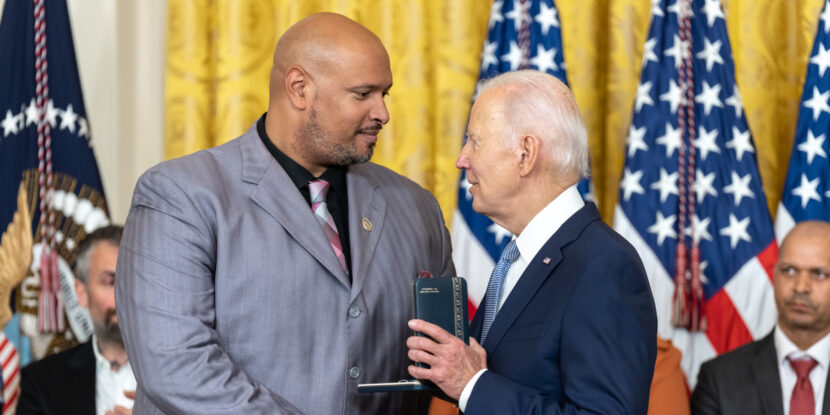
Image by DVSROSS.

Join Pulse+ to comment below, and receive exclusive e-mail analyses.
show less
show more

Failed House Candidate and Capitol Police Grifter Harry Dunn is Running Again, Vowing to Abolish ICE.

PULSE POINTS

❓WHAT HAPPENED: Former U.S. Capitol Police Officer Harry Dunn announced his campaign for Maryland’s Fifth Congressional District.

👤WHO WAS INVOLVED: Harry Dunn, a former Capitol Police officer, and retiring Representative Steny Hoyer (D-MD).

📍WHEN & WHERE: Dunn announced his campaign in February 2026 for Maryland’s Fifth Congressional District.

💬KEY QUOTE: “I believe we need to abolish ICE.” – Harry Dunn

🎯IMPACT: Dunn’s campaign, which claims to be “100% pro police,” focuses on abolishing U.S. Immigration and Customs Enforcement (ICE) and his usual trope of claiming President Donald J. Trump is a threat to American democracy.

IN FULL

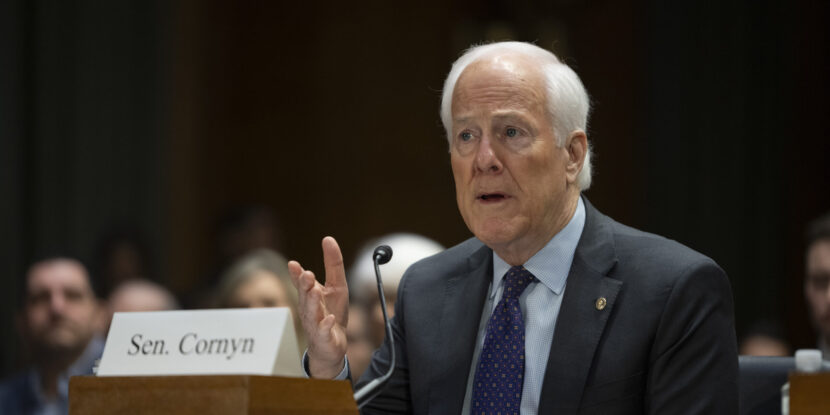
Former U.S. Capitol Police Officer, failed 2024 congressional candidate, and political action committee (PAC) grifter Harry Dunn has announced his candidacy for Maryland’s Fifth Congressional District, a seat being vacated by long-time Representative Steny Hoyer (D-MD). Dunn, a 15-year veteran of the Capitol Police, gained national attention as a key Democrat ally in the sham January 6 Select Committee and for his partisan attacks on President Donald J. Trump.

A key focus of Dunn’s latest bid for office is his placation of the far left’s calls to abolish U.S. Immigration and Customs Enforcement (ICE). “I see the same aggression in these ICE agents that I saw from rioters on Jan. 6,” Dunn claims, while making the absurd assertion that, “Maybe they are wearing their masks because they will be identified as people who were at the Capitol on Jan. 6.”

“I believe we need to abolish ICE,” he adds, while insisting he is a “100% pro police” candidate.

Dunn, who lost a primary bid for Maryland’s Third Congressional District in 2024, is also running on a platform that claims President Trump has become an imminent threat to American democracy. “It’s not even an administration anymore. We’re in regime territory, and we need as many people [as possible] that are going to stand up to him, especially when the Democrats take back the House in these midterms coming up, we’re going to need people,” Dunn contends.

The National Pulse reported in June 2024 that after losing his initial congressional bid, Dunn launched a new PAC. The group, named Dunn’s Democracy Defenders, stated it aims to support candidates running against pro-Trump Republicans. In reality, it allowed Dunn to make a salary after rendering himself unemployable, even by Maryland Democrat standards.

Join Pulse+ to comment below, and receive exclusive e-mail analyses.
show less
show more

RINO Senator John Cornyn Falls to Third in Primary Race, May Not Qualify for Runoff.

PULSE POINTS

❓WHAT HAPPENED: Allies of U.S. Senator John Cornyn (R-TX) have spent tens of millions to bail out his reelection campaign, but new polling shows him falling to third place behind challengers Ken Paxton and Wesley Hunt.

👤WHO WAS INVOLVED: Texas Sen. John Cornyn, Texas Attorney General Ken Paxton (R), Representative Wesley Hunt (R-TX), and the National Republican Senatorial Committee (NRSC).

📍WHEN & WHERE: The GOP primary’s first round of voting is scheduled for early March, with a potential runoff in late May in Texas.

🎯IMPACT: Cornyn could fail to make the runoff; challengers like Paxton and Hunt are gaining momentum among GOP voters.

IN FULL

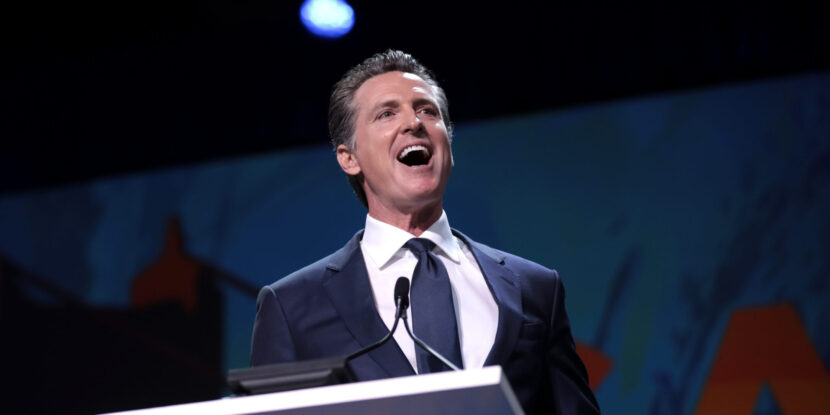
U.S. Senator John Cornyn (R-TX) could lose his reelection bid without even making it to the general election, according to new polling of the Republican primary race in which he will face Texas Attorney General Ken Paxton (R) and Representative Wesley Hunt (R-TX). With just weeks to go before the initial March vote—and the race likely going to a runoff in May—Cornyn trails both Paxton and Hunt, meaning he may not advance to the next round of the primary contest.

The J.L. Partners poll, released on Thursday, shows Paxton, an ally of President Donald J. Trump, leading the field with 27 percent of the vote, followed by Hunt at 25.7 percent. Meanwhile, Cornyn has fallen behind Hunt, at 25.5 percent. An additional 21.7 percent of voters say they remain undecided on which candidate they will back.

Notably, the polling in the primary race has narrowed from late last year, with a December survey showing Paxton at 29 percent and Cornyn and Hunt tied at 24 percent. The inability of Cornyn to generate significant movement in his polling numbers, despite allied SuperPACs spending upwards of $50 million in support of his campaign, suggests the 74-year-old Republican could face the toughest reelection bid in his nearly 24 years in the U.S. Senate. Conversely, the Lone Star Liberty PAC—backing Paxton—has spent just one percent of what Cornyn’s allies have.

Throughout the campaign, Sen. Cornyn has sought to portray him as an ally to President Donald J. Trump, while personally attacking Paxton and branding him a “fraud.” However, Paxton’s record as a Trump supporter is solid, while Cornyn previously argued against the America First leader standing for reelection in 2024 and lobbied Congress not to oppose the lawfare campaign against him. The National Pulse reported in May of last year that, in an effort to keep Trump from endorsing in the primary race, a SuperPAC backing Cornyn hired former Trump campaign chief and Republican National Committee (RNC) Chief Operating Officer (COO) Chris LaCivita as a senior advisor.

Despite the overwhelming money advantage and support from key GOP figures and political organizations like the National Republican Senatorial Committee (NRSC) and Senate Majority Leader John Thune (R-SD), Cornyn has trailed Paxton in polling for most of the race. With it unlikely that any of the candidates will secure a majority of the vote outright in March, a runoff election will be held in May. If Cornyn cannot move ahead of either Hunt or Paxton, he’ll be eliminated from the race—with the top two candidates advancing. The winner of the runoff will face either Democrat state Rep. James Talarico or Congresswoman Jasmine Crockett (D-TX) in November’s general election.

Join Pulse+ to comment below, and receive exclusive e-mail analyses.
show less
show more

SCOTUS Allows Democrat-Drawn Districts Ahead of Midterms.

PULSE POINTS

❓WHAT HAPPENED: The U.S. Supreme Court decided to allow California Democrats to proceed with new, gerrymandered maps ahead of the 2026 midterm elections.

👤WHO WAS INVOLVED: California Democrats, the state GOP, the Department of Justice (DOJ), Justice Elena Kagan, and the U.S. Supreme Court.

📍WHEN & WHERE: The ruling was issued on Wednesday, impacting California and the U.S. as a whole.

🎯IMPACT: The decision allows Proposition 50 to move forward, potentially reducing Republican congressional seats in California from nine to four.

IN FULL

The U.S. Supreme Court on Wednesday declined to block California’s new congressional district map, allowing the state to proceed with new, gerrymandered boundaries ahead of the 2026 midterm elections. The decision rejects an emergency request from California Republicans and the U.S. Department of Justice (DOJ) seeking to halt implementation of the plan, known as Proposition 50.

Proposition 50 dismantled California’s independent redistricting commission and granted the Democratic-controlled legislature authority to redraw congressional lines. Supporters said the measure was intended to counter Republican redistricting efforts in other states and better reflect demographic changes, while critics argued it was designed to boost Democrat power in the U.S. House of Representatives.

Under the new map, Republicans could lose as many as five congressional seats, reducing the number of GOP-held districts in California from nine to four. Republican officials and voters filed suit shortly after the ballot measure passed, claiming the new districts relied too heavily on racial considerations and violated the Constitution and federal voting laws.

The Justice Department joined the legal challenge, arguing that California lawmakers improperly used race as a tool to achieve partisan goals. A three-judge federal district court panel rejected those claims in January. Following that ruling, opponents of the map asked the Supreme Court to intervene. The application was initially submitted to Justice Elena Kagan and then referred to the full Court, which denied the request for an injunction without issuing a written opinion.

California officials argued that blocking the map so close to the 2026 election cycle would disrupt candidate filings, campaign planning, and voter outreach already underway. Governor Gavin Newsom (D-CA) and other Democrats praised the Court’s decision.

The ruling comes amid heightened national disputes over redistricting. In a separate case, the Supreme Court recently allowed Texas to use a Republican-drawn congressional map that could add several GOP seats, despite lower court claims that the plan discriminated against minority voters.

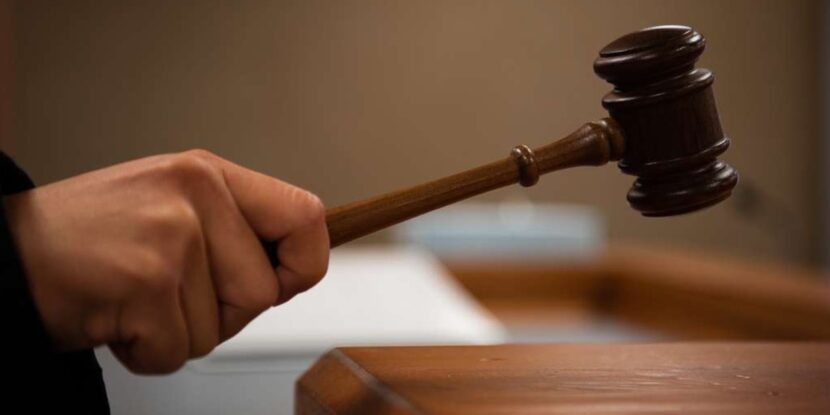
Image by Gage Skidmore.

Join Pulse+ to comment below, and receive exclusive e-mail analyses.
show less
show more

Court Delivers MAJOR Blow to Democrat Gerrymander Efforts.

PULSE POINTS

❓WHAT HAPPENED: A Virginia state appeals court has issued an injunction blocking the implementation of legislation adopted by Democrats in the state general assembly that would put a partisan gerrymandered congressional map on the state ballot as a referendum in late April.

👤WHO WAS INVOLVED: The Virginia Court of Appeals, the Virginia Supreme Court, Virginia Democrat lawmakers, voters, and Virginia Republicans.

📍WHEN & WHERE: The appellate ruling and injunction were handed down on Tuesday, January 27, 2026.

đź’¬KEY QUOTE: “Therefore, any attempt to repeal Section 30-13 which does not comply with this Constitutional mandate, is NULL and VOID.” — Virginia Court of Appeals

🎯IMPACT: The ruling, while still subject to reversal by the state’s Supreme Court, is a significant blow to Virginia Democrats who have sought to implement a very Democrat-friendly congressional map ahead of the 2026 midterm elections.

IN FULL

A Virginia state appeals court has issued an injunction blocking the implementation of legislation adopted by Democrats in the state general assembly that would put a partisan gerrymandered congressional map on the state ballot as a referendum in late April. The ruling will likely be appealed by Democrat lawmakers and set a final decision before Virginia’s Supreme Court.

The appellate court found that by adopting the legislation just four days before the state’s general election last November, lawmakers violated notice requirements under the state’s constitution. “The General Assembly has attempted or is attempting to repeal Section 30-13, which is fully within their power to do. However, under Article IV, Section 13 of the Constitution of Virginia, ‘All laws enacted at a regular session… shall take effect on the first day of July following the adjournment of the session of the General Assembly at which it has been enacted … unless in the case of an emergency (which emergency shall be expressed in the body of the bill) the General Assembly shall specify an earlier date by a vote of four-fifths of the members voting in each house…'” the judges stated.

They continued, “Therefore, any attempt to repeal Section 30-13 which does not comply with this Constitutional mandate, is NULL and VOID.” The ruling, while still subject to reversal by the state’s Supreme Court, is a significant blow to Virginia Democrats who have sought to implement a very Democrat-friendly congressional map ahead of the 2026 midterm elections. A number of legal observers have noted it is unlikely that the Virginia Supreme Court will reverse the appellate decision.

The National Pulse reported in December last year that Virginia House Speaker Don Scott (D) was considering a plan to redraw the state’s Congressional maps in a way that could give Democrats a significant advantage, potentially shifting the current 6-5 delegation in favor of Republicans to a 10-1 Democratic majority. However, the latest ruling would prevent the implementation of any new maps until 2027, after the 2026 midterms.

Join Pulse+ to comment below, and receive exclusive e-mail analyses.

show less
show more

Elderly Democrat Congressional Delegate Tricked by Scammers Won’t Run for Re-Election.

PULSE POINTS

❓WHAT HAPPENED: Washington, D.C. Delegate Eleanor Holmes Norton (D) announced she will not seek re-election in 2026, ending a 35-year tenure in Congress.

👤WHO WAS INVOLVED: Eleanor Holmes Norton, D.C. Mayor Muriel Bowser, Donna Brazile, and former staffer Trent Holbrook.

📍WHEN & WHERE: Announced via a Federal Election Commission (FEC) filing on Sunday, January 25, 2026, in Washington, D.C.

đź’¬KEY QUOTE: “I want to congratulate Congresswoman Eleanor Holmes Norton on a remarkable career… Her work embodies the unwavering resolve of a city that refuses to yield in its fight for equal representation,” said D.C. Mayor Muriel Bowser.

🎯IMPACT: Norton’s decision opens the door for new candidates, including former staffer Trent Holbrook, to vie for the D.C. delegate seat.

IN FULL

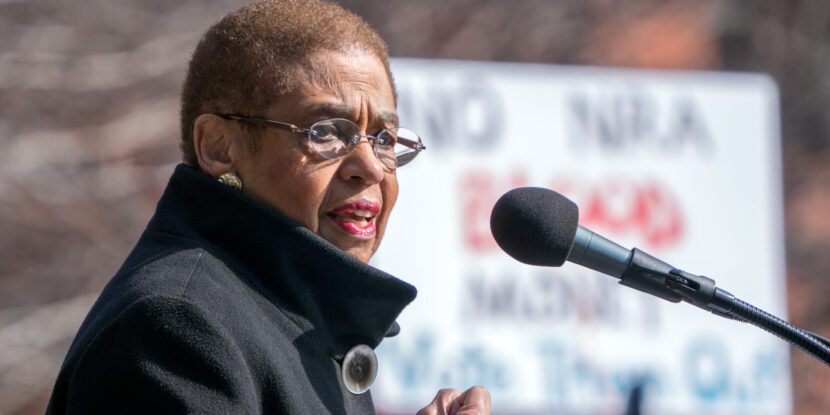
Eleanor Holmes Norton, the oldest member of the U.S. House of Representatives will not seek another term in the 2026 election. Norton, the 88-year-old non-voting delegate from Washington, D.C.,, filed a termination report with the Federal Election Commission (FEC) on Sunday, signaling the end of her 35-year tenure.

The National Pulse reported last October that Norton, who is believed to be suffering from a diminished cognitive state, fell victim to a scam at her D.C. home, losing thousands of dollars. Posing as HVAC workers, a group of people entered her apartment, charged her nearly $4,400 using her credit card, and left without performing any work. The fraud was discovered when Norton’s house manager, Jacqueline Pelt, reviewed security footage and called the police.

Following Norton’s decision not to run for re-election, D.C. Mayor Muriel Bowser paid tribute to the long-term Democrat lawmaker in a post on X (formerly Twitter), stating, “I want to congratulate Congresswoman Eleanor Holmes Norton on a remarkable career. For 35 years, Congresswoman Norton has been our Warrior on the Hill—from securing shutdown protection for the city and the creation of DCTAG, to defeating continued attacks on Home Rule and leading historic votes in the House for DC Statehood.” Bowser herself announced in November last year that she would not seek a fourth term as mayor.

Notably, a number of top Democrat officials have pushed for Norton to retire, especially following the October scamming incident. Late last year, former Democratic National Committee (DNC) acting chair and political strategist Donna Brazile called on the 88-year-old D.C. Delegate to Congress to retire. Writing in the Washington Post, Brazile stated, “It’s in her best interest, and the interest of D.C., for her to serve her current term but then end her extraordinary service in Congress and not seek reelection next year.”

Norton, who first assumed office in 1991, has held the delegate seat for over three decades. Several people, including former Norton staffer Trent Holbrook, have announced their candidacies for the position before her retirement. Holbrook remarked, “I think it’s evident that she’s not going to successfully run. Congresswoman Norton is one of the most successful lawmakers in American history.”

The D.C. delegate’s role does not include voting on legislation like regular House representatives but does allow for the introduction of legislation and participation in committees.

Image by Lorie Shaull.

Join Pulse+ to comment below, and receive exclusive e-mail analyses.
show less
show more

Top Trump Traitor Faces Shock Senate Primary.

PULSE POINTS

❓WHAT HAPPENED: Representative Julia Letlow (R-LA) announced her U.S. Senate bid against Senator Bill Cassidy (R-LA), following her endorsement by President Donald J. Trump.

👤WHO WAS INVOLVED: Rep. Letlow, Sen. Cassidy, President Trump, and Louisiana Governor Jeff Landry (R).

📍WHEN & WHERE: Letlow announced her decision during a breakfast in Baton Rouge, Louisiana, on Tuesday morning.

🎯IMPACT: The race will likely become one of the more expensive primary contests of the 2026 cycle and is the second serious primary race an incumbent Republican senator faces, with Texas Attorney General Ken Paxton (R) already challenging Senator John Cornyn (R-TX).

IN FULL

Representative Julia Letlow (R-LA) announced Tuesday morning at a breakfast event in Baton Rouge, Louisiana, that she will challenge incumbent Senator Bill Cassidy (R-LA) in the 2026 midterm elections. The announcement comes after President Donald J. Trump announced he would back Letlow’s candidacy in a post on Truth Social this past Saturday.

“Should she decide to enter this Race, Julia Letlow has my Complete and Total Endorsement. RUN, JULIA, RUN!!!” Trump wrote. While Letlow has not yet made any public statements about her Senate bid, her candidacy is expected to receive significant backing from Louisiana Republican leaders, along with President Trump. Months ago, Governor Jeff Landry (R-LA)—a staunch Trump ally—identified Letlow as an ideal challenger to Sen. Cassidy.

While Cassidy has attempted to reposition himself as a soft pro-Trump senator, the Louisiana lawmaker was one of a handful of Republicans to vote to convict President Trump during the 2021 Democrat-led impeachment over the January 6 Capitol protests. “Our Constitution and our country are more important than any one person. I voted to convict President Trump because he is guilty,” Cassidy said at the time.

Additionally, Sen. Cassidy is a top primary target for members of the Make America Healthy Again (MAHA) movement and vaccine skeptics—along with other allies of Department of Health and Human Services (HHS) Secretary Robert F. Kennedy, Jr.

The National Pulse previously reported that between 2019 and 2024, Sen. Cassidy received an estimated $667,000 in political contributions from the pharmaceutical industry. Federal disclosures reveal that an influx of campaign donations began on February 10, 2023, shortly after Cassidy’s appointment as the ranking member of the Senate Health Committee. Contributions from the period included $5,800 from Pfizer CEO Albert Bourla, $5,000 from Eli Lilly CEO David Ricks, $2,900 from Bristol Myers Squibb CEO Giovanni Caforio, and $2,500 from Biogen CEO Christopher Viehbacher, all of whom are members of the Pharmaceutical Research and Manufacturers of America (PhRMA) board.

A reliable Trump vote in the House, Letlow was elected to the House in a 2021 special election after her husband died of COVID complications shortly after winning the congressional seat. Trump’s backing of Letlow pits the White House against the National Republican Senatorial Committee (NRSC), which has endorsed Cassidy as part of its tradition of backing incumbents.

Image by Gage Skidmore.

Join Pulse+ to comment below, and receive exclusive e-mail analyses.

show less
show more

Newsom’s Newest Move Against GOP House Majority Poses Serious Threat to Trump’s Agenda.

PULSE POINTS

❓WHAT HAPPENED: California Governor Gavin Newsom (D) scheduled a special election to fill the vacant seat of the late Representative Doug LaMalfa (R-CA) on the latest possible date under state law.

👤WHO WAS INVOLVED: Gov. Gavin Newsom, late GOP Rep. Doug LaMalfa, and voters in Northern California.

📍WHEN & WHERE: The special election is set for August 4 in Northern California.

🎯IMPACT: The vacancy adds to the challenges faced by Republicans’ narrow House majority in passing President Donald J. Trump’s legislative agenda.

IN FULL

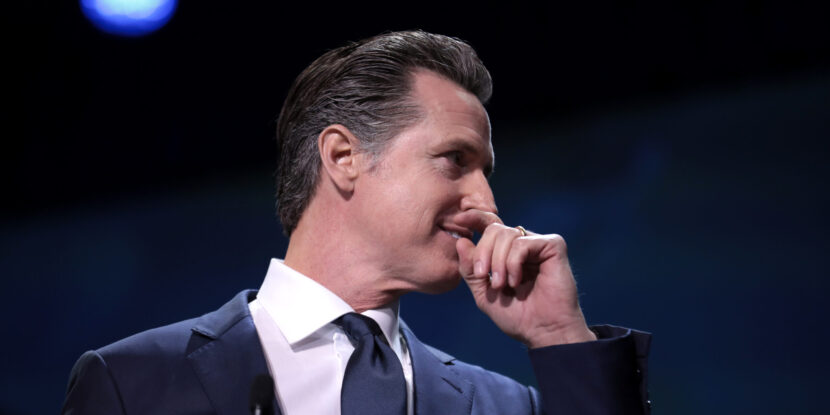
Governor Gavin Newsom (D-CA)—a leading contender for the 2028 Democrat presidential nomination—has scheduled a special election to fill the open seat of the late Representative Doug LaMalfa (R-CA) on August 4, 2026. This is the last possible date permissible under state law for the vacancy to be filled.

Notably, the move by Newsom appears aimed at further complicating the legislative process for House Republicans on Capitol Hill, as the prolonged vacancy will deprive GOP leaders of a critical vote in their already slim majority. Republicans have faced an increasingly difficult time passing major legislation in the House, holding just 218 seats to the Democrats’ 213, with two Republican and two Democrat vacancies.

Further, Rep. Thomas Massie‘s penchant for defecting to the Democrats on critical votes means the House GOP effectively operates with an effective one- or two-vote majority on most floor action. The winner of the California special election will only serve the remaining months of the term, which expires in early January 2027. LaMalfa passed away on January 6 at the age of 65.

The delayed special election is just the latest maneuver by Newsom to position himself for a 2028 presidential primary run, by embracing hyperpartisan tactics to tilt the midterm election in the Democrats’ favor in an effort to appeal to the more radical elements of the party’s base. Last November, California voters backed Newsom’s Proposition 50, a ballot measure that temporarily suspends the state’s independent redistricting commission and allows the legislature to redraw congressional districts, potentially creating five additional Democratic seats ahead of the 2026 congressional midterm elections.

Image by Gage Skidmore.

Join Pulse+ to comment below, and receive exclusive e-mail analyses.
show less
show more

Democrats Win Redistricting Battle at Ninth Circuit.

PULSE POINTS

âť“WHAT HAPPENED: Federal judges dismissed Republican claims that California’s Proposition 50 gerrymandered map is discriminatory, allowing the state to proceed with redrawn congressional districts.

👤WHO WAS INVOLVED: California Governor Gavin Newsom (D), Attorney General Rob Bonta (D), Secretary of State Shirley Weber (D), and Republican challengers led by State Assemblymember David Tangipa (R).

📍WHEN & WHERE: The ruling was issued on Wednesday by the Ninth Circuit Court of Appeals after a December hearing.

đź’¬KEY QUOTE: “The decision upholds the will of the people. It also means that, to date, every single challenge against Proposition 50 has failed.” – Attorney General Rob Bonta.

🎯IMPACT: The ruling could allow Democrats to secure up to five additional seats in the U.S. House, bolstering their efforts in the 2026 midterms.

IN FULL

California Democrats secured a legal victory Wednesday as a panel of federal judges rejected Republican claims that Proposition 50, a measure allowing the state to redraw congressional districts, is discriminatory. The measure, approved by voters last November, is expected to help Democrats gain up to five additional U.S. House seats, potentially aiding their efforts to reclaim Congress in the 2026 midterms.

Governor Gavin Newsom (D), who spearheaded the Prop 50 initiative, celebrated the decision on social media. Newsom’s office posted, “Can’t spell Republican without an L,” on X (formerly Twitter), while Newsom himself posted the phrase “FAFO,” an acronym for “F—k around and find out.”

Republicans argued that the redrawn districts unfairly favor Latino voters at the expense of other racial groups. However, Attorney General Rob Bonta (D) praised the court’s decision, stating, “The decision upholds the will of the people. It also means that, to date, every single challenge against Proposition 50 has failed.” He added, “I couldn’t be prouder of my team for successfully defending this ballot initiative in court on behalf of Governor Newsom and Secretary of State Weber.”

The Ninth Circuit Court of Appeals issued its ruling after a three-day hearing in December. California voters had approved the new district map in November, and this decision further solidifies its implementation. State Assemblymember David Tangipa (R), part of the Republican group challenging the measure, previously indicated plans to escalate the matter to the Supreme Court should the Ninth Circuit rule against the plaintiffs.

Image by Gage Skidmore.

Join Pulse+ to comment below, and receive exclusive e-mail analyses.

show less
show more