




Monday, February 23, 2026

Media Preps Public to Expect Trump Win Followed by Mail-In Ballot Reversal.

The Washington Post Editorial Board is priming readers to expect an apparent victory for Donald J. Trump on election night, being reversed by a flood of mail-in ballots, as in 2020. “If Democrats continue to vote by mail more than Republicans, early returns will probably show Mr. Trump leading, but the gap will close as votes are tallied,” the board writes, describing this as a “red mirage.”

Trump, The Washington Post recalls, described this as a case of “Democrats dumping ballots” in 2020, but the board insists it was actually “an entirely foreseeable and legitimate consequence of voting patterns and state counting policies.”

The board notes that “Mr. Trump may well win this election fair and square” but stresses that “Democrats returned 18 million ballots by mail compared with about 10 million from Republicans across 20 states with party registration data” in 2020 and that “it will probably still take longer to tally the high volume of ballots in [Democrat-voting] urban centers such as Philadelphia and Milwaukee than the lower number in redder, rural areas.”

However, The Washington Post concedes that the Democrats’ mail-in voting advantage narrowed in 2022, with the left-liberal party casting 7.6 million mail-in ballots compared to 5.1 million for the Republicans.

ENTIRELY LEGITIMATE?

Despite the Democrat and corporate media’s insistence that mail-in voting is secure, research suggests such ballots were substantially fraudulent in 2020.

For instance, polling of mail-in voters by the Heartland Institute found that 17 percent of respondents voted in states where they were no longer residents, 21 percent filled out ballots for someone else, and 17 percent “forge[d] the signature of a friend or family member on their behalf, with or without their permission”—all election law violations that would render the ballots invalid. Ten percent of respondents also said they knew someone else who had committed these offenses.

Rasmussen polling resulted in similar findings regarding mail-in voters casting ballots in the wrong state and filling out other people’s documents. One in 10 Rasmussen respondents also said they were offered “pay” or a “reward” for voting in 2020.

show less

The Washington Post Editorial Board is priming readers to expect an apparent victory for Donald J. Trump on election night, being reversed by a flood of mail-in ballots, as in 2020. "If Democrats continue to vote by mail more than Republicans, early returns will probably show Mr. Trump leading, but the gap will close as votes are tallied," the board writes, describing this as a "red mirage." show more
mail in ballot

REPORT: ‘At Least’ 1-in-5 Mail-In Voters Admit to 2020 Fraud, Without Which Trump WOULD Still Be President.

Research by the Heartland Institute confirms that mail-in voting in 2020 was tainted by widespread fraud. Justin Haskins, director of the Socialism Research Center at the think-tank, revealed how they polled people on whether they voted in 2020 and whether they used an absentee ballot. Respondents who answered ‘yes’ to both questions received a series of follow-up queries.

Poll respondents were not asked directly whether they committed voter fraud. Instead, they were asked if they engaged in certain behaviors that are illegal under electoral law. Haskins revealed:

  • 17 percent answered ‘yes’ when asked, “Did you vote in a state where you’re no longer a legal resident?”
  • 21 percent answered ‘yes’ when asked, “Did you fill out a ballot for someone else on their behalf?”
  • 17 percent answered ‘yes’ when asked if they “forge[d] the signature of a friend or family member on their behalf, with or without their permission?”

“So, all told, it’s at least, and I say at least, one in five mail-in ballots involved some kind of fraudulent activity,” Haskins highlighted.

The Heartland Institute also asked respondents whether they used an absentee ballot, and if they knew anyone who had admitted to committing one of the above forms of voter fraud. Ten percent answered ‘yes.’

Mail-in or postal voting is banned or heavily restricted in many countries, due to the ease of fraud and the difficulty of proving it after the fact.

NO WIDESPREAD FRAUD?

Despite insisting there is no evidence of “widespread” fraud in 2020, the authorities are increasingly being forced to acknowledge the abuse of mail-in ballots in the U.S. In November 2023, a judge overturned the results of a Democrat primary after Mayor Joe Ganim, who was losing the race, surged into the lead after a suspicious influx of absentee ballots. In February 2024, Craig Callaway, a Democrat organizer and former President of the City Council of Atlantic City, was arrested for an elaborate scheme involving paid “messengers” and his office filing vote-by-mail applications and casting ballots on people’s behalf without their knowledge.

Republican lawmakers have attempted to strengthen election integrity in several states, but Democrat governors are vetoing the bills.

WATCH:

show less
Research by the Heartland Institute confirms that mail-in voting in 2020 was tainted by widespread fraud. Justin Haskins, director of the Socialism Research Center at the think-tank, revealed how they polled people on whether they voted in 2020 and whether they used an absentee ballot. Respondents who answered 'yes' to both questions received a series of follow-up queries. show more

Editor’s Notes

Behind-the-scenes political intrigue exclusively for Pulse+ subscribers.

RAHEEM J. KASSAM Editor-in-Chief
The data here comes from a study conducted late in 2023, with a report published just a few months later, in February 2024
The data here comes from a study conducted late in 2023, with a report published just a few months later, in February 2024 show more
for exclusive members-only insights

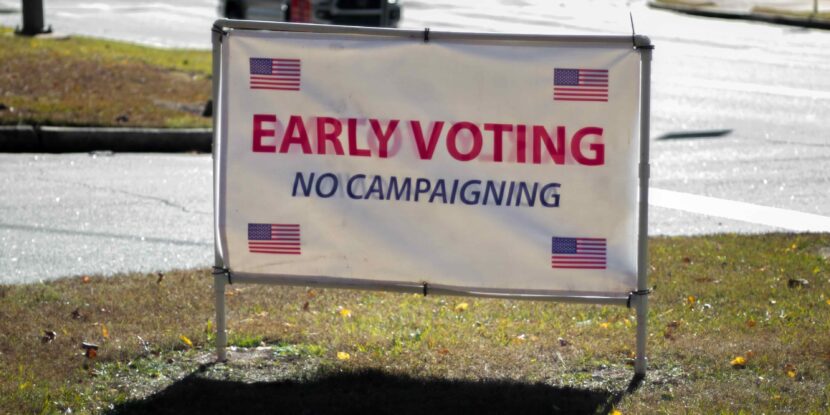
Biden’s Home State Strikes Down 10 Day Early Voting Law.

A Delaware Superior Court has ruled the state’s law allowing ten days of early voting and permanent absentee voting is unconstitutional. Judge Mark H. Conner stated in a 25-page opinion: “The enactments of the General Assembly challenged today are inconsistent with our Constitution and therefore cannot stand.”

The court’s decision states that Article 5, Section 1 of the state constitution specifically proscribes that a “general election shall be held biennially on the Tuesday next after the first Monday in the month of November.” The Delaware Board of Elections argued the phrase “election shall be held” refers to the ‘last’ day in which a vote can be cast.

This decision could have broad implications, given ongoing legal challenges to state voting practices that critics say are in contravention of state laws and constitutions. Joe Biden, whose home state is Delaware, has leveled criticism at states like Georgia over their election regulations — calling their voter I.D. law “Jim Crow 2.0.” Georgia allows for three weeks of early voting.

The case was brought by Delaware state Senator Gerald Hocker and Michael Mennella — an inspector for the Delaware Department of Elections, represented by the Public Interest Legal Foundation. They noted the ruling is just the latest court decision stipulating states must follow their own constitutions. A New York state appeals court recently held noncitizen voting in municipal elections to be unconstitutional.

The ruling is Mennella and the Public Interest Legal Foundation’s second victory over Delaware’s voting laws in less than two years; previously, they succeeded in challenging the constitutionality of the state’s universal vote-by-mail and same-day voter registration laws.

show less
A Delaware Superior Court has ruled the state's law allowing ten days of early voting and permanent absentee voting is unconstitutional. Judge Mark H. Conner stated in a 25-page opinion: “The enactments of the General Assembly challenged today are inconsistent with our Constitution and therefore cannot stand." show more