


Monday, February 23, 2026
germany

Teens Embrace ‘Foreigners Out!’ Anthem in Nightclubs.

Recent polling indicates a notable shift to the right among German youth, with the anti-mass migration Alternative for Germany (AfD) party now the most popular choice among 14- to 29-year-olds. This political trend appears to be influencing both electoral prospects and cultural expression just weeks before the European Union elections, with several instances of young people engaging with a reworked Eurodance classic featuring anti-foreigner lyrics.

The song, set to DJ Gigi D’Agostino’s “L’amour Toujours,” has resurfaced repeatedly, promoting the slogan “Deutschland den Deutschen, Ausländer raus” (“Germany for the Germans, foreigners out”). The latest incident occurred at an exclusive nightclub on the German holiday island of Sylt, drawing widespread attention on social media.

A video circulating on social media depicts young men and women dancing and singing the contentious lyrics. German media have debated whether their gestures are merely dance moves or potentially Nazi salutes. Die Welt reports that Germany’s federal security police, typically focused on terrorism and international crime, are now investigating these activities.

Ferda Ataman, Germany’s Federal Commissioner for Anti-Discrimination, described the song as “pure racism,” asserting that it represents escalating discrimination. Green Party Integration Minister Aminata Touré echoed these concerns, calling for criminal investigations and describing the behavior as “Nazi yelling.”

The resurgence of this song highlights growing right-wing sentiments. Bayerischer Rundfunk (BR) has noted that similar clips have appeared frequently at discos and festivals across the country. Despite the backlash, it remains a symbol of a broader cultural shift within the youth demographic.

Support for the AfD among young Germans has surged, with recent research showing a significant increase in party preference among the 14- to 29-year-old cohort. Professor Klaus Hurrelmann has attributed this shift to growing pessimism and anxiety about the future, noting a diminishing optimism and increased fear of economic and geopolitical instability.

show less
Recent polling indicates a notable shift to the right among German youth, with the anti-mass migration Alternative for Germany (AfD) party now the most popular choice among 14- to 29-year-olds. This political trend appears to be influencing both electoral prospects and cultural expression just weeks before the European Union elections, with several instances of young people engaging with a reworked Eurodance classic featuring anti-foreigner lyrics. show more

German Populist Leader RESIGNS After Idiotic Nazi Comments.

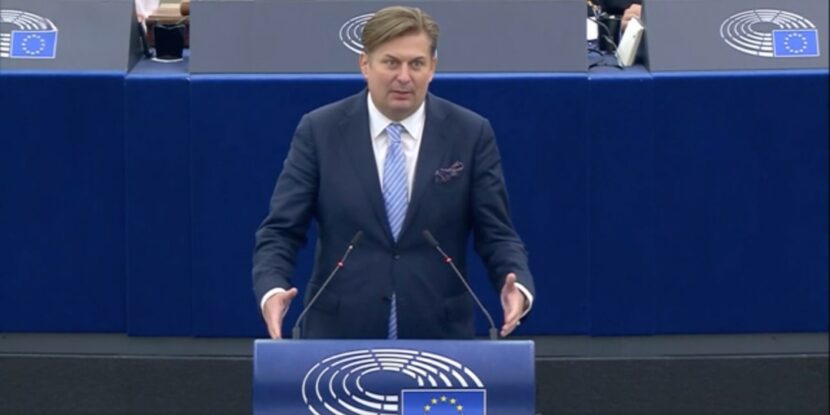
Maximilian Krah, lead candidate for Alternative für Deutschland (AfD) in the European parliamentary election, has resigned from the party’s leadership. Krah recently sparked controversy by telling an Italian newspaper that members of the Nazi SS were “not all criminals.” His resignation comes amid growing divisions among Europe’s nationalist parties that could undermine their anticipated gains in the June elections.

Krah announced his resignation from the German far-right party’s leadership on Wednesday. He stated that his comments were “being misused as a pretext to damage our party.”

His remarks drew immediate backlash. Significantly, France’s National Rally (RN) declared it would no longer align with AfD in the European Parliament. Marine Le Pen, RN’s leader, emphasized the need for a “clean break,” accusing AfD of being dominated by its most extreme elements.

“It was urgent to establish a cordon sanitaire,” Le Pen told French radio, asserting that AfD had become a source of constant provocation. RN’s leader confirmed the need for separation to appeal to mainstream voters.

Amidst these developments, RN appears poised to win the European election in France, with Jordan Bardella leading their list. The split with AfD appears strategically driven by domestic political considerations for RN.

Currently, RN and AfD dominate the European parliament’s right-populist Identity and Democracy (ID) group, which also includes Matteo Salvini’s League in Italy, Austria’s Freedom party (FPÖ), the Freedom party (PVV) in the Netherlands, and Vlaams Belang in Belgium.

However, the division casts uncertainty on the future influence of Europe’s populist right in Brussels. Analysts note that while RN’s decision aims to polish its domestic image, it may weaken the collective power of the coalition. All right-wing populist parties are expected to see significant gains in the June elections.

show less
Maximilian Krah, lead candidate for Alternative für Deutschland (AfD) in the European parliamentary election, has resigned from the party's leadership. Krah recently sparked controversy by telling an Italian newspaper that members of the Nazi SS were "not all criminals." His resignation comes amid growing divisions among Europe's nationalist parties that could undermine their anticipated gains in the June elections. show more

Cops Raid Right-Wing Politician’s Premises.

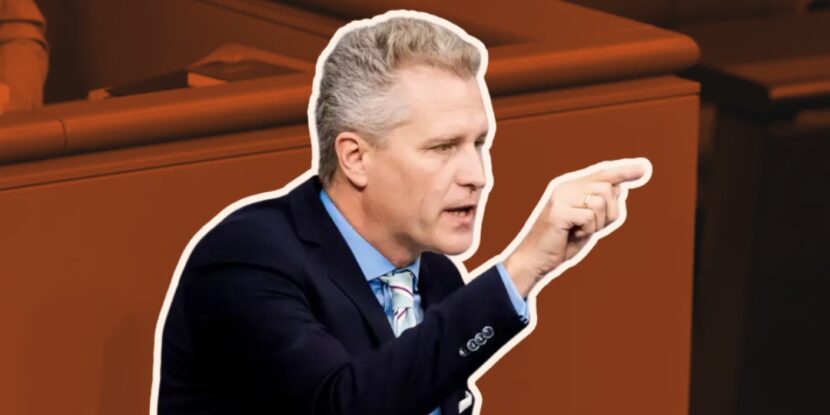
German authorities conducted a search on Thursday at locations connected to Petr Bystron of Alternative für Deutschland (AfD). Bystron, a leading candidate in the upcoming EU elections and a current Bundestag member, is under investigation over allegations regarding financial bribes from Russian officials. The accusations hinge on purported illicit funds from Russia via the sanctioned news platform Voice of Europe.

After the revocation of his parliamentary immunity by the Bundestag, numerous prosecutors and police officers carried out searches across Bystron’s public offices, as well as in three Bavarian counties and a property in the Balearic Island of Mallorca. Evidence in the form of documents and data carriers was seized for evaluation.

Alice Weidel and Tino Chrupalla, the two AfD leaders, have labeled these events a “serious matter.” However, they also highlighted the lack of presented evidence against Bystron despite the longstanding accusations.

The Munich Public Prosecutor General’s Office, though not directly stating Bystron’s name, declared its ongoing investigation on initial suspicions of corruption of elected officials and money laundering.

Bystron has staunchly denied the allegations but has not commented on the recent police searches. The leadership of AfD has similarly called for the Czech intelligence to publicize their supposed evidence against Bystron. They have stated the importance of considering Bystron’s innocence until concrete evidence against him is presented.

This investigation is the latest in a series of scandals impacting the AfD, negatively affecting their recent performance in opinion polls. Irrespective of the outcome, the complex situation is indicative of the heightened scrutiny the AfD and its members are under.

Seen as a significant threat to the globalist German political establishment, AfD has been surging in the polls due to widespread frustration in Germany with mass migration.

show less
German authorities conducted a search on Thursday at locations connected to Petr Bystron of Alternative für Deutschland (AfD). Bystron, a leading candidate in the upcoming EU elections and a current Bundestag member, is under investigation over allegations regarding financial bribes from Russian officials. The accusations hinge on purported illicit funds from Russia via the sanctioned news platform Voice of Europe. show more

Migrants Account for Nearly 60% of Violent Crime in THIS Western Nation.

Recent data disclosed by Germany‘s Federal Criminal Police Office (BKA) suggests that foreign migrants are committing a disproportionately large number of violent crimes. The data, reported by German broadcaster NTV, reveals that foreign migrants, who account for just 14.6 percent of the country’s population, were implicated in 58.5 percent of all violent crimes in Germany. Furthermore, the BKA documented a 14.5 percent rise in violent crimes attributed to non-German suspects from the previous year.

The data also reveals migrant involvement in other crimes. For instance, suspected foreigners constitute 187,000 of the total 424,000 alleged thieves, over 40 percent. In addition, the rate of non-German suspects in general crimes increased by 17.8 percent in a single year to reach 923,269, nearly 50 percent of the total suspected criminals last year. However, these figures do not include those migrants who have since gained German citizenship or those of migrant heritage.

The high degree of criminal conduct linked to foreign migrants has created a substantial burden on Germany’s ability to integrate these groups. The increase in alien crimes has prompted a response, with the German government promising to escalate the deportation of foreign offenders. Reflecting the growing dissatisfaction, the Christian Social Union party’s Andrea Lindholz said Germany is reaching its “limit” in its “ability to integrate” migrants.

German citizens increasingly disapprove of mass migration despite frequent criticism from the establishment. The anti-immigration, national populist Alternative für Deutschland (AfD) party has been surging in the polls and is expected to see significant gains in the upcoming European elections.

show less
Recent data disclosed by Germany's Federal Criminal Police Office (BKA) suggests that foreign migrants are committing a disproportionately large number of violent crimes. The data, reported by German broadcaster NTV, reveals that foreign migrants, who account for just 14.6 percent of the country's population, were implicated in 58.5 percent of all violent crimes in Germany. Furthermore, the BKA documented a 14.5 percent rise in violent crimes attributed to non-German suspects from the previous year. show more

Politician Fined… After Linking to Govt’s Own Migrant Rape Stats.

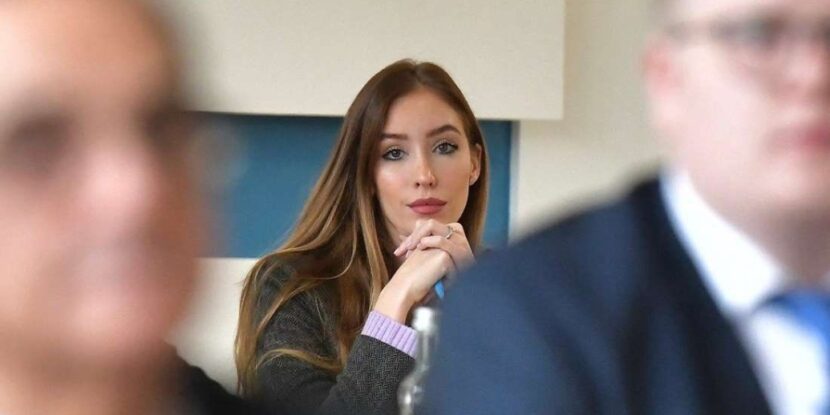
Marie-Thérèse Kaiser, a politician from the Alternative für Deutschland Party (AfD), has been found guilty of ‘incitement’ for sharing a government link to statistics on rapes committed by migrants and questioning their disproportionately high incidence rate. In a 2021 social media post, Kaiser asked, in the context of refugee resettlement, “Afghan refugees, welcome culture for group rapes?”

In defense of her post, Kaiser explained her impetus was to spark a debate on the alarming crime rates among Afghan migrants. She stressed her concern as a woman feeling threatened, particularly by groups of male migrants. She also voiced concern that unchecked immigration might be fostering an atmosphere conducive to a surge in criminal activity. Her conviction was met with the pronouncement from the judge that “freedom of expression ends where human dignity begins.”

The announcement of the guilty verdict has sparked controversy and critique, including from entrepreneur and tech giant Elon Musk. “Are you saying the fine was for repeating accurate government statistics? Was there anything inaccurate in what she said?” Musk posted to X (formerly Twitter).

Kaiser has stated she will file an appeal against the verdict.

Germany has witnessed an 18 percent spike in foreign suspects, leading to 41 percent of all crime suspects belonging to foreign communities. Conservative factions in the country argue that these statistics point toward the need for a cap on immigration and a revision of integration policies. The German government, however, continues to focus on homegrown conservative ‘extremist’ threats, especially the AfD, which is expected to surge in this summer’s European elections.

show less
Marie-Thérèse Kaiser, a politician from the Alternative für Deutschland Party (AfD), has been found guilty of 'incitement' for sharing a government link to statistics on rapes committed by migrants and questioning their disproportionately high incidence rate. In a 2021 social media post, Kaiser asked, in the context of refugee resettlement, “Afghan refugees, welcome culture for group rapes?” show more

These Major Firms Are Pressuring Workers to Vote Against ‘Populism.’

An alliance formed by Germany‘s largest companies, including BMW, BASF, and Deutsche Bank, is campaigning against extremism ahead of the European elections. The campaign comes amidst predictions of significant gains for the nationalist populist Alternative für Deutschland (AfD) party.

“Exclusion, extremism, and populism pose threats to Germany as a business location and to our prosperity,” the alliance, which comprises a total of 30 companies, said in a statement. “In their first joint campaign, the companies are calling on their combined 1.7 million employees to take part in the upcoming European elections and engaging in numerous activities to highlight the importance of European unity for prosperity, growth, and jobs,” it added.

The globalist industrial behemoths have been compelled to action due to recent opinion polls indicating the AfD may secure around 15 percent of the EU vote next month, landing them second place, tied with the Greens, following the conservative CDU-CSU alliance. There is some concern among business leaders that strong showings from the populist right could diminish the attractiveness of Europe’s largest economy for migrant labor, exacerbating existing shortfalls in skilled workers.

The campaign plans to utilize social media to emphasize its call against extremism and enlist participation from other companies. The initiative intends to persist post-EU elections, focusing on regions where the AfD party leads in the polls, including Brandenburg, Thuringia, and Saxony.

Right-wing populist parties are surging across Europe, and the establishment in Germany is so scared of AfD that they are intent on banning it.

show less
An alliance formed by Germany's largest companies, including BMW, BASF, and Deutsche Bank, is campaigning against extremism ahead of the European elections. The campaign comes amidst predictions of significant gains for the nationalist populist Alternative für Deutschland (AfD) party. show more
germany afd

Germany Wants to Track ‘Right-Wing’ Financing.

German Interior Minister Nancy Faeser announced Tuesday plans to trace individuals who donate to so-called “right-wing extremists” and establish an “early recognition system” to detect so-called “disinformation campaigns.”

The new measures include a law to allow the monitoring of financing to so-called extremist groups, a ban on so-called “far-right extremists” from owning weapons, a general ban on semi-automatic weapons, easier dismissal of public servants who are “far-right,” and a detection system for alleged bots that “attempt to manipulate the free formation of opinions.”

“We want to use all the instruments of the rule of law to protect our democracy,” Faeser said in an official statement. “We want to break up extreme right networks and take away their income streams and their weapons,” she said, adding: “No one who donates to a right-wing extremist organization should be able to rely on remaining undiscovered.”

Faeser further claimed that: “German right-wing extremists and foreign autocrats have one thing in common: They want to stoke rage and divide, above all through disinformation.”

The announcement comes as the German nationalist populist party AfD (Alternative for Germany) continues to surge in the polls. Last year, it was reported that a third of Europeans are voting for populist parties, and right-wing populist parties are predicted to sweep the 2024 European elections.

show less
German Interior Minister Nancy Faeser announced Tuesday plans to trace individuals who donate to so-called "right-wing extremists" and establish an "early recognition system" to detect so-called "disinformation campaigns." show more

France’s Le Pen Balks at AfD’s Deportation Plan.

Marine Le Pen, the leader of France’s right-wing populist National Rally party, indicated during a press conference Thursday that she is reconsidering her party’s alliance with Germany’s Alternative for Deutschland (AfD) party, citing significant differences over a controversial AfD deportation plan.

News of AfD leaders discussing the potential deportation of immigrants, as well as German citizens deemed to have “failed to integrate,” led to widespread protests in Germany last weekend. Le Pen, who is currently leading in polls for France’s upcoming presidential elections, voiced her party’s strong opposition to the concept of ‘remigration’ — deporting citizens of migrant descent who have failed to integrate — saying: “We have never advocated for ‘remigration’ in the sense of withdrawing French citizenship from people who have acquired it, even under conditions we dispute.”

This disagreement between National Rally and AfD could destabilize the European Parliament’s Identity and Democracy Group, potentially reducing the right-wing populist bloc’s ability to influence European laws and projects, including aid packages for Ukraine. “We will have to discuss differences as important as these and see whether or not they will have consequences for our ability to work together in the same group,” Le Pen said.

Following Le Pen’s comments, Daniel Tapp, spokesman for AfD co-leader Alice Weidel, attempted to downplay LePen’s comments. “As is usual among friends, we will seek a discussion to clear up any misunderstandings,” he said. “We will fully inform our partners in Paris about the completely baseless media campaign.”

Right-wing populists across Europe are predicted to make significant gains in the European elections this year. The European Council on Foreign Relations predicts right-wing populist and nationalist parties could emerge as the dominant force in the European Parliament.

show less
Marine Le Pen, the leader of France's right-wing populist National Rally party, indicated during a press conference Thursday that she is reconsidering her party's alliance with Germany's Alternative for Deutschland (AfD) party, citing significant differences over a controversial AfD deportation plan. show more

German Populist Leader Wants Brexit-Style Referendum on Leaving EU.

Alice Weidel, co-chairwoman of the populist Alternative for Germany (AfD) party, believes there should be a referendum on ‘Dexit’ — a Deutsch (German) exit from the European Union — if the bloc cannot be reformed.

“If a reform isn’t possible, if we fail to rebuild the sovereignty of the EU member-states, we should let the people decide, just as Britain did,” said Weidel, whose party is polling significantly above the three globalist parties that form Germany’s coalition government, in an interview with the Financial Times on Sunday.

“And we could have a referendum on ‘Dexit’ – a German exit from the EU,” adding that the British referendum provided “a model for Germany, that one can make a sovereign decision like that.”

In alliance with France, Germany is widely seen as the dominant force in the European Union. Compared to smaller countries like Greece and conservative countries like Hungary and, under its previous government, Poland, Germany has been able to break EU rules with impunity.

Only around 10 percent of Germans currently support leaving the European Union. Even among AfD voters, it is presently a minority position, with 45 percent support.

Nevertheless, Weidel’s anti-mass migration, anti-net zero party looks poised to make significant gains in regional elections and elections to the European Parliament in 2024, topping polls in the areas that used to comprise East Germany.

show less
Alice Weidel, co-chairwoman of the populist Alternative for Germany (AfD) party, believes there should be a referendum on ‘Dexit’ — a Deutsch (German) exit from the European Union — if the bloc cannot be reformed. show more

Editor’s Notes

Behind-the-scenes political intrigue exclusively for Pulse+ subscribers.

RAHEEM J. KASSAM Editor-in-Chief
You have to understand that this was broadly the sentiment in Britain circa 2008/9, with a serious but tiny Eurosceptic movement
You have to understand that this was broadly the sentiment in Britain circa 2008/9, with a serious but tiny Eurosceptic movement show more
for exclusive members-only insights

60% of Welfare Recipients in Germany Are from Migrant Backgrounds.

More than 60 percent of those receiving state welfare (Bürgergeld) in Germany – those who are able to work but refuse to – come from migrational backgrounds, with that number rising well above 70 percent in certain areas, according to statistics published by the German Federal Employment Agency (BA).

The number has increased by almost three percent compared to last year, indicating that migrants or those with migrant backgrounds are vastly overrepresented as welfare recipients. They currently make up 24.3 percent of the German population.

In the federal state of Hessen, where one in three are from migrant backgrounds, the number receiving welfare increases to 76 percent. The second highest is Baden-Württemberg, in which 73.7 percent of those from migrant backgrounds get state handouts.

“The migration policy of the last decades has failed catastrophically. Rigorous measures are now needed to stop immigration into our social systems. Complete border protection and rejections at our national borders, consistent deportations, and, from now on, only benefits in kind instead of cash for asylum seekers and refugees,” stated Alternative for Germany (AfD) politicians Rene Springer.

This follows the revelation that Germany has paid just under $150 billion to foreigners since 2010, with the proportion of those receiving welfare increasing by a staggering 122 percent.

show less
More than 60 percent of those receiving state welfare (Bürgergeld) in Germany – those who are able to work but refuse to – come from migrational backgrounds, with that number rising well above 70 percent in certain areas, according to statistics published by the German Federal Employment Agency (BA). show more

Editor’s Notes

Behind-the-scenes political intrigue exclusively for Pulse+ subscribers.

RAHEEM J. KASSAM Editor-in-Chief
This situation is a direct result of Angela Merkel’s 2015 declaration: “Wir schaffen das!” or “We can do it!” I was Editor in Chief of Breitbart London at the time
This situation is a direct result of Angela Merkel’s 2015 declaration: “Wir schaffen das!” or “We can do it!” I was Editor in Chief of Breitbart London at the time show more
for exclusive members-only insights