



Monday, February 23, 2026

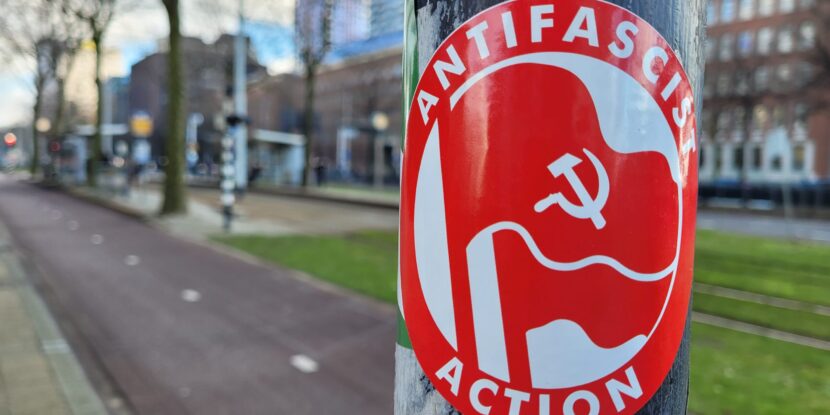
Antifa Torch Politician’s Car, Vow ‘MAGA Freaks’ Will ‘Follow Charlie Kirk to Hell.’

PULSE POINTS

WHAT HAPPENED: A car belonging to Alternative for Germany (AfD) politician Bernd Baumann was set on fire in Hamburg, with Antifa claiming responsibility and vowing to send “MAGAfreaks… to hell” with assassinated Turning Point USA (TPUSA) founder Charlie Kirk.

👤WHO WAS INVOLVED: Bernd Baumann, Antifa, and residents in the Hamburg, Germany, area.

📍WHEN & WHERE: November 3, 2025, in the Othmarschen district of Hamburg.

💬KEY QUOTE: “All you damn’ MAGAfreaks [sic], you will follow [Charlie] Kirk to hell!” – Antifa statement.

🎯IMPACT: Antifa claimed responsibility, heightening concerns about politically motivated violence.

IN FULL

In the early hours of November 3, a car belonging to Bernd Baumann, a senior politician from Germany’s populist Alternative for Germany (AfD) party, was set on fire in Hamburg’s upscale Othmarschen district. The blaze reportedly began around 3:20 AM, when residents were awakened by several loud bangs and saw flames coming from the street.

At about 3:27 PM the same day, far-left Antifa terrorists claimed responsibility for the attack in a post on the website Indymedia. The statement opened with a greeting to “antifascists” and included a threat to Trump supporters, saying, “All you damn’ MAGAfreaks [sic], you will follow [Charlie] Kirk to hell!”

Baumann was informed of the incident by state security officials at around 5:00 AM. Firefighters arrived to find four vehicles burning, including a BMW belonging to Baumann’s partner. Despite an extensive search involving several patrol units, no suspects have been identified. The investigation has been taken over by the State Security Service, which handles politically motivated crimes.

The attack has raised fresh concerns about the rise in politically motivated violence in Germany, particularly against AfD members and supporters. Similar arson attacks and acts of vandalism and violence targeting party officials have been reported in several German cities this year.

In the United States, President Donald J. Trump signed an executive order in September 2025 designating Antifa as a domestic terrorist organisation and directing federal agencies to investigate and disrupt its activities. Several European nations, including Hungary, have expressed support for similar measures, with Prime Minister Viktor Orbán calling Antifa “a terrorist organisation.”

A secret recording published in October 2025 appeared to show Antifa members in the Netherlands justifying political violence. In the recording, one participant said, “When violence is justified is all up to you as a person.”

Image by Oompje.

Join Pulse+ to comment below, and receive exclusive e-mail analyses.

show less
show more

Nearly One Million People Victimized by Migrants from Top Refugee Countries.

PULSE POINTS

WHAT HAPPENED: An analysis of police crime statistics in Germany shows nearly one million victims of crimes committed by foreign suspects from key refugee-origin countries.

👤WHO WAS INVOLVED: The populist, anti-mass migration Alternative for Germany (AfD) parliamentary group initiated the analysis of Police Crime Statistics (PKS) data.

📍WHEN & WHERE: The data covers the period from 2015 to 2024 in Germany.

💬KEY QUOTE: “The number of victims is increasing – in parallel with the number of refugees.” – Focus Magazine

🎯IMPACT: The report highlights the significant rise in crime victims in Germany directly linked to the migrant crisis of 2015-16 and subsequent chain migration.

IN FULL

From 2015 to 2024, roughly 426,000 Germans fell victim to offenses carried out by suspects originating from ten key refugee-sending nations. In that timeframe, about 512,000 non-Germans were also victimized by migrants from this same group. This examination of Police Crime Statistics (PKS) comes from a parliamentary query submitted by the populist, anti-mass migration Alternative for Germany (AfD) parliamentary group.

The AfD selected ten nations for scrutiny, namely Syria, Afghanistan, Iraq, Morocco, Algeria, Iran, Nigeria, Somalia, Pakistan, and Georgia, as they have contributed significant refugee populations to Germany. Through PKS data, nationals of these countries have been tallied against victims of crime.

Victim numbers have surged markedly since 2015, aligning with the influx of people from these ten countries into Germany. The fewest cases were reported in 2020 and 2021, mirroring the broader decline in crime rates during the COVID-19 pandemic. Syrians boast the most victims, with 35,668, followed by Afghanistan, with 72,190. All have over 10,000.

In terms of particular crimes, the data indicates that, for instance, Algerian nationals are accused of robbery 12,685 percent more frequently than Germans, with similarly elevated rates for Georgians (3,846 percent higher), Libyans (3,641 percent higher), and Tunisians (3,132 percent higher).

Image by Markus Spiske.

Join Pulse+ to comment below, and receive exclusive e-mail analyses.
show less
show more

All German Political Parties Agree to Stay Silent on Immigration During Election—Except One.

PULSE POINTS

WHAT HAPPENED: Establishment political parties on both the left and the right in Cologne, Germany, have signed an agreement to promote positive messaging about immigration and not bring up its downsides during local elections. However, the populist Alternative for Germany (AfD) party is not part of the pact.

👤WHO WAS INVOLVED: The Christian Democratic Union (CDU), Social Democratic Party (SPD), Greens, Free Democratic Party (FDP), Left Party, Volt, Die Partei, the Cologne Round Table for Integration association, and the AfD.

📍WHEN & WHERE: Cologne, Germany, ahead of local elections scheduled for September 14.

💬KEY QUOTE: “Our parties are so stupid that they don’t see the tactical disadvantage [in not discussing immigration] and are so weak-minded that they don’t see that they themselves are damaging our democracy by not wanting to talk about important issues.” – Political scientist Werner Patzelt

🎯IMPACT: The agreement suppresses debate on immigration but may inadvertently bolster the AfD, which has a strong stance against mass migration.

IN FULL

With local elections looming in Cologne, Germany, on September 14, all major political parties except the populist Alternative for Germany (AfD) have signed an agreement to avoid criticizing immigration or linking it to social issues like crime, unemployment, or public safety. Infamously, Cologne was the epicenter of a series of mass sex attacks by migrant mobs on New Year’s Eve 2015-16, with 650 sexual assaults reported in the city, including 22 rapes.

The so-called “fairness agreement,” organized by the Cologne Round Table for Integration, was signed by the Chancellor Friedrich Merz’s notionally right-wing Christian Democratic Union (CDU), the leftist Social Democratic Party (SPD), the far-left Greens, the neoliberal Free Democratic Party (FDP), the Left Party, Volt, and Die Partei. The pledge commits signatories to speak positively about migration and to avoid blaming refugees or migrants for any local problems, despite their proven link to increased sexual offending and other criminality.

The pact also includes promises to fight racism and anti-Semitism, with church officials tasked with monitoring compliance. Citizens have been encouraged to report candidates or campaigners who break the rules.

Notably, the populist Alternative for Germany (AfD) party was excluded from the agreement. Organizers stated the anti-mass migration party, currently the second-largest in Germany, “does not share their values.”

AfD Cologne spokesman Christer Cremer criticized the move: “I view this fairness agreement somewhat critically, because I believe it is intended to suppress debate. Especially during the election campaign, it must be possible to address all issues, including issues of migration.”

Political scientist Werner Patzelt echoed those concerns, calling the strategy “tactically stupid” and warning that it only boosts the AfD by erasing pressing concerns from the public discourse. “Our parties are so stupid that they don’t see the tactical disadvantage and are so weak-minded that they don’t see that they themselves are damaging our democracy by not wanting to talk about important issues,” he said.

Some signatories are already facing backlash. The CDU came under fire for allegedly violating the agreement after distributing a flyer opposing a planned refugee center in the Agnesviertel neighborhood. CDU leader Serap Güler dismissed the criticism as “absurd,” saying the flyer reflected concerns about the scale of the project, not hostility toward migrants.

The controversy comes as the AfD continues to surge in national polling. A Forsa poll released August 12 shows the AfD leading nationwide with 26 percent, ahead of Chancellor Merz’s CDU/CSU bloc at 24 percent.

This rise in the AfD’s support comes amid growing debate over whether the populist party should even be allowed to participate in Germany’s democratic system. In October 2023, lawmakers began crafting legislation aimed at banning the party, claiming it threatens the country’s constitutional order. But the idea has sparked fierce opposition: a July 2025 survey by the Allensbach Institute found a majority of Germans, 52 percent, oppose banning the AfD, with only 27 percent in favor.

The Trump administration in the United States has also warned against such a ban, with Secretary of State Marco Rubio saying of a previous move to designate the AfD as an extremist organization, “Germany just gave its spy agency new powers to surveil the opposition. That’s not democracy—it’s tyranny in disguise.”

Image by Olaf Kosinsky.

Join Pulse+ to comment below, and receive exclusive e-mail analyses.
show less
show more
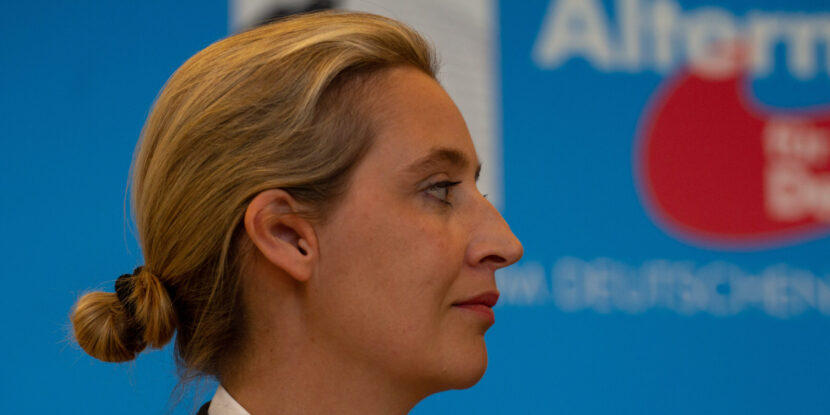
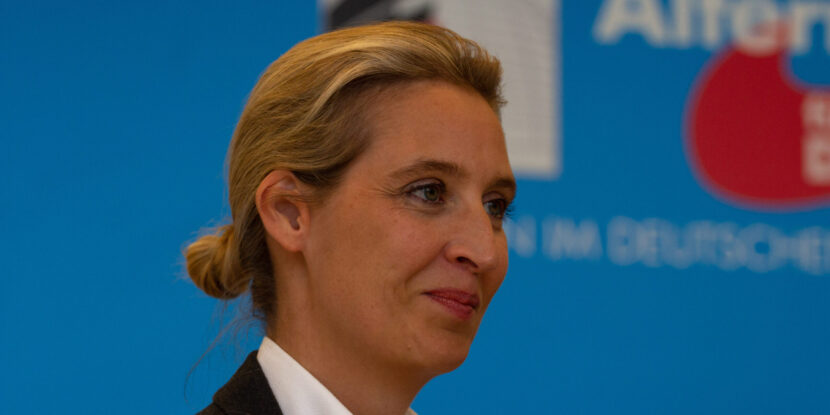
Alice Weidel

Populist AfD Tops Latest German Polls.

PULSE POINTS

WHAT HAPPENED: Germany’s populist Alternative for Germany (AfD) party is now the most popular political force in the country, according to a new poll.

👤WHO WAS INVOLVED: Alternative for Germany (AfD), Chancellor Friedrich Merz and his Christian Democratic Union (CDU) party, AfD leader Alice Weidel.

📍WHEN & WHERE: The poll was released on August 12.

💬KEY QUOTE: “The citizens have finally had enough of a Union that not only seamlessly continues the policies of the [former government] but even expands them. Mr. Merz has become intolerable after just 100 days—time for an AfD government!” – Alice Weidel.

🎯IMPACT: The AfD’s rise in popularity comes amid other European populist parties rising in the polls, with voters increasingly disillusioned with establishment political parties and their globalist platforms.

IN FULL

A new poll released Tuesday has revealed a dramatic shift in Germany’s political landscape, showing the populist, anti-mass migration Alternative for Germany (AfD) as the most popular party in the country. According to a survey conducted by the Forsa Institute for Social Research and Statistical Analysis, 26 percent of German voters would support the AfD if a federal election were held now.

This result places the AfD ahead of Chancellor Friedrich Merz’s notionally center-right Christian Democratic Union (CDU), formerly led by Angela Merkel, and its sister party, the Christian Social Union (CSU), now on 24 percent support.

The figures are expected to heighten concerns among establishment leaders across Europe. In neighboring France, Marine Le Pen’s National Rally is already leading comfortably, and right-wing populist parties have recently made significant electoral gains across the continent, from Poland and Romania to Portugal and the Netherlands.

In the United Kingdom, Nigel Farage’s Reform Party also outpaces establishment parties in current polls, reflecting widespread dissatisfaction with Prime Minister Sir Keir Starmer’s leftist Labour Party government.

Though some polls still show Germany’s conservative Christian Democrats narrowly ahead of the AfD in a compilation of multiple surveys, the populist party has seen a steady rise since February’s federal election, when it captured nearly 21 percent of the vote in its strongest showing to date. The AfD currently holds the position of the largest opposition party in the Bundestag (federal legislature).

Under the leadership of Alice Weidel, a former economist, the party has adopted a staunchly anti-mass migration platform. Weidel commented on the polling, saying, “The citizens have finally had enough of a Union that not only seamlessly continues the policies of the [former government] but even expands them. Mr. Merz has become intolerable after just 100 days—time for an AfD government!”

Some establishment politicians believe the AfD should be outlawed and banned as the party becomes more popular with voters.

Image by Olaf Kosinsky.

Join Pulse+ to comment below, and receive exclusive e-mail analyses.
show less
show more

‘Path to Civil War’ — Majority of Germans Oppose Banning Populist Opposition.

PULSE POINTS

WHAT HAPPENED: A majority of Germans oppose efforts to ban the populist Alternative for Germany (AfD) party, with many viewing it as an attempt by the government to stifle opposition.

👤WHO WAS INVOLVED: The Federal Office for the Protection of the Constitution (BfV), former Interior Minister Nancy Faeser, AfD leadership, and German voters.

📍WHEN & WHERE: The classification of AfD as “right-wing extremist” occurred in May, with recent polling conducted by the Allensbach Institute.

💬KEY QUOTE: Andreas Rödder of Johannes Gutenberg University Mainz called such a ban a “sure path to civil war.”

🎯IMPACT: A ban on the AfD could undermine faith in German democracy, with 54 percent of respondents believing a similar party would emerge if the AfD were disbanded.

IN FULL

A recent poll has revealed that more than half of German voters are against banning the right-wing populist Alternative for Germany (AfD) party, despite its classification as “right-wing extremist” by the country’s domestic intelligence agency. In May, under then-Interior Minister Nancy Faeser, the Federal Office for the Protection of the Constitution (BfV) designated the AfD as an extremist organization. This decision, which could enable increased surveillance and even lead to a formal ban, is currently being challenged in court.

While some members of the Social Democratic Party (SPD) and the Greens have pushed for outlawing the party, the idea is not widely supported among the public. According to a survey of 1,054 voters conducted by the Allensbach Institute, 52 percent of Germans oppose banning the AfD, while only 27 percent are in favor and 21 percent remain undecided.

Although 54 percent of respondents believe the AfD qualifies as a right-wing extremist group, personal views on its supporters are more nuanced. The poll found that many Germans know someone, whether a friend or family member, who backs the party, yet only five percent of respondents described those individuals as extremists.

The survey also revealed concerns that targeting the AfD could be perceived as a political maneuver to suppress legitimate opposition. Currently serving as the official opposition in the Bundestag (federal legislature) and ranking as the second-largest party, the AfD’s removal would be undemocratic. Over half of those surveyed, 54 percent, said they believed that banning the party would not significantly change the political landscape, since another group with similar views would likely take its place.

Some political experts have warned of the risks such a move poses to Germany’s democratic stability. Professor Andreas Rödder of Johannes Gutenberg University Mainz cautioned that banning the AfD “would eliminate all votes for the AfD and thus lead to [a left-wing] parliamentary majority,” calling the prospect a “sure path to civil war.”

Join Pulse+ to comment below, and receive exclusive e-mail analyses.

show less
show more

Efforts to Ban Top European Nation’s Populist Opposition Are Forging Ahead.

PULSE POINTS

WHAT HAPPENED: The Social Democratic Party (SPD) in Germany has launched an effort to ban the Alternative for Germany (AfD) party—the second-most popular party in the country—citing alleged extremism.

👤WHO WAS INVOLVED: SPD leader Lars Klingbeil, the Federal Constitutional Court, and the AfD.

📍WHEN & WHERE: The SPD’s resolution was adopted during their three-day party congress in Berlin, Germany.

💬KEY QUOTE: “The moment at which domestic intelligence says this is a confirmed right-wing extremist party, there is no more room for tactics.” – Lars Klingbeil

🎯IMPACT: A ban would dissolve the AfD, confiscate its assets, and prohibit its re-establishment.

IN FULL

Germany’s leftist Social Democratic Party (SPD), which led the federal government until May, has officially launched an effort to ban the populist Alternative for Germany (AfD) party. SPD delegates voted unanimously on June 29 to establish a “federal working group” to collect and present evidence of the anti-mass migration party’s alleged extremism, which they claim is already “overwhelming.”

The SPD accused the AfD, which placed second in this year’s federal elections, of undermining Germany’s constitution and eroding democracy, citing the party’s advocacy for “remigration” as a violation of human dignity. SPD leader Lars Klingbeil stated, “Based on historical experience, we have a constitution that provides the necessary instruments.” He added, “The moment at which domestic intelligence says this is a confirmed right-wing extremist party, there is no more room for tactics.”

In Germany, the European Union’s most populous country and top economy, only the Federal Constitutional Court can ban a political party, requiring a two-thirds majority of its Justices. If successful, a ban would dissolve the party, confiscate its assets, and outlaw its symbols and logos. Efforts to re-establish a banned party under a similar name would also be prohibited.

The legal push comes amid growing support for the AfD, particularly in eastern Germany, where recent elections have shown the party gaining significant traction. A recent survey placed the AfD at 32 percent, ahead of the SPD by nine points. Critics argue that the SPD is attempting to ban its political rival rather than compete with it democratically.

The move follows the designation of the AfD as an extremist group by Germany’s intelligence agency, the Bundesamt für Verfassungschutz (BfV), which enabled increased surveillance of the party. Critics, including X CEO Elon Musk, have condemned the proposed ban, labeling it “an extreme attack on democracy.” Newly elected Chancellor Friedrich Merz, of the notionally conservative Christian Democratic Union (CDU), formerly led by Angela Merkel, conceded, “Ten million AfD voters—you can’t ban them. You have to engage with them factually and on substance.”

The BfV decided to pause the classification after the AfD launched a lawsuit to appeal the move. Germany also came under pressure from the Trump administration, with Secretary of State Marco Rubio stating, “That’s not democracy—it’s tyranny in disguise. What is truly extremist is not the popular AfD—which took second in the recent election—but rather the establishment’s deadly open border immigration policies that the AfD opposes.”

Image by Olaf Kosinsky.

Join Pulse+ to comment below, and receive exclusive e-mail analyses.

show less
show more

Leftist Politician Proposes Denying Organ Donations to Populists.

PULSE POINTS

WHAT HAPPENED: A Green Party councilor in Weißenhorn, Germany, conducted a controversial survey about organ donation and political affiliation.

👤WHO WAS INVOLVED: Green Party councilor Julia Probst and nearly 4,000 survey participants.

📍WHEN & WHERE: Weißenhorn, Germany, recently on the social media platform X.

💬KEY QUOTE: “The wording of the question is very confusing to me? Do I have left-wing or right-wing blood?” – Anonymous user.

🎯IMPACT: The survey faced backlash, and Probst has since locked her X account. Organ donation laws are supposed to prohibit discrimination based on political views.

IN FULL

Julia Probst, a Green Party councilor from Weißenhorn, Germany, created a social media survey asking her followers if they would agree to donate an organ to a voter from the populist Alternative for Germany (AfD) party. The survey, which received nearly 4,000 responses, revealed that 76 percent of participants would donate, while about a quarter said they would not.

The post sparked significant criticism, with many accusing Probst of politicizing organ donation. One user, identifying as an “AfD opponent,” stated, “As a first responder, I first help a person and not a ‘party affiliation.’” They also questioned the phrasing of the survey, asking, “Do I have left-wing or right-wing blood?”

Even users who supported the Green Party expressed disapproval of the survey, emphasizing that organ donation should not be linked to politics. Following the backlash, Probst locked her X account, limiting access to her posts.

Legally, organ donation in Germany is regulated by the Eurotransplant agency, which bases decisions on factors such as tissue compatibility, waiting times, and urgency. Political affiliation is not supposed to be a factor in these decisions. Even if a donor expressed a preference to exclude certain recipients, such a request should be disregarded under the law.

This incident comes amid growing concerns about the intersection of politics and medical treatment in Germany. In a separate case, a doctor reportedly refused to treat an AfD politician who had been his patient for years.

During the COVID-19 pandemic, some people in certain countries, like Canada, were denied organ transplants based on their vaccination status. Medical professionals denied an Alberta woman who needed a life-saving organ transplant. She attempted to take her case to the Canadian Supreme Court, which refused to hear her. She died in August 2023.

Join Pulse+ to comment below, and receive exclusive e-mail analyses.
show less
show more

Stabbing Sprees by Migrants Leave 8 Injured, Including 11-Year-Old Girl.

PULSE POINTS:

What Happened: Two separate stabbings in Germany left eight people injured, including an 11-year-old girl. Migrants are believed to be the perpetrators.

👥 Who’s Involved: A 35-year-old Syrian asylum seeker is suspected in a Bielefeld attack, while a 46-year-old from Kosovo has been arrested in a Halle incident.

📍 Where & When: The first attack occurred the morning of May 18 in Bielefeld, North Rhine-Westphalia, and the second on the same day outside an apartment block in Halle, central Germany.

💬 Key Quote:  “It’s high time for a clear turnaround: properly protect borders, consistently deport illegal immigrants, and finally make the security of its own population a priority again. Germany is on a knife-edge. Therefore: remigration now!” — Marc Bernhard, Alternative for Germany (AfD) MP.

⚠️ Impact: The incidents highlight ongoing concerns over security and migration policy in the European Union (EU), with countries like Germany facing increasing violence linked to migrants.

IN FULL:

Two separate stabbing attacks in Germany over the weekend left eight people injured, including an 11-year-old girl, with migrants reportedly identified as the suspects in both incidents.

In the first attack, five soccer fans, aged between 22 and 27, were injured outside a bar in Bielefeld, North Rhine-Westphalia, on the morning of May 18. The assailant, armed with a knife and a cane sword, reportedly attacked the group indiscriminately. Four of the victims sustained serious injuries but managed to fight back, forcing the attacker to flee.

Police later discovered a bag left behind by the suspect containing multiple knives, a liquid smelling of gasoline, and identification documents indicating Syrian nationality. The 35-year-old suspect, who entered Europe via Turkey in 2023 and applied for asylum in Germany, was arrested Monday in Heiligenhaus near Düsseldorf. Authorities are investigating the case as a potential terror attack.

In a separate incident on May 18 in Halle, central Germany, three people, including an 11-year-old girl, were injured in a stabbing outside an apartment block. Witnesses reported that the violence stemmed from a dispute over children making noise. A 46-year-old migrant from Kosovo has been arrested in connection with the attack.

Responding to the incidents, Marc Bernhard, a member of Germany’s Bundestag (federal legislature) for the Alternative for Germany (AfD) party, criticized the government’s handling of mass migration, stating, “Even after 10 years of bloodshed, people are still talking about ‘isolated cases.’”

He added, “It’s high time for a clear turnaround: properly protect borders, consistently deport illegal immigrants, and finally make the security of [Germany’s] own population a priority again. Germany is on a knife-edge. Therefore: remigration now!”

German Chancellor Friedrich Merz, of the notionally center-right Christian Democratic Union (CDU), formerly led by Angela Merkel, had previously pledged to implement stricter immigration controls, including shutting down illegal border crossings. However, he has faced resistance from neighboring countries like Poland and has yet to deliver on promises of increased deportations.

The two attacks are part of a broader pattern of violent incidents involving migrants in Germany, with similar cases reported in cities such as Magdeburg, Munich, and Solingen in recent years.

show less

PULSE POINTS:

show more

Germany Reverses Designation of Populist Party as ‘Right-Wing Extremist’ Following Lawsuit, Pressure from Trump.

PULSE POINTS:

What Happened: Following a lawsuit and criticism from the Trump administration, Germany’s domestic spy agency has suspended its classification of the populist Alternative for Germany (AfD), which placed second in the country’s recent federal elections, as a right-wing extremist organization.

👥 Who’s Involved: AfD, AfD leader Alice Weidel, co-leader Tino Chrupalla, the Federal Office for the Protection of the Constitution.

📍 Where & When: The spy agency announced the move on May 8.

💬 Key Quote: “We are defending ourselves with all legal means against the upgrade by the Federal Office for the Protection of the Constitution.” — Weidel and Chrupalla.

⚠️ Impact: The German spy agency will not surveil members of the AfD or place informants in the party as general policy until the court case is resolved.

IN FULL:

The German domestic spy agency has suspended its labelling of the populist Alternative for Germany (AfD) party as a right-wing extremist organization following pressure from the Trump administration and a new lawsuit. The Federal Office for the Protection of the Constitution announced it would be suspending the classification on May 8 until a court decides on the outcome of the pending lawsuit.

The AfD is appealing the classification at the Cologne Administrative Court to reverse the spy agency’s decision. If the court does not rule in favour of the party, the spy agency will be able to surveil party members and use informants to infiltrate it at scale.

Following the announcement from the spy agency, AfD leaders Alice Weidel and Tino Chrupalla both claimed it as a victory, though the move will only become permanent after a ruling.

“We are defending ourselves with all legal means against the upgrade by the Federal Office for the Protection of the Constitution,” the pair said in a statement. Their party placed second in Germany’s recent federal elections, and it is the leading party in several areas, particularly in the former East Germany.

Along with the lawsuit, the move comes after the German spy agency was widely criticised by members of Donald J. Trump’s administration, including Secretary of State Marco Rubio. “Germany just gave its spy agency new powers to surveil the opposition. That’s not democracy—it’s tyranny in disguise,” Rubio said.

Image by Markus Spiske.

show less

PULSE POINTS:

show more

German ‘Conservative’ Merz Becomes Chancellor After Historic Initial Failure.

PULSE POINTS:

What Happened: Friedrich Merz failed to secure enough votes to become Germany’s Chancellor (Prime Minister) on an initial ballot in the German legislature, the first time such an event has occurred since the Second World War. However, he managed to secure sufficient votes after a second attempt.

👥 Who’s Involved: Friedrich Merz, Christian Democratic Union (CDU), Christian Social Union (CSU), Social Democrats (SPD).

📍 Where & When: German Bundestag (Parliament), May 6.

💬 Key Quote: “It is an annoying process, but in a parliamentary democracy, in a liberal country, this is unfortunately one of the scenarios that you have to be prepared for,” complained Johann Wadepuhl, Merz’s prospective foreign minister, after he failed to pass the initial ballot.

⚠️ Impact: The failure to elect a chancellor on the first ballot was historic; there was a potential for new elections if a majority had not been reached within 14 days.

IN FULL:

Friedrich Merz, the leader of Germany‘s notionally conservative Christian Democratic Union (CDU)—formerly led by Angela Merkel—did not secure enough votes in the Bundestag to become Chancellor in an initial ballot. This marks the first time since World War II that a candidate for Chancellor has failed to win on the initial ballot in the German legislature.

Merz required a majority of 316 votes to succeed but fell short by six votes, obtaining only 310 out of 630. His coalition, which includes the CDU, its Bavarian sister party the Christian Social Union (CSU), and the leftist Social Democrats, holds a slim majority with 328 seats. The secret ballot nature of the vote means it is unclear who within his coalition did not support him, although he managed to push through with 325 votes on his second attempt.

If Merz had not managed to secure a majority within 14 days, the German president, who generally plays a largely ceremonial head of state role in national politics, could have been forced to intervene and either appoint the candidate with the most votes as Chancellor or dissolve parliament, prompting a new national election.

Johann Wadepuhl, set to become Merz’s foreign minister, said of Merz’s initial failure, “It is an annoying process, but in a parliamentary democracy, in a liberal country, this is unfortunately one of the scenarios that you have to be prepared for.”

Meanwhile, Alice Weidel, co-leader of the largest opposition group, Alternative for Germany (AfD), criticized Merz’s coalition—roughly equivalent to a Republican-Democrat alliance—calling it a “weak foundation.” She has urged for Merz’s resignation and the initiation of new elections.

The vote comes less than a week after the German domestic intelligence service declared the AfD a right-wing extremist organization, allowing surveillance measures directed at all party members and the use of informants. The move was met with significant criticism from the Trump administration.

Image by Steffen Prößdorf.

show less

PULSE POINTS:

show more