



Monday, February 23, 2026

State Govt Bans Populist Politicians From Overseas Trips.

PULSE POINTS:

What Happened: Members of the populist Alternative for Germany (AfD) party have been banned from taking part in overseas business trips by a state government after being declared a right-wing extremist organization.

👥 Who’s Involved: State of Hesse, Alternative for Germany (AfD) members.

📍 Where & When: Hesse’s Europe Minister, Manfred Pentz, announced the exclusion on May 4.

💬 Key Quote:  “My business trips abroad are aimed at promoting this location. I can’t achieve that if I travel with representatives of a secure right-wing extremist party.” — Minister Manfred Pentz.

⚠️ Impact: The move is part of the broader fallout from Germany’s domestic spy agency declaring the AfD an extremist group, despite the fact that it recently placed second in the country’s federal elections.

IN FULL:

A state government in Germany has banned members of the Alternative for Germany (AfD) from taking part in foreign business trips. The move comes after Germany’s domestic spy agency declared the AfD a right-wing extremist organisation last week.

The German state of Hesse announced it would not include AfD members in foreign business trips due to the labelling of the party as extremists. The state’s Europe Minister, Manfred Pentz, announced the exclusion of the AfD members on May 4. Pentz stated, “After the classification of the AfD, I decided not to invite representatives of this party to my foreign business trips for the time being.”

The minister argued that having the AfD on trips dealing with countries like Israel would harm Germany’s reputation, despite the AfD having many pro-Israel members. “My business trips abroad are aimed at promoting [Hesse]. I can’t achieve that if I travel with representatives of a secure right-wing extremist party,” he insisted.

Germany’s actions to declare the AfD an extremist group mean that the domestic spy agency would be able to surveil party members. The move could also lead to the AfD being banned in the future.

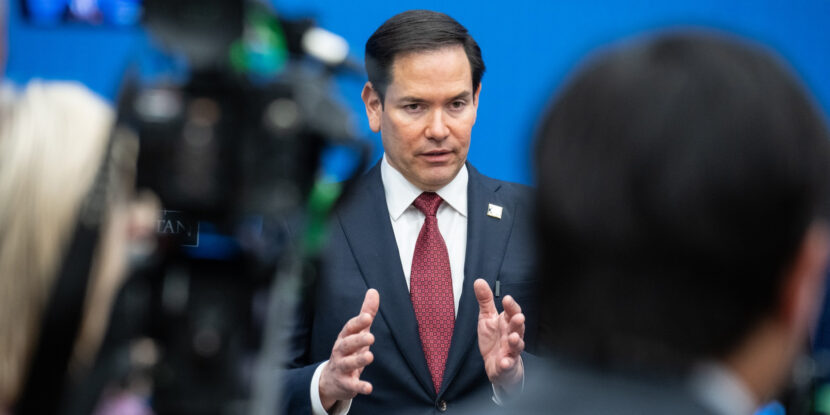
Members of the Trump administration have outright condemned the moves against the AfD. Secretary of State Marco Rubio stated, “Germany just gave its spy agency new powers to surveil the opposition. That’s not democracy—it’s tyranny in disguise.”

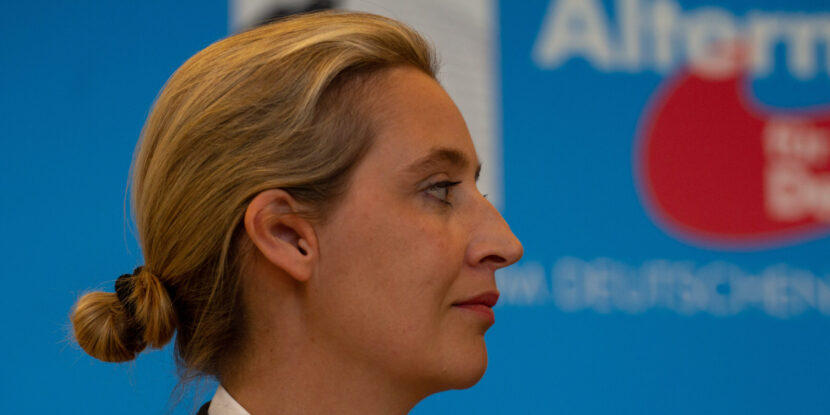
Image by Olaf Kosinsky.

show less

PULSE POINTS:

show more

Trump Admin Condemns Germany After Populist Opposition Designated as Extremist Org: ‘Tyranny in Disguise.’

PULSE POINTS:

What Happened: Germany’s domestic intelligence service classified the populist political party Alternative for Germany (AfD), which placed second in the recent federal elections, as an extremist organization. The Trump administration has condemned the move as tyrannical.

👥 Who’s Involved: “Germany just gave its spy agency new powers to surveil the opposition. That’s not democracy—it’s tyranny in disguise.” — Secretary of State Marco Rubio.

📍 Where & When: Germany and the U.S., May 2.

💬 Key Quote: “This decision by the Office for the Protection of the Constitution is complete nonsense in terms of substance, has nothing to do with law and justice, and is purely political in the fight between the cartel parties against the AfD.” — Stephan Brandner for the AfD.

⚠️ Impact: The decision could intensify discussions on potentially banning the AfD, in Germany, affecting its political activities through increased surveillance, and sour relations with the U.S.

IN FULL:

Germany’s domestic intelligence service has designated the Alternative for Germany (AfD) party an extremist organization. Authorities announced the designation on May 2, which permits the use of enhanced spying to monitor the party and its leaders. The Office for the Protection of the Constitution, Germany’s domestic spy agency, compiled a 1,100-page report to justify this classification, claiming that the AfD promotes an ethnocentric view of the population that discriminates against certain groups, particularly those with immigrant backgrounds. This perspective, according to Nancy Faeser, Germany’s leftist interior minister, conflicts with a constitutional decree.

On behalf of the Trump administration in the U.S., Secretary of State Marco Rubio has condemned the move as tyrannical, saying, “Germany just gave its spy agency new powers to surveil the opposition. That’s not democracy—it’s tyranny in disguise.”

“What is truly extremist is not the popular AfD—which took second in the recent election—but rather the establishment’s deadly open border immigration policies that the AfD opposes,” he added, warning, “Germany should reverse course.”

AfD leaders have criticized the extremist designation as a politically motivated attack. Notably, the classification not only impacts the public image of AfD, which is currently leading in some polls, but, as Rubio warns, it also allows for deeper surveillance and scrutiny of its members. This could potentially culminate in legislative actions aimed at limiting or banning the party’s political activities altogether.

German lawmakers have already tried to introduce motions to ban the AfD in the German legislature. However, a full ban requires an order from the country’s constitutional court.

Chris Tomlinson contributed to this report.

Image by Olaf Kosinsky.

show less

PULSE POINTS:

show more
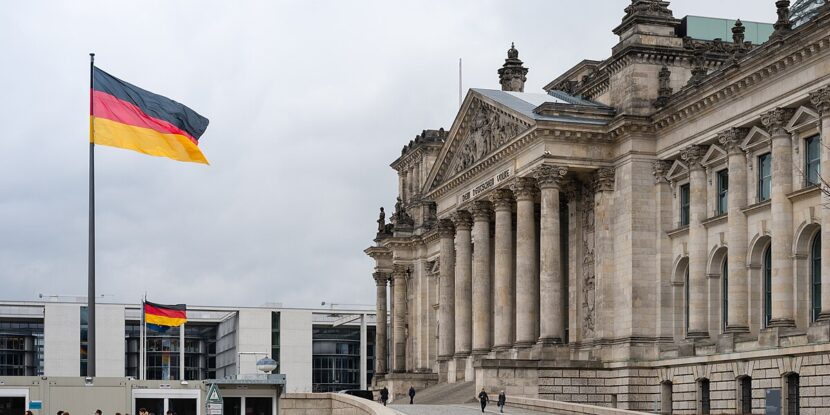
German Parliament

Despite Right-Wing Triumph in Germany, Coalition with Left Likely.

Preliminary results for Germany’s national elections, released by the Federal Returning Officer in Berlin on Monday, have confirmed a significant shift to the right. The nominally center-right Christian Democratic Union (CDU) formerly led by Angela Merkel emerged as the leading party, securing 28.5 percent of the vote and 208 seats in the 630-seat parliament. The populist Alternative for Germany (AfD) made historic gains, doubling its vote share from 10.4 percent in 2021 to 20.8 percent and increasing its seats from 83 to a provisional 152—the best result in the party’s history.

Despite a theoretical majority with the AfD, it remains unlikely the CDU, led by Friedrich Merz, will form a coalition with them. The CDU is part of a long-standing effort by establishment political parties to marginalize the AfD. Instead, a so-called “grand coalition” government alongside left-wing parties, such as the Social Democrats led by outgoing Chancellor Olaf Scholz, is far more likely.

The liberal Free Democrats (FDP), who were part of the last governing coalition, failed to meet the required five percent threshold to enter parliament, losing all of their 91 seats. The newly-founded left-wing populist Sahra Wagenknecht Alliance (BSW) also failed to win any seats.

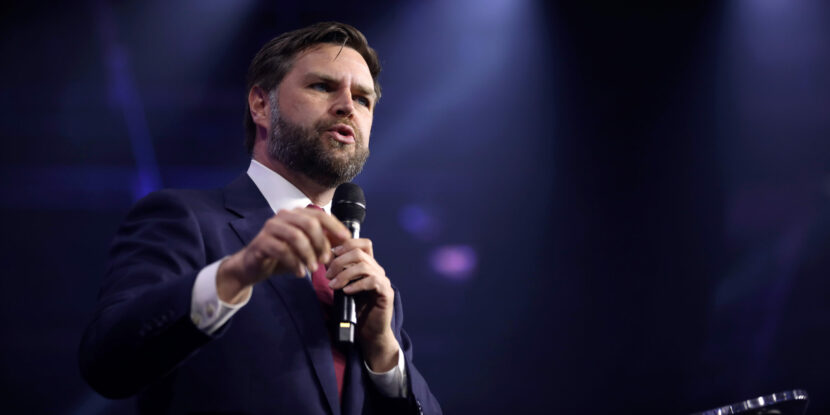
Prior the to German elections, U.S. President J.D. Vance argued the German establishment should not shut out the AfD, given its level of popularity. “It’s really about censorship and about migration, about this fear that President Trump and I have, that European leaders are kind of terrified of their own people,” he said.

Image by Norbert Nagel.

show less
Preliminary results for Germany's national elections, released by the Federal Returning Officer in Berlin on Monday, have confirmed a significant shift to the right. The nominally center-right Christian Democratic Union (CDU) formerly led by Angela Merkel emerged as the leading party, securing 28.5 percent of the vote and 208 seats in the 630-seat parliament. The populist Alternative for Germany (AfD) made historic gains, doubling its vote share from 10.4 percent in 2021 to 20.8 percent and increasing its seats from 83 to a provisional 152—the best result in the party's history. show more

The Right Rises in Germany.

Germany took a big step to the right as voters went to the polls over the weekend, rebuking years of poor economic growth and unchained illegal immigration under the existing leftist government led by Olaf Scholz.

The details: The big winner was the center-right Christian Democratic Union (CDU) led by Friedrich Merz, which took 28 percent of the vote. The CDU ran a coalition with its sister party, the Christian Social Union (CSU).

  • A close second: The “far right“ Alternative for Germany (AfD) party had an impressive turnout with 20.8 percent of the vote.
  • The big loser was the current ruling liberal party, headed by Olaf Schultz — the Social Democratic Party, which only captured 16 percent percent of the vote.

How we got here: The German economy has been ravaged by bad policies like overregulation and green energy mandates—with industrial production (think automakers) down 20 percent since 2017.

  • Energy prices: Additionally, the war in Ukraine has led to rising energy costs, as the country has relied on Russian natural gas. Wholesale electricity is nearly four times higher than it was pre-war.
  • Immigration: Between 2014-2022 Germany imported nearly three million people from Syria, Afghanistan, Iraq, and Ukraine. And as of 2022, about 28 percent of its population were foreign-born.

Germany’s new leader: Friedrich Merz is seen as an establishment conservative, and his CDU is the same party as former Chancellor Angela Merkel, who was the godmother of unchecked immigration into Germany. The twist is that while Merkel lurched the party to the left, Merz seeks to set it back towards the right—specifically on combatting immigration, lowering taxes, and removing regulations on businesses.

Winners and losers: The real winner was the global right-wing populist movement. The losers were the mainstream media. The AfD, just like Trump, was slandered by the mainstream media as “far right” and frequently slandered as Nazis and authoritarians. But again and again, voters are tuning out the noise.

Be sure to subscribe to the Wake Up Right newsletter! 

show less
Germany took a big step to the right as voters went to the polls over the weekend, rebuking years of poor economic growth and unchained illegal immigration under the existing leftist government led by Olaf Scholz. show more
Alice Weidel

Vance Meets German Populist Leader in Munich, Snubs Far-Left Chancellor.

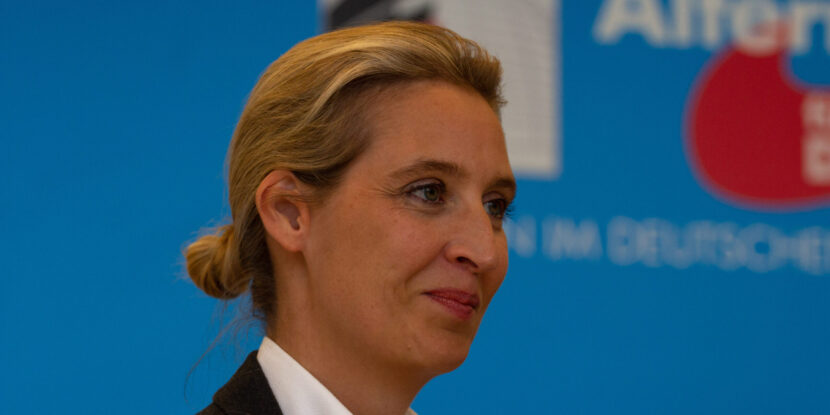
Vice President J.D. Vance met with Alice Weidel, leader of the Alternative for Germany (AfD), on Friday in Munich, Germany, according to a source familiar with the vice president’s schedule. Vance, in town for the Munich Security Conference, had earlier criticized the German establishment for attempting to shut out the AfD—the second-most popular party in a country where coalition governments are often necessary—as well as European governments in general, particularly for their mishandling of immigration and hostility to free speech.

Earlier this week, Vance also met with German President Frank-Walter Steinmeier—whose post is largely ceremonial—and Chancellor Olaf Scholz in Paris, France. However, reports yesterday indicated the Vice President would not meet Scholz in Germany, with a former U.S. official suggesting, “We don’t need to see him, he won’t be Chancellor long.”

Scholz’s Social Democrats are expected to lose badly in Germany’s upcoming federal elections, polling significantly below the AfD. However, the notionally conservative Christian Democratic Union (CDU), formerly led by Angela Merkel, is expected to place first, though the CDU is more likely to attempt to form a coalition with the Social Democrats and other leftist parties than with Weidel’s populists.

Elon Musk, who leads President Donald J. Trump’s high-profile Department of Government Efficiency (DOGE), has been vocally supporting Weidel and the AfD ahead of the German elections, saying they are the only party that can save Germany.

Defending Musk’s right to express his views, Vice President Vance has said, “If American democracy can survive 10 years of Greta Thunberg’s scolding, you guys can survive a few months of Elon Musk.”

Image by Olaf Kosinsky.

show less
Vice President J.D. Vance met with Alice Weidel, leader of the Alternative for Germany (AfD), on Friday in Munich, Germany, according to a source familiar with the vice president's schedule. Vance, in town for the Munich Security Conference, had earlier criticized the German establishment for attempting to shut out the AfD—the second-most popular party in a country where coalition governments are often necessary—as well as European governments in general, particularly for their mishandling of immigration and hostility to free speech. show more

Vance Tells Germans to Respect AfD and Its Voters.

U.S. Vice President J.D. Vance has called for Germany’s establishment parties to reconsider their policy of shutting out the populist Alternative for Germany (AfD) party. Speaking at the Munich Security Conference, Vance said, “I think, unfortunately, the will of voters has been ignored by a lot of our European friends.”

“It’s really about censorship and about migration, about this fear that President Trump and I have, that European leaders are kind of terrified of their own people,” the Vice President explained to the press ahead of his address to the conference.

Vance struck a similar tone when turning to the question of supposed Russian influence over the European political discourse, saying, “If your democratic society can be taken down by $200,000 of social media ads, then you should think seriously about how strong your grip on or how strong your understanding of the will of the people actually is.”

The AfD is currently the second-most popular party in Germany, projected to place ahead of the governing Social Democrats and their current and former coalition partners in the Green and Free Democratic parties. It will likely place behind the Christian Democratic Union (CDU), a notionally right-wing party that occasionally indulges in anti-mass migration rhetoric but was formerly led by Angela Merkel, who opened Germany to millions of Middle Eastern migrants.

Elon Musk, the tech mogul leading the Department for Government Efficiency (DOGE) for the Trump administration, has previously endorsed the AfD, calling it the only party that can save Germany.

Image by Gage Skidmore.

show less
U.S. Vice President J.D. Vance has called for Germany's establishment parties to reconsider their policy of shutting out the populist Alternative for Germany (AfD) party. Speaking at the Munich Security Conference, Vance said, “I think, unfortunately, the will of voters has been ignored by a lot of our European friends.” show more

EU Parliament Member Demands Investigation Into USAID Activity in Europe.

A German populist Member of the European Parliament (MEP) has demanded an investigation into the activities and influence of the United States Agency for International Development (USAID), questioning if the agency engaged in illegal influence activity.

Alternative for Germany (AfD) MEP Petr Bystron called for an investigation this week, highlighting claims that USAID attempted to influence the 2024 European Elections in several EU member states, accusing the agency of funding disinformation campaigns.

Trump has done fantastic groundwork; now we must also swiftly and comprehensively uncover illegal election interference by foreign powers in Europe,” Bystron said. He also accuses USAID-funded media of allegedly targeting anti-globalist opposition parties and claims it may have attempted to orchestrate regime change globally as well as influence elections.

It has been revealed that USAID funded around 90 percent of the media in Ukraine, but it has also funded left-wing media in EU states like Bulgaria, Czechia, Hungary, Poland, Romania, Slovakia, and First Lady Melania Trump’s native Slovenia.

Hungary’s Prime Minister Viktor Orban, a close ally of President Donald J. Trump, announced Friday, February 7, that his government would reveal all U.S. funding to media and NGOs and called for legal consequences.

“We don’t call them agents… but these are people and organizations paid from abroad whose job is to overthrow the Hungarian government,” Orban said.

USAID has spent millions of dollars of taxpayer money on bizarre projects, from a transgender opera in Colombia to poppy farming in Afghanistan and feeding al-Qaeda jihadists in Syria.

Earlier this week, it was announced that President Trump is ordering almost all USAID staff on leave, with only 294 staff out of 14,000 globally deemed essential.

Image via European Union 2017 – European Parliament.

show less
A German populist Member of the European Parliament (MEP) has demanded an investigation into the activities and influence of the United States Agency for International Development (USAID), questioning if the agency engaged in illegal influence activity. show more

Democratically Elected Populists Excluded from Major Security Conference.

Germany’s populist Alternative for Germany (AfD) party has been denied an invitation to a major global security conference after organizers claimed the party does not believe in peace through dialogue. Christoph Heusgen, the Munich Security Conference chairman, cited the AfD’s departure from Germany’s Bundestag (federal parliament) during a speech by Ukrainian President Volodymyr Zelensky and their stance on aid to Zelensky as factors.

Starting February 14, the conference will gather global leaders, lawmakers, and senior defense officials to discuss security matters. Historically, regardless of orientation, German political parties are typically invited to this annual security dialogue. The exclusion of the AfD is seen as a move to further isolate populists in Germany as they rise in the polls.

Tech billionaire Elon Musk recently appeared via video link at an AfD campaign event in Halle, Germany, voicing support for the party. Earlier, Musk had taken to social platform X, expressing that the AfD was key to Germany’s future in a conversation with party co-chairwoman Alice Weidel.

While the AfD is polling at over 20 percent ahead of this month’s German federal election, putting it in second place, Musk’s intervention in German politics is not popular among the public. A poll found only 19 percent of Germans viewed Musk favorably in the country.

show less
Germany's populist Alternative for Germany (AfD) party has been denied an invitation to a major global security conference after organizers claimed the party does not believe in peace through dialogue. Christoph Heusgen, the Munich Security Conference chairman, cited the AfD's departure from Germany's Bundestag (federal parliament) during a speech by Ukrainian President Volodymyr Zelensky and their stance on aid to Zelensky as factors. show more
germany

Germany Votes AGAINST Stopping Illegal Immigration.

The German legislature has voted down a bill restricting illegal immigration to Western Europe’s largest economy, put forward in response to a spate of deadly terrorist attacks. The bill would have imposed more restrictions on illegal immigrants and on the ability of migrants already present in Germany to import their family members to join them from abroad.

The notionally center-right German Christian Democratic Union (CDU), formerly led by Angela Merkel, failed to pass the new immigration bill through the German parliament, by a vote of 350 to 338.

Friedrich Merz, leader of the CDU and likely the next Chancellor of Germany after next month’s election, tried to pass the legislation with the help of the populist Alternative for Germany (AfD) party. However, resistance from left-wing parties meant the vote failed overall.

Earlier this week, the CDU passed a motion on immigration with the help of the AfD, leading to former party leader and arch-globalist Merkel slamming Merz for working with the populists. On Friday, January 31, offices of the CDU in Berlin were attacked by far-left Antifa extremists, calling the CDU party members “fascists” for daring to work with the AfD.

While the CDU and their sister party, the Bavarian Christian Social Democrats (CDU), are expected to come first in next month’s election, they are not expected to come close to an outright majority. The AfD, meanwhile, is projected to win second place, but a coalition between the two parties seems unlikely. Historically, the establishment CDU has proven more willing to ally with the currently governing Socialists, Greens, and others to shut the AfD out of government.

The failed vote on restricting immigration comes just weeks after a migrant from Africa murdered a CDU party member. Christoph Rosenschon, 26, was stabbed to death in his home.

show less
The German legislature has voted down a bill restricting illegal immigration to Western Europe's largest economy, put forward in response to a spate of deadly terrorist attacks. The bill would have imposed more restrictions on illegal immigrants and on the ability of migrants already present in Germany to import their family members to join them from abroad. show more

Elon Musk’s Interventions Unpopular With Most Britons and Germans.

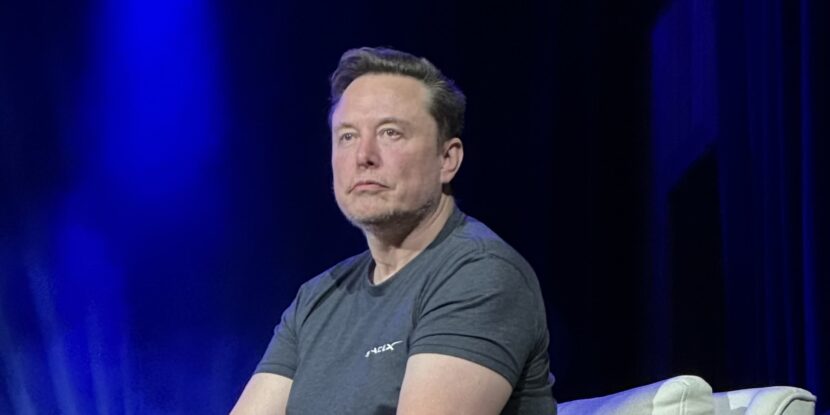
Tech billionaire Elon Musk is stirring controversy in Europe by attacking Britain’s far-left Labour government over Pakistani grooming gangs and endorsing Germany’s populist Alternative for Germany (AfD) ahead of federal elections in February. However, polls show his interventions are generally being poorly received.

A YouGov EuroTrack survey reveals that Musk is viewed unfavorably by 71 percent of the population in both Germany and Britain. Only 19 percent of Germans and 18 percent of Britons hold a favorable view of the SpaceX and Tesla CEO. Sixty percent of respondents in both countries believe he lacks knowledge about their politics and the significant issues they face.

In an interview earlier this month, one grooming gang victim criticized Musk, saying that his comments were unhelpful and accusing the billionaire of being narcissistic.

Public opinion in both countries strongly disapproves of foreign political figures influencing domestic politics. Approximately 74 and 76 percent of Germans and Britons reject such interventions, including from American figures like Musk. About 72 percent also oppose European interference in the United States’ political affairs.

Few in Britain and Germany believe Musk will significantly impact politics in their countries. Only about 18 to 22 percent of respondents think he holds sway over their national political landscapes.

However, Musk’s popularity is markedly higher among supporters of Germany’s AfD and Britain’s Reform Party, led by Nigel Farage. Regardless, both groups believe Musk’s influence in their national politics is limited.

Image by Wcamp9.

show less
Tech billionaire Elon Musk is stirring controversy in Europe by attacking Britain's far-left Labour government over Pakistani grooming gangs and endorsing Germany's populist Alternative for Germany (AfD) ahead of federal elections in February. However, polls show his interventions are generally being poorly received. show more